
1 Correctly label the 5 steps of Mitosis
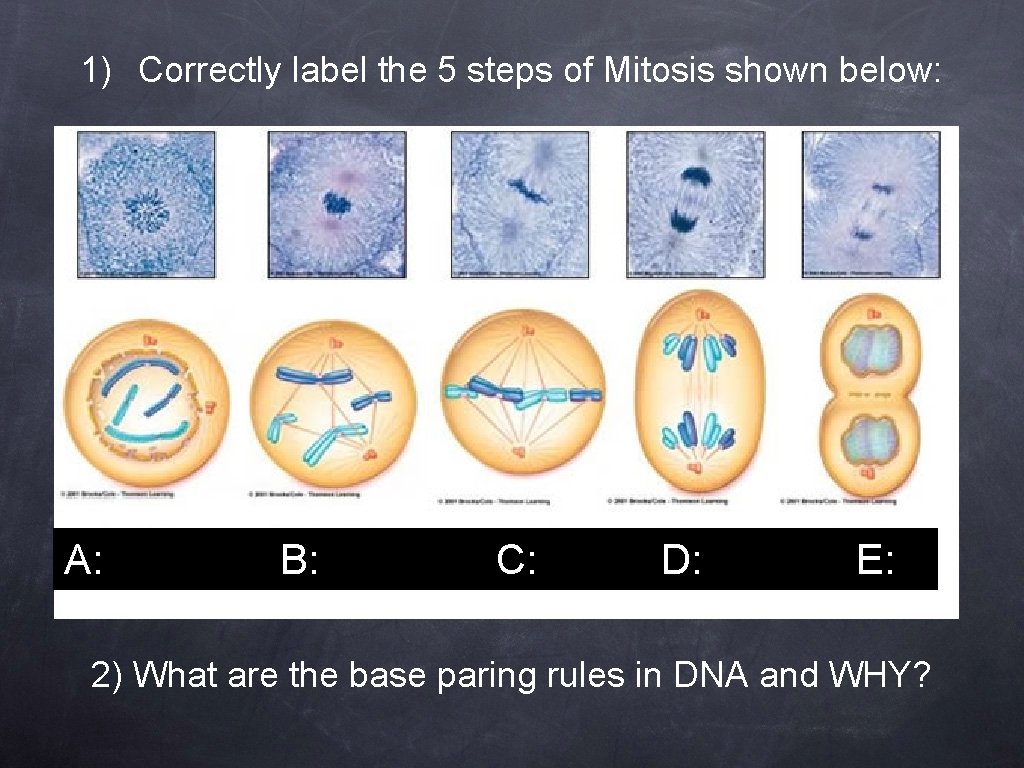
1) Correctly label the 5 steps of Mitosis shown below: Bellwork (have out completed origami) A: B: C: D: E: 2) What are the base paring rules in DNA and WHY?
DNA replication, transcription, & translation How you go from DNA to proteins Test NEXT Friday (Nov 13 th) on Cell Cycle, Mitosis, Meiosis, Heredity, DNA structure & DNA Replication (Chapter 5, 6, 8): Review will be posted and passed out on Friday Nov 6 th.
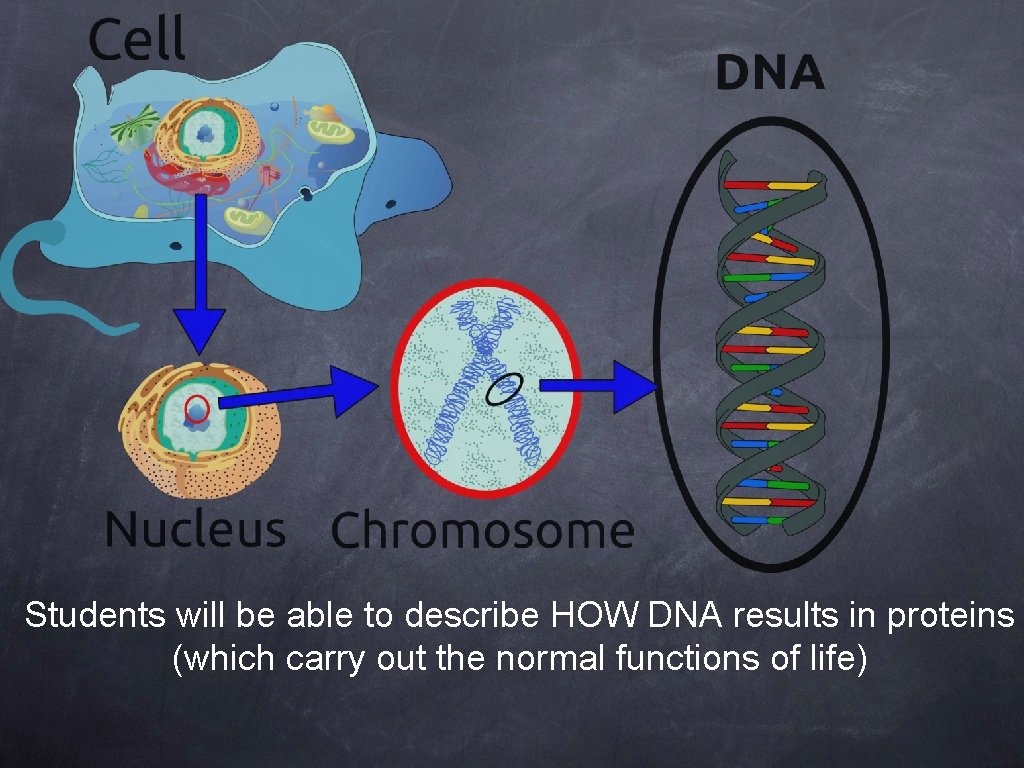
Students will be able to describe HOW DNA results in proteins (which carry out the normal functions of life)
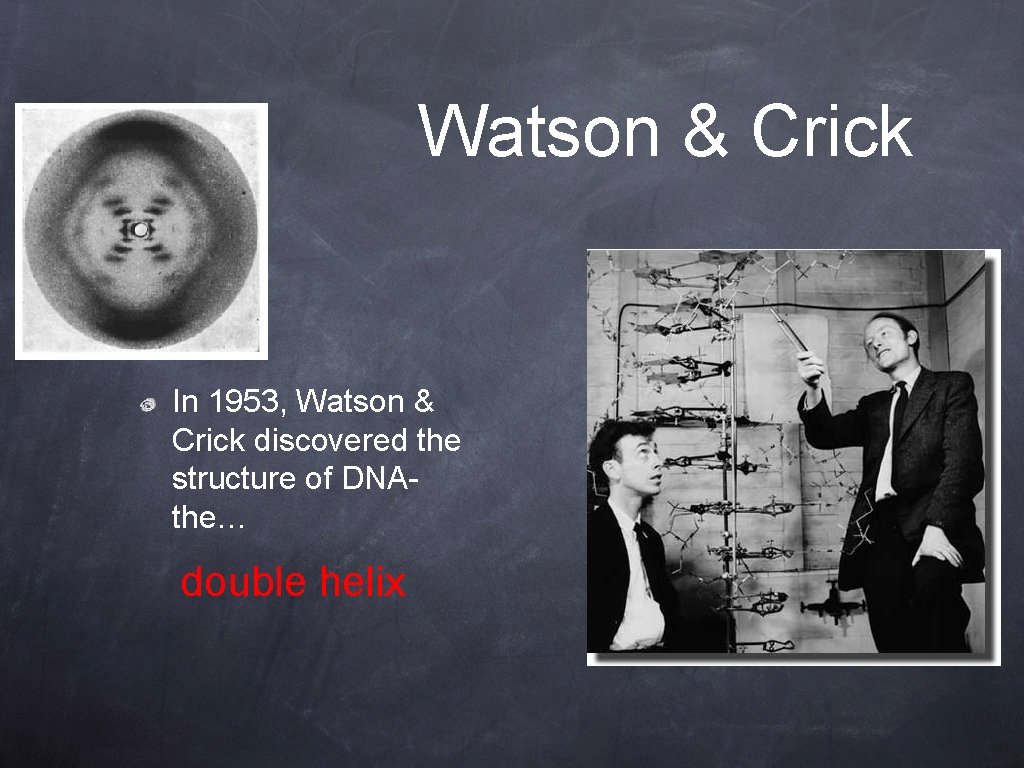
Watson & Crick In 1953, Watson & Crick discovered the structure of DNAthe… double helix
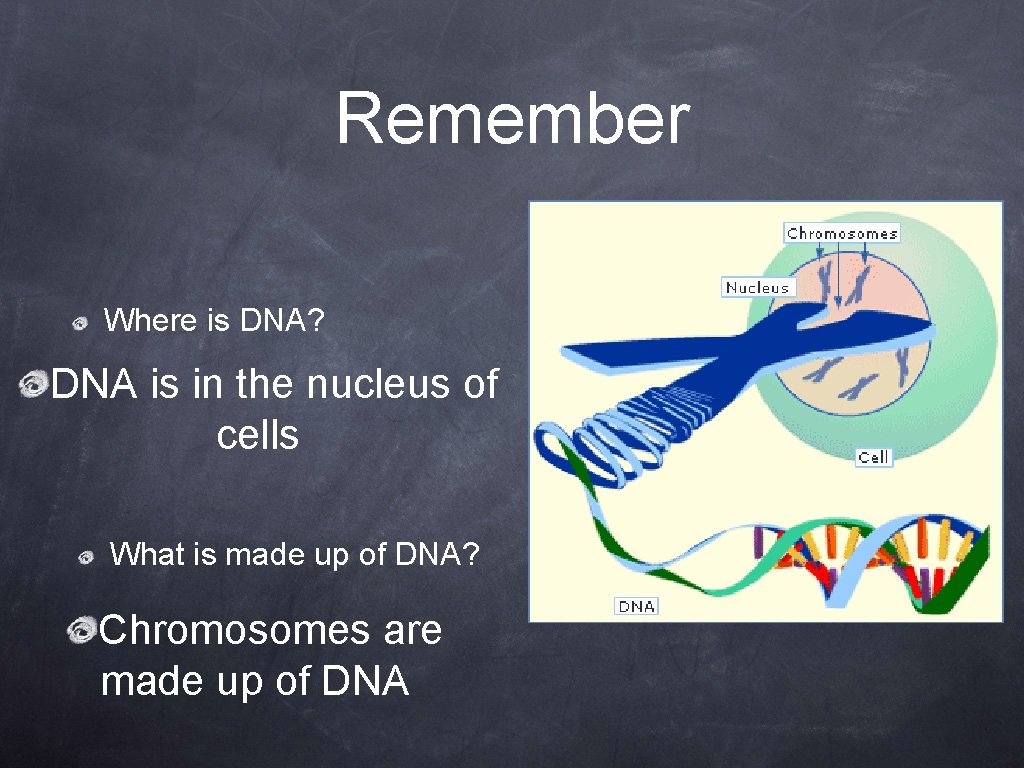
Remember Where is DNA? DNA is in the nucleus of cells What is made up of DNA? Chromosomes are made up of DNA
Remember as well… • Before a cell divides (mitosis) it has to do what? • Copy its DNA, (and grow)
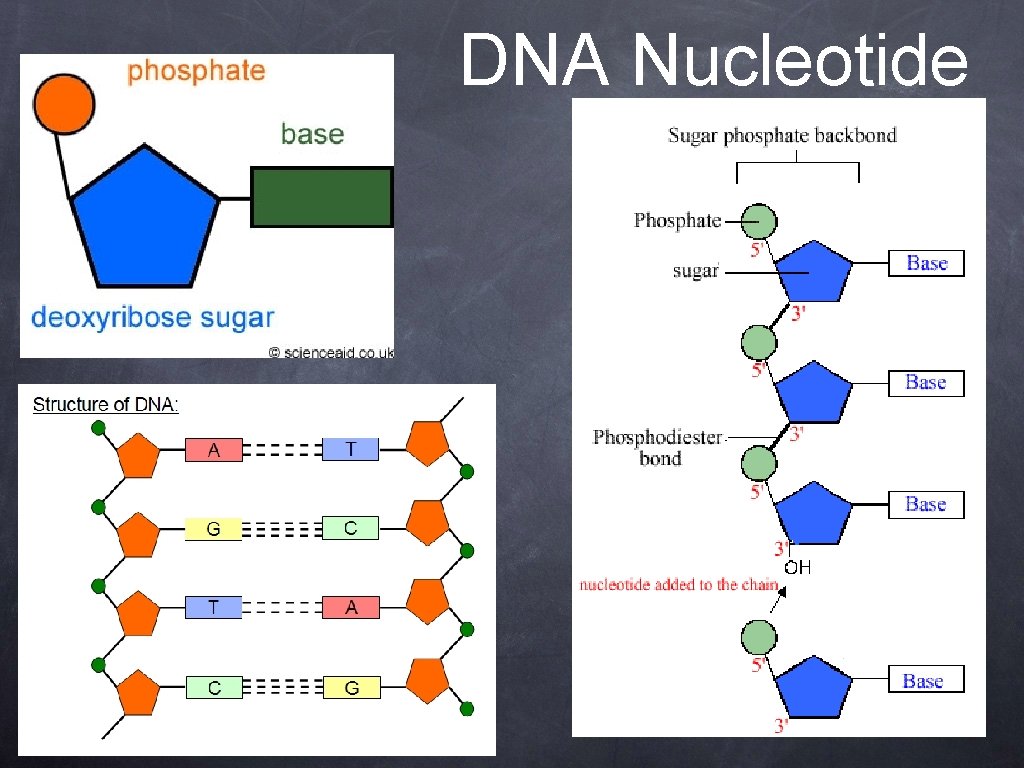
DNA Nucleotide
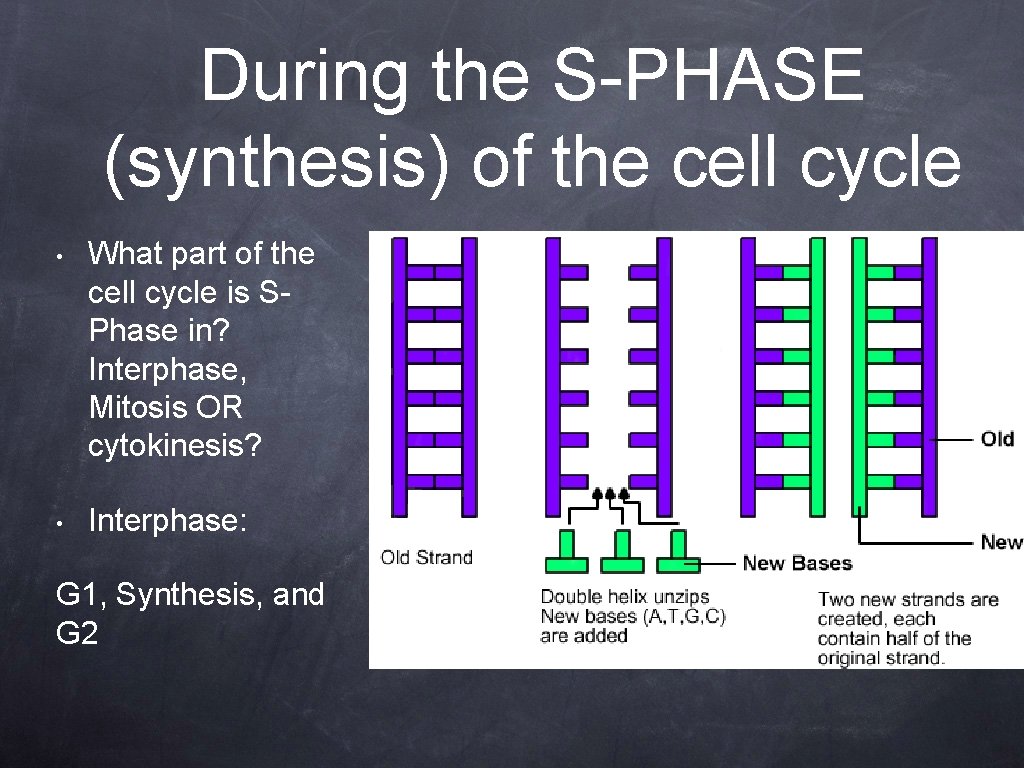
During the S-PHASE (synthesis) of the cell cycle • What part of the cell cycle is SPhase in? Interphase, Mitosis OR cytokinesis? • Interphase: G 1, Synthesis, and G 2
1. What structure is outside the nucleus of an animal cell and contains DNA? 2. What structure is outside of the nucleus of a plant cell and contains DNA? 3. A fish contains 96 chromosomes in each cell: 4. a) After mitosis, how many chromosomes will each daughter cell contain? b) After meiosis, how many chromosomes will each daughter cell contain? Which cell division process is essential for genetic diversity?
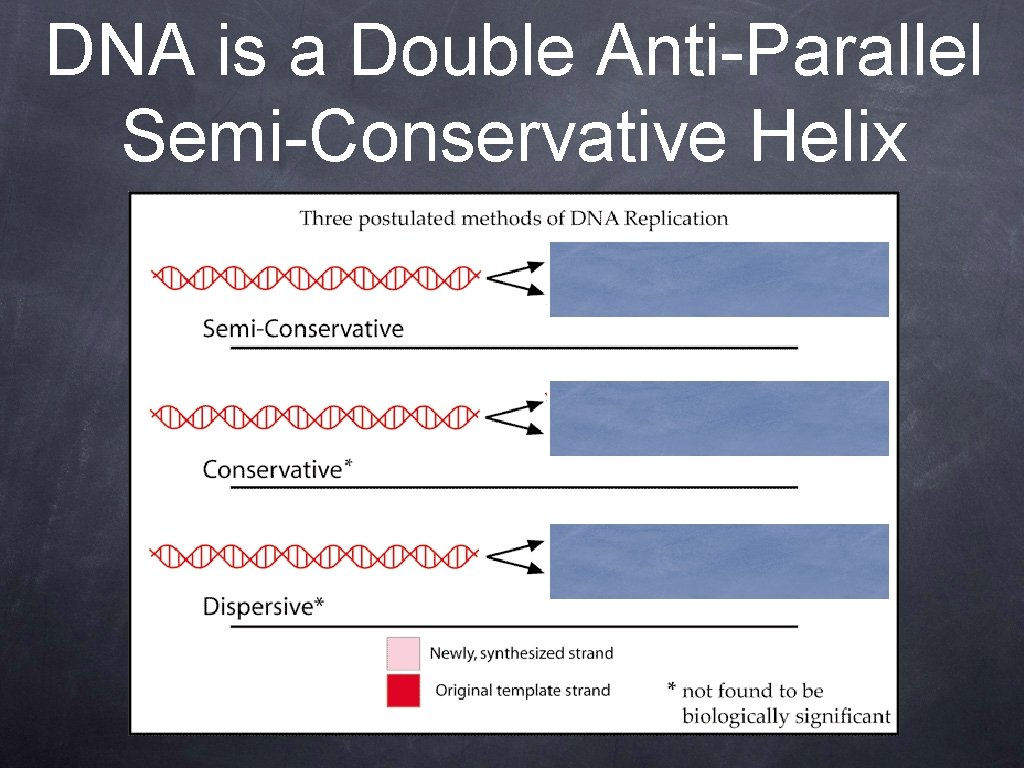
DNA is a Double Anti-Parallel Semi-Conservative Helix
DNA Replication and the Enzymes Involved • Enzymes are a substance produced by a living organism that acts as a catalyst to bring about a specific biochemical reaction (can break things down, can speed a process up, can start/stop a process, etc)
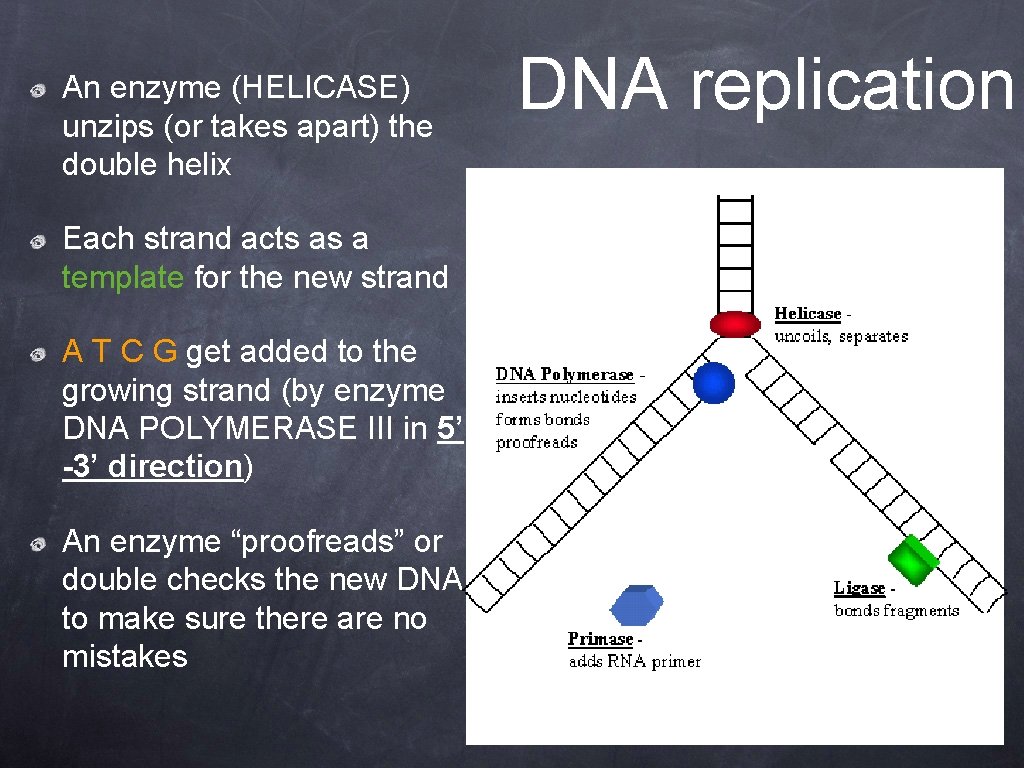
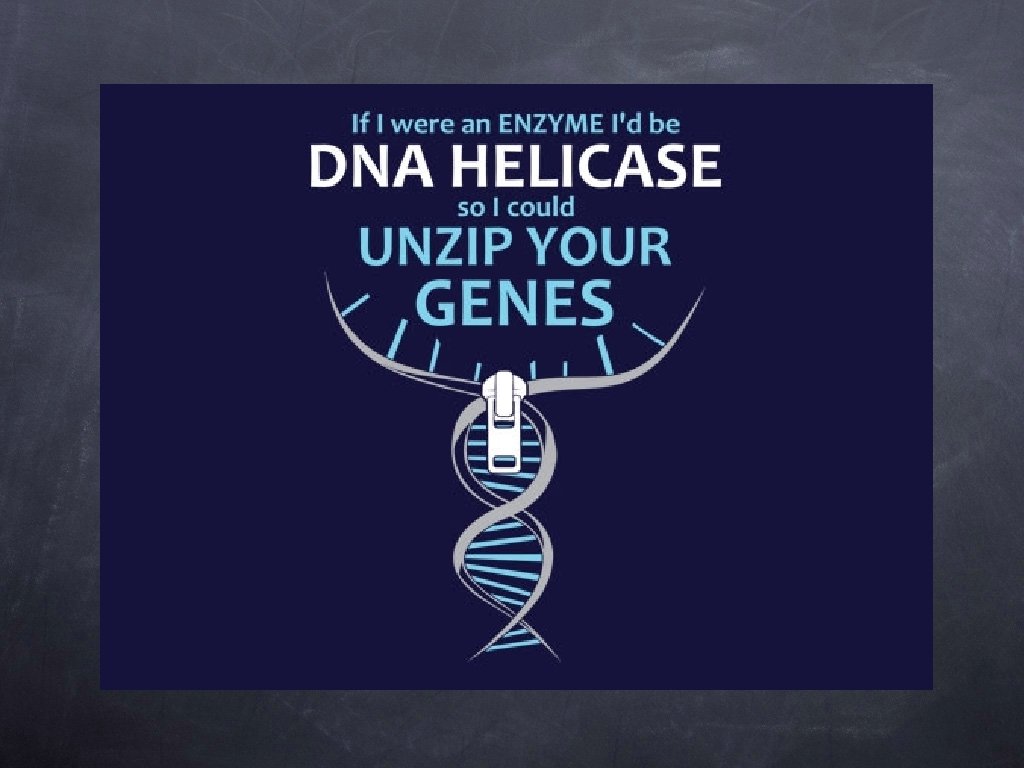
An enzyme (HELICASE) unzips (or takes apart) the double helix Each strand acts as a template for the new strand A T C G get added to the growing strand (by enzyme DNA POLYMERASE III in 5’ -3’ direction) An enzyme “proofreads” or double checks the new DNA to make sure there are no mistakes DNA replication
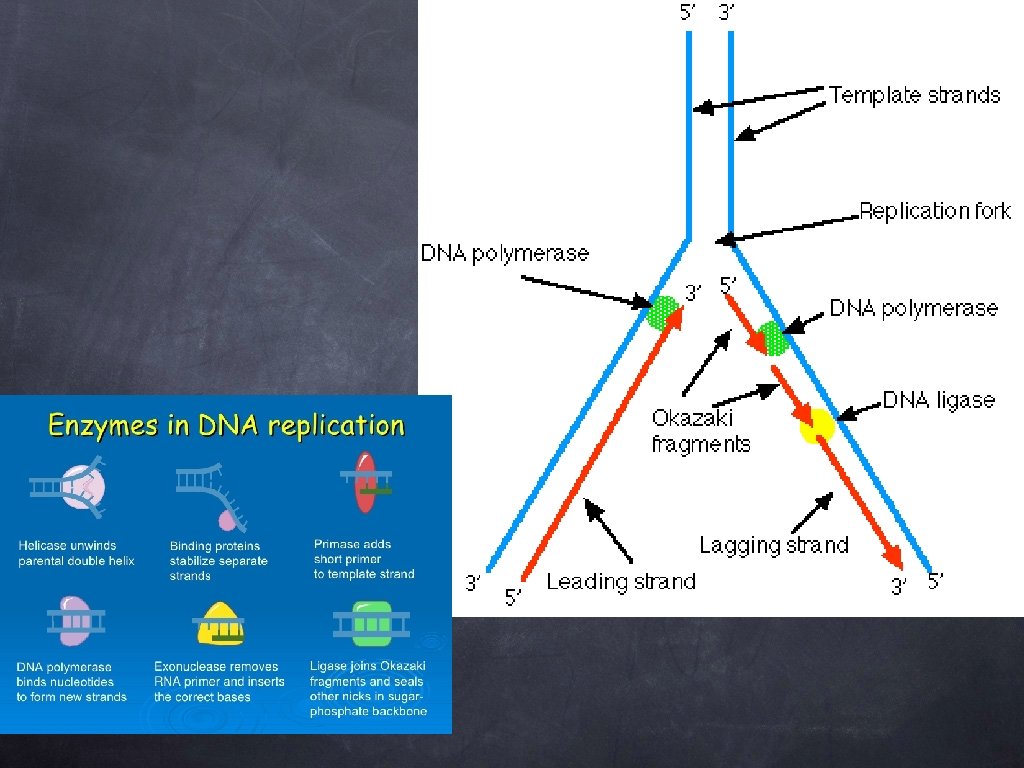
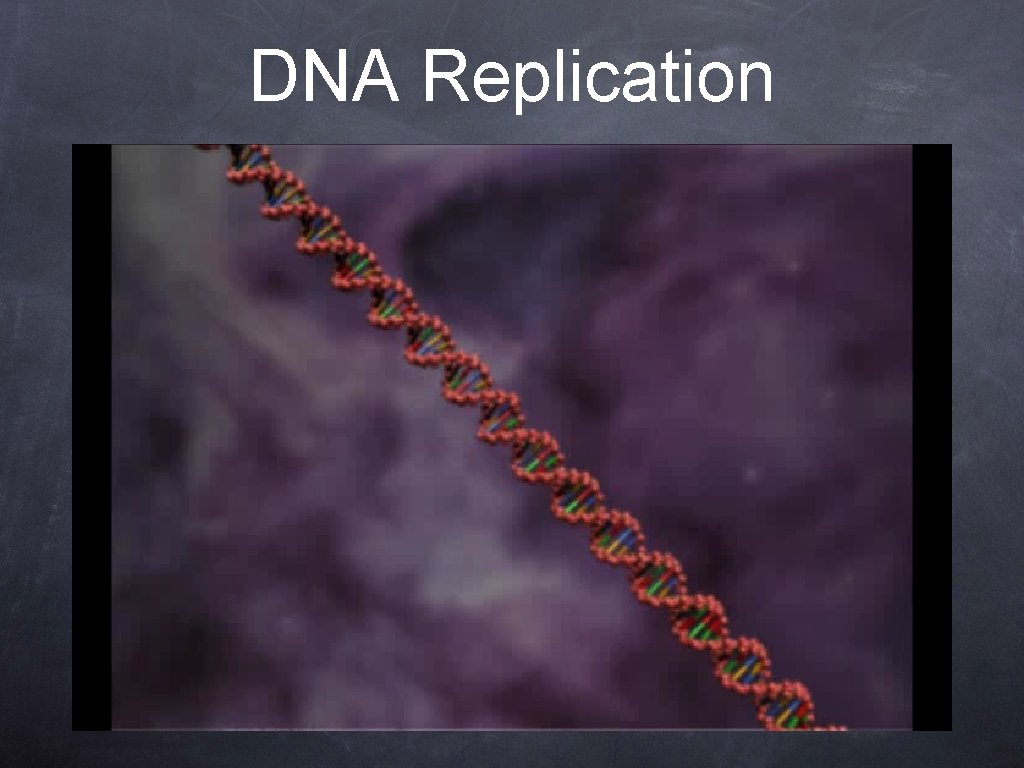
DNA Replication
DNA Replication Closure • DNA Replications occurs WHERE in the cell? • DNA Helicase is an enzyme that does what? • DNA Polymerase is an enzyme that does what? • Semi-conservative means……. . ? • What is an ENZYME?
Day 2 – Review Replication
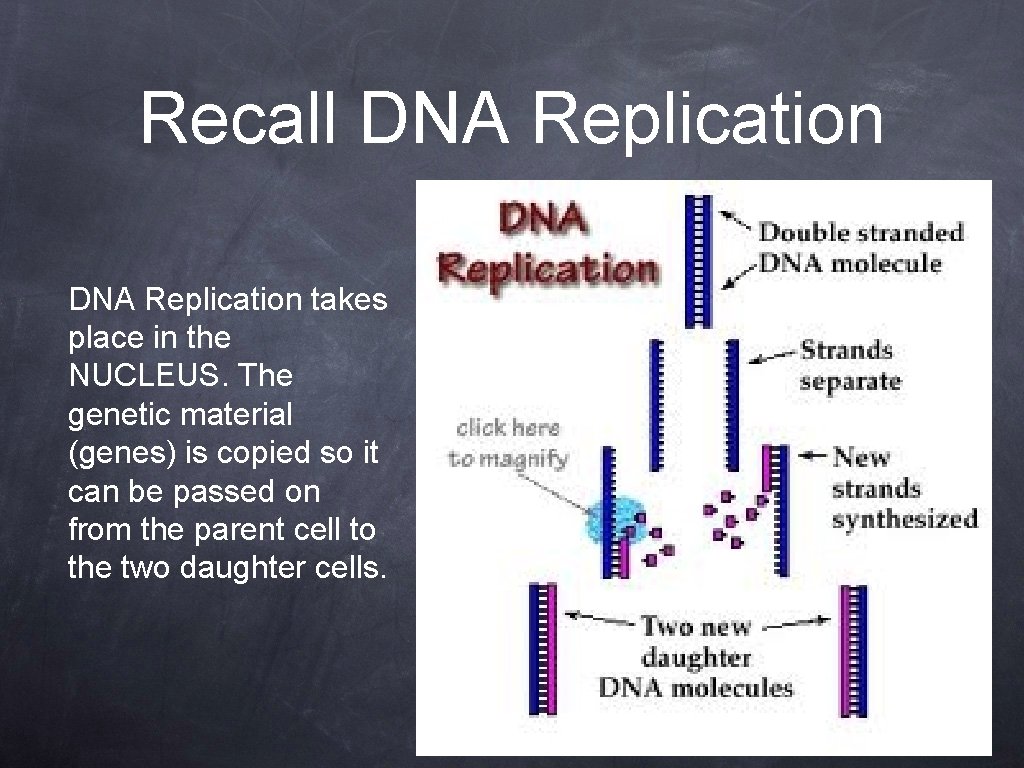
Recall DNA Replication takes place in the NUCLEUS. The genetic material (genes) is copied so it can be passed on from the parent cell to the two daughter cells.
Yesterday…. • With candy, you modeled DNA Replication • First you make the DNA structure with only FOUR nucleotides • Then the scissors acted as a DNA Helicase and “unzipped” the DNA double strand making them into TWO SINGLE strands. • Then YOU acted as a DNA Polymerase III and obtained the correct “free” floating nucleotides to create a SEMI-Conservative model in the 5’-3’ direction
Watch DNA replication http: //www. stolaf. edu/peop le/giannini/flashanimat/mol genetics/dna-rna 2. swf http: //www. hhmi. org/bioint eractive/media/DNAi_repli cation_vo 1 -lg. mov
Bellwork 11/17/15 • Finish the blood type punnett square THEN: How many nucleotides are in this sequence? How many codons are in this sequence? ATG-AAA-CGT Use the sentence below as a template. There is something wrong with the sentence – figure out what the mutation is and what the correct sentence sequence should be (call me over to check): (should be a normal sentence with 3 letters per word) Hef atc ats at
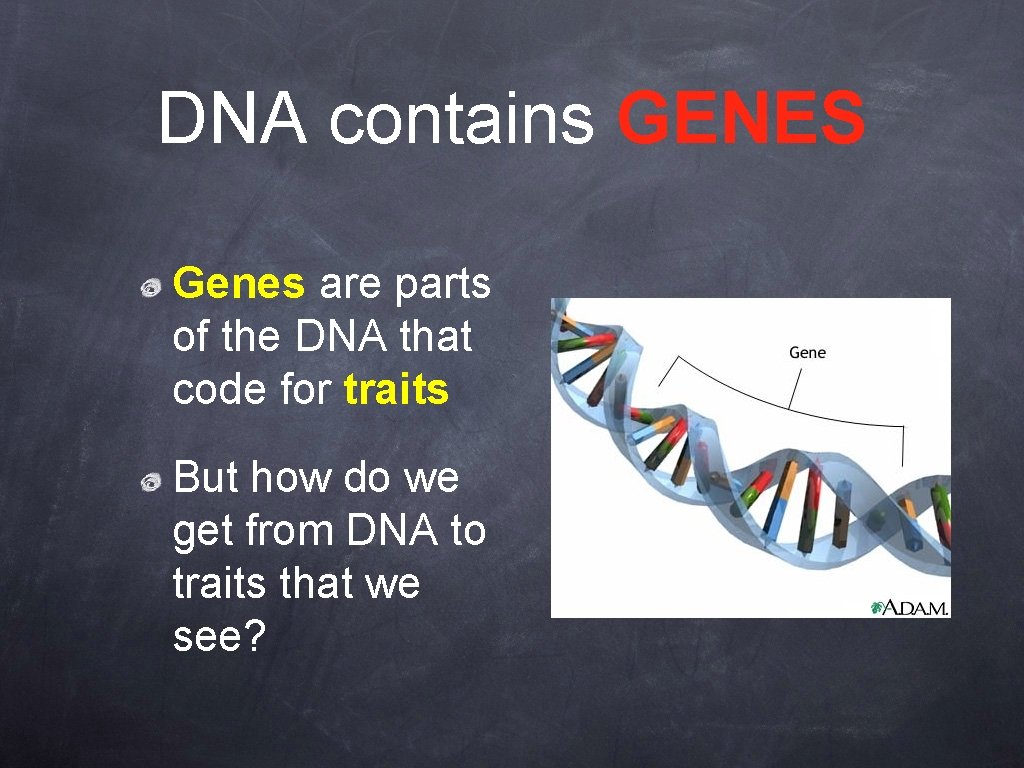
DNA contains GENES Genes are parts of the DNA that code for traits But how do we get from DNA to traits that we see?
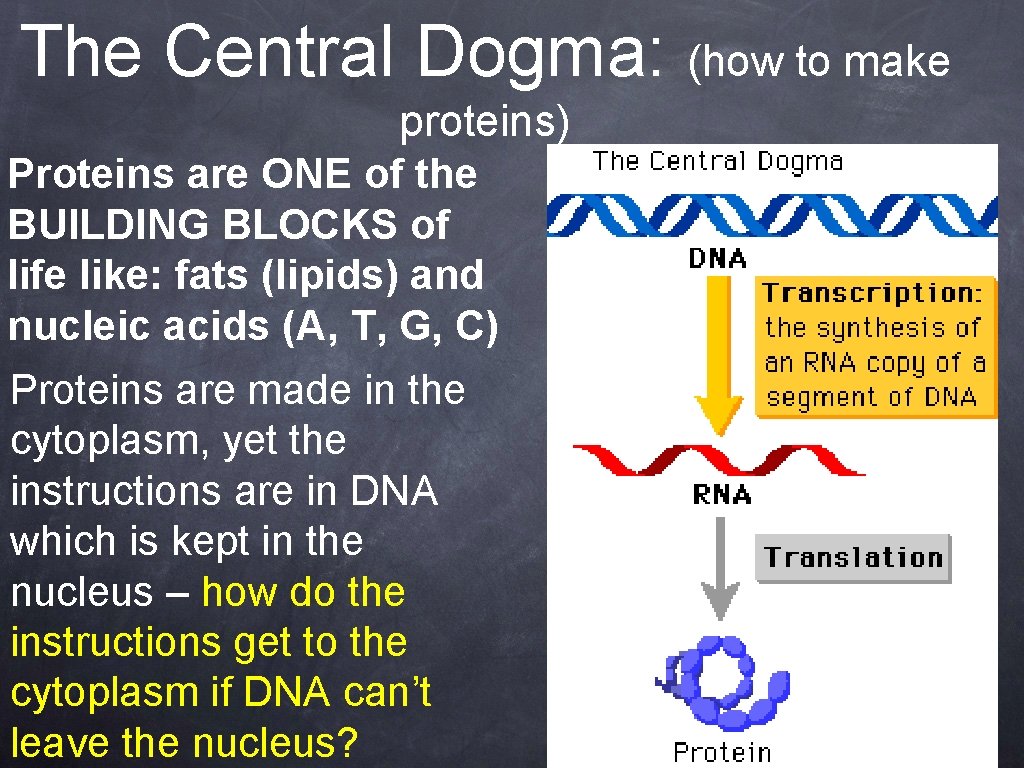
The Central Dogma: (how to make proteins) Proteins are ONE of the BUILDING BLOCKS of life like: fats (lipids) and nucleic acids (A, T, G, C) Proteins are made in the cytoplasm, yet the instructions are in DNA which is kept in the nucleus – how do the instructions get to the cytoplasm if DNA can’t leave the nucleus?
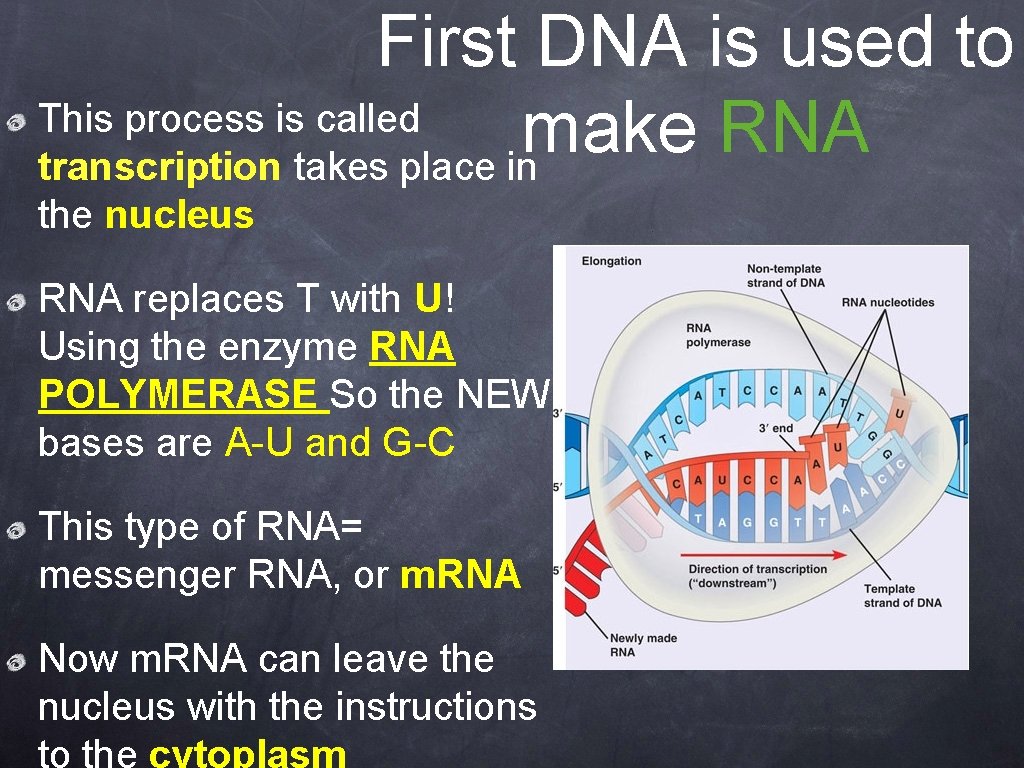
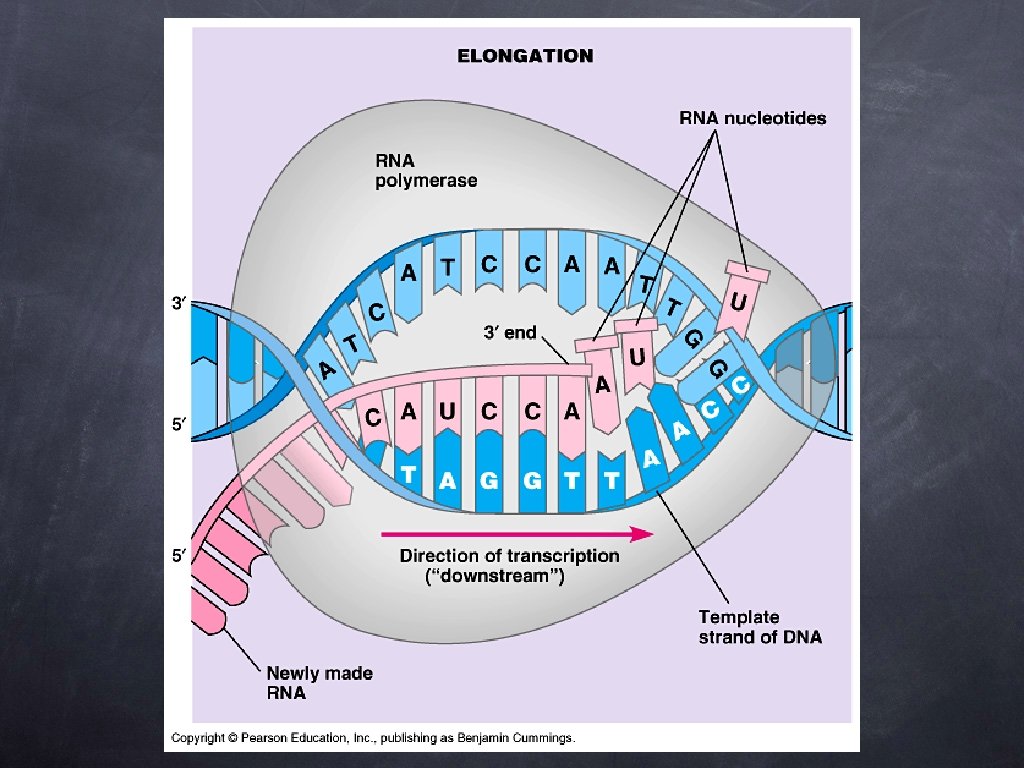
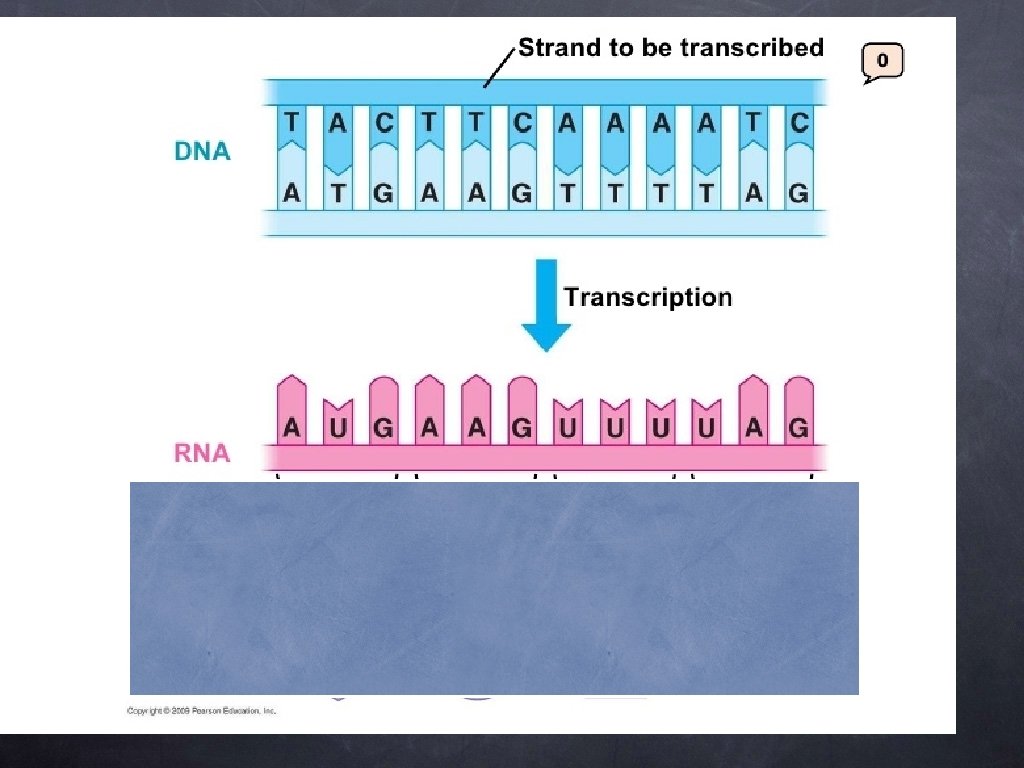
First DNA is used to This process is called make RNA transcription takes place in the nucleus RNA replaces T with U! Using the enzyme RNA POLYMERASE So the NEW bases are A-U and G-C This type of RNA= messenger RNA, or m. RNA Now m. RNA can leave the nucleus with the instructions to the cytoplasm
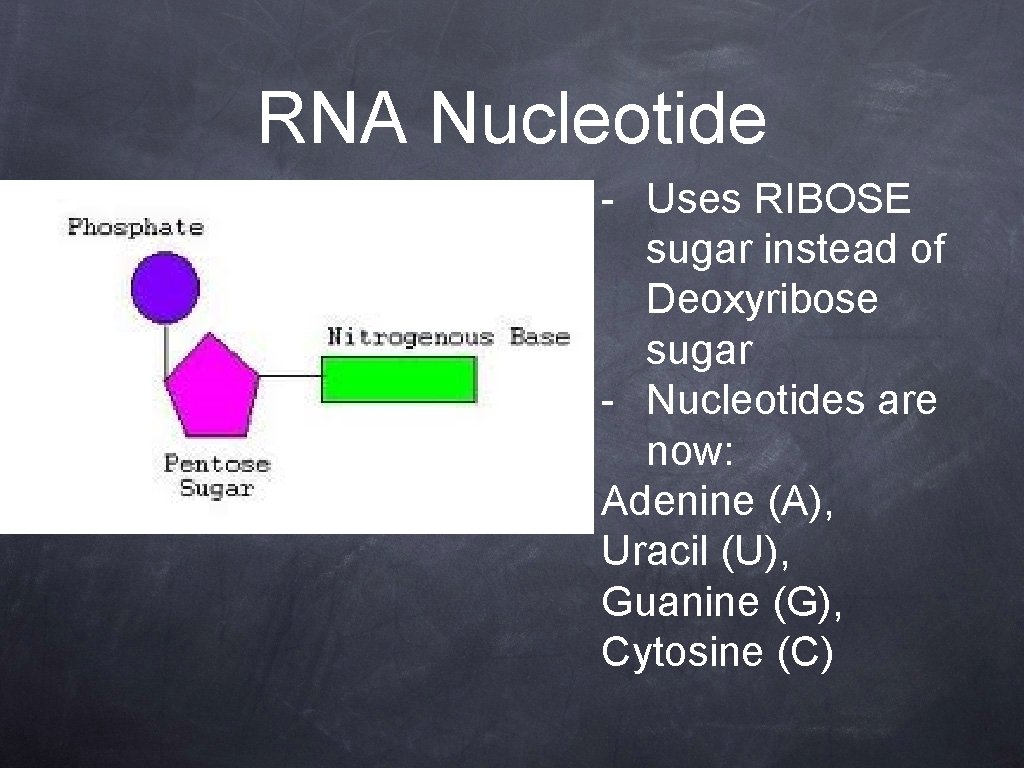
RNA Nucleotide - Uses RIBOSE sugar instead of Deoxyribose sugar - Nucleotides are now: Adenine (A), Uracil (U), Guanine (G), Cytosine (C)
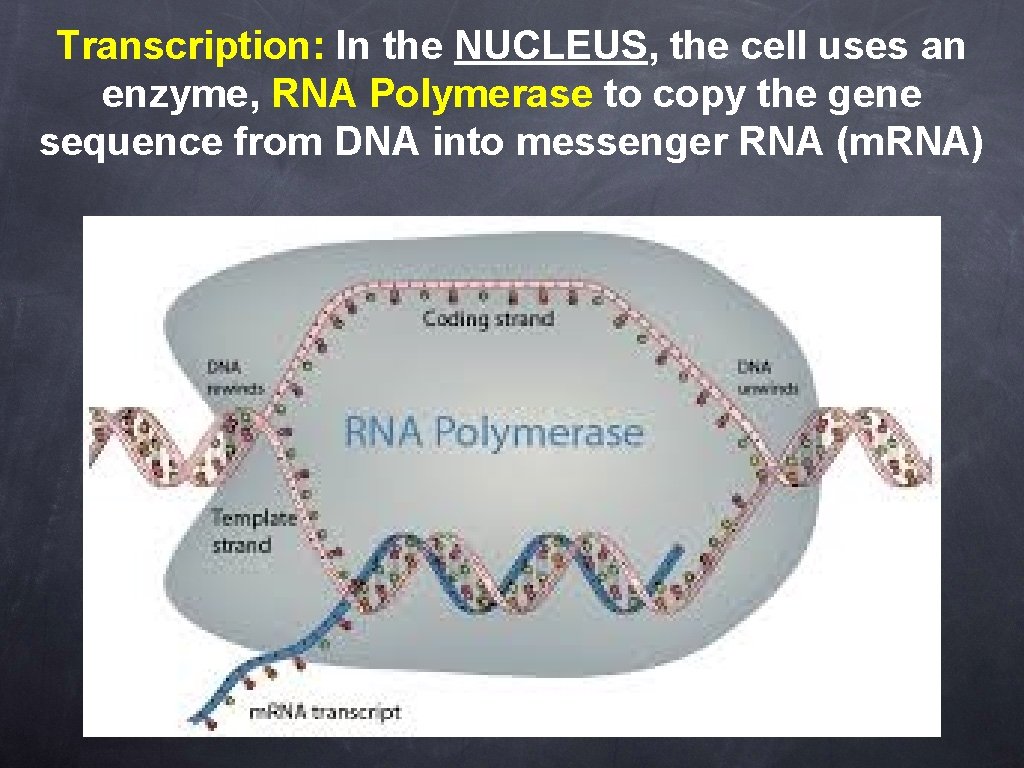
Transcription: In the NUCLEUS, the cell uses an enzyme, RNA Polymerase to copy the gene sequence from DNA into messenger RNA (m. RNA)
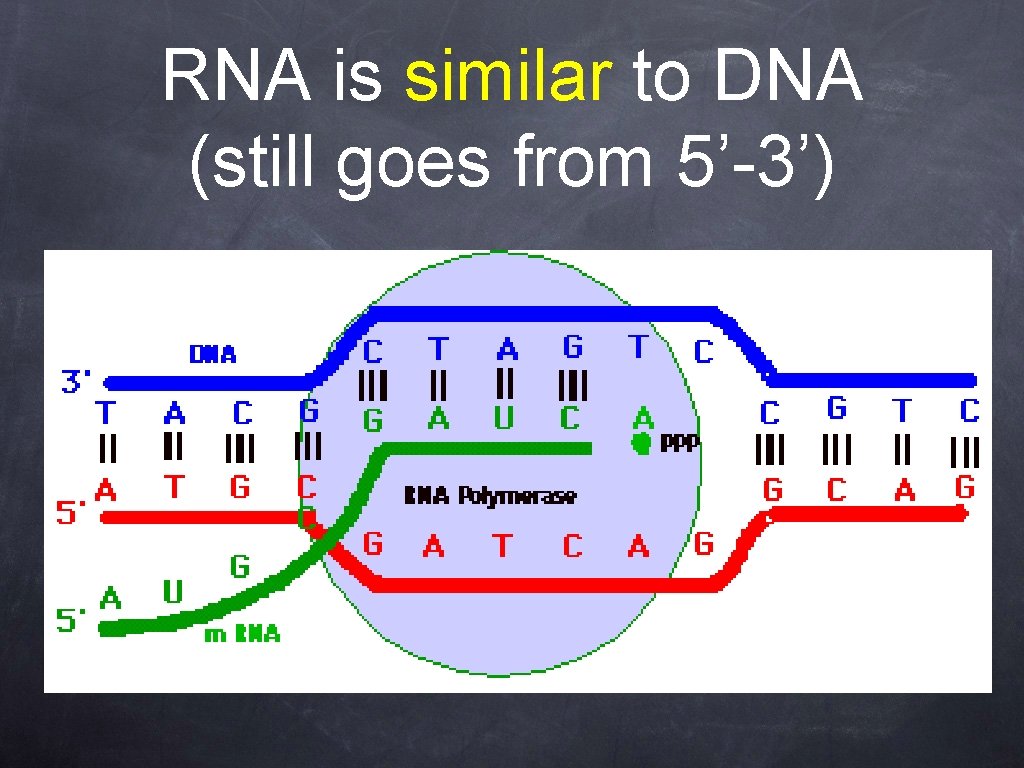
RNA is similar to DNA (still goes from 5’-3’)
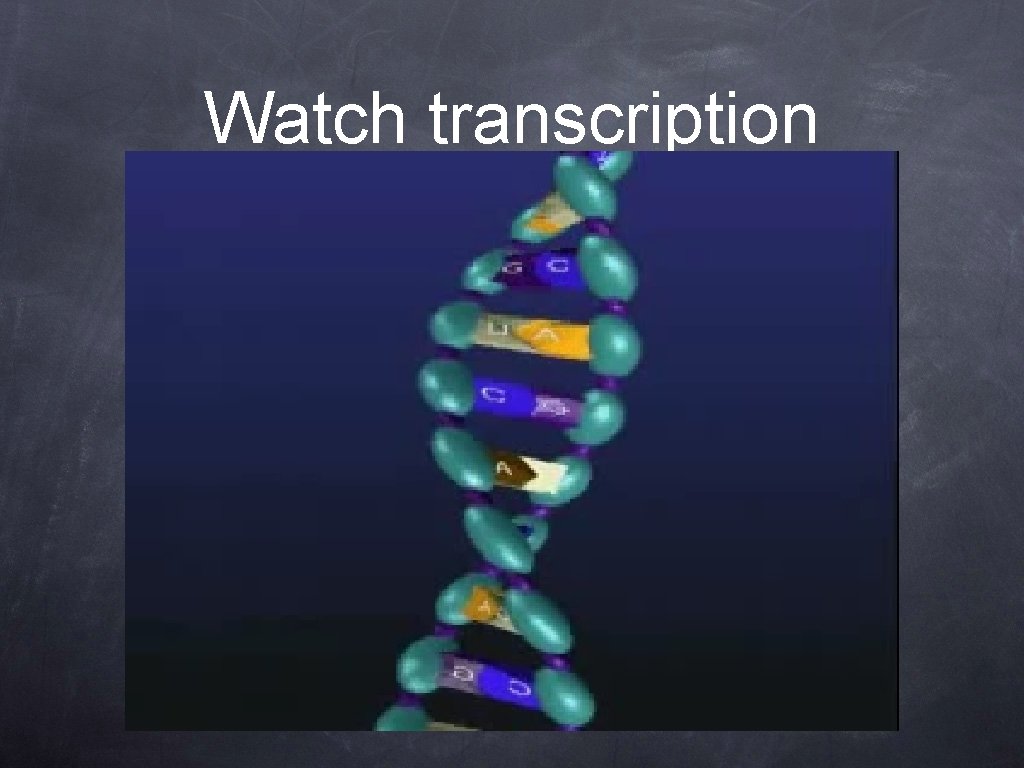
Watch transcription
Activity - make your own m. RNA from DNA • DNA Template strand will go: CAC-AGT-GT • Cut out DNA nucleotides and RNA nucleotides • Create two DNA template strands (8 nucleotides each) ONLY attach the backbone but DO NOT attach the bases in the middle. • Using one strand from DNA – create the RNA message.
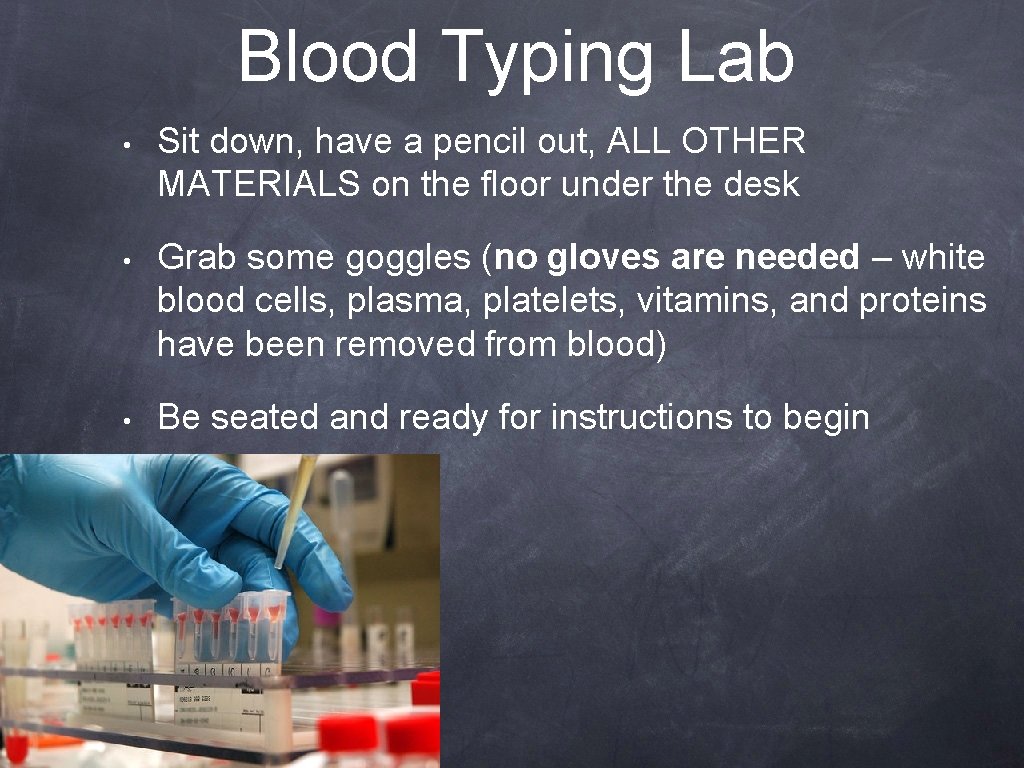
Blood Typing Lab • Sit down, have a pencil out, ALL OTHER MATERIALS on the floor under the desk • Grab some goggles (no gloves are needed – white blood cells, plasma, platelets, vitamins, and proteins have been removed from blood) • Be seated and ready for instructions to begin
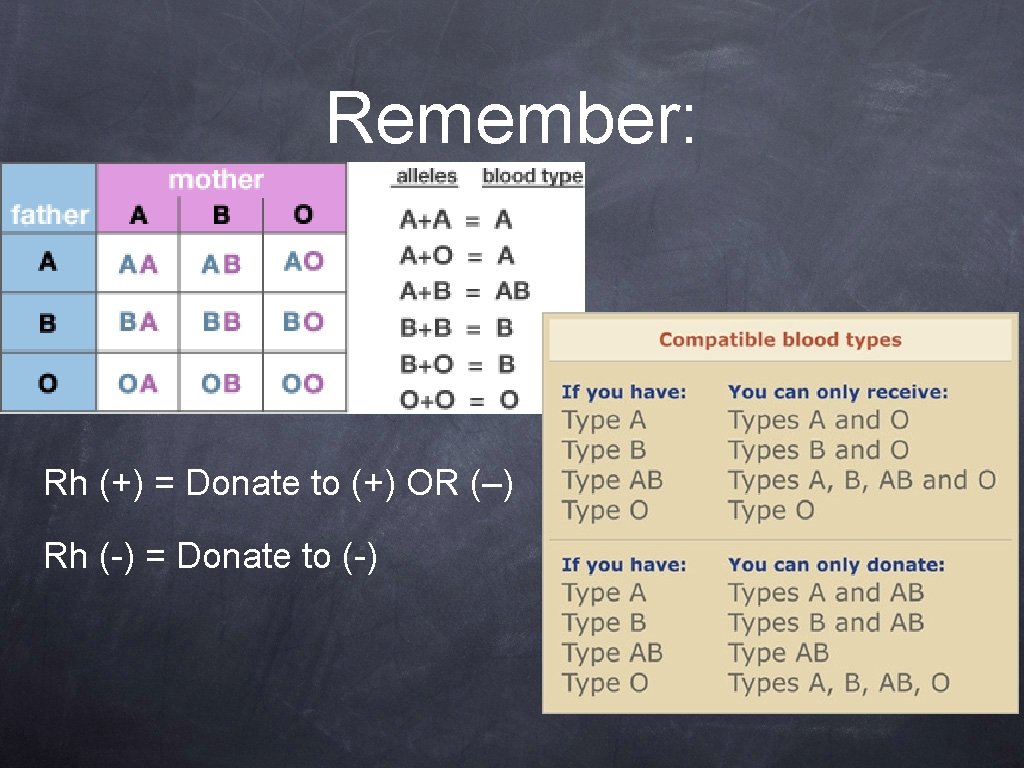
Remember: Rh (+) = Donate to (+) OR (–) Rh (-) = Donate to (-)
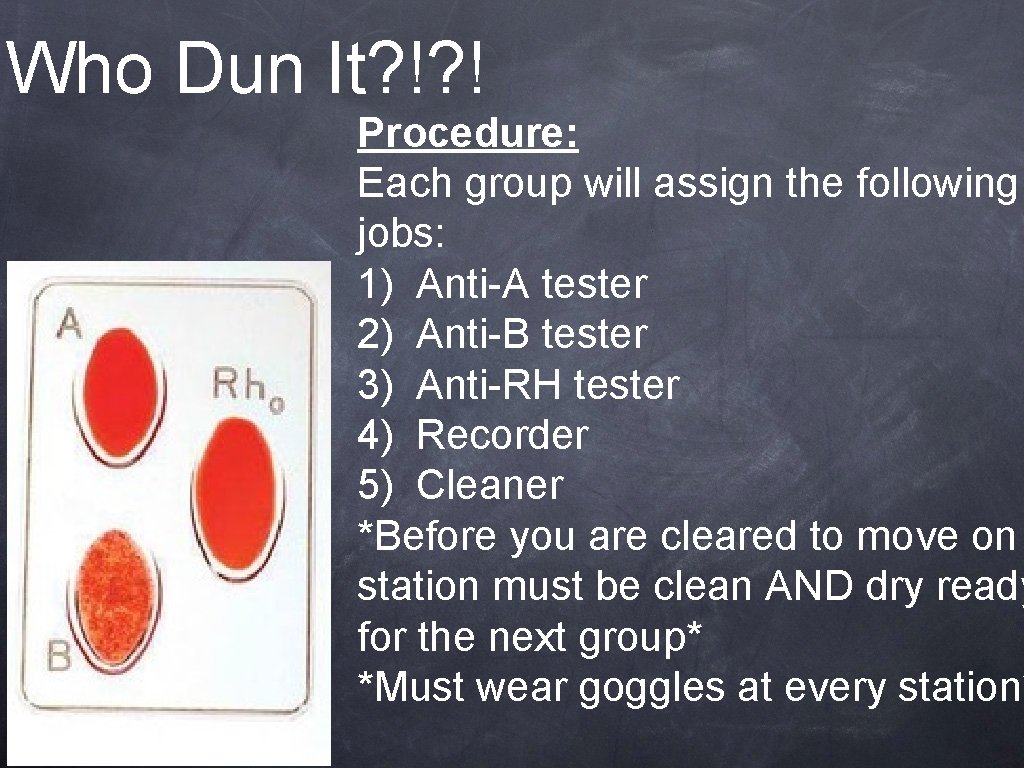
Who Dun It? !? ! Procedure: Each group will assign the following jobs: 1) Anti-A tester 2) Anti-B tester 3) Anti-RH tester 4) Recorder 5) Cleaner *Before you are cleared to move on station must be clean AND dry ready for the next group* *Must wear goggles at every station*
Biology announcements • Make sure to have all human impact challenge work (data, materials, etc) with you on Monday Nov 23 rd. We will be working on our report for the whole class period. • Test corrections are due Tuesday Nov 24 th. Make sure you list the correct answer and WHY that answer is correct (using scientific terms). • Blood typing EC due on Monday Nov 30 th (details on next slide). • Have out colored and cut out DNA & RNA nucleotides on desk.
DNA Blood Typing EC: Due Nov 30 • For 25 EC pts: Teach a member of your family about blood and how to blood type. Set up a blood typing lab and have them correctly determine 6 different types of blood. Write a 1 pg report on the chemistry behind your lab, what you taught your family member, and include their worksheet they worked on. Have a parent/guardian sign your work. • For 50 EC pts: Teach a member of your family about blood and how to blood type. Set up a crime scene/emergency situation and have them blood type to solve the crime. Write a 1 -2 pg report on the chemistry behind your lab, the crime scene being solved, the correct answers, and the worksheet your family member worked on. Have a parent/guardian sign your work.
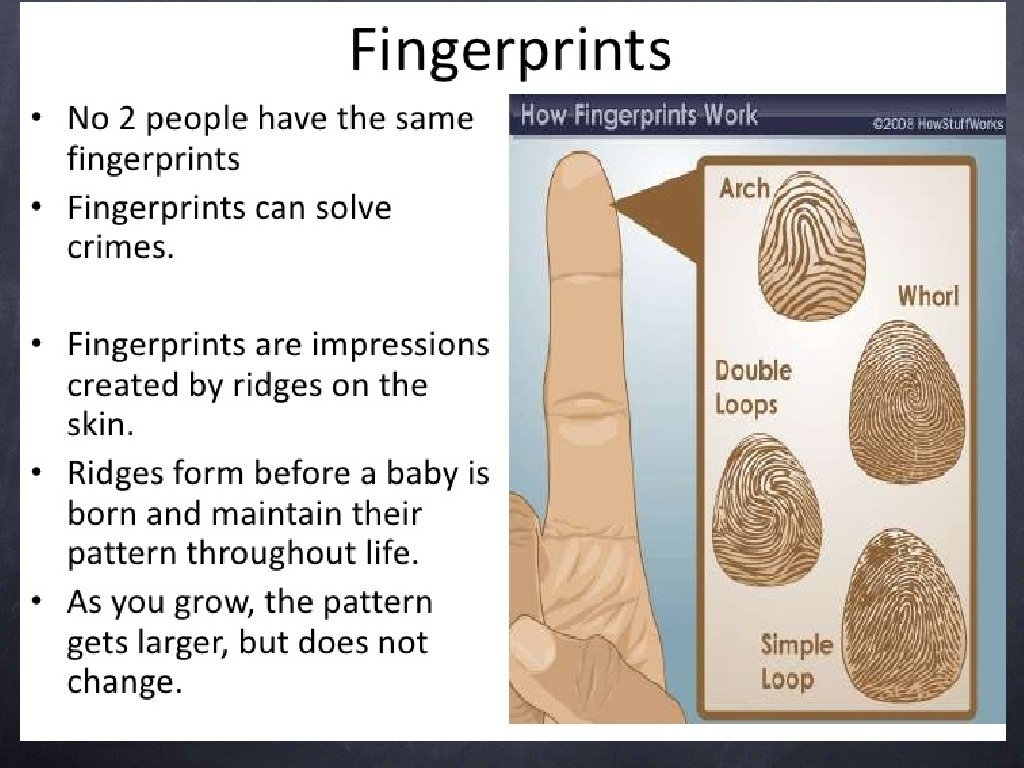
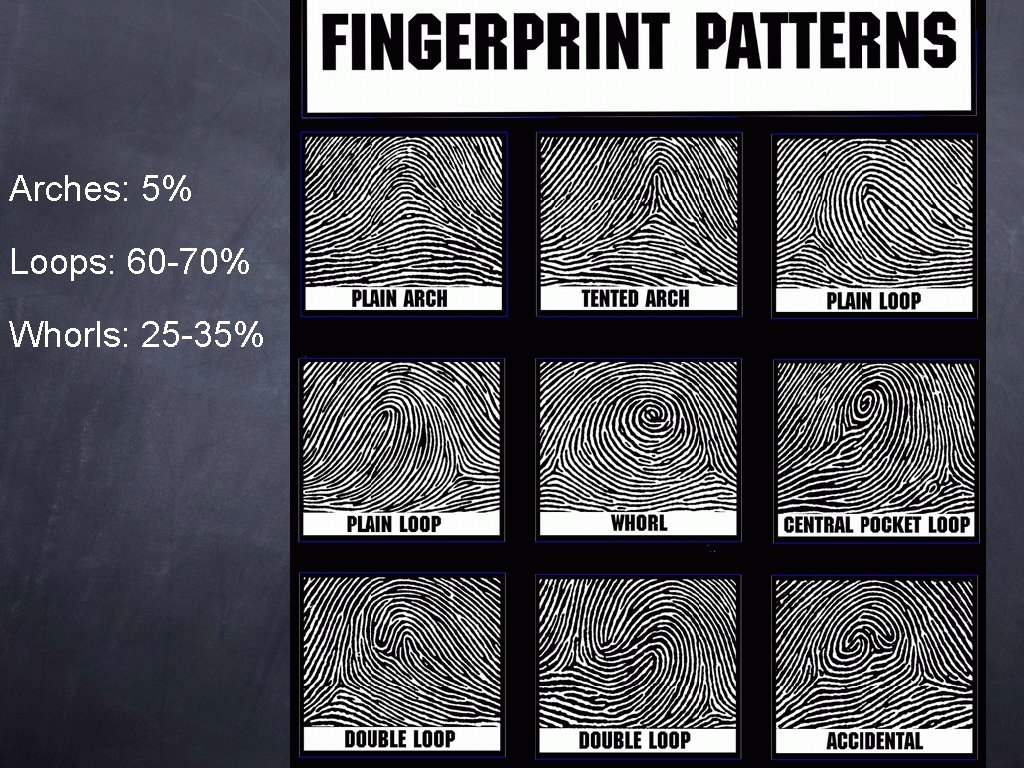
Arches: 5% Loops: 60 -70% Whorls: 25 -35%
After Bellwork • Have 1 chrome per table, log in and: Go to: Learn. genetics. utah. edu Click on Molecules of inheritance Transcribe and translate a gene • Leave the chrome on the website and move chrome out of the way (middle of the table), we will work on this site during class
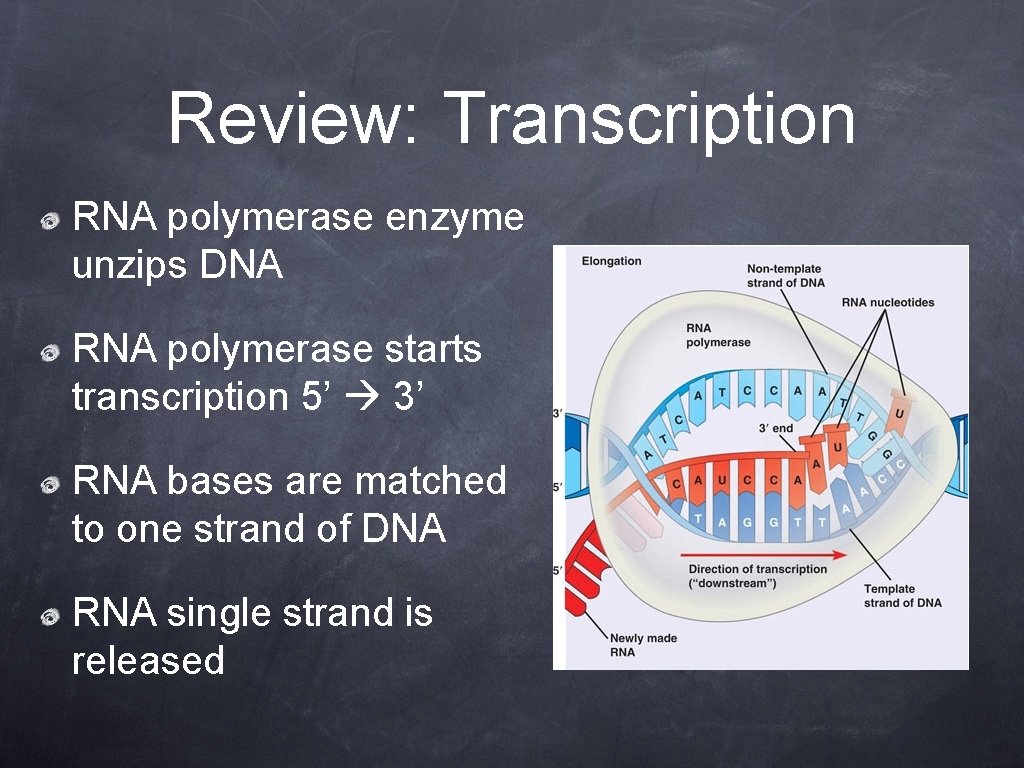
Review: Transcription RNA polymerase enzyme unzips DNA RNA polymerase starts transcription 5’ 3’ RNA bases are matched to one strand of DNA RNA single strand is released
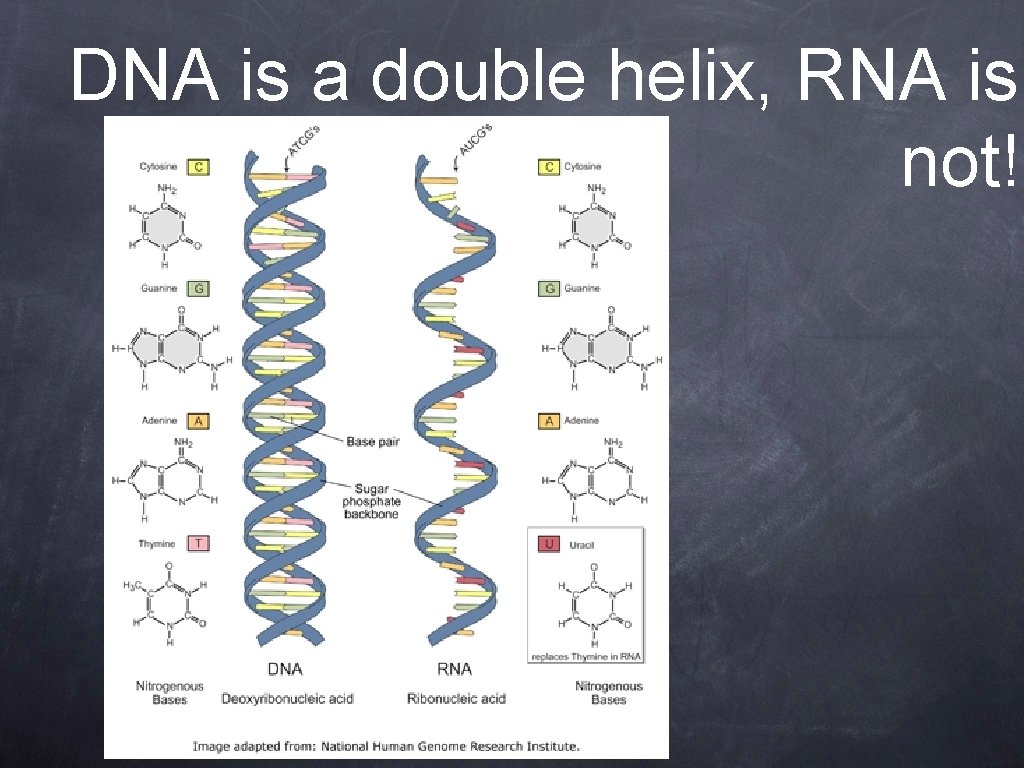
DNA is a double helix, RNA is not!
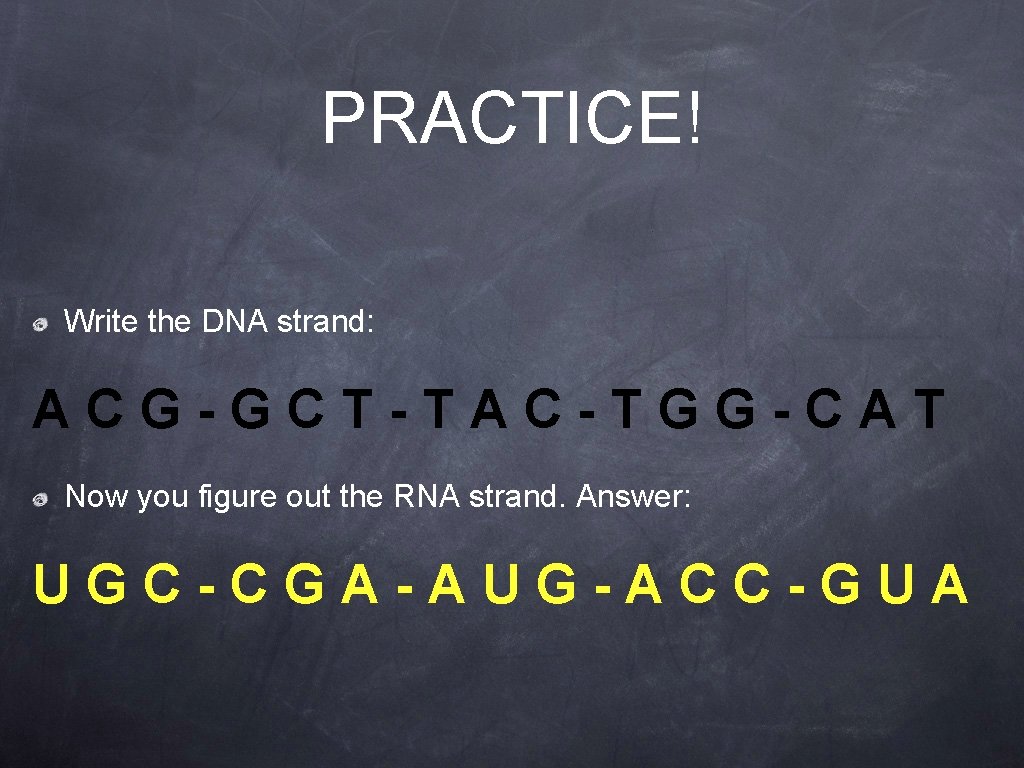
PRACTICE! Write the DNA strand: ACG-GCT-TAC-TGG-CAT Now you figure out the RNA strand. Answer: UGC-CGA-AUG-ACC-GUA
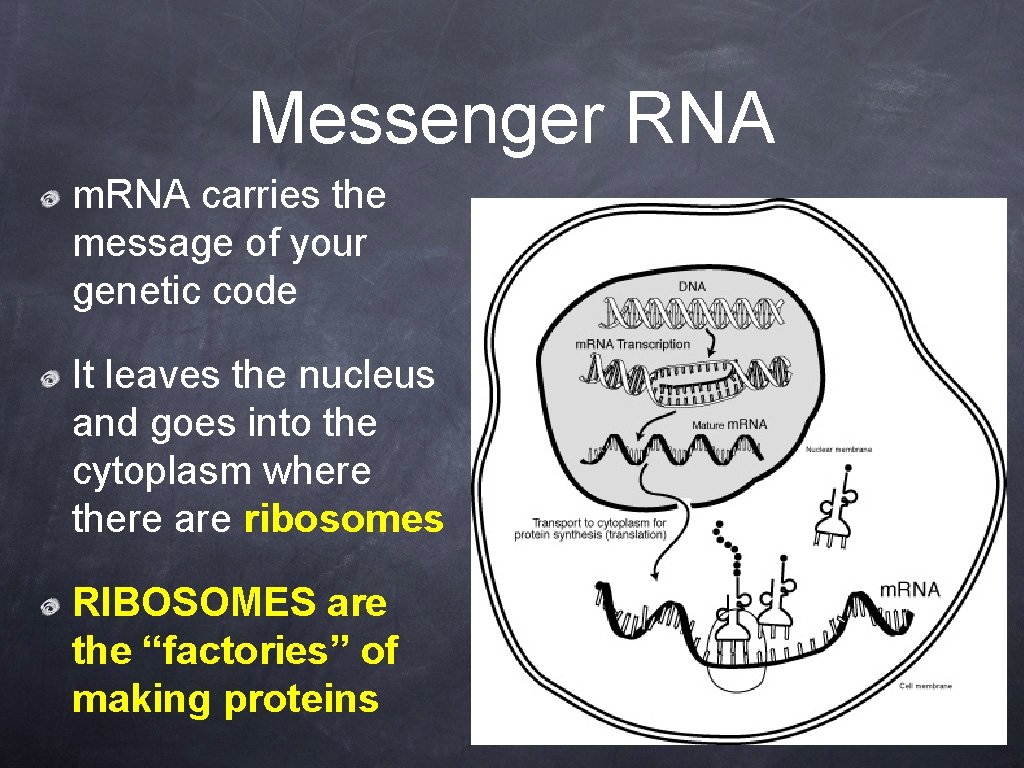
Messenger RNA m. RNA carries the message of your genetic code It leaves the nucleus and goes into the cytoplasm where there are ribosomes RIBOSOMES are the “factories” of making proteins
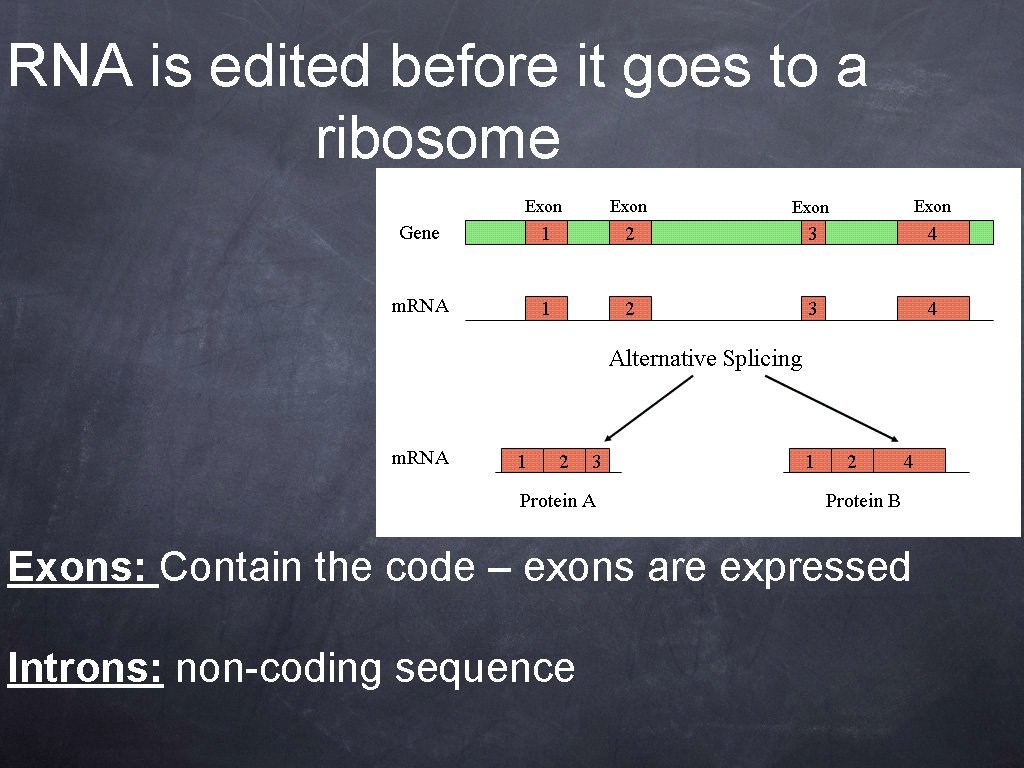
RNA is edited before it goes to a ribosome Exons: Contain the code – exons are expressed Introns: non-coding sequence
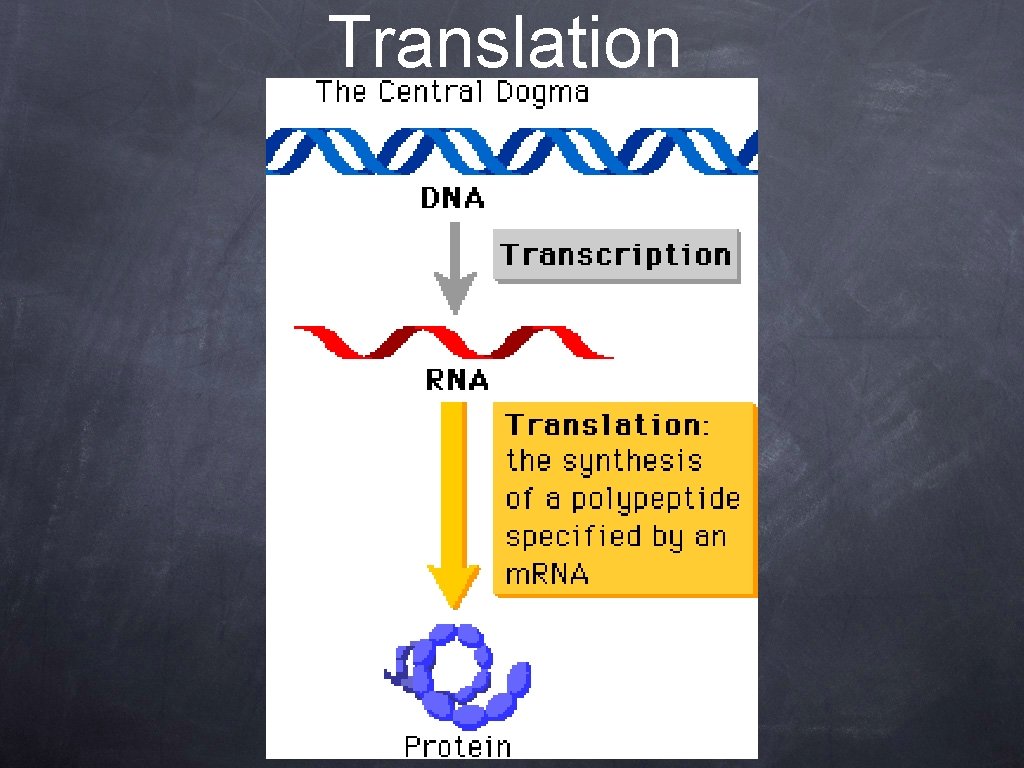
Translation
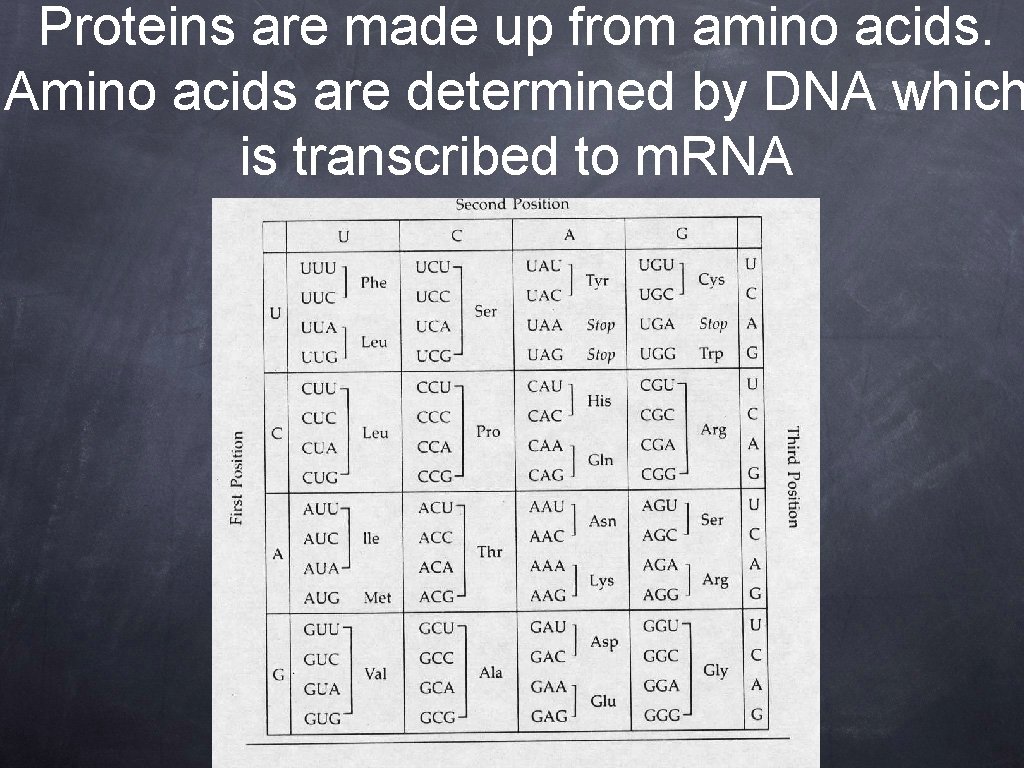
Proteins are made up from amino acids. Amino acids are determined by DNA which is transcribed to m. RNA
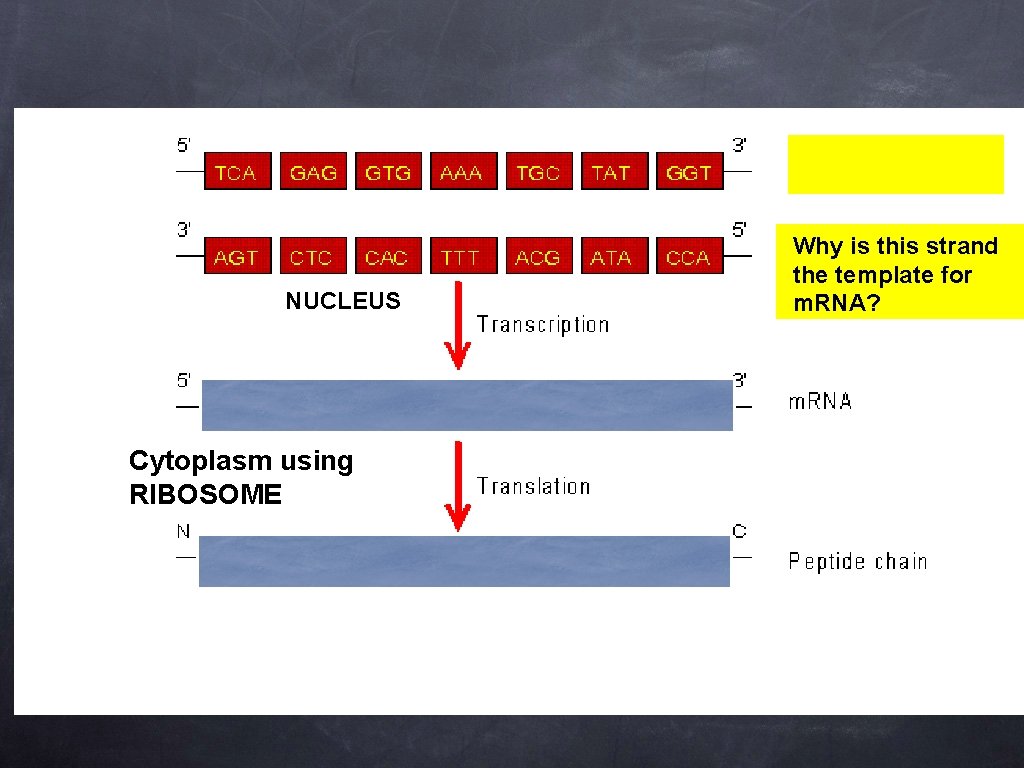
NUCLEUS Cytoplasm using RIBOSOME Why is this strand the template for m. RNA?
Transcribe and Translate a Gene Go to: Learn. genetics. utah. edu Click on Molecules of inheritance Transcribe and translate a gene Make sure to read the instructions & descriptions! *Each partner should practice at least once!*
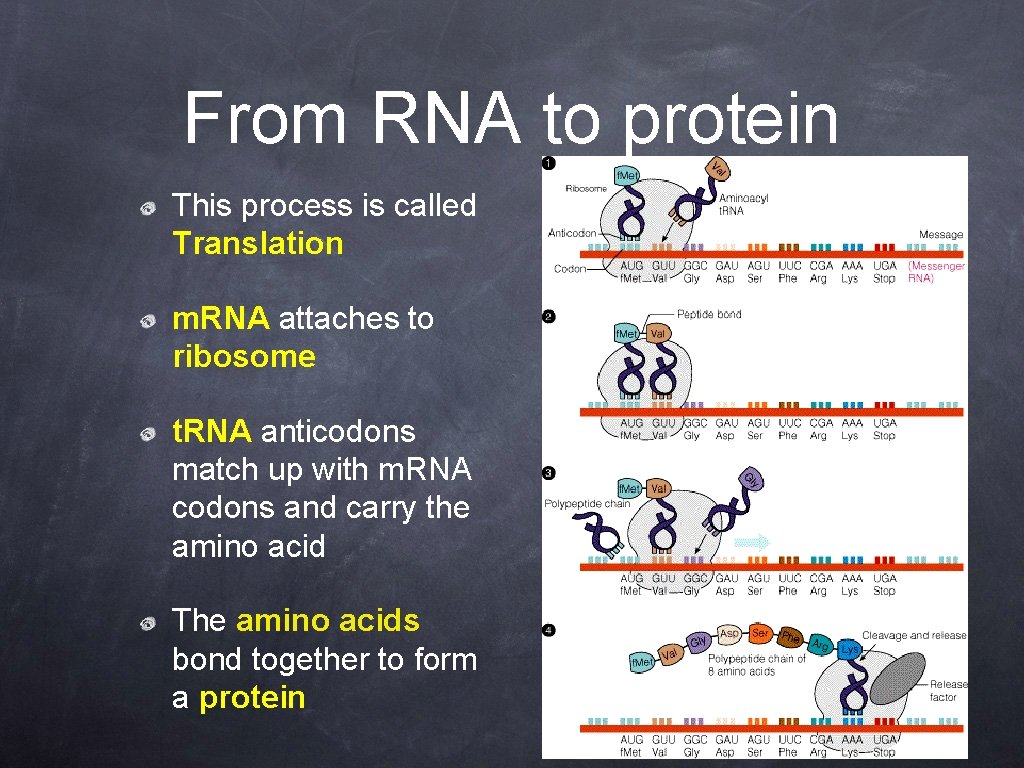
From RNA to protein This process is called Translation m. RNA attaches to ribosome t. RNA anticodons match up with m. RNA codons and carry the amino acid The amino acids bond together to form a protein
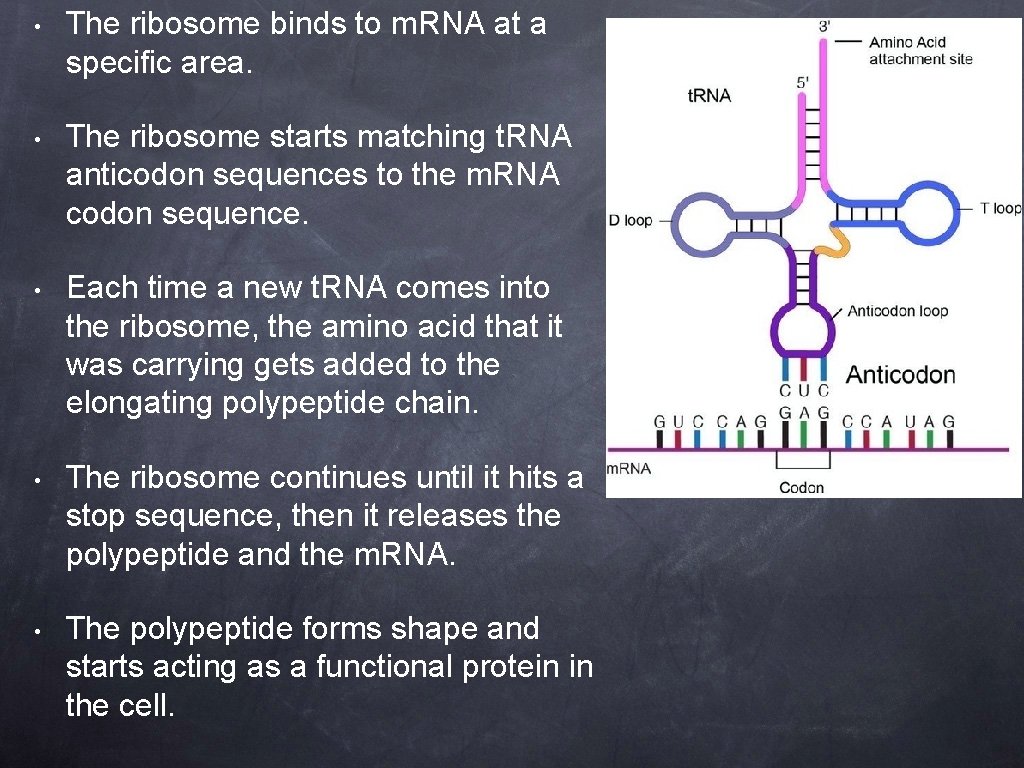
• The ribosome binds to m. RNA at a specific area. • The ribosome starts matching t. RNA anticodon sequences to the m. RNA codon sequence. • Each time a new t. RNA comes into the ribosome, the amino acid that it was carrying gets added to the elongating polypeptide chain. • The ribosome continues until it hits a stop sequence, then it releases the polypeptide and the m. RNA. • The polypeptide forms shape and starts acting as a functional protein in the cell.
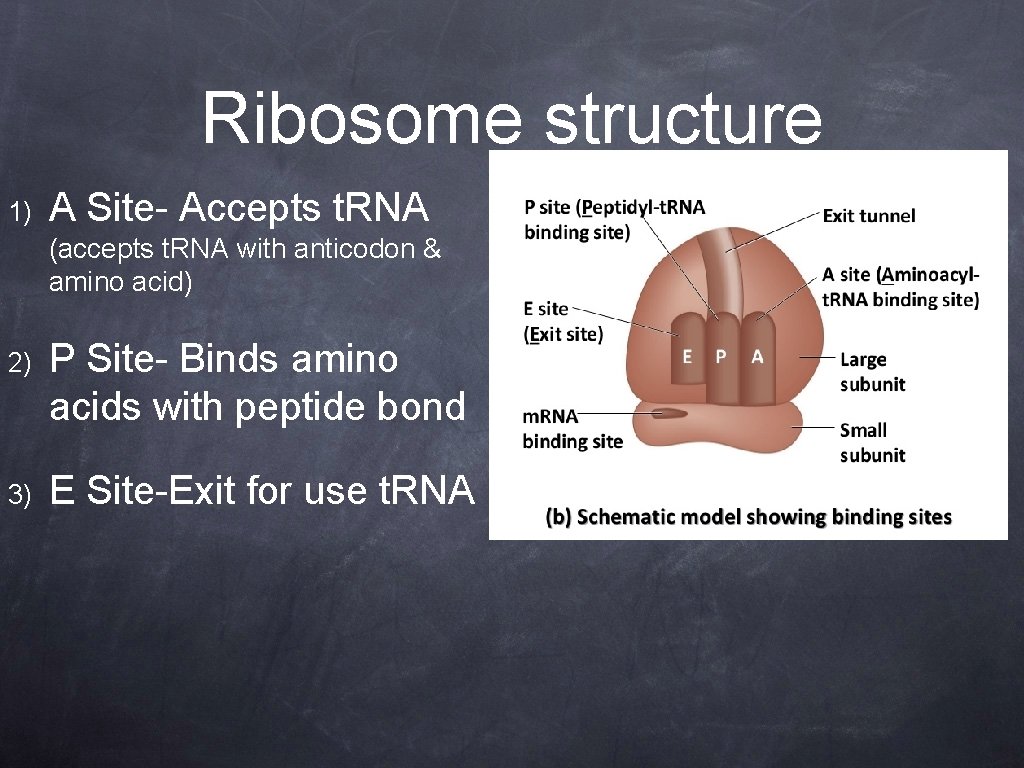
Ribosome structure 1) A Site- Accepts t. RNA (accepts t. RNA with anticodon & amino acid) 2) P Site- Binds amino acids with peptide bond 3) E Site-Exit for use t. RNA
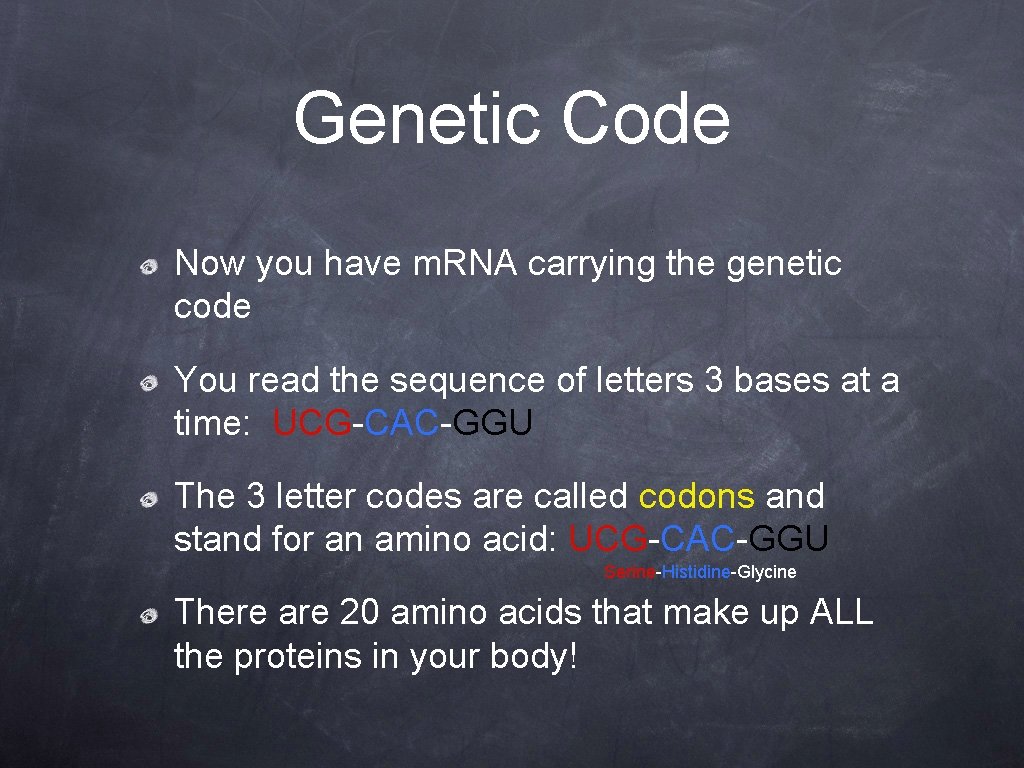
Genetic Code Now you have m. RNA carrying the genetic code You read the sequence of letters 3 bases at a time: UCG-CAC-GGU The 3 letter codes are called codons and stand for an amino acid: UCG-CAC-GGU Serine-Histidine-Glycine There are 20 amino acids that make up ALL the proteins in your body!
Watch translation. . TWICE! http: //www. stolaf. edu/people/giannini/flashanimat/molg enetics/translation. swf
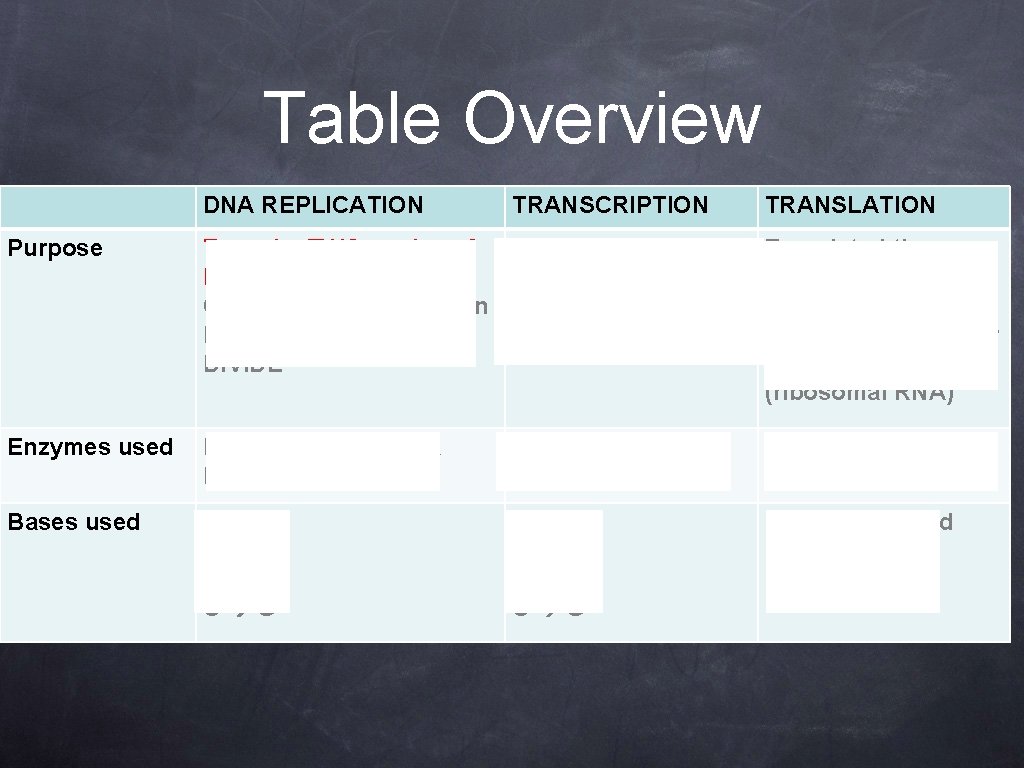
Table Overview DNA REPLICATION TRANSCRIPTION TRANSLATION Purpose To make TWO copies of DNA – Needed for the CELL CYCLE (S-phase in Interphase) for cells to DIVIDE Transcribes the DNA gene message to a m. RNA (messenger RNA) Translated the message from m. RNA into a protein using t. RNA (transfer RNA) and r. RNA (ribosomal RNA) Enzymes used DNA Helicase & DNA Polymerase RNA Polymerase NONE Bases used A T T A G C C G A U T A G C C G Uses amino acid chart
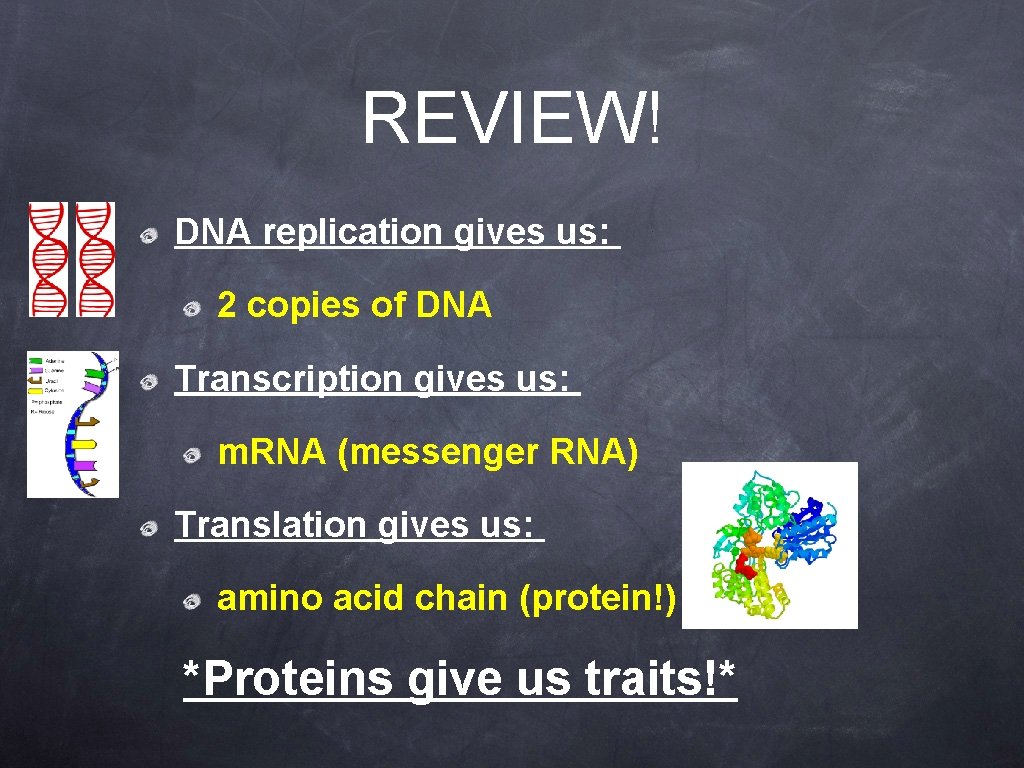
REVIEW! DNA replication gives us: 2 copies of DNA Transcription gives us: m. RNA (messenger RNA) Translation gives us: amino acid chain (protein!) *Proteins give us traits!*
- Slides: 55