
1 Chap 8 A Waiting Line Management Components

- Slides: 15
1 Chap 8 A. Waiting Line Management Components of the Queuing System Servicing System Servers Queue or Customer Arrivals Waiting Line Exit
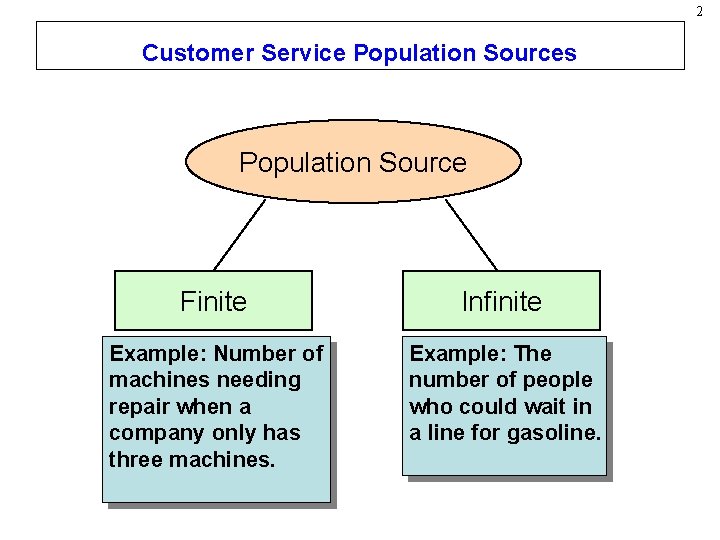
2 Customer Service Population Sources Population Source Finite Infinite Example: Number of machines needing repair when a company only has three machines. Example: The number of people who could wait in a line for gasoline.
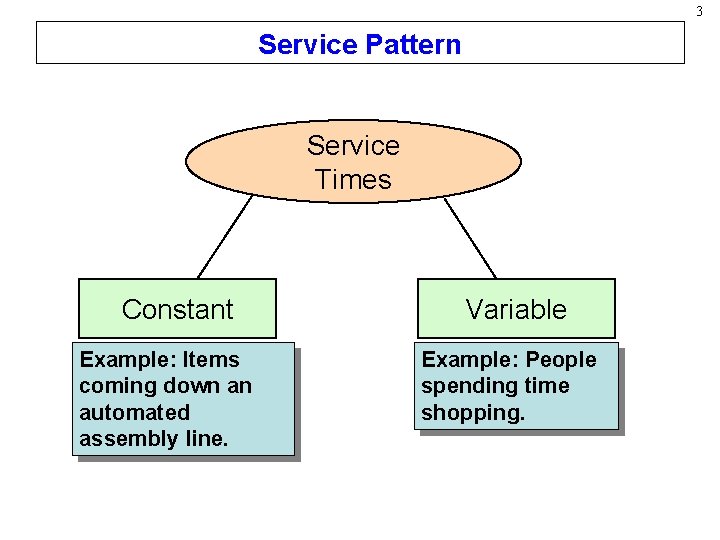
3 Service Pattern Service Times Constant Example: Items coming down an automated assembly line. Variable Example: People spending time shopping.
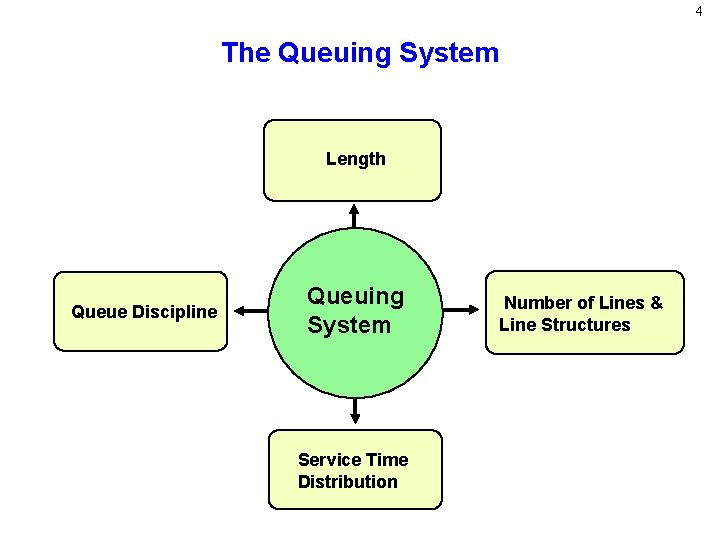
4 The Queuing System Length Queue Discipline Queuing System Service Time Distribution Number of Lines & Line Structures
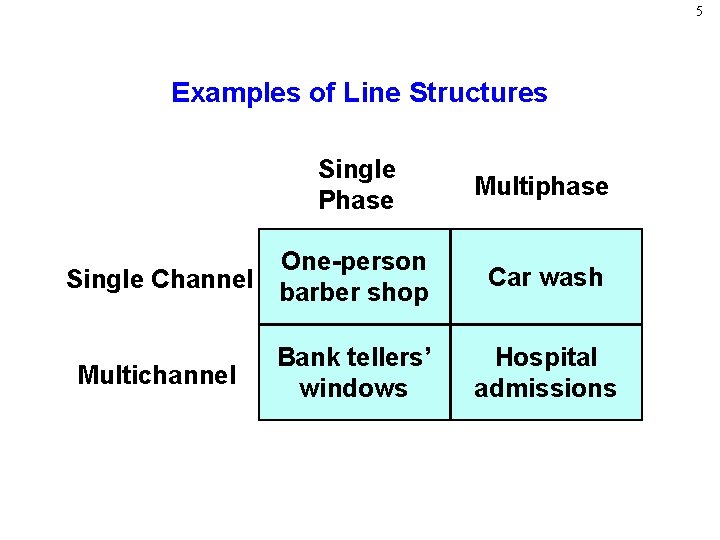
5 Examples of Line Structures Single Phase One-person Single Channel barber shop Multichannel Bank tellers’ windows Multiphase Car wash Hospital admissions
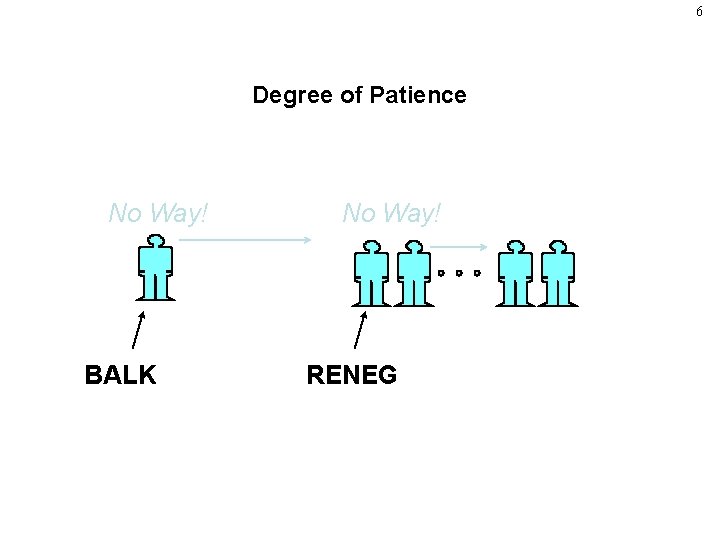
6 Degree of Patience No Way! BALK No Way! RENEG
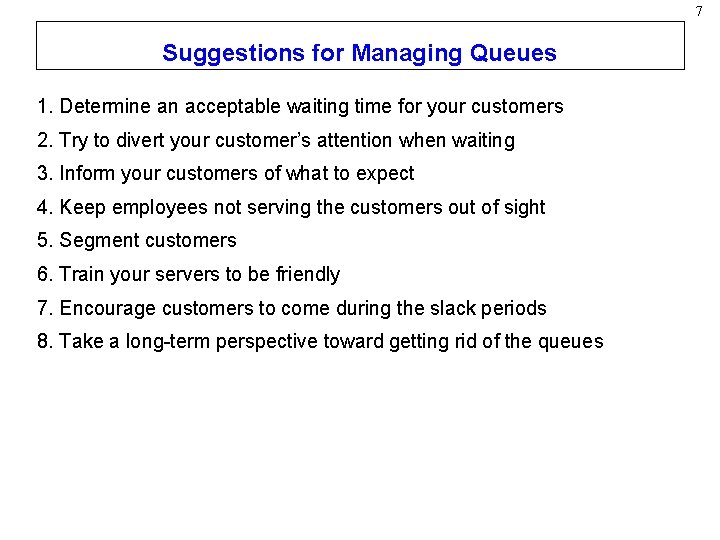
7 Suggestions for Managing Queues 1. Determine an acceptable waiting time for your customers 2. Try to divert your customer’s attention when waiting 3. Inform your customers of what to expect 4. Keep employees not serving the customers out of sight 5. Segment customers 6. Train your servers to be friendly 7. Encourage customers to come during the slack periods 8. Take a long-term perspective toward getting rid of the queues
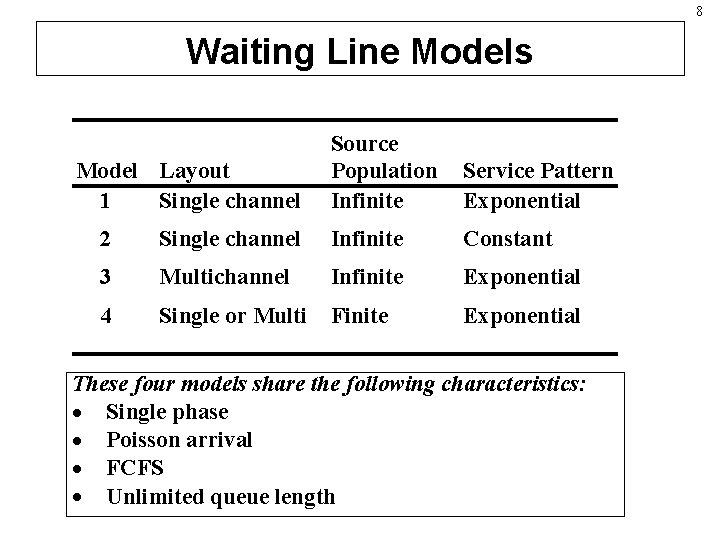
8 Waiting Line Models Model Layout 1 Single channel Source Population Infinite Service Pattern Exponential 2 Single channel Infinite Constant 3 Multichannel Infinite Exponential 4 Single or Multi Finite Exponential These four models share the following characteristics: · Single phase · Poisson arrival · FCFS · Unlimited queue length
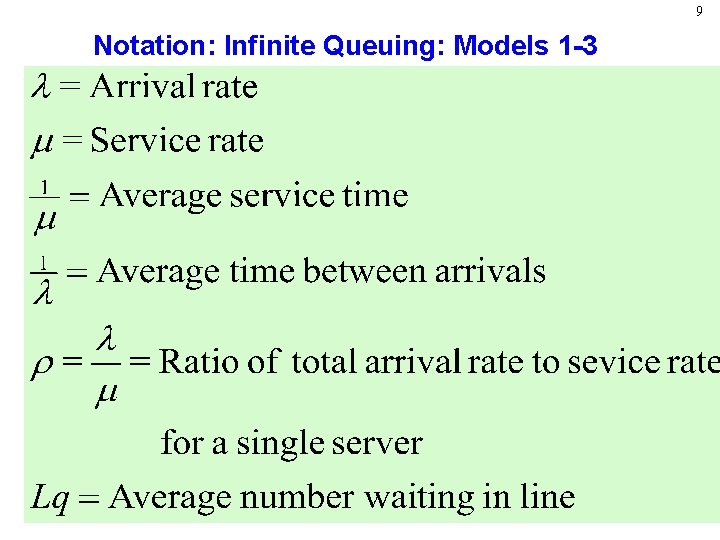
9 Notation: Infinite Queuing: Models 1 -3
Infinite Queuing Models 1 -3 (Continued) 10
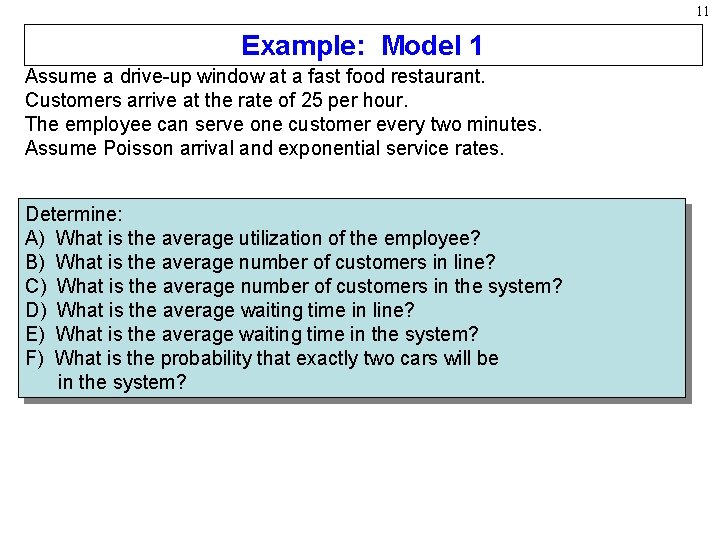
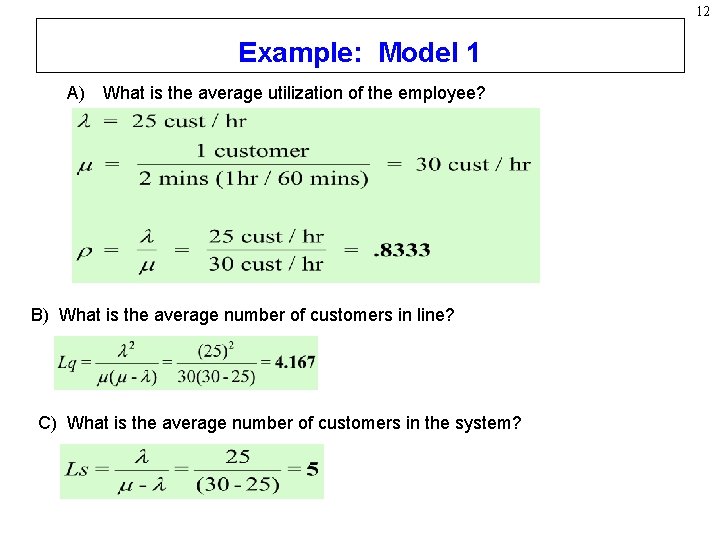
11 Example: Model 1 Assume a drive-up window at a fast food restaurant. Customers arrive at the rate of 25 per hour. The employee can serve one customer every two minutes. Assume Poisson arrival and exponential service rates. Determine: A) What is the average utilization of the employee? B) What is the average number of customers in line? C) What is the average number of customers in the system? D) What is the average waiting time in line? E) What is the average waiting time in the system? F) What is the probability that exactly two cars will be in the system?
12 Example: Model 1 A) What is the average utilization of the employee? B) What is the average number of customers in line? C) What is the average number of customers in the system?
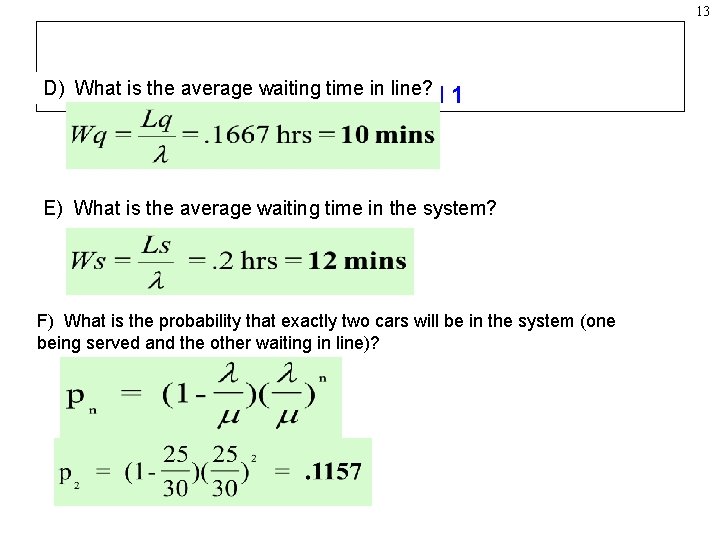
13 D) What is the average Example: waiting time in. Model line? 1 E) What is the average waiting time in the system? F) What is the probability that exactly two cars will be in the system (one being served and the other waiting in line)?
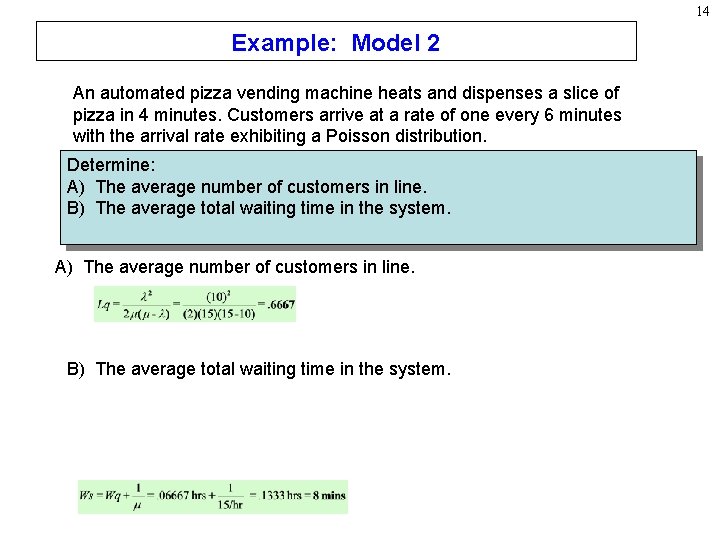
14 Example: Model 2 An automated pizza vending machine heats and dispenses a slice of pizza in 4 minutes. Customers arrive at a rate of one every 6 minutes with the arrival rate exhibiting a Poisson distribution. Determine: A) The average number of customers in line. B) The average total waiting time in the system. A) The average number of customers in line. B) The average total waiting time in the system.
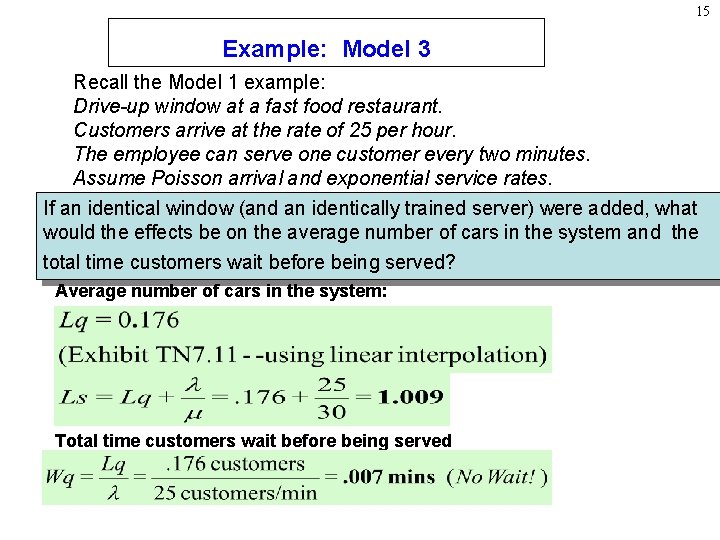
15 Example: Model 3 Recall the Model 1 example: Drive-up window at a fast food restaurant. Customers arrive at the rate of 25 per hour. The employee can serve one customer every two minutes. Assume Poisson arrival and exponential service rates. If an identical window (and an identically trained server) were added, what would the effects be on the average number of cars in the system and the total time customers wait before being served? Average number of cars in the system: Total time customers wait before being served