
1 Changes in income distribution Economic Classes Income

1
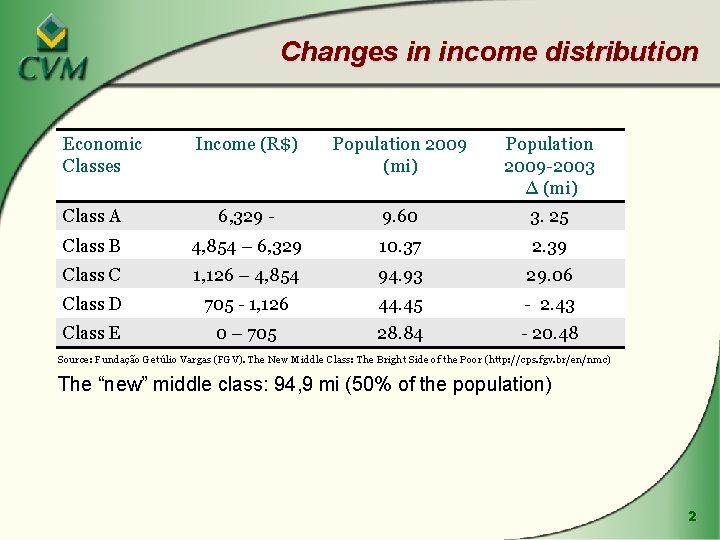
Changes in income distribution Economic Classes Income (R$) Population 2009 (mi) Population 2009 -2003 ∆ (mi) Class A 6, 329 - 9. 60 3. 25 Class B 4, 854 – 6, 329 10. 37 2. 39 Class C 1, 126 – 4, 854 94. 93 29. 06 Class D 705 - 1, 126 44. 45 - 2. 43 Class E 0 – 705 28. 84 - 20. 48 Source: Fundação Getúlio Vargas (FGV). The New Middle Class: The Bright Side of the Poor (http: //cps. fgv. br/en/nmc) The “new” middle class: 94, 9 mi (50% of the population) 2
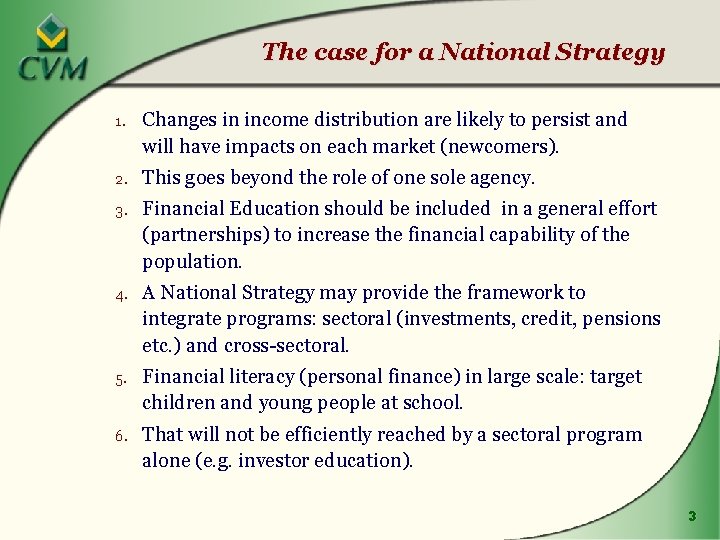
The case for a National Strategy 1. Changes in income distribution are likely to persist and will have impacts on each market (newcomers). 2. This goes beyond the role of one sole agency. 3. Financial Education should be included in a general effort (partnerships) to increase the financial capability of the population. 4. A National Strategy may provide the framework to integrate programs: sectoral (investments, credit, pensions etc. ) and cross-sectoral. 5. Financial literacy (personal finance) in large scale: target children and young people at school. 6. That will not be efficiently reached by a sectoral program alone (e. g. investor education). 3
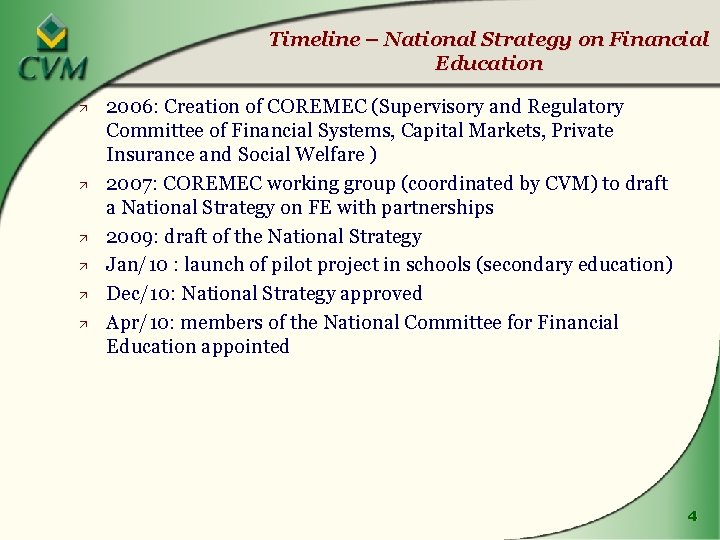
Timeline – National Strategy on Financial Education ä ä ä 2006: Creation of COREMEC (Supervisory and Regulatory Committee of Financial Systems, Capital Markets, Private Insurance and Social Welfare ) 2007: COREMEC working group (coordinated by CVM) to draft a National Strategy on FE with partnerships 2009: draft of the National Strategy Jan/10 : launch of pilot project in schools (secondary education) Dec/10: National Strategy approved Apr/10: members of the National Committee for Financial Education appointed 4
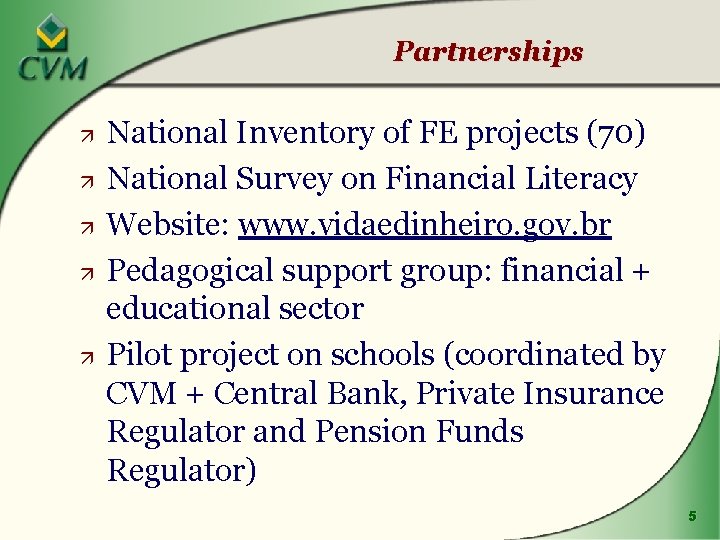
Partnerships ä ä ä National Inventory of FE projects (70) National Survey on Financial Literacy Website: www. vidaedinheiro. gov. br Pedagogical support group: financial + educational sector Pilot project on schools (coordinated by CVM + Central Bank, Private Insurance Regulator and Pension Funds Regulator) 5
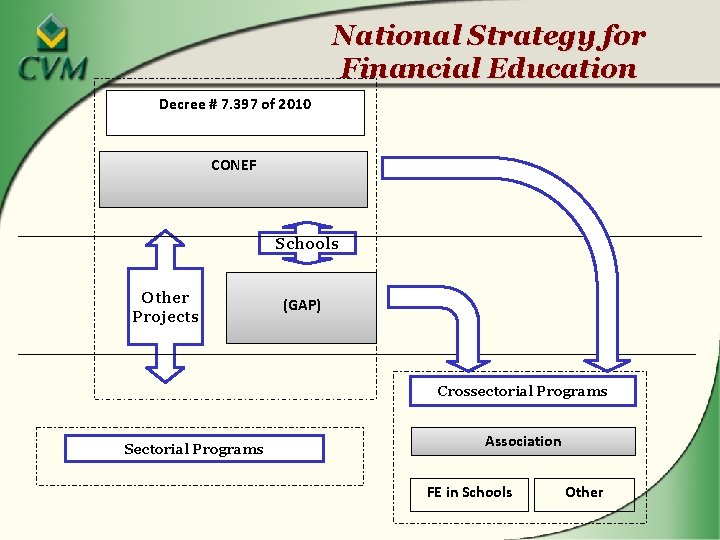
National Strategy for Financial Education Decree # 7. 397 of 2010 6 CONEF Schools Other Projects (GAP) Crossectorial Programs Sectorial Programs Association FE in Schools Other
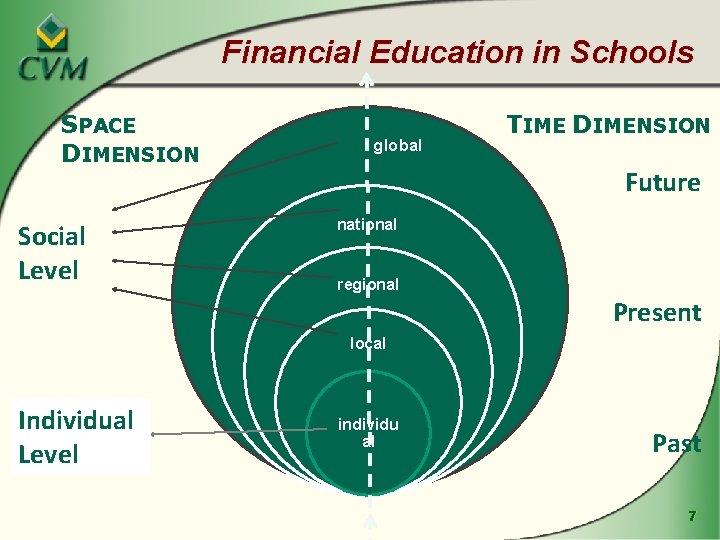
Financial Education in Schools SPACE DIMENSION Social Level global TIME DIMENSION Future national regional Present local Individual Level individu al Past 7
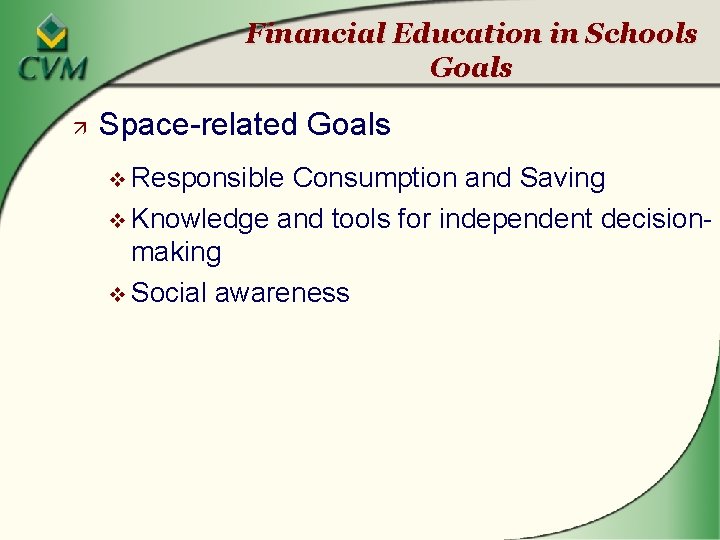
Financial Education in Schools Goals ä Space-related Goals v Responsible Consumption and Saving v Knowledge and tools for independent decisionmaking v Social awareness
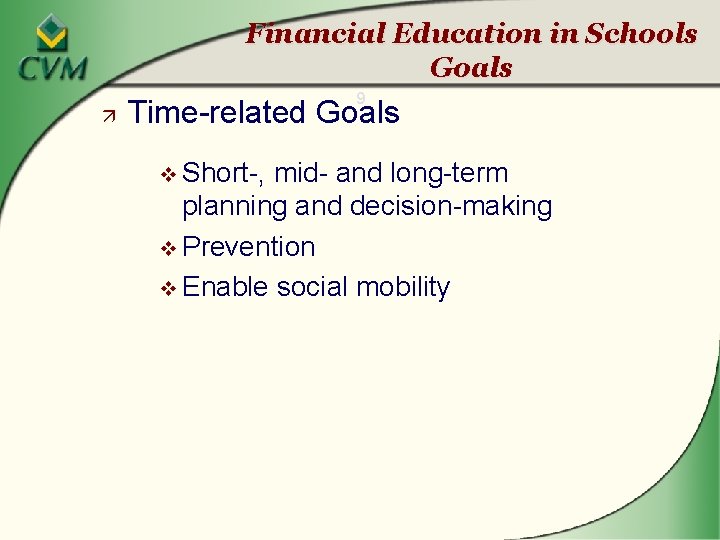
Financial Education in Schools Goals ä 9 Time-related Goals v Short-, mid- and long-term planning and decision-making v Prevention v Enable social mobility
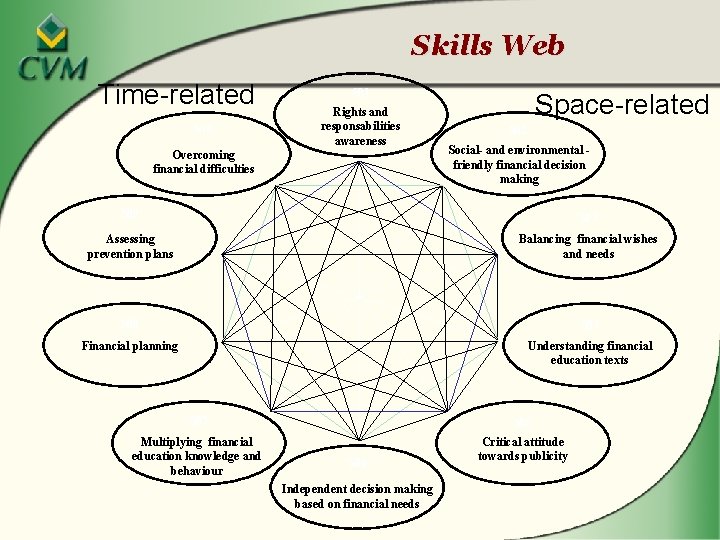
Skills Web Time-related S 10 S 01 Rights and responsabilities awareness Overcoming financial difficulties Space-related S 02 Social- and environmental friendly financial decision making S 09 S 03 Assessing prevention plans Balancing financial wishes and needs S 08 S 04 Financial planning Understanding financial education texts S 07 S 05 Multiplying financial education knowledge and behaviour Critical attitude towards publicity S 06 Independent decision making based on financial needs
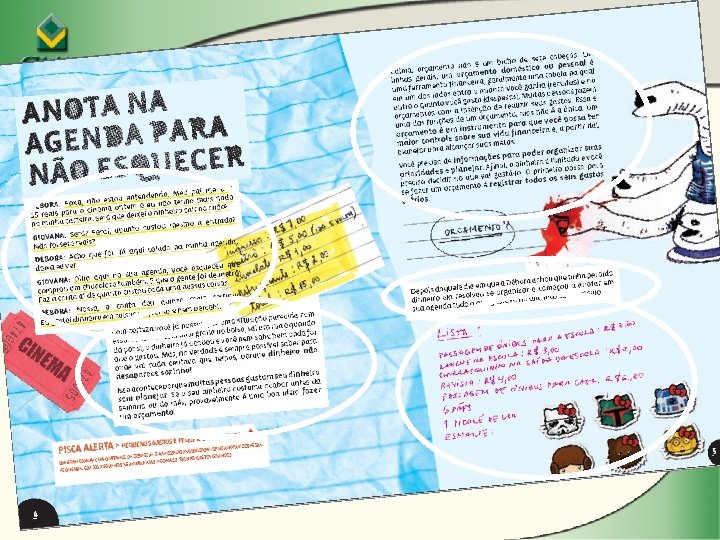
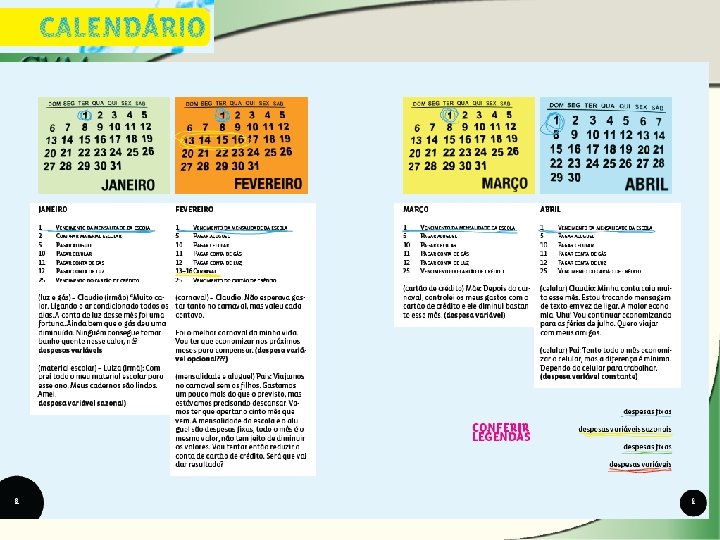
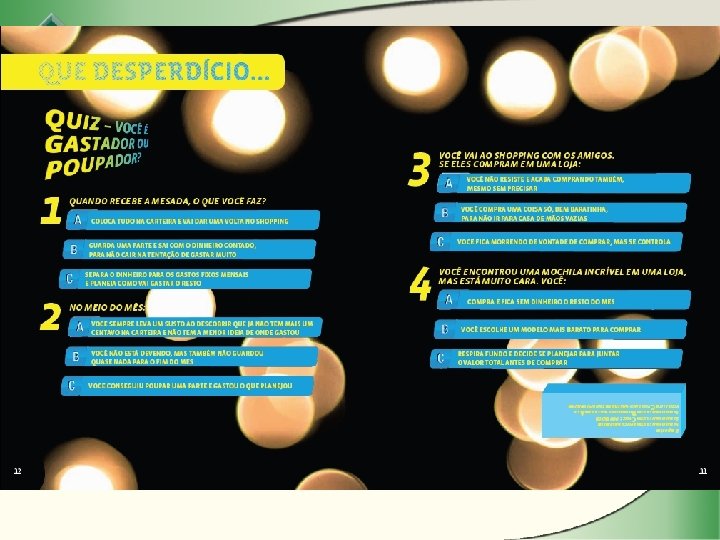
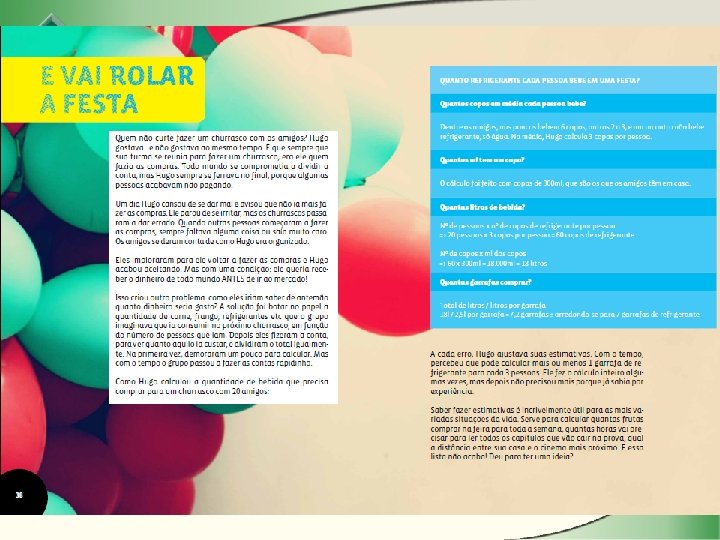
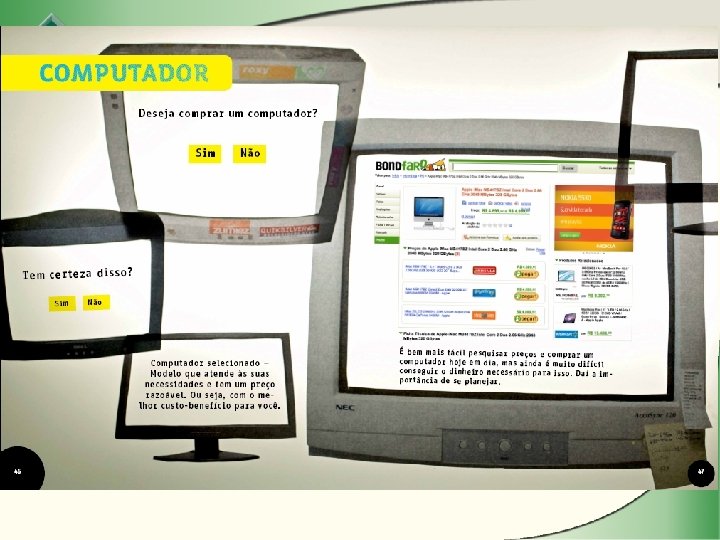
Teaching Material Student’s book 72 Learning Opportunities: formal and real-life contents + activities + self-assessment questions Teacher’s book a copy of the student’s book + teaching guidelines + further formal contents



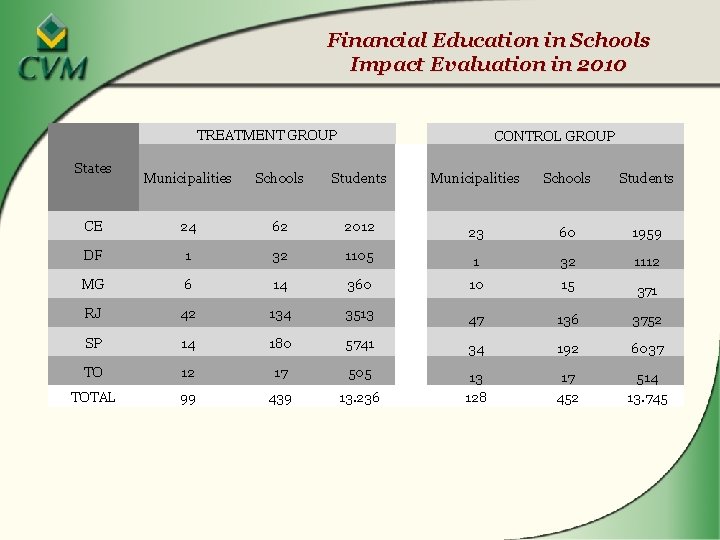
Financial Education in Schools Impact Evaluation in 2010 TREATMENT GROUP States CONTROL GROUP Municipalities Schools Students CE 24 62 2012 23 60 1959 DF 1 32 1105 1 32 1112 MG 6 14 360 10 15 371 RJ 42 134 3513 47 136 3752 SP 14 180 5741 34 192 6037 TO 12 17 505 TOTAL 99 439 13. 236 13 128 17 452 514 13. 745
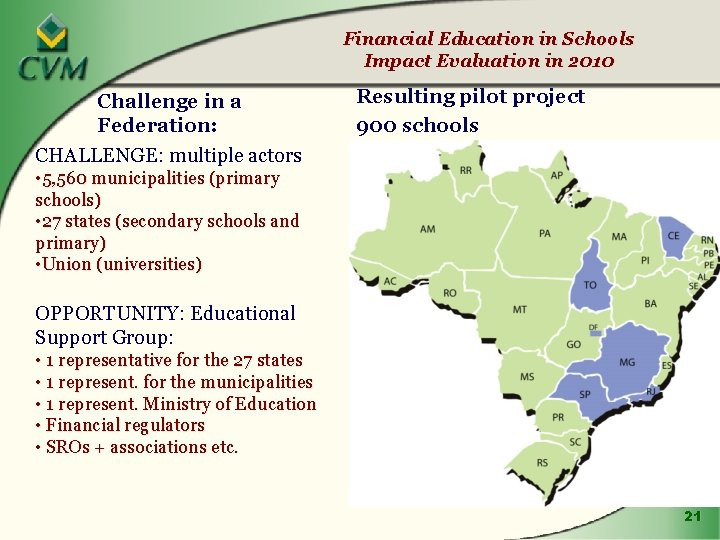
Financial Education in Schools Impact Evaluation in 2010 Challenge in a Federation: CHALLENGE: multiple actors Resulting pilot project 900 schools • 5, 560 municipalities (primary schools) • 27 states (secondary schools and primary) • Union (universities) OPPORTUNITY: Educational Support Group: • 1 representative for the 27 states • 1 represent. for the municipalities • 1 represent. Ministry of Education • Financial regulators • SROs + associations etc. 21
Impact Evaluation Survey Instruments (baseline: AUG 10 / follow-up: DEC 10/next: NOV 11) ä 1. Financial Literacy Test: designed to measure financial literacy (competences and abilities) ä 2. Behavior and attitudinal questionnaires to students: v Socioeconomic information; v Financial decision-making and behavior (familiarity, use and access to financial products; savings and investments behavior); v Attitudes towards the financial world (propensity to save, consumption autonomy) ä 3. Parent’s questionnaire: socioeconomic data of the student’s household, financial profile and behavior of student’s family, knowledge and access to financial products. Next Steps ä Parent’s workshop (1 st semester 2011): in treatment schools ä Mai 9 -10, International Workshop (Rio de Janeiro): preliminary results from financial education in schools project. 22
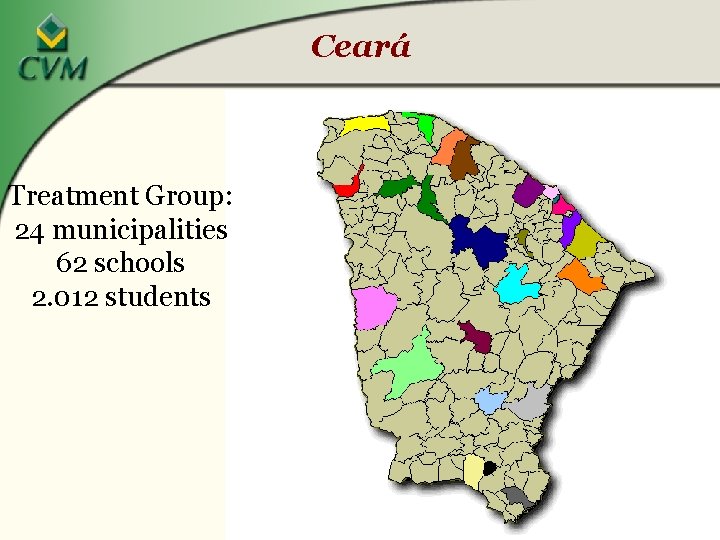
Ceará Treatment Group: 24 municipalities 62 schools 2. 012 students
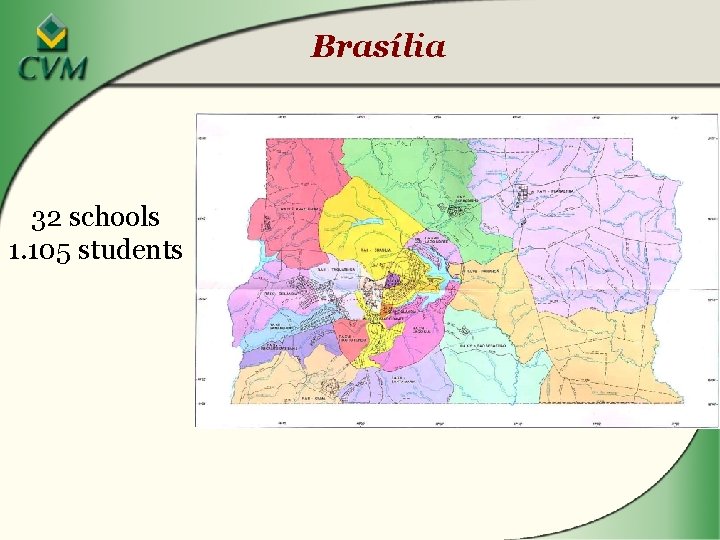
Brasília 32 schools 1. 105 students
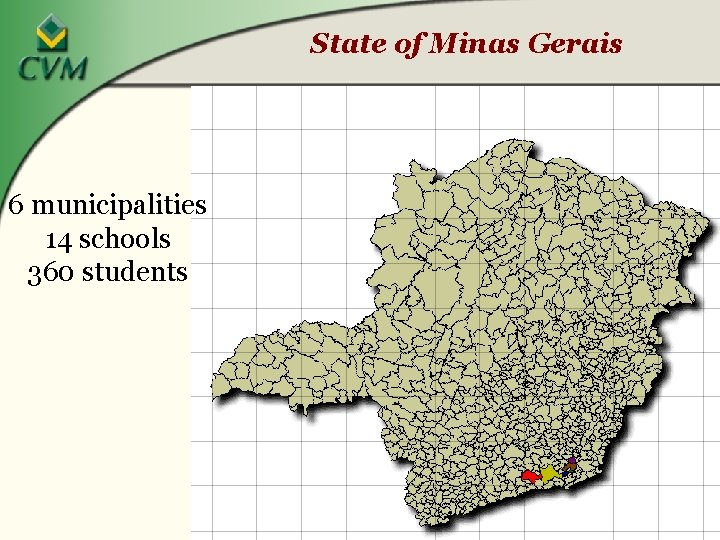
State of Minas Gerais 6 municipalities 14 schools 360 students
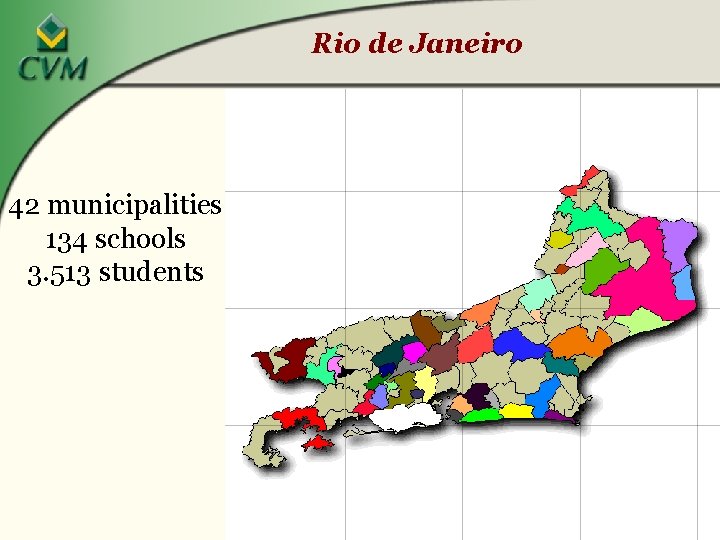
Rio de Janeiro 42 municipalities 134 schools 3. 513 students
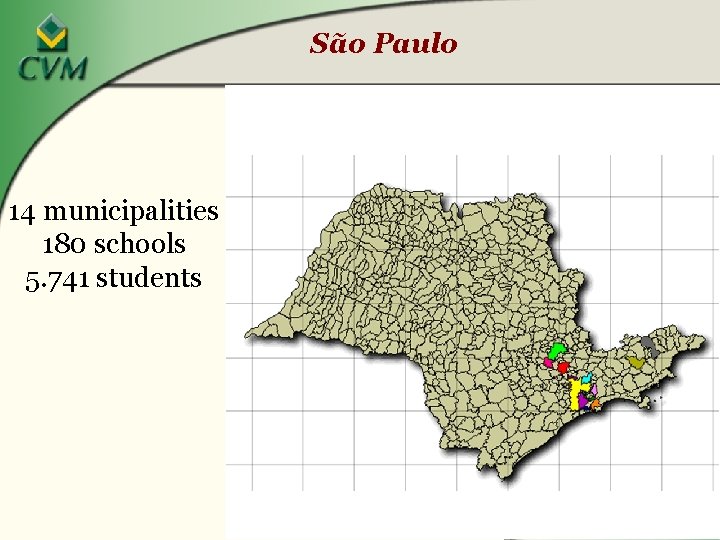
São Paulo 14 municipalities 180 schools 5. 741 students
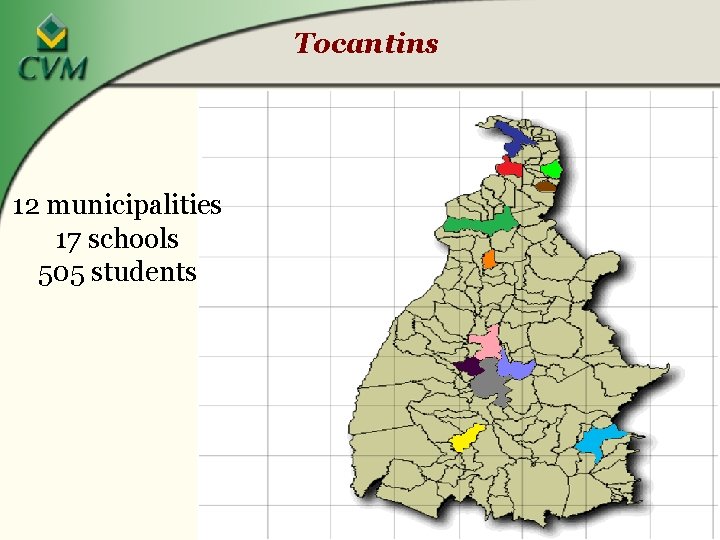
Tocantins 12 municipalities 17 schools 505 students
29 Thank you! National Strategy: www. vidaedinheiro. gov. br
- Slides: 29