
1 Cells grow larger and reproduce 2 Development


- Slides: 26
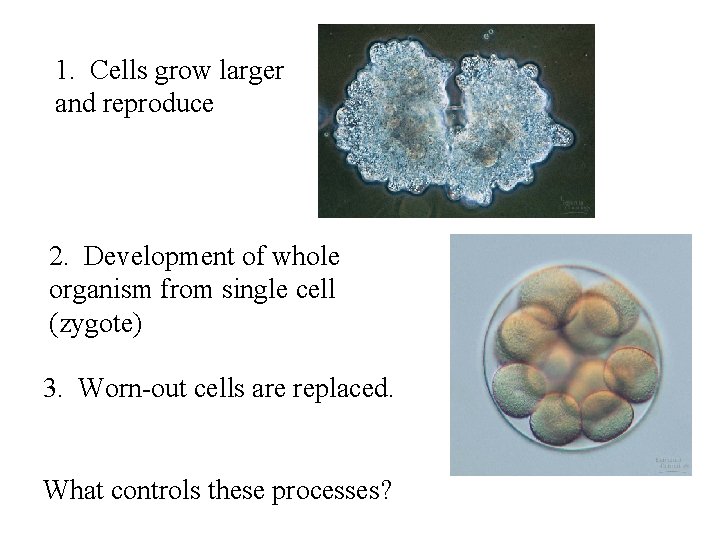
1. Cells grow larger and reproduce 2. Development of whole organism from single cell (zygote) 3. Worn-out cells are replaced. What controls these processes?
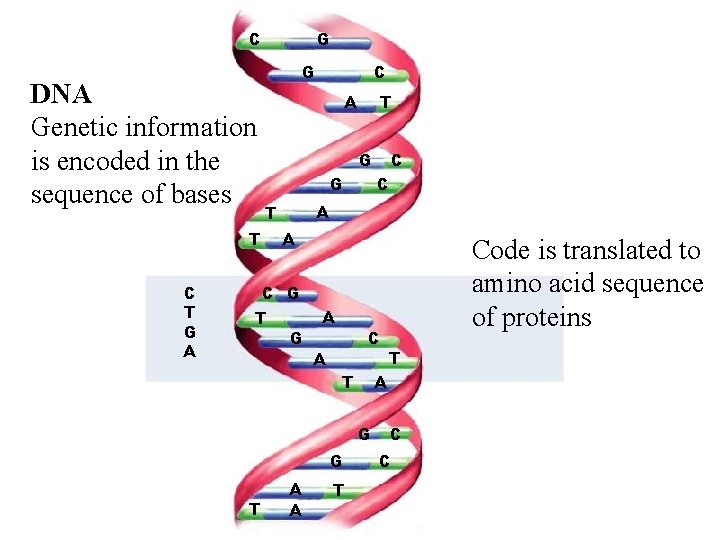
C DNA Genetic information is encoded in the sequence of bases G G A T G G C C A T T C T G A Code is translated to amino acid sequence of proteins C G T G A C A T A G G T A A T T C C
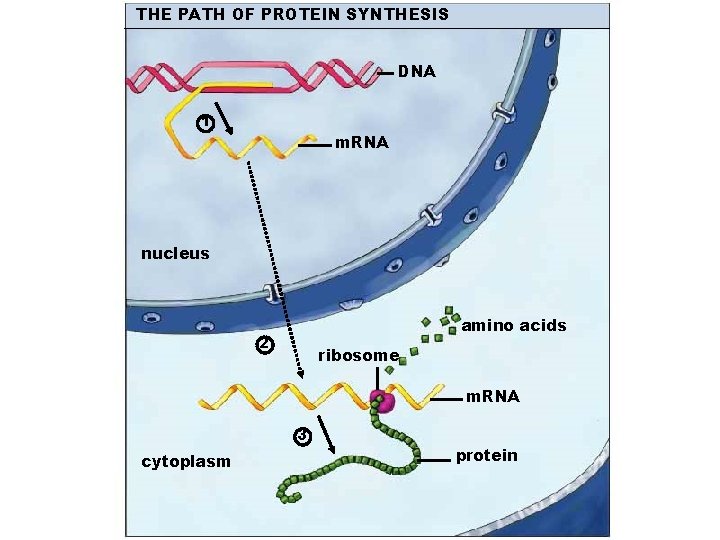
THE PATH OF PROTEIN SYNTHESIS DNA 1 m. RNA nucleus amino acids 2 ribosome m. RNA 3 cytoplasm protein
• Chromosomes consist of a long DNA molecule with thousands of genes Chromatin = DNA with associated proteins Genome = one complete set of chromosomes for an organism Copyright © 2003 Pearson Education, Inc. publishing as Benjamin Cummings
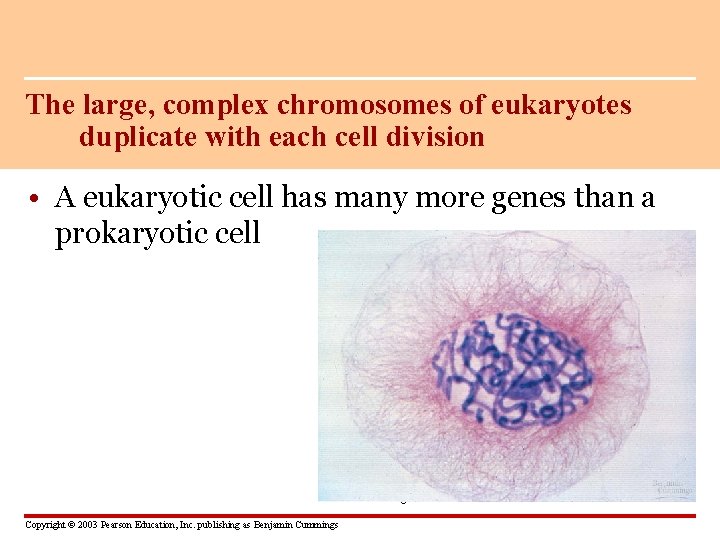
The large, complex chromosomes of eukaryotes duplicate with each cell division • A eukaryotic cell has many more genes than a prokaryotic cell Figure 8. 4 A Copyright © 2003 Pearson Education, Inc. publishing as Benjamin Cummings
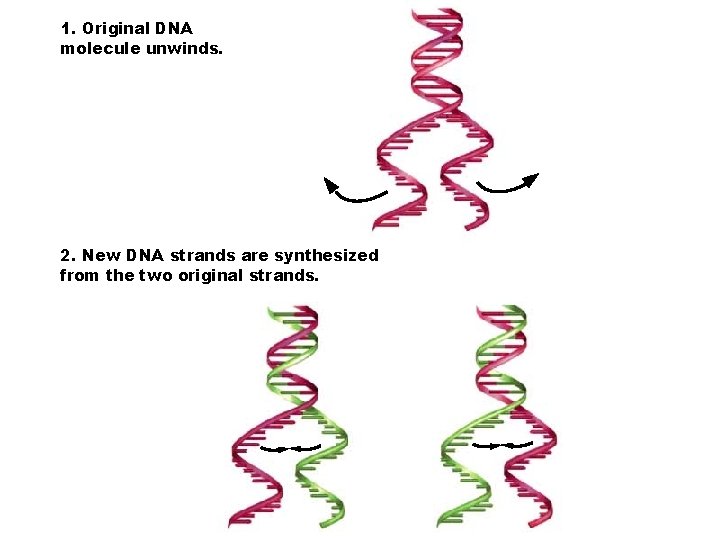
1. Original DNA molecule unwinds. 2. New DNA strands are synthesized from the two original strands.
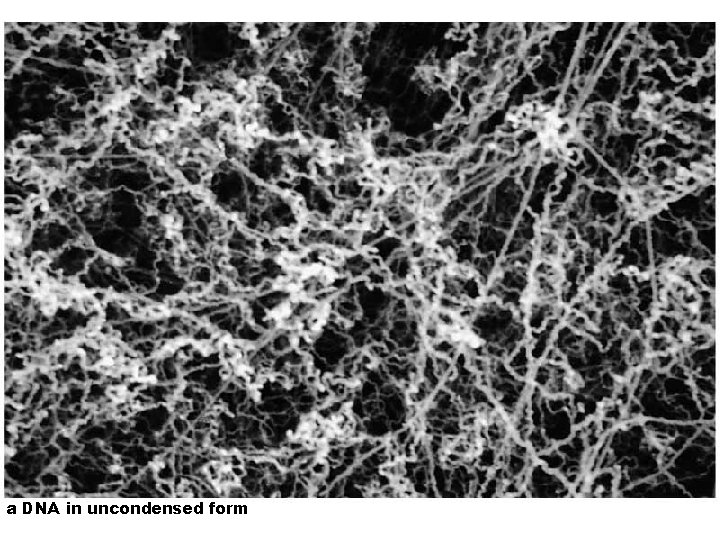
a DNA in uncondensed form
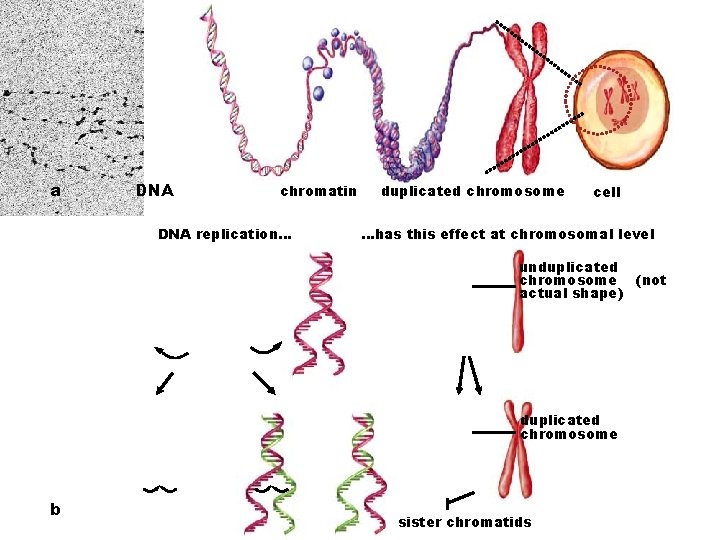
a DNA chromatin DNA replication. . . duplicated chromosome cell …has this effect at chromosomal level unduplicated chromosome (not actual shape) duplicated chromosome b sister chromatids
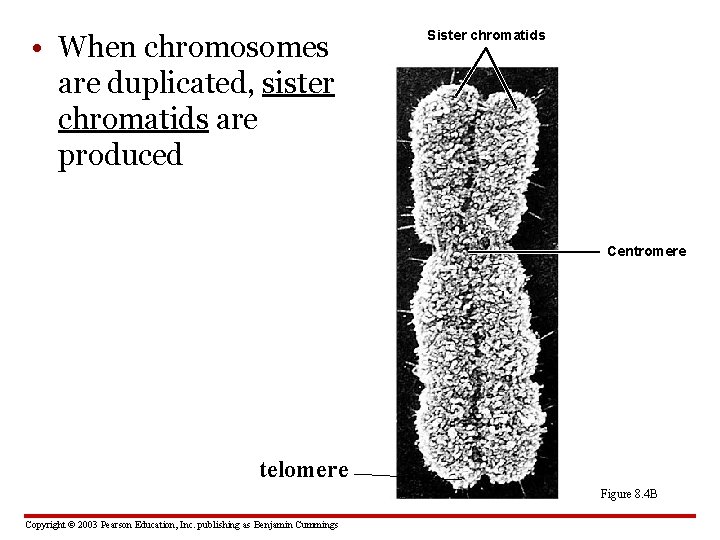
• When chromosomes are duplicated, sister chromatids are produced Sister chromatids Centromere telomere Figure 8. 4 B Copyright © 2003 Pearson Education, Inc. publishing as Benjamin Cummings
• Human bands Figure 8. 19 x 1 Copyright © 2003 Pearson Education, Inc. publishing as Benjamin Cummings
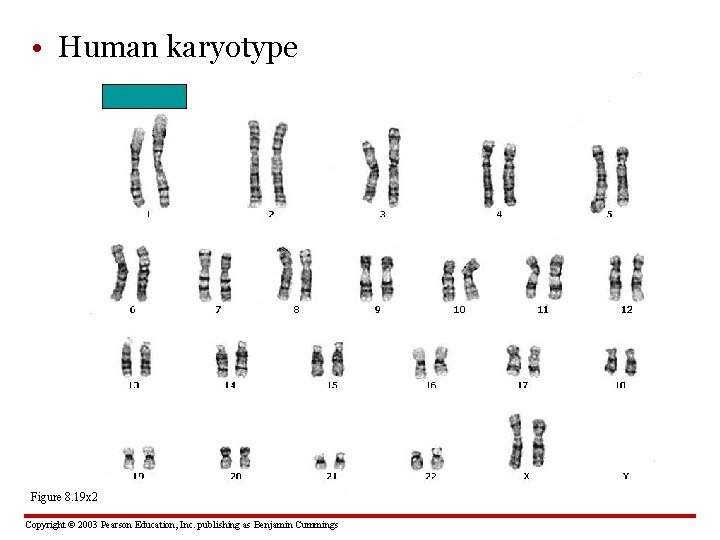
• Human karyotype Figure 8. 19 x 2 Copyright © 2003 Pearson Education, Inc. publishing as Benjamin Cummings
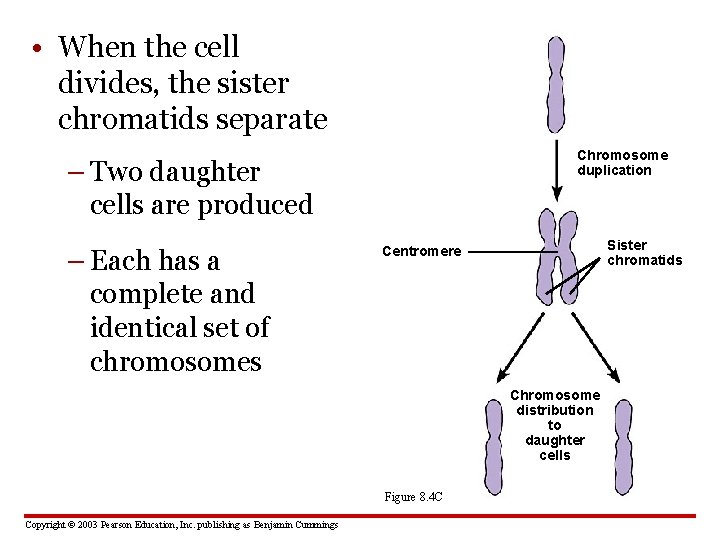
• When the cell divides, the sister chromatids separate Chromosome duplication – Two daughter cells are produced – Each has a complete and identical set of chromosomes Sister chromatids Centromere Chromosome distribution to daughter cells Figure 8. 4 C Copyright © 2003 Pearson Education, Inc. publishing as Benjamin Cummings
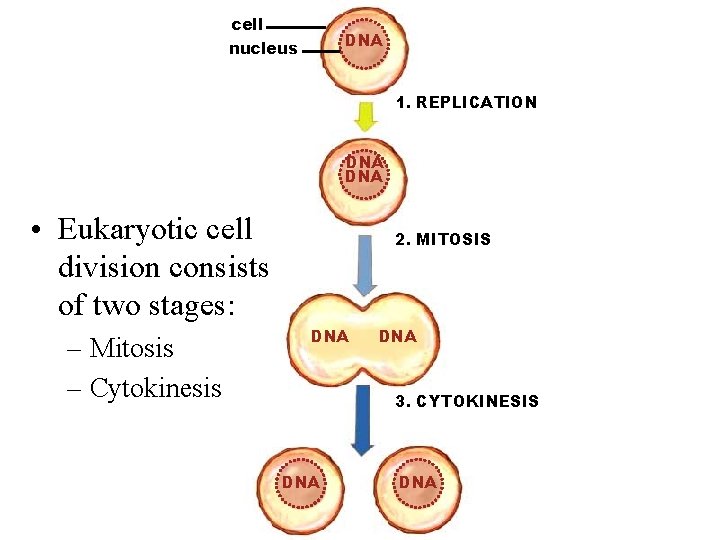
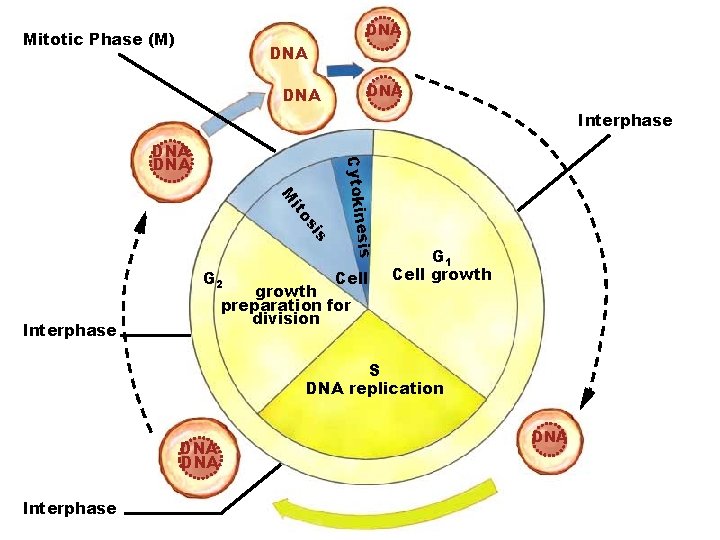
cell nucleus DNA 1. REPLICATION DNA • Eukaryotic cell division consists of two stages: – Mitosis – Cytokinesis 2. MITOSIS DNA 3. CYTOKINESIS DNA
DNA Mitotic Phase (M) DNA DNA Interphase esis s si ito M G 2 Cytokin DNA Cell growth preparation for division Interphase G 1 Cell growth S DNA replication DNA Interphase DNA
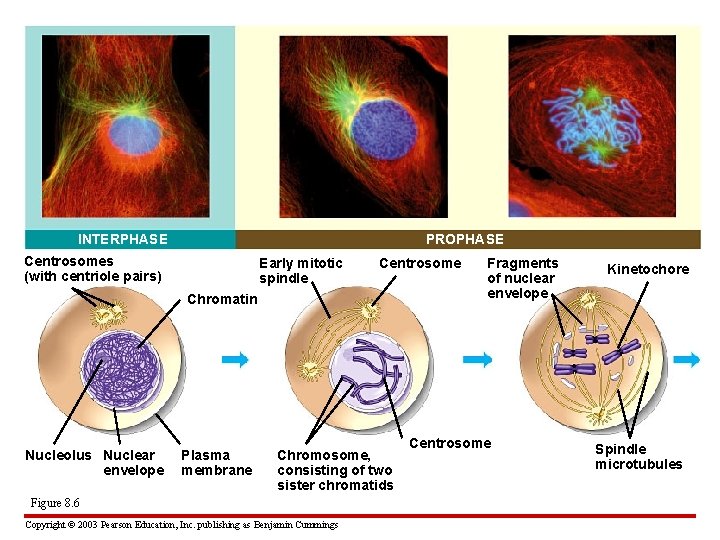
INTERPHASE PROPHASE Centrosomes (with centriole pairs) Early mitotic spindle Centrosome Chromatin Nucleolus Nuclear envelope Plasma membrane Chromosome, consisting of two sister chromatids Figure 8. 6 Copyright © 2003 Pearson Education, Inc. publishing as Benjamin Cummings Fragments of nuclear envelope Centrosome Kinetochore Spindle microtubules
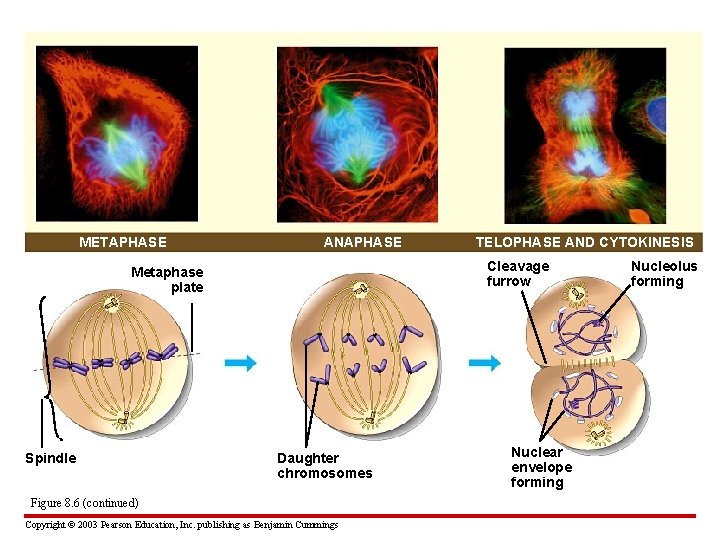
METAPHASE ANAPHASE Cleavage furrow Metaphase plate Spindle TELOPHASE AND CYTOKINESIS Daughter chromosomes Figure 8. 6 (continued) Copyright © 2003 Pearson Education, Inc. publishing as Benjamin Cummings Nuclear envelope forming Nucleolus forming
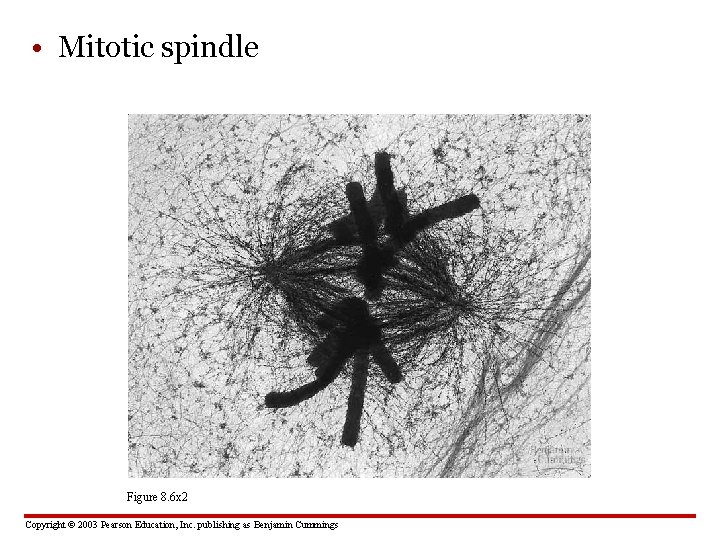
• Mitotic spindle Figure 8. 6 x 2 Copyright © 2003 Pearson Education, Inc. publishing as Benjamin Cummings
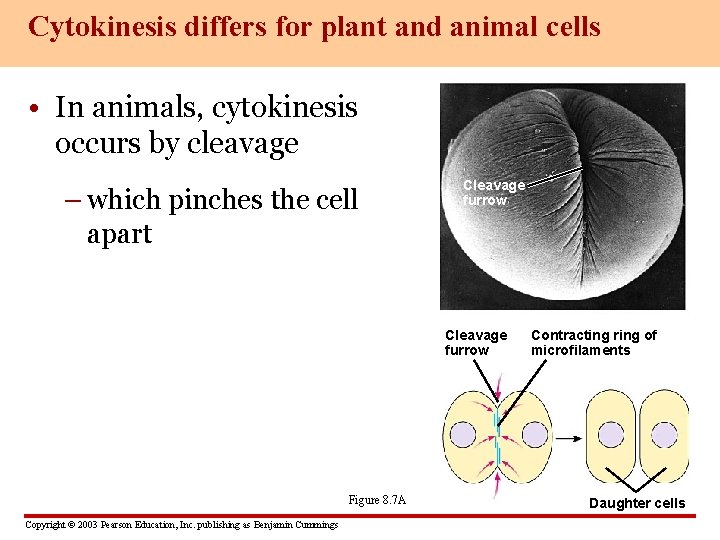
Cytokinesis differs for plant and animal cells • In animals, cytokinesis occurs by cleavage – which pinches the cell apart Cleavage furrow Figure 8. 7 A Copyright © 2003 Pearson Education, Inc. publishing as Benjamin Cummings Contracting ring of microfilaments Daughter cells
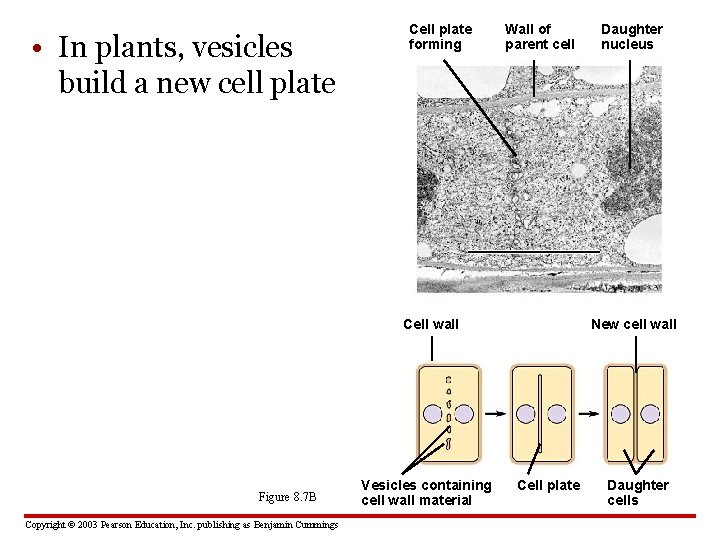
• In plants, vesicles build a new cell plate Cell plate forming Wall of parent cell Cell wall Figure 8. 7 B Copyright © 2003 Pearson Education, Inc. publishing as Benjamin Cummings Vesicles containing cell wall material Daughter nucleus New cell wall Cell plate Daughter cells
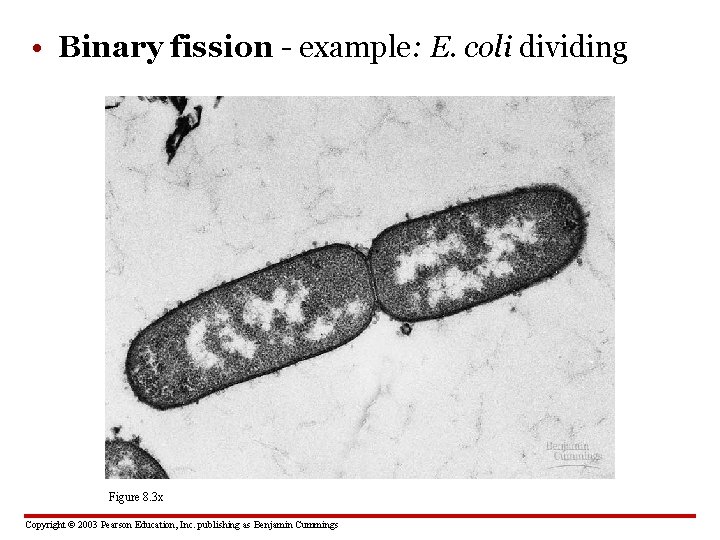
• Binary fission - example: E. coli dividing Figure 8. 3 x Copyright © 2003 Pearson Education, Inc. publishing as Benjamin Cummings
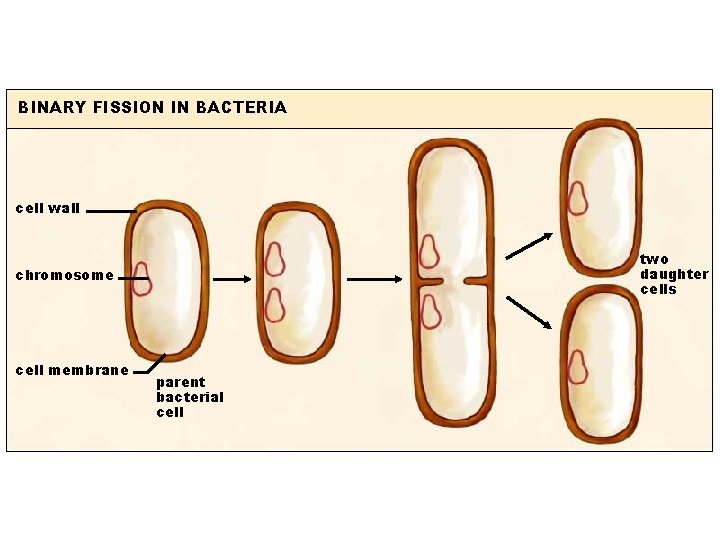
BINARY FISSION IN BACTERIA cell wall two daughter cells chromosome cell membrane parent bacterial cell
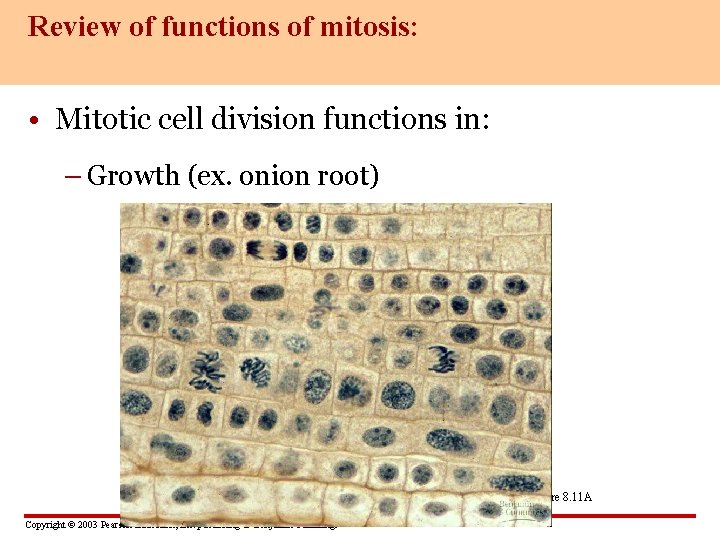
Review of functions of mitosis: • Mitotic cell division functions in: – Growth (ex. onion root) Figure 8. 11 A Copyright © 2003 Pearson Education, Inc. publishing as Benjamin Cummings
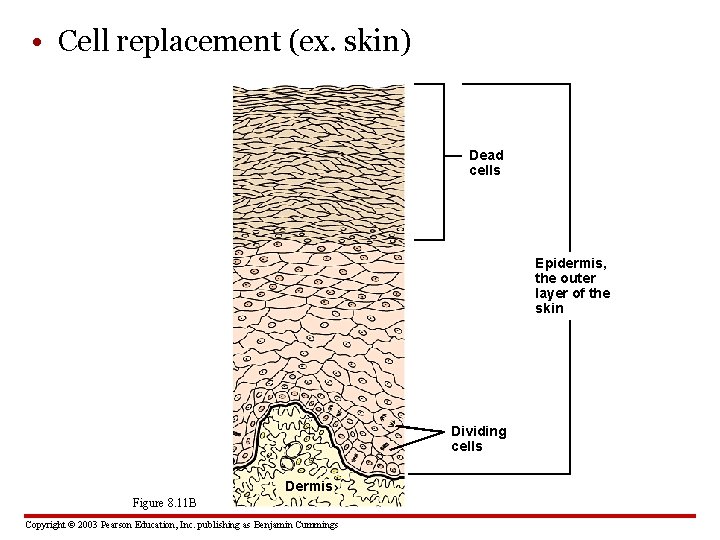
• Cell replacement (ex. skin) Dead cells Epidermis, the outer layer of the skin Dividing cells Dermis Figure 8. 11 B Copyright © 2003 Pearson Education, Inc. publishing as Benjamin Cummings
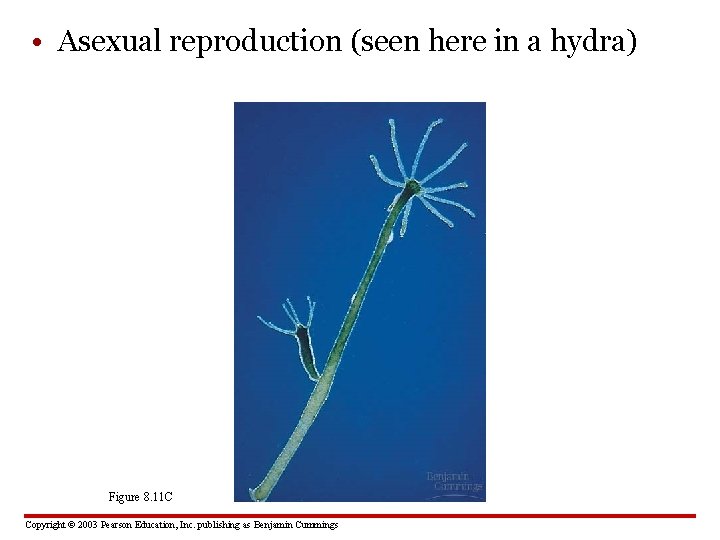
• Asexual reproduction (seen here in a hydra) Figure 8. 11 C Copyright © 2003 Pearson Education, Inc. publishing as Benjamin Cummings
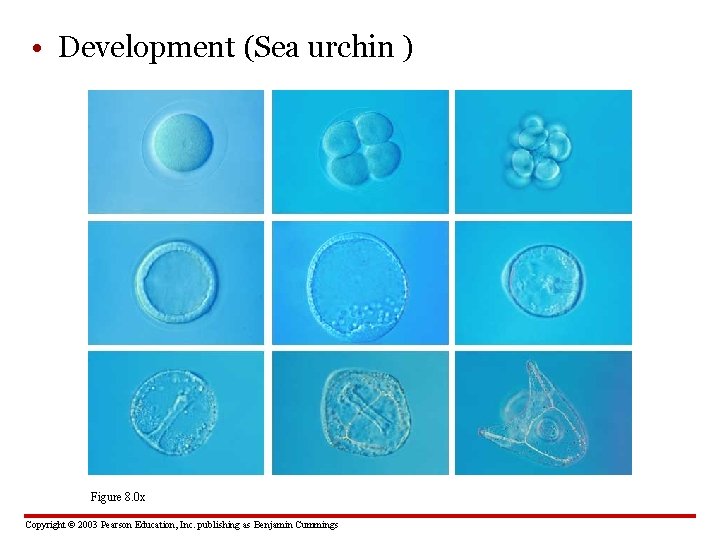
• Development (Sea urchin ) Figure 8. 0 x Copyright © 2003 Pearson Education, Inc. publishing as Benjamin Cummings