
1 Burkley First edition Chapter 12 Emotions 2
1 Burkley First edition Chapter 12 Emotions
2 Chapter 12 Emotions – emotion, affect, and mood – relationships: thoughts, emotions, and behavior – biological theories (James-Lange, Cannon Bard) – cognitive theories (Schachter’s cognitive labeling) – cognition or emotion – which comes first? ▪ Lazarus – Cognitive appraisal theory ▪ Zajonc – automatically prefer things (mere exposure) ▪ Plutchik – both occur in a Circular sequence – neuroscience (ACC and amygdala) ▪ the physiological sources of emotions and cognitions – the types of emotions – purpose for emotions ▪ Feedback, belongingness, guide thinking – emotion regulation ▪ Situation selection / modification ▪ Attentional deployment ▪ Reappraise Copyright © 2018 Pearson Education, Inc. All Rights Reserved
3 Lisa Nowak & Colleen Shipman • What were her emotions over a life time? Copyright © 2018 Pearson Education, Inc. All Rights Reserved
4 12. 1: What Is an Emotion? – Emotion (slow) • conscious evaluative reaction to an event. • strong, singular feelings. – Affect (quick) + or (-) feeling • Unconscious evaluation reaction to an event – Mood vs. emotion • Mood—generalized affective state • Emotion—toward a particular target • Think of one for each Copyright © 2018 Pearson Education, Inc. All Rights Reserved
5 12. 2: What Causes Emotions? • –common sense theory? • Thoughts cause emotions • Emotions cause behavior Copyright © 2018 Pearson Education, Inc. All Rights Reserved

6 Figure 12. 1: The Common Sense Theory Give an example you have experienced? Copyright © 2018 Pearson Education, Inc. All Rights Reserved
7 Biological Perspective • James-Lange Theory – Stimulus -> Behavior -> Emotion • Emotions is a: – direct result of physiological changes that occur – automatically in response to a stimulus. • Emotions are the mind’s interpretation to the body’s response. – The autonomic nervous system needs to: • Maintains homeostasis • Sympathetic nervous system (flight or fight) • Parasympathetic nervous system (calms the Sympathetic down) Copyright © 2018 Pearson Education, Inc. All Rights Reserved
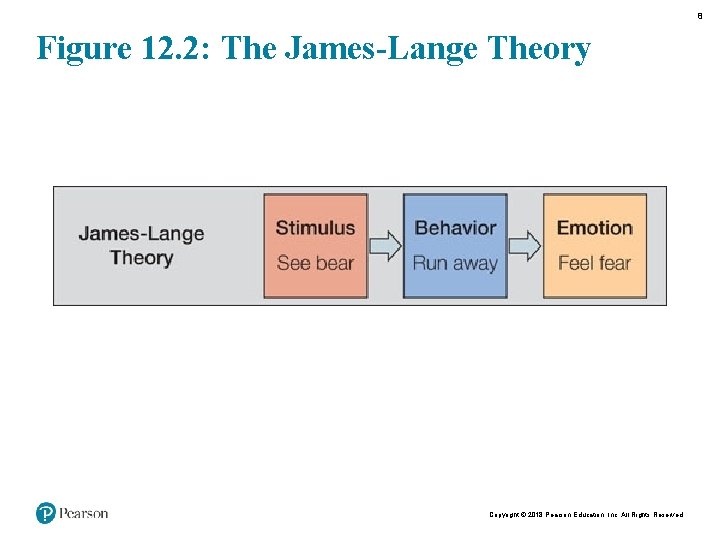
8 Figure 12. 2: The James-Lange Theory Copyright © 2018 Pearson Education, Inc. All Rights Reserved
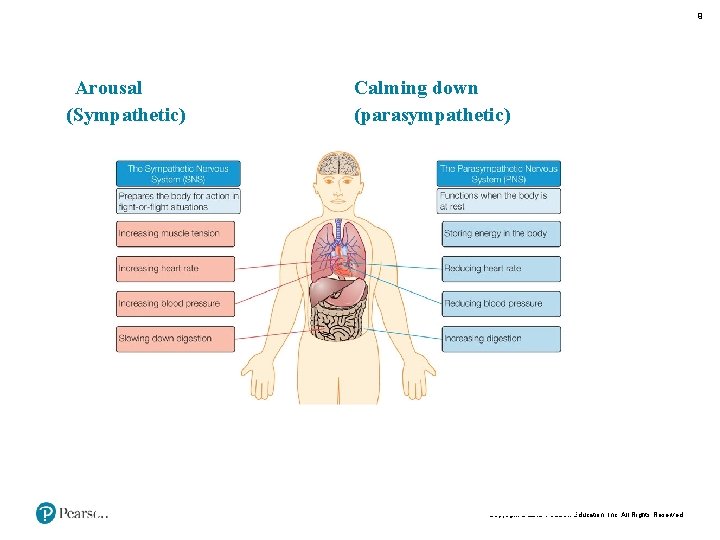
9 Arousal (Sympathetic) Calming down (parasympathetic) Copyright © 2018 Pearson Education, Inc. All Rights Reserved
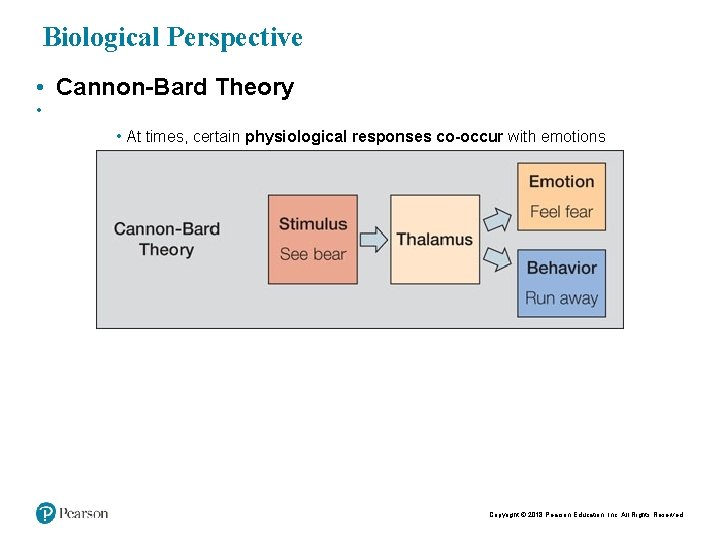
10 Biological Perspective • Cannon-Bard Theory • • At times, certain physiological responses co-occur with emotions • Thalamus Copyright © 2018 Pearson Education, Inc. All Rights Reserved
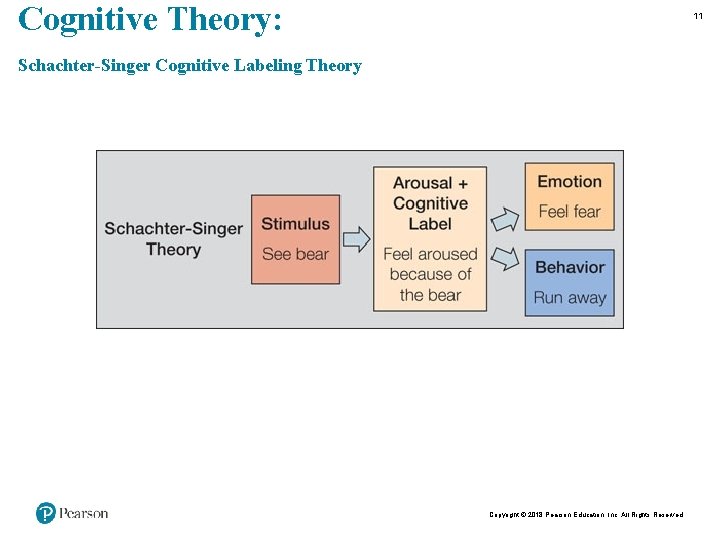
Cognitive Theory: 11 Schachter-Singer Cognitive Labeling Theory Copyright © 2018 Pearson Education, Inc. All Rights Reserved
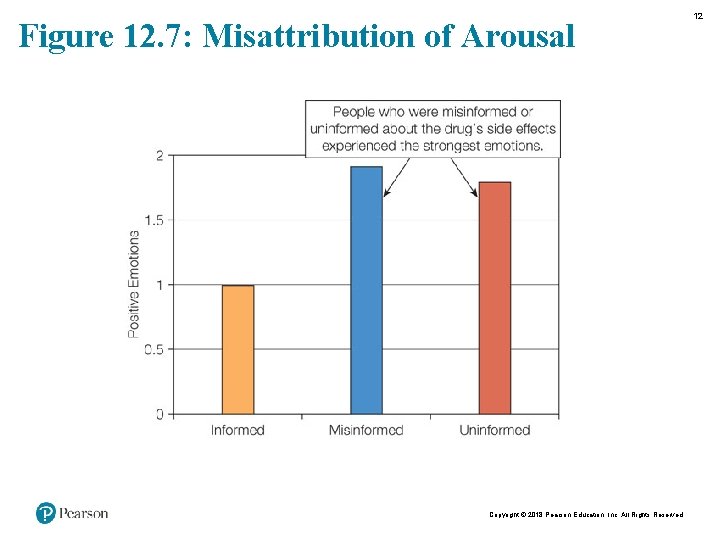
Figure 12. 7: Misattribution of Arousal Copyright © 2018 Pearson Education, Inc. All Rights Reserved 12
13 Cognitive Perspective • Schachter-Singer cognitive labeling theory • Misattribution? • What happened in the Dutton and Lake “bridge study? • Did Cindy throw Colleen off the bridge? • Can you think of a situation where you misattributed an emotion? • How can you help to make sure your first date will not be the last one? Copyright © 2018 Pearson Education, Inc. All Rights Reserved
Cognitive Perspective: Appraisal theory (Lazarus) • 14 Primary appraisal – – Is the arousal ▪ Negative? Threat or fear? ▪ Positive ? Beneficial? ▪ Neither? – no emotion • Secondary appraisal • Do I have the resources to deal to cope with the harm or benefit? • E. g. Negative appraisal • “difficult exam! But I can do it! • (related to one’s level of autonomy and self-efficacy • Can you think of a situation you have had? • Cognitions precede arousal (Lazarus) • If able to cope (Secondary arousal) then the arousal decreases Copyright © 2018 Pearson Education, Inc. All Rights Reserved
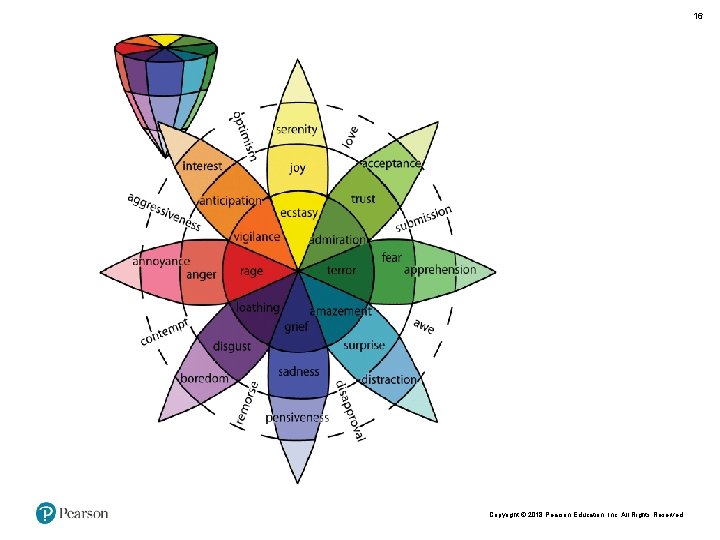
15 12. 7: What Types of Emotions Are There? • 12. 7: Differentiate between the types of emotions – What types of emotions are there? • Core emotions (biological theory) 3 -10? • disgust, fear, happiness, sadness, and surprise (Ekman) • Each has a corresponding facial expression • And brain correlates! • Secondary emotions (cognitive theory) Infinite • as many ways as we can perceive a stimulus) • - “Families” of emotions • …. of colours (Plutchikn’s wheel) Copyright © 2018 Pearson Education, Inc. All Rights Reserved
16 Copyright © 2018 Pearson Education, Inc. All Rights Reserved
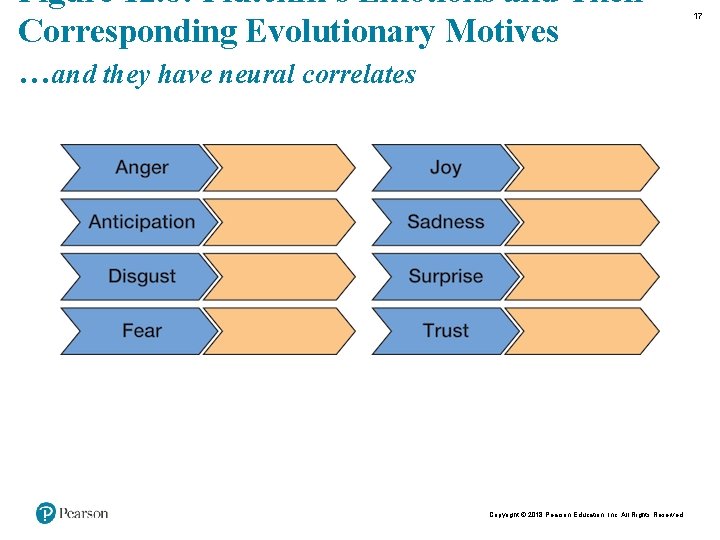
Figure 12. 8: Plutchik’s Emotions and Their Corresponding Evolutionary Motives …and they have neural correlates Copyright © 2018 Pearson Education, Inc. All Rights Reserved 17
18 12. 8: What Is the Purpose of Emotions? • 12. 8: What is the purpose of emotions? • Feedback • Belongingness • Thinking • Behaviour • 12. 8. 1: How do emotions provide feedback? • How well we are doing at our goals • Meta-monitoring loop (feedback in TOTE) – Implications of the meta-monitoring loop • Feeling good even when the goal hasn’t been achieved An immediate reduction in effort following good goal progress Copyright © 2018 Pearson Education, Inc. All Rights Reserved
19 12. 7: What Types of Emotions Are There? • 12. 7. 2: Positive Emotions v. Negative Emotions • Negative emotions - > • Specific responses • Physical responses • Positive emotions -> • Non-specific responses • Cognitive responses – How do positive emotions motivate us? • Fredrickson’s broaden-and-build theory • Positive emotions help to: • broaden our attention and thoughts • build resources. Copyright © 2018 Pearson Education, Inc. All Rights Reserved
20 12. 8: What Is the Purpose of Emotions? • 12. 8. 2: Emotions Promote Belongingness • 12. 8. 2: Analyze how emotions promote belongingness – How do emotions promote belongingness? • Communicate feelings to others • Creating and maintaining relationships • Emotion contagion (give an example you experienced) • 12. 8. 3: Emotions Guide Thinking – Positive emotions—“dumbing down” • Negative emotions—”attend to details more) Can this partly explain why we become increasingly more politically polarized? – Feelings-as-information theory • We make judgments by asking how we feel about something. • Life satisfaction (how has COVID 19 affected your Life Satisfaction? Copyright © 2018 Pearson Education, Inc. All Rights Reserved
21 12. 8: What Is the Purpose of Emotions? • 12. 8. 4: How do emotions guide behavior? Indirect influence – Mood-as-input theory (when to stop working on a task) –stop rules • The subjective stop rule – “am I enjoying it? ) • (positive -> continue) • (negative -> quit) • The objective stop rule – “have I reached my goal? ” • (positive -> quit) • (negative -> continue) – Affective forecasting – how you will feel (not very good at it) • Predicting emotional feelings in the future • Cognitive biases § Focalism (focus too much on the single event) § Immune neglect (we have more resources than we think) Copyright © 2018 Pearson Education, Inc. All Rights Reserved
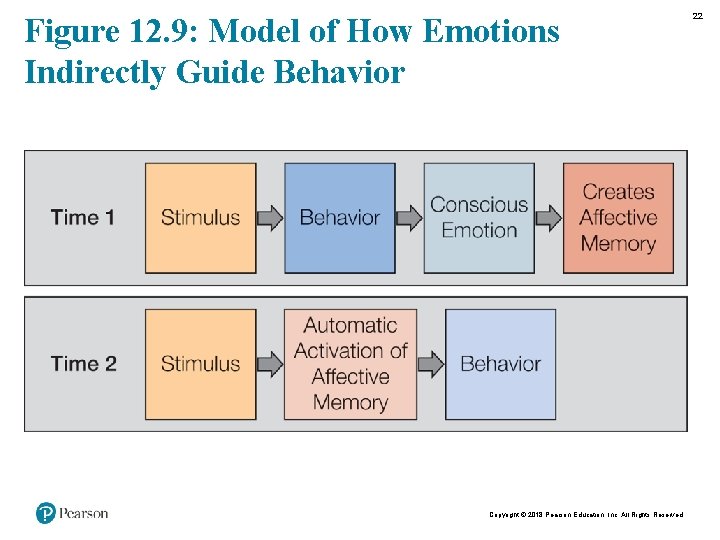
Figure 12. 9: Model of How Emotions Indirectly Guide Behavior Copyright © 2018 Pearson Education, Inc. All Rights Reserved 22
23 12. 9: Emotion Regulation • 12. 9: Describe the importance of emotion regulation – Emotion regulation • How people try to influence which emotions they experience – The modal model of emotion regulation (Gross and Thompson, 2007) • Situation selection – choose one you will like • Situation modification • Attentional deployment – focus attention elsewhere (headphones at dentist) • Cognitive change – reappraise the situation (rationalize it? ) • Response modulation – don’t be angry, meditate Copyright © 2018 Pearson Education, Inc. All Rights Reserved
24 Summary: Emotions – The difference between emotion, affect, and mood – The relationship between thoughts, emotions, and behavior – The biological theories put forth to explain emotion causality – The cognitive theories put forth to explain emotion causality – The debate on the question of whether cognition or emotion comes first – The research work done in neuroscience to understand the sources of emotions and cognitions – The difference between the types of emotions – The purpose served by emotions – The importance of emotion regulation Copyright © 2018 Pearson Education, Inc. All Rights Reserved
- Slides: 24