
1 Bulk method Bulk is an extension of
1 Bulk method • Bulk is an extension of the pedigree method. • In contrast to pedigree, early generations are grown as bulk populations w/o selection. • The last generation of bulking, the plants are grown as spaced plants • Bulk is used in self-pollinated species • What role may natural selection play?

2 Requirements • Two parents – Complementary in strengths and weaknesses AAbb x aa. BB
3 Implementation • 3 n genotypes in F 2 reduced to 2 n homozygotes • Natural selection during ‘bulk’ phase – Theoretically, natural selection may result in poor genotypes contributing relatively fewer seeds to the next generation • At F 5 or F 6 space plant for preliminary yield evaluations
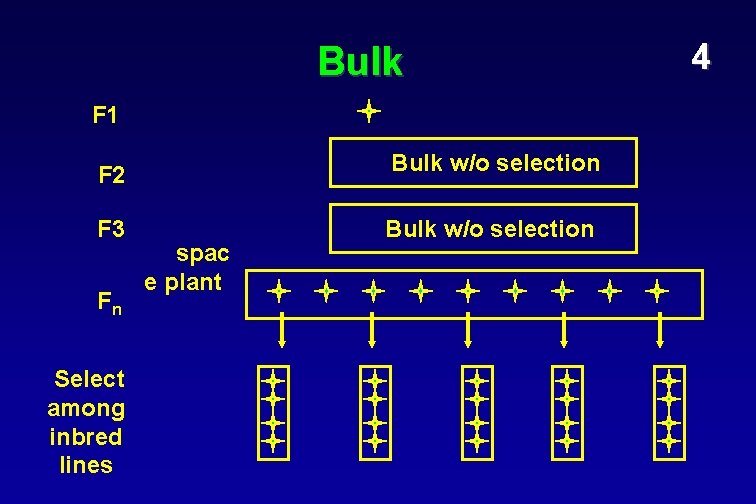
Bulk F 1 F 2 Bulk w/o selection F 3 Bulk w/o selection Fn Select among inbred lines spac e plant 4
5 Features of Bulk method • Inbreeding and evaluation of inbred lines – Should bulking be done in production environment? Natural selection? • Little record keeping • Easy to handle populations - harvest in bulk • Extensive field trials not required
6 Negative features • Maximum productivity is established in F 2 generation • No recombination among superior lines • Objective is an array of inbred lines which have been inbred from an F 2 population, but, how natural selection, migration, mutation and drift may have shifted the population is unknown.
7 Single Seed Descent • Called “Recombinant Inbred Lines” in molecular marker literature • First suggested by Goulden in 1939 and later expanded upon by Brim (a soybean breeder) in 1966.
8 SSD -Requirements • Two parents crossed to produce F 1 – Exactly like pedigree and bulk
9 Implementation • Objective is rapid inbreeding to evaluate inbred lines • Easy way to maintain populations • Often minimum space required • Inbreeding can be done in greenhouse or winter nursery
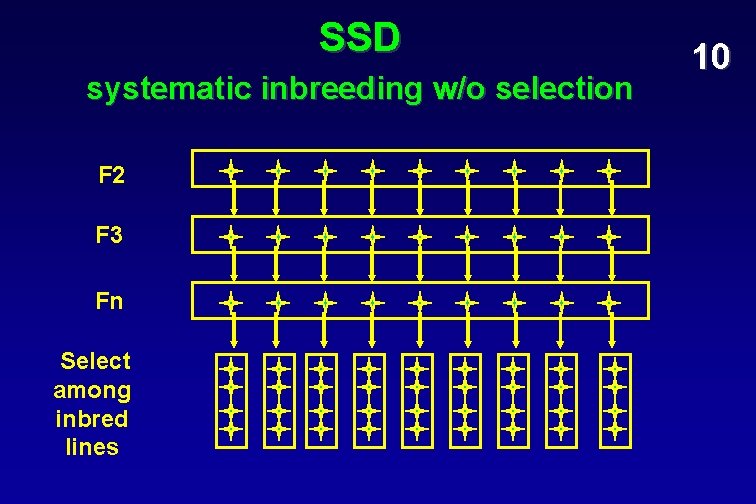
SSD systematic inbreeding w/o selection F 2 F 3 Fn Select among inbred lines 10
Features of Single seed descent • Inbreeding and evaluation of inbred lines • Little record keeping • Easy to handle populations - extensive field trials not required • Final lines represent a “true”sample of variation 11
12 Negative features of SSD • Maximum productivity is established in F 2 generations • No recombination among selected lines • Must evaluate large numbers of inbred lines to identify superior ones • Little opportunity for early generation selection, as inbreeding may be done in greenhouse or winter nursery
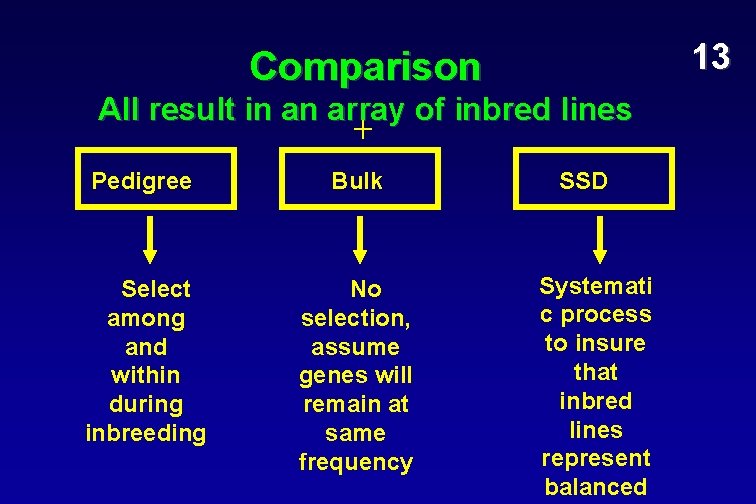
13 Comparison All result in an array of inbred lines Pedigree Bulk Select among and within during inbreeding No selection, assume genes will remain at same frequency SSD Systemati c process to insure that inbred lines represent balanced
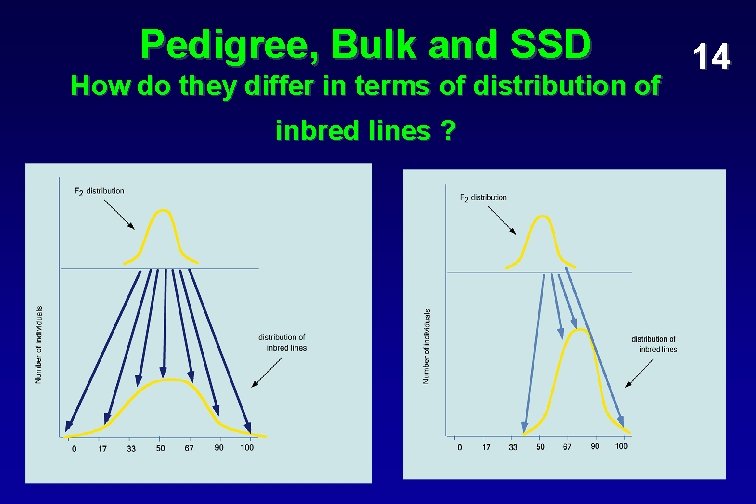
Pedigree, Bulk and SSD How do they differ in terms of distribution of inbred lines ? 14
15 Inbred Backcross • Combines features of Backcross and SSD • Generally used in crosses with exotic germplasm • The goal is to identify major genes involved in quatitative variation (Wehrhan and Allard, Genetics 1965, 51: 109 -119. • Develop inbred lines with an array of variation for the quatitative trait

16 Requirements • Two parents – Desirable Recurrent parent – Exotic ‘Donor’ parent
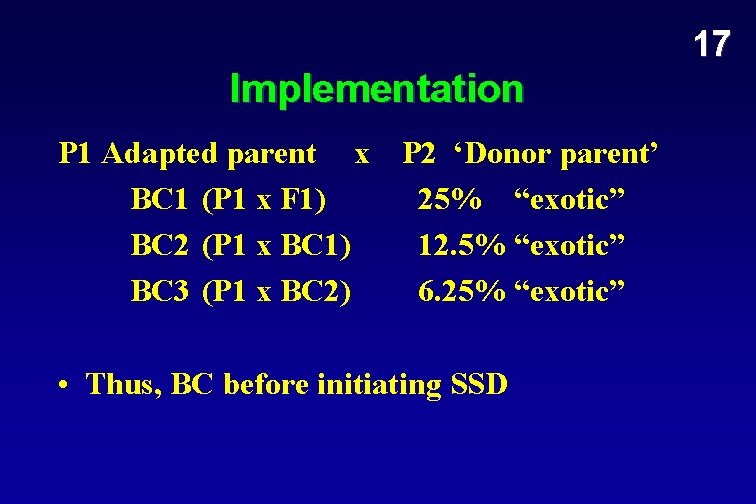
17 Implementation P 1 Adapted parent x BC 1 (P 1 x F 1) BC 2 (P 1 x BC 1) BC 3 (P 1 x BC 2) P 2 ‘Donor parent’ 25% “exotic” 12. 5% “exotic” 6. 25% “exotic” • Thus, BC before initiating SSD
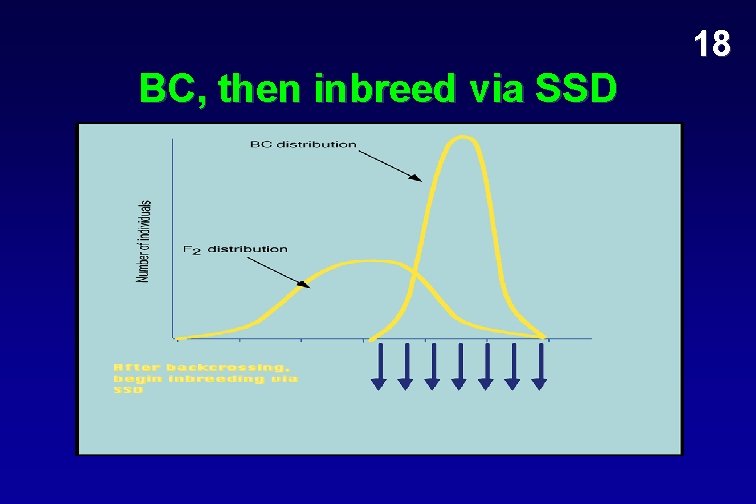
18 BC, then inbreed via SSD
19 Features of IBC • Incorporate “exotic germplasm” • Final evaluation based on inbred lines that represent a range of variation for quantitative trait. • Can be done in GH or winter nursery
20 Negative features of IBC • Maximum productivity is established in BC generations • No recombination among lines • Little opportunity for selection • Often used in “genetic” studies vs. breeding • Must evaluate many inbred lines
- Slides: 20