
1 BI 233 Laboratory Urinary System 2 The
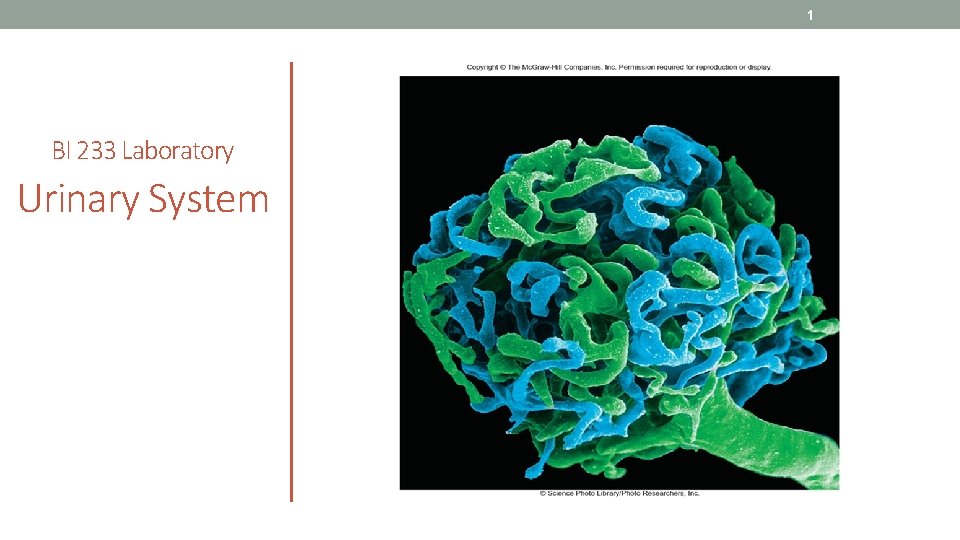
1 BI 233 Laboratory Urinary System
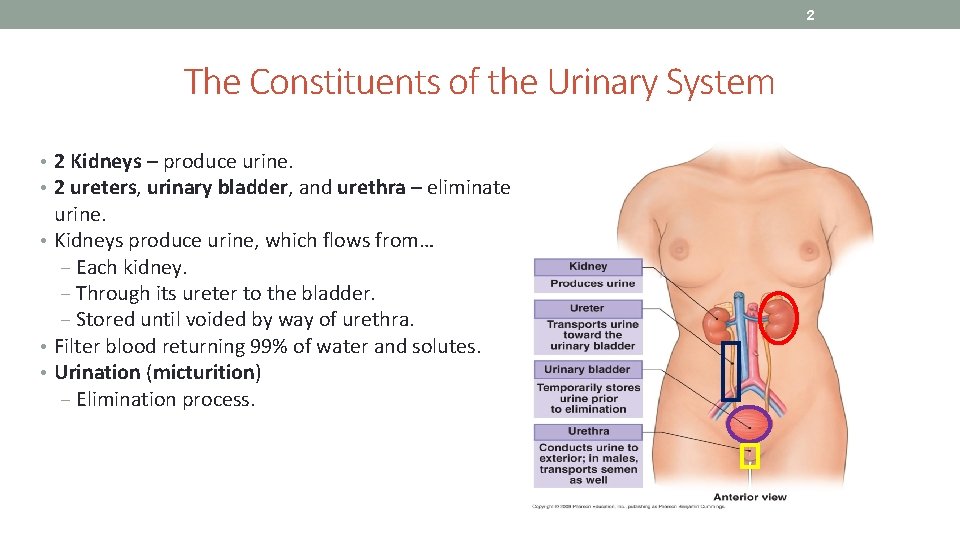
2 The Constituents of the Urinary System • 2 Kidneys – produce urine. • 2 ureters, urinary bladder, and urethra – eliminate urine. • Kidneys produce urine, which flows from… ‒ Each kidney. ‒ Through its ureter to the bladder. ‒ Stored until voided by way of urethra. • Filter blood returning 99% of water and solutes. • Urination (micturition) ‒ Elimination process.
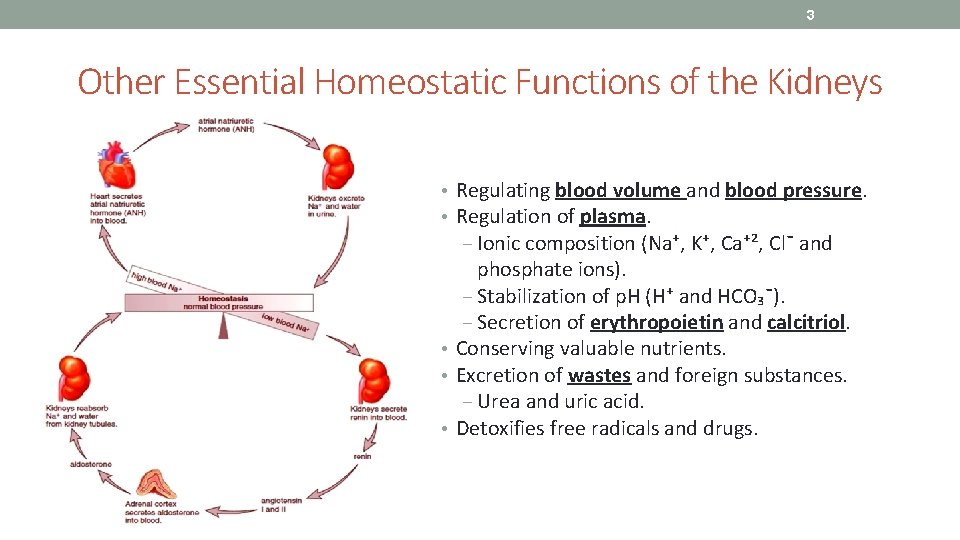
3 Other Essential Homeostatic Functions of the Kidneys • Regulating blood volume and blood pressure. • Regulation of plasma. ‒ Ionic composition (Na⁺, K⁺, Ca⁺², Cl¯ and phosphate ions). ‒ Stabilization of p. H (H⁺ and HCO₃¯). ‒ Secretion of erythropoietin and calcitriol. • Conserving valuable nutrients. • Excretion of wastes and foreign substances. ‒ Urea and uric acid. • Detoxifies free radicals and drugs.
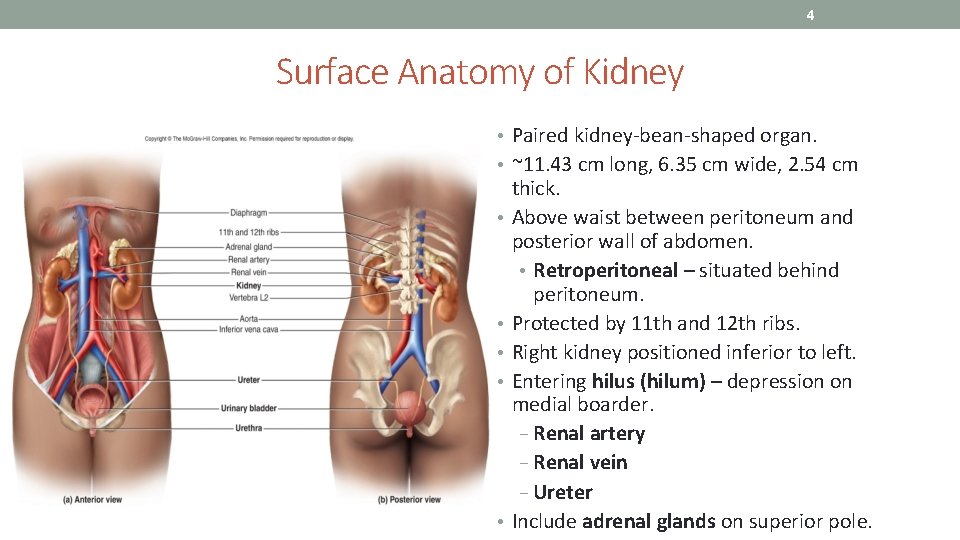
4 Surface Anatomy of Kidney • Paired kidney-bean-shaped organ. • ~11. 43 cm long, 6. 35 cm wide, 2. 54 cm • • • thick. Above waist between peritoneum and posterior wall of abdomen. • Retroperitoneal – situated behind peritoneum. Protected by 11 th and 12 th ribs. Right kidney positioned inferior to left. Entering hilus (hilum) – depression on medial boarder. − Renal artery − Renal vein − Ureter Include adrenal glands on superior pole.
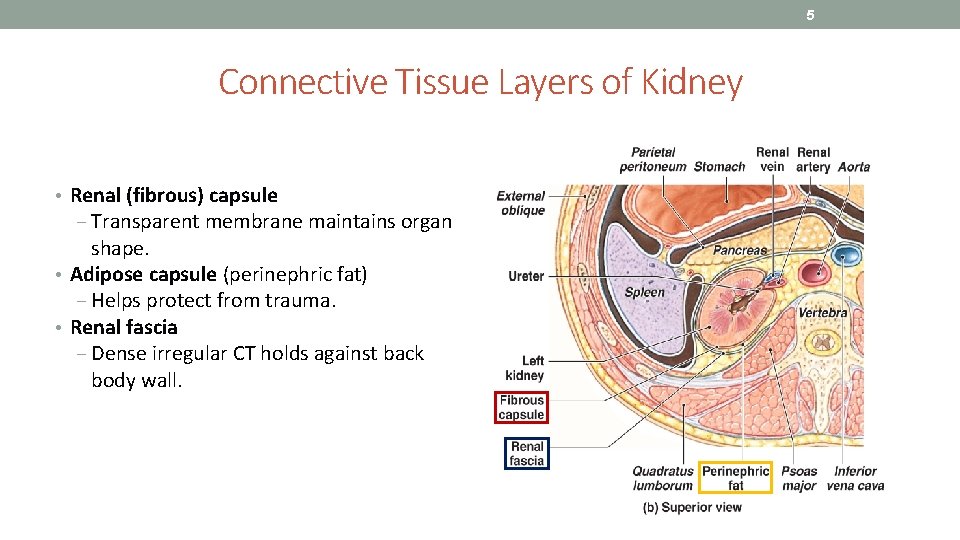
5 Connective Tissue Layers of Kidney • Renal (fibrous) capsule ‒ Transparent membrane maintains organ shape. • Adipose capsule (perinephric fat) ‒ Helps protect from trauma. • Renal fascia ‒ Dense irregular CT holds against back body wall.
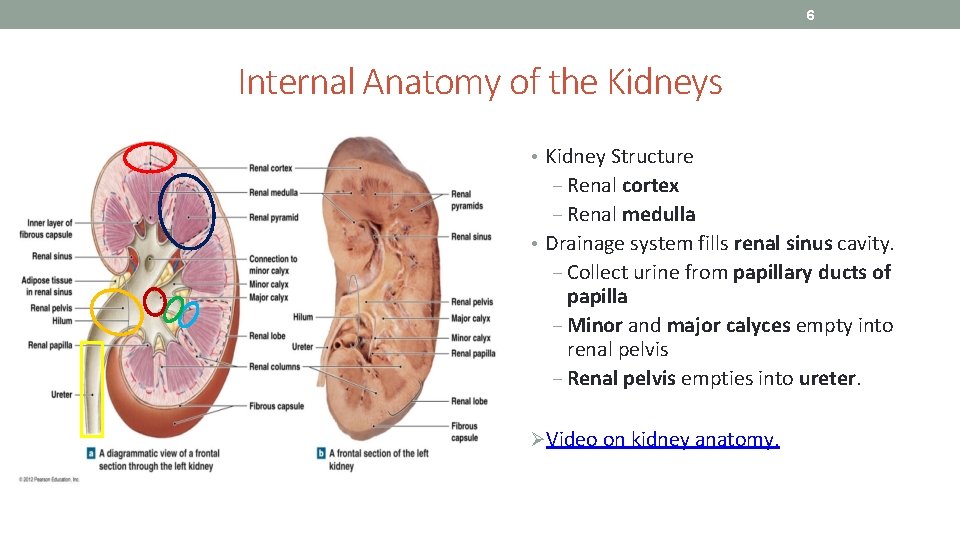
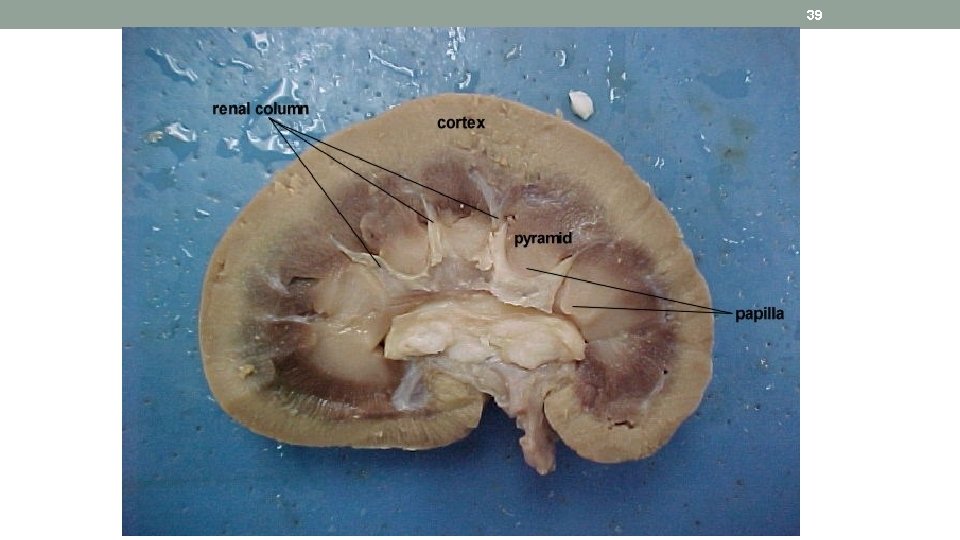
6 Internal Anatomy of the Kidneys • Kidney Structure ‒ Renal cortex ‒ Renal medulla • Drainage system fills renal sinus cavity. ‒ Collect urine from papillary ducts of papilla ‒ Minor and major calyces empty into renal pelvis ‒ Renal pelvis empties into ureter. ØVideo on kidney anatomy.
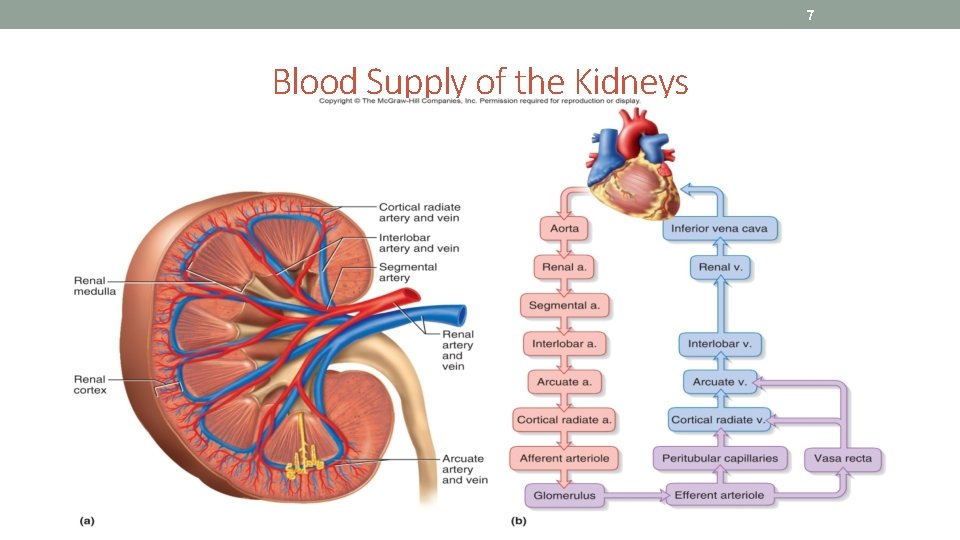
7 Blood Supply of the Kidneys
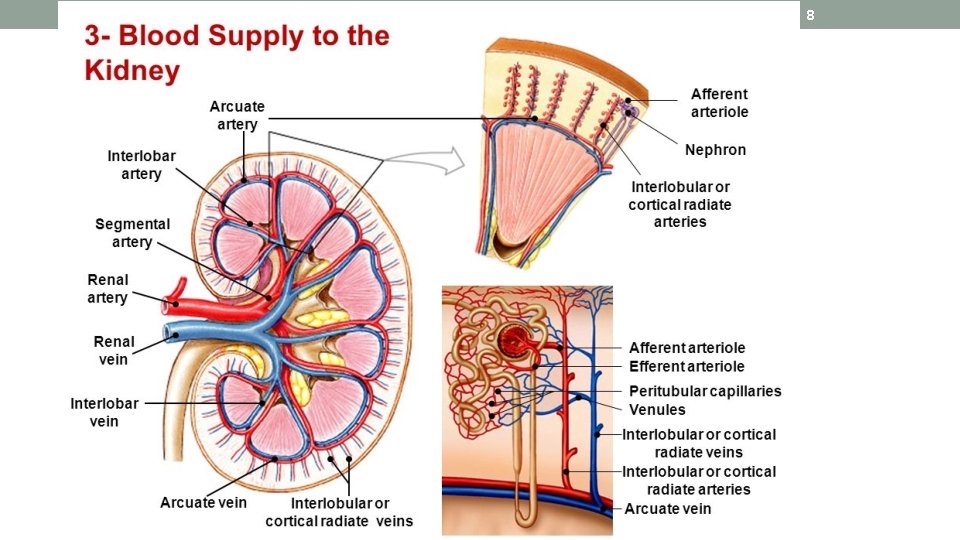
8
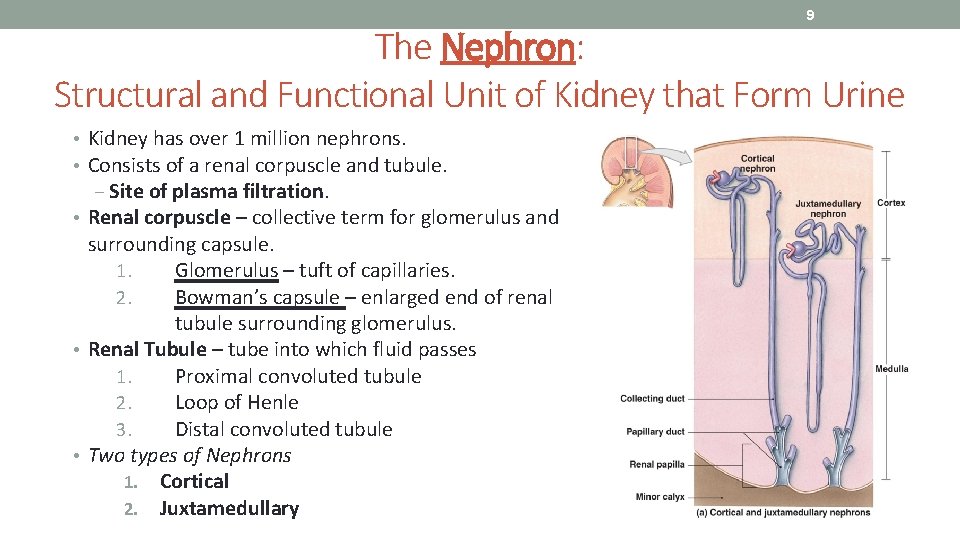
9 The Nephron: Structural and Functional Unit of Kidney that Form Urine • Kidney has over 1 million nephrons. • Consists of a renal corpuscle and tubule. ‒ Site of plasma filtration. • Renal corpuscle – collective term for glomerulus and surrounding capsule. 1. Glomerulus – tuft of capillaries. 2. Bowman’s capsule – enlarged end of renal tubule surrounding glomerulus. • Renal Tubule – tube into which fluid passes 1. Proximal convoluted tubule 2. Loop of Henle 3. Distal convoluted tubule • Two types of Nephrons 1. Cortical 2. Juxtamedullary
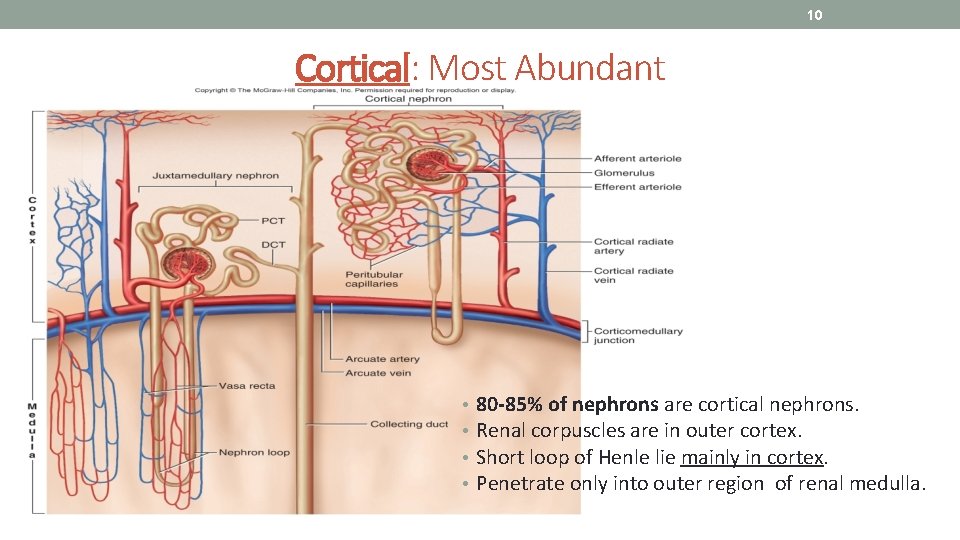
10 Cortical: Most Abundant • • 80 -85% of nephrons are cortical nephrons. Renal corpuscles are in outer cortex. Short loop of Henle lie mainly in cortex. Penetrate only into outer region of renal medulla.
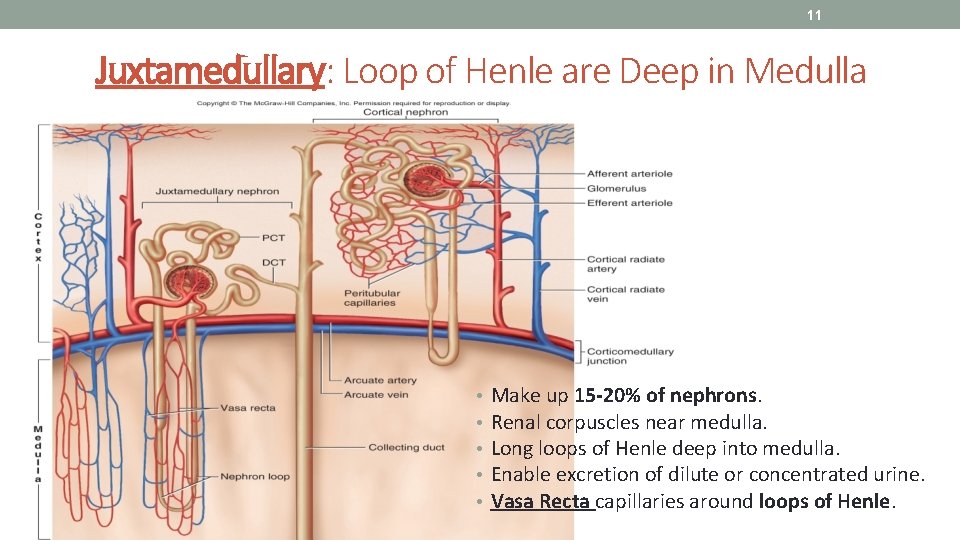
11 Juxtamedullary: Loop of Henle are Deep in Medulla • • • Make up 15 -20% of nephrons. Renal corpuscles near medulla. Long loops of Henle deep into medulla. Enable excretion of dilute or concentrated urine. Vasa Recta capillaries around loops of Henle.

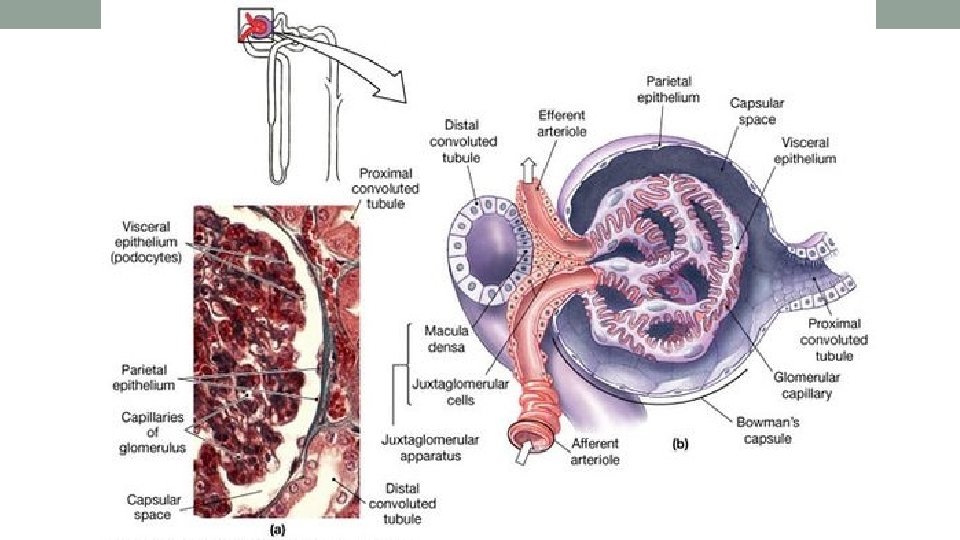
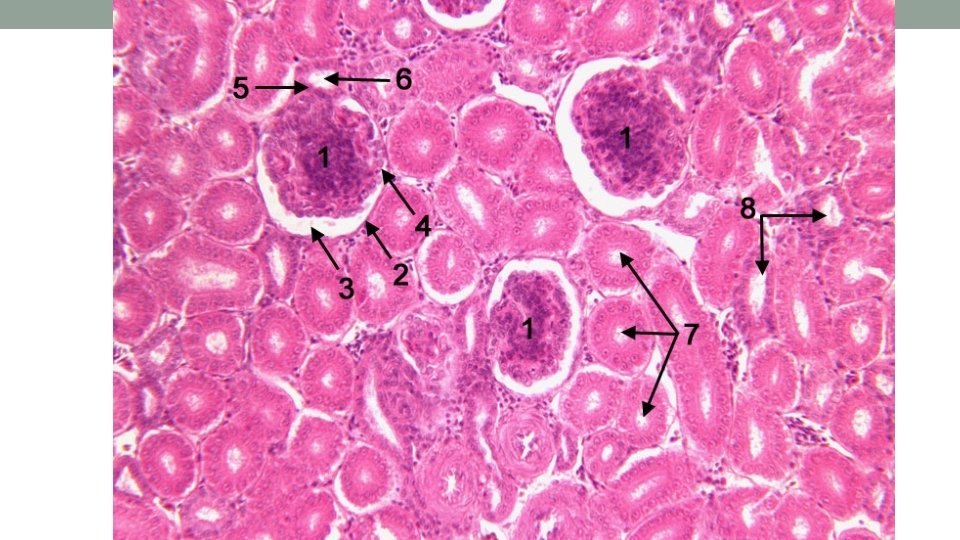
12 Renal Corpuscle = Glomerulus + Bowman’s Capsule • Glomerular (Bowman’s) capsule surrounds capsular space. ‒ Podocytes cover capillaries = visceral layer. ‒ Simple squamous cells = parietal layer. ‒ Pedicels, filtration slits, mesangial cells. • Glomerulus a knot of capillaries. ‒ Arise from afferent arteriole (entering glomerulus). ‒ Form a ball before emptying into efferent arteriole (exiting glomerulus).
13
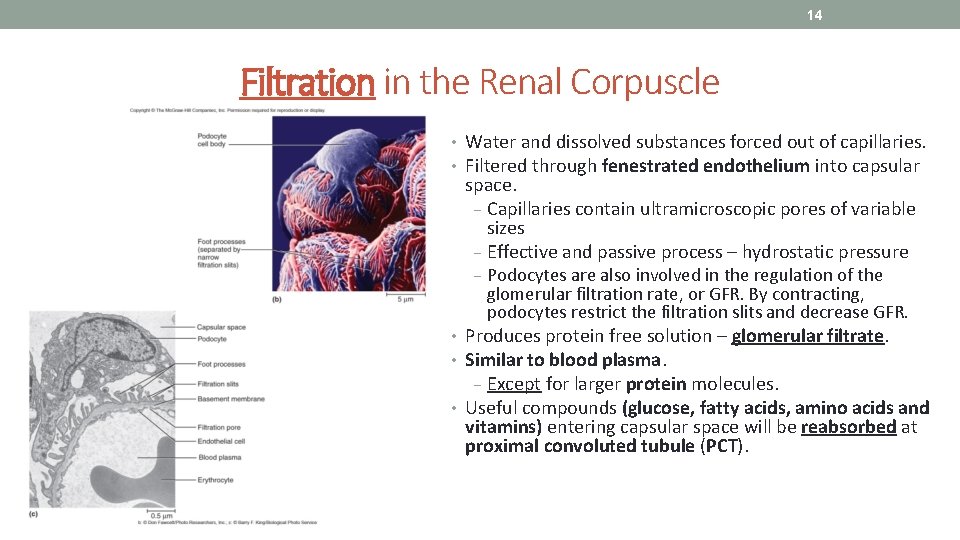
14 Filtration in the Renal Corpuscle • Water and dissolved substances forced out of capillaries. • Filtered through fenestrated endothelium into capsular space. − Capillaries contain ultramicroscopic pores of variable sizes − Effective and passive process – hydrostatic pressure − Podocytes are also involved in the regulation of the glomerular filtration rate, or GFR. By contracting, podocytes restrict the filtration slits and decrease GFR. • Produces protein free solution – glomerular filtrate. • Similar to blood plasma. − Except for larger protein molecules. • Useful compounds (glucose, fatty acids, amino acids and vitamins) entering capsular space will be reabsorbed at proximal convoluted tubule (PCT).
15 • The typical kidneys filter approximately 180 liters of plasma/day • So a body’s 3 liters of plasma gets filtered about 60 times a day • To replace this much water you would have to drink a 12 ounce drink every 3 minutes • Fortunately 99% of the filtrate gets reabsorbed, leaving 1. 5 -2 liters of urine per day
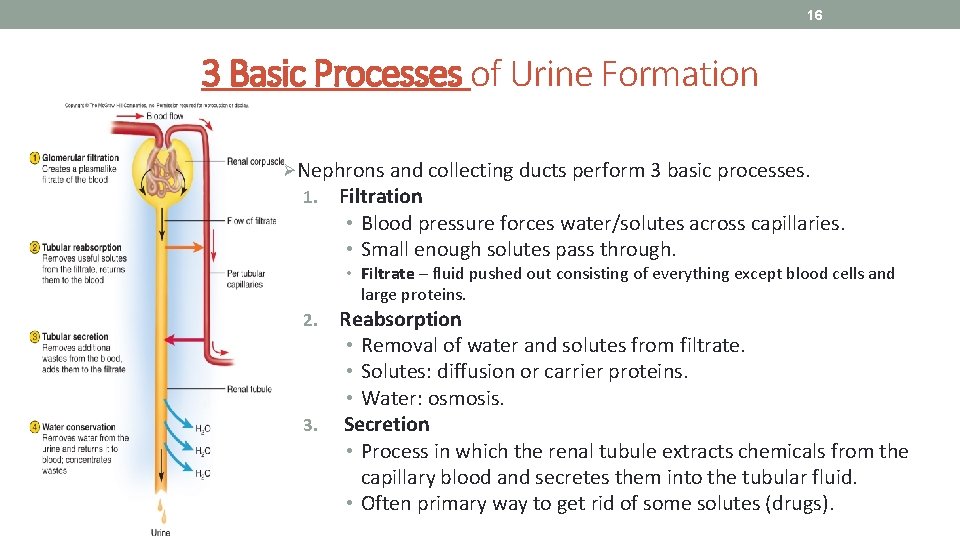
16 3 Basic Processes of Urine Formation ØNephrons and collecting ducts perform 3 basic processes. 1. Filtration • Blood pressure forces water/solutes across capillaries. • Small enough solutes pass through. • Filtrate – fluid pushed out consisting of everything except blood cells and large proteins. Reabsorption • Removal of water and solutes from filtrate. • Solutes: diffusion or carrier proteins. • Water: osmosis. 3. Secretion • Process in which the renal tubule extracts chemicals from the capillary blood and secretes them into the tubular fluid. • Often primary way to get rid of some solutes (drugs). 2.
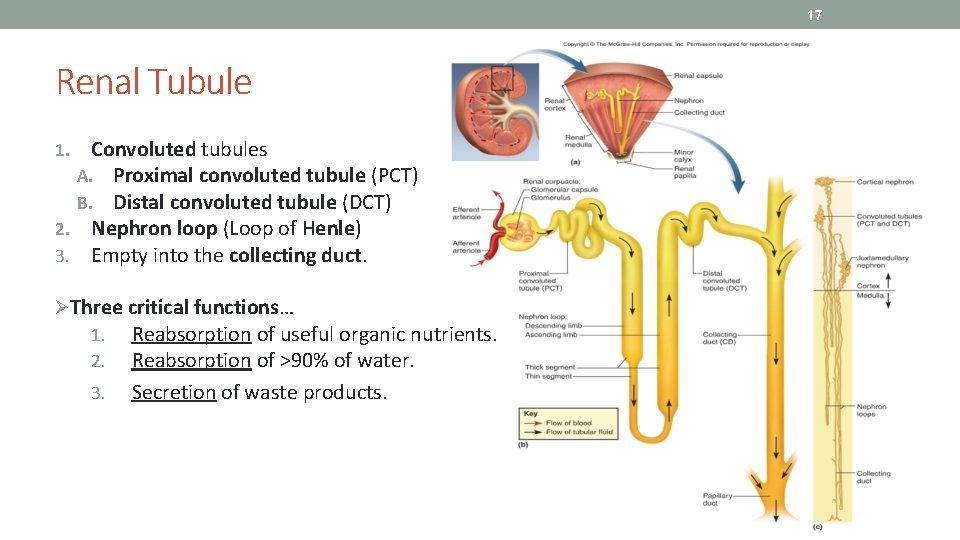
17 Renal Tubule Convoluted tubules A. Proximal convoluted tubule (PCT) B. Distal convoluted tubule (DCT) 2. Nephron loop (Loop of Henle) 3. Empty into the collecting duct. 1. ØThree critical functions… 1. Reabsorption of useful organic nutrients. 2. Reabsorption of >90% of water. 3. Secretion of waste products.
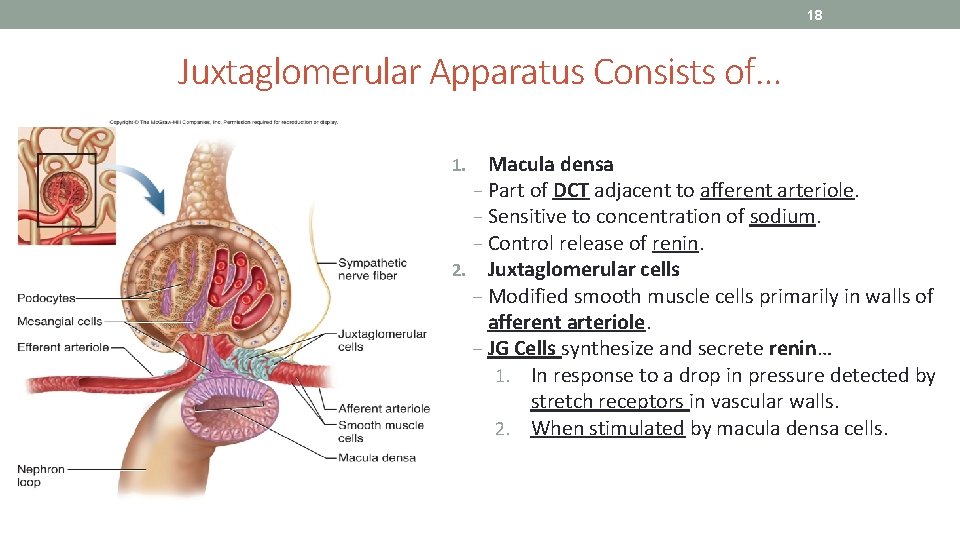
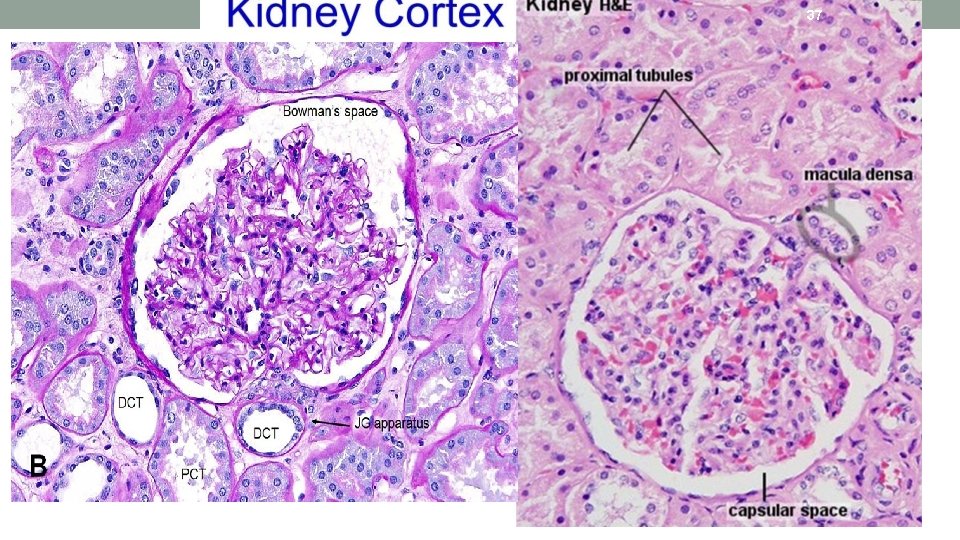
18 Juxtaglomerular Apparatus Consists of… Macula densa − Part of DCT adjacent to afferent arteriole. − Sensitive to concentration of sodium. − Control release of renin. 2. Juxtaglomerular cells ‒ Modified smooth muscle cells primarily in walls of afferent arteriole. ‒ JG Cells synthesize and secrete renin… 1. In response to a drop in pressure detected by stretch receptors in vascular walls. 2. When stimulated by macula densa cells. 1.
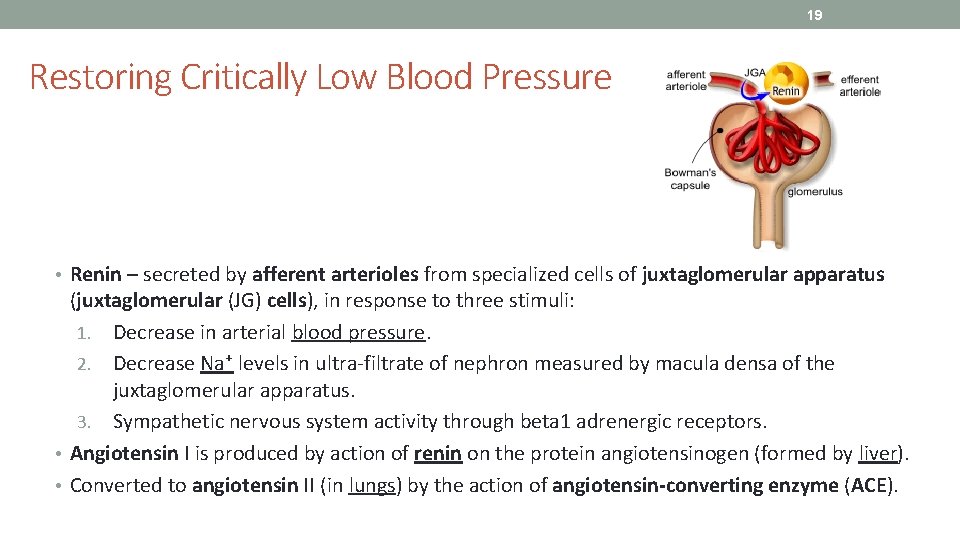
19 Restoring Critically Low Blood Pressure • Renin – secreted by afferent arterioles from specialized cells of juxtaglomerular apparatus (juxtaglomerular (JG) cells), in response to three stimuli: 1. Decrease in arterial blood pressure. 2. Decrease Na⁺ levels in ultra-filtrate of nephron measured by macula densa of the juxtaglomerular apparatus. 3. Sympathetic nervous system activity through beta 1 adrenergic receptors. • Angiotensin I is produced by action of renin on the protein angiotensinogen (formed by liver). • Converted to angiotensin II (in lungs) by the action of angiotensin-converting enzyme (ACE).
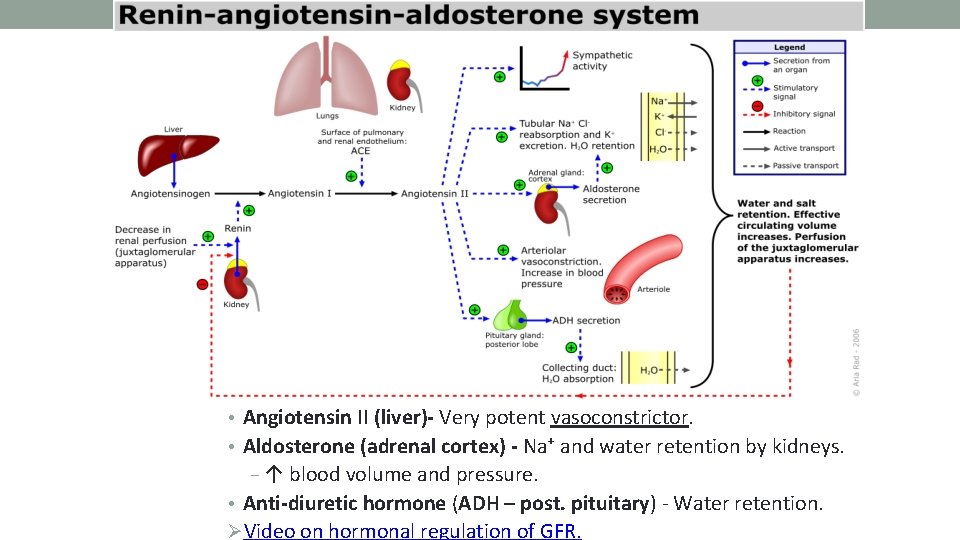
20 • Angiotensin II (liver)- Very potent vasoconstrictor. • Aldosterone (adrenal cortex) - Na⁺ and water retention by kidneys. − ↑ blood volume and pressure. • Anti-diuretic hormone (ADH – post. pituitary) - Water retention. ØVideo on hormonal regulation of GFR.
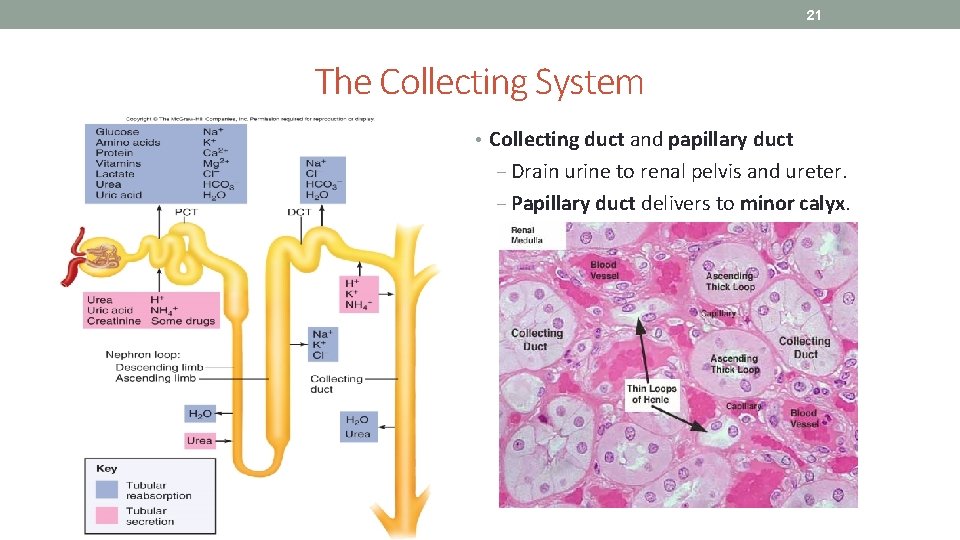
21 The Collecting System • Collecting duct and papillary duct ‒ Drain urine to renal pelvis and ureter. ‒ Papillary duct delivers to minor calyx.
22 Histology - Identify • Macula Densa – on DCT adjacent to glomerulus • Parietal and Visceral layers (podycytes) of Bowmans capsule • PCT – low columnar with brush border, often stain darker • DCT – cuboidal without brush border • Collecting Duct – dense low cuboidal
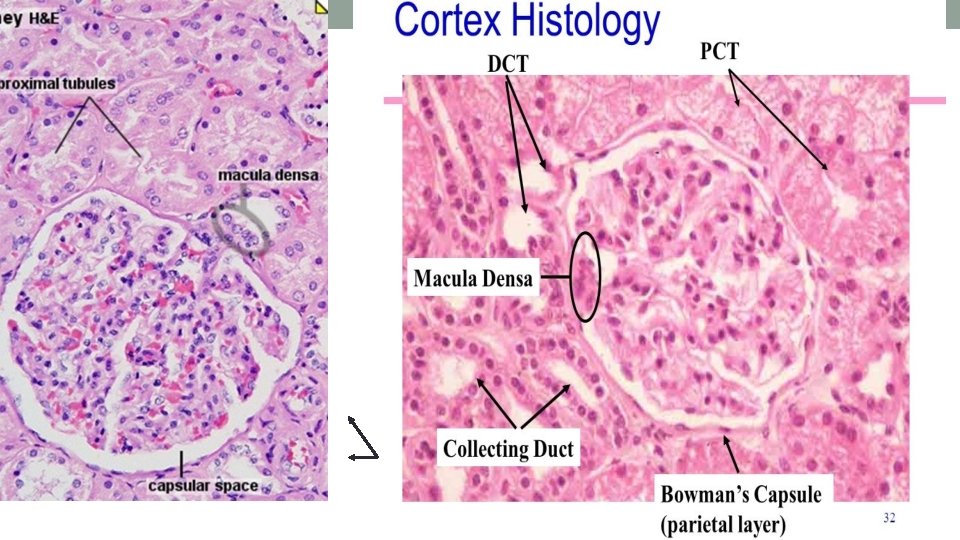
23
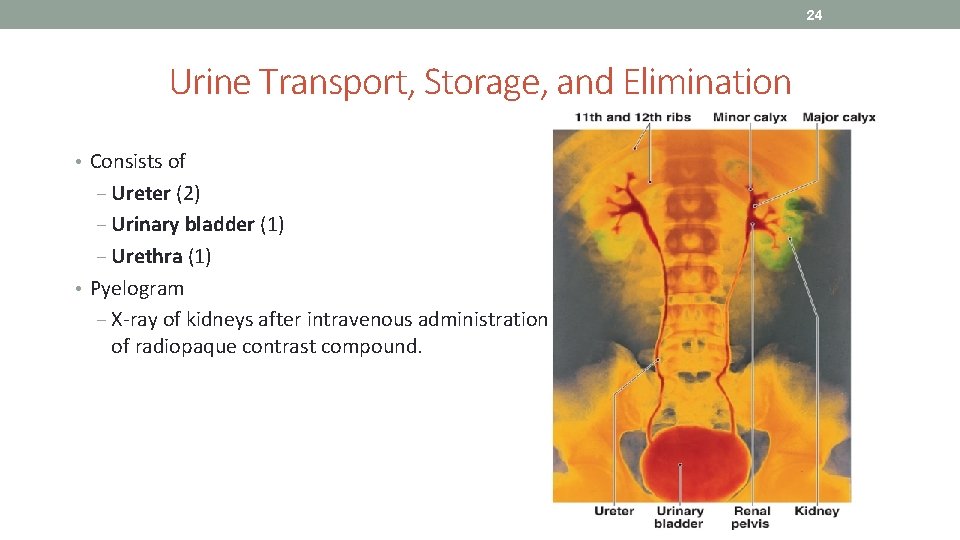
24 Urine Transport, Storage, and Elimination • Consists of ‒ Ureter (2) ‒ Urinary bladder (1) ‒ Urethra (1) • Pyelogram ‒ X-ray of kidneys after intravenous administration of radiopaque contrast compound.
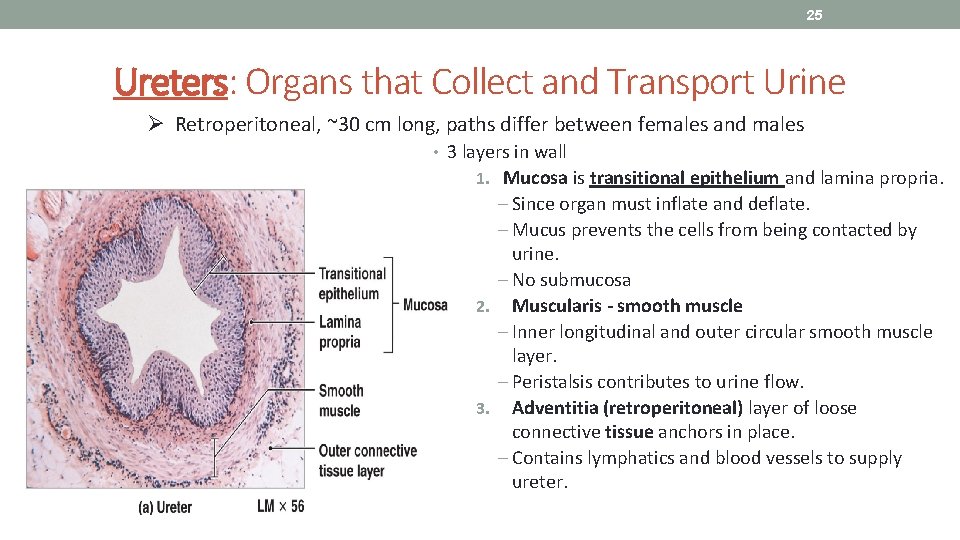
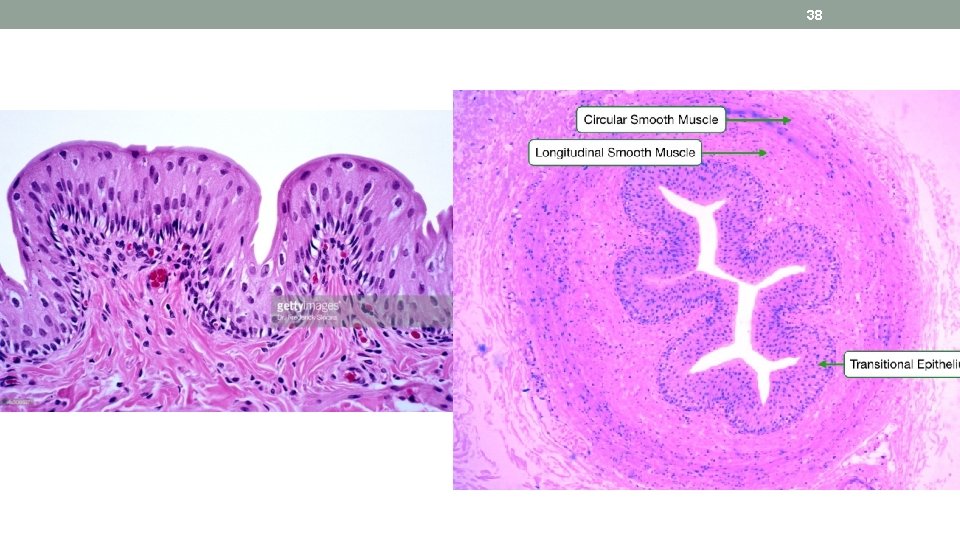
25 Ureters: Organs that Collect and Transport Urine Ø Retroperitoneal, ~30 cm long, paths differ between females and males • 3 layers in wall 1. Mucosa is transitional epithelium and lamina propria. ‒ Since organ must inflate and deflate. ‒ Mucus prevents the cells from being contacted by urine. ‒ No submucosa 2. Muscularis - smooth muscle ‒ Inner longitudinal and outer circular smooth muscle layer. ‒ Peristalsis contributes to urine flow. 3. Adventitia (retroperitoneal) layer of loose connective tissue anchors in place. ‒ Contains lymphatics and blood vessels to supply ureter.
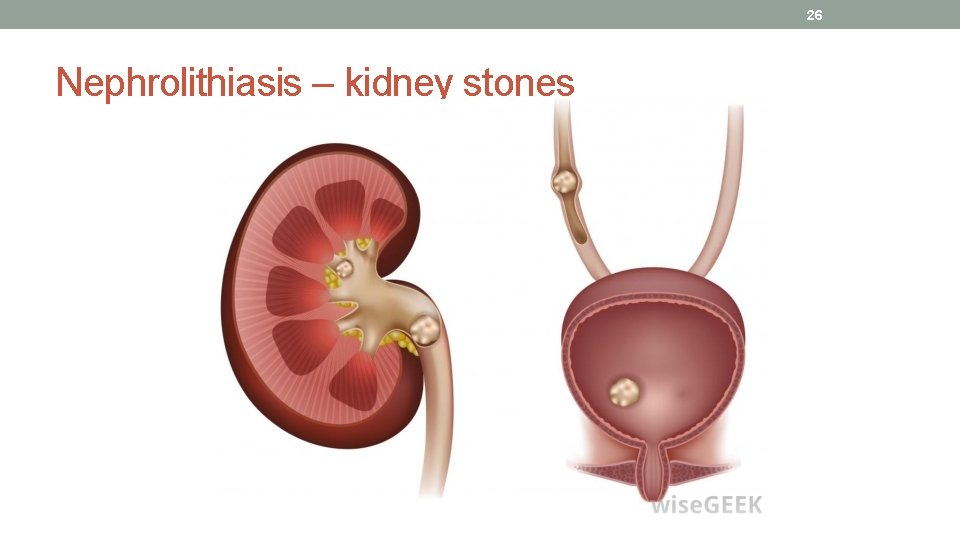
26 Nephrolithiasis – kidney stones
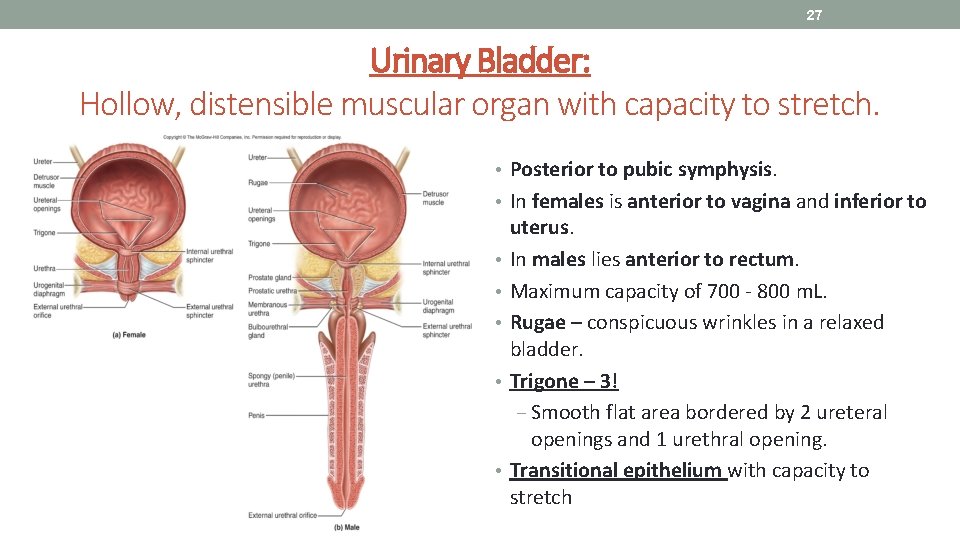
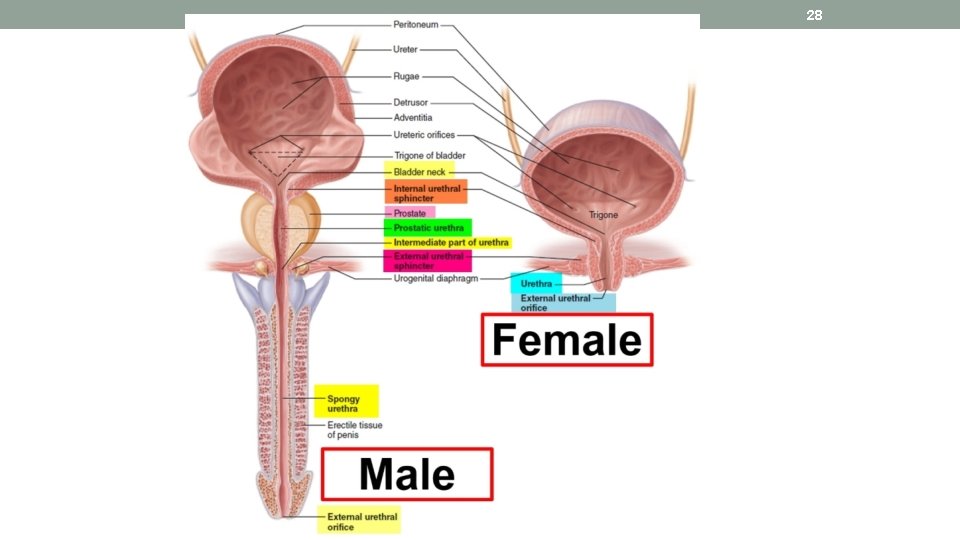
27 Urinary Bladder: Hollow, distensible muscular organ with capacity to stretch. • Posterior to pubic symphysis. • In females is anterior to vagina and inferior to • • • uterus. In males lies anterior to rectum. Maximum capacity of 700 - 800 m. L. Rugae – conspicuous wrinkles in a relaxed bladder. Trigone – 3! ‒ Smooth flat area bordered by 2 ureteral openings and 1 urethral opening. Transitional epithelium with capacity to stretch
28
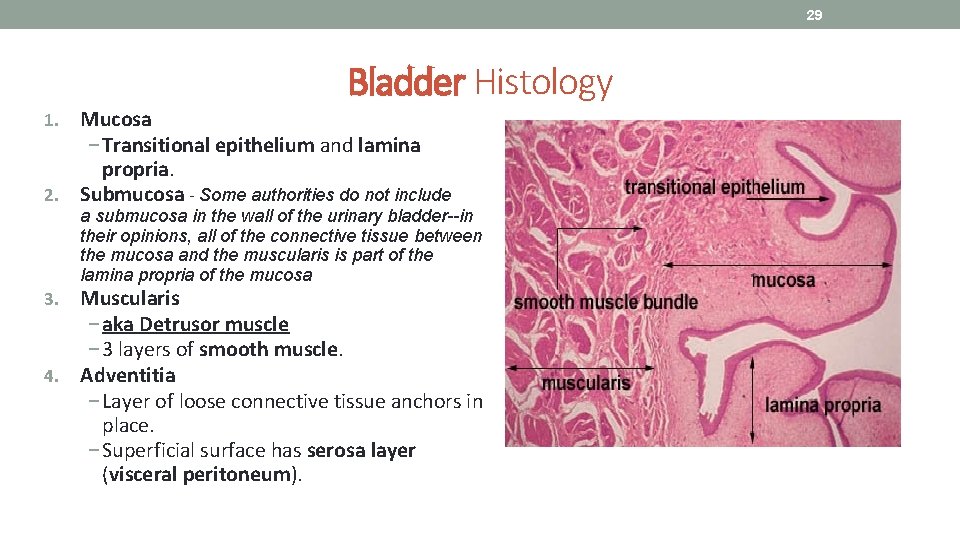
29 Bladder Histology Mucosa − Transitional epithelium and lamina propria. 2. Submucosa - Some authorities do not include 1. a submucosa in the wall of the urinary bladder--in their opinions, all of the connective tissue between the mucosa and the muscularis is part of the lamina propria of the mucosa Muscularis − aka Detrusor muscle − 3 layers of smooth muscle. 4. Adventitia − Layer of loose connective tissue anchors in place. − Superficial surface has serosa layer (visceral peritoneum). 3.
30 • 1. What is the name of the smooth muscle that makes up the bladder wall? • Detrussor • 2. What type of muscle forms the internal urethral sphincter? • involuntary smooth • 3. What type of muscle forms the external urethral sphincter? • voluntary striated • 4. What part of the bladder or urethra is innervated by sympathetic neurons? • Detrussor relaxed, internal sphincter tight. • 5. When are parasympathetic inputs to the bladder inhibited and when activated? • Detrussor activated, internal sphincter relaxed.
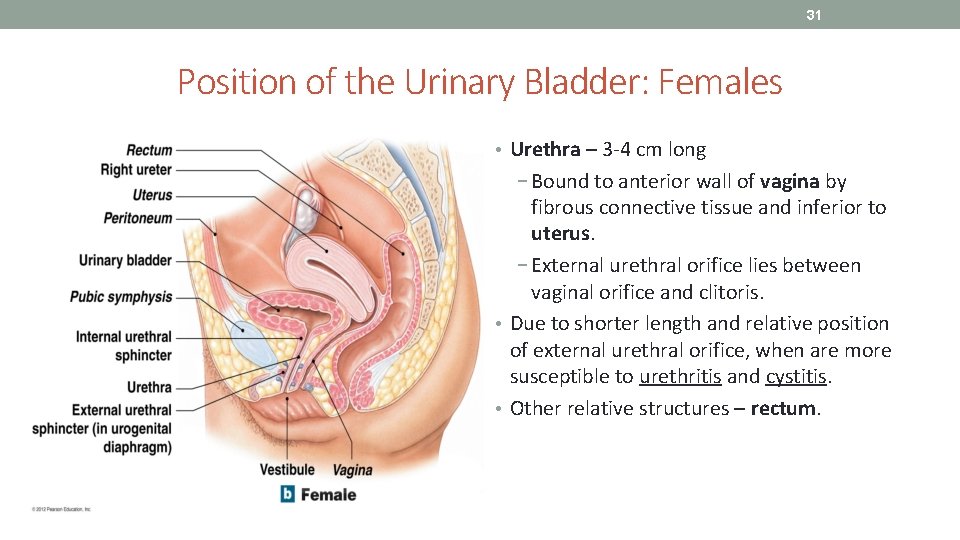
31 Position of the Urinary Bladder: Females • Urethra – 3 -4 cm long − Bound to anterior wall of vagina by fibrous connective tissue and inferior to uterus. − External urethral orifice lies between vaginal orifice and clitoris. • Due to shorter length and relative position of external urethral orifice, when are more susceptible to urethritis and cystitis. • Other relative structures – rectum.
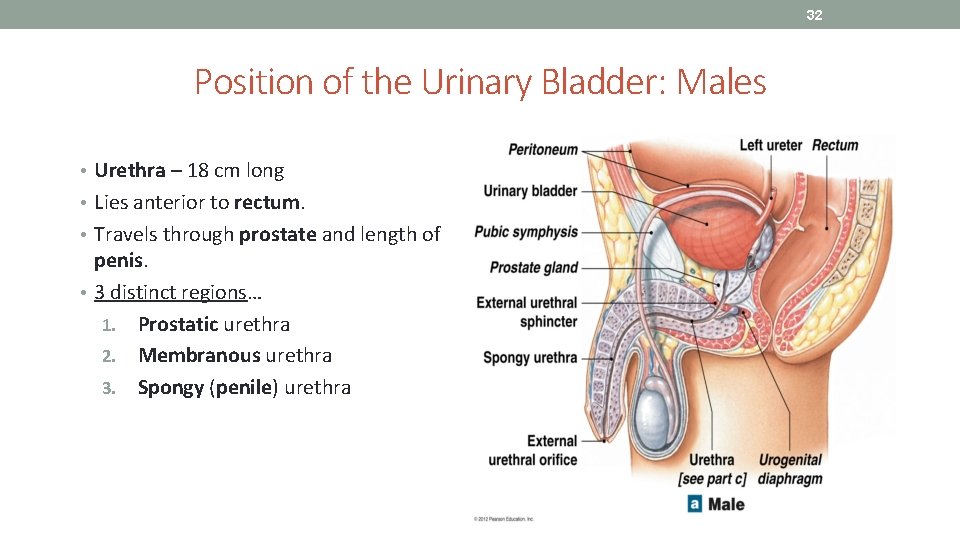
32 Position of the Urinary Bladder: Males • Urethra – 18 cm long • Lies anterior to rectum. • Travels through prostate and length of penis. • 3 distinct regions… 1. Prostatic urethra 2. Membranous urethra 3. Spongy (penile) urethra
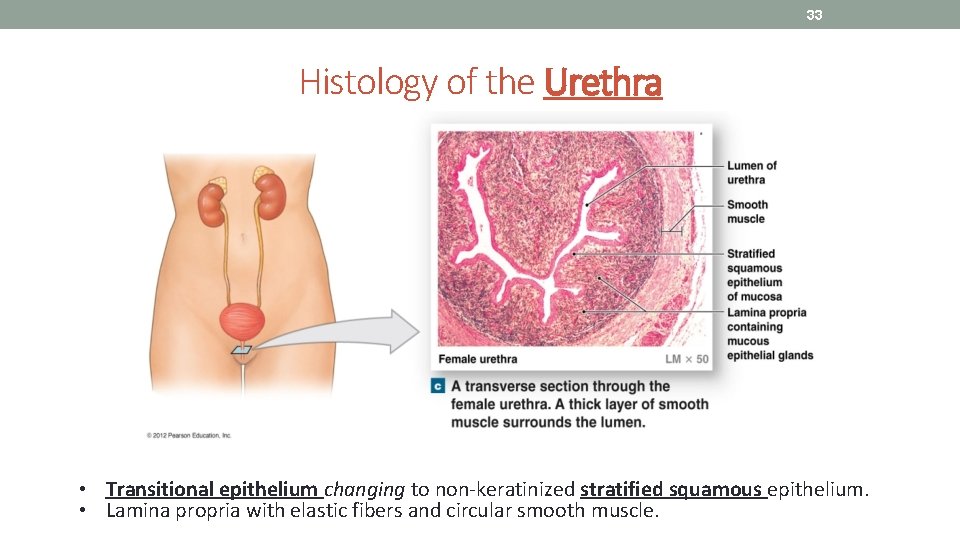
33 Histology of the Urethra • Transitional epithelium changing to non-keratinized stratified squamous epithelium. • Lamina propria with elastic fibers and circular smooth muscle.
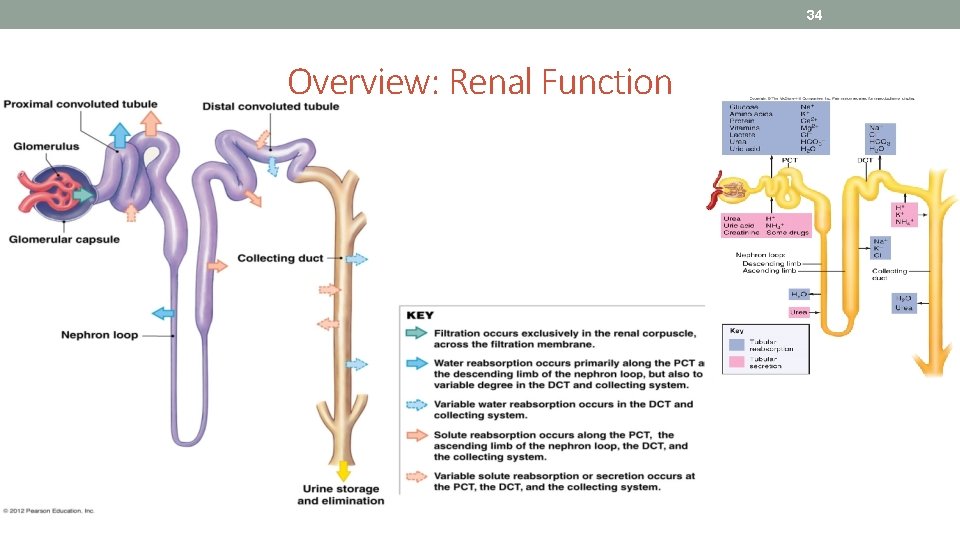
34 Overview: Renal Function
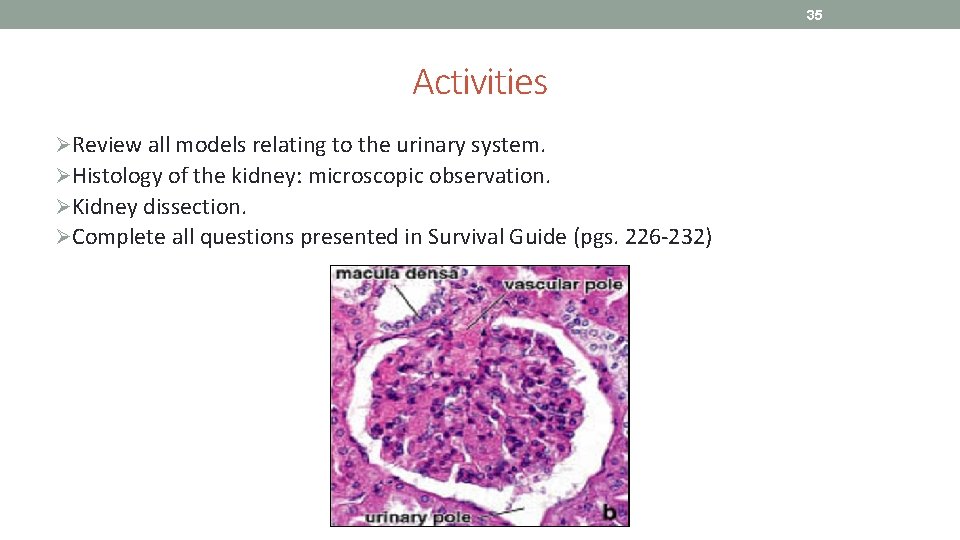
35 Activities ØReview all models relating to the urinary system. ØHistology of the kidney: microscopic observation. ØKidney dissection. ØComplete all questions presented in Survival Guide (pgs. 226 -232)
36
37
38
39
40 References Marieb, E. N. (2012). Essentials of human anatomy & physiology (6 th ed. ). Boston: Pearson Education, Inc. Marieb, E. N. , Mitchell, S. J. & Smith, L. A. (2012). Human anatomy and physiology laboratory manual (10 th ed. ). Boston: Pearson Education, Inc. Martini, F. , Nath, J. & Bartholomew, E. F. (2012). Fundamentals of anatomy & physiology (9 th ed. ). Boston: Pearson Education, Inc. Mc. Phee, J. & Papadakis, M. (2012) Current medical diagnosis & treatment (51 st ed. ). New York: Mc. Graw Hill. Patton, T. & Thibodeau, G. (2013). Anatomy & physiology (8 th ed. ). St. Louis: Mosby Elsevier. Saladin, K. S. (2012). Anatomy & physiology: The unity of form and function (6 th ed. ). New York: Mc. Graw Hill. Tortora, G. J. & Derrickson, B. H. (2012). Principles of anatomy and physiology (13 th ed. ). Hoboken, NJ: Wiley
- Slides: 40