
1 BI 233 Laboratory Respiratory Physiology 2 Pulmonary
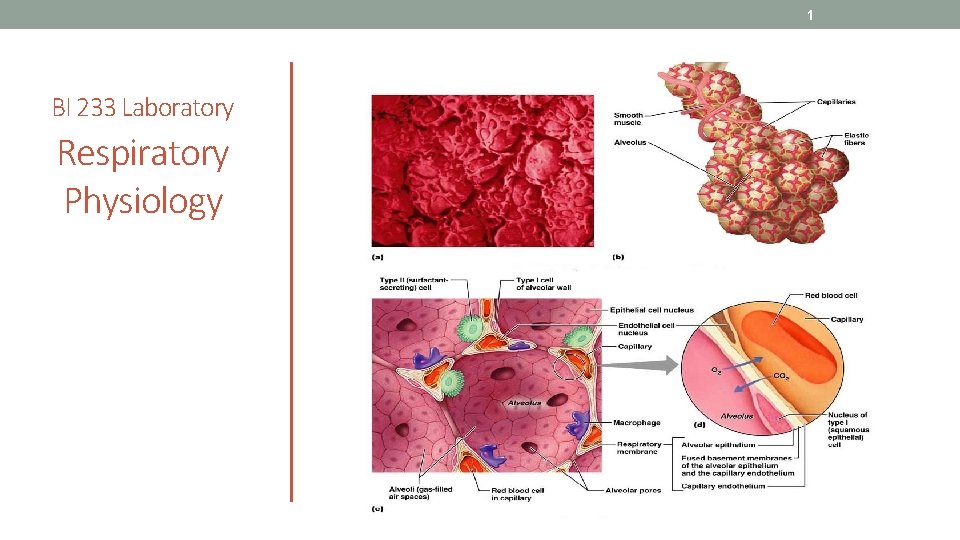
1 BI 233 Laboratory Respiratory Physiology
2 • Pulmonary ventilation Respiratory Terminology − Process by which O₂ enters and CO₂ exits alveoli (breathing). • Respiration − Process by which O₂ and CO₂ diffuse in and out of the blood (gas exchange) − Occurs in 2 areas of the body. 1. External respiration – gas exchange across respiratory membrane of lungs (alveoli) into the blood. 2. Internal respiration – gas exchange between the blood and the interstitial fluid, tissues and cells • Cellular respiration − Series of metabolic processes where living cells produce energy through oxidation of organic substances.
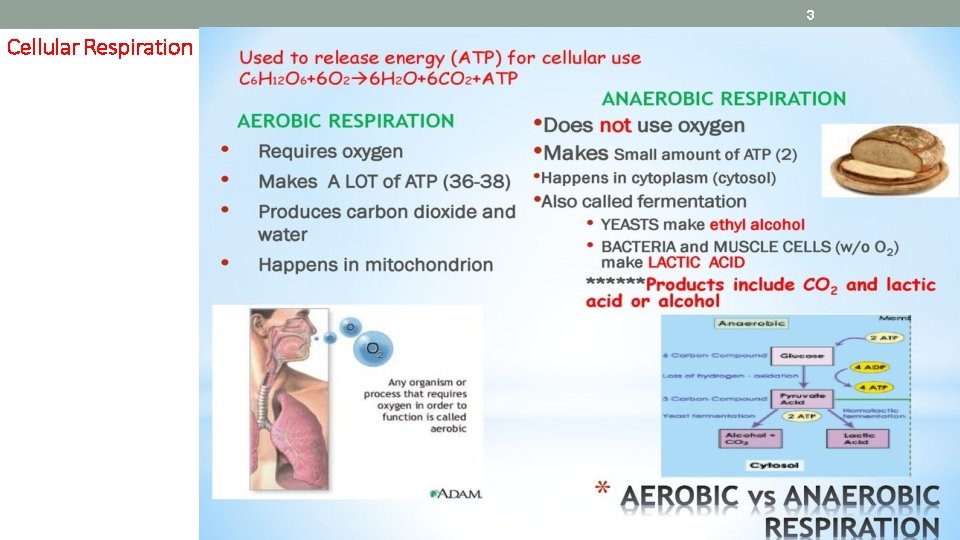
3 Cellular Respiration
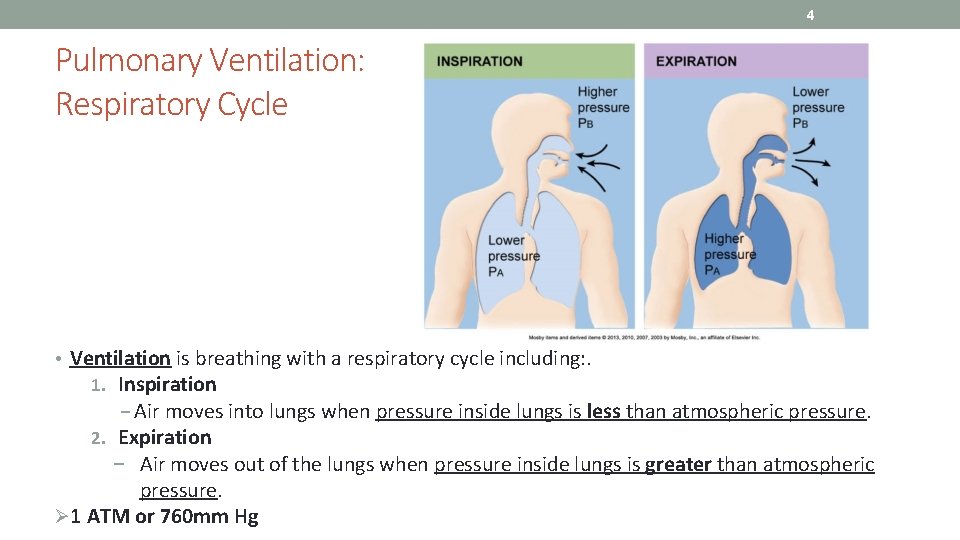
4 Pulmonary Ventilation: Respiratory Cycle • Ventilation is breathing with a respiratory cycle including: . 1. Inspiration − Air moves into lungs when pressure inside lungs is less than atmospheric pressure. 2. Expiration − Air moves out of the lungs when pressure inside lungs is greater than atmospheric pressure. Ø 1 ATM or 760 mm Hg
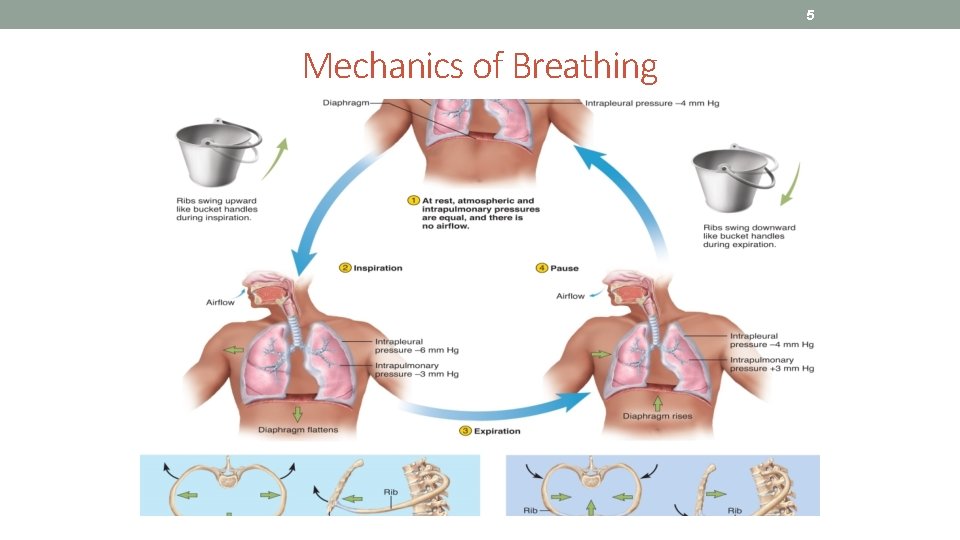
5 Mechanics of Breathing
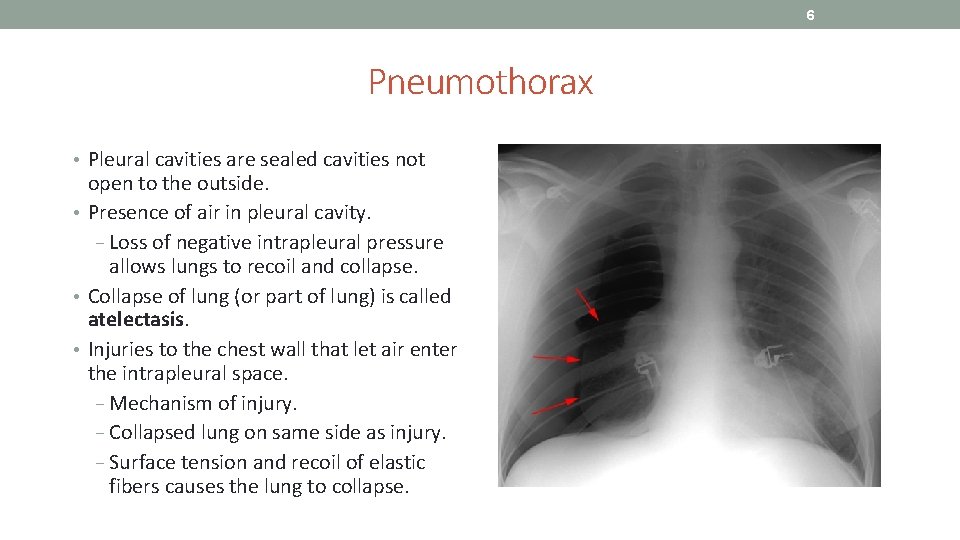
6 Pneumothorax • Pleural cavities are sealed cavities not open to the outside. • Presence of air in pleural cavity. − Loss of negative intrapleural pressure allows lungs to recoil and collapse. • Collapse of lung (or part of lung) is called atelectasis. • Injuries to the chest wall that let air enter the intrapleural space. − Mechanism of injury. − Collapsed lung on same side as injury. − Surface tension and recoil of elastic fibers causes the lung to collapse.
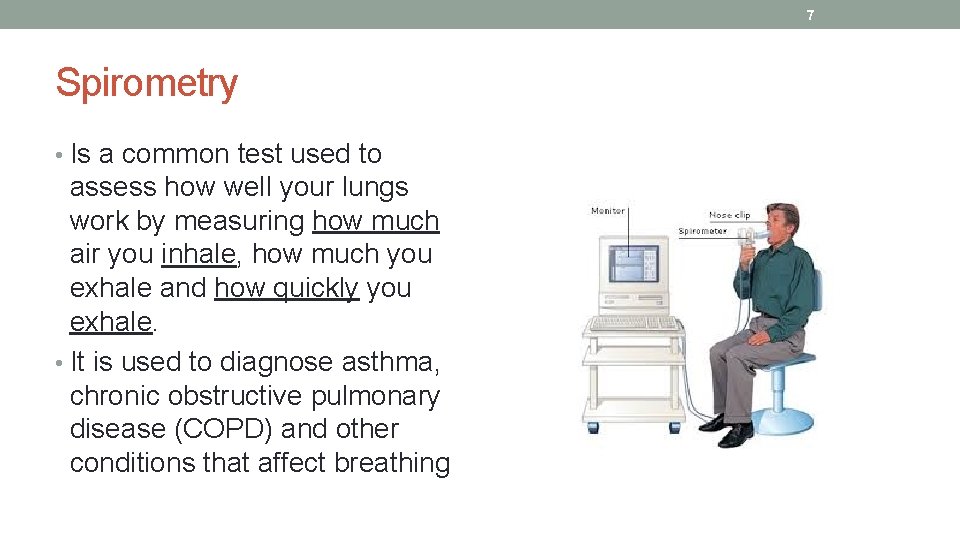
7 Spirometry • Is a common test used to assess how well your lungs work by measuring how much air you inhale, how much you exhale and how quickly you exhale. • It is used to diagnose asthma, chronic obstructive pulmonary disease (COPD) and other conditions that affect breathing
8 Pulmonary Volumes (how much) • Exchange of O₂ and CO₂ dependent on normal volumes of air moving in and out, and remaining volumes. − Respiratory volumes ØTidal volume (TV) − Air exhaled after a normal inspiration (quiet breathing). ØInspiratory reserve volume (IRV) − Air in excess of tidal inspiration that can be inhaled with maximum effort. − Normal = 3. 3 L • Expiratory reserve volume (ERV) − Air in excess of tidal expiration that can be exhaled with maximum effort. − Normal = between 1. 0 and 1. 2 L • Residual volume (RV) − Air remaining in lungs after maximum expiration, keeps alveoli inflated. − Normal = 1. 1 -1. 2 L
9 Pulmonary Capacities • Vital capacity (VC) − Amount of air that an be exhaled with maximum effort after maximum inspiration. − Influenced by size of thoracic cavity and posture. − Assess strength of thoracic muscles and pulmonary function. − VC = IRV + TV + ERV • Inspiratory capacity (IC) − Maximum amount of air that can be inhaled after a normal (tidal) expiration. • Functional residual capacity (FRC) − Amount of air in lungs after a normal respiration (tidal). • Total lung capacity (TLC) − Maximum amount of air lungs can hold. − Sum of all four lung volumes. − TLC = TV + IRV + ERV + RV

10 Pulmonary Volumes and Capacities
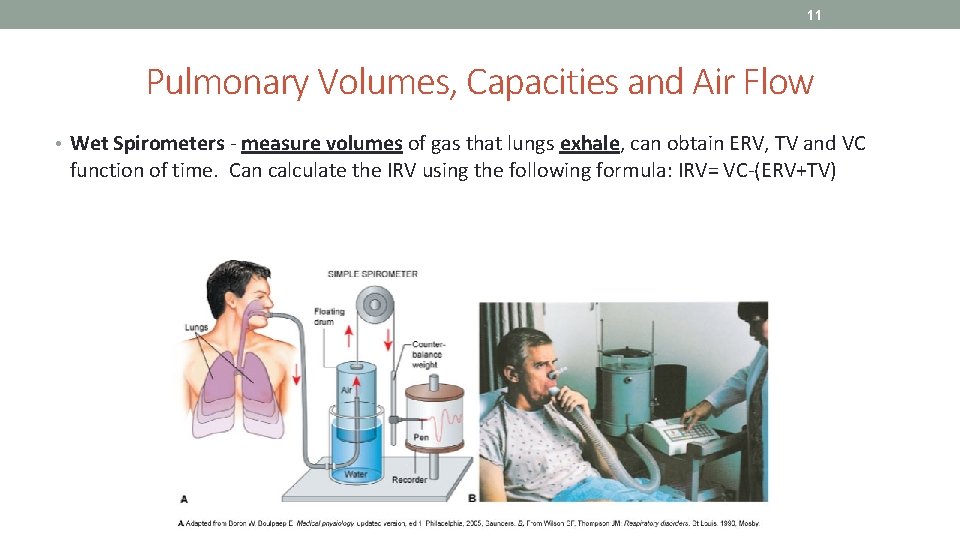
11 Pulmonary Volumes, Capacities and Air Flow • Wet Spirometers - measure volumes of gas that lungs exhale, can obtain ERV, TV and VC function of time. Can calculate the IRV using the following formula: IRV= VC-(ERV+TV)
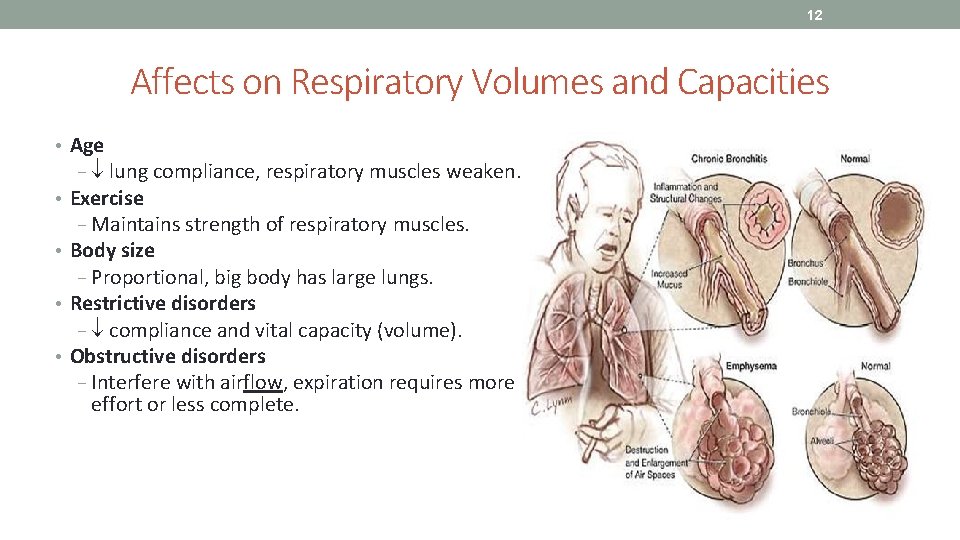
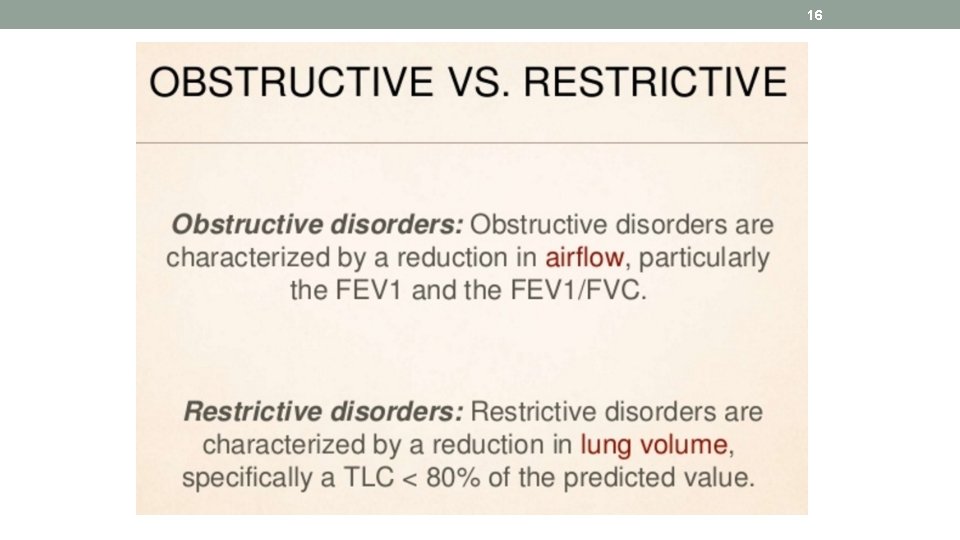
12 Affects on Respiratory Volumes and Capacities • Age − lung compliance, respiratory muscles weaken. • Exercise − Maintains strength of respiratory muscles. • Body size − Proportional, big body has large lungs. • Restrictive disorders − compliance and vital capacity (volume). • Obstructive disorders − Interfere with airflow, expiration requires more effort or less complete.

13 FEV: Most Important Measurement of Lung Function • Forced expiratory volume (FEV) – volume of gas expired over time – (typically 1 sec=FEV 1) ‒ AKA: forced vital capacity (FVC) − Maximum volume of gas expired/second during forced expiration (% of VC). • Exhaled from full inhalation as forcefully and rapidly as possible. ‒ Amount of air exhaled may be measured during first (FEV 1), second (FEV 2), and/or third seconds (FEV 3) of forced breath. ‒ Healthy adult - 75 to 85% in 1 sec. • FEV used to… 1. Diagnose obstructive lung diseases (asthma and COPD). • Individuals with asthma or COPD have lower FEV 1 result than a healthy person. 2. Indicate effectiveness of medications prescribed for lung disease. 3. Monitor disease status. • Decreases in FEV 1 value may indicate condition is worsening.
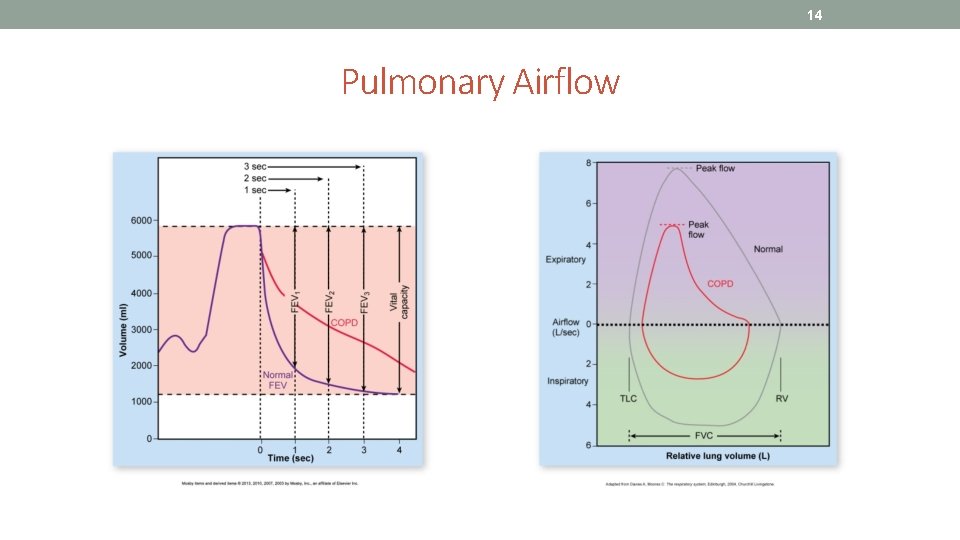
14 Pulmonary Airflow
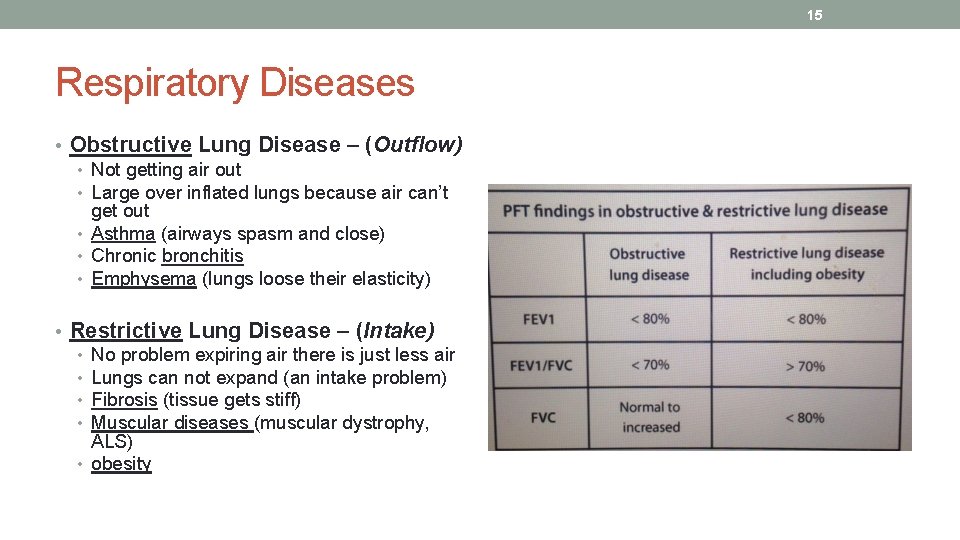
15 Respiratory Diseases • Obstructive Lung Disease – (Outflow) • Not getting air out • Large over inflated lungs because air can’t get out • Asthma (airways spasm and close) • Chronic bronchitis • Emphysema (lungs loose their elasticity) • Restrictive Lung Disease – (Intake) • No problem expiring air there is just less air • Lungs can not expand (an intake problem) • Fibrosis (tissue gets stiff) • Muscular diseases (muscular dystrophy, ALS) • obesity
16
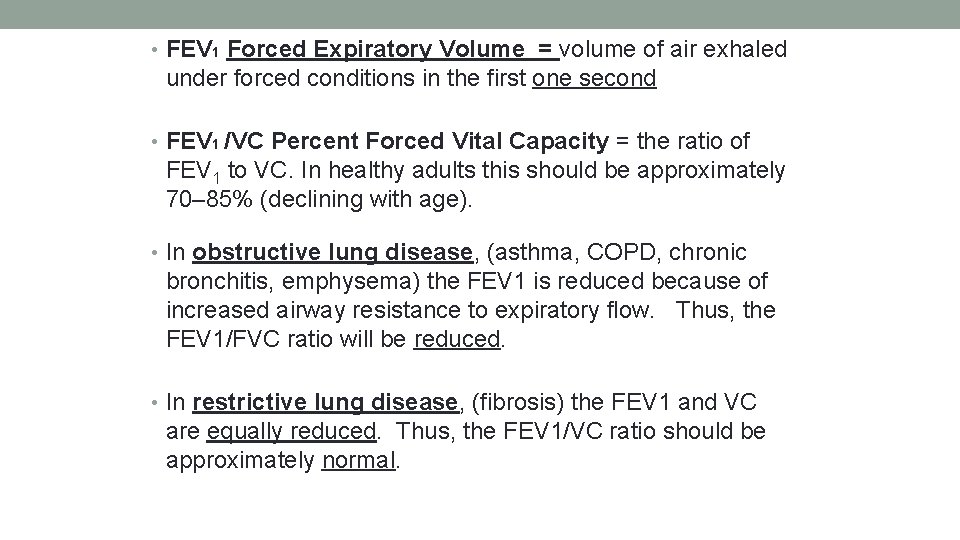
• FEV 1 Forced Expiratory Volume = volume of air exhaled under forced conditions in the first one second • FEV 1 /VC Percent Forced Vital Capacity = the ratio of FEV 1 to VC. In healthy adults this should be approximately 70– 85% (declining with age). • In obstructive lung disease, (asthma, COPD, chronic bronchitis, emphysema) the FEV 1 is reduced because of increased airway resistance to expiratory flow. Thus, the FEV 1/FVC ratio will be reduced. • In restrictive lung disease, (fibrosis) the FEV 1 and VC are equally reduced. Thus, the FEV 1/VC ratio should be approximately normal.
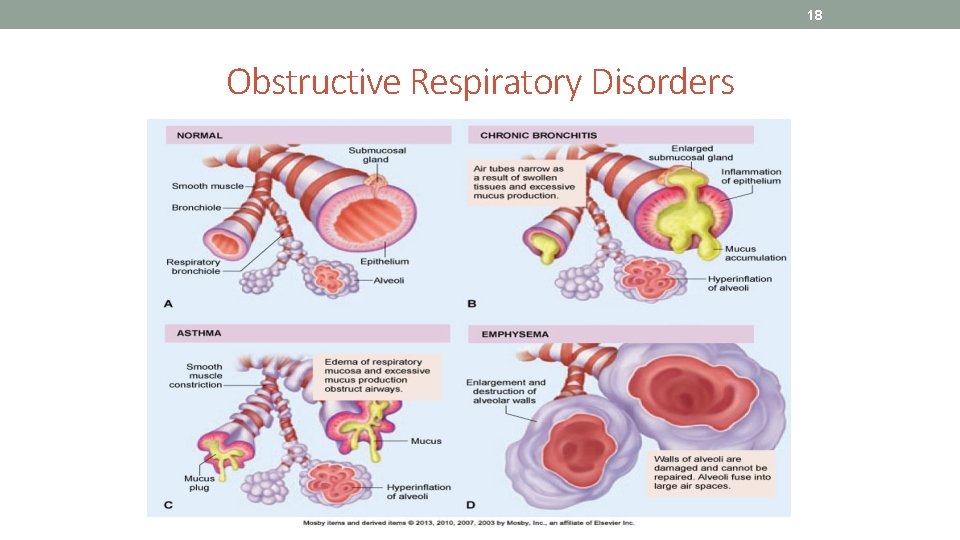
18 Obstructive Respiratory Disorders
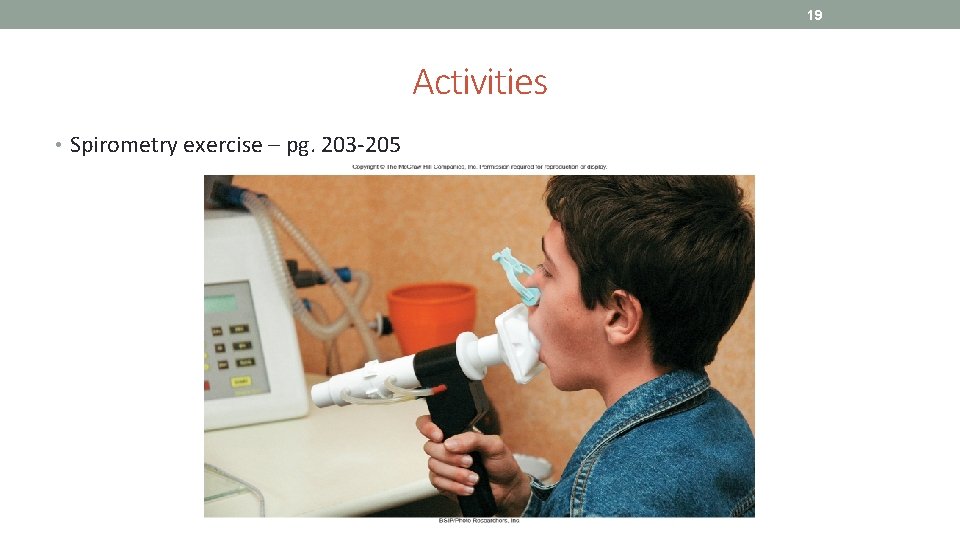
19 Activities • Spirometry exercise – pg. 203 -205
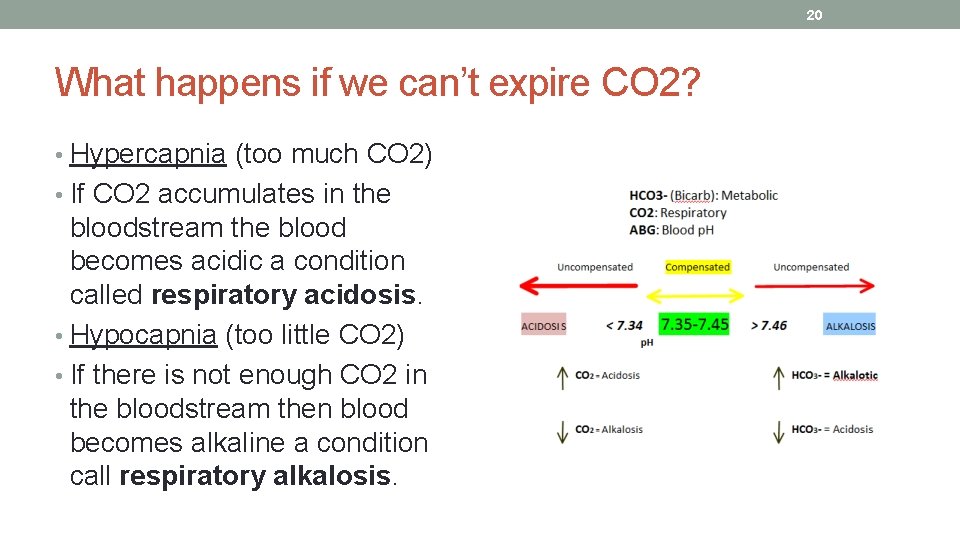
20 What happens if we can’t expire CO 2? • Hypercapnia (too much CO 2) • If CO 2 accumulates in the bloodstream the blood becomes acidic a condition called respiratory acidosis. • Hypocapnia (too little CO 2) • If there is not enough CO 2 in the bloodstream then blood becomes alkaline a condition call respiratory alkalosis.
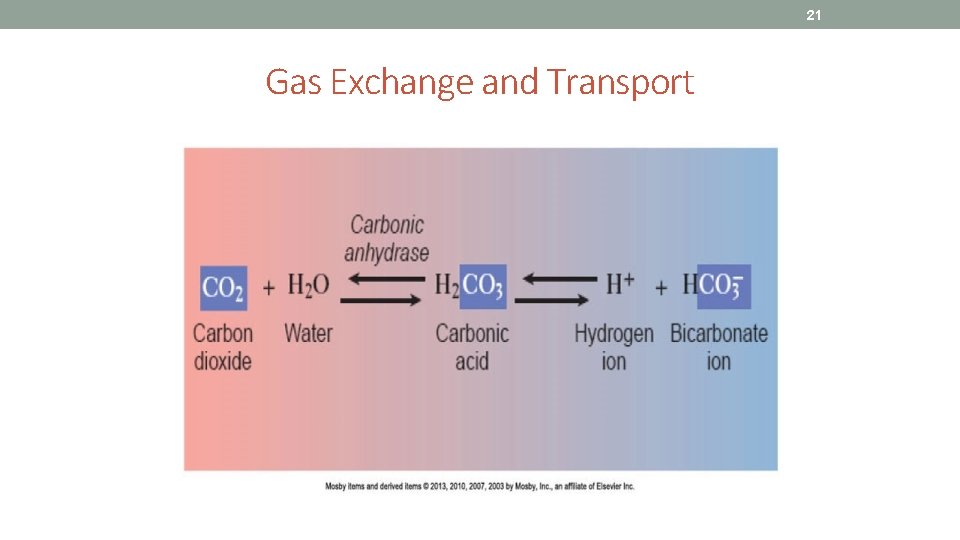
21 Gas Exchange and Transport
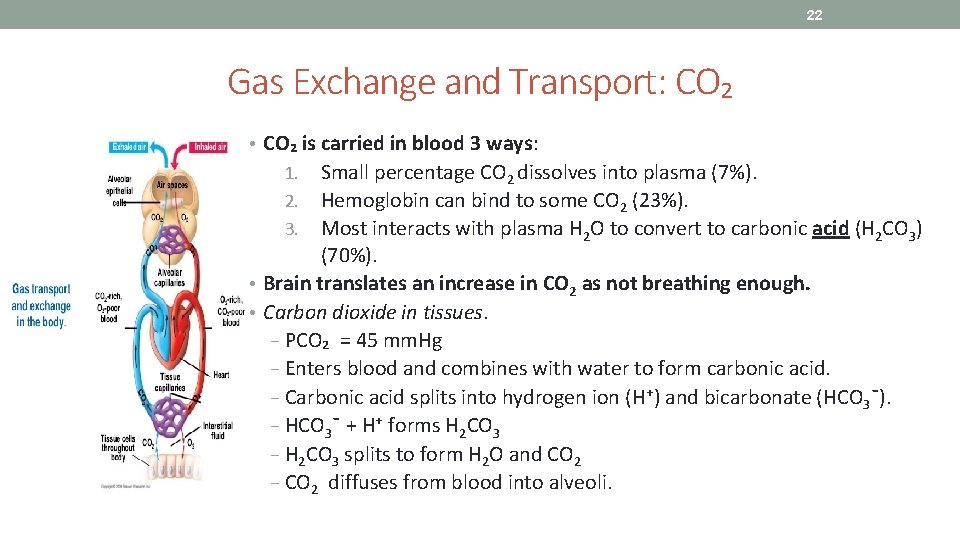
22 Gas Exchange and Transport: CO₂ • CO₂ is carried in blood 3 ways: 1. Small percentage CO 2 dissolves into plasma (7%). 2. Hemoglobin can bind to some CO 2 (23%). 3. Most interacts with plasma H 2 O to convert to carbonic acid (H 2 CO 3) (70%). • Brain translates an increase in CO 2 as not breathing enough. • Carbon dioxide in tissues. − PCO₂ = 45 mm. Hg − Enters blood and combines with water to form carbonic acid. − Carbonic acid splits into hydrogen ion (H⁺) and bicarbonate (HCO 3¯). − HCO 3¯ + H⁺ forms H 2 CO 3 − H 2 CO 3 splits to form H 2 O and CO 2 − CO 2 diffuses from blood into alveoli.
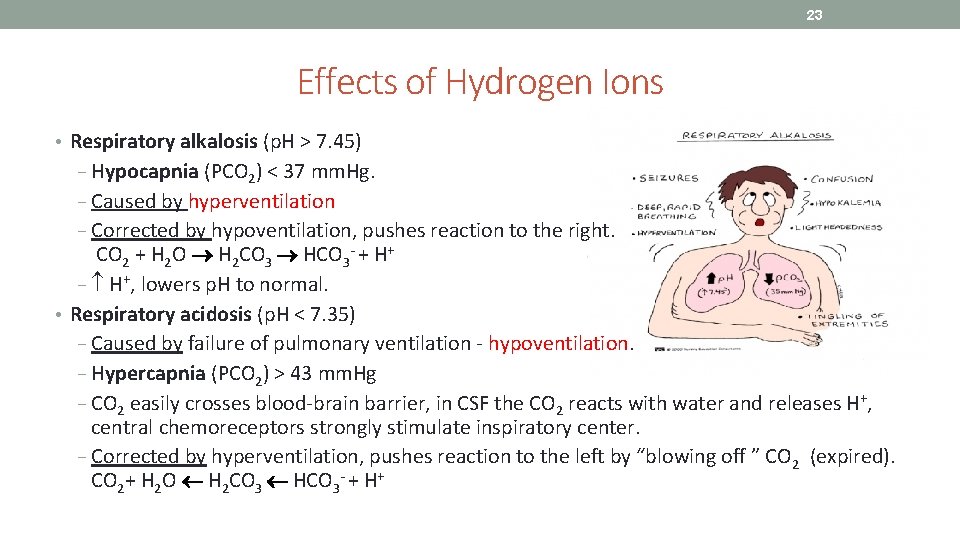
23 Effects of Hydrogen Ions • Respiratory alkalosis (p. H > 7. 45) − Hypocapnia (PCO 2) < 37 mm. Hg. − Caused by hyperventilation − Corrected by hypoventilation, pushes reaction to the right. CO 2 + H 2 O H 2 CO 3 HCO 3 - + H+ − H+, lowers p. H to normal. • Respiratory acidosis (p. H < 7. 35) − Caused by failure of pulmonary ventilation - hypoventilation. − Hypercapnia (PCO 2) > 43 mm. Hg − CO 2 easily crosses blood-brain barrier, in CSF the CO 2 reacts with water and releases H+, central chemoreceptors strongly stimulate inspiratory center. − Corrected by hyperventilation, pushes reaction to the left by “blowing off ” CO 2 (expired). CO 2+ H 2 O H 2 CO 3 HCO 3 - + H+
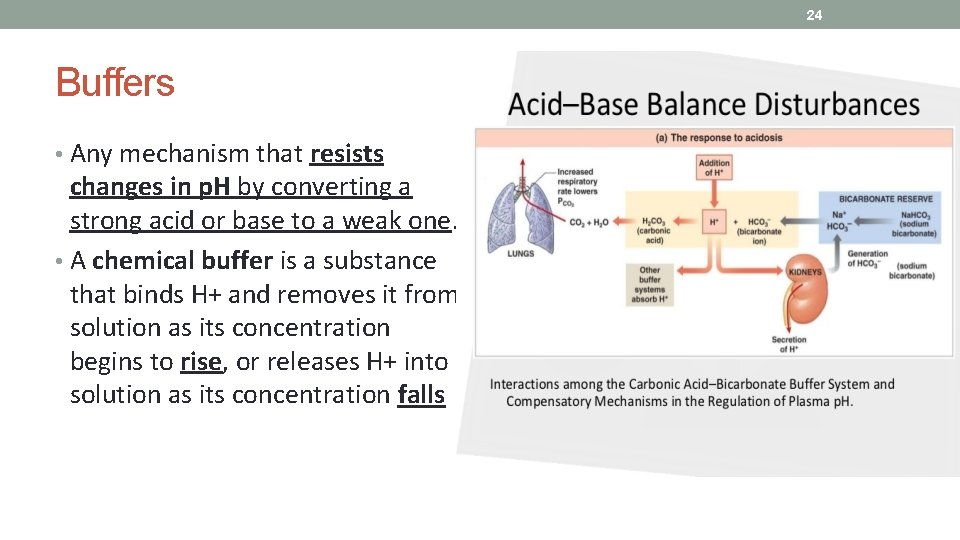
24 Buffers • Any mechanism that resists changes in p. H by converting a strong acid or base to a weak one. • A chemical buffer is a substance that binds H+ and removes it from solution as its concentration begins to rise, or releases H+ into solution as its concentration falls
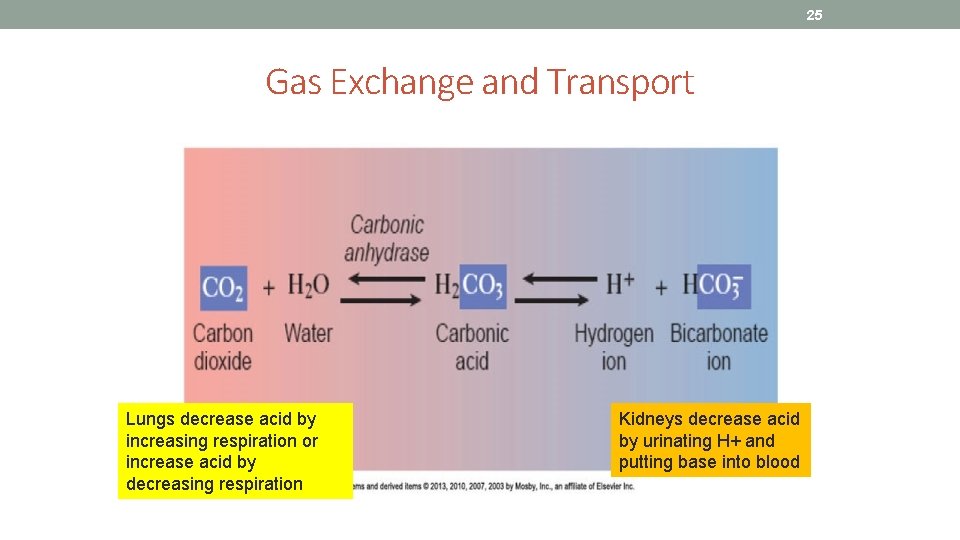
25 Gas Exchange and Transport Lungs decrease acid by increasing respiration or increase acid by decreasing respiration Kidneys decrease acid by urinating H+ and putting base into blood
26 Do Buffer Activity in lab manual • Follow the instructions in your manual
27 Activity: Effect of p. CO 2 on respiratory Rate • 1. Observe lab partner for one minute and record their respiratory rate (# of breaths per min) • 2. Next have partner take slow, deep breaths for two minutes and record respiratory rate for one minute • Was there an increase or decrease in the respiratory rate? • 3. Next have partner breathe in and out of a paper bag (covering their nose and mouth with the bag) for two minutes and then record respiratory rate for one minute. • Was there an increase or decrease in the respiratory rate?
28 Activity: Effect of CO 2 on the p. H of a solution • Since we can’t measure the effects of ventilatory rate on blood p. H directly in the lab because it requires an analysis of arterial blood we will use water and test the p. H while resting, exercising and after exercising. • Follow the instructions in your lab manual and then answer the questions.
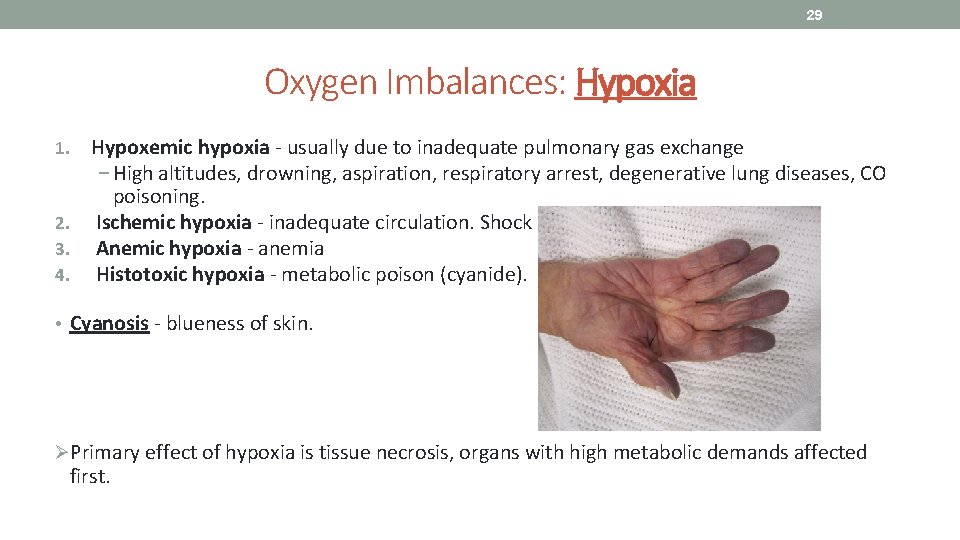
29 Oxygen Imbalances: Hypoxia Hypoxemic hypoxia - usually due to inadequate pulmonary gas exchange − High altitudes, drowning, aspiration, respiratory arrest, degenerative lung diseases, CO poisoning. 2. Ischemic hypoxia - inadequate circulation. Shock 3. Anemic hypoxia - anemia 4. Histotoxic hypoxia - metabolic poison (cyanide). 1. • Cyanosis - blueness of skin. ØPrimary effect of hypoxia is tissue necrosis, organs with high metabolic demands affected first.
30 Activity: Pulse Oximeter • Check your oxygen saturation levels and record on chart

31 Works Cited Marieb, E. N. (2012). Essentials of human anatomy & physiology (6 th ed. ). Boston: Pearson Education, Inc. Marieb, E. N. , Mitchell, S. J. & Smith, L. A. (2012). Human anatomy and physiology laboratory manual (10 th ed. ). Boston: Pearson Education, Inc. Martini, F. , Nath, J. & Bartholomew, E. F. (2012). Fundamentals of anatomy & physiology (9 th ed. ). Boston: Pearson Education, Inc. Mc. Phee, J. & Papadakis, M. (2012) Current medical diagnosis & treatment (51 st ed. ). New York: Mc. Graw Hill. Patton, T. & Thibodeau, G. (2013). Anatomy & physiology (8 th ed. ). St. Louis: Mosby Elsevier. Saladin, K. S. (2012). Anatomy & physiology: The unity of form and function (6 th ed. ). New York: Mc. Graw Hill. Tortora, G. J. & Derrickson, B. H. (2012). Principles of anatomy and physiology (13 th ed. ). Hoboken, NJ: Wiley
- Slides: 31