
1 BEHAVIORAL DISTURBANCES IN DEMENTIA 2 OBJECTIVES Know
1 BEHAVIORAL DISTURBANCES IN DEMENTIA
2 OBJECTIVES • Know and understand: • Factors precipitating behavioral disturbances • How to rule out medical, environmental, and caregiving causes of behavioral problems • Environmental and non-pharmacologic management of behavioral disturbances • When and how to medicate
3 TOPICS COVERED • Clinical Features • Assessment and Differential Diagnosis • Basic Approach to Treatment • Treatments for Specific Disturbances
4 INTRODUCTION • As many as 80%– 90% of patients with dementia develop at least one distressing symptom over the course of their illness • Behavioral disturbances or psychotic symptoms in dementia often precipitate early nursing-home placement • Disturbances are potentially treatable, so it is vital to anticipate and recognize them early
5 CLINICAL FEATURES • Psychiatric symptoms may develop that resemble discrete mental disorders such as depression or mania • The course and features are more difficult to predict, and treatments are less reliably effective than in younger adults without dementia • Neuropsychiatric symptoms such as apathy, poor self-care, or paranoia may be the first indication of dementia

CLINICAL FEATURES: AGITATION (1 of 2) • Reflects loss of ability to modulate behavior in a socially acceptable way • May involve verbal outbursts, physical aggression, resistance to bathing or other care needs, and restless motor activity such as pacing or rocking • Often occurs concomitantly with psychotic symptoms such as paranoia, delusional thinking, or hallucinations 6
CLINICAL FEATURES: AGITATION (2 of 2) • The word agitation is used to describe a variety of behaviors and psychologic symptoms • Assessment of disruptive behavior must include a careful description of the nature of the symptom, when it occurs, where it develops, and if any precipitants are identified • Overt resistance to care is most often seen in later stages of dementia, but it may be a first sign of incipient cognitive decline 7
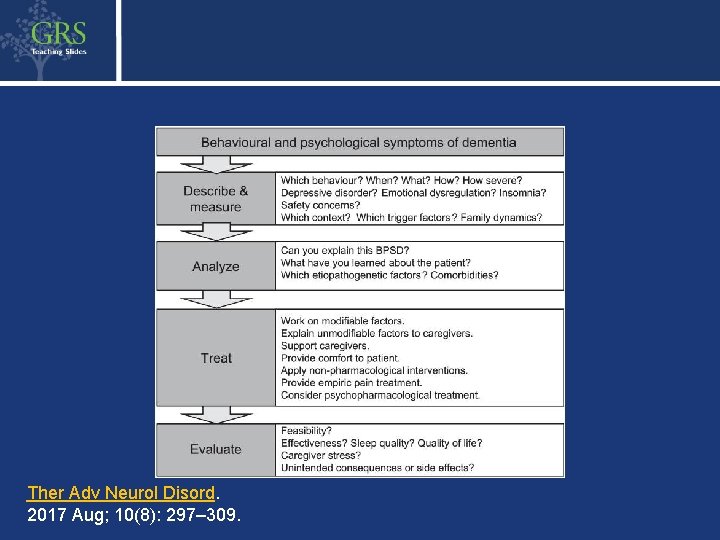
8 Ther Adv Neurol Disord. 2017 Aug; 10(8): 297– 309.
9 ASSESSMENT • Obtain a history from both the patient and an informant • Elicit a clear description of the behavior: Ø Temporal onset and course Ø Associated circumstances Ø Relationship to key environmental factors, such as caregiver status and recent stressors
DIFFERENTIAL DIAGNOSIS: MEDICAL CAUSES • Disturbances that are new, acute in onset, or evolving rapidly are most often due to a medical condition or medication toxicity • An isolated behavioral disturbance in a demented patient can be the sole presenting symptom of acute conditions such as pneumonia, UTI, gout flare, electrolyte abnormalities, angina, constipation, or uncontrolled diabetes • Medication toxicity can present as behavioral symptoms alone 10
DIFFERENTIAL DIAGNOSIS: ENVIRONMENTAL CAUSES 11 • Life stressor (eg, death of a spouse or other family member) • Change to daylight savings time or travel across time zones • New routine, new caregivers, or new roommate • Overstimulation (eg, too much noise, crowded rooms, close contact with too many people) • Understimulation (eg, relative absence of people, spending much time alone, use of television as a companion) • Disruptive behavior of other patients
DIFFERENTIAL DIAGNOSIS: STRESS IN CAREGIVING RELATIONSHIP • May exacerbate/cause a behavioral disturbance • Relationships with potential for stress include: Ø Inexperienced caregivers Ø Domineering caregivers Ø Caregivers who themselves are impaired by medical or psychiatric disturbances 12
MANIFESTATION OF DEMENTIA: CATASTROPHIC REACTION • Defined as an acute behavioral, physical, or verbal reaction to environmental stressors that results from inability to make routine adjustments in daily life • Might include anger, emotional lability, or aggression when confronted with a deficit • Best treated by identifying and avoiding precipitants, providing structured routines and activities, and recognizing early signs so the patient can be distracted and supported before reacting 13
MANIFESTATION OF DEMENTIA: BRAIN DETERIORATION • Persistent behavioral disturbances and those with more insidious onset are likely to relate to brain deterioration • Behavioral disturbances related to dementia fall into 3 groups, which may overlap: mood symptoms, psychosis, specific behavior problems • If the disturbance is polysymptomatic, one approach is to target treatment to the prevailing feature: psychosis (delusions or hallucinations), mood symptoms (dysphoria, sadness, irritability, lability), aggression, or behavioral disruption 14
BEHAVIORAL SYMPTOMS BY DEMENTIA TYPE • Frontotemporal dementia (Pick’s disease): often associated with prominent disinhibition, compulsive behaviors, and social impairment, often with a younger age of onset Ø In severe cases, a syndrome of hyperphagia, hyperactivity, and hypersexuality may occur • Dementia with Lewy bodies: prominent psychosis characterized by visual hallucinations • Behavioral problems can occur in all dementia types 15
TREATMENTS FOR SPECIFIC DISTURBANCES: GENERAL PRINCIPLES • Management of pain, dehydration, hunger, and thirst is paramount • Consider the possibility of positional discomforts or nausea secondary to medication effects • Modify environment to improve orientation • Good lighting, one-on-one attention, supportive care, and attention to personal needs and wants are also important 16
BEHAVIORAL INTERVENTIONS (1 of 3) • Evaluate and treat underlying medical conditions • Replace poorly fitting hearing aids, eyeglasses, and dentures • Remove offending medications, particularly anticholinergic agents • Keep the environment comfortable, calm, and homelike with use of familiar possessions • Provide regular daily activities and structure; refer patient to adult day care programs, if needed 17
BEHAVIORAL INTERVENTIONS (2 of 3) • Assess for new medical problems • Attend to patient’s sleep and eating patterns • Install safety measures to prevent accidents • Ensure that the caregiver has adequate respite • Educate caregivers about practical aspects of dementia care and about behavioral disturbances • Teach caregivers communication skills, how to avoid confrontation, techniques of ADL support, activities for dementia care • 18
BEHAVIORAL INTERVENTIONS (3 of 3) • Simplify bathing and dressing with use of adaptive clothing and assistive devices, if needed • Offer toileting frequently and anticipate incontinence as dementia progresses • Provide access to experienced professionals and community resources • Refer family and patient to local Alzheimer’s Association • Consult with caregiving professionals, such as geriatric case managers 19
TREATMENT OF MOOD DISTURBANCES • Reduce aversive environmental stimuli • Assess physical health comprehensively • Try recreation programs and activity therapies • Consider antidepressants for: Ø Depression of 2 weeks’ duration resulting in significant distress or functional impairment Ø Depressive symptoms lasting >2 months after initiation of behavioral interventions 20
SELECTIVE SEROTONIN REUPTAKE INHIBITORS (1 of 3) Medication Daily Dose Uses Citalopram 10– 20 mg Depression, anxiety (offmax dose label) Escitalopram 5– 20 mg Fluoxetine 10– 40 mg Depression, anxiety- not generally recommended in the elderly 21 Precautions GI upset, nausea, insomnia, risk of QTc prolongation with doses >20 mg Depression, anxiety Long half-life, greater inhibition of the cytochrome P 450 system
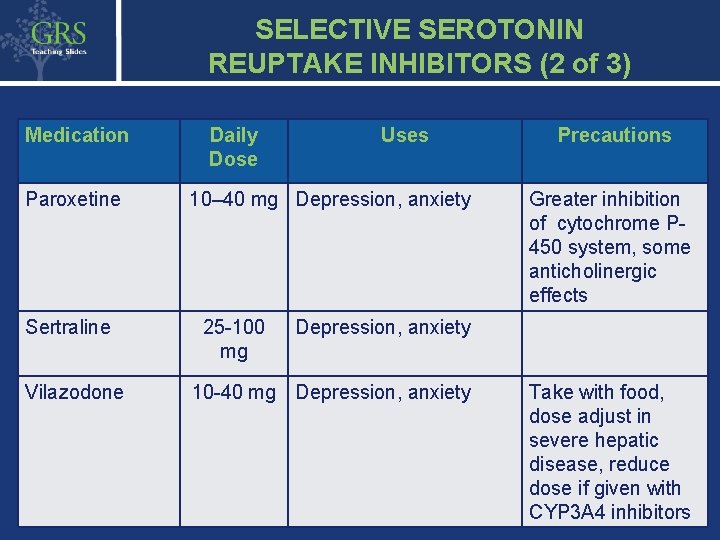
SELECTIVE SEROTONIN REUPTAKE INHIBITORS (2 of 3) Medication Paroxetine Sertraline Vilazodone Daily Dose Uses 10– 40 mg Depression, anxiety 25 -100 mg 22 Precautions Greater inhibition of cytochrome P 450 system, some anticholinergic effects Depression, anxiety 10 -40 mg Depression, anxiety Take with food, dose adjust in severe hepatic disease, reduce dose if given with CYP 3 A 4 inhibitors
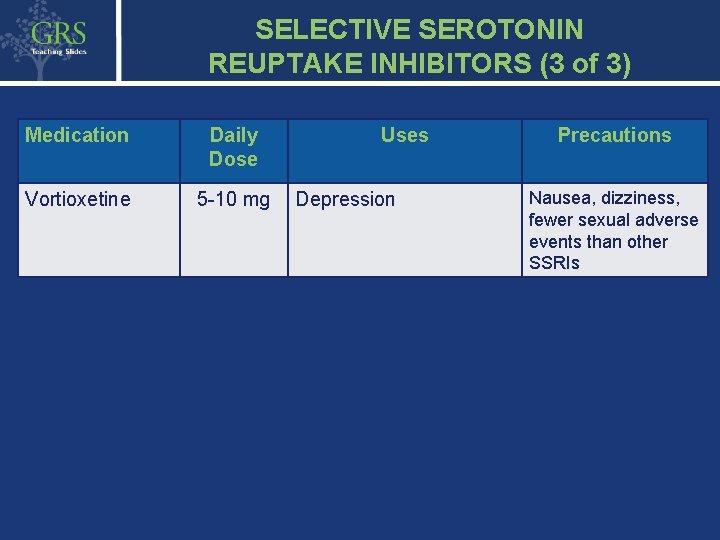
SELECTIVE SEROTONIN REUPTAKE INHIBITORS (3 of 3) Medication Daily Dose Vortioxetine 5 -10 mg Uses Depression 23 Precautions Nausea, dizziness, fewer sexual adverse events than other SSRIs
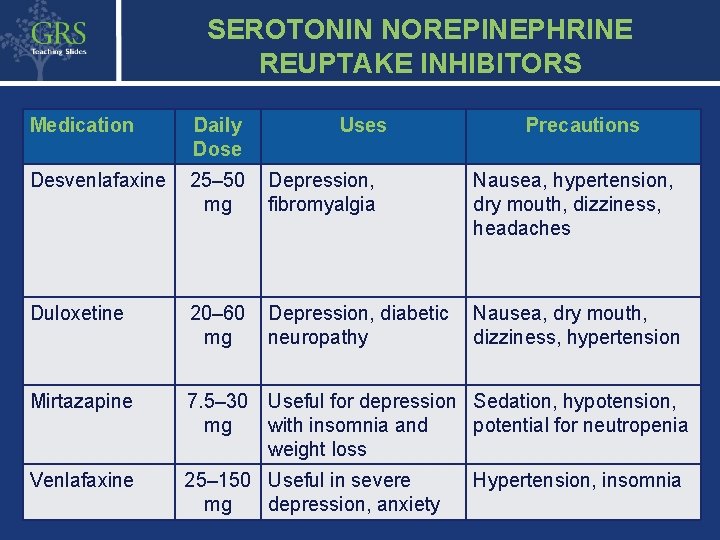
SEROTONIN NOREPINEPHRINE REUPTAKE INHIBITORS Uses 24 Medication Daily Dose Precautions Desvenlafaxine 25– 50 mg Depression, fibromyalgia Nausea, hypertension, dry mouth, dizziness, headaches Duloxetine 20– 60 mg Depression, diabetic neuropathy Nausea, dry mouth, dizziness, hypertension Mirtazapine 7. 5– 30 Useful for depression Sedation, hypotension, mg with insomnia and potential for neutropenia weight loss Venlafaxine 25– 150 Useful in severe mg depression, anxiety Hypertension, insomnia
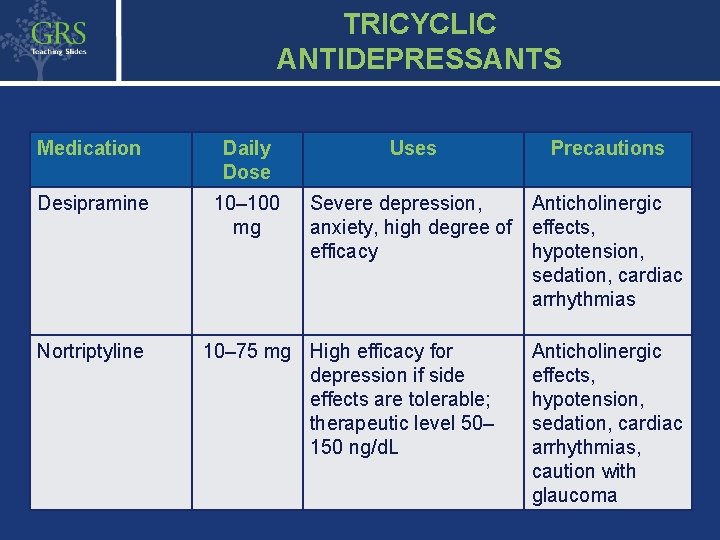
TRICYCLIC ANTIDEPRESSANTS Medication Daily Dose Desipramine 10– 100 mg Nortriptyline Uses Precautions Severe depression, Anticholinergic anxiety, high degree of effects, efficacy hypotension, sedation, cardiac arrhythmias 10– 75 mg High efficacy for depression if side effects are tolerable; therapeutic level 50– 150 ng/d. L Anticholinergic effects, hypotension, sedation, cardiac arrhythmias, caution with glaucoma 25
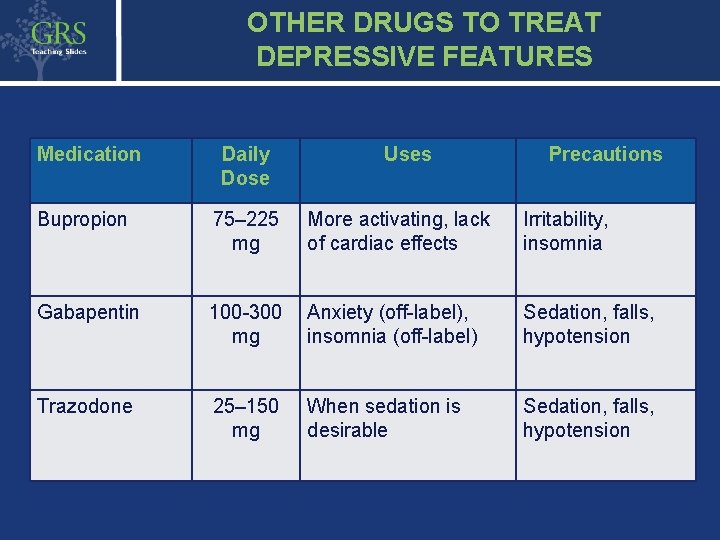
OTHER DRUGS TO TREAT DEPRESSIVE FEATURES Medication Daily Dose Uses Precautions Bupropion 75– 225 mg More activating, lack of cardiac effects Irritability, insomnia Gabapentin 100 -300 mg Anxiety (off-label), insomnia (off-label) Sedation, falls, hypotension Trazodone 25– 150 mg When sedation is desirable Sedation, falls, hypotension 26
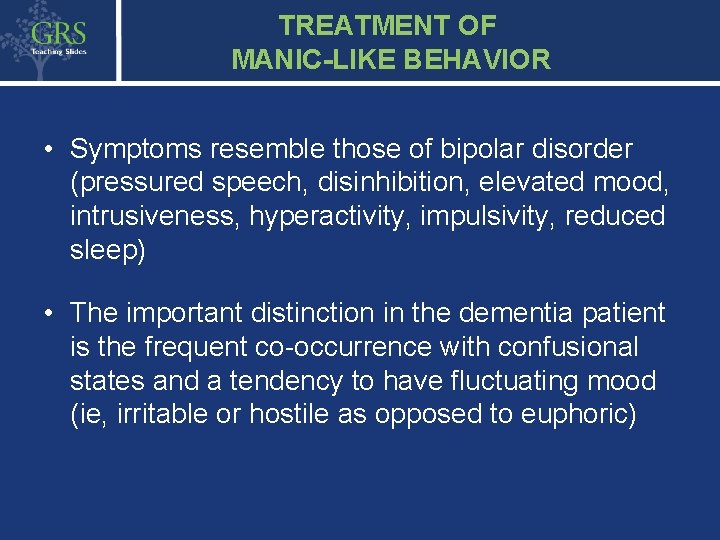
TREATMENT OF MANIC-LIKE BEHAVIOR • Symptoms resemble those of bipolar disorder (pressured speech, disinhibition, elevated mood, intrusiveness, hyperactivity, impulsivity, reduced sleep) • The important distinction in the dementia patient is the frequent co-occurrence with confusional states and a tendency to have fluctuating mood (ie, irritable or hostile as opposed to euphoric) 27
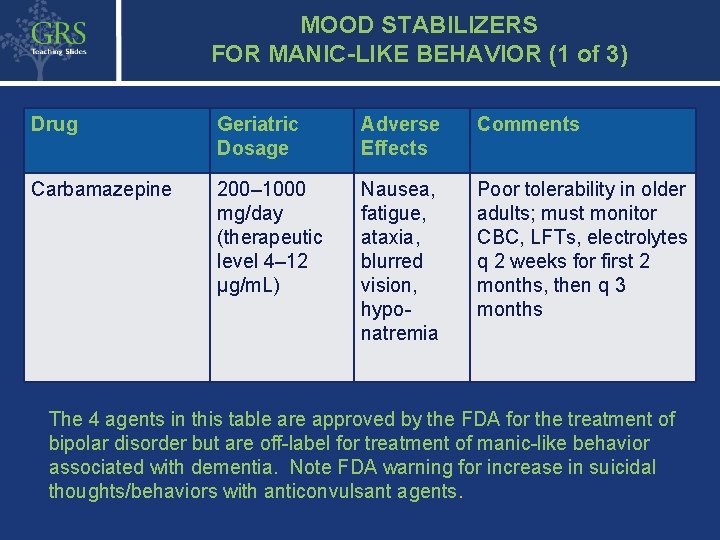
MOOD STABILIZERS FOR MANIC-LIKE BEHAVIOR (1 of 3) 28 Drug Geriatric Dosage Adverse Effects Comments Carbamazepine 200– 1000 mg/day (therapeutic level 4– 12 μg/m. L) Nausea, fatigue, ataxia, blurred vision, hyponatremia Poor tolerability in older adults; must monitor CBC, LFTs, electrolytes q 2 weeks for first 2 months, then q 3 months The 4 agents in this table are approved by the FDA for the treatment of bipolar disorder but are off-label for treatment of manic-like behavior associated with dementia. Note FDA warning for increase in suicidal thoughts/behaviors with anticonvulsant agents.
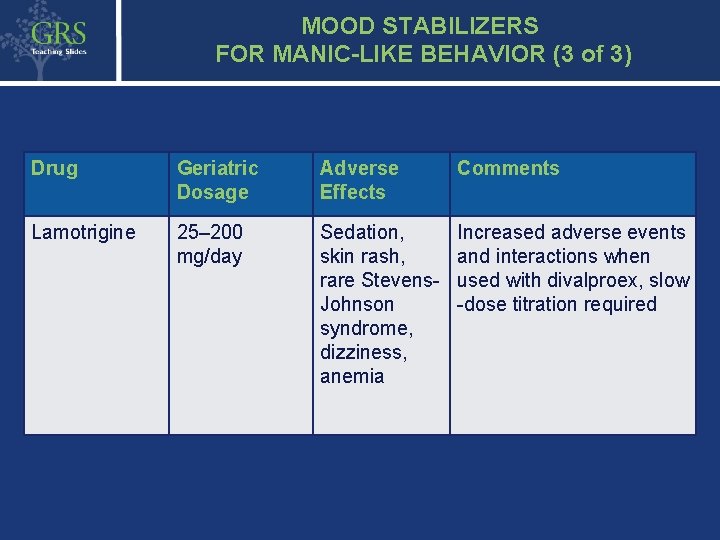
MOOD STABILIZERS FOR MANIC-LIKE BEHAVIOR (3 of 3) 29 Drug Geriatric Dosage Adverse Effects Comments Lamotrigine 25– 200 mg/day Sedation, skin rash, rare Stevens. Johnson syndrome, dizziness, anemia Increased adverse events and interactions when used with divalproex, slow -dose titration required
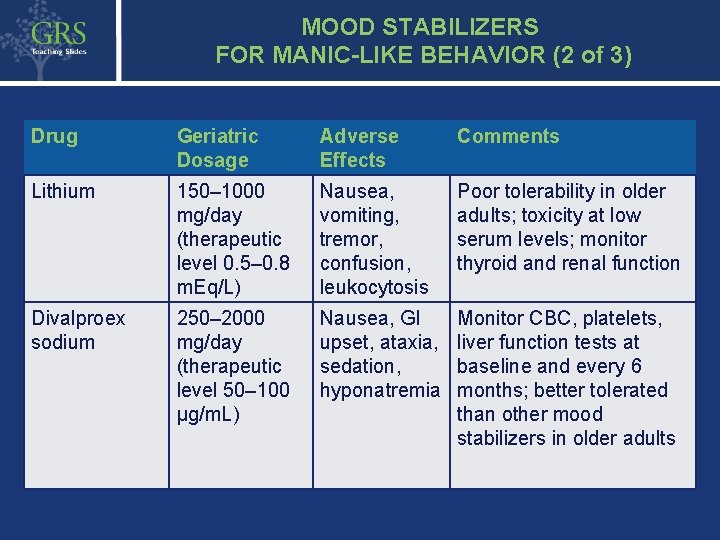
MOOD STABILIZERS FOR MANIC-LIKE BEHAVIOR (2 of 3) Drug Geriatric Dosage Adverse Effects Comments Lithium 150– 1000 mg/day (therapeutic level 0. 5– 0. 8 m. Eq/L) Nausea, vomiting, tremor, confusion, leukocytosis Poor tolerability in older adults; toxicity at low serum levels; monitor thyroid and renal function Divalproex sodium 250– 2000 mg/day (therapeutic level 50– 100 μg/m. L) Nausea, GI upset, ataxia, sedation, hyponatremia Monitor CBC, platelets, liver function tests at baseline and every 6 months; better tolerated than other mood stabilizers in older adults 30
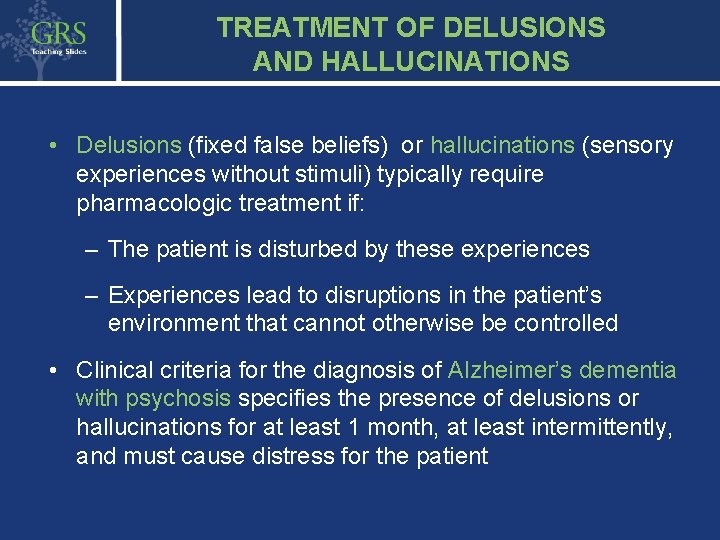
TREATMENT OF DELUSIONS AND HALLUCINATIONS • Delusions (fixed false beliefs) or hallucinations (sensory experiences without stimuli) typically require pharmacologic treatment if: – The patient is disturbed by these experiences – Experiences lead to disruptions in the patient’s environment that cannot otherwise be controlled • Clinical criteria for the diagnosis of Alzheimer’s dementia with psychosis specifies the presence of delusions or hallucinations for at least 1 month, at least intermittently, and must cause distress for the patient 31
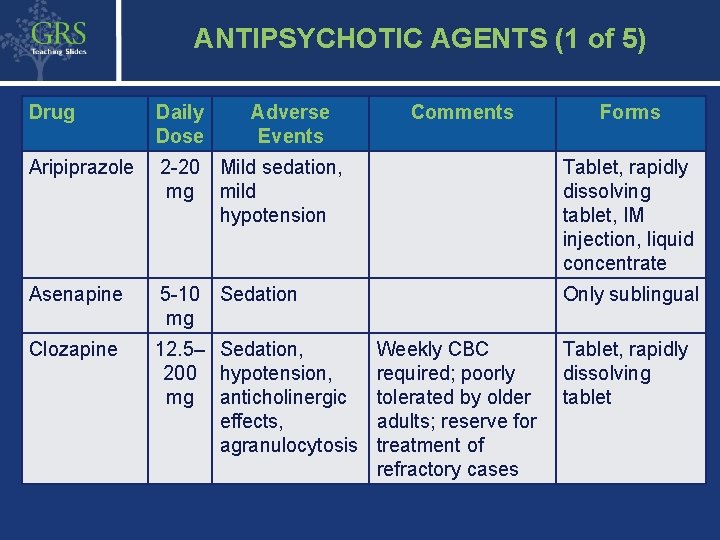
32 ANTIPSYCHOTIC AGENTS (1 of 5) Drug Daily Dose Adverse Events Comments Aripiprazole 2 -20 Mild sedation, mg mild hypotension Tablet, rapidly dissolving tablet, IM injection, liquid concentrate Asenapine 5 -10 Sedation mg Only sublingual Clozapine 12. 5– Sedation, 200 hypotension, mg anticholinergic effects, agranulocytosis Weekly CBC required; poorly tolerated by older adults; reserve for treatment of refractory cases Forms Tablet, rapidly dissolving tablet
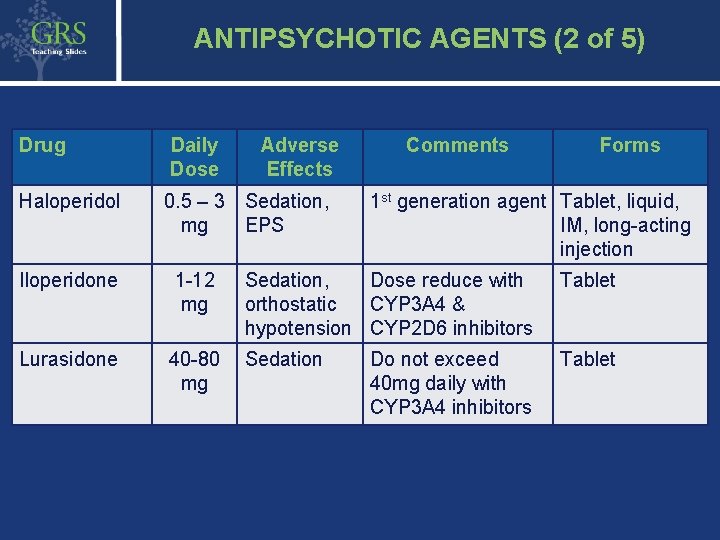
33 ANTIPSYCHOTIC AGENTS (2 of 5) Drug Haloperidol Daily Dose Adverse Effects 0. 5 – 3 Sedation, mg EPS Comments Forms 1 st generation agent Tablet, liquid, IM, long-acting injection Iloperidone 1 -12 mg Sedation, Dose reduce with orthostatic CYP 3 A 4 & hypotension CYP 2 D 6 inhibitors Tablet Lurasidone 40 -80 mg Sedation Tablet Do not exceed 40 mg daily with CYP 3 A 4 inhibitors
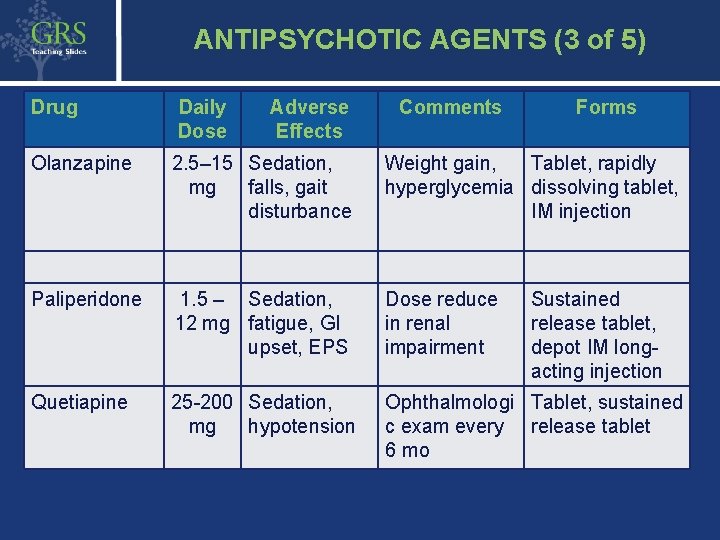
34 ANTIPSYCHOTIC AGENTS (3 of 5) Drug Daily Dose Adverse Effects Comments Forms Olanzapine 2. 5– 15 Sedation, mg falls, gait disturbance Weight gain, Tablet, rapidly hyperglycemia dissolving tablet, IM injection Paliperidone 1. 5 – Sedation, 12 mg fatigue, GI upset, EPS Dose reduce in renal impairment Quetiapine 25 -200 Sedation, mg hypotension Ophthalmologi Tablet, sustained c exam every release tablet 6 mo Sustained release tablet, depot IM longacting injection
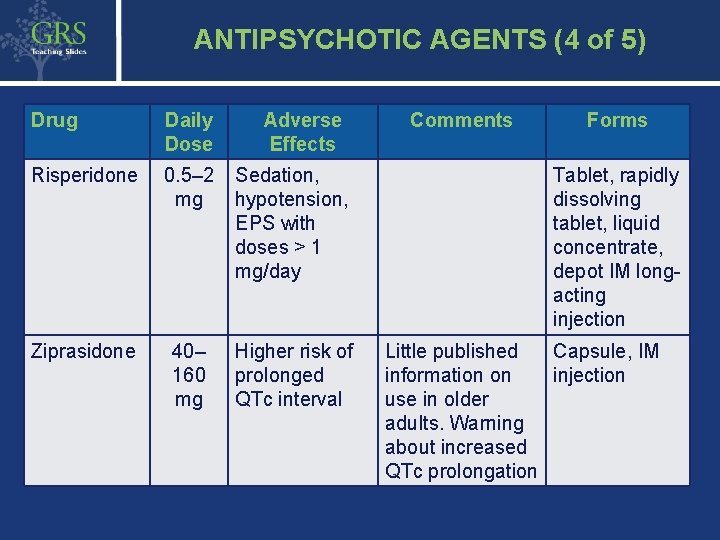
35 ANTIPSYCHOTIC AGENTS (4 of 5) Drug Daily Dose Adverse Effects Risperidone 0. 5– 2 mg Sedation, hypotension, EPS with doses > 1 mg/day Ziprasidone 40– 160 mg Higher risk of prolonged QTc interval Comments Forms Tablet, rapidly dissolving tablet, liquid concentrate, depot IM longacting injection Little published Capsule, IM information on injection use in older adults. Warning about increased QTc prolongation
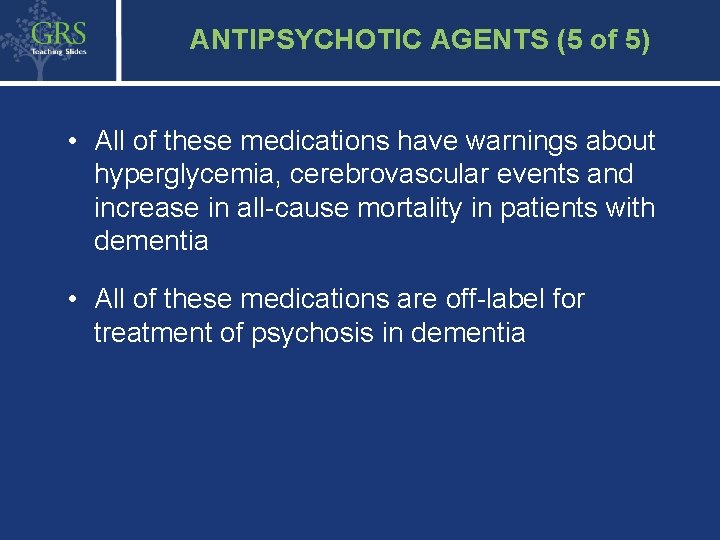
36 ANTIPSYCHOTIC AGENTS (5 of 5) • All of these medications have warnings about hyperglycemia, cerebrovascular events and increase in all-cause mortality in patients with dementia • All of these medications are off-label for treatment of psychosis in dementia
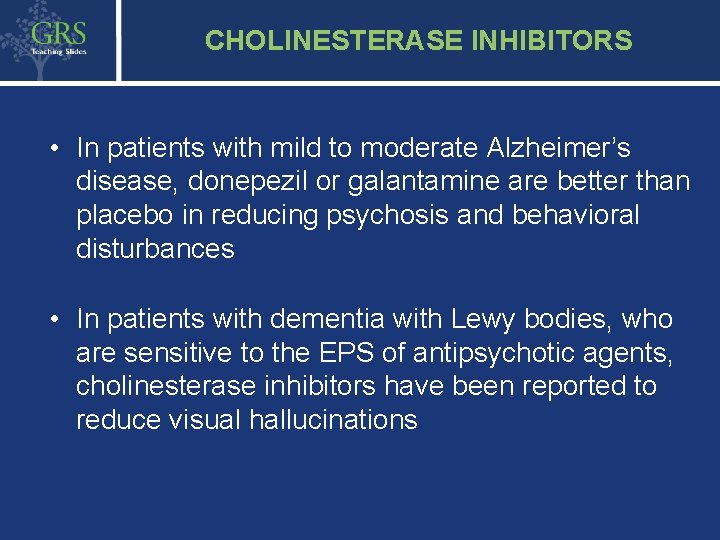
37 CHOLINESTERASE INHIBITORS • In patients with mild to moderate Alzheimer’s disease, donepezil or galantamine are better than placebo in reducing psychosis and behavioral disturbances • In patients with dementia with Lewy bodies, who are sensitive to the EPS of antipsychotic agents, cholinesterase inhibitors have been reported to reduce visual hallucinations
38 MANAGING SLEEP DISTURBANCES • Improve sleep hygiene (see next slides) • Treat associated depression, suspiciousness, delusions • If the above do not succeed, consider (off-label): Ø Ø Ø Trazodone 25– 50 mg at bedtime Mirtazapine 7. 5– 15 mg at bedtime Gabapentin is increasingly used for insomnia Zolpidem 5 mg at bedtime Zaleplon has been studied in older patients and also appears to be effective Ø Melatonin available OTC • Avoid benzodiazepines or antihistamines
39 SLEEP HYGIENE (1 of 2) • Establish a stable routine for going to bed and awakening • Pay attention to noise, light, and temperature • Increase daytime activity and light exercise • Reduce or eliminate caffeine, nicotine, alcohol • Reduce evening fluid consumption to minimize nocturia
40 SLEEP HYGIENE (2 of 2) • Give activating medications early in the day • Control nighttime pain • Limit daytime napping to periods of 20 to 30 minutes • Use relaxation, stress management, and breathing techniques to promote natural sleep
41 INAPPROPRIATE SEXUAL BEHAVIOR • First exclude underlying treatable causes • Treat any underlying syndrome, such as a mania-like state • Consider antiandrogens for men who are dangerously hypersexual or aggressive: Ø Progesterone. OL 5 mg/day orally; adjust dose to suppress testosterone well below normal Ø If patient responds, may treat with 10 mg IM depot progesterone weekly Ø Leuprolide acetate. OL 5– 10 mg IM monthly is an alternative
INTERMITTENT AGGRESSION OR AGITATION • Behavioral interventions: distraction, reminiscence, validation therapy, environmental modifications, caregiver education and support, music therapy, physical activity, or aromatherapy • Behavior modification using positive reinforcement of desirable behavior • Avoid physical restraints 42
43 CHOOSING WISELY • Don’t use antipsychotics as first choice to treat behavioral and psychological symptoms of dementia.
44 SUMMARY (1 of 2) • The need to express basic needs such as hunger, thirst, or fatigue, which the patient cannot adequately communicate in dementia, may precipitate a behavioral disturbance • Delirium secondary to an underlying condition such as dehydration, urinary tract infection, or medication toxicity is a common cause of abrupt behavioral disturbances in patients with dementia
45 SUMMARY (2 of 2) • Medication effects on behavioral disturbances in dementia tend to be modest and should be implemented only after trying environmental and other nonpharmacologic techniques • Antipsychotic medications may reduce agitation, and antidepressants may be helpful if symptoms of depression are evident in the patient with a behavioral disturbance
46 CASE 1 (1 of 3) • An 86 -year-old man has episodes of increasing psychosis and aggression over the past 2 months. Ø Primary caregiver is his daughter, whom he verbally abuses and threatens; he has punched her on 3 occasions. Ø Believes that his food is being poisoned Ø Believes that his son, who lives 1, 000 miles away, has been coming into their home and stealing Ø Attempts at nonpharmacologic interventions have been unsuccessful • History: moderate Alzheimer disease
47 CASE 1 (2 of 3) Which one of the following is the most appropriate pharmacologic treatment for this patient? A. Citalopram B. Donepezil C. Haloperidol D. Risperidone E. Valproic acid
48 CASE 1 (3 of 3) Which one of the following is the most appropriate pharmacologic treatment for this patient? A. Citalopram B. Donepezil C. Haloperidol D. Risperidone E. Valproic acid
49 CASE 2 (1 of 3) • A 78 -year-old woman has had disrupted sleep for the past month. Ø Her son says that she has difficulty falling asleep. Ø Once she does sleep, she awakens after about 4 hours. Ø OTC antihistamines help her sleep, but she is groggy the following day. • History: Lewy body dementia • Physical examination: no findings that might contribute to insomnia
50 CASE 2 (2 of 3) Which one of the following is the most appropriate initial treatment for this patient? A. Mirtazapine B. Ramelteon C. Trazodone D. Zolpidem E. Melatonin
51 CASE 2 (3 of 3) Which one of the following is the most appropriate initial treatment for this patient? A. Mirtazapine B. Ramelteon C. Trazodone D. Zolpidem E. Melatonin
52 CASE 3 (1 of 3) • A 72 -year-old man has hallucinations that cause him severe distress. The hallucinations are of Civil War soldiers and monkeys, and he fears they will attack him. Ø In previous visits, no medical or pharmacologic (eg, anticholinergic agents) causes of psychosis were identified. Behavioral interventions were unsuccessful. Ø During a particularly stressful episode, his family took him to the emergency department, where he was prescribed risperidone 0. 25 mg twice daily. v He rapidly became more confused and markedly rigid. v Symptoms resolved after risperidone was discontinued. • History: early Lewy body dementia
53 CASE 3 (2 of 3) Which one of the following is the most appropriate treatment recommendation for this patient? A. Clozapine B. Haloperidol C. Lorazepam D. Quetiapine E. Rivastigmine
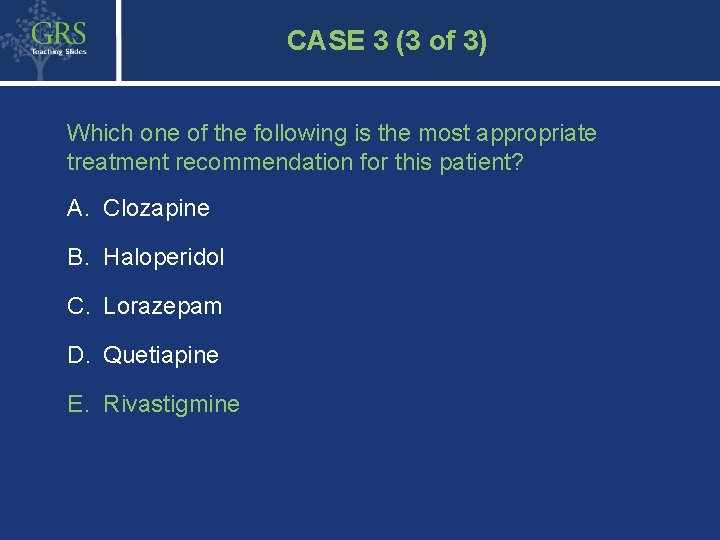
54 CASE 3 (3 of 3) Which one of the following is the most appropriate treatment recommendation for this patient? A. Clozapine B. Haloperidol C. Lorazepam D. Quetiapine E. Rivastigmine

55 GRS Slides Editor: Danielle Snyderman, MD, CMD GRS 9 Chapter Authors: Melinda S. Lantz, MD Pui Yin Wong, MD GRS 9 Question Writer: Managing Editor: Martin Steinberg, MD Andrea N. Sherman, MS Copyright © 2017 American Geriatrics Society
- Slides: 55