
1 B part 1 Objectives Identify the characteristics
1 B (part 1) Objectives Identify the characteristics of star clusters n Define the 3 different kinds of star systems n Describe the characteristics of a constellation n Define nova and nebula n
WHY STUDY STARS? WHY ARE STARS IMPORTANT? Before the age of computers, cell phones, TVs or even electricity and light bulbs, at night, the only thing to do was to gaze at the skies. Stars became a central part of culture and traditions from the beginning of time.
Historical Importance of Stars n Ancient Egyptian farmers eagerly awaited the annual spring flood of the Nile river. For thousands of years, their planting was ruled by it. As soon as the Nile’s flood waters withdrew, the farmers had to be ready to plow and plant their fields along the banks of the river. Because of this, the Egyptians wanted to predict when the flood would occur.
Historical Importance of Stars Around 3000 B. C. , people noticed that the bright star Sirius first became visible in the early morning sky every year shortly before the flood began. The Egyptians used this knowledge to predict each year’s flood. n This was among the first known studies of the stars. n
Solar System The words “solar system" refer to a star and all of the nonluminous objects that travel around it n These objects include planets, natural satellites such as moons, asteroid belts, comets, and meteoroids n
Our Solar System Our solar system has only one star (commonly known as our sun) n The Sun is the center of our solar system. n It contains 99. 8% of all of the mass in our solar system. n
Stars n Our sun is a single star – Single Star System n Not all stars are single star systems
Star Classifications Star Systems n Single Star Systems – Our solar system n Binary Star Systems – Pair of stars that orbit around their common center mass – What is the center mass? n Spoon
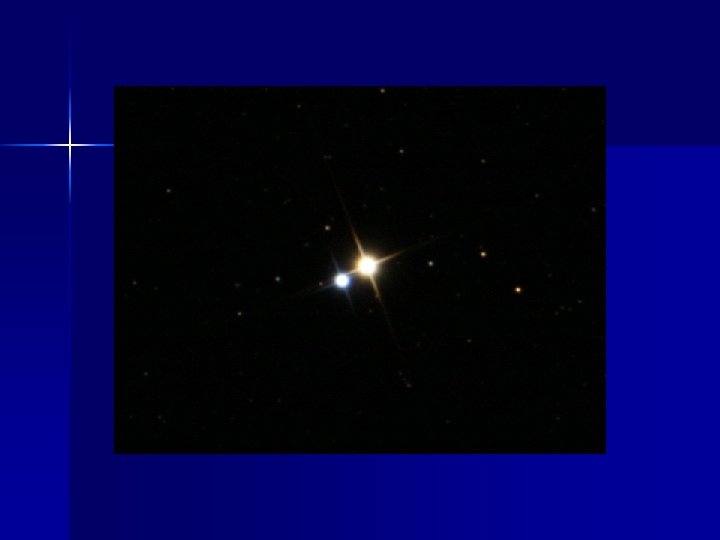
Star Classifications n Binary Star Systems – Pair of stars that orbit around their common center mass – 2 stars n Bright star n Dim companion star – Eclipsing Binary n If the dim companion star temporarily blocks the light from the bright star, it is “eclipsing” it or makes it appear to gradually dim and then brighten
Star Classifications n Multiple Star Systems – Three or more stars orbiting around their common center mass

Star System
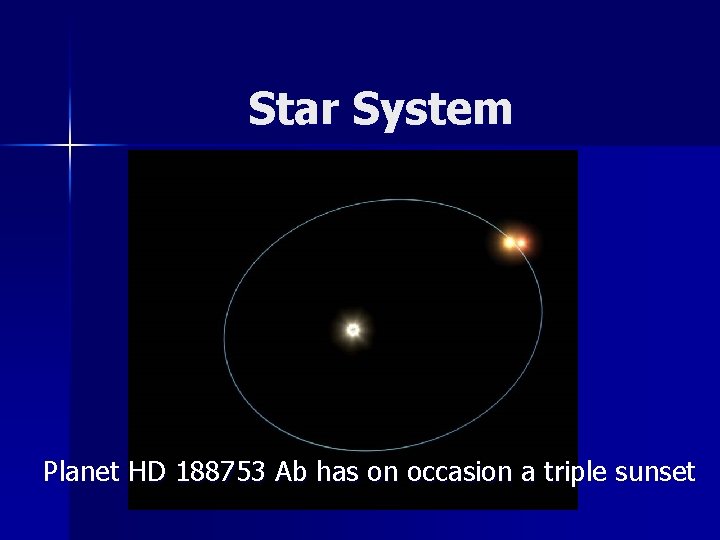
Star System Planet HD 188753 Ab has on occasion a triple sunset
Our Star Classifications n The Sun is our star. – We are an in single star system. n What is the name of the next closest star system? – Alpha Centauri Star System n Within that system, what is the name of the closest star? – Proxima Centauri
Star Classifications n Alpha Centauri is a Multiple Star System – Triple Star System n Alpha Centauri is made up of: – Alpha Centauri A – Alpha Centauri B n n A & B are so close they cannot be seen separately 11 AU – Alpha Centauri C (Proxima Centauri) n n Companion star 13, 000 AU from A & B Our closest star Still about 4. 3 ly away
OTHER THAN SINGLE, BINARY AND MULTIPLE STAR SYSTEMS, WE ALSO HAVE GROUPS OF STARS THAT MAKE PATTERNS IN THE SKY. THESE ARE KNOWN AS…
Types of Star Groups n Star System – Single or multiple stars that orbit around a common center mass n Constellation – Group of stars that seem to make patterns or pictures in the sky
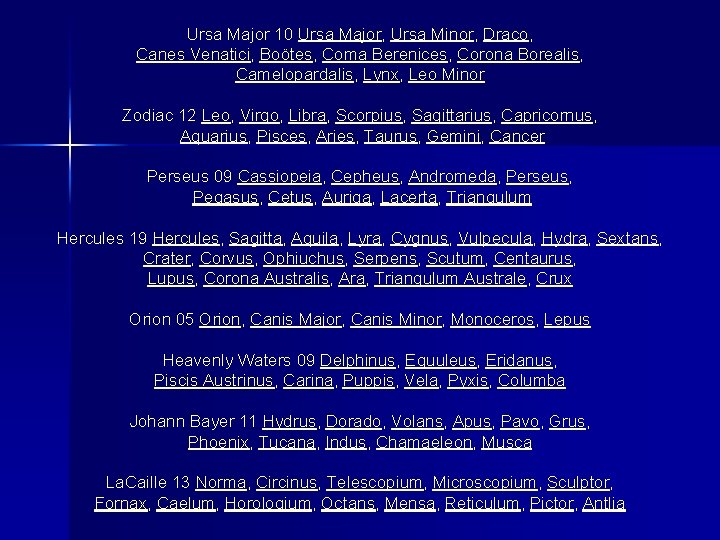
Ursa Major 10 Ursa Major, Ursa Minor, Draco, Canes Venatici, Boötes, Coma Berenices, Corona Borealis, Camelopardalis, Lynx, Leo Minor Zodiac 12 Leo, Virgo, Libra, Scorpius, Sagittarius, Capricornus, Aquarius, Pisces, Aries, Taurus, Gemini, Cancer Perseus 09 Cassiopeia, Cepheus, Andromeda, Perseus, Pegasus, Cetus, Auriga, Lacerta, Triangulum Hercules 19 Hercules, Sagitta, Aquila, Lyra, Cygnus, Vulpecula, Hydra, Sextans, Crater, Corvus, Ophiuchus, Serpens, Scutum, Centaurus, Lupus, Corona Australis, Ara, Triangulum Australe, Crux Orion 05 Orion, Canis Major, Canis Minor, Monoceros, Lepus Heavenly Waters 09 Delphinus, Equuleus, Eridanus, Piscis Austrinus, Carina, Puppis, Vela, Pyxis, Columba Johann Bayer 11 Hydrus, Dorado, Volans, Apus, Pavo, Grus, Phoenix, Tucana, Indus, Chamaeleon, Musca La. Caille 13 Norma, Circinus, Telescopium, Microscopium, Sculptor, Fornax, Caelum, Horologium, Octans, Mensa, Reticulum, Pictor, Antlia
Constellations n Constellation is usually referred to as simply groups of stars that form patterns – Stellar patterns that are named usually of mythological gods, people or animals – Is a constellation REALLY a group of stars? – No, most stars in constellations are ly away from each other
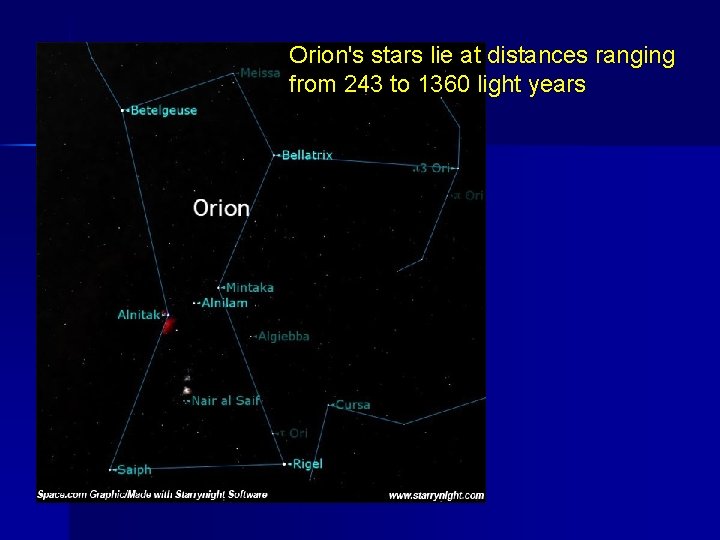
Orion's stars lie at distances ranging from 243 to 1360 light years
Stars Star Systems – (1+) orbit each other n Constellations – not really grouped together, only appear to be n What about when stars are grouped together in large numbers? n – Star Clusters – Two types of star clusters
Open Star Clusters n What is an open star cluster? – A cluster of 10 to 10, 000 stars with an open, transparent appearance. – Stars are not tightly grouped – Usually relatively young – Usually located in the disk of a galaxy
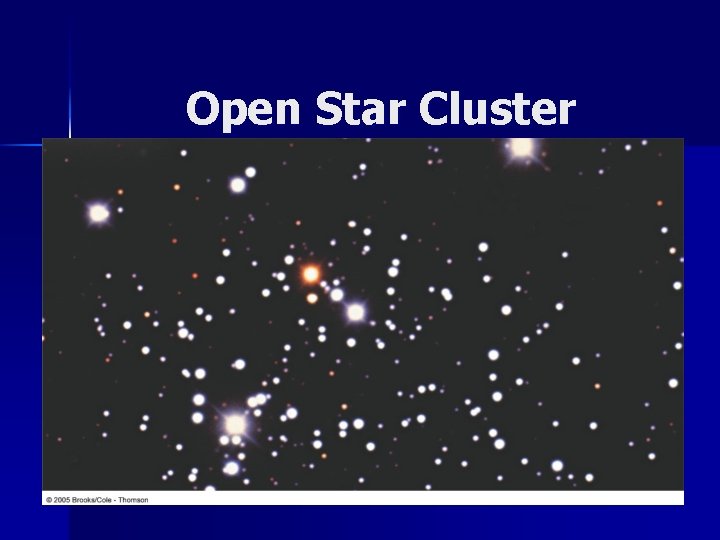
Open Star Cluster
Globular Star Clusters n What is a globular star cluster? – A star cluster of 50, 000 to 1 million stars in a sphere – More tightly packed – Diameter about 75 ly – Usually old, metal-poor – Usually found in the spherical component of the galaxy
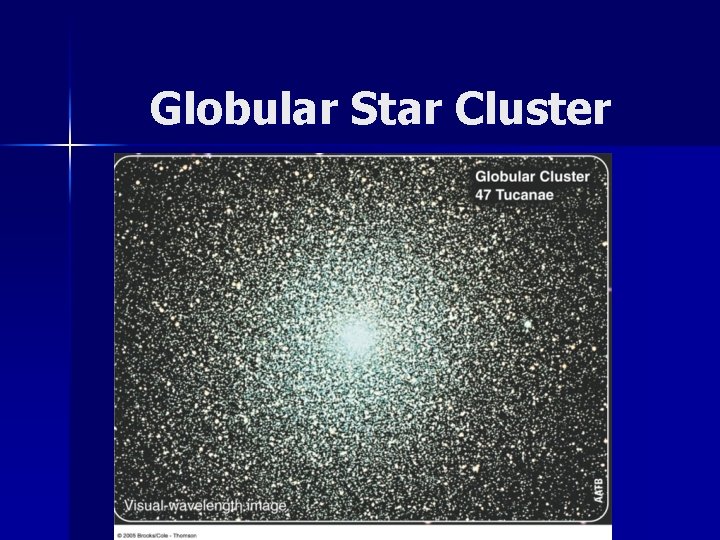
Globular Star Cluster
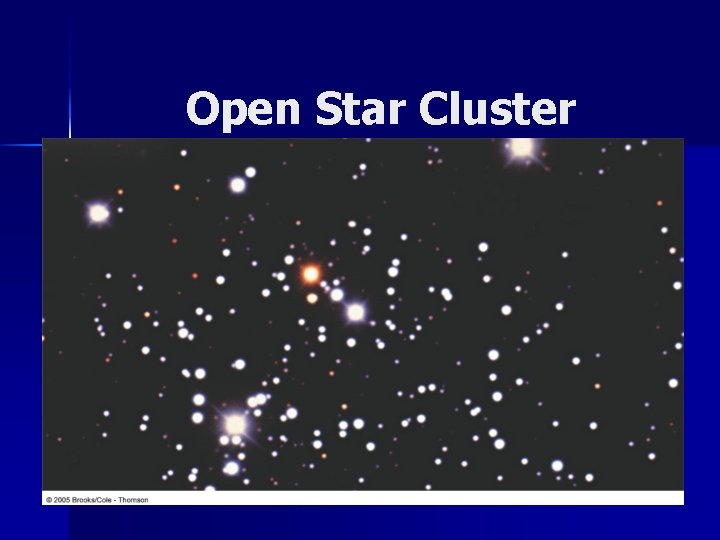
Open Star Cluster
Novae From the Latin for “new” n Sudden brightening of a star so that it appears to be a “new” star n Believed to be associated with nuclear explosions on the surface of white dwarfs of binary systems n – White dwarf is a dying star
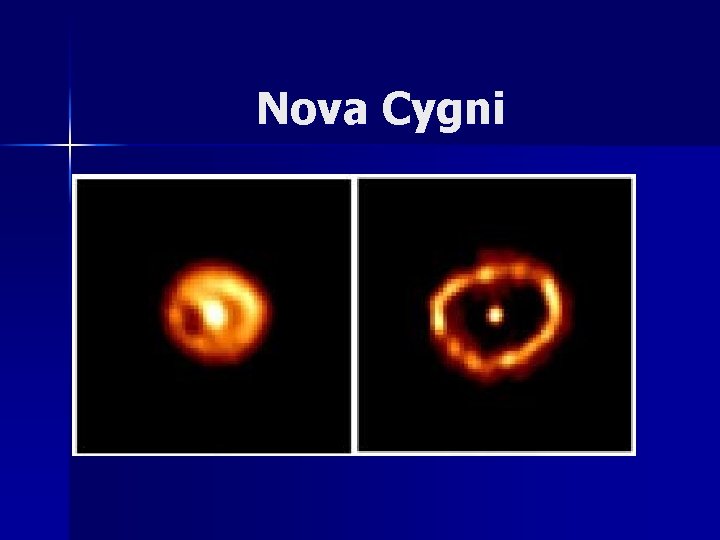
Nova Cygni
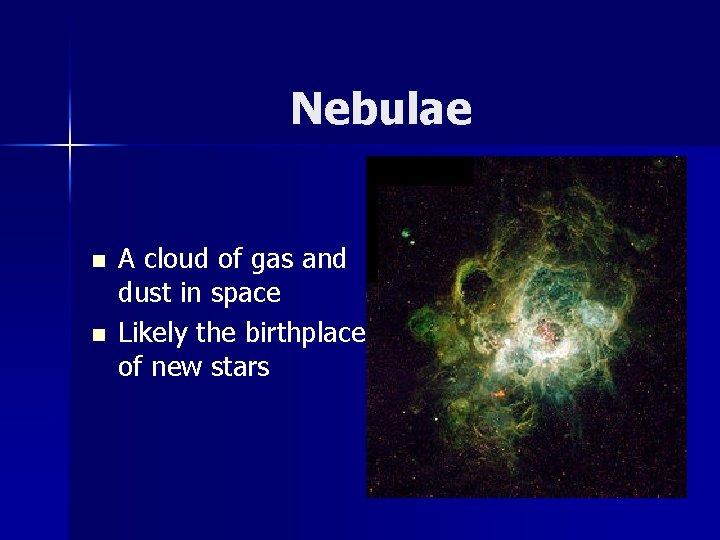
Nebulae n n A cloud of gas and dust in space Likely the birthplace of new stars

Assignments Read Ch 1. 1 Complete wkst 1. 1 Define all vocabulary on a separate sheet of paper (will turn it in)
Vocabulary 1. 1 Multiple star systems n Binary star systems n Constellations n Open star clusters n Globular star clusters n Novas n Nebulae n
- Slides: 31