
1 B Eukaryotic Cell Copyright 2002 Pearson Education
1
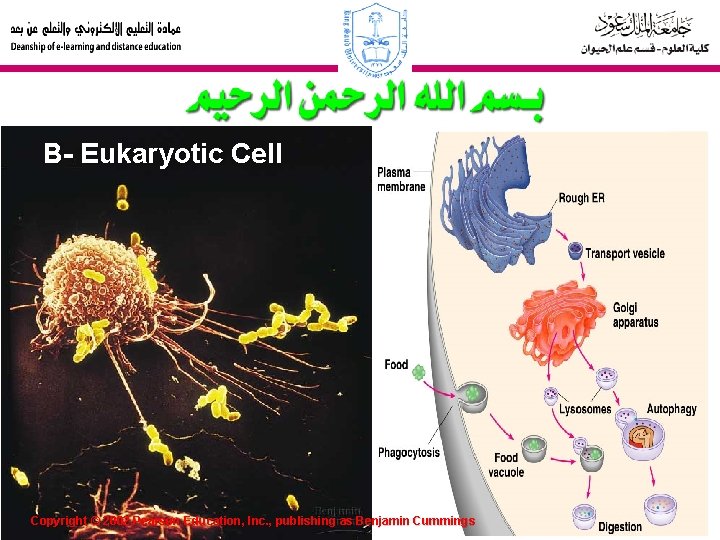
B- Eukaryotic Cell Copyright © 2002 Pearson Education, Inc. , publishing as Benjamin Cummings
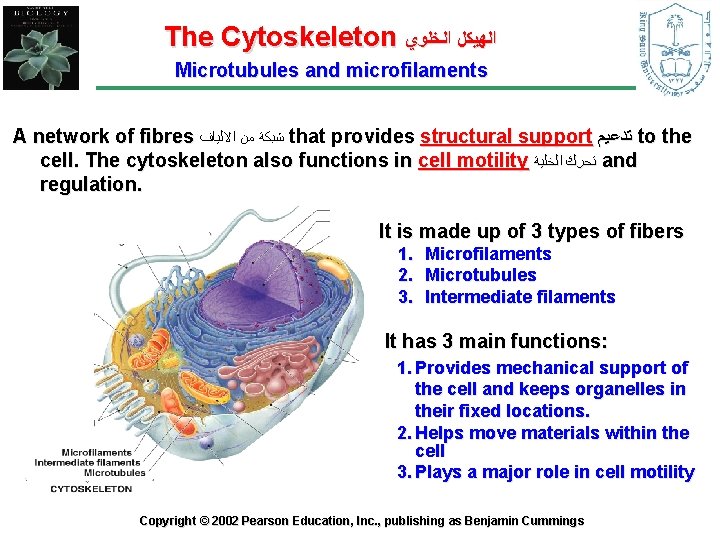
The Cytoskeleton ﺍﻟﻬﻴﻜﻞ ﺍﻟﺨﻠﻮﻱ Microtubules and microfilaments A network of fibres ﺷﺒﻜﺔ ﻣﻦ ﺍﻻﻟﻴﺎﻑ that provides structural support ﺗﺪﻋﻴﻢ to the cell. The cytoskeleton also functions in cell motility ﺗﺤﺮﻙ ﺍﻟﺨﻠﻴﺔ and regulation. It is made up of 3 types of fibers 1. 2. 3. Microfilaments Microtubules Intermediate filaments It has 3 main functions: 1. Provides mechanical support of the cell and keeps organelles in their fixed locations. 2. Helps move materials within the cell 3. Plays a major role in cell motility Copyright © 2002 Pearson Education, Inc. , publishing as Benjamin Cummings
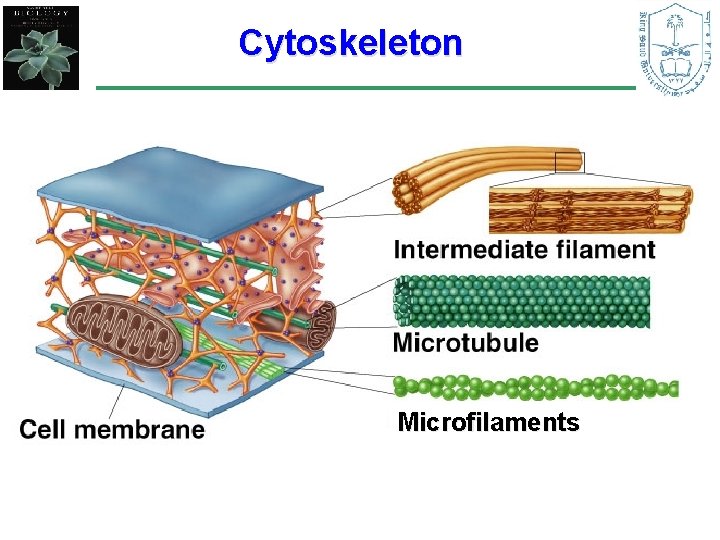
Cytoskeleton Microfilaments
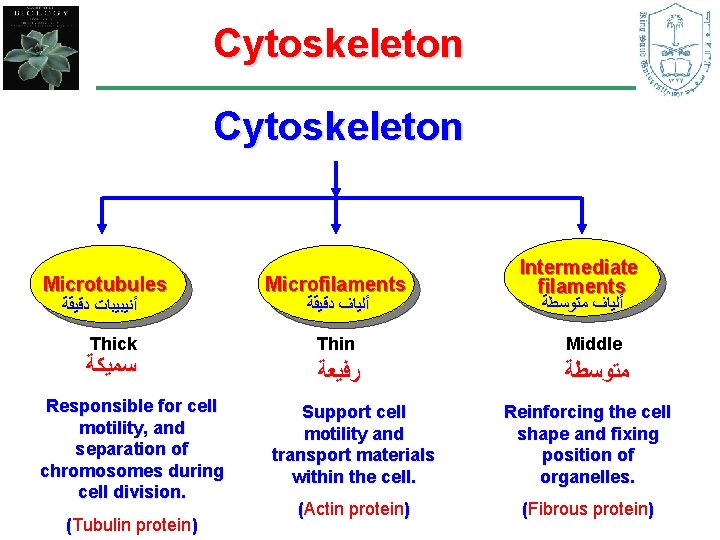
Cytoskeleton Microtubules ﺃﻨﻴﺒﻴﺒﺎﺕ ﺩﻗﻴﻘﺔ Thick ﺳﻤﻴﻜﺔ Responsible for cell motility, and separation of chromosomes during cell division. (Tubulin protein) Microfilaments ﺃﻠﻴﺎﻑ ﺩﻗﻴﻘﺔ Intermediate filaments ﺃﻠﻴﺎﻑ ﻣﺘﻮﺳﻄﺔ Thin Middle ﺭﻓﻴﻌﺔ ﻣﺘﻮﺳﻄﺔ Support cell motility and transport materials within the cell. Reinforcing the cell shape and fixing position of organelles. (Actin protein) (Fibrous protein)
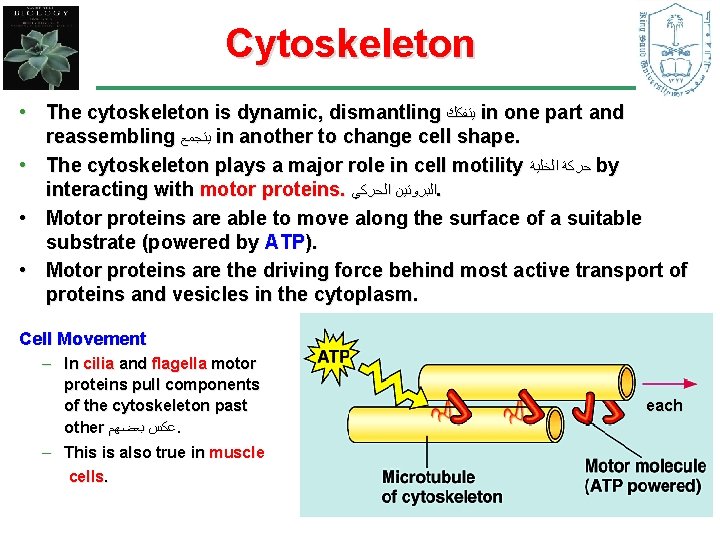
Cytoskeleton • The cytoskeleton is dynamic, dismantling ﻳﺘﻔﻜﻚ in one part and reassembling ﻳﺘﺠﻤﻊ in another to change cell shape. • The cytoskeleton plays a major role in cell motility ﺣﺮﻛﺔ ﺍﻟﺨﻠﻴﺔ by interacting with motor proteins. ﺍﻟﺒﺮﻭﺗﻴﻦ ﺍﻟﺤﺮﻛﻲ. • Motor proteins are able to move along the surface of a suitable substrate (powered by ATP). • Motor proteins are the driving force behind most active transport of proteins and vesicles in the cytoplasm. Cell Movement – In cilia and flagella motor proteins pull components of the cytoskeleton past other ﻋﻜﺲ ﺑﻌﻀﻬﻢ. – This is also true in muscle cells. each
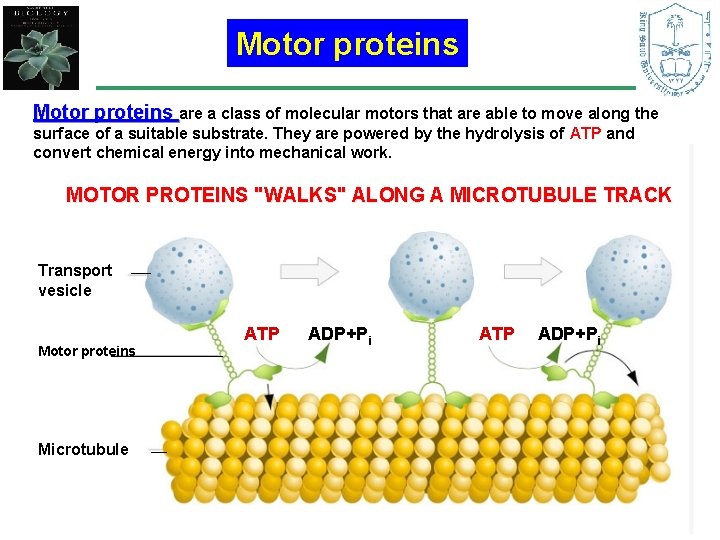
Motor proteins are a class of molecular motors that are able to move along the surface of a suitable substrate. They are powered by the hydrolysis of ATP and convert chemical energy into mechanical work. MOTOR PROTEINS "WALKS" ALONG A MICROTUBULE TRACK Transport vesicle Motor proteins Microtubule ATP ADP+Pi
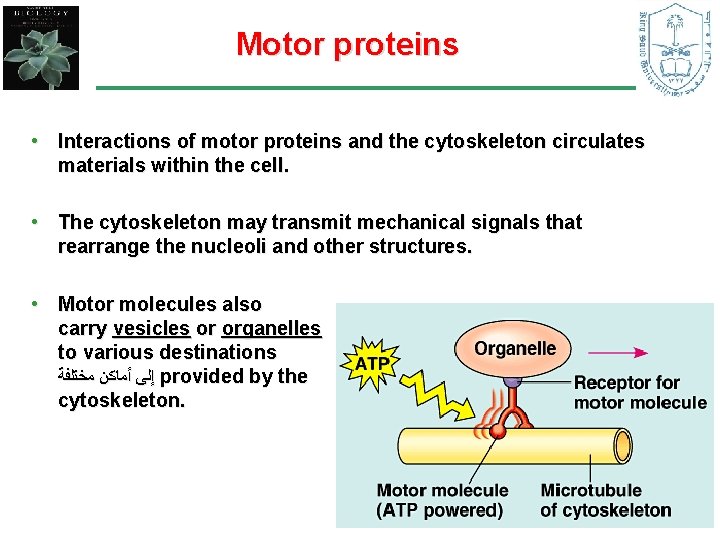
Motor proteins • Interactions of motor proteins and the cytoskeleton circulates materials within the cell. • The cytoskeleton may transmit mechanical signals that rearrange the nucleoli and other structures. • Motor molecules also carry vesicles or organelles to various destinations ﺇﻟﻰ ﺃﻤﺎﻛﻦ ﻣﺨﺘﻠﻔﺔ provided by the cytoskeleton.
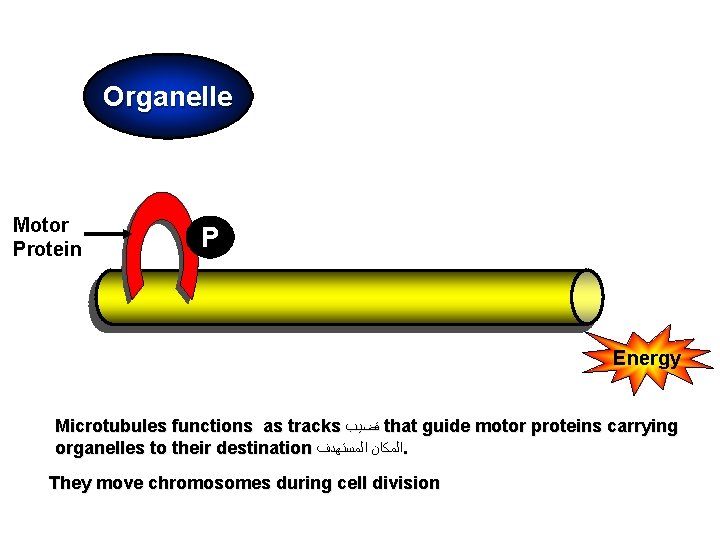
Organelle Motor Protein P Energy Microtubules functions as tracks ﻗﻀﻴﺐ that guide motor proteins carrying organelles to their destination ﺍﻟﻤﻜﺎﻥ ﺍﻟﻤﺴﺘﻬﺪﻑ. They move chromosomes during cell division
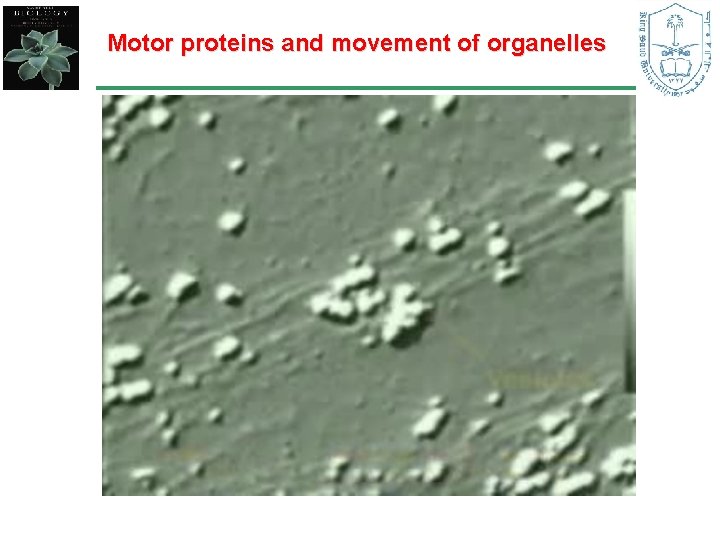
Motor proteins and movement of organelles
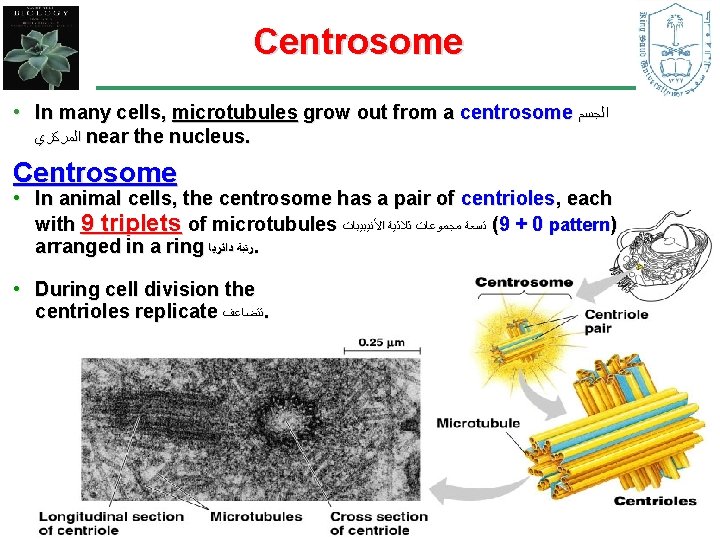
Centrosome • In many cells, microtubules grow out from a centrosome ﺍﻟﺠﺴﻢ ﺍﻟﻤﺮﻛﺰﻱ near the nucleus. Centrosome • In animal cells, the centrosome has a pair of centrioles, each with 9 triplets of microtubules ( ﺗﺴﻌﺔ ﻣﺠﻤﻮﻋﺎﺕ ﺛﻼﺛﻴﺔ ﺍﻷﻨﻴﺒﻴﺒﺎﺕ 9 + 0 pattern) arranged in a ring ﺭﺗﺒﺔ ﺩﺍﺋﺮﻳﺎ. • During cell division the centrioles replicate ﺗﺘﻀﺎﻋﻒ. 12
Cilia and Flagella • Microtubules are the central structural supports both cilia ﺍﻷﻬﺪﺍﺏ and flagella ﺍﻷﺴﻮﺍﻁ. – Both can move unicellular and small multicellular organisms by propelling ﺩﻓﻊ water outside the organism. Movement of cilia & flagella • • • Cilia usually occur in large numbers on the cell surface. Flagella usually occur in just one or a few per cell. Cilia move more like oars ﻣﺠﺎﺩﺑﻒ with alternating power and recovery strokes. • Flagella have an undulatory movement ﺣﺮﻛﺔ ﺗﻤﻮﺟﻴﺔ. • So, They differ in their beating pattern ﺃﺴﻠﻮﺏ ﺍﻟﺤﺮﻛﺔ.
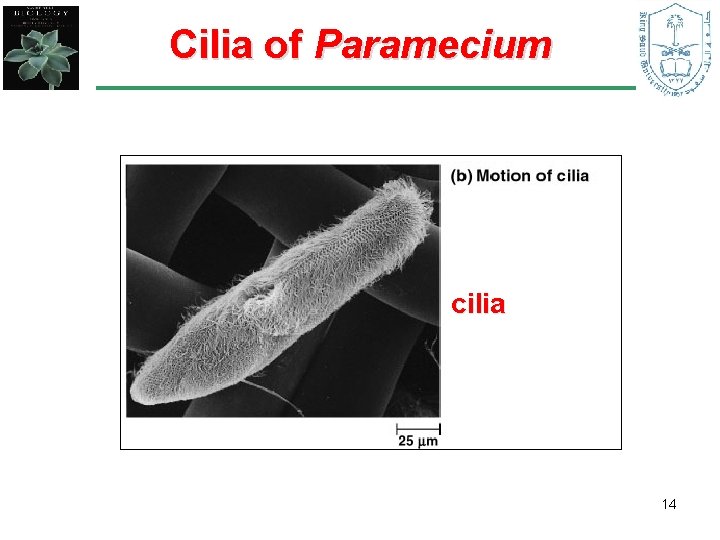
Cilia of Paramecium cilia 14
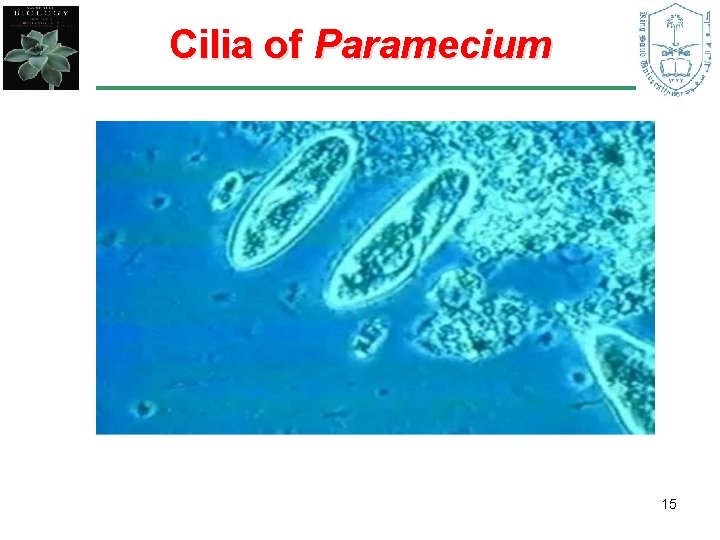
Cilia of Paramecium 15
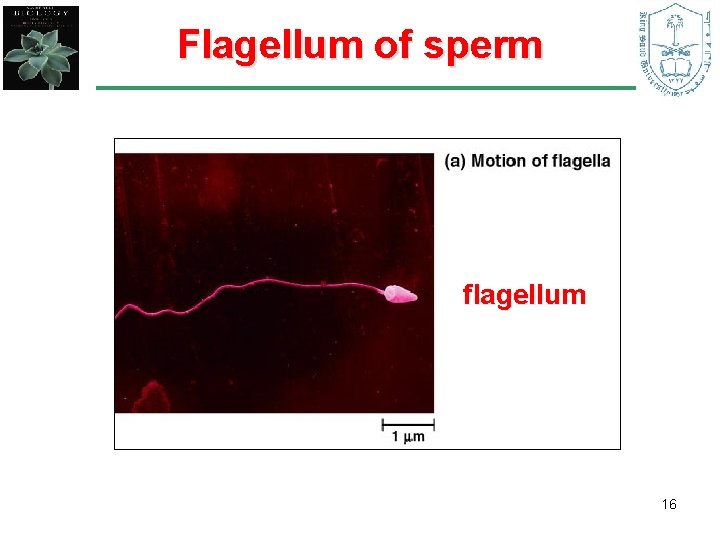
Flagellum of sperm flagellum 16
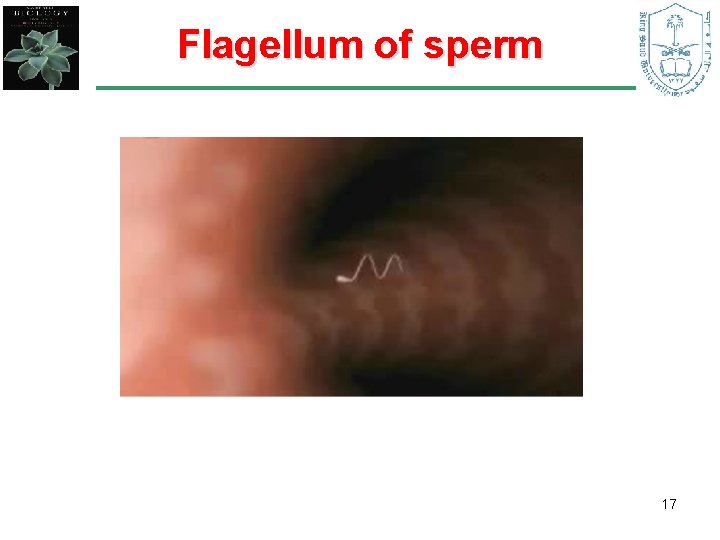
Flagellum of sperm 17
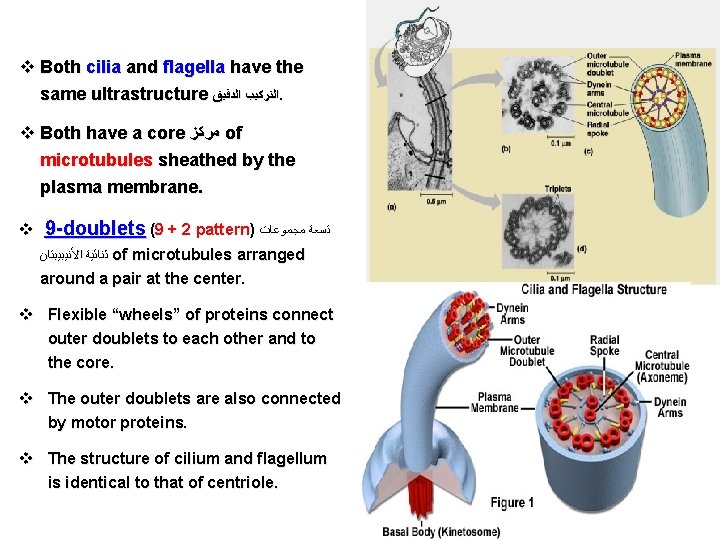
v Both cilia and flagella have the same ultrastructure ﺍﻟﺘﺮﻛﻴﺐ ﺍﻟﺪﻗﻴﻖ. v Both have a core ﻣﺮﻛﺰ of microtubules sheathed by the plasma membrane. v 9 -doublets (9 + 2 pattern) ﺗﺴﻌﺔ ﻣﺠﻤﻮﻋﺎﺕ ﺛﻨﺎﺋﻴﺔ ﺍﻷﻨﻴﺒﻴﺒﺘﺎﻥ of microtubules arranged around a pair at the center. v Flexible “wheels” of proteins connect outer doublets to each other and to the core. v The outer doublets are also connected by motor proteins. v The structure of cilium and flagellum is identical to that of centriole. 18
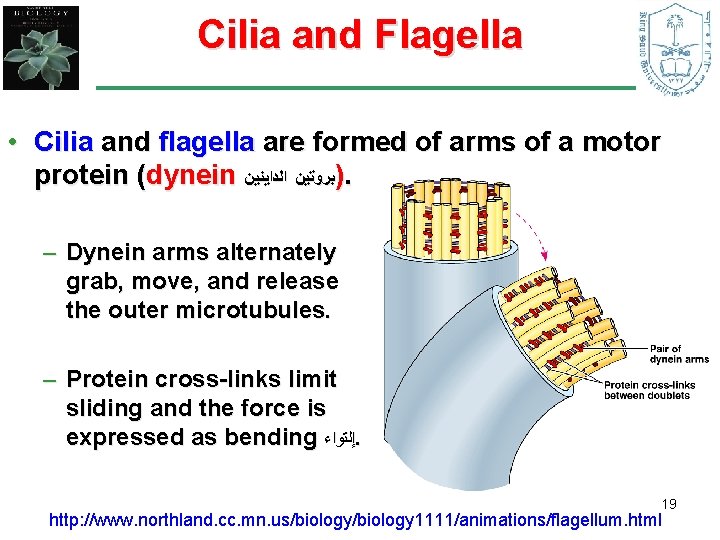
Cilia and Flagella • Cilia and flagella are formed of arms of a motor protein (dynein )ﺑﺮﻭﺗﻴﻦ ﺍﻟﺪﺍﻳﻨﻴﻦ. – Dynein arms alternately grab, move, and release the outer microtubules. – Protein cross-links limit sliding and the force is expressed as bending ﺇﻟﺘﻮﺍﺀ. 19 http: //www. northland. cc. mn. us/biology 1111/animations/flagellum. html
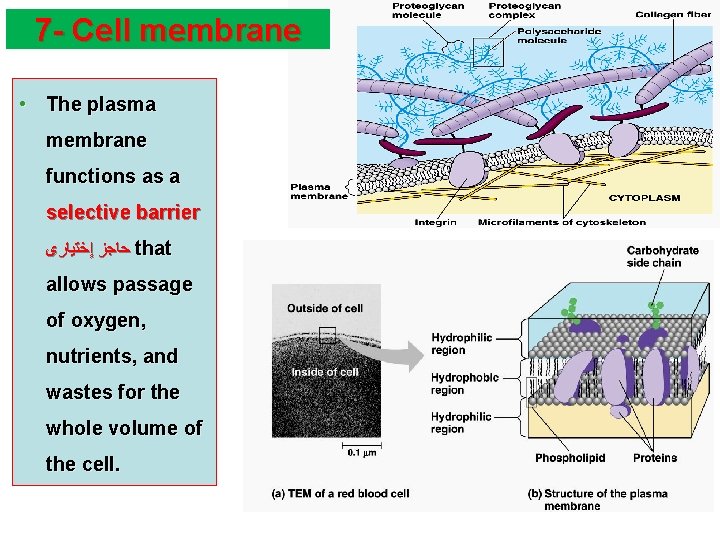
7 - Cell membrane • The plasma membrane functions as a selective barrier ﺣﺎﺟﺰ ﺇﺧﺘﻴﺎﺭﻯ that allows passage of oxygen, nutrients, and wastes for the whole volume of the cell. 20
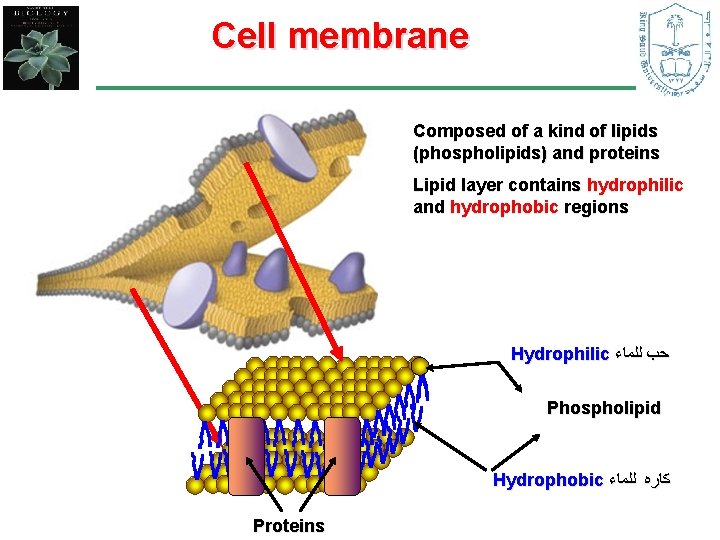
Cell membrane Composed of a kind of lipids (phospholipids) and proteins Lipid layer contains hydrophilic and hydrophobic regions Hydrophilic ﺣﺐ ﻟﻠﻤﺎﺀ Phospholipid Hydrophobic ﻛﺎﺭﻩ ﻟﻠﻤﺎﺀ Proteins
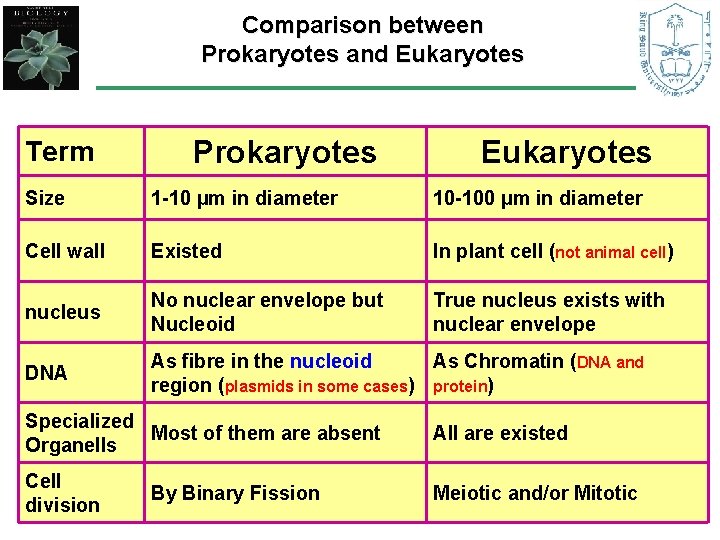
Comparison between Prokaryotes and Eukaryotes Term Prokaryotes Eukaryotes Size 1 -10 µm in diameter 10 -100 µm in diameter Cell wall Existed In plant cell (not animal cell) nucleus No nuclear envelope but Nucleoid True nucleus exists with nuclear envelope DNA As fibre in the nucleoid As Chromatin (DNA and region (plasmids in some cases) protein) Specialized Most of them are absent Organells All are existed Cell division Meiotic and/or Mitotic By Binary Fission 22
College of Science, Zoology Department General Animal Biology (Zoo-145) Prof. Ashraf M. Ahmed aalii@ksu. edu. sa
- Slides: 24