
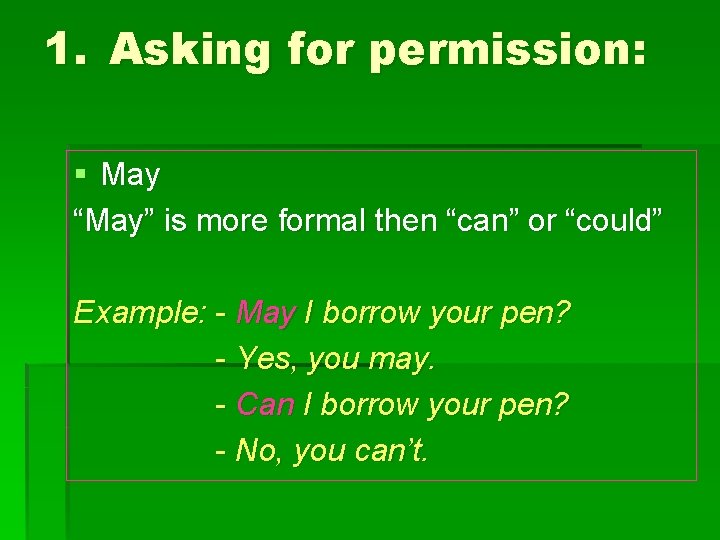
1 Asking for permission May May is more

- Slides: 9
1. Asking for permission: § May “May” is more formal then “can” or “could” Example: - May I borrow your pen? - Yes, you may. - Can I borrow your pen? - No, you can’t.
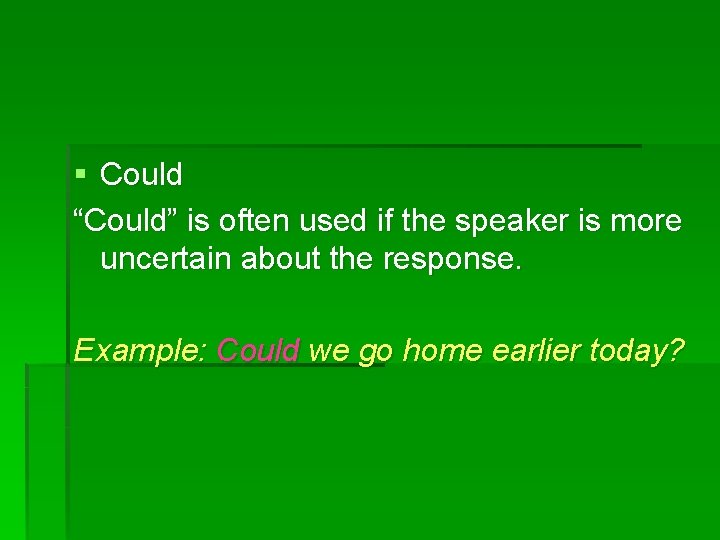
§ Could “Could” is often used if the speaker is more uncertain about the response. Example: Could we go home earlier today?
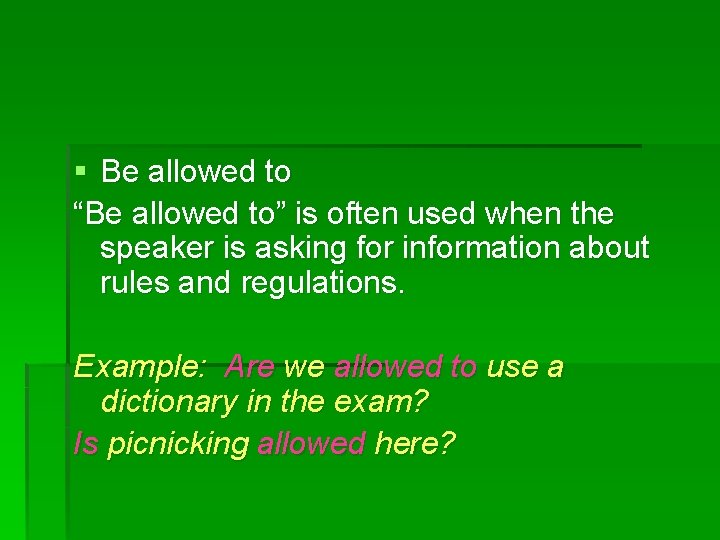
§ Be allowed to “Be allowed to” is often used when the speaker is asking for information about rules and regulations. Example: Are we allowed to use a dictionary in the exam? Is picnicking allowed here?
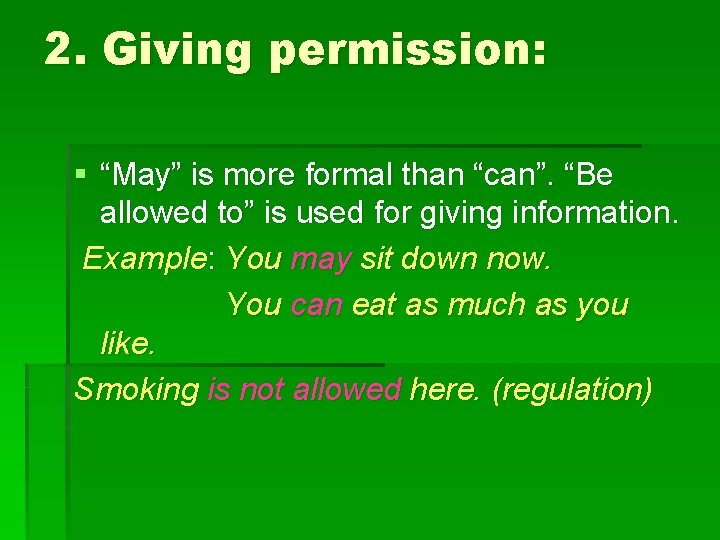
2. Giving permission: § “May” is more formal than “can”. “Be allowed to” is used for giving information. Example: You may sit down now. You can eat as much as you like. Smoking is not allowed here. (regulation)
Remember please: § “Could” is not usually used to give permission.
3. Ways of forbidding and expressing obligation: § Must “Must” is usually used when the obligation is imposed by the speakers. Example: You really must work harder. You must come to dinner on Sunday.
Practice: 1)You want to borrow your friend’s camera. What do you say to him / her? (Could you…? ) 2) You have a car and you want to give somebody a lift. What do you say? (…. I……? ) 3)You have to go to the airport but you don’t know how to get there. You ask a passer-by. (…. you …. ? ) 4)You are at an interview. You want to smoke a cigarette. What do you ask first? (…. I…. ? )
Thank you for your attention! Good luck!