
1 Anatomic and Physiologic Differences Lesson 2 NYS
- Slides: 12
1 Anatomic and Physiologic Differences Lesson 2 NYS DOH EMSC PPCC
2 Anatomic and Physiologic Differences • There are fundamental anatomic and physiologic differences between children and adults that directly effect – How assessment is performed – How children respond to illness and injury – How treatment and transportation decisions are made NYS DOH EMSC PPCC
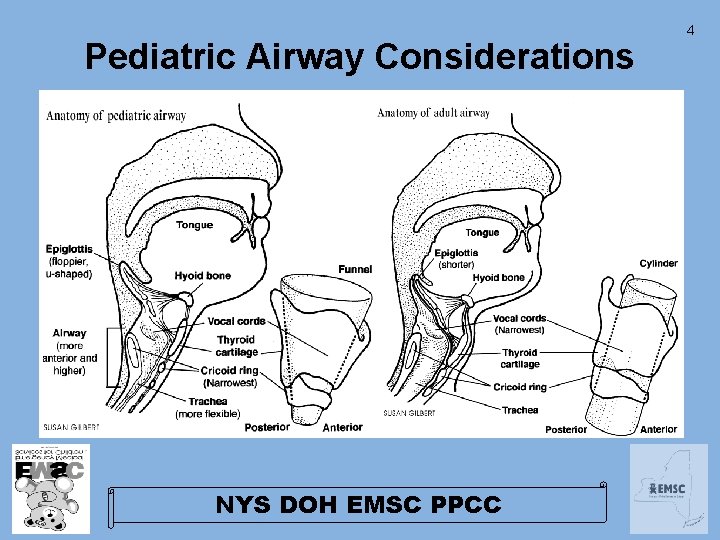
3 Pediatric Airway Considerations • More anterior than the adult – less head tilt to open the airway • Smaller diameter of airway than the adult – easily blocked by secretions or blood • Large tongue in relation to jaw size – likely to cause obstruction when child is unconscious NYS DOH EMSC PPCC
Pediatric Airway Considerations NYS DOH EMSC PPCC 4
5 Pediatric Airway Considerations Infants prefer to breathe through the nose. Nasal obstructions can cause respiratory distress. NYS DOH EMSC PPCC
6 Breathing Considerations % Small children are dependent on contraction of the diaphragm to breathe. %A child’s primary response to respiratory distress is to increase the rate and effort of breathing. NYS DOH EMSC PPCC
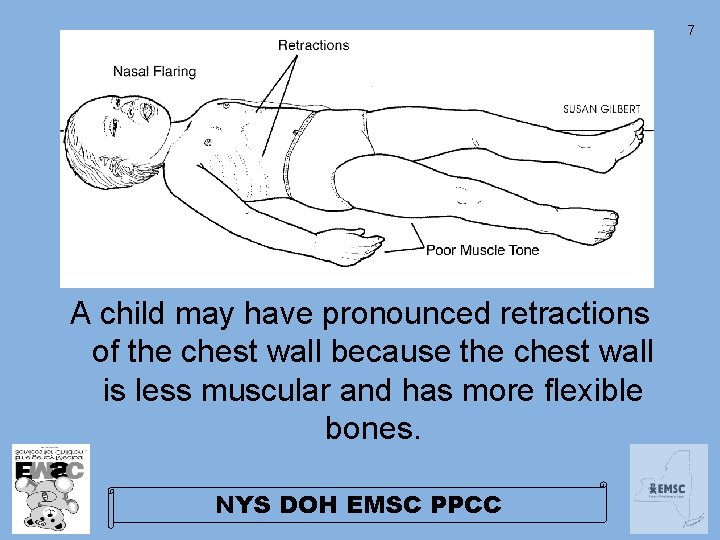
7 A child may have pronounced retractions of the chest wall because the chest wall is less muscular and has more flexible bones. NYS DOH EMSC PPCC
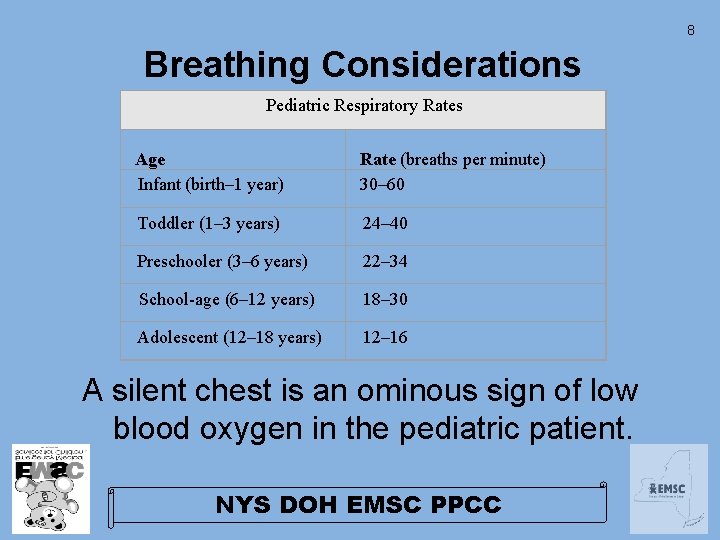
8 Breathing Considerations Pediatric Respiratory Rates Age Infant (birth– 1 year) Rate (breaths per minute) 30– 60 Toddler (1– 3 years) Preschooler (3– 6 years) School-age (6– 12 years) Adolescent (12– 18 years) 24– 40 22– 34 18– 30 12– 16 A silent chest is an ominous sign of low blood oxygen in the pediatric patient. NYS DOH EMSC PPCC
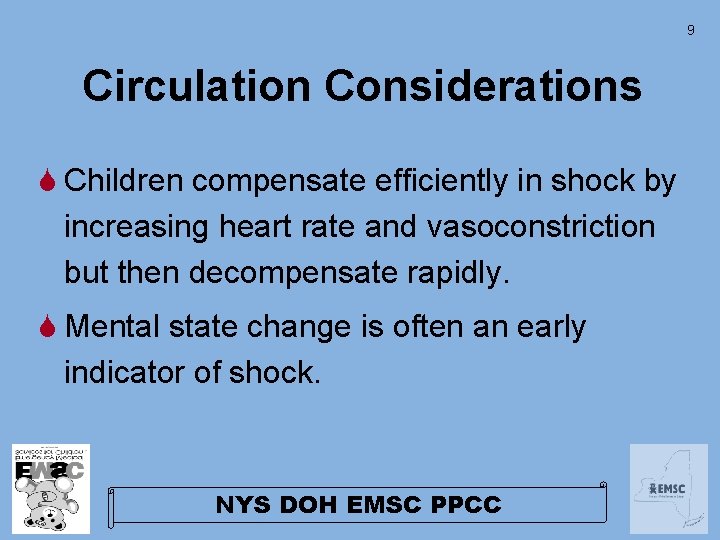
9 Circulation Considerations S Children compensate efficiently in shock by increasing heart rate and vasoconstriction but then decompensate rapidly. S Mental state change is often an early indicator of shock. NYS DOH EMSC PPCC
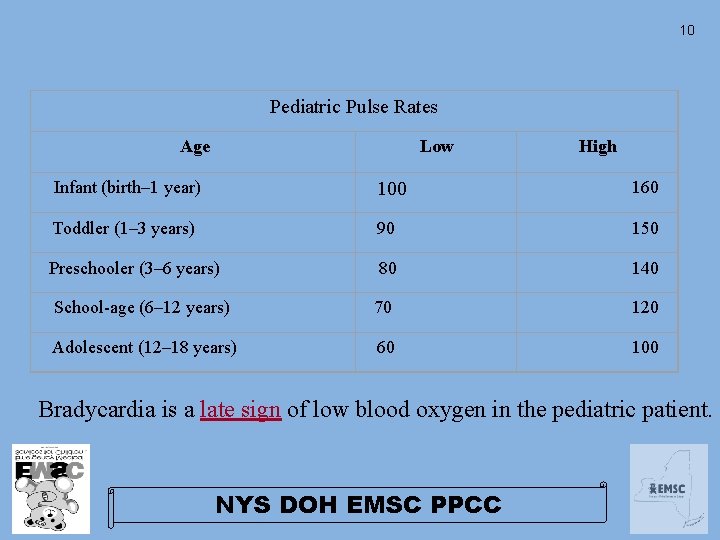
10 Pediatric Pulse Rates Age Low High Infant (birth– 1 year) 100 Toddler (1– 3 years) 90 Preschooler (3– 6 years) 80 School-age (6– 12 years) 70 120 Adolescent (12– 18 years) 60 100 160 150 140 Bradycardia is a late sign of low blood oxygen in the pediatric patient. NYS DOH EMSC PPCC
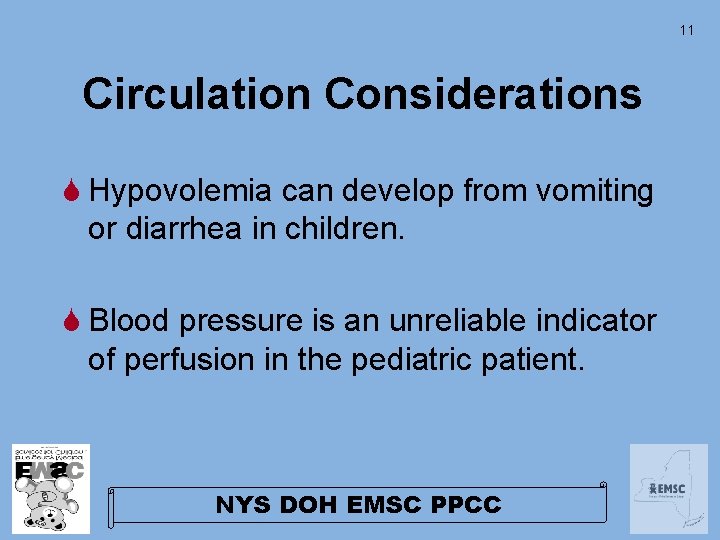
11 Circulation Considerations S Hypovolemia can develop from vomiting or diarrhea in children. S Blood pressure is an unreliable indicator of perfusion in the pediatric patient. NYS DOH EMSC PPCC
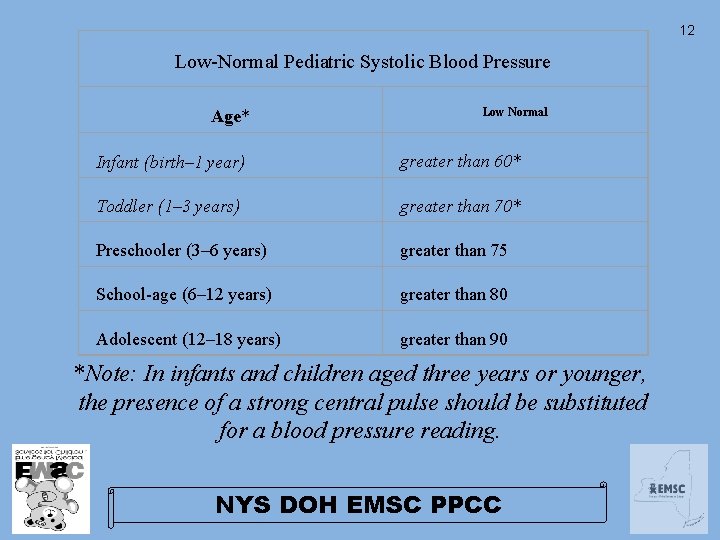
12 Low-Normal Pediatric Systolic Blood Pressure Low Normal Age* Infant (birth– 1 year) greater than 60* Toddler (1– 3 years) greater than 70* Preschooler (3– 6 years) greater than 75 School-age (6– 12 years) greater than 80 Adolescent (12– 18 years) greater than 90 *Note: In infants and children aged three years or younger, the presence of a strong central pulse should be substituted for a blood pressure reading. NYS DOH EMSC PPCC