
1 An Introduction to Life on Earth Overview


- Slides: 71
1 An Introduction to Life on Earth
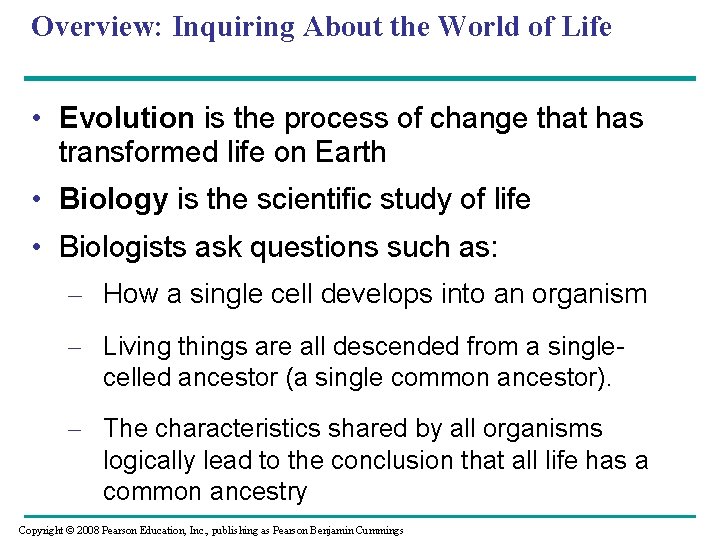
Overview: Inquiring About the World of Life • Evolution is the process of change that has transformed life on Earth • Biology is the scientific study of life • Biologists ask questions such as: – How a single cell develops into an organism – Living things are all descended from a singlecelled ancestor (a single common ancestor). – The characteristics shared by all organisms logically lead to the conclusion that all life has a common ancestry Copyright © 2008 Pearson Education, Inc. , publishing as Pearson Benjamin Cummings
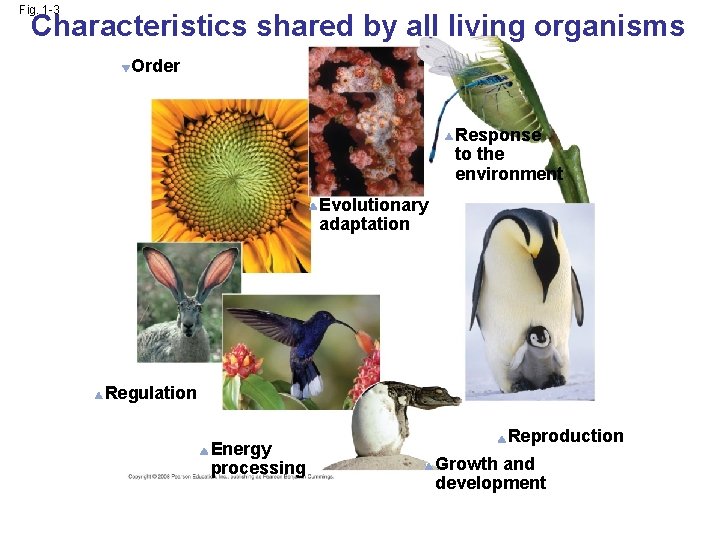
Fig. 1 -3 Characteristics shared by all living organisms Order Response to the environment Evolutionary adaptation Regulation Energy processing Reproduction Growth and development
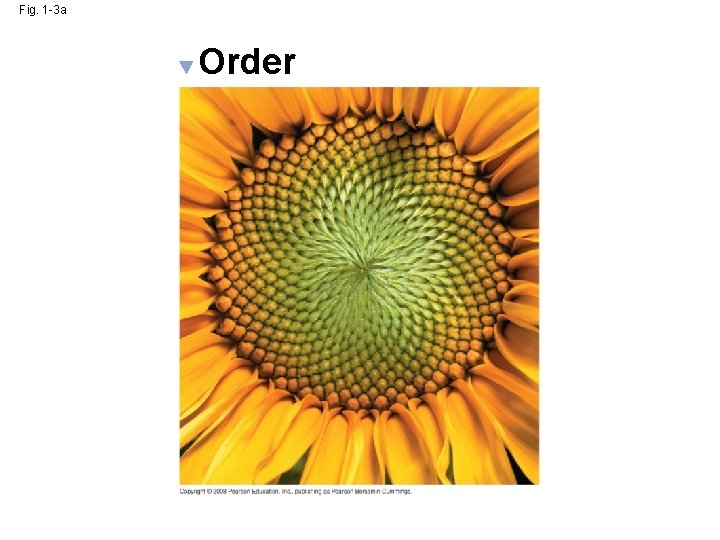
Fig. 1 -3 a Order
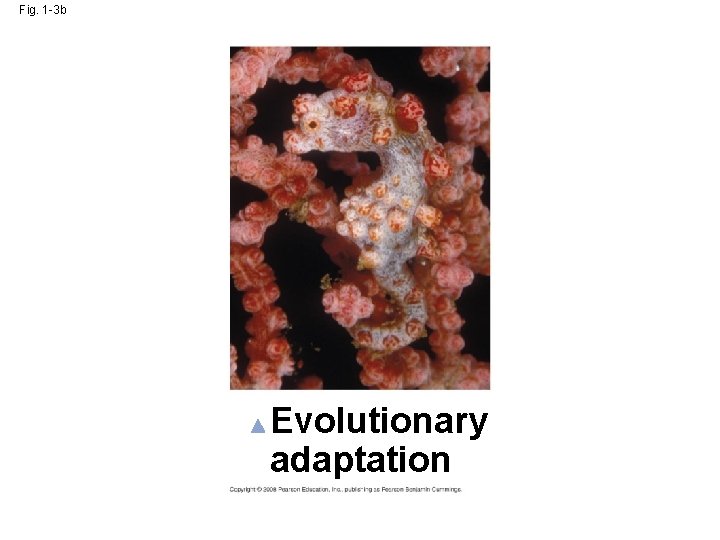
Fig. 1 -3 b Evolutionary adaptation
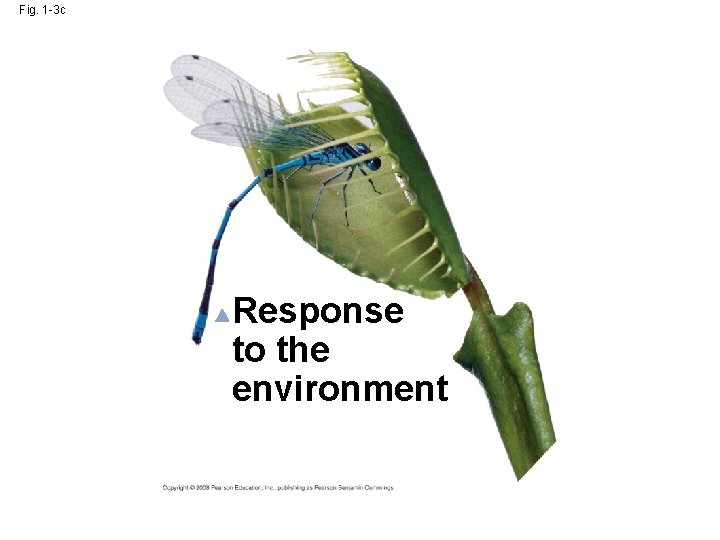
Fig. 1 -3 c Response to the environment
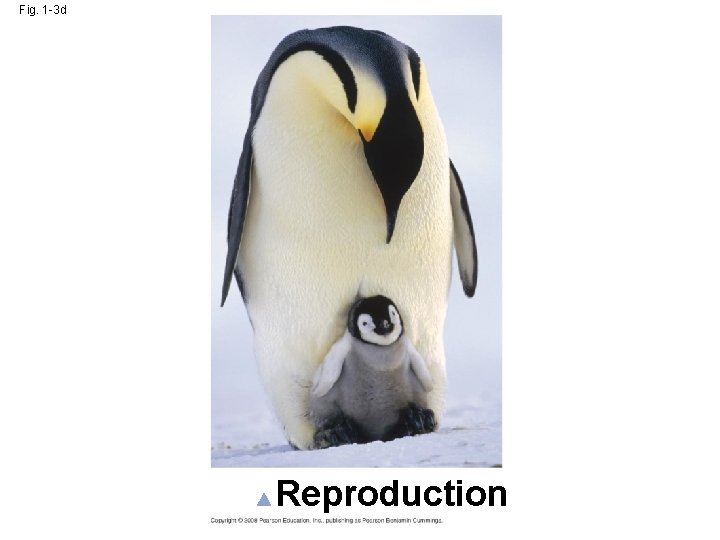
Fig. 1 -3 d Reproduction
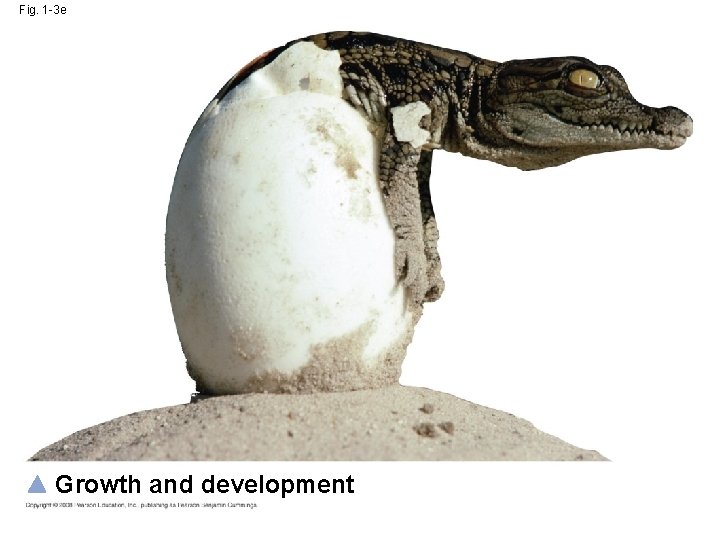
Fig. 1 -3 e Growth and development
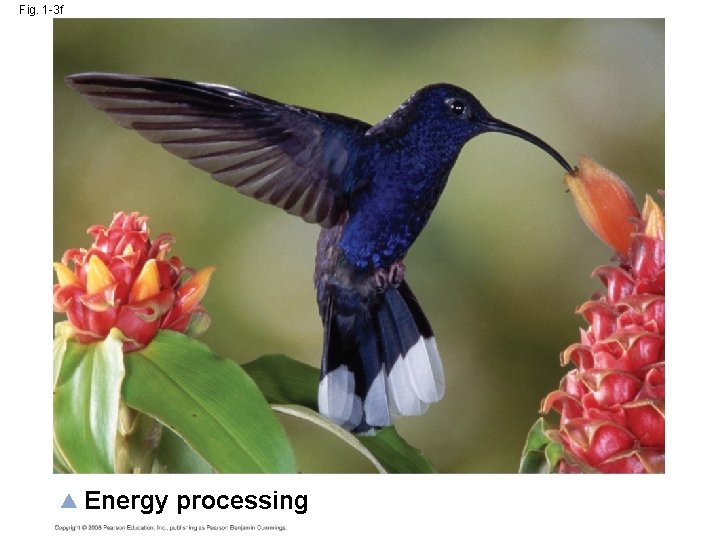
Fig. 1 -3 f Energy processing
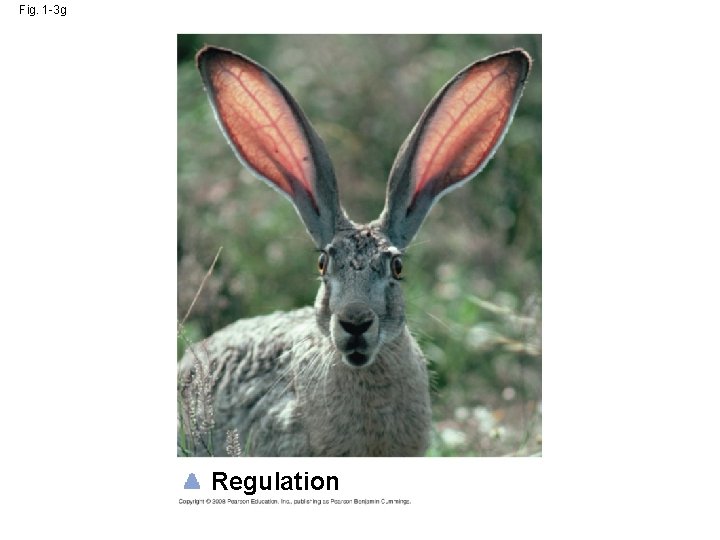
Fig. 1 -3 g Regulation
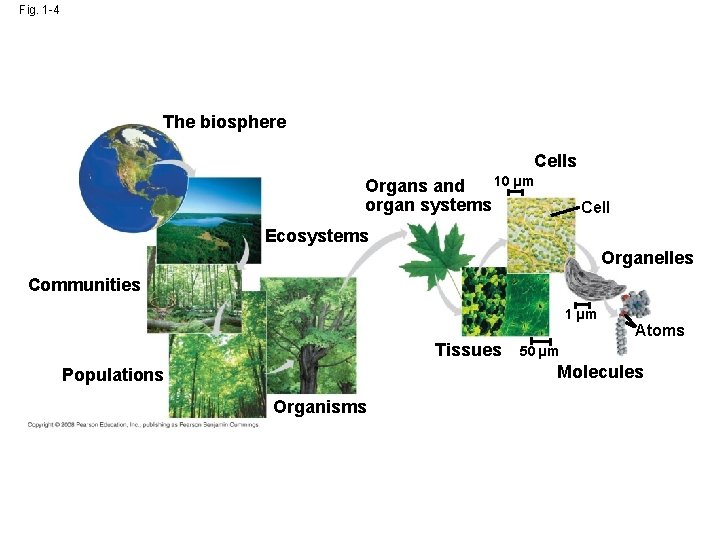
Theme: New properties emerge at each level in the biological hierarchy • Life can be studied at different levels from molecules to the entire living planet • The study of life can be divided into different levels of biological organization Copyright © 2008 Pearson Education, Inc. , publishing as Pearson Benjamin Cummings
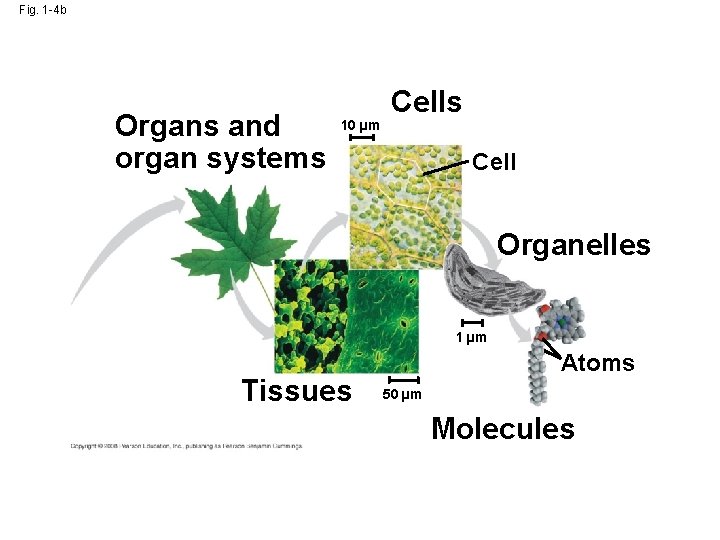
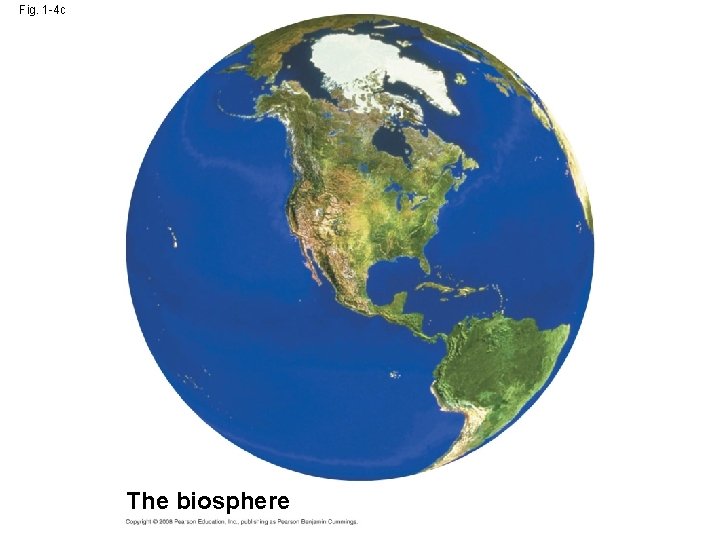
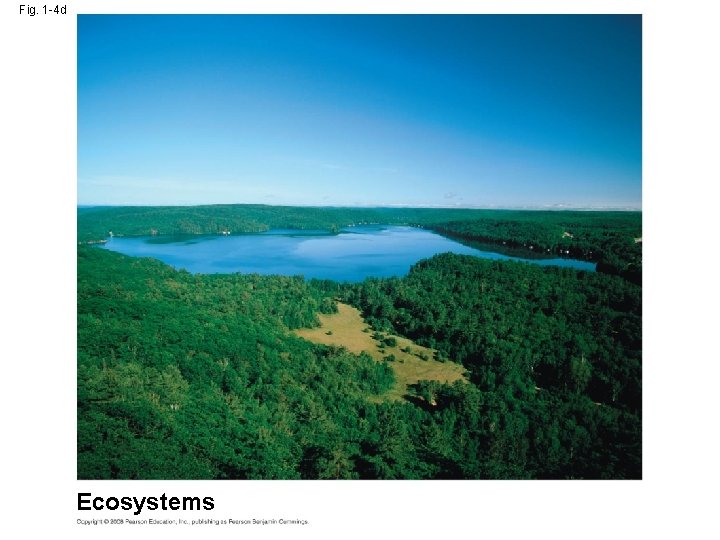
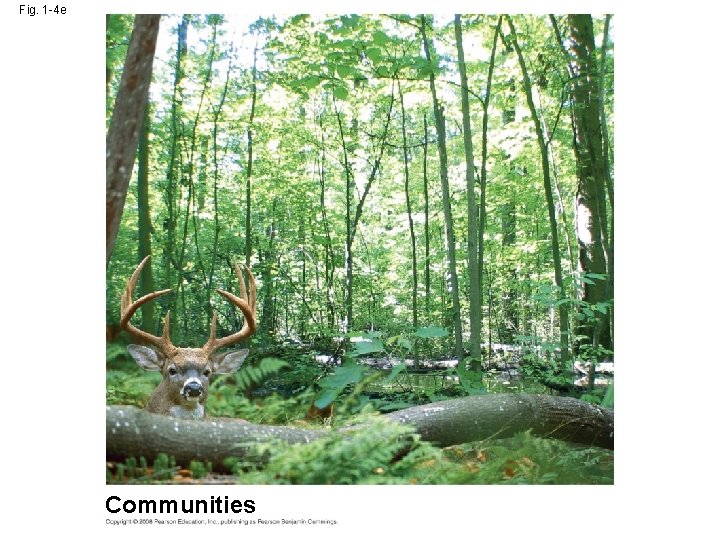
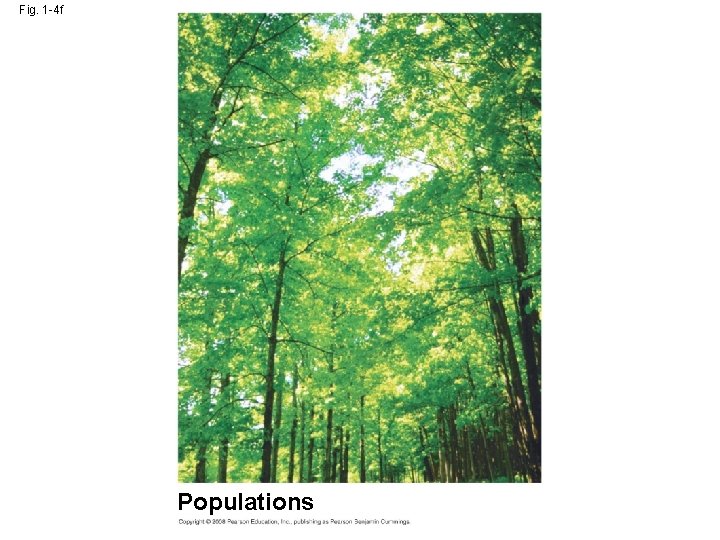
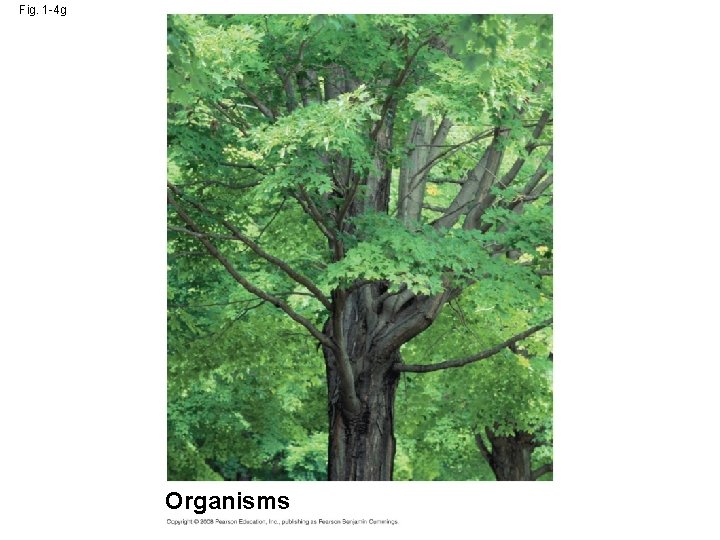
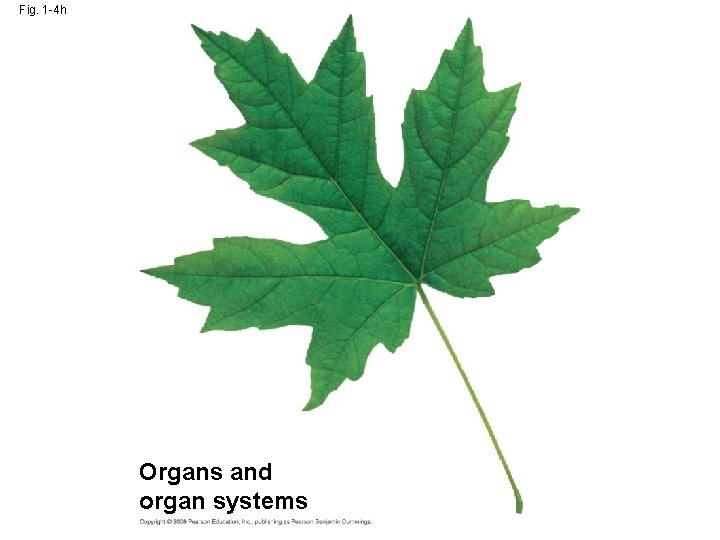
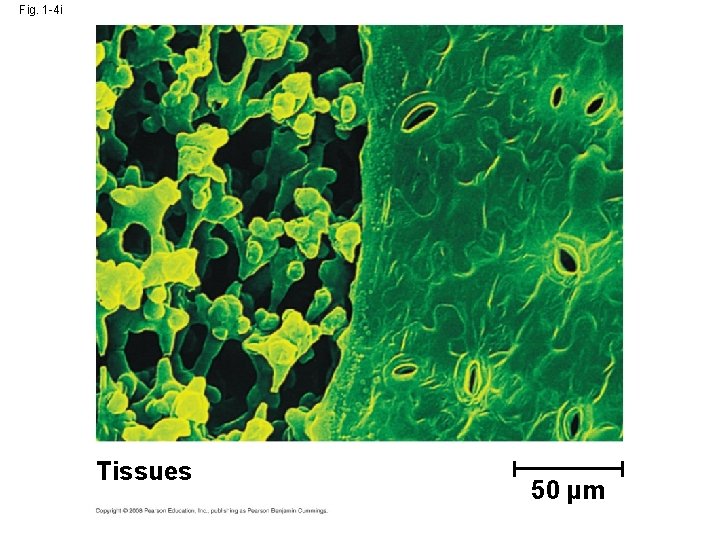
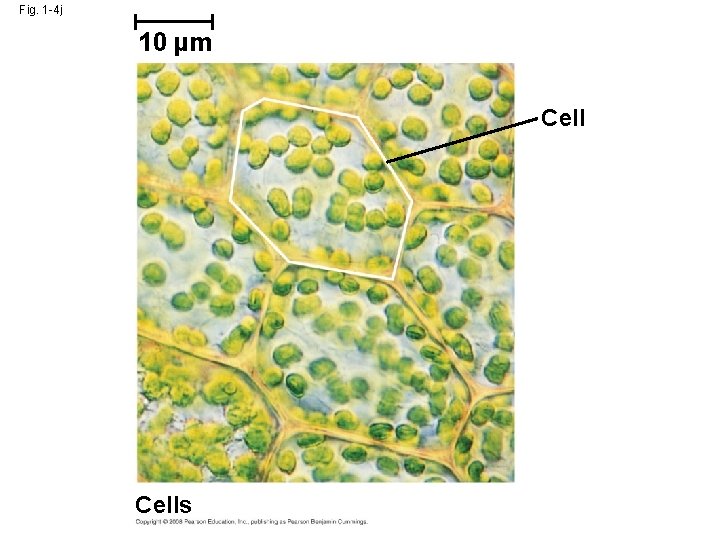
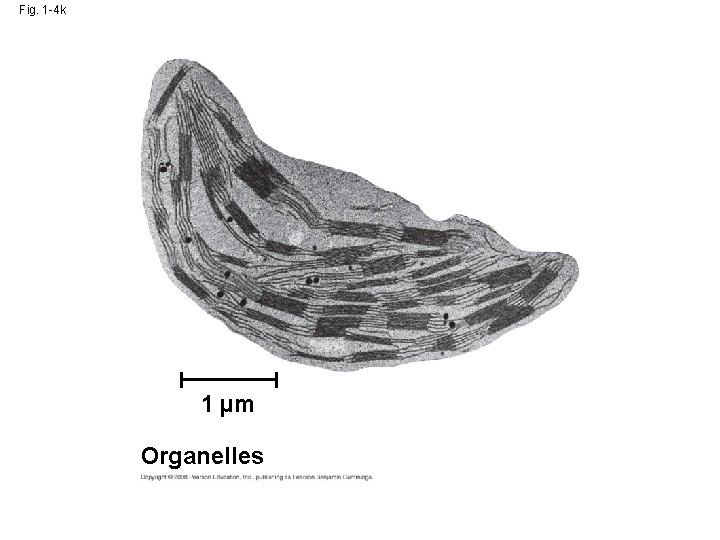
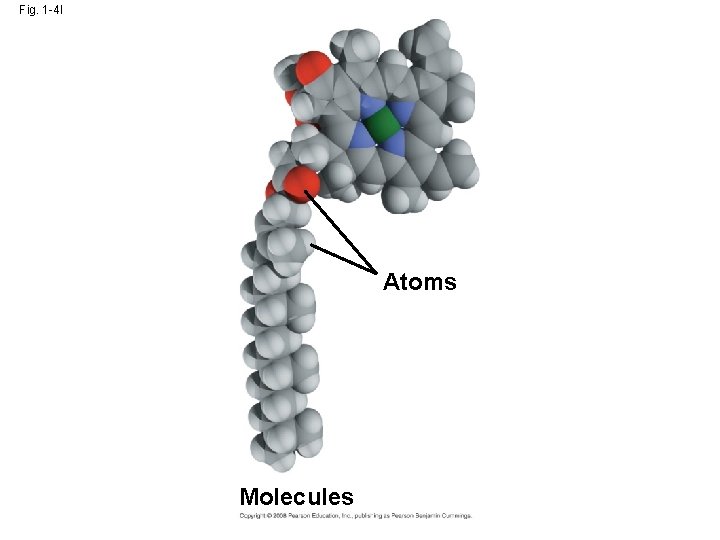
Fig. 1 -4 The biosphere Cells 10 µm Organs and organ systems Cell Ecosystems Organelles Communities 1 µm Tissues Atoms 50 µm Molecules Populations Organisms
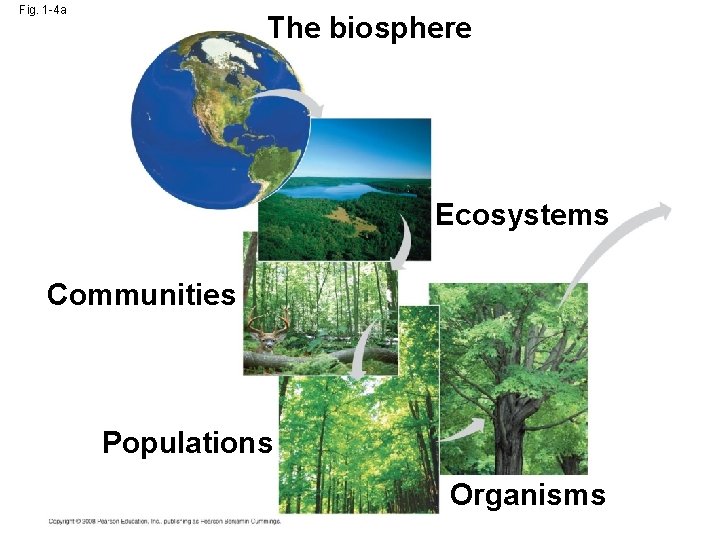
Fig. 1 -4 a The biosphere Ecosystems Communities Populations Organisms
Fig. 1 -4 b Organs and organ systems 10 µm Cells Cell Organelles 1 µm Tissues Atoms 50 µm Molecules
Fig. 1 -4 c The biosphere
Fig. 1 -4 d Ecosystems
Fig. 1 -4 e Communities
Fig. 1 -4 f Populations
Fig. 1 -4 g Organisms
Fig. 1 -4 h Organs and organ systems
Fig. 1 -4 i Tissues 50 µm
Fig. 1 -4 j 10 µm Cells
Fig. 1 -4 k 1 µm Organelles
Fig. 1 -4 l Atoms Molecules
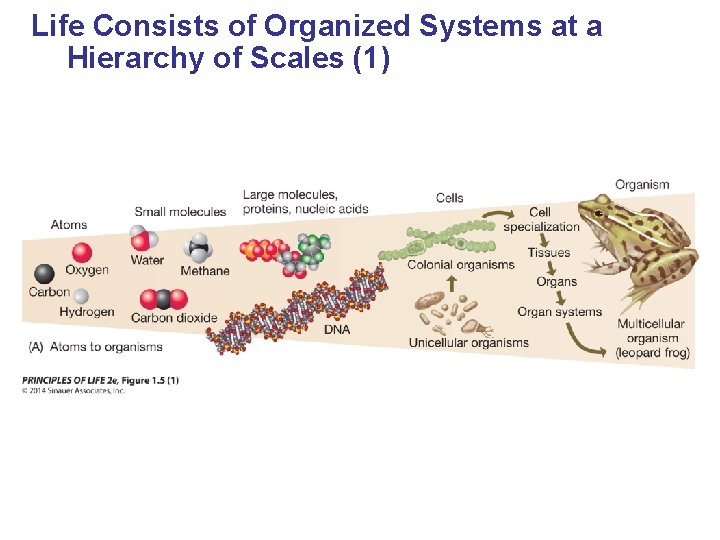
Life Consists of Organized Systems at a Hierarchy of Scales (1)
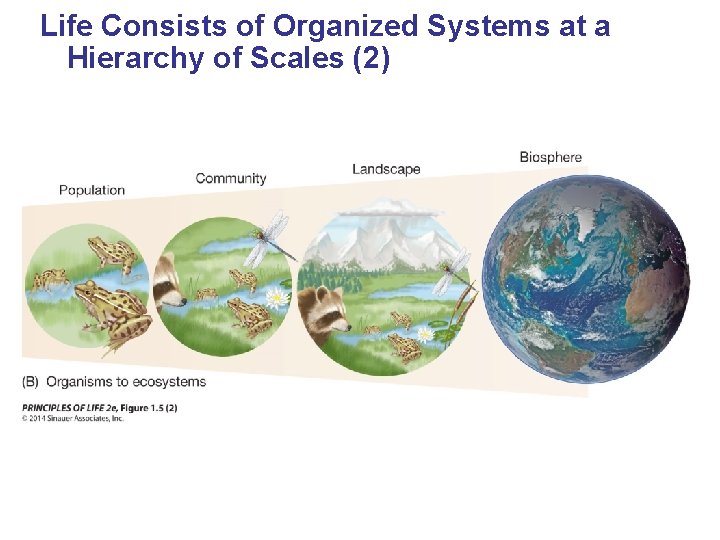
Life Consists of Organized Systems at a Hierarchy of Scales (2)
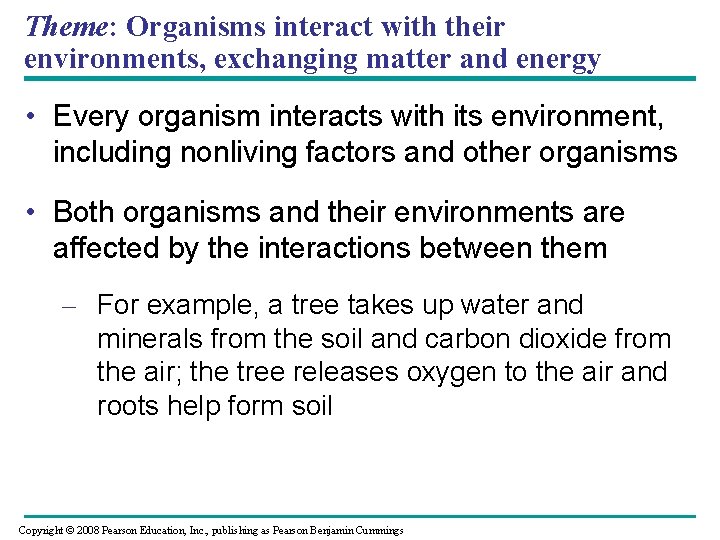
Theme: Organisms interact with their environments, exchanging matter and energy • Every organism interacts with its environment, including nonliving factors and other organisms • Both organisms and their environments are affected by the interactions between them – For example, a tree takes up water and minerals from the soil and carbon dioxide from the air; the tree releases oxygen to the air and roots help form soil Copyright © 2008 Pearson Education, Inc. , publishing as Pearson Benjamin Cummings
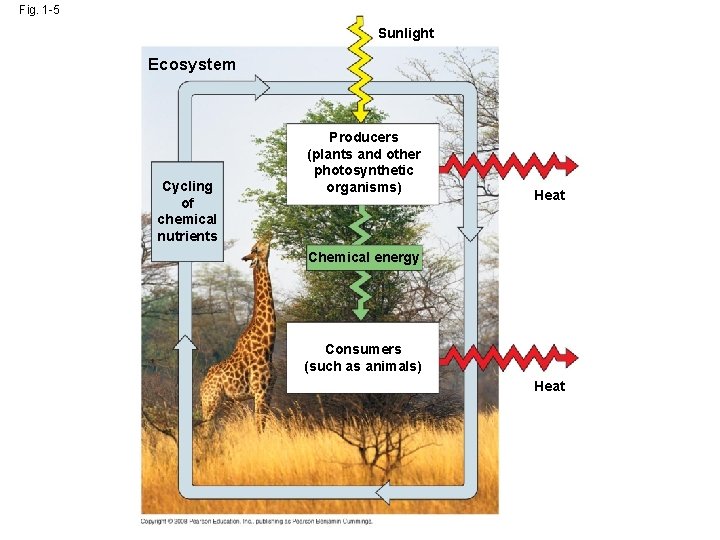
Ecosystem Dynamics • The dynamics of an ecosystem include two major processes: – Cycling of nutrients, in which materials acquired by plants eventually return to the soil – The flow of energy from sunlight to producers to consumers Copyright © 2008 Pearson Education, Inc. , publishing as Pearson Benjamin Cummings
Fig. 1 -5 Sunlight Ecosystem Cycling of chemical nutrients Producers (plants and other photosynthetic organisms) Heat Chemical energy Consumers (such as animals) Heat
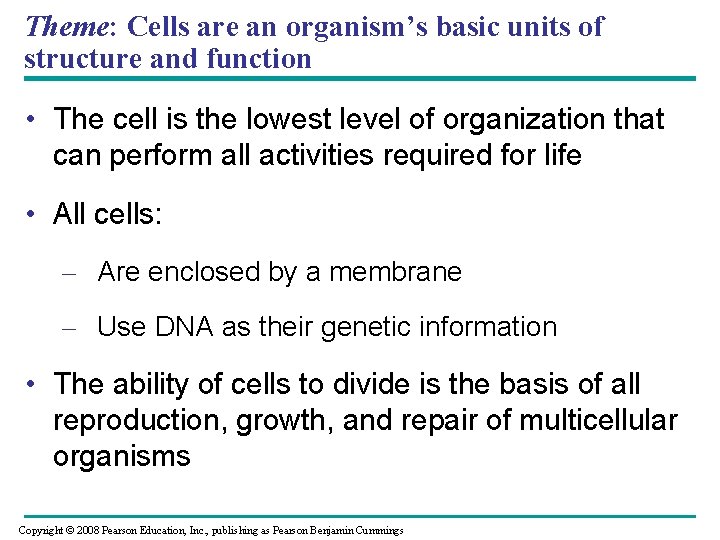
Theme: Cells are an organism’s basic units of structure and function • The cell is the lowest level of organization that can perform all activities required for life • All cells: – Are enclosed by a membrane – Use DNA as their genetic information • The ability of cells to divide is the basis of all reproduction, growth, and repair of multicellular organisms Copyright © 2008 Pearson Education, Inc. , publishing as Pearson Benjamin Cummings
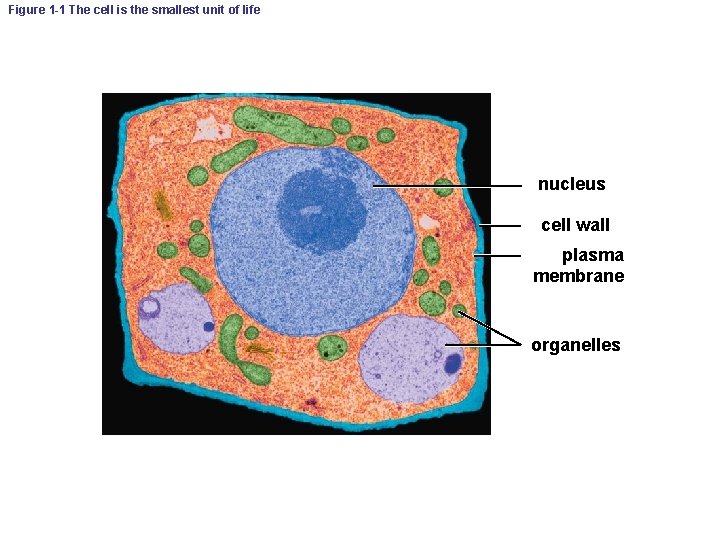
Figure 1 -1 The cell is the smallest unit of life nucleus cell wall plasma membrane organelles
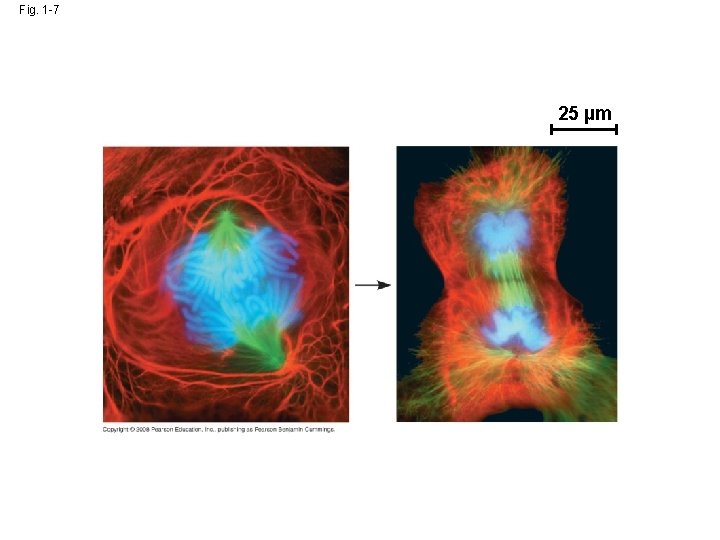
Fig. 1 -7 25 µm
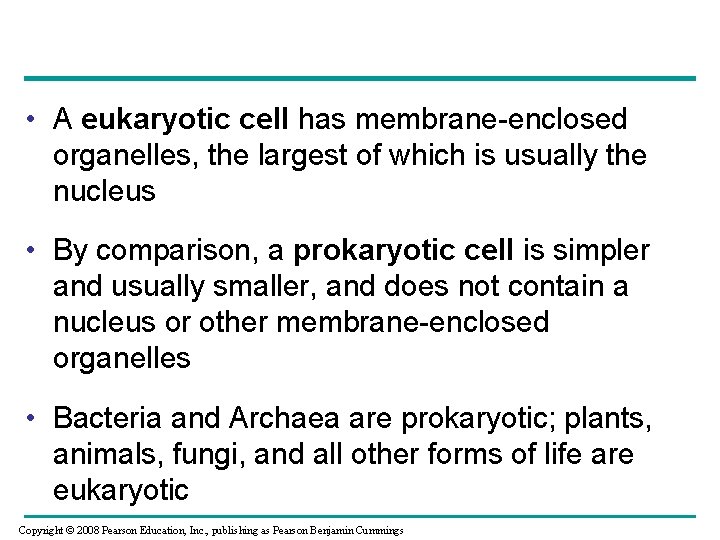
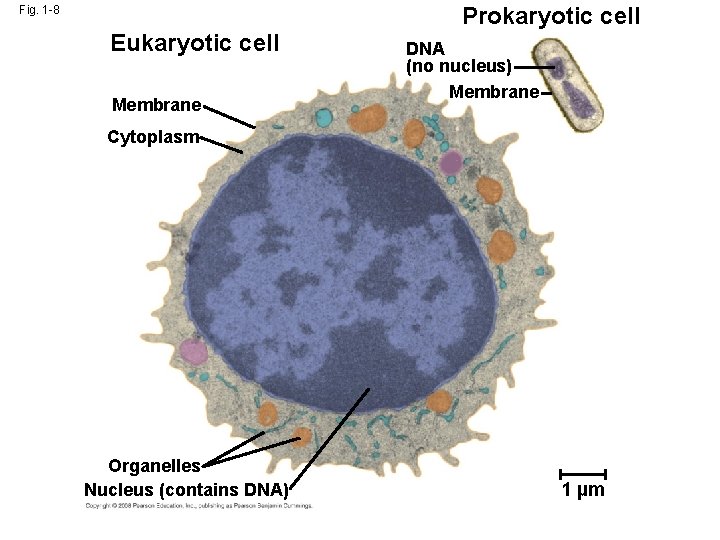
• A eukaryotic cell has membrane-enclosed organelles, the largest of which is usually the nucleus • By comparison, a prokaryotic cell is simpler and usually smaller, and does not contain a nucleus or other membrane-enclosed organelles • Bacteria and Archaea are prokaryotic; plants, animals, fungi, and all other forms of life are eukaryotic Copyright © 2008 Pearson Education, Inc. , publishing as Pearson Benjamin Cummings
Prokaryotic cell Fig. 1 -8 Eukaryotic cell Membrane DNA (no nucleus) Membrane Cytoplasm Organelles Nucleus (contains DNA) 1 µm
Theme: The continuity of life is based on heritable information in the form of DNA • Chromosomes contain most of a cell’s genetic material in the form of DNA (deoxyribonucleic acid) • DNA is the substance of genes • Genes are the units of inheritance that transmit information from parents to offspring Copyright © 2008 Pearson Education, Inc. , publishing as Pearson Benjamin Cummings
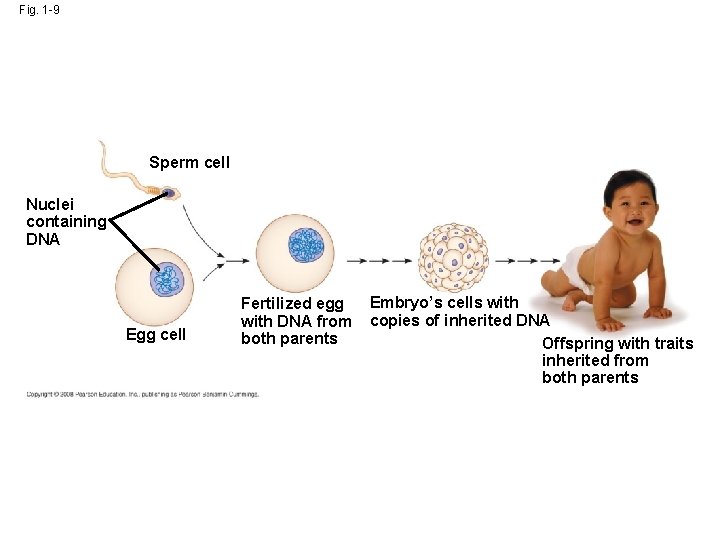
DNA Structure and Function • Each chromosome has one long DNA molecule with hundreds or thousands of genes • DNA is inherited by offspring from their parents • DNA controls the development and maintenance of organisms Copyright © 2008 Pearson Education, Inc. , publishing as Pearson Benjamin Cummings
Fig. 1 -9 Sperm cell Nuclei containing DNA Egg cell Fertilized egg with DNA from both parents Embryo’s cells with copies of inherited DNA Offspring with traits inherited from both parents
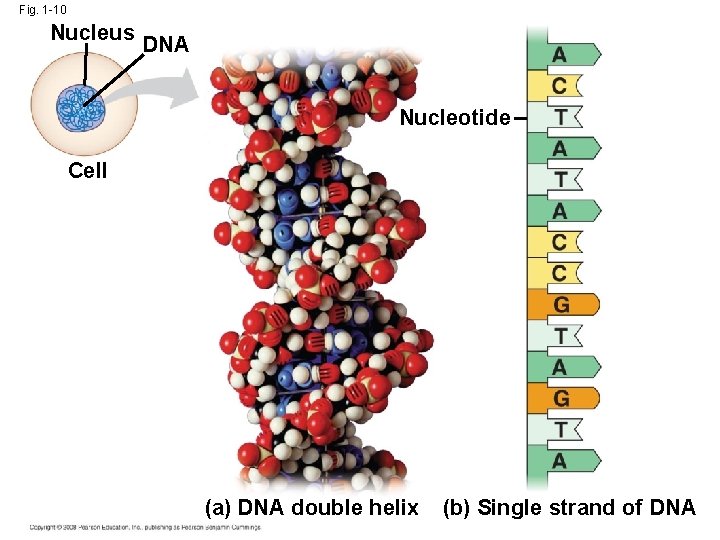
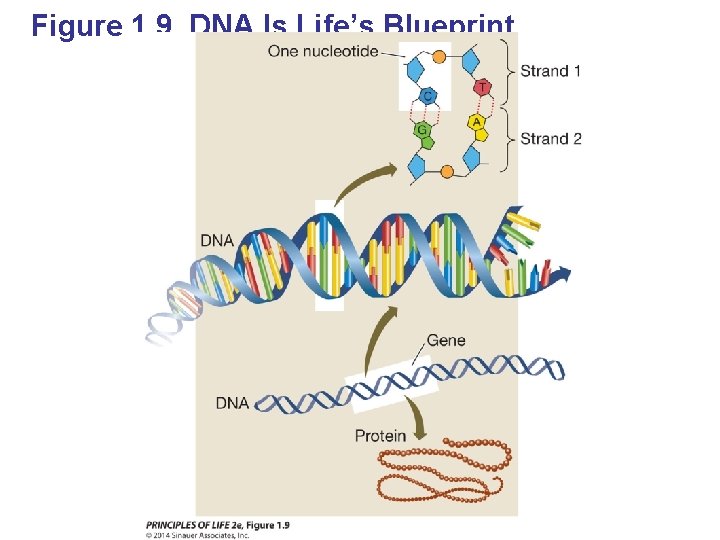
• Each DNA molecule is made up of two long chains arranged in a double helix • Each link of a chain is one of four kinds of chemical building blocks called nucleotides • http: //www. youtube. com/watch? v=gb. SIBh. Fw. Q 4 s Copyright © 2008 Pearson Education, Inc. , publishing as Pearson Benjamin Cummings
Fig. 1 -10 Nucleus DNA Nucleotide Cell (a) DNA double helix (b) Single strand of DNA
Figure 1. 9 DNA Is Life’s Blueprint
• Genes control protein production indirectly • DNA is transcribed into RNA then translated into a protein • http: //www. youtube. com/watch? v=C 8 OL 1 MTb Gp. U Copyright © 2008 Pearson Education, Inc. , publishing as Pearson Benjamin Cummings
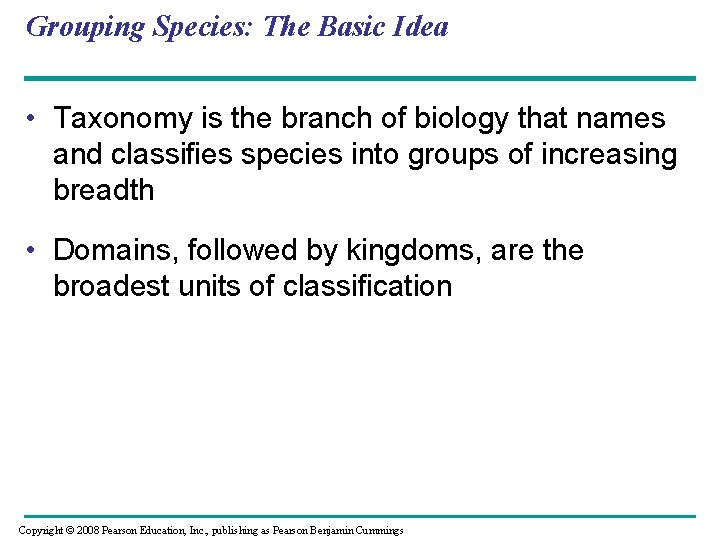
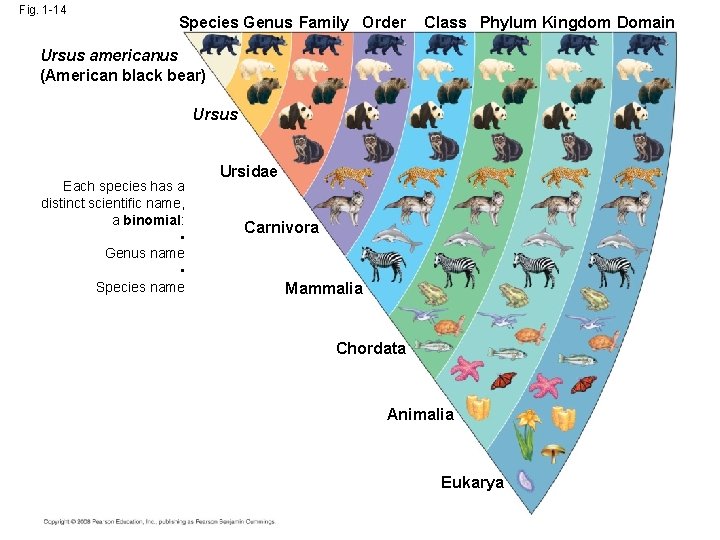
Grouping Species: The Basic Idea • Taxonomy is the branch of biology that names and classifies species into groups of increasing breadth • Domains, followed by kingdoms, are the broadest units of classification Copyright © 2008 Pearson Education, Inc. , publishing as Pearson Benjamin Cummings
Fig. 1 -14 Species Genus Family Order Class Phylum Kingdom Domain Ursus americanus (American black bear) Ursus Each species has a distinct scientific name, a binomial: • Genus name • Species name Ursidae Carnivora Mammalia Chordata Animalia Eukarya
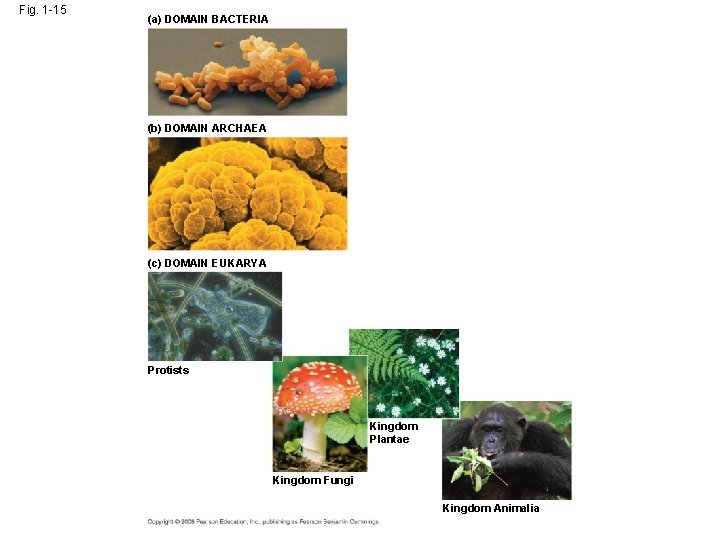
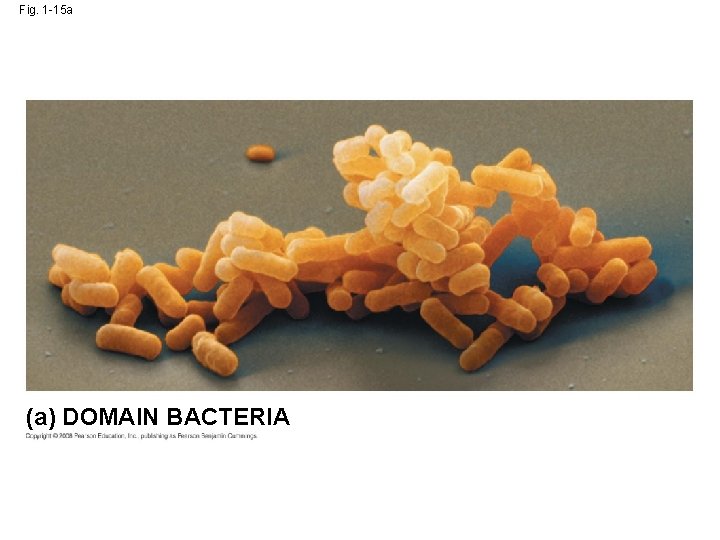
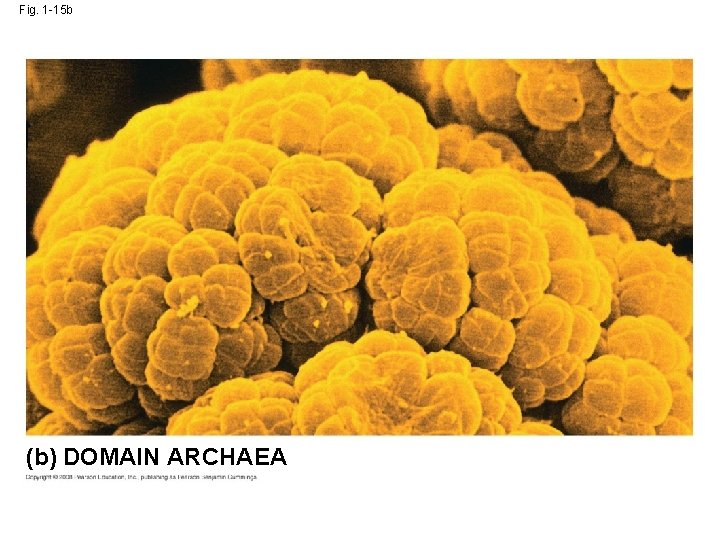
The Three Domains of Life • The three-domain system is currently used, and replaces the old five-kingdom system • Domain Bacteria and domain Archaea comprise the prokaryotes • Domain Eukarya includes all eukaryotic organisms Copyright © 2008 Pearson Education, Inc. , publishing as Pearson Benjamin Cummings
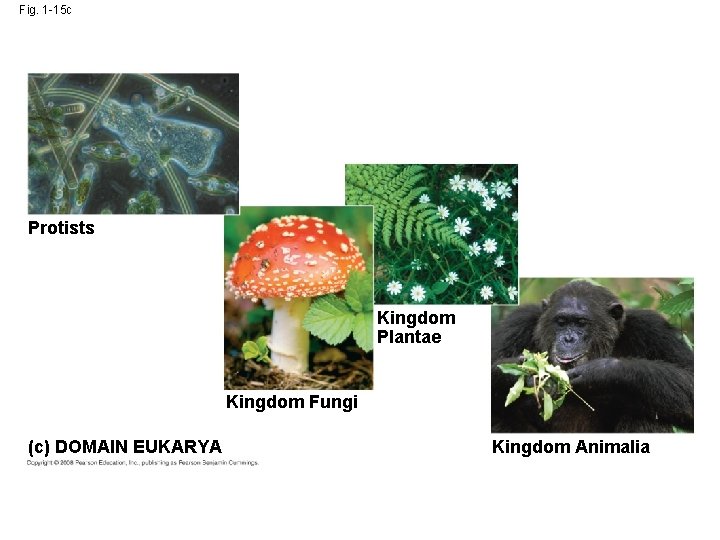
Fig. 1 -15 (a) DOMAIN BACTERIA (b) DOMAIN ARCHAEA (c) DOMAIN EUKARYA Protists Kingdom Plantae Kingdom Fungi Kingdom Animalia
Fig. 1 -15 a (a) DOMAIN BACTERIA
Fig. 1 -15 b (b) DOMAIN ARCHAEA
• The domain Eukarya includes three multicellular kingdoms: – Plantae – Fungi – Animalia • Other eukaryotic organisms were formerly grouped into a kingdom called Protista, though these are now often grouped into many separate kingdoms Copyright © 2008 Pearson Education, Inc. , publishing as Pearson Benjamin Cummings
Fig. 1 -15 c Protists Kingdom Plantae Kingdom Fungi (c) DOMAIN EUKARYA Kingdom Animalia
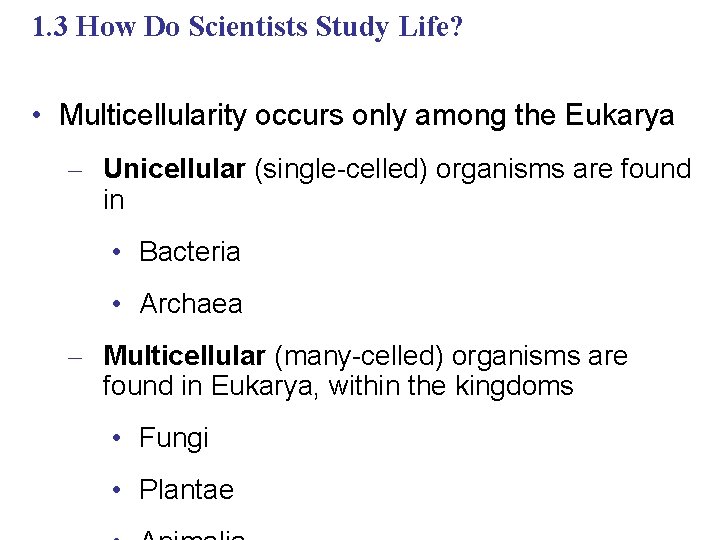
1. 3 How Do Scientists Study Life? • Multicellularity occurs only among the Eukarya – Unicellular (single-celled) organisms are found in • Bacteria • Archaea – Multicellular (many-celled) organisms are found in Eukarya, within the kingdoms • Fungi • Plantae
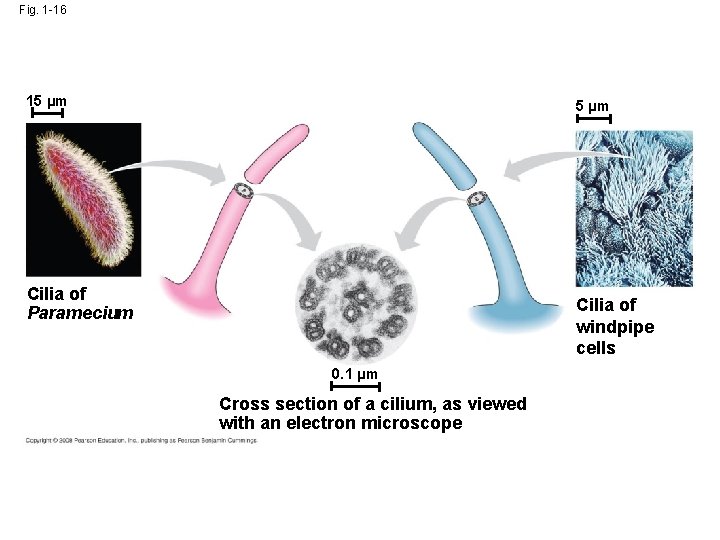
Unity in the Diversity of Life • A striking unity underlies the diversity of life; for example: – DNA is the universal genetic language common to all organisms – Unity is evident in many features of cell structure Copyright © 2008 Pearson Education, Inc. , publishing as Pearson Benjamin Cummings
Fig. 1 -16 15 µm Cilia of Paramecium Cilia of windpipe cells 0. 1 µm Cross section of a cilium, as viewed with an electron microscope
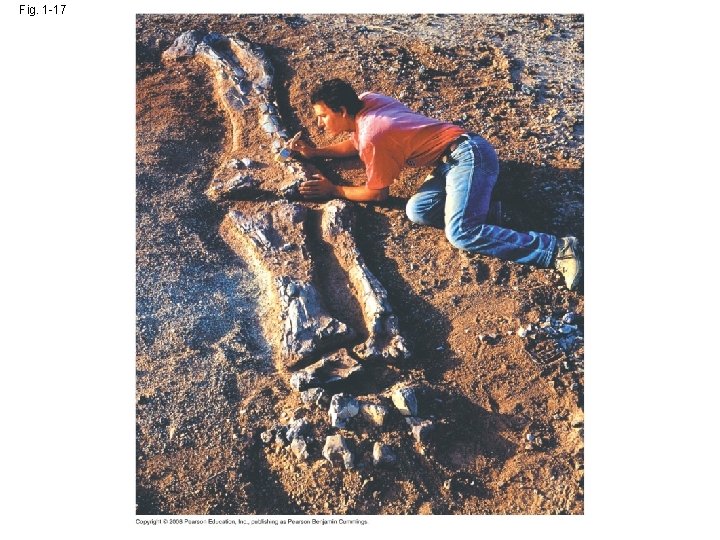
Charles Darwin and the Theory of Natural Selection • Fossils and other evidence document the evolution of life on Earth over billions of years Copyright © 2008 Pearson Education, Inc. , publishing as Pearson Benjamin Cummings
Fig. 1 -17
1. 1 What Is Life? • Organisms, collectively, have the capacity to evolve – Evolution is the process by which modern organisms descended, with modifications, from preexisting forms of life – Changes in DNA within populations occur over the course of generations, which results in evolution • Populations are groups of the same type of organism living in the same area
1. 2 What Is Evolution? • Evolution explains the diversity of life on Earth • Evolution provides an explanation for the similarities found among different types of organisms – Chimpanzees and people have various physical features in common – DNA of humans differs from that of chimpanzees by less than 5%
Scientists use two main forms of inquiry in their study of nature • The word Science is derived from Latin and means “to know” • Inquiry is the search for information and explanation • There are two main types of scientific inquiry: discovery science and hypothesis-based science Copyright © 2008 Pearson Education, Inc. , publishing as Pearson Benjamin Cummings
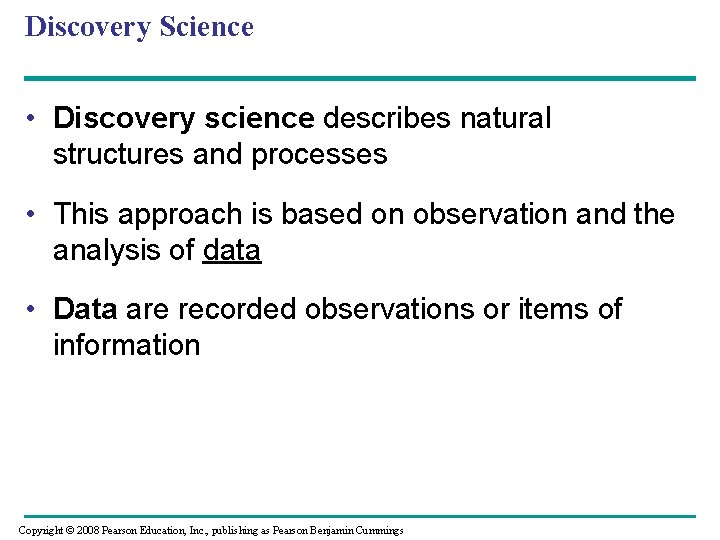
Discovery Science • Discovery science describes natural structures and processes • This approach is based on observation and the analysis of data • Data are recorded observations or items of information Copyright © 2008 Pearson Education, Inc. , publishing as Pearson Benjamin Cummings
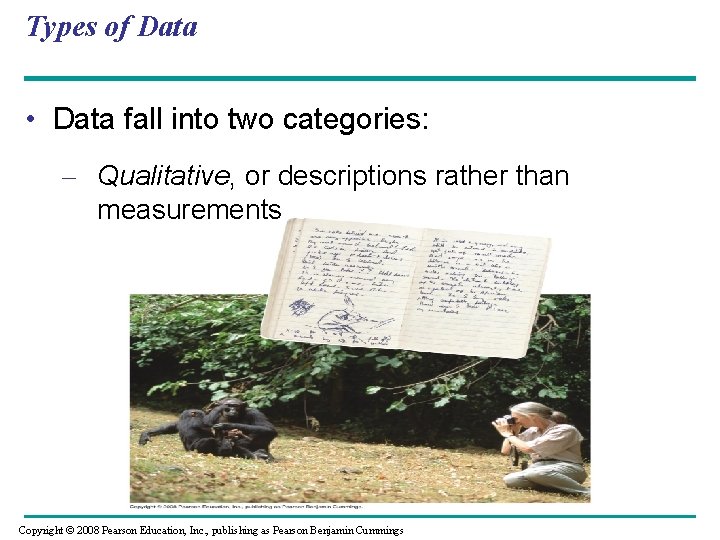
Types of Data • Data fall into two categories: – Qualitative, or descriptions rather than measurements Copyright © 2008 Pearson Education, Inc. , publishing as Pearson Benjamin Cummings
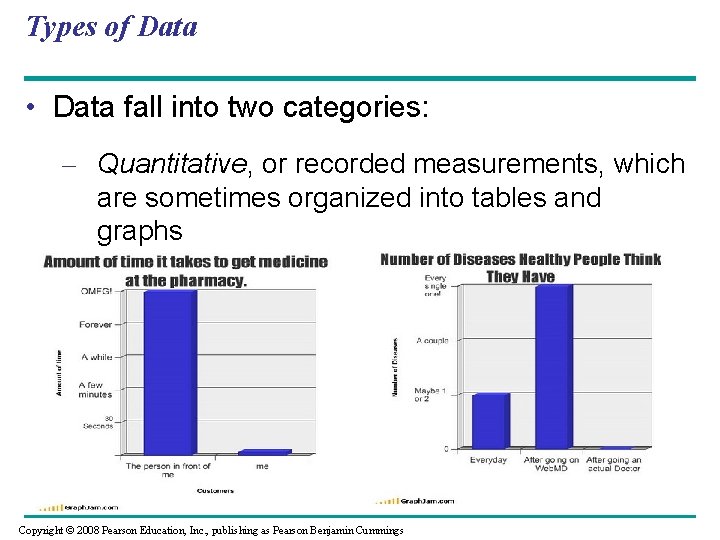
Types of Data • Data fall into two categories: – Quantitative, or recorded measurements, which are sometimes organized into tables and graphs Copyright © 2008 Pearson Education, Inc. , publishing as Pearson Benjamin Cummings
Hypothesis-Based Science • Observations can lead us to ask questions and propose hypothetical explanations called hypotheses Copyright © 2008 Pearson Education, Inc. , publishing as Pearson Benjamin Cummings
The Role of Hypotheses in Inquiry • A hypothesis is a tentative answer to a wellframed question • A scientific hypothesis leads to predictions that can be tested by observation or experimentation Copyright © 2008 Pearson Education, Inc. , publishing as Pearson Benjamin Cummings
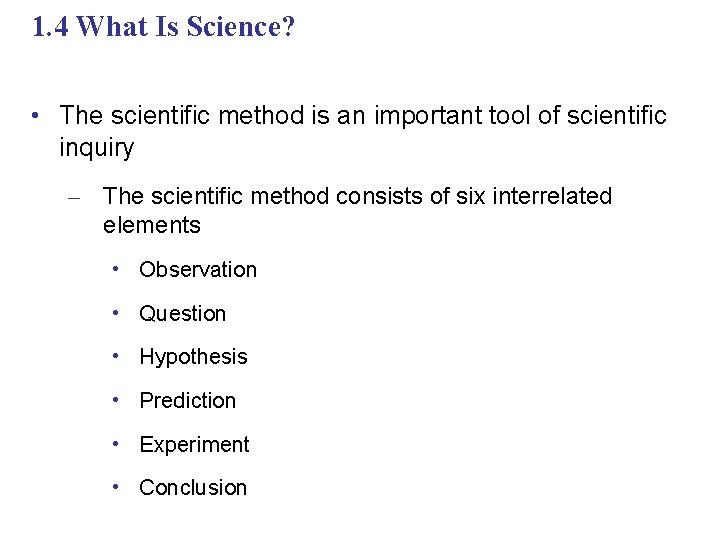
1. 4 What Is Science? • The scientific method is an important tool of scientific inquiry – The scientific method consists of six interrelated elements • Observation • Question • Hypothesis • Prediction • Experiment • Conclusion
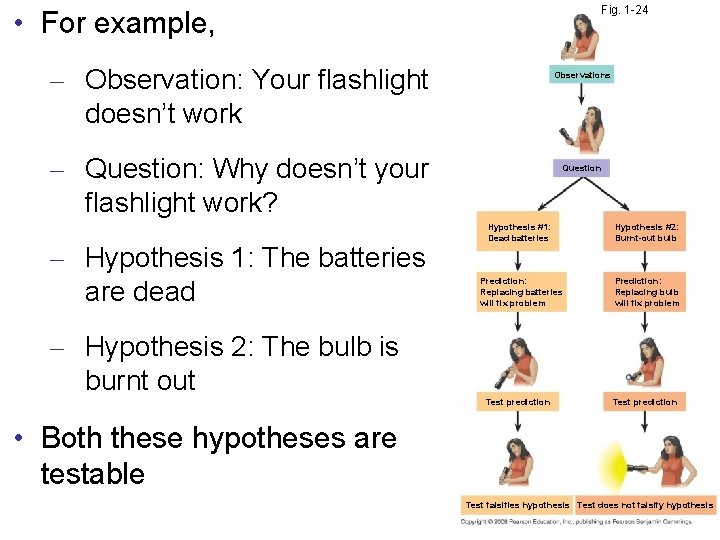
Fig. 1 -24 • For example, – Observation: Your flashlight doesn’t work Observations – Question: Why doesn’t your flashlight work? – Hypothesis 1: The batteries are dead Question Hypothesis #1: Dead batteries Hypothesis #2: Burnt-out bulb Prediction: Replacing batteries will fix problem Prediction: Replacing bulb will fix problem – Hypothesis 2: The bulb is burnt out Test prediction • Both these hypotheses are testable Test falsifies hypothesis Test does not falsify hypothesis
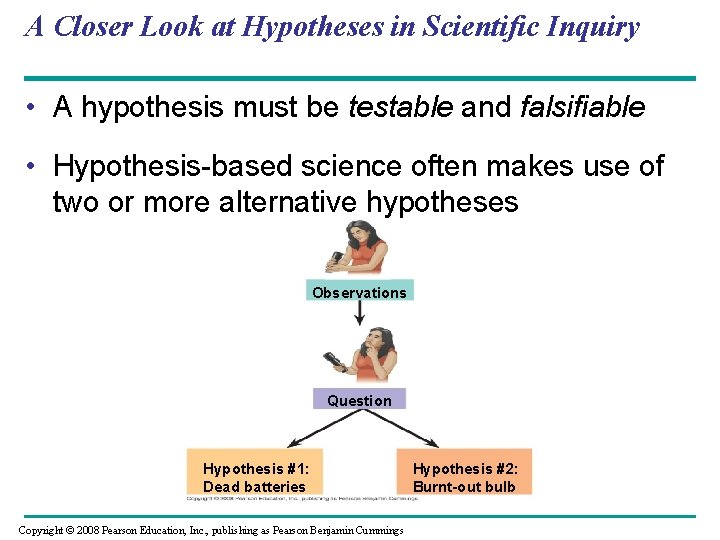
A Closer Look at Hypotheses in Scientific Inquiry • A hypothesis must be testable and falsifiable • Hypothesis-based science often makes use of two or more alternative hypotheses Observations Question Hypothesis #1: Dead batteries Copyright © 2008 Pearson Education, Inc. , publishing as Pearson Benjamin Cummings Hypothesis #2: Burnt-out bulb
A Closer Look at Hypotheses in Scientific Inquiry • Failure to falsify a hypothesis does not prove that hypothesis – For example, you replace your flashlight bulb, and it now works; this supports the hypothesis that your bulb was burnt out, but does not prove it (perhaps the first bulb was inserted incorrectly) Copyright © 2008 Pearson Education, Inc. , publishing as Pearson Benjamin Cummings
Determining the Variables • Dependent Variable – Measure, counted or observed in response to experimental conditions • Independent Variable – Variable or experimental condition manipulated • Controlled Variable
The Procedure • Procedure – Sequence of steps to be performed for experiment • Replication – Repeat procedure
• Control – Independent variable held at established value or omitted • Prediction – Tests hypothesis, If……then statements
Scientific Theory • Broad in scope • Generates new hypotheses • Supported by large body of evidence