
1 Amith Garg IRSE 87 EDEn HMCE MS

- Slides: 55
1
Amith Garg, IRSE 87 ED/En. HM/CE MS in High Speed Railways from University of Illinois at Urbana Champaign, USA Ph. D scholar in HSR from UPES, Dehradun 2
Paradigm shift in financing Railway projects 26 SEPTEMBER 2017
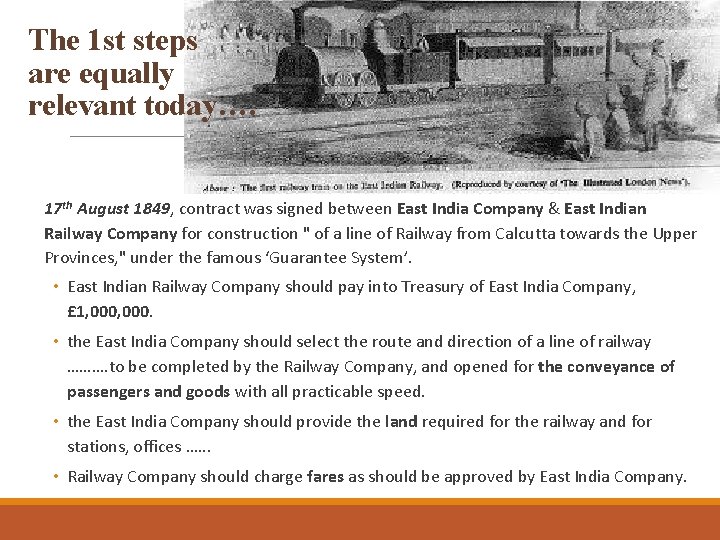
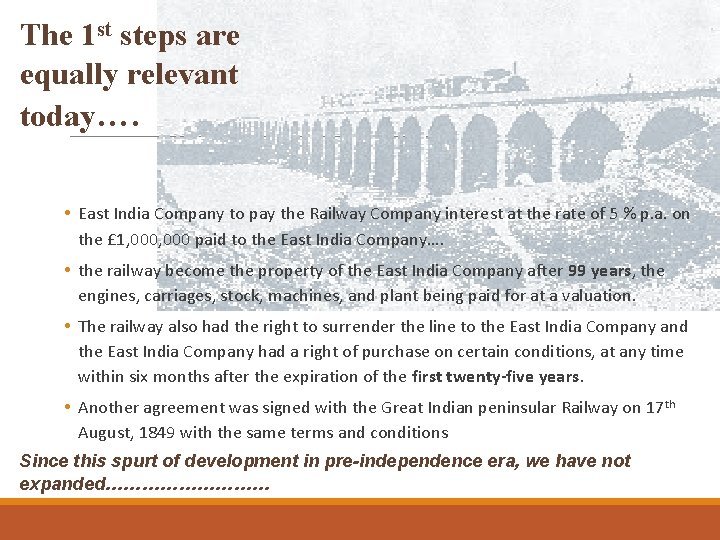
The 1 st steps are equally relevant today…. 17 th August 1849, contract was signed between East India Company & East Indian Railway Company for construction " of a line of Railway from Calcutta towards the Upper Provinces, " under the famous ‘Guarantee System’. • East Indian Railway Company should pay into Treasury of East India Company, £ 1, 000. • the East India Company should select the route and direction of a line of railway ………. to be completed by the Railway Company, and opened for the conveyance of passengers and goods with all practicable speed. • the East India Company should provide the land required for the railway and for stations, offices …. . . • Railway Company should charge fares as should be approved by East India Company.
The 1 st steps are equally relevant today…. • East India Company to pay the Railway Company interest at the rate of 5 % p. a. on the £ 1, 000 paid to the East India Company…. • the railway become the property of the East India Company after 99 years, the engines, carriages, stock, machines, and plant being paid for at a valuation. • The railway also had the right to surrender the line to the East India Company and the East India Company had a right of purchase on certain conditions, at any time within six months after the expiration of the first twenty-five years. • Another agreement was signed with the Great Indian peninsular Railway on 17 th August, 1849 with the same terms and conditions Since this spurt of development in pre-independence era, we have not expanded……………
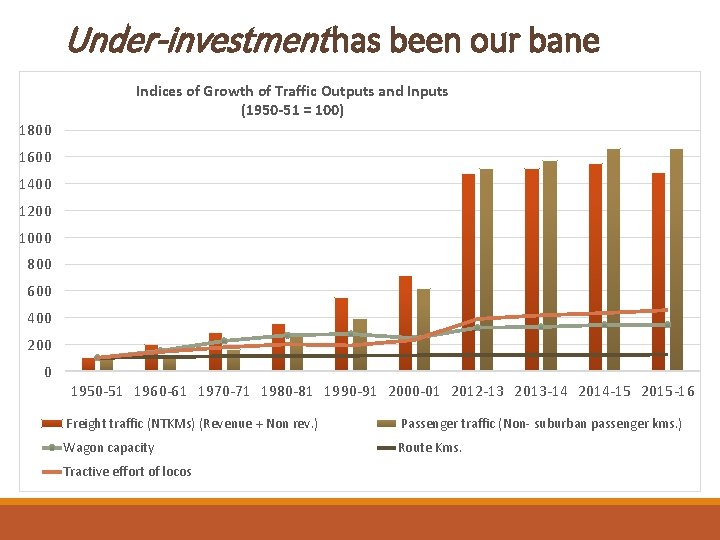
Under-investment has been our bane Indices of Growth of Traffic Outputs and Inputs (1950 -51 = 100) 1800 1600 1400 1200 1000 800 600 400 200 0 1950 -51 1960 -61 1970 -71 1980 -81 1990 -91 2000 -01 2012 -13 2013 -14 2014 -15 2015 -16 Freight traffic (NTKMs) (Revenue + Non rev. ) Passenger traffic (Non- suburban passenger kms. ) Wagon capacity Route Kms. Tractive effort of locos
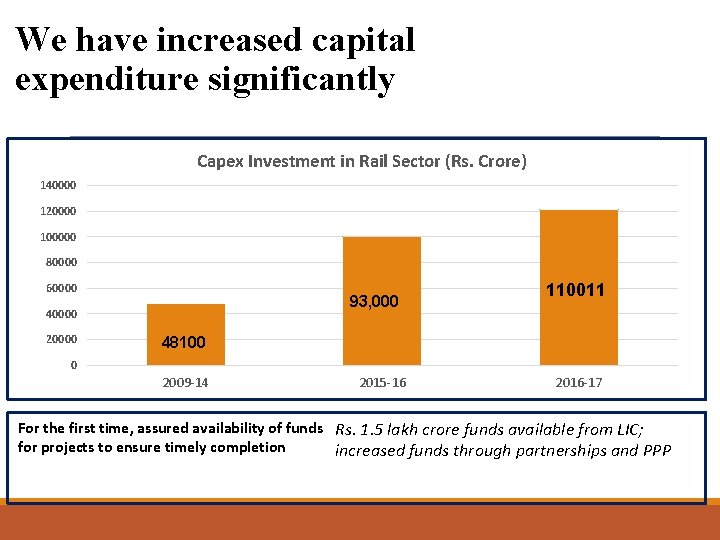
We have increased capital expenditure significantly Capex Investment in Rail Sector (Rs. Crore) 140000 120000 100000 80000 60000 93, 000 40000 20000 110011 48100 0 2009 -14 2015 -16 2016 -17 For the first time, assured availability of funds Rs. 1. 5 lakh crore funds available from LIC; for projects to ensure timely completion increased funds through partnerships and PPP
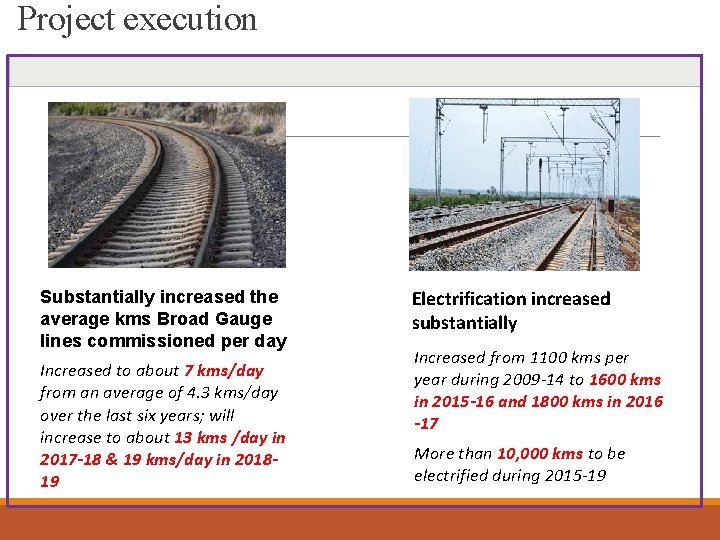
Project execution Substantially increased the average kms Broad Gauge lines commissioned per day Increased to about 7 kms/day from an average of 4. 3 kms/day over the last six years; will increase to about 13 kms /day in 2017 -18 & 19 kms/day in 201819 Electrification increased substantially Increased from 1100 kms per year during 2009 -14 to 1600 kms in 2015 -16 and 1800 kms in 2016 -17 More than 10, 000 kms to be electrified during 2015 -19
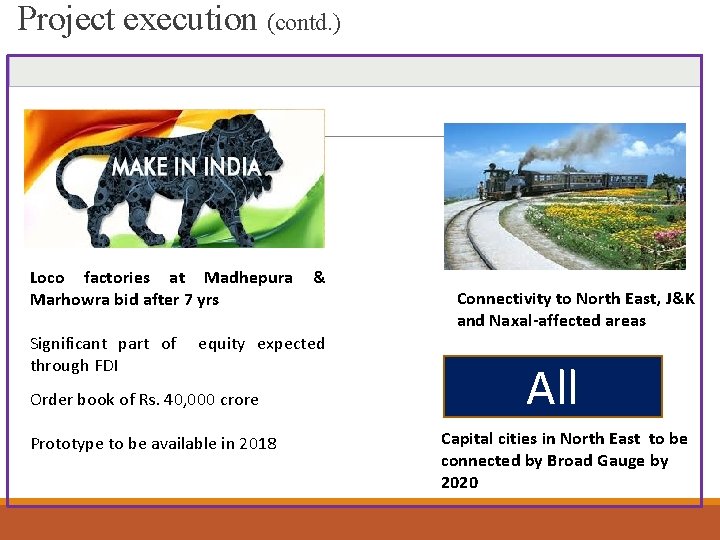
Project execution (contd. ) Loco factories at Madhepura & Marhowra bid after 7 yrs Significant part of equity expected through FDI Order book of Rs. 40, 000 crore Prototype to be available in 2018 Connectivity to North East, J&K and Naxal-affected areas All Capital cities in North East to be connected by Broad Gauge by 2020
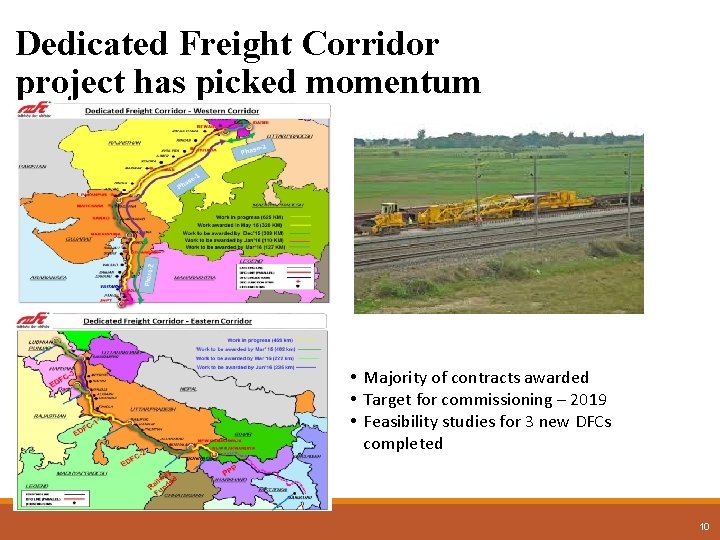
Dedicated Freight Corridor project has picked momentum • Majority of contracts awarded • Target for commissioning – 2019 • Feasibility studies for 3 new DFCs completed 10
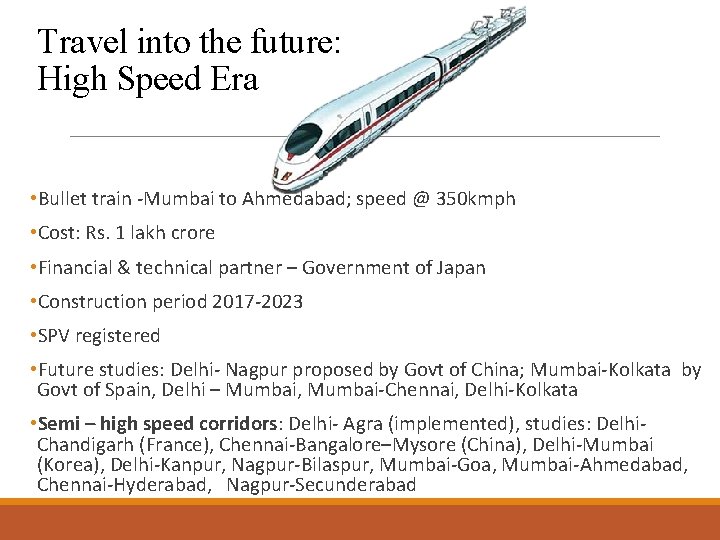
Travel into the future: High Speed Era • Bullet train -Mumbai to Ahmedabad; speed @ 350 kmph • Cost: Rs. 1 lakh crore • Financial & technical partner – Government of Japan • Construction period 2017 -2023 • SPV registered • Future studies: Delhi- Nagpur proposed by Govt of China; Mumbai-Kolkata by Govt of Spain, Delhi – Mumbai, Mumbai-Chennai, Delhi-Kolkata • Semi – high speed corridors: Delhi- Agra (implemented), studies: Delhi- Chandigarh (France), Chennai-Bangalore–Mysore (China), Delhi-Mumbai (Korea), Delhi-Kanpur, Nagpur-Bilaspur, Mumbai-Goa, Mumbai-Ahmedabad, Chennai-Hyderabad, Nagpur-Secunderabad
Financing projects INSTITUTIONAL FINANCING 12
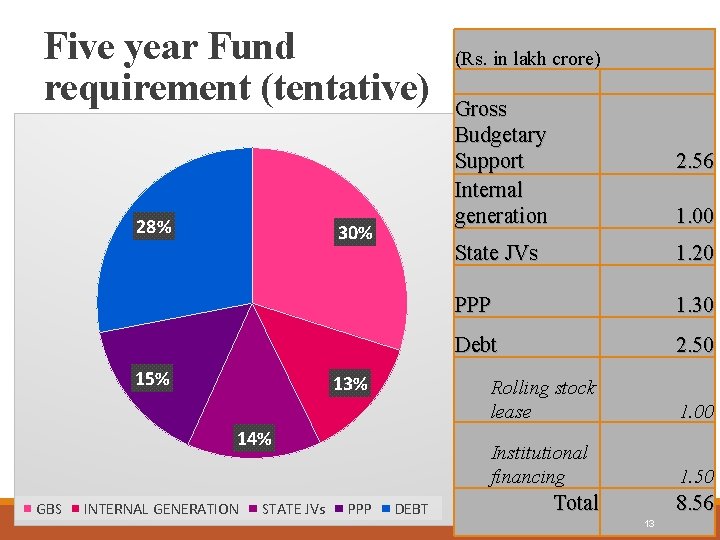
Five year Fund requirement (tentative) 28% 30% 15% 13% 14% GBS INTERNAL GENERATION STATE JVs PPP DEBT (Rs. in lakh crore) Gross Budgetary Support Internal generation 2. 56 State JVs 1. 20 PPP 1. 30 Debt 2. 50 1. 00 Rolling stock lease 1. 00 Institutional financing 1. 50 Total 8. 56 13
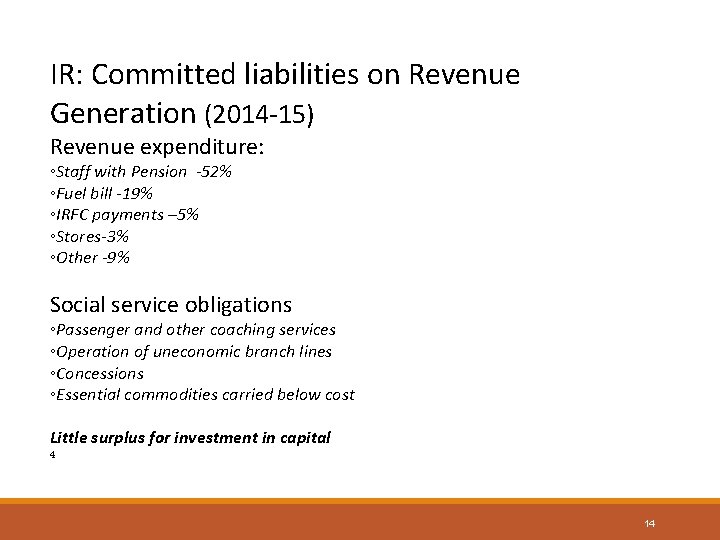
IR: Committed liabilities on Revenue Generation (2014 -15) Revenue expenditure: ◦Staff with Pension -52% ◦Fuel bill -19% ◦IRFC payments – 5% ◦Stores-3% ◦Other -9% Social service obligations ◦Passenger and other coaching services ◦Operation of uneconomic branch lines ◦Concessions ◦Essential commodities carried below cost Little surplus for investment in capital 4 14
Under-investment in IR: the vicious circle Under-investment Poor quality services, delays Inability to increase 15
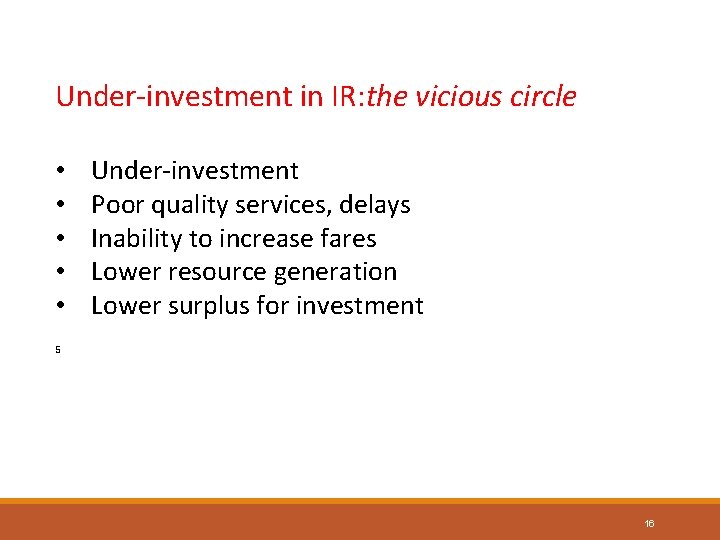
Under-investment in IR: the vicious circle • • • Under-investment Poor quality services, delays Inability to increase fares Lower resource generation Lower surplus for investment 5 16
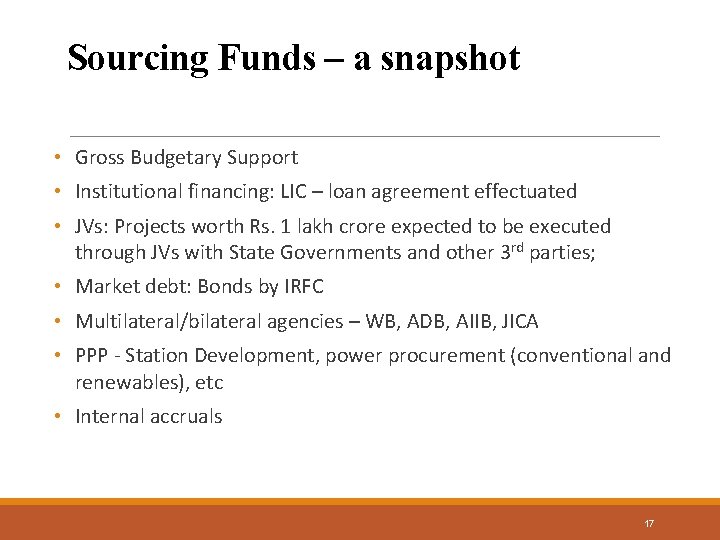
Sourcing Funds – a snapshot • Gross Budgetary Support • Institutional financing: LIC – loan agreement effectuated • JVs: Projects worth Rs. 1 lakh crore expected to be executed through JVs with State Governments and other 3 rd parties; • Market debt: Bonds by IRFC • Multilateral/bilateral agencies – WB, ADB, AIIB, JICA • PPP - Station Development, power procurement (conventional and renewables), etc • Internal accruals 17
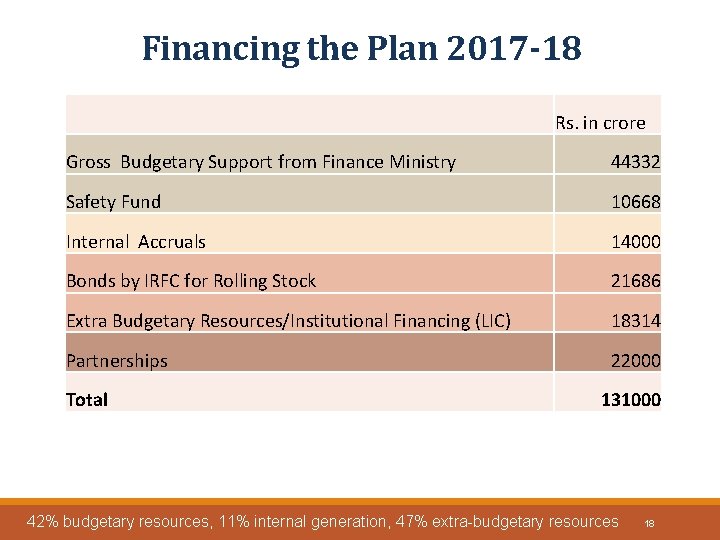
Financing the Plan 2017 -18 Rs. in crore Gross Budgetary Support from Finance Ministry 44332 Safety Fund 10668 Internal Accruals 14000 Bonds by IRFC for Rolling Stock 21686 Extra Budgetary Resources/Institutional Financing (LIC) 18314 Partnerships 22000 Total 131000 42% budgetary resources, 11% internal generation, 47% extra-budgetary resources 18
Institutional financing 19
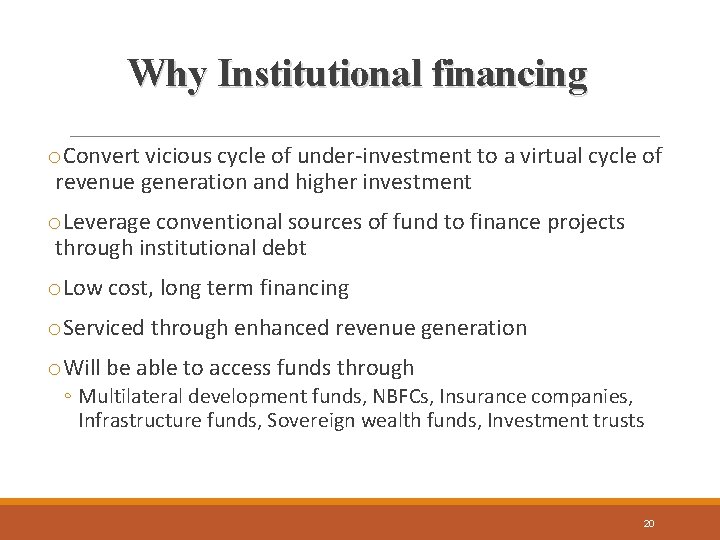
Why Institutional financing o. Convert vicious cycle of under-investment to a virtual cycle of revenue generation and higher investment o. Leverage conventional sources of fund to finance projects through institutional debt o. Low cost, long term financing o. Serviced through enhanced revenue generation o. Will be able to access funds through ◦ Multilateral development funds, NBFCs, Insurance companies, Infrastructure funds, Sovereign wealth funds, Investment trusts 20
Implications Assured availability of funds for projects taken up for financing through institutional financing Funds do not lapse at the end of financial year 21
Prerequisites for financing through EBR/IF ◦Robust appraisal of projects ◦Selection of projects which are clear for drawal of funds; unutilised funds would be a drain on Railway finances ◦Realistic assessment of fund requirement ◦Timely completion of projects leading to timely generation of revenues for repayment Intensive monitoring required to avoid slippages 22
LIC Financing Facility March 11, 2015 – MOR signed MOU with LIC of India for extending a financing assistance of Rs. 1. 5 lakh crore for the next five years; rate of interest : 30 bps above the 10 -year benchmark yield tenor of the facility would be 30 years LIC will invest in bonds issued by IR companies such as IRFC Moratorium: o on interest and principal payment for first 5 years; interest to be capitalized o year 6 to year 10 interest liability to be met; year 11 to year 30 repayment of principal and interest in equated half yearly instalments, i. e. 40 instalments 23
Financing projects MULTILATERAL/BILATERAL ASSISTANCE 24
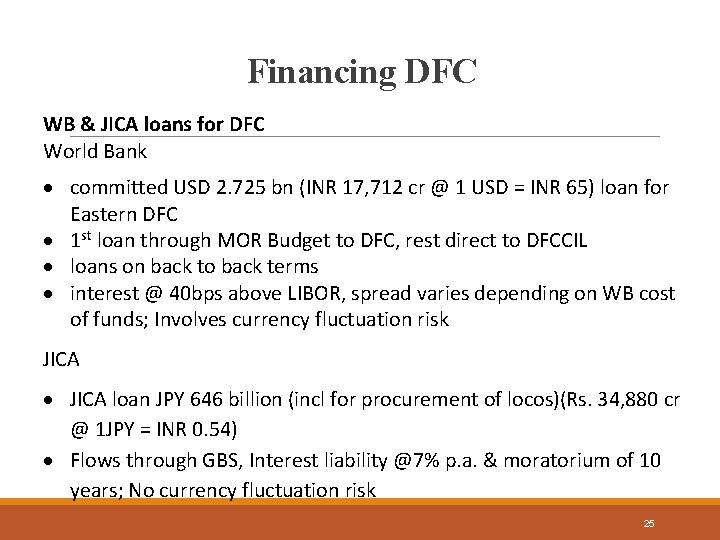
Financing DFC WB & JICA loans for DFC World Bank committed USD 2. 725 bn (INR 17, 712 cr @ 1 USD = INR 65) loan for Eastern DFC 1 st loan through MOR Budget to DFC, rest direct to DFCCIL loans on back to back terms interest @ 40 bps above LIBOR, spread varies depending on WB cost of funds; Involves currency fluctuation risk JICA loan JPY 646 billion (incl for procurement of locos)(Rs. 34, 880 cr @ 1 JPY = INR 0. 54) Flows through GBS, Interest liability @7% p. a. & moratorium of 10 years; No currency fluctuation risk 25
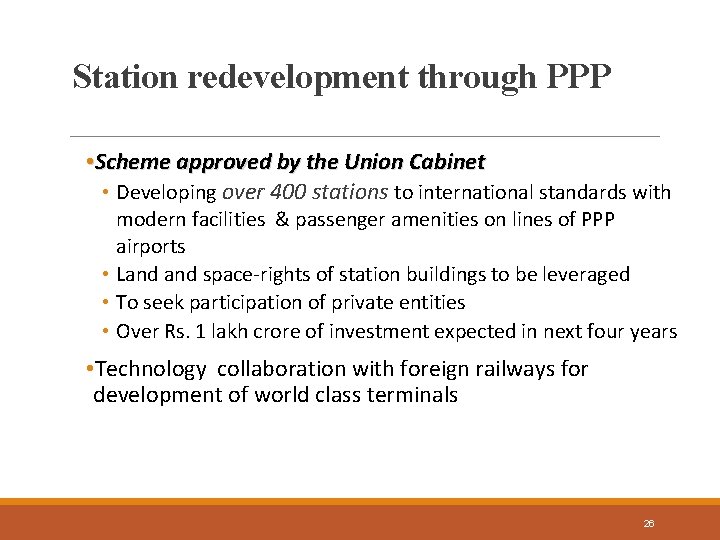
Station redevelopment through PPP • Scheme approved by the Union Cabinet • Developing over 400 stations to international standards with modern facilities & passenger amenities on lines of PPP airports • Land space-rights of station buildings to be leveraged • To seek participation of private entities • Over Rs. 1 lakh crore of investment expected in next four years • Technology collaboration with foreign railways for development of world class terminals 26
Rolling stock 27
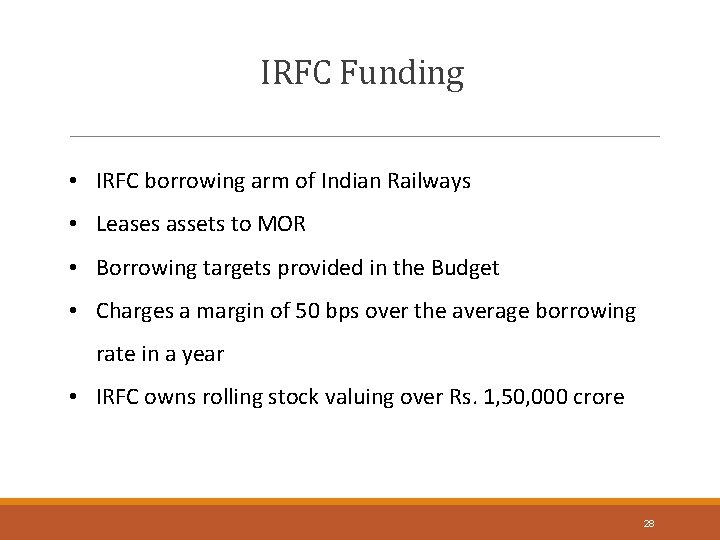
IRFC Funding • IRFC borrowing arm of Indian Railways • Leases assets to MOR • Borrowing targets provided in the Budget • Charges a margin of 50 bps over the average borrowing rate in a year • IRFC owns rolling stock valuing over Rs. 1, 50, 000 crore 28
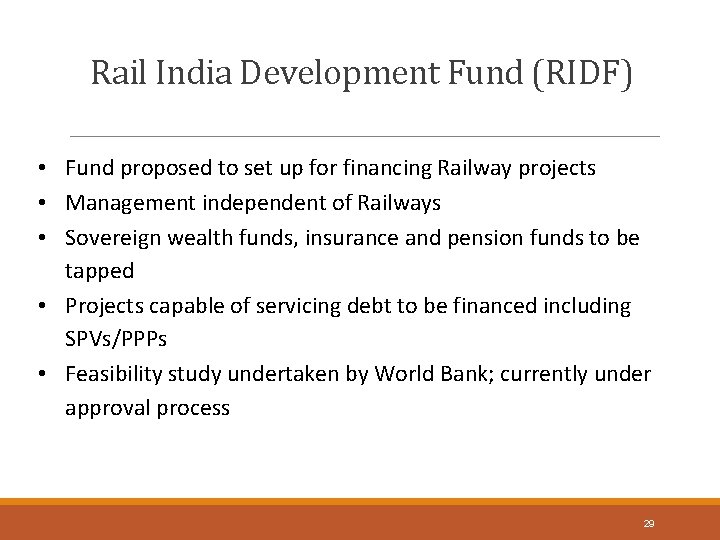
Rail India Development Fund (RIDF) • Fund proposed to set up for financing Railway projects • Management independent of Railways • Sovereign wealth funds, insurance and pension funds to be tapped • Projects capable of servicing debt to be financed including SPVs/PPPs • Feasibility study undertaken by World Bank; currently under approval process 29
Financing infrastructure PRIVATE PARTICIPATION – PPP, FDI, ETC 30
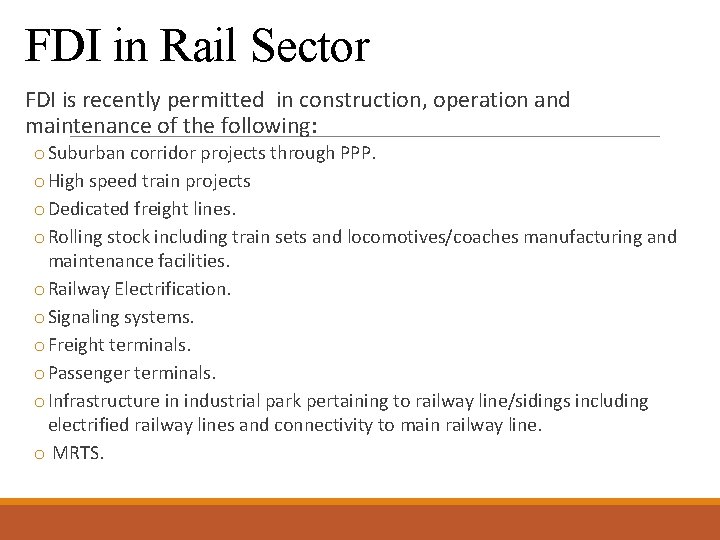
FDI in Rail Sector FDI is recently permitted in construction, operation and maintenance of the following: o Suburban corridor projects through PPP. o High speed train projects o Dedicated freight lines. o Rolling stock including train sets and locomotives/coaches manufacturing and maintenance facilities. o Railway Electrification. o Signaling systems. o Freight terminals. o Passenger terminals. o Infrastructure in industrial park pertaining to railway line/sidings including electrified railway lines and connectivity to main railway line. o MRTS.
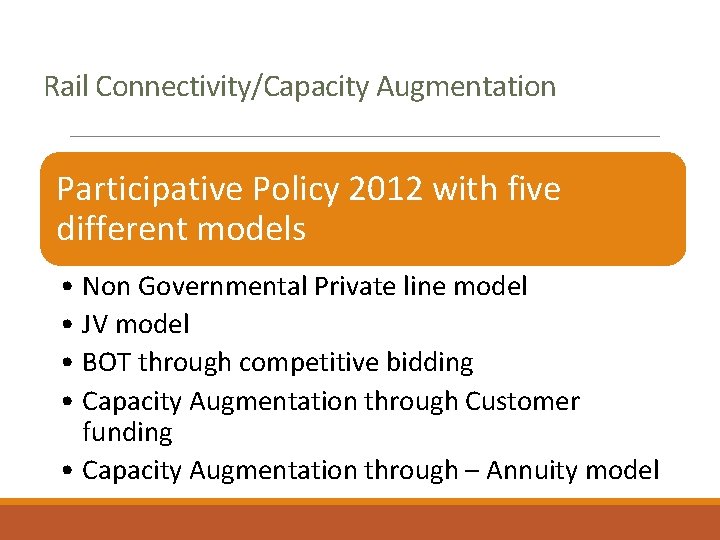
Rail Connectivity/Capacity Augmentation Participative Policy 2012 with five different models • Non Governmental Private line model • JV model • BOT through competitive bidding • Capacity Augmentation through Customer funding • Capacity Augmentation through – Annuity model
Cost sharing JOINT VENTURES 33
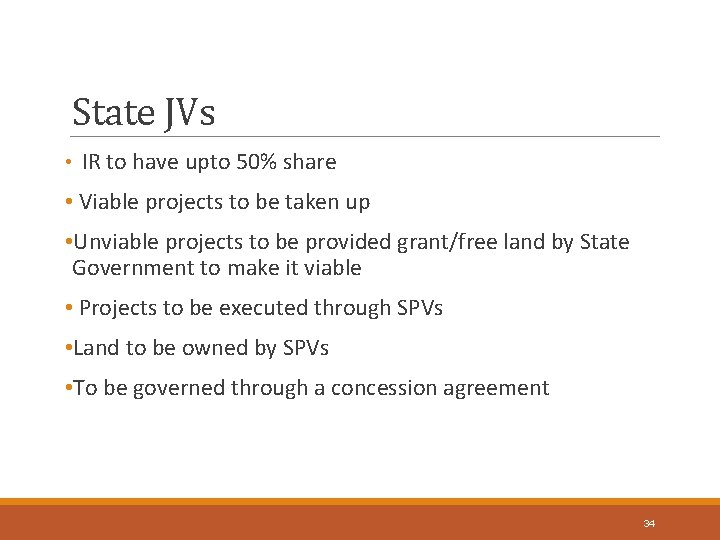
State JVs • IR to have upto 50% share • Viable projects to be taken up • Unviable projects to be provided grant/free land by State Government to make it viable • Projects to be executed through SPVs • Land to be owned by SPVs • To be governed through a concession agreement 34
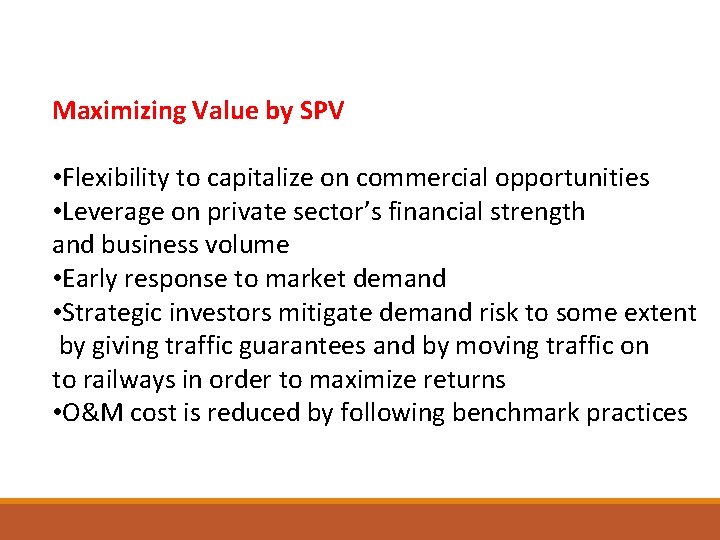
Maximizing Value by SPV • Flexibility to capitalize on commercial opportunities • Leverage on private sector’s financial strength and business volume • Early response to market demand • Strategic investors mitigate demand risk to some extent by giving traffic guarantees and by moving traffic on to railways in order to maximize returns • O&M cost is reduced by following benchmark practices
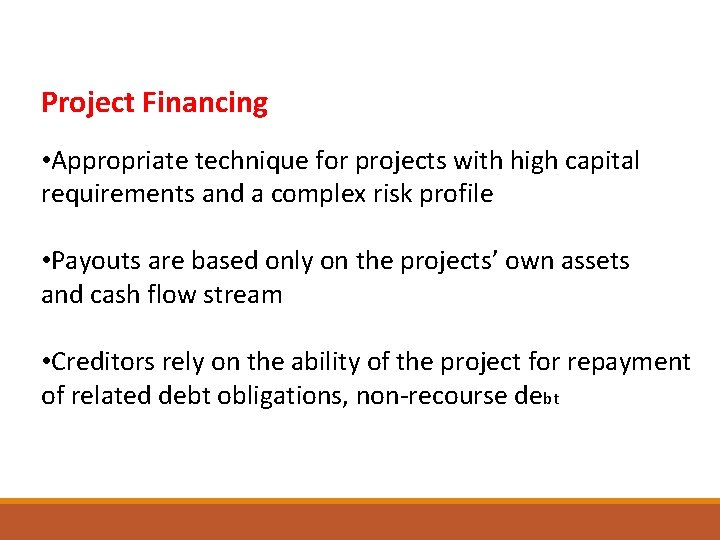
Project Financing • Appropriate technique for projects with high capital requirements and a complex risk profile • Payouts are based only on the projects’ own assets and cash flow stream • Creditors rely on the ability of the project for repayment of related debt obligations, non-recourse debt
California High Speed Railway Project Spring 2016 – Term Project CEE 412 | High Speed Rail Engineering Team Assignments: Project Manager: Executive Summary, compilation of all group works Team A : Route and Station Selection and Environmental Study Team B : Civil and track works Team C : Core systems Team D : Construction Plan and Project Cost and Financing Rail Transportation & Engineering Center (Rail. TEC) Department of Civil and Environmental Engineering © UNIVERSITY OF ILLINOIS AT URBANA CHAMPAIGN 2016 37
Project Manager (Amit Garg) Salient Features of CHSR CEE 412 | High Speed Rail Engineering © UNIVERSITY OF ILLINOIS AT URBANA CHAMPAIGN 2016
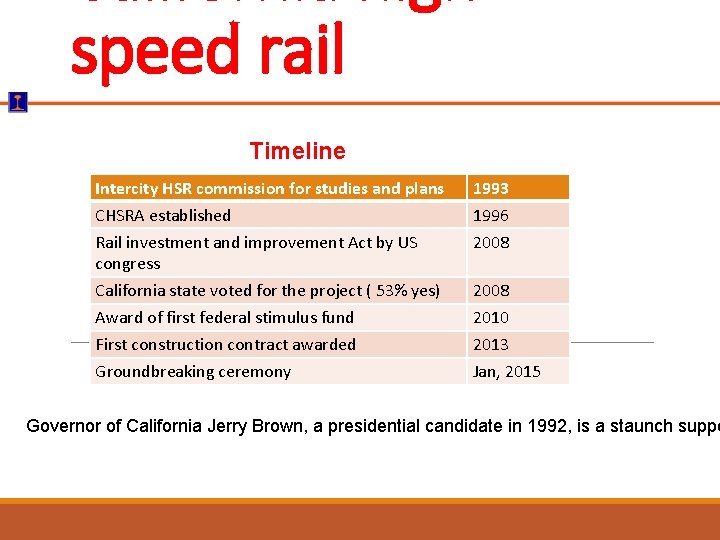
speed rail Timeline Intercity HSR commission for studies and plans CHSRA established Rail investment and improvement Act by US congress California state voted for the project ( 53% yes) 1993 1996 2008 Award of first federal stimulus fund First construction contract awarded Groundbreaking ceremony 2010 2013 Jan, 2015 2008 Governor of California Jerry Brown, a presidential candidate in 1992, is a staunch suppo
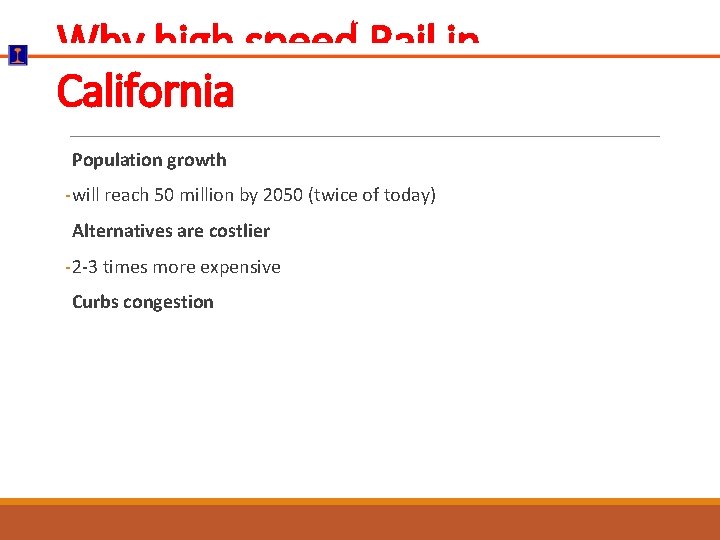
Why high speed Rail in California Population growth - will reach 50 million by 2050 (twice of today) Alternatives are costlier - 2 -3 times more expensive Curbs congestion
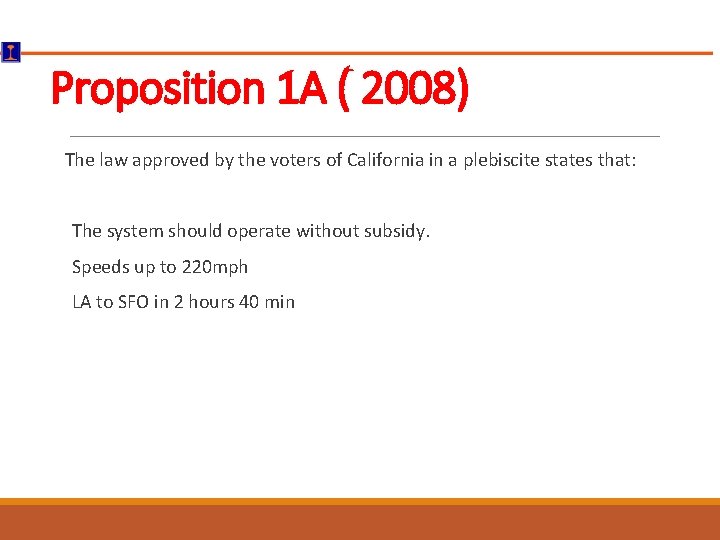
Proposition 1 A ( 2008) The law approved by the voters of California in a plebiscite states that: The system should operate without subsidy. Speeds up to 220 mph LA to SFO in 2 hours 40 min
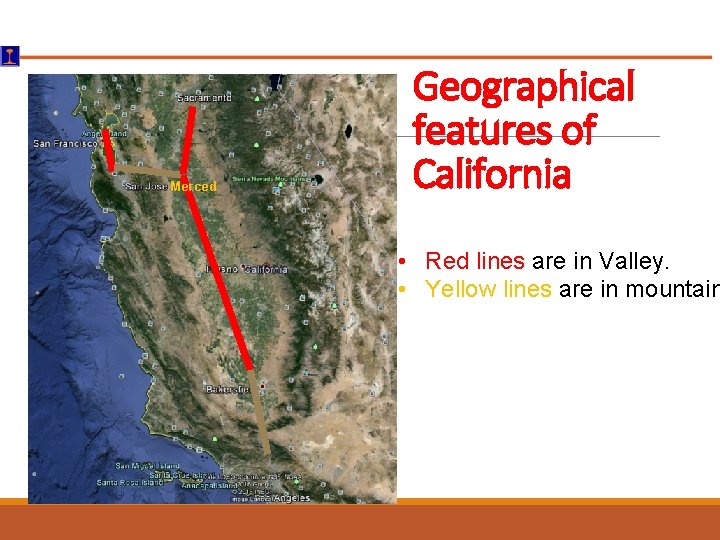
Merced Geographical features of California • Red lines are in Valley. • Yellow lines are in mountain
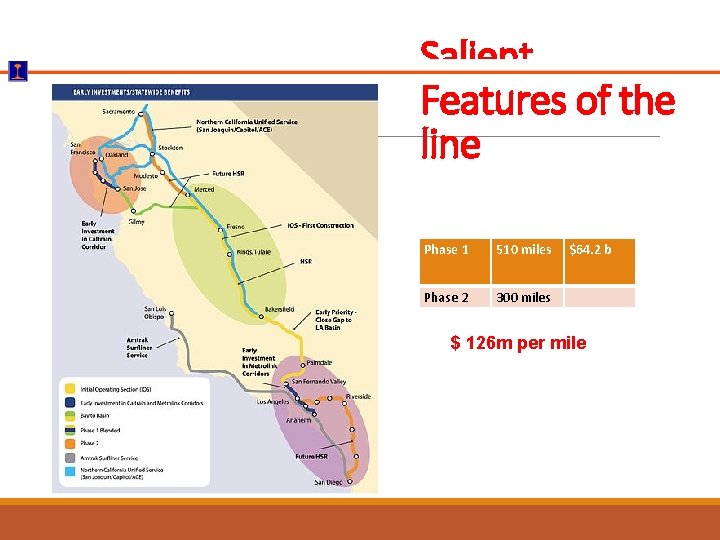
Salient Features of the line Phase 1 510 miles Phase 2 300 miles $64. 2 b $ 126 m per mile
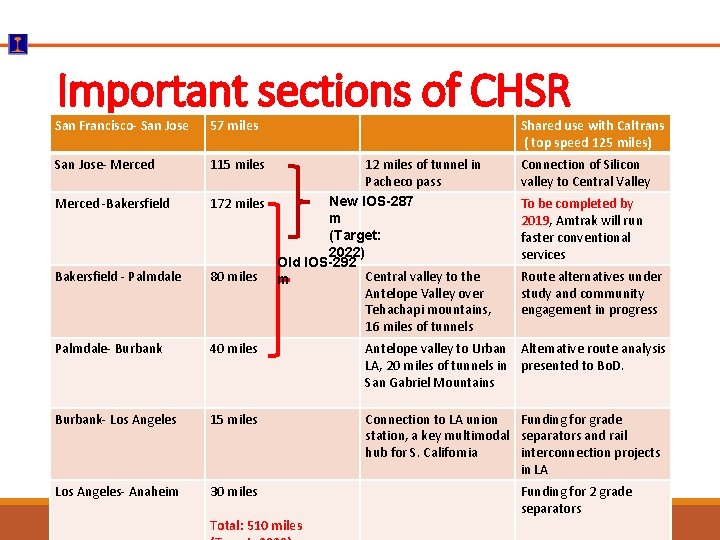
Important sections of CHSR San Francisco- San Jose 57 miles Shared use with Caltrans ( top speed 125 miles) San Jose- Merced 115 miles Connection of Silicon valley to Central Valley Merced -Bakersfield - Palmdale 12 miles of tunnel in Pacheco pass New IOS-287 172 miles m (Target: 2022) Old IOS-292 80 miles m Central valley to the Antelope Valley over Tehachapi mountains, 16 miles of tunnels To be completed by 2019, Amtrak will run faster conventional services Route alternatives under study and community engagement in progress Palmdale- Burbank 40 miles Antelope valley to Urban Alternative route analysis LA, 20 miles of tunnels in presented to Bo. D. San Gabriel Mountains Burbank- Los Angeles 15 miles Connection to LA union Funding for grade station, a key multimodal separators and rail hub for S. California interconnection projects in LA Los Angeles- Anaheim 30 miles Total: 510 miles Funding for 2 grade separators
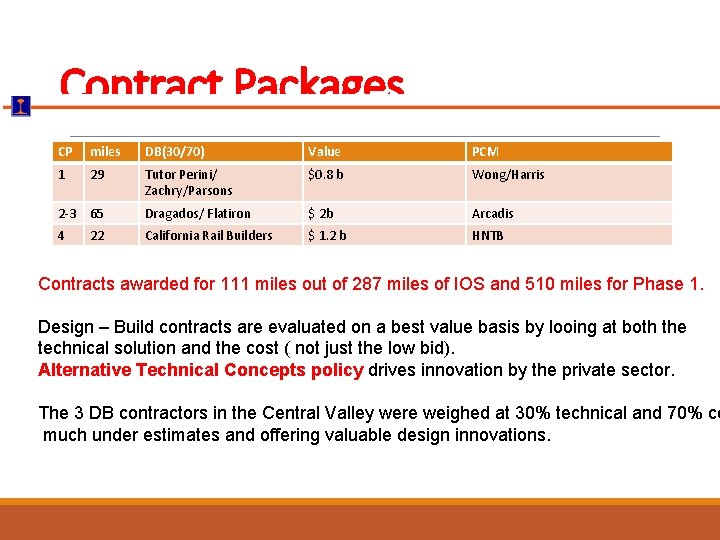
Contract Packages CP miles DB(30/70) Value PCM 1 29 Tutor Perini/ Zachry/Parsons $0. 8 b Wong/Harris 2 -3 65 Dragados/ Flatiron $ 2 b Arcadis 4 California Rail Builders $ 1. 2 b HNTB 22 Contracts awarded for 111 miles out of 287 miles of IOS and 510 miles for Phase 1. Design – Build contracts are evaluated on a best value basis by looing at both the technical solution and the cost ( not just the low bid). Alternative Technical Concepts policy drives innovation by the private sector. The 3 DB contractors in the Central Valley were weighed at 30% technical and 70% co much under estimates and offering valuable design innovations.
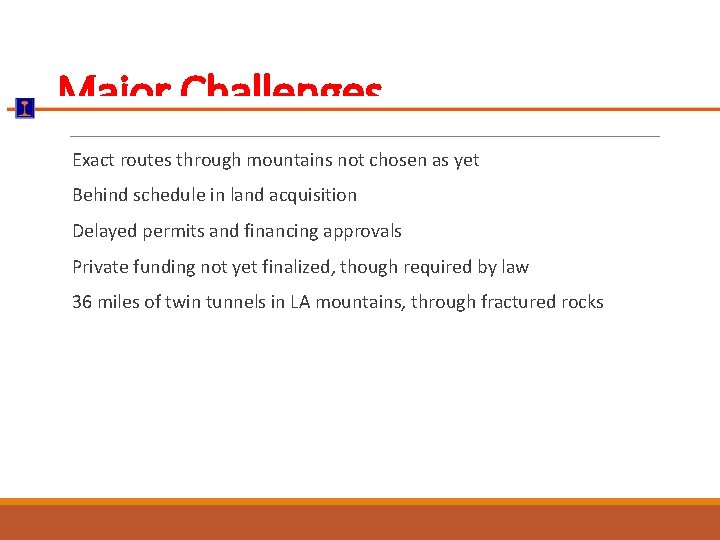
Major Challenges Exact routes through mountains not chosen as yet Behind schedule in land acquisition Delayed permits and financing approvals Private funding not yet finalized, though required by law 36 miles of twin tunnels in LA mountains, through fractured rocks
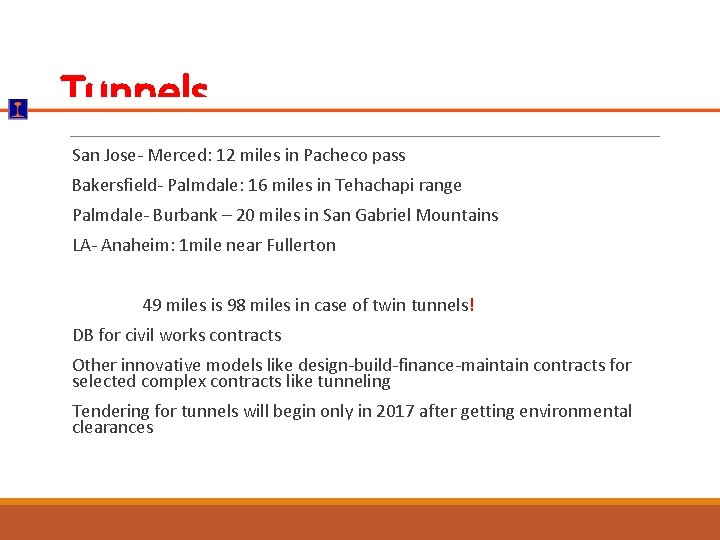
Tunnels San Jose- Merced: 12 miles in Pacheco pass Bakersfield- Palmdale: 16 miles in Tehachapi range Palmdale- Burbank – 20 miles in San Gabriel Mountains LA- Anaheim: 1 mile near Fullerton 49 miles is 98 miles in case of twin tunnels! DB for civil works contracts Other innovative models like design-build-finance-maintain contracts for selected complex contracts like tunneling Tendering for tunnels will begin only in 2017 after getting environmental clearances
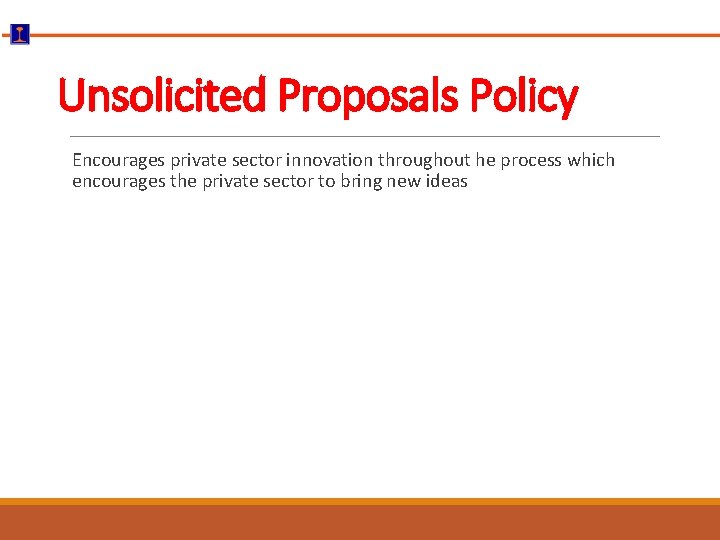
Unsolicited Proposals Policy Encourages private sector innovation throughout he process which encourages the private sector to bring new ideas
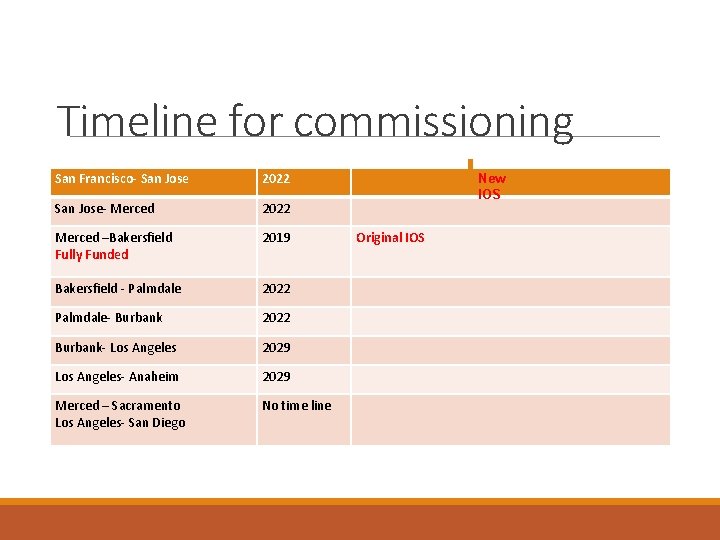
Timeline for commissioning San Francisco- San Jose 2022 San Jose- Merced 2022 Merced –Bakersfield Fully Funded 2019 Bakersfield - Palmdale 2022 Palmdale- Burbank 2022 Burbank- Los Angeles 2029 Los Angeles- Anaheim 2029 Merced – Sacramento Los Angeles- San Diego No time line New IOS Original IOS
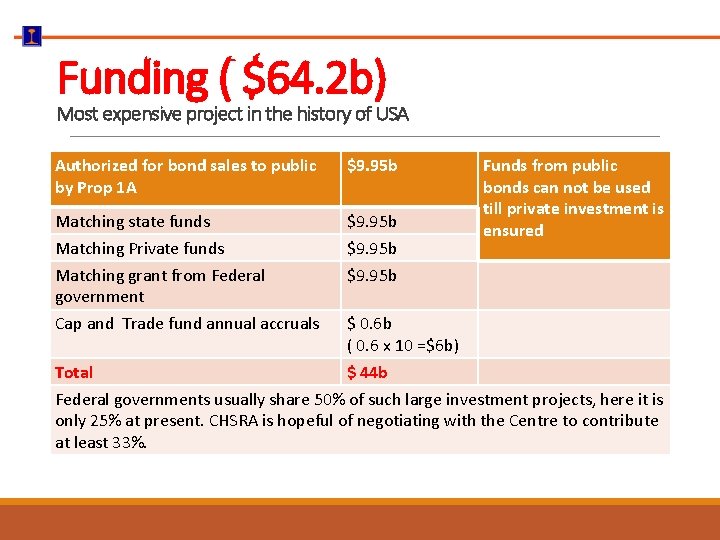
Funding ( $64. 2 b) Most expensive project in the history of USA Authorized for bond sales to public by Prop 1 A $9. 95 b Matching state funds Matching Private funds Matching grant from Federal government $9. 95 b Cap and Trade fund annual accruals Funds from public bonds can not be used till private investment is ensured $ 0. 6 b ( 0. 6 x 10 =$6 b) Total $ 44 b Federal governments usually share 50% of such large investment projects, here it is only 25% at present. CHSRA is hopeful of negotiating with the Centre to contribute at least 33%.
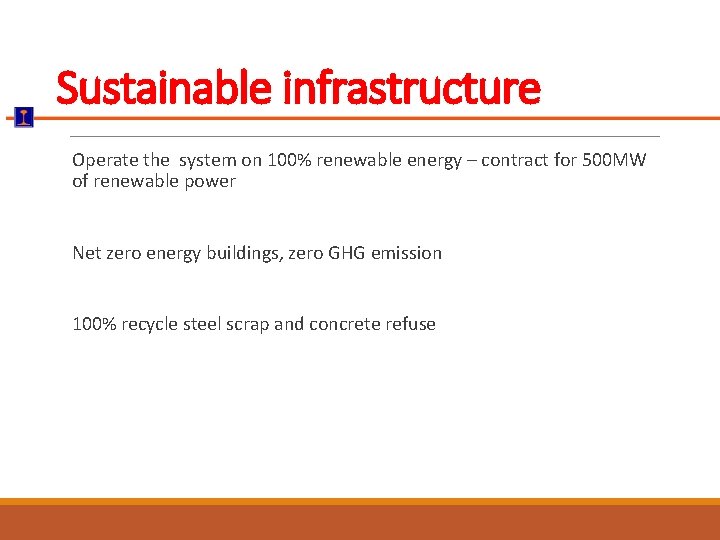
Sustainable infrastructure Operate the system on 100% renewable energy – contract for 500 MW of renewable power Net zero energy buildings, zero GHG emission 100% recycle steel scrap and concrete refuse
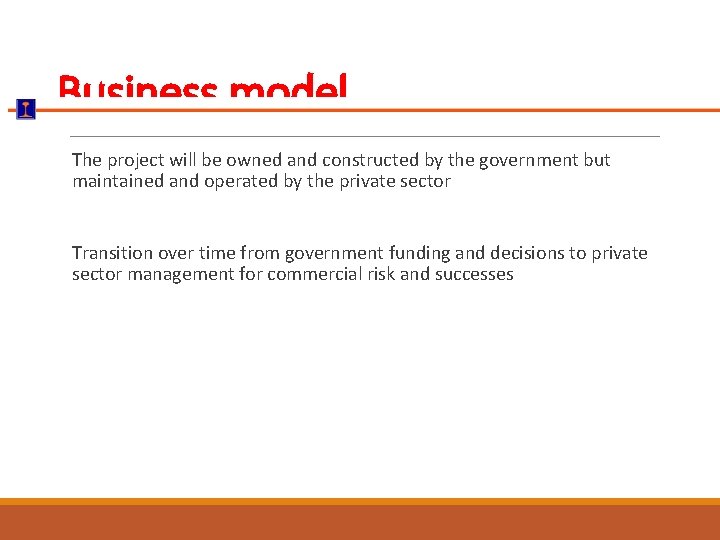
Business model The project will be owned and constructed by the government but maintained and operated by the private sector Transition over time from government funding and decisions to private sector management for commercial risk and successes
Cap and trade funds Emissions trading or cap and trade is a government-mandated, marketbased approach to controlling pollution It provides economic incentives for achieving reductions in the emissions of pollutants 53
Cap and trade funds A central authority (usually a governmental body) allocates or sells a limited number of permits to discharge specific quantities of a specific pollutant per time period. Polluters are required to hold permits in amount equal to their emissions. Polluters that want to increase their emissions must buy permits from others willing to sell them. Financial derivatives of permits can also be traded on secondary markets. 54
Thank you 55