
1 Alternative Education in the Democratic Republic of
1 Alternative Education in the Democratic Republic of the Congo A Summary Audio Slideshow
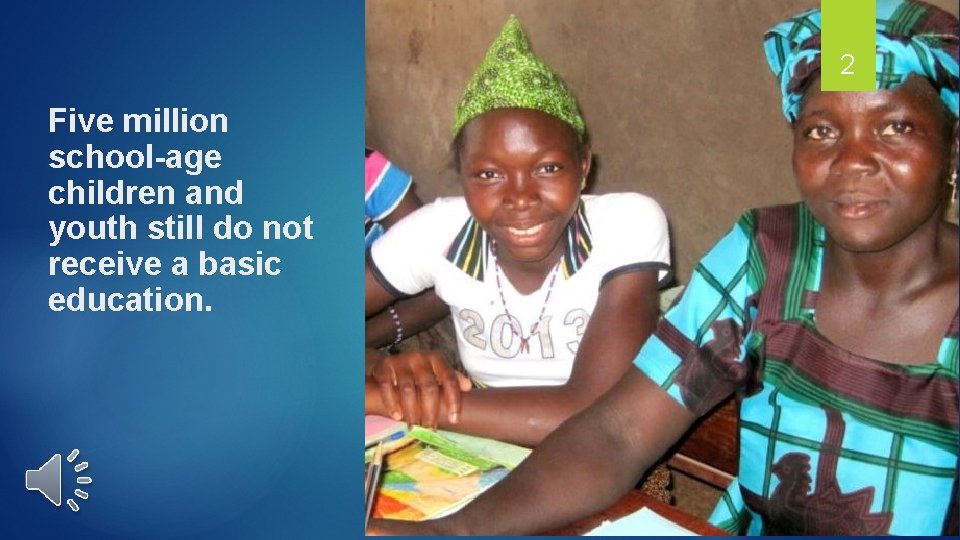
2 Five million school-age children and youth still do not receive a basic education.
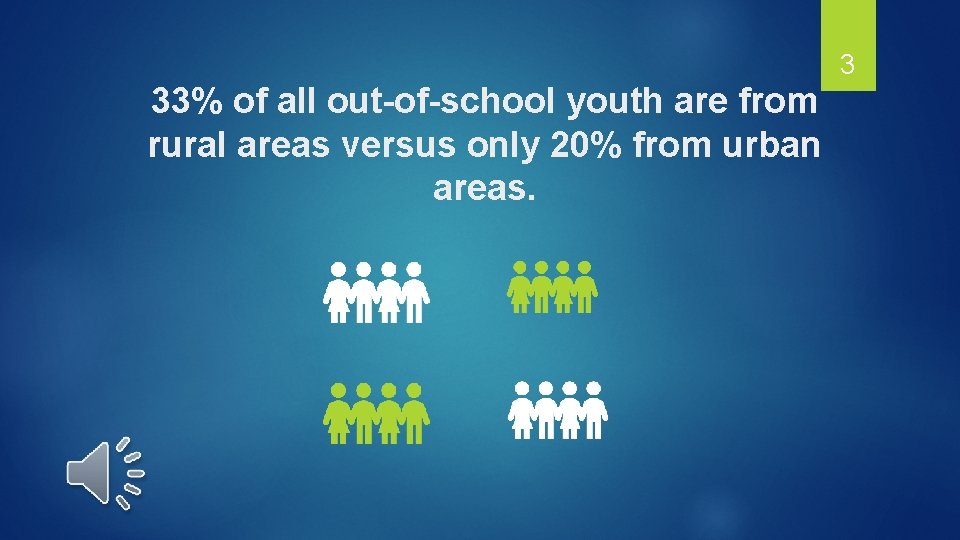
3 33% of all out-of-school youth are from rural areas versus only 20% from urban areas.
ACCELERATED EDUCATION PROVIDES A POSSIBLE SOLUTION: Øprimary level education Øreturn to formal education Øgo to work Ømore specialized training 4

Accelerated Education Programs (AEPs) 5
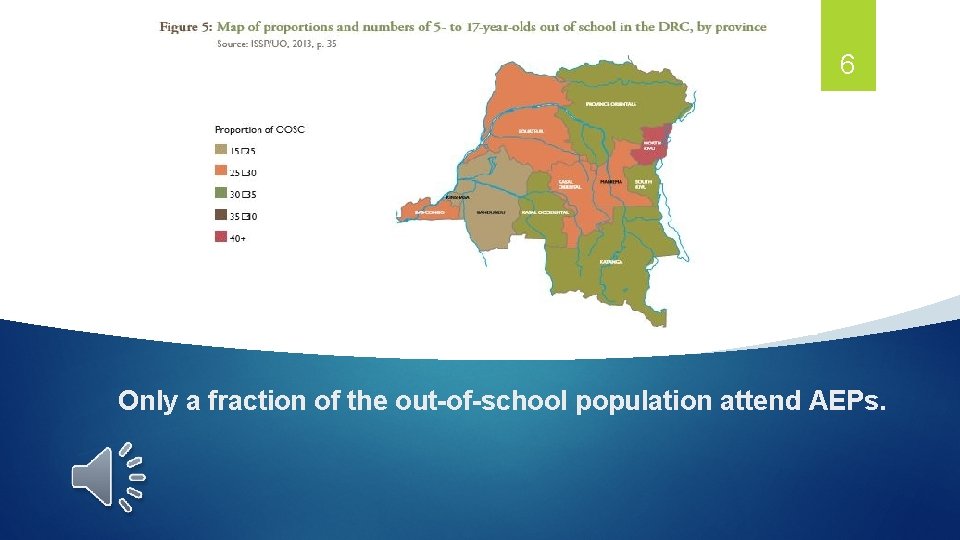
6 Only a fraction of the out-of-school population attend AEPs.
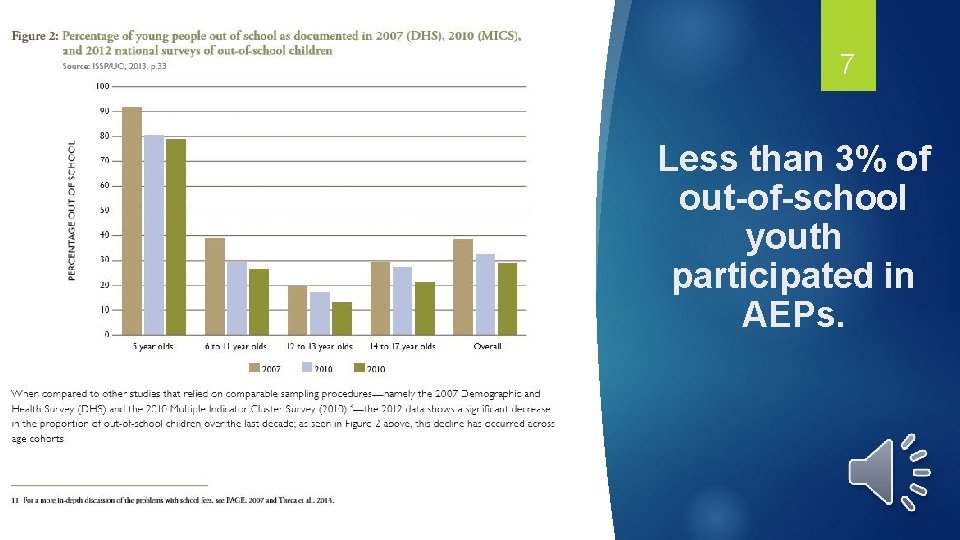
7 Less than 3% of out-of-school youth participated in AEPs.
8 The most affected are often the most vulnerable.
9 Over-age children who have not started school… are unable to return to school.
10 Poverty, insecurity, and unequal access to services are factors in access to education.
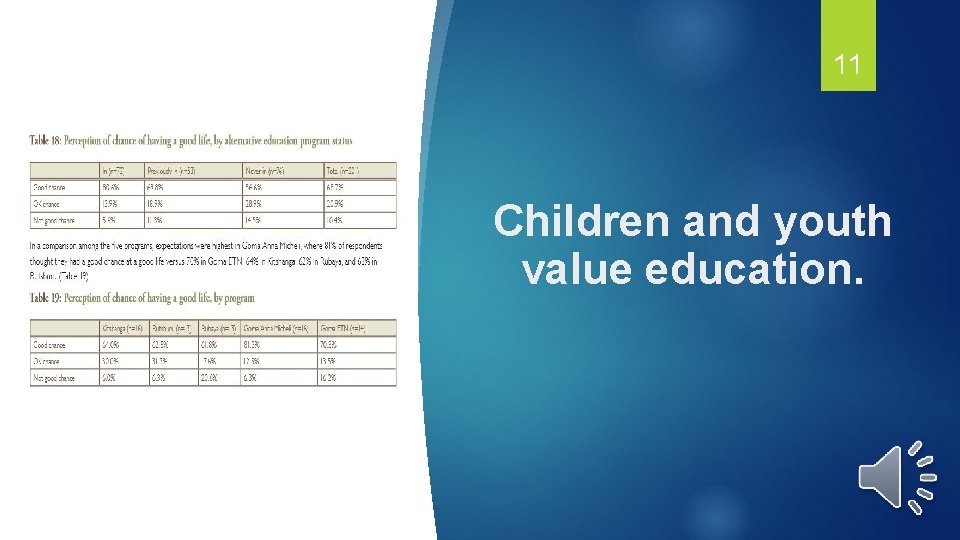
11 Children and youth value education.

12 “If I had studied, I would know how to use it effectively…”
13 75% of all primary schools in the DRC are managed by religious networks.
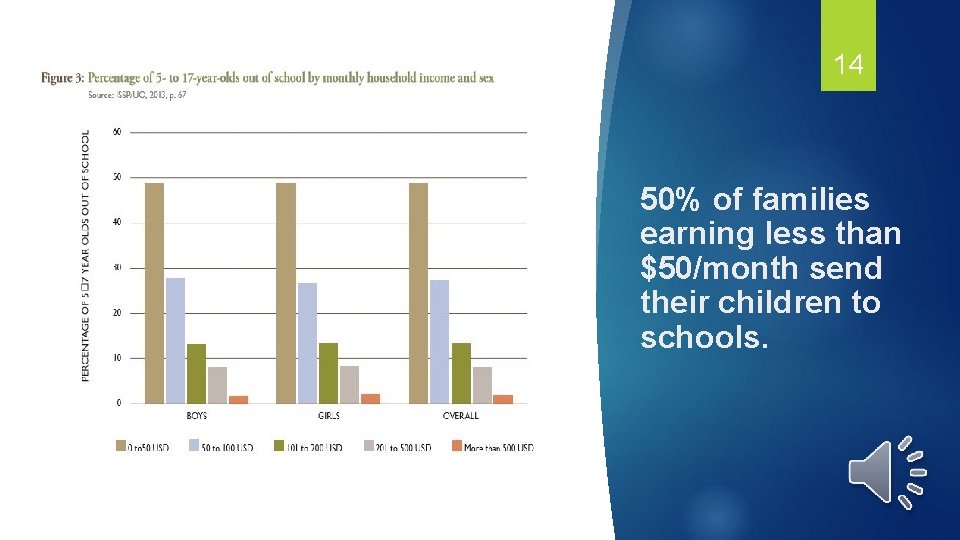
14 50% of families earning less than $50/month send their children to schools.
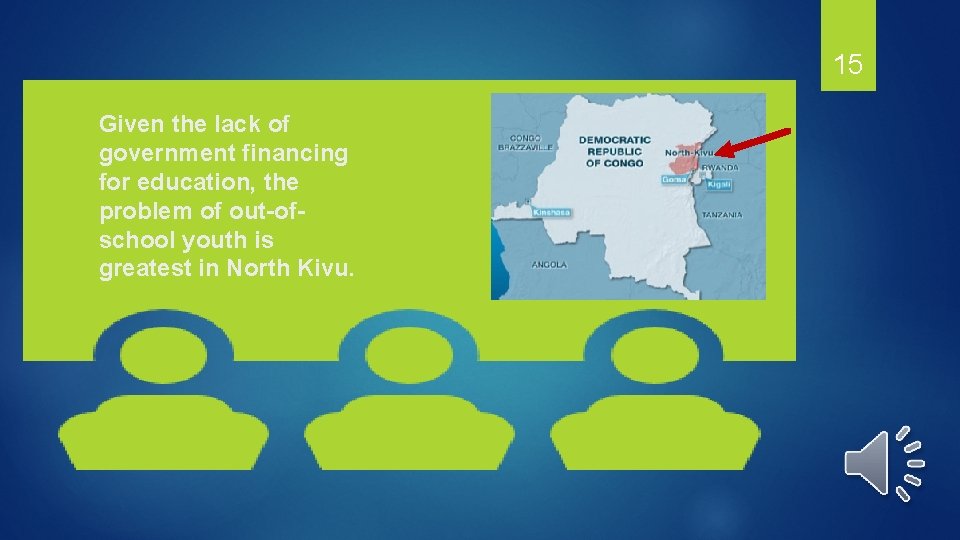
15 Given the lack of government financing for education, the problem of out-ofschool youth is greatest in North Kivu.
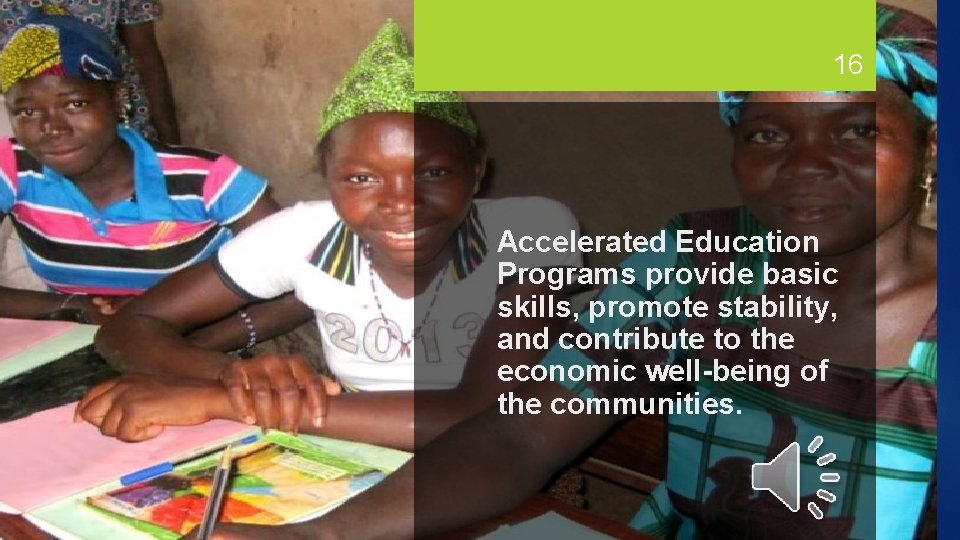
16 Accelerated Education Programs provide basic skills, promote stability, and contribute to the economic well-being of the communities.
17 “We really like AEPs… It helps those of us who are poor and brings us up to secondary level. ”
18 AEPs depend mostly on international donors and local NGOs.
19 Source: Claudia Seymour, Gwendolyn Heaner, Gregory Deacon, and Alfred Hartwell. “USAID ECCN Alternative Education in the DRC Final Research Report. ” USAID Education in Conflict and Crisis Network. December 2016 Resources for Alternative Education in the DRC Learn more here. Follow us @Ed. CCNetwork
- Slides: 19