
1 Agroindustrial supply chain management concepts and applications


- Slides: 15
ﺩﺭﺳی ﻣﻨﺎﺑﻊ 1. Agro-industrial supply chain management: concepts and applications Jack G. A. J. van der Vorst, Carlos A. da Silva, Jacques H. Trienekens, FAO 2. Training programmed on Supply Chain Management in Agriculture National Institute of Agricultural Extension Management ، ﺍﺳﺘﺪﻟﺮ ﻫﺎﺭﻣﻮﺕ ، ﺗﺎﻣیﻦ ﺯﻧﺠیﺮﻩ ﻣﺪیﺮیﺖ. 3 ﻋﺴگﺮی ﻭ ﺭﻧﺠیﺮﺍﻧی ﺗﺮﺟﻤﻪ کیﻠگﺮ کﺮیﺴﺘﻮﻑ ﺍﻣیﺮکﺒیﺮ ﺻﻨﻌﺘی ﺩﺍﻧﺸگﺎﻩ : ﻧﺎﺷﺮ
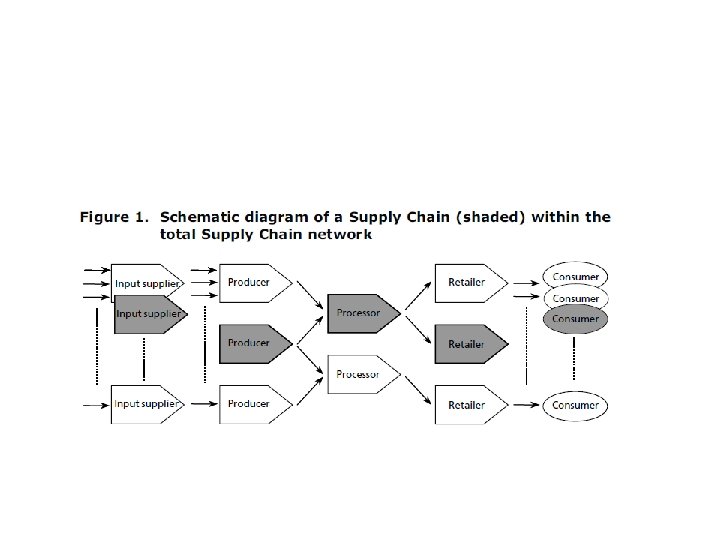
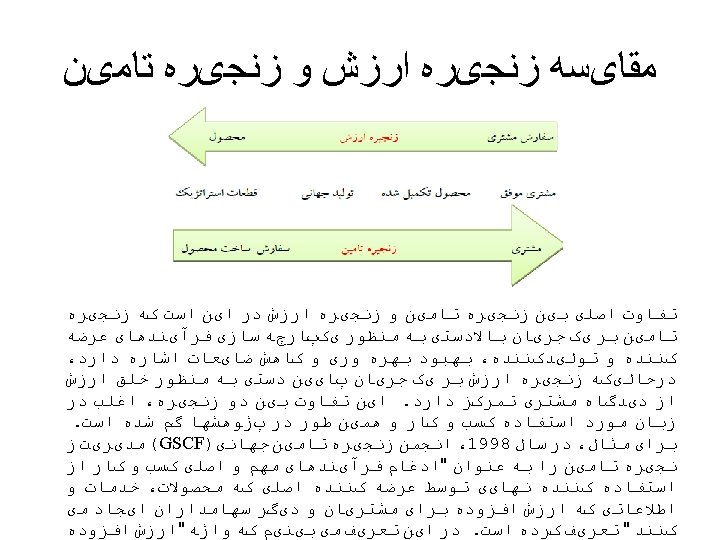
Definition of supply chain management Keith Oliver, 1982 1. SCM is the integrated planning, implementation, coordination and control of all business processes and activities necessary to produce and deliver, as efficiently as possible, products that satisfy market requirements. 2. ‘supply chain’ as a series of physical and decision-making activities connected by material and information flows and associated flows of money and property rights that cross organizational boundaries. Under this view, the supply chain does not include only the producer and its suppliers; depending on the logistical flows it also considers processors, transporters, warehouses, retailers, service organizations and consumers.
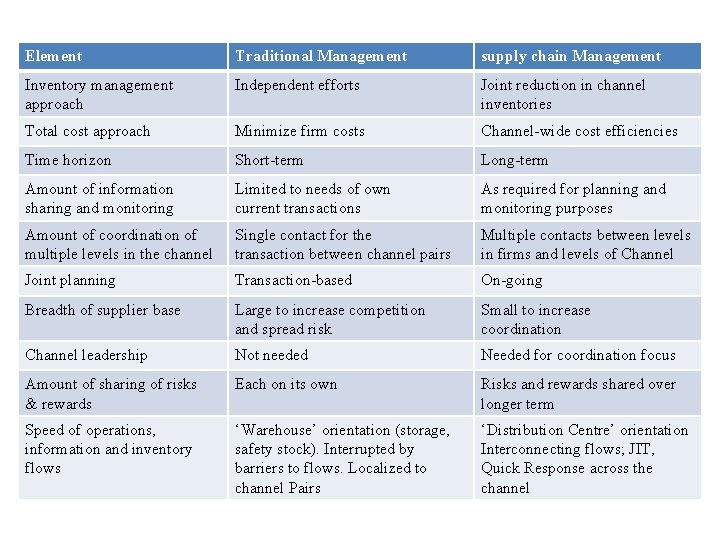
Element Traditional Management supply chain Management Inventory management approach Independent efforts Joint reduction in channel inventories Total cost approach Minimize firm costs Channel-wide cost efficiencies Time horizon Short-term Long-term Amount of information sharing and monitoring Limited to needs of own current transactions As required for planning and monitoring purposes Amount of coordination of multiple levels in the channel Single contact for the transaction between channel pairs Multiple contacts between levels in firms and levels of Channel Joint planning Transaction-based On-going Breadth of supplier base Large to increase competition and spread risk Small to increase coordination Channel leadership Not needed Needed for coordination focus Amount of sharing of risks & rewards Each on its own Risks and rewards shared over longer term Speed of operations, information and inventory flows ‘Warehouse’ orientation (storage, safety stock). Interrupted by barriers to flows. Localized to channel Pairs ‘Distribution Centre’ orientation Interconnecting flows; JIT, Quick Response across the channel
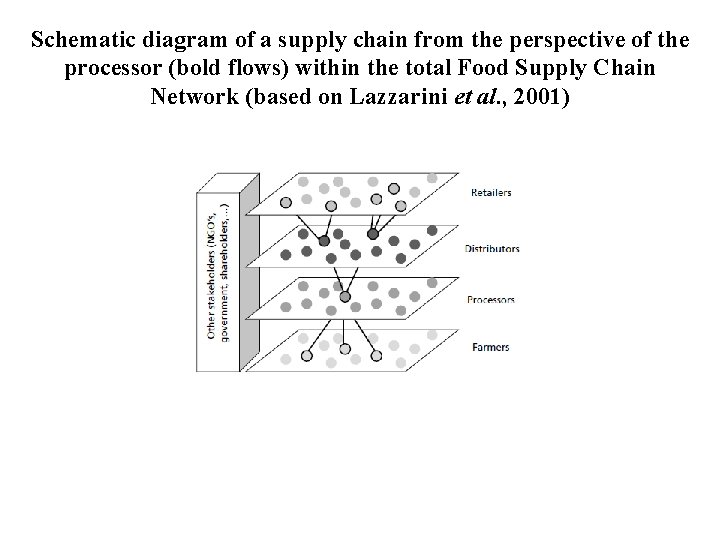
Schematic diagram of a supply chain from the perspective of the processor (bold flows) within the total Food Supply Chain Network (based on Lazzarini et al. , 2001)
What is logistics? Logistics is that part of the supply chain process that plans, implements and controls the efficient, effective flow and storage of goods, services and related information from the point-of-origin to the point-of-consumption in order to meet customer requirements and satisfies the requirements imposed by other stakeholders such as the government (new rules and regulations such as the General Food Law) (Cooper et al. , 1997)