
1 AGM Seminar Copenhagen October 11 th 2012
1 AGM Seminar Copenhagen October 11 th 2012 Seafarers training in the 21. Century + Ability profiling Ståle Nordvik Area Sales Manager
2 Seafarers training in the 21. Century
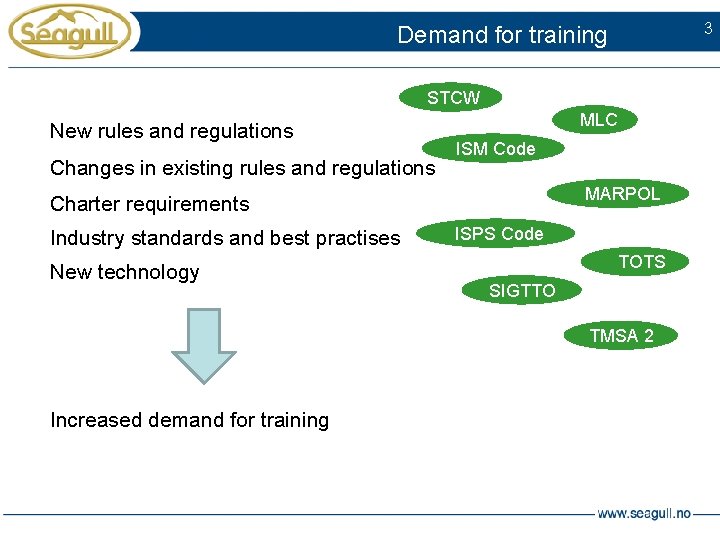
3 Demand for training STCW New rules and regulations Changes in existing rules and regulations MLC ISM Code MARPOL Charter requirements Industry standards and best practises New technology ISPS Code TOTS SIGTTO TMSA 2 Increased demand for training
Demand for training How can the demand for training be met? Maritime schools and academies Commersial training centres In-house training E-learning – online and onboard Onboard courses Distance courses 4
E-learning benefits Easy to distribute – quick access to new training Content can easily be revised and distributed No need for support or assistance by instructors Built in assessment and record keeping Effective learning with interactive content 5
Seafarer benefits E-learning is available at any time both onboard and ashore Trainees can work at their own pace Trainees can repeat course material to reinforce their understanding Self development to further enhance own competence and career opportunities Protect the seafarers time ashore 6
Benefits for shipowners/managers Training records are stored and accessible from other locations, and managed for audit and verification purposes Retain crew by providing them training for own career development Keep your crew up to date Uniform training material content Save cost on travel, accommodation and course expenses 7
8 Conclusion To be able to meet the increasing demand for training there has be other means for delivering this training than traditional shore based institutions E-learning and onboard training is the most effective way to achive this and will be even more important in the future
9 ABILITY PROFILING APRO
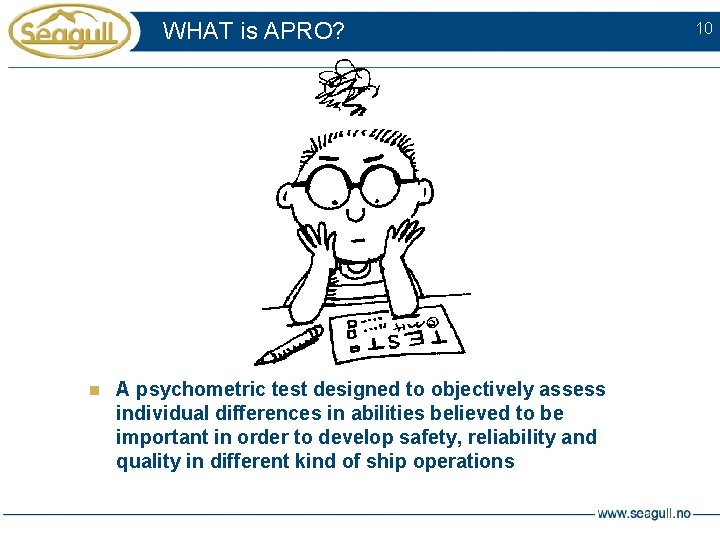
WHAT is APRO? n A psychometric test designed to objectively assess individual differences in abilities believed to be important in order to develop safety, reliability and quality in different kind of ship operations 10
WHAT is APRO? 11
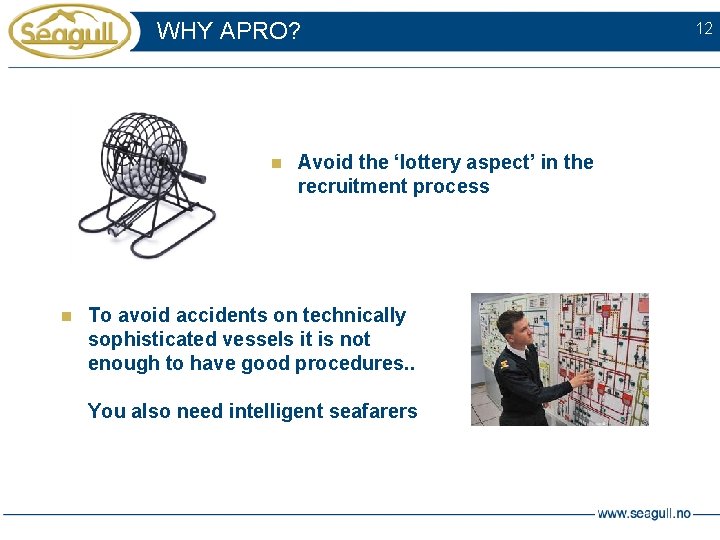
WHY APRO? n n Avoid the ‘lottery aspect’ in the recruitment process To avoid accidents on technically sophisticated vessels it is not enough to have good procedures. . You also need intelligent seafarers 12
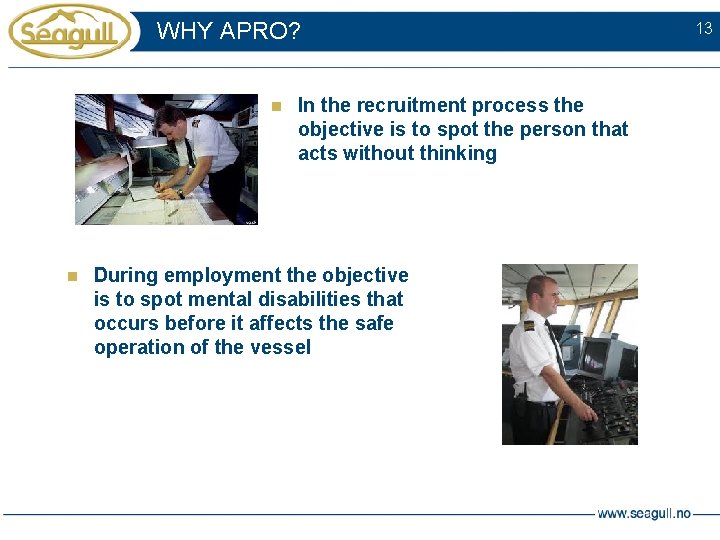
WHY APRO? n n In the recruitment process the objective is to spot the person that acts without thinking During employment the objective is to spot mental disabilities that occurs before it affects the safe operation of the vessel 13
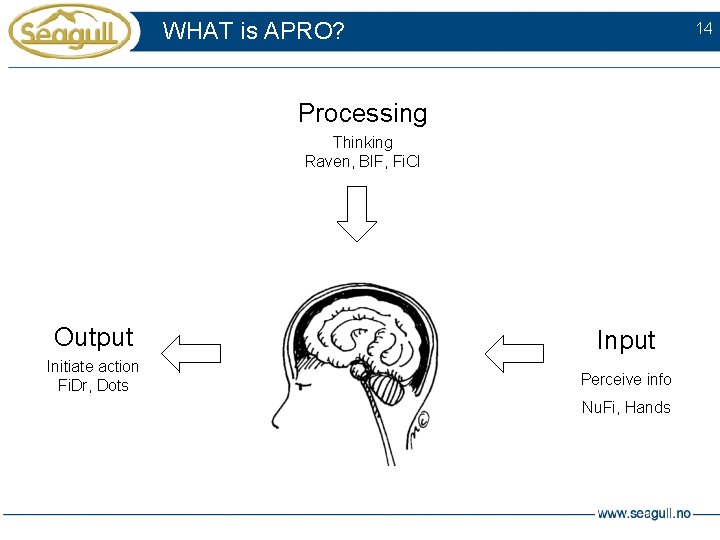
WHAT is APRO? 14 Processing Thinking Raven, BIF, Fi. Cl Output Initiate action Fi. Dr, Dots Perceive info Nu. Fi, Hands
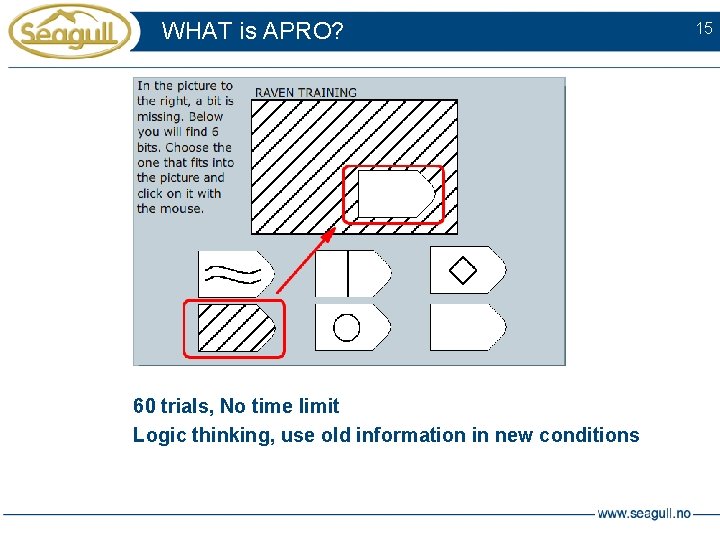
WHAT is APRO? 60 trials, No time limit Logic thinking, use old information in new conditions 15
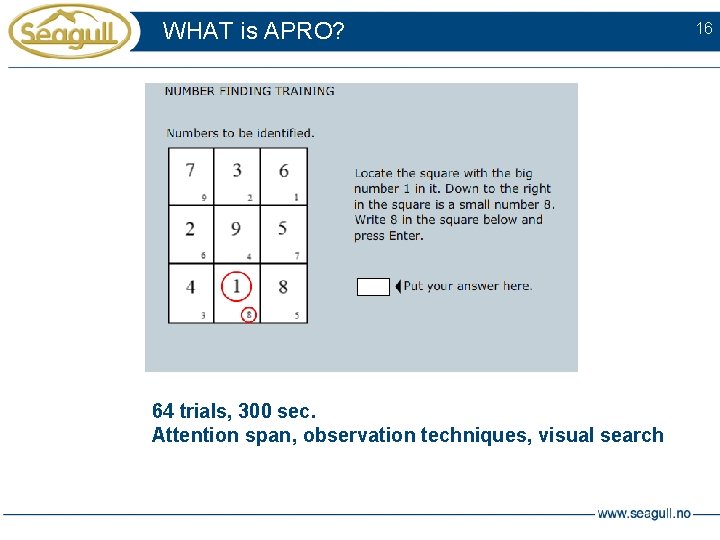
WHAT is APRO? 64 trials, 300 sec. Attention span, observation techniques, visual search 16
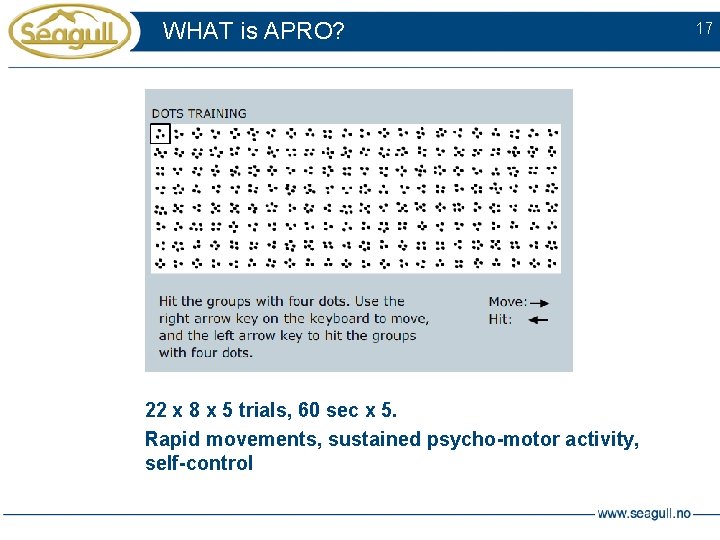
WHAT is APRO? 22 x 8 x 5 trials, 60 sec x 5. Rapid movements, sustained psycho-motor activity, self-control 17
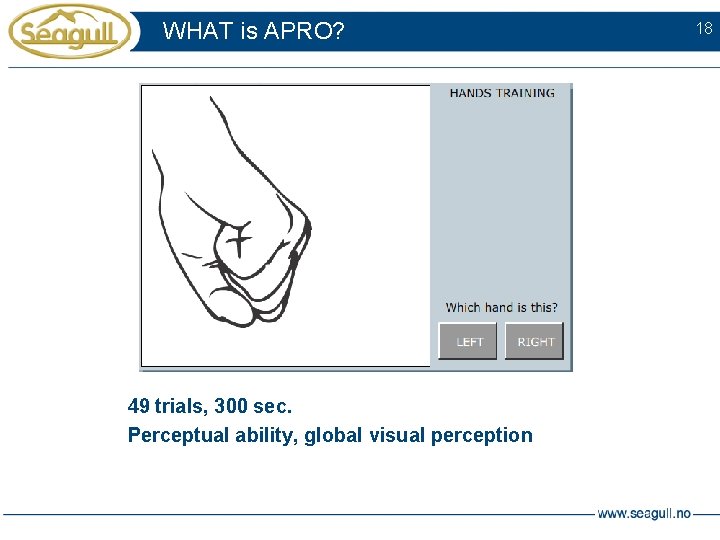
WHAT is APRO? 49 trials, 300 sec. Perceptual ability, global visual perception 18
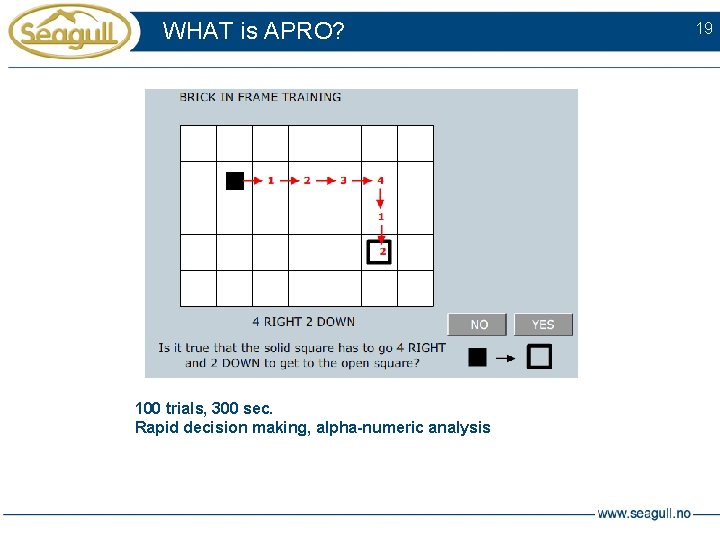
WHAT is APRO? 100 trials, 300 sec. Rapid decision making, alpha-numeric analysis 19
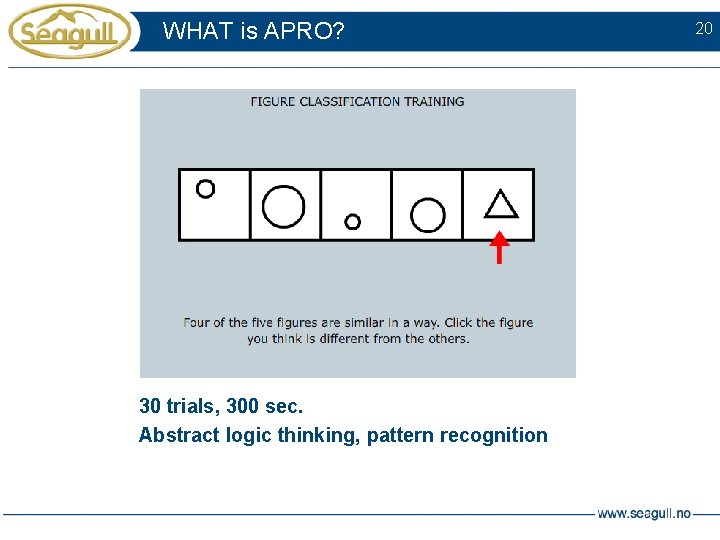
WHAT is APRO? 30 trials, 300 sec. Abstract logic thinking, pattern recognition 20
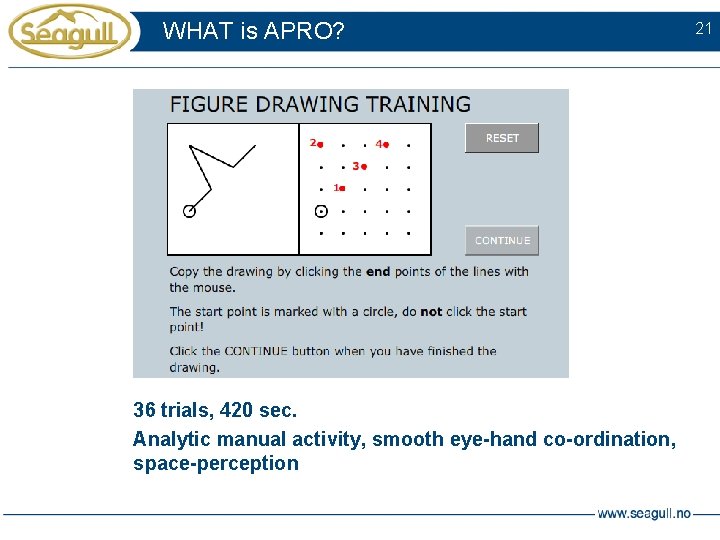
WHAT is APRO? 36 trials, 420 sec. Analytic manual activity, smooth eye-hand co-ordination, space-perception 21
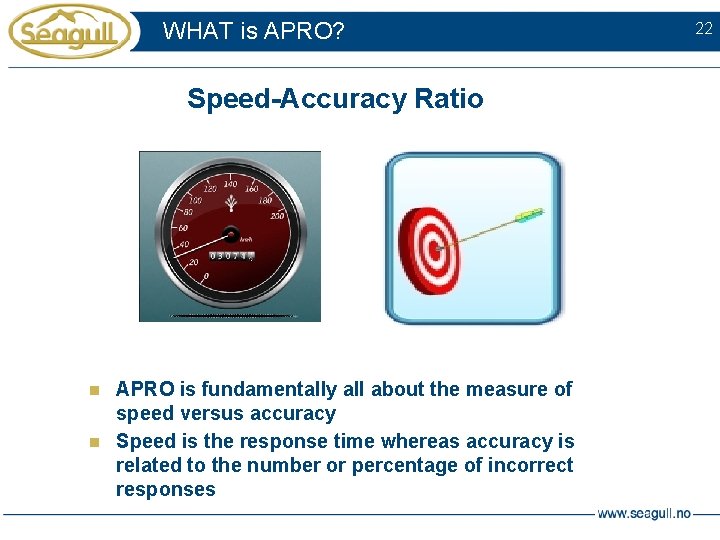
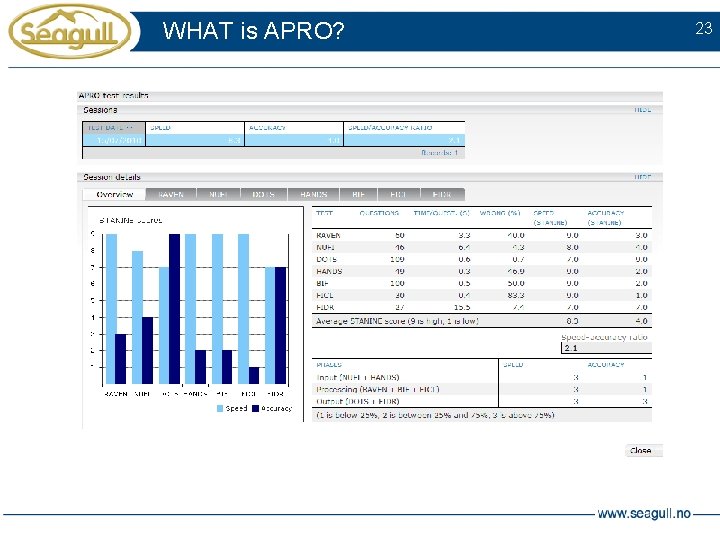
WHAT is APRO? Speed-Accuracy Ratio n n APRO is fundamentally all about the measure of speed versus accuracy Speed is the response time whereas accuracy is related to the number or percentage of incorrect responses 22
WHAT is APRO? 23
24 Mandatory 1 day training course for APRO assessors Next course in Manila on november 13 th
25 Thank you
- Slides: 25