
1 A 36 yearold female consults you at














- Slides: 180
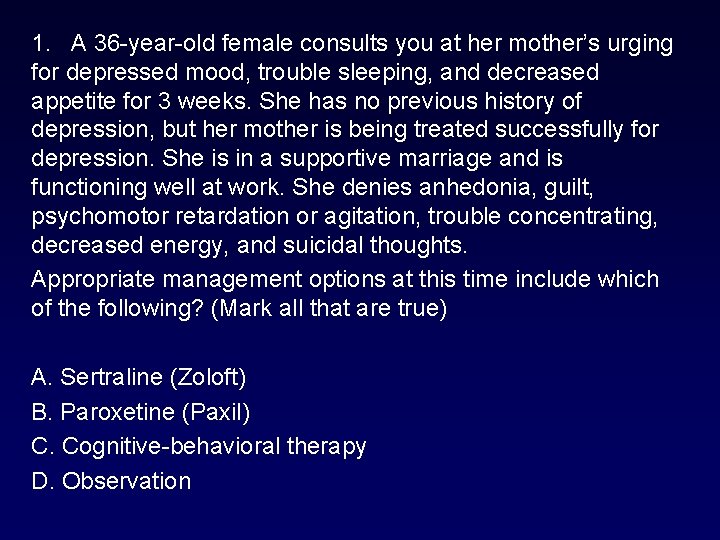
1. A 36 -year-old female consults you at her mother’s urging for depressed mood, trouble sleeping, and decreased appetite for 3 weeks. She has no previous history of depression, but her mother is being treated successfully for depression. She is in a supportive marriage and is functioning well at work. She denies anhedonia, guilt, psychomotor retardation or agitation, trouble concentrating, decreased energy, and suicidal thoughts. Appropriate management options at this time include which of the following? (Mark all that are true) A. Sertraline (Zoloft) B. Paroxetine (Paxil) C. Cognitive-behavioral therapy D. Observation
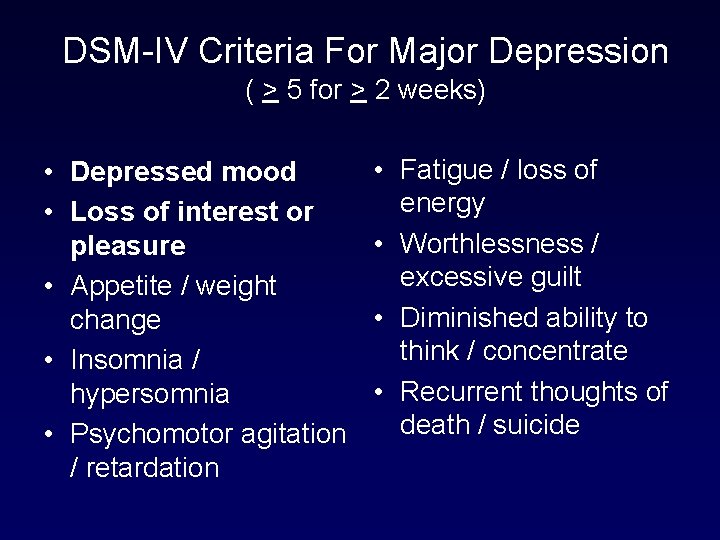
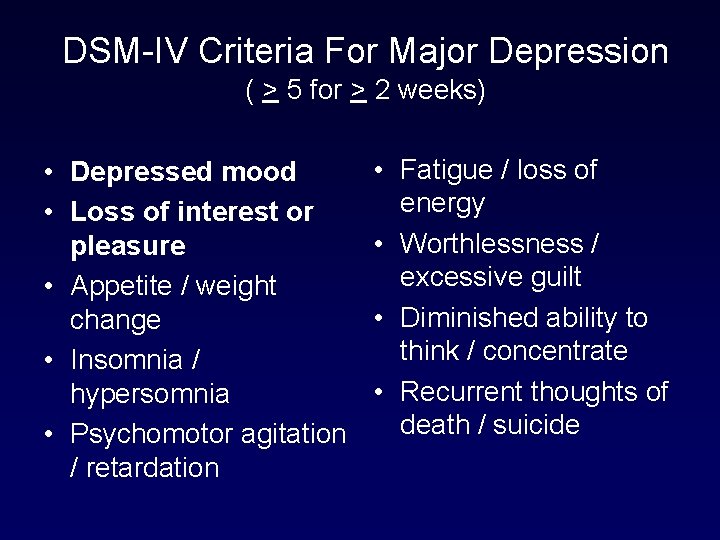
DSM-IV Criteria For Major Depression ( > 5 for > 2 weeks) • Depressed mood • Loss of interest or pleasure • Appetite / weight change • Insomnia / hypersomnia • Psychomotor agitation / retardation • Fatigue / loss of energy • Worthlessness / excessive guilt • Diminished ability to think / concentrate • Recurrent thoughts of death / suicide
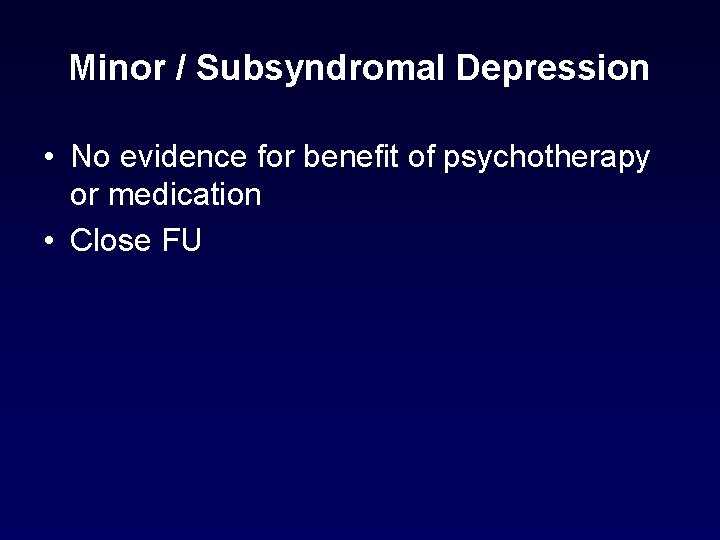
Minor / Subsyndromal Depression • No evidence for benefit of psychotherapy or medication • Close FU
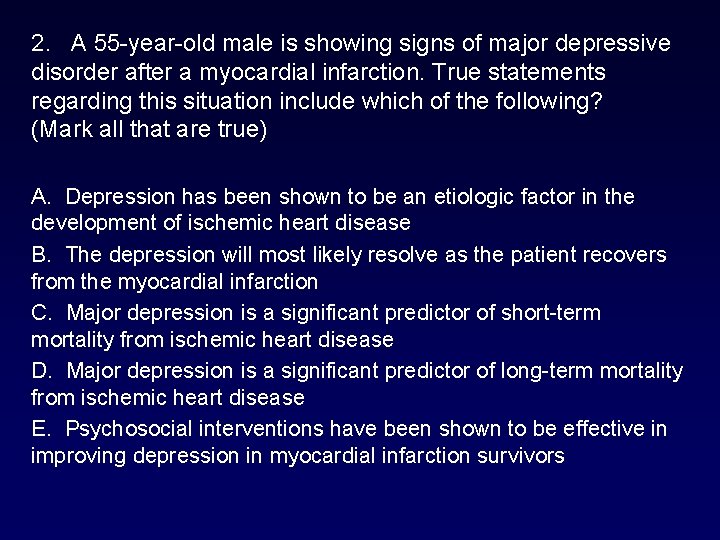
2. A 55 -year-old male is showing signs of major depressive disorder after a myocardial infarction. True statements regarding this situation include which of the following? (Mark all that are true) A. Depression has been shown to be an etiologic factor in the development of ischemic heart disease B. The depression will most likely resolve as the patient recovers from the myocardial infarction C. Major depression is a significant predictor of short-term mortality from ischemic heart disease D. Major depression is a significant predictor of long-term mortality from ischemic heart disease E. Psychosocial interventions have been shown to be effective in improving depression in myocardial infarction survivors
Depression and Heart Disease
Depression and Heart Disease • Significant predictor of short-term AND long-term mortality • Medication and psychosocial interventions improve sx, ? impact on future events or mortality • Has not been shown to cause heart disease
3. In a patient diagnosed with major depression, which of the following would support the use of long-term maintenance antidepressant medication? (Mark all that are true. ) A. B. C. D. E. Occurrence of the first episode during young adulthood Occurrence of the first episode at age 70 years or greater Occurrence of the first episode during adolescence Three lifetime recurrences A positive family history for depression in a first degree relative
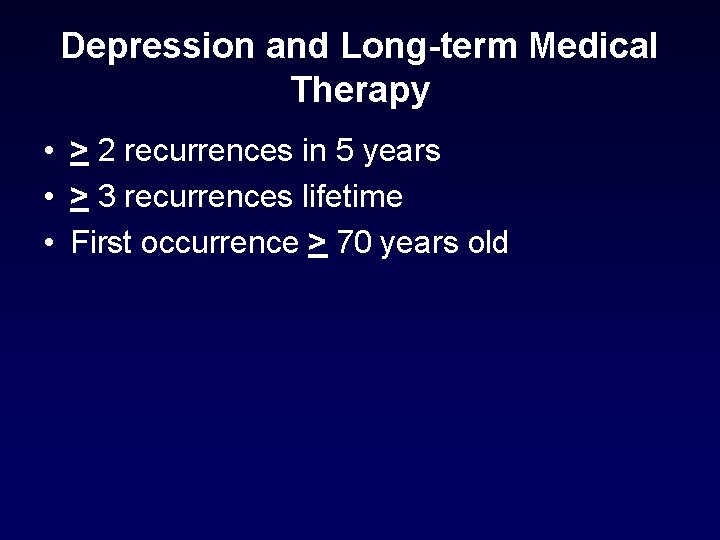
Depression and Long-term Medical Therapy • > 2 recurrences in 5 years • > 3 recurrences lifetime • First occurrence > 70 years old
4. Which one of the following is true regarding perimenopausal depression? A. The loss of ovarian function during menopause is a major risk factor for the development of depression B. Hormone therapy has been shown to be an effective treatment for depression in perimenopausal women C. Life stress is a stronger predictor of depression during midlife than is menopause D. The incidence of depression in women peaks during the perimenopausal years
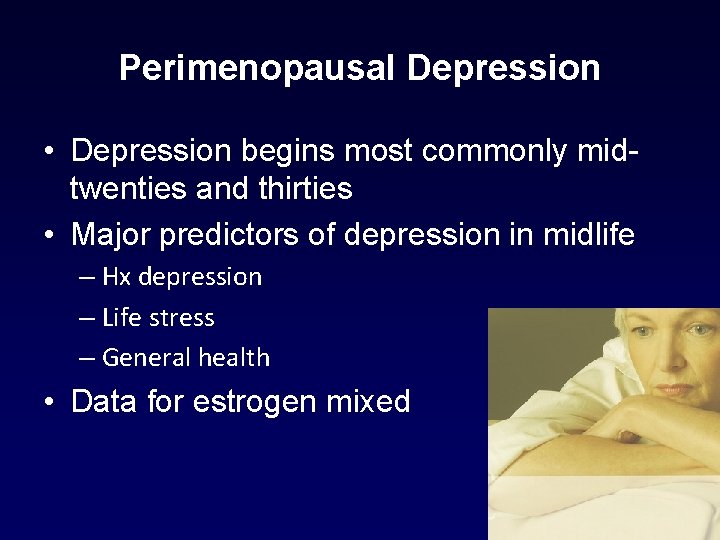
Perimenopausal Depression • Depression begins most commonly midtwenties and thirties • Major predictors of depression in midlife – Hx depression – Life stress – General health • Data for estrogen mixed
5. A 32 -year-old female informs you that she and her husband have decided to have a child. She was diagnosed with major depression 3 months ago, but it has been well controlled with paroxetine (Paxil). She had a previous episode of major depression 10 years ago that also responded to paroxetine. She asks what effect antidepressant use would have on her pregnancy. Accurate advice would include which of the following? A. Pregnancy has been shown to have a salutary effect on major depressive disorder B. Paroxetine use during pregnancy has been linked to an increased risk of congenital heart malformations C. Paroxetine use in pregnancy has been linked to an increased risk for cleft palate D. SSRI use during the first trimester of pregnancy is associated with a higher risk of persistent pulmonary hypertension in the newborn E. Euthymic women who discontinue antidepressant therapy during pregnancy have a fivefold higher risk of relapse over the course of pregnancy compared with women who continue their antidepressant
Depression and Pregnancy Issues • Risk of pregnancy loss • Teratogenesis • Neonatal toxicity / withdrawal syndrome after delivery • Long-term neurobehavioral effects on child
Depression and Pregnancy • 5 x higher risk of relapse • Paroxetine 2005 Category D – Increased ASD, VSD – Increased R ventricular outflow obstruction • PPH with SSRI in late pregnancy
6. True statements regarding the prevalence and nature of depression in the elderly include which of the following? (Mark all that are true. ) A. Depression is roughly two to three times more common in the elderly than in younger patients B. Physicians are more likely to correctly diagnose depression in elderly patients than in younger patients C. Treatment of depression in the elderly is less important than in younger patients because the depression is generally less severe D. Patients who are elderly when their first episode of depression occurs have a relatively high likelihood of developing chronic or recurring depression
“Take the green pill to feel hunky, the yellow pill to feel dory. ”
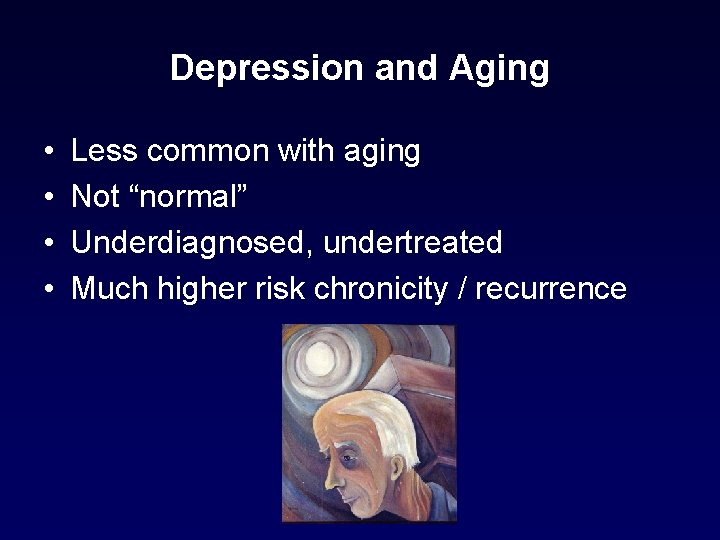
Depression and Aging • • Less common with aging Not “normal” Underdiagnosed, undertreated Much higher risk chronicity / recurrence
7. Agents approved by the FDA for maintenance therapy in patients with bipolar disorder include which of the following? (Mark all that are true. ) A. Lithium B. Divalproex (Depakote) C. Olanzapine (Zyprexa) D. Lamotrigine (Lamictal) E. Aripiprazole (Abilify) F. Bupropion (Wellbutrin)
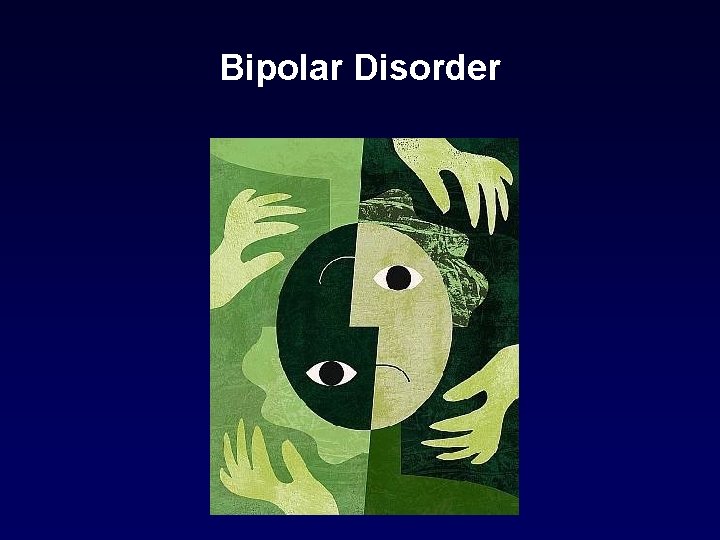
Bipolar Disorder
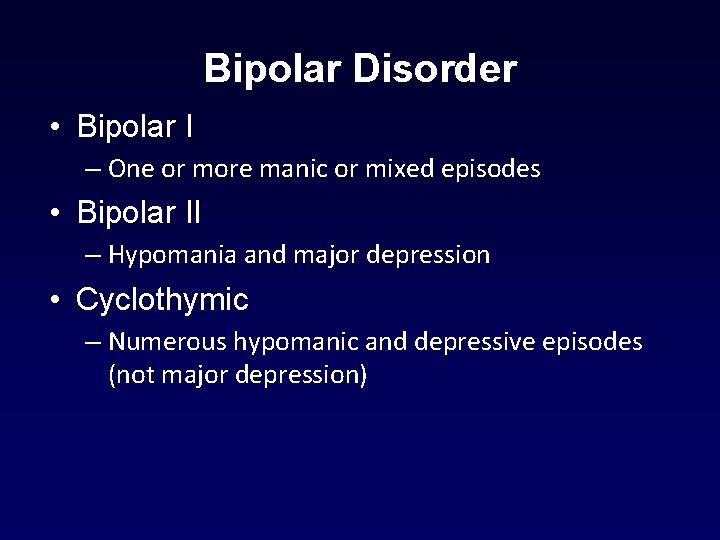
Bipolar Disorder • Bipolar I – One or more manic or mixed episodes • Bipolar II – Hypomania and major depression • Cyclothymic – Numerous hypomanic and depressive episodes (not major depression)
Bipolar Disorder Chronic Treatment (FDA) (goal is sustained remission) • • Lithium Olanzapine (Zyprexa) Lamotrigine (Lamictal) Aripiprazole (Abilify)
8. A 33 -year-old male presents with signs and symptoms of depression and a history of daily heavy alcohol and polysubstance abuse for the past 5 years. Which one of the following is true in this situation? A. Symptoms that resemble primary mood anxiety disorders can result from alcohol and substance intoxication and withdrawal B. This patient has an organic mood disorder secondary to alcohol dependence C. Carbamazepine is the appropriate first-line medication to treat withdrawal symptoms in this patient D. Treatment for mood anxiety disorders in patients with substance use disorders should be withheld pending a period of sobriety
Substance Abuse and Affective Disorders • Both disorders quite common • Association b/w the two significant • Likelihood of primary mood / anxiety disorders very high • Treatment for affective disorders should not be withheld pending sobriety / abstinence
9. You are considering starting a program in which you screen all pregnant women for depression during their pregnancy and then immediately after delivery. Which of the following should be taken into account in such a program? (Mark all that are true. ) A. The onset of postpartum depression frequently occurs before the patient is seen for a routine 6 -week postpartum visit B. Screening questionnaires for depression during pregnancy have low sensitivity and high specificity C. The “baby blues” are so common during the first few weeks after delivery that screening for postpartum depression during that time would not be effective D. Significant dysphoria that arises more than 2 weeks after delivery should raise a strong suspicion for depression E. “Baby blues” commonly persist for several weeks after delivery
Post-Partum Depression • “Baby Blues” common but symptoms mild and transient • Persistent sx beyond 2 weeks or severe symptoms should raise suspicion • Incidence PPD up to 10 % • Questionnaires high sensitivity, low specificity
10. True statements regarding the relationship between depression and high utilization of medical care include which of the following? (Mark all that are true. ) A. Depressed patients classified as high utilizers commonly present with defined medical conditions B. In patients classified as high utilizers, the incidence of current or past major depressive disorder is twice that of other patients C. The prevalence of defined medical conditions is higher among high utilizers who are classified as being depressed, compared to those who are classified as nondepressed D. Depressed patients classified as high utilizers have rates of medical resource utilization similar to those of nondepressed high utilizers
Depression and Utilization of Care • “High Utilizers” have high incidence (2 x) of depression, often unrecognized • Depressed high utilizers more non-specific complaints • Depressed high utilizers higher resource utilization
11. A 32 -year-old male who was successfully treated for major depressive disorder with paroxetine (Paxil) for the past 10 months chooses to stop his medication. Within a week he develops symptoms of dysphoria, fatigue, difficulty concentrating, anxiety, and insomnia. In addition, he also complains of an “electric shock” sensation in his legs and “rushing sensations” in his head. Which one of the following is the most likely diagnosis? A. Recurrence of major depressive disorder B. Dysthymic disorder C. SSRI discontinuation syndrome D. Bipolar disorder
SSRI Discontinuation Syndrome • Features Common with Depression – Dysphoria, Appetite/Sleep changes, fatigue, difficulty concentrating • Distinctive Features – Dizziness, Electric shock sensations face and extremities, HA, nausea, rushing sensation in head
SSRI Discontinuation Syndrome • Can start within 24 hours • Least common with – Fluoxetine (Prozac) • Most common with – Paroxetine (Paxil) – Sertraline (Zoloft)
12. A 28 -year-old female with severe major depression has achieved partial symptom remission with SSRIs but complains of persistent diarrhea and loss of libido. She asks you about using St. John’s wort to treat her depression. Appropriate advice would include which of the following? (Mark all that are true) A. St. John’s wort may be effective in milder forms of major depression B. St. John’s wort is more effective than placebo in patients with severe major depression C. St. John’s wort is better tolerated than prescription antidepressants D. The combination of St. John’s wort and SSRIs is safe and effective for major depression E. St. John’s wort may reduce the efficacy of combined oral contraceptives
“The wise men brought gifts: ginseng, St. John’s wort, and ginko biloba. ”
St. John’s wort • Species Hypericum perforatum (Tipton's or Klamath weed) • Challenge of standardization • Effective mild-moderate depression • Favorable SE profile • ? Increase risk of serotonin syndrome • May increase metabolism of ethinyl estradiol Cochrane 2008
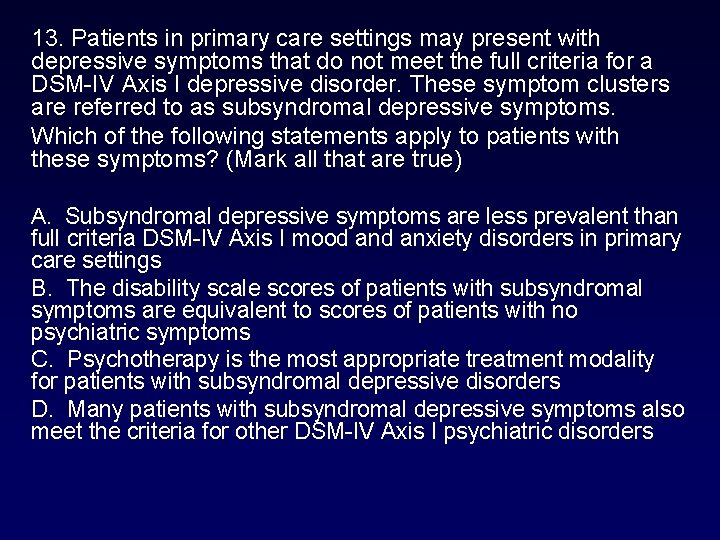
13. Patients in primary care settings may present with depressive symptoms that do not meet the full criteria for a DSM-IV Axis I depressive disorder. These symptom clusters are referred to as subsyndromal depressive symptoms. Which of the following statements apply to patients with these symptoms? (Mark all that are true) A. Subsyndromal depressive symptoms are less prevalent than full criteria DSM-IV Axis I mood anxiety disorders in primary care settings B. The disability scale scores of patients with subsyndromal symptoms are equivalent to scores of patients with no psychiatric symptoms C. Psychotherapy is the most appropriate treatment modality for patients with subsyndromal depressive disorders D. Many patients with subsyndromal depressive symptoms also meet the criteria for other DSM-IV Axis I psychiatric disorders
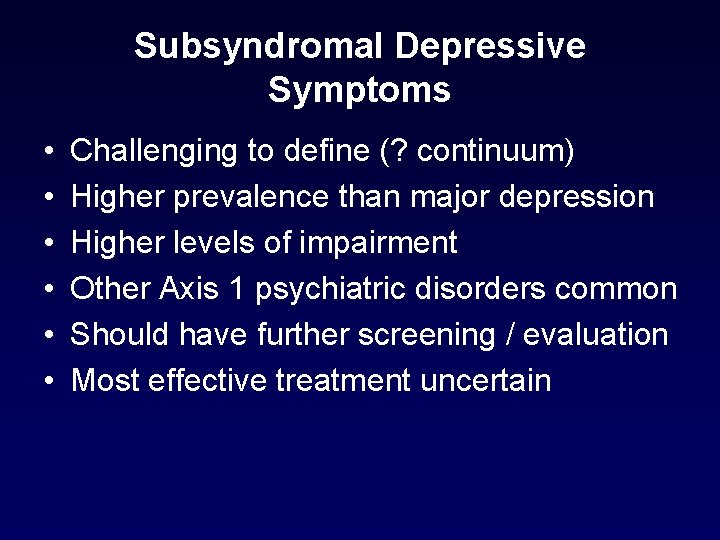
Subsyndromal Depressive Symptoms • • • Challenging to define (? continuum) Higher prevalence than major depression Higher levels of impairment Other Axis 1 psychiatric disorders common Should have further screening / evaluation Most effective treatment uncertain
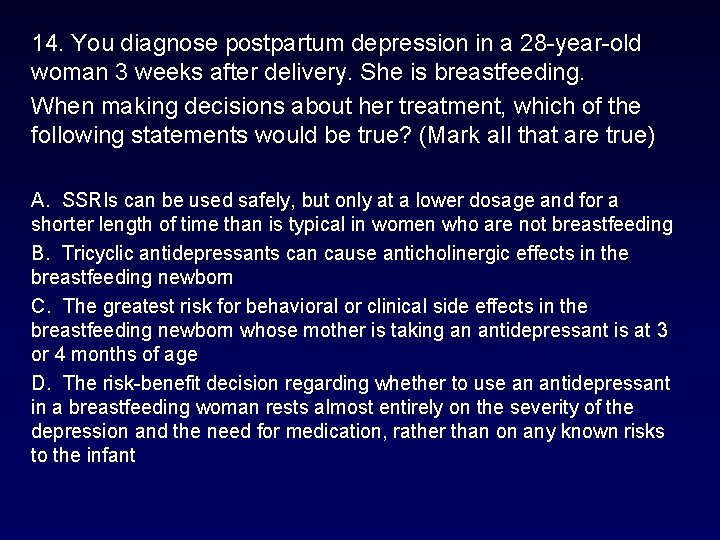
14. You diagnose postpartum depression in a 28 -year-old woman 3 weeks after delivery. She is breastfeeding. When making decisions about her treatment, which of the following statements would be true? (Mark all that are true) A. SSRIs can be used safely, but only at a lower dosage and for a shorter length of time than is typical in women who are not breastfeeding B. Tricyclic antidepressants can cause anticholinergic effects in the breastfeeding newborn C. The greatest risk for behavioral or clinical side effects in the breastfeeding newborn whose mother is taking an antidepressant is at 3 or 4 months of age D. The risk-benefit decision regarding whether to use an antidepressant in a breastfeeding woman rests almost entirely on the severity of the depression and the need for medication, rather than on any known risks to the infant
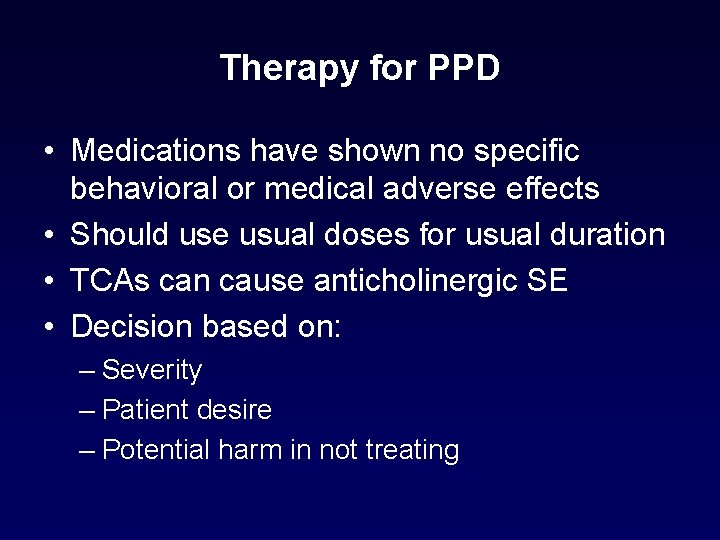
Therapy for PPD • Medications have shown no specific behavioral or medical adverse effects • Should use usual doses for usual duration • TCAs can cause anticholinergic SE • Decision based on: – Severity – Patient desire – Potential harm in not treating
15. Which one of the following is true regarding the effectiveness of antidepressants for treating major depression? A. SSRIs are the most effective class of antidepressants B. Tricyclic antidepressants (TCAs) are the most effective class of antidepressants C. Serotonin-noradrenalin reuptake inhibitors (SNRIs) such as venlafaxine are the most effective class of antidepressants D. Dopamine antagonists (DAs) such as bupropion (Wellbutrin) are the most effective class of antidepressants E. SSRIs, SNRIs, and DAs are more effective than TCAs F. All classes of antidepressants are equally effective
All Equally Effective “In reducing depressive symptoms and achieving remission of major depression” HOWEVER
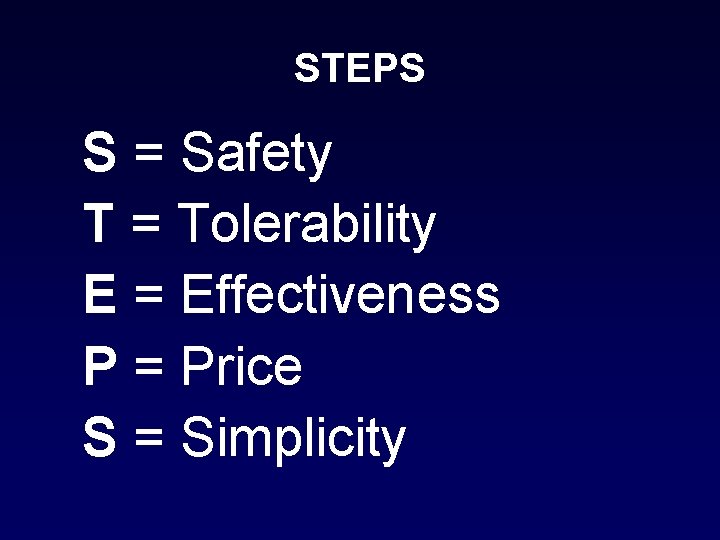
STEPS S = Safety T = Tolerability E = Effectiveness P = Price S = Simplicity
16. The lifetime prevalence of major depressive disorder in the general population is A. 2%– 5% B. 5%– 10% C. 10%– 20% D. 20%– 30%
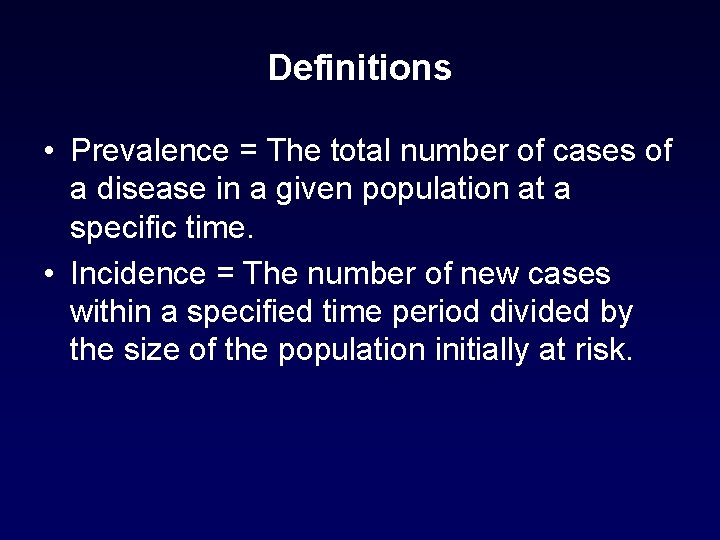
Definitions • Prevalence = The total number of cases of a disease in a given population at a specific time. • Incidence = The number of new cases within a specified time period divided by the size of the population initially at risk.
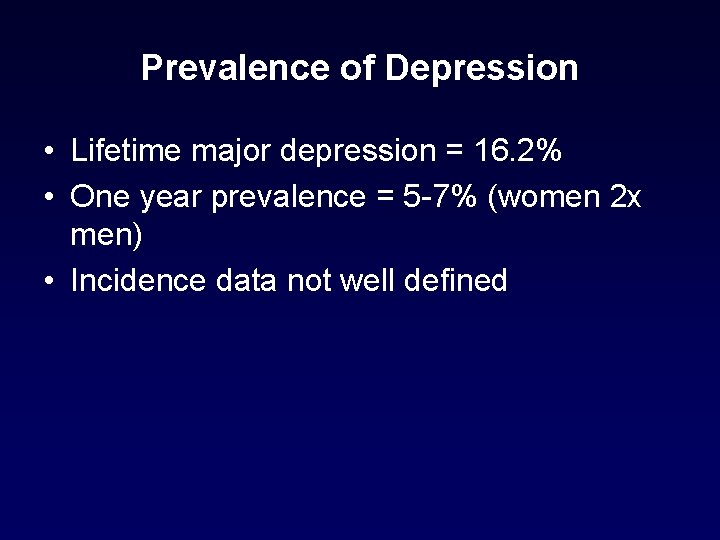
Prevalence of Depression • Lifetime major depression = 16. 2% • One year prevalence = 5 -7% (women 2 x men) • Incidence data not well defined
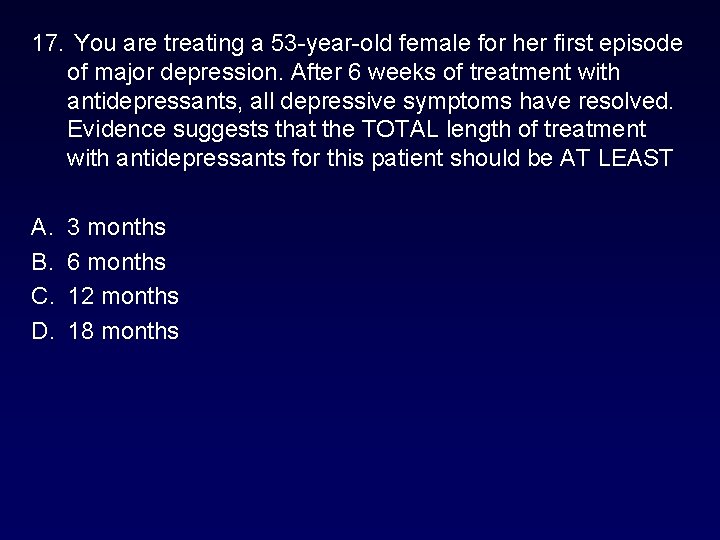
17. You are treating a 53 -year-old female for her first episode of major depression. After 6 weeks of treatment with antidepressants, all depressive symptoms have resolved. Evidence suggests that the TOTAL length of treatment with antidepressants for this patient should be AT LEAST A. B. C. D. 3 months 6 months 12 months 18 months
Duration of Treatment • “Early discontinuation” associated with early relapse • Data suggest at least 6 months, though continued benefit in preventing relapse found out to 3 years • ? Implications with severity of depression (mild through severe)
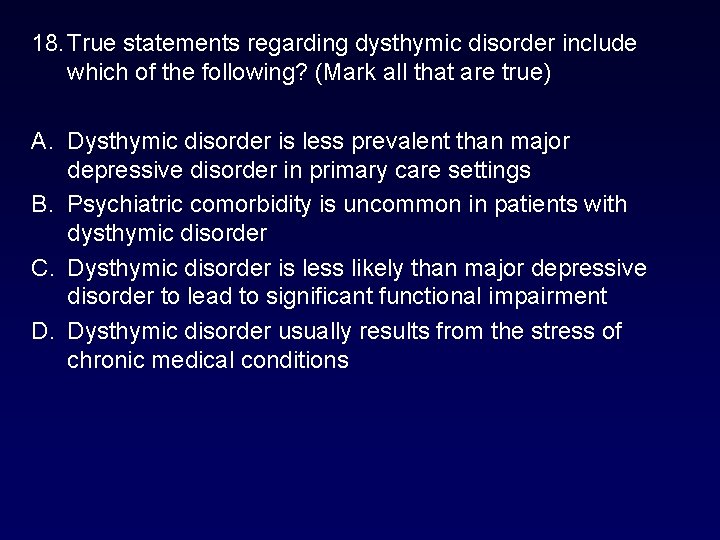
18. True statements regarding dysthymic disorder include which of the following? (Mark all that are true) A. Dysthymic disorder is less prevalent than major depressive disorder in primary care settings B. Psychiatric comorbidity is uncommon in patients with dysthymic disorder C. Dysthymic disorder is less likely than major depressive disorder to lead to significant functional impairment D. Dysthymic disorder usually results from the stress of chronic medical conditions
Dysthymic Disorder A mood disorder with chronic (long-term) depressive symptoms that are present most of the day, more days than not, for a period of at least two years.
Dysthymic Disorder • • • Lifetime prevalence 4 -6% (vs 16%) High psychiatric comorbidity Functional impairment common Etiology uncertain Occurs in 25 -50% persons with sleep impairment
19. Which one of the following is true regarding the relationship between stressful life events and the onset of major depressive disorder? A. The genetically influenced traits that predispose patients to major depressive disorder have a protective effect on the response to stressful events B. Stressful life events are associated with the onset of major depressive disorder C. Stressful life events play a minimal role in the onset of major depressive disorder
Stressful Life Events and Depression • Substantial causal relationship • Some genetic predisposition to: – Select high-risk environments for stressful events – More vulnerable to these same events
20. Which one of the following does the U. S. Preventive Services Task Force currently recommend with regard to depression screening? A. No recommendation either for or against routine screening for depression in primary care B. Screening only for adults with risk factors for depression, such as a positive family history, or when there is clinical suspicion C. Screening only when systems are in place to ensure adequate treatment and follow-up D. Screening in all primary care practices because it is highly effective
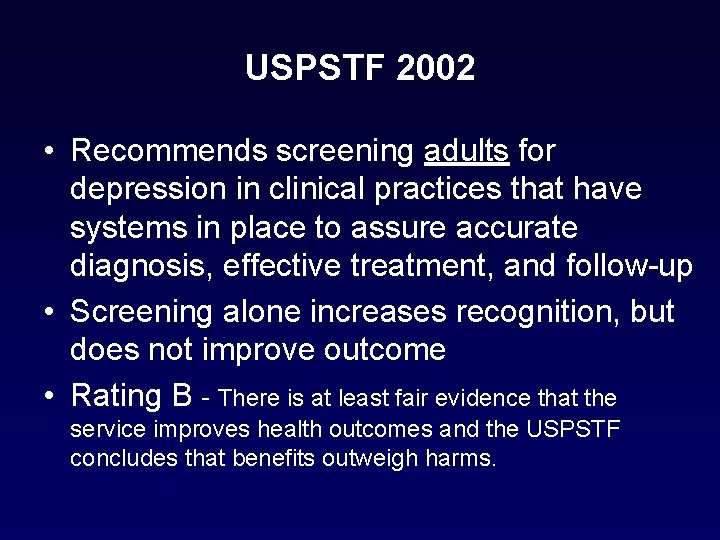
USPSTF 2002 • Recommends screening adults for depression in clinical practices that have systems in place to assure accurate diagnosis, effective treatment, and follow-up • Screening alone increases recognition, but does not improve outcome • Rating B - There is at least fair evidence that the service improves health outcomes and the USPSTF concludes that benefits outweigh harms.
21. A 54 -year-old female has multiple complaints that she attributes to “getting old, ” including insomnia, weight gain, irritability, trouble concentrating, and “memory loss. ” She has had these symptoms for 3 months. Her past history includes a 10 -year history of hypertension which is well controlled with atenolol (Tenormin), 25 mg daily. Her vital signs are unremarkable, and a physical examination is remarkable only for mild obesity and a midline hysterectomy scar. Her TSH level is normal. After an appropriate diagnostic interview, you diagnose major depressive disorder of mild intensity. She is not suicidal and is not abusing alcohol. Appropriate treatment options at this point include which of the following? (Mark all that are true) A. Stopping the atenolol and rechecking the patient’s symptoms in 2– 4 weeks B. Psychotherapy alone C. Antidepressant medication alone D. Benzodiazepines
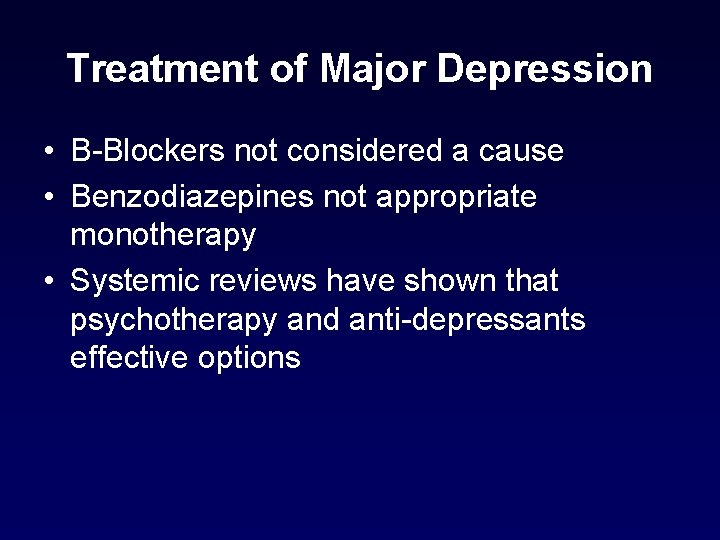
Treatment of Major Depression • B-Blockers not considered a cause • Benzodiazepines not appropriate monotherapy • Systemic reviews have shown that psychotherapy and anti-depressants effective options
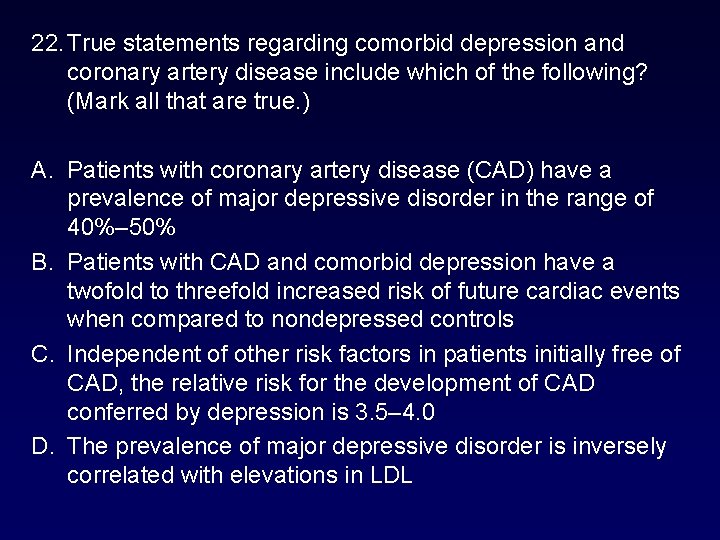
22. True statements regarding comorbid depression and coronary artery disease include which of the following? (Mark all that are true. ) A. Patients with coronary artery disease (CAD) have a prevalence of major depressive disorder in the range of 40%– 50% B. Patients with CAD and comorbid depression have a twofold to threefold increased risk of future cardiac events when compared to nondepressed controls C. Independent of other risk factors in patients initially free of CAD, the relative risk for the development of CAD conferred by depression is 3. 5– 4. 0 D. The prevalence of major depressive disorder is inversely correlated with elevations in LDL
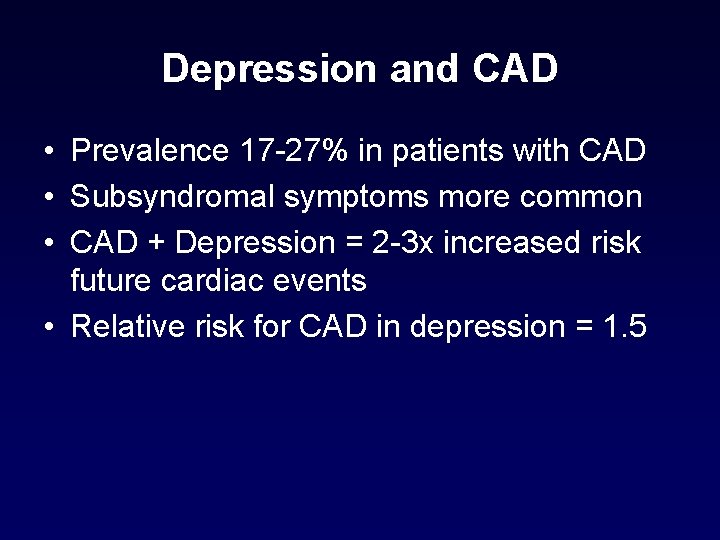
Depression and CAD • Prevalence 17 -27% in patients with CAD • Subsyndromal symptoms more common • CAD + Depression = 2 -3 x increased risk future cardiac events • Relative risk for CAD in depression = 1. 5
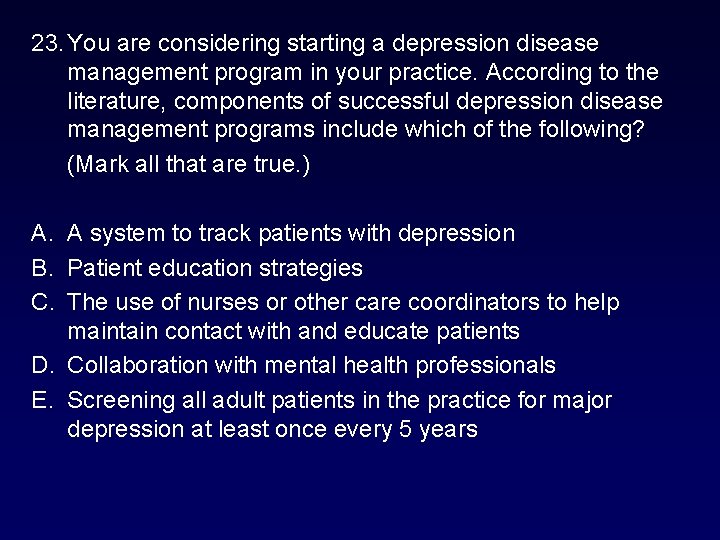
23. You are considering starting a depression disease management program in your practice. According to the literature, components of successful depression disease management programs include which of the following? (Mark all that are true. ) A. A system to track patients with depression B. Patient education strategies C. The use of nurses or other care coordinators to help maintain contact with and educate patients D. Collaboration with mental health professionals E. Screening all adult patients in the practice for major depression at least once every 5 years
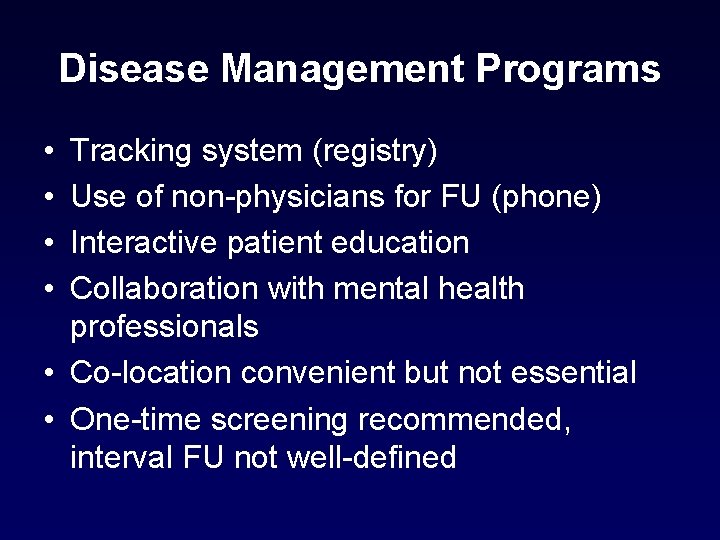
Disease Management Programs • • Tracking system (registry) Use of non-physicians for FU (phone) Interactive patient education Collaboration with mental health professionals • Co-location convenient but not essential • One-time screening recommended, interval FU not well-defined
24. True statements regarding the relationship between diabetes mellitus and depression include which of the following? (Mark all that are true. ) A. The presence of type 1 or type 2 diabetes doubles the likelihood of comorbid depression in adults B. In patients with comorbid depression and diabetes, the level of dietary compliance is inversely related to the severity of depressive symptoms C. Depression is associated with hyperglycemia in type 1 diabetes, but not type 2 diabetes D. Health care costs for patients with diabetes and comorbid depression are similar to the health care costs of nondepressed diabetic patients
Depression and Diabetes • Greater symptoms – Poorer adherence to meds – Poorer diet – Greater functional impairment – Higher healthcare costs • Associated with hyperglycemia in types 1 and 2 • Doubles odds of co-morbid depression
25. Physical and psychological stress have been found to be related to the pathophysiology of mood disorders. True statements regarding this process include which of the following? (Mark all that are true. ) A. The response to both physical and psychologic stress is mediated in part by the hypothalamic-pituitaryadrenocortical system B. Acute psychologic stress leads to a decrease in corticotropin-releasing factor (CRF), adrenocorticotropic hormone (ACTH), and cortisol levels C. Successful treatment of depression leads to a normalization of the hypothalamic-pituitary-adrenal system D. The dexamethasone suppression test is a useful clinical test for the presence of major depressive disorder
Physiologic Stress • Activates the HPA system • Elevated corticotropin-releasing hormone, adrenocorticotropic hormone, and cortisol • Antidepressant therapy normalizes cortisol • Dexamethasone suppression test inadequate sensitivity / specificity to be used in diagnosis
26. After a complete evaluation of a 76 -year-old woman with depression, you decide she needs to be treated. Her depression is moderately severe, and she has no other significant medical problems. True statements regarding her treatment include which of the following? (Mark all that are true. ) A. In mild to moderate depression, the effectiveness of antidepressant medication is roughly equal to that of short-term, focused psychological therapies B. Serotonergic antidepressants are significantly more effective than tricyclic antidepressants for moderate to severe major depression C. In general, tricyclic antidepressants have a much higher overall dropout rate than serotonergic agents D. Tricyclic antidepressants should generally not be used in elderly patients because of the higher side-effect related dropout rate compared to serotonergic agents E. Newer serotonergic agents should generally be avoided in the elderly because of the risk of drug interactions with the many medications usually taken by elderly patients
Depression and the Elderly • • Treatment not significantly different Therapy = Meds for mild/moderate Both recommended for severe TCAs = SSRIs – Discontinuation differences “modest” overall, BUT TCA side-effects > in elderly • SSRIs no greater drug-drug than others
27. Depression may affect the management of general medical illness for which of the following reasons. (Mark all that are true) A. Patients with aversive symptoms such as pain are at increased risk for developing depressive disorders B. Patients with depression may exhibit an increase in maladaptive interpersonal behaviors, making collaboration with the physician more difficult C. Patients with depression have higher rates of adverse health-risk behaviors when compared to non-depressed patients D. The medical cost of a chronic medical illness is reduced by comorbid depression
Chronic Medical Illness and Depression • Higher prevalence of MDD with CI – Direct pathophysiologic effects on brain – Indirect effects by cytokines / inflammatory factors – SE of meds can contribute to depression – Sx / complications of dz can contribute to depression
Chronic Medical Illness and Depression • Depression impacts Chronic Illness – Functional Impairment – Medical cost (50%) – Adverse health-risk behavior – Medical regimen non-adherence – Maladaptive personality traits (decreased trust) – Increased RF for developing specific diseases
28. When used at full therapeutic doses, which one of the following antidepressant medications can be discontinued without tapering in adults, with a low risk of side effects? A. Nortriptyline (Aventyl, Pamelor) B. Desipramine (Norpramin) C. Paroxetine (Paxil) D. Fluoxetine (Prozac) E. Sertraline (Zoloft)
Discontinuation Syndromes • Longer half-life = Less symptoms – Less common with fluoxetine (Prozac) – More common with paroxetine (Paxil), sertraline (Zoloft) XXXXXXXXXXXXXXX X
29. A 68 -year-old male with diabetes mellitus and hypertension has a past history of major depressive disorder but has not been depressed recently. He and his wife ask you about the possibility that his depression may return and become a significant problem. Which of the following would be accurate advice when discussing their concerns? (Mark all that are true. ) A. Depression is a normal part of the aging process and does not require treatment at this man’s age B. Depression that occurred more than 20 years ago does not increase the patient’s risk for a recurrence now C. Suicide risk is higher in elderly patients when depression is untreated, compared to the risk in untreated younger patients with depression D. Depression secondary to a chronic medical illness, such as myocardial infarction or diabetes mellitus, rarely requires treatment with an antidepressant and will remit as the chronic medical disease improves
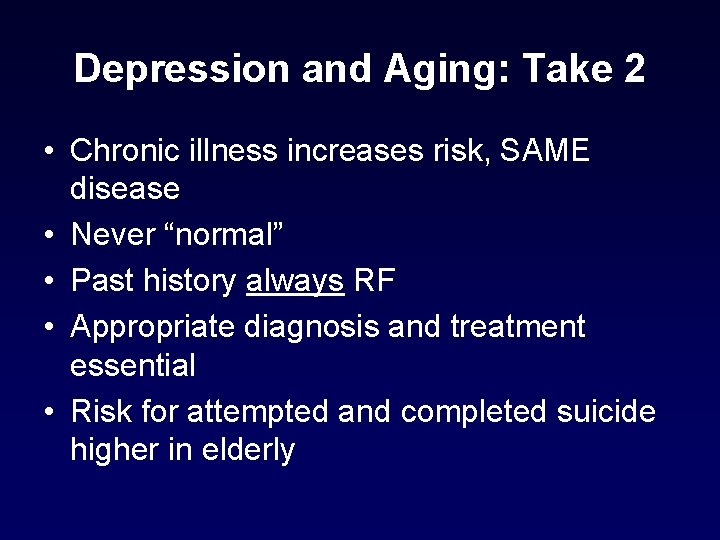
Depression and Aging: Take 2 • Chronic illness increases risk, SAME disease • Never “normal” • Past history always RF • Appropriate diagnosis and treatment essential • Risk for attempted and completed suicide higher in elderly
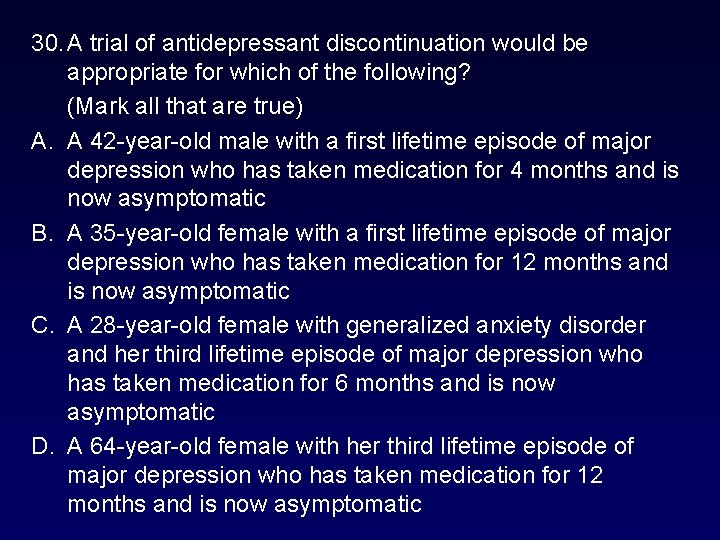
30. A trial of antidepressant discontinuation would be appropriate for which of the following? (Mark all that are true) A. A 42 -year-old male with a first lifetime episode of major depression who has taken medication for 4 months and is now asymptomatic B. A 35 -year-old female with a first lifetime episode of major depression who has taken medication for 12 months and is now asymptomatic C. A 28 -year-old female with generalized anxiety disorder and her third lifetime episode of major depression who has taken medication for 6 months and is now asymptomatic D. A 64 -year-old female with her third lifetime episode of major depression who has taken medication for 12 months and is now asymptomatic
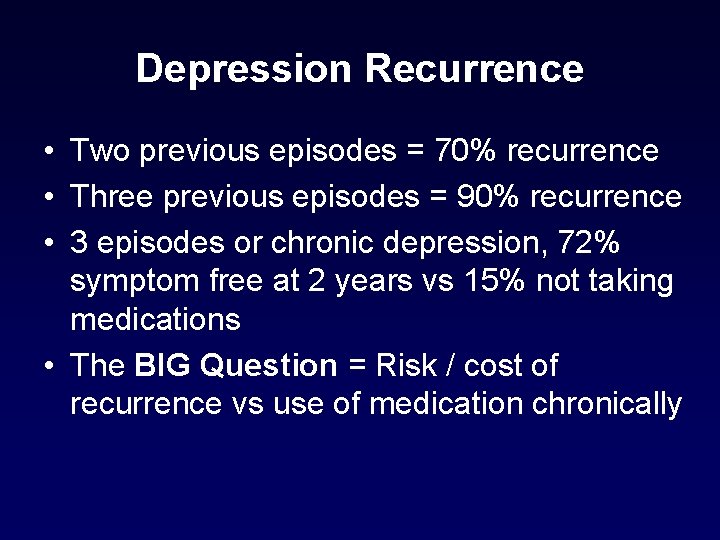
Depression Recurrence • Two previous episodes = 70% recurrence • Three previous episodes = 90% recurrence • 3 episodes or chronic depression, 72% symptom free at 2 years vs 15% not taking medications • The BIG Question = Risk / cost of recurrence vs use of medication chronically
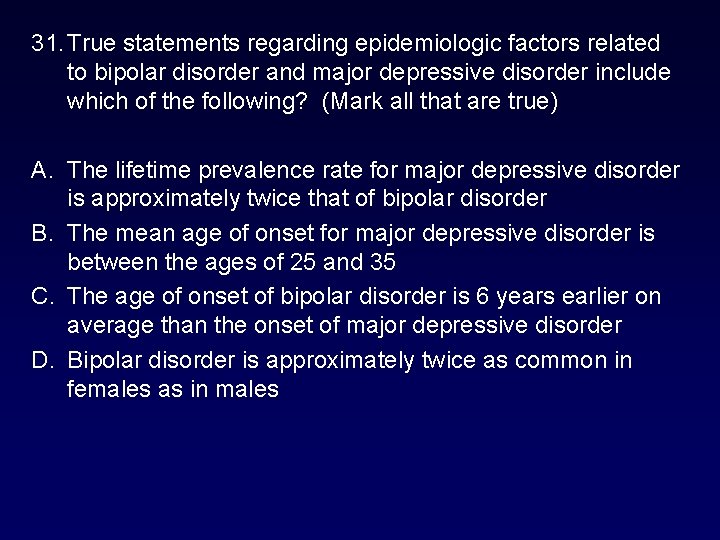
31. True statements regarding epidemiologic factors related to bipolar disorder and major depressive disorder include which of the following? (Mark all that are true) A. The lifetime prevalence rate for major depressive disorder is approximately twice that of bipolar disorder B. The mean age of onset for major depressive disorder is between the ages of 25 and 35 C. The age of onset of bipolar disorder is 6 years earlier on average than the onset of major depressive disorder D. Bipolar disorder is approximately twice as common in females as in males
Bipolar Disorder • Bipolar I – One or more manic or mixed episodes • Bipolar II – Hypomania and major depression • Cyclothymic – Numerous hypomanic and depressive episodes (not major depression)
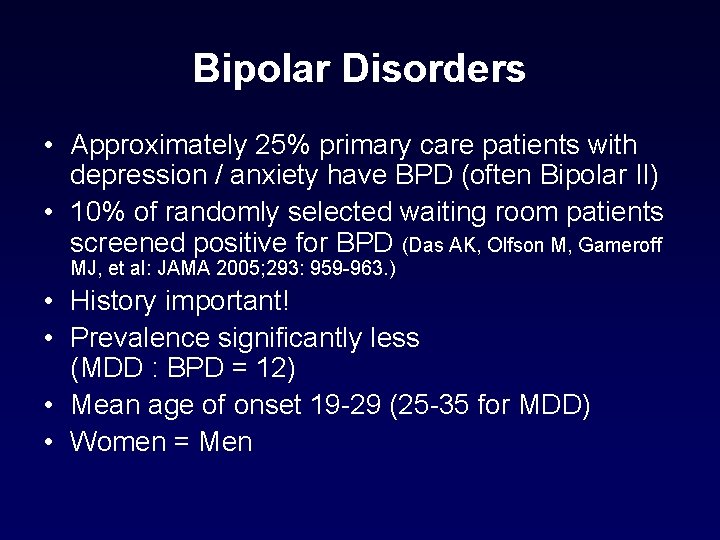
Bipolar Disorders • Approximately 25% primary care patients with depression / anxiety have BPD (often Bipolar II) • 10% of randomly selected waiting room patients screened positive for BPD (Das AK, Olfson M, Gameroff MJ, et al: JAMA 2005; 293: 959 -963. ) • History important! • Prevalence significantly less (MDD : BPD = 12) • Mean age of onset 19 -29 (25 -35 for MDD) • Women = Men
Bipolar Disorders - Misdiagnosis • Manic / hypomanic episodes • Rapid cycling (treatment refractory) • Mixed states with concurrent manic / depressed symptomatology • Increased morbidity / mortality
32. Which one of the following instruments allows simultaneous assessment of both DSM-IV depression criteria and symptom severity, and is useful for follow-up? A. The nine-item Patient Health Questionnaire (PHQ-9) B. The Beck Depression Inventory (BDI) C. The Center for Epidemiologic Studies Depression Screen (CES-D) D. The Zung Depression Scale (ZDS) E. The Primary Care Evaluation of Mental Disorders (PRIME -MD)
Depression Screening Instruments • All completed by patients < 5 minutes • Each gives patient severity score • PHQ-9 higher positive predictive value (PPV) = lowest false positive screens – Based on DSM-IV criteria
33. True statements regarding the treatment of major depression in adults include which of the following? (Mark all that are true. ) A. Psychotherapy and antidepressant medication are equally effective in patients with mild depression B. Psychotherapy is more effective than antidepressant medication for severe depression C. Combining psychotherapy and antidepressant medication in patients with mild to moderate depression is significantly more cost-effective than either treatment alone D. Interpersonal therapy (IPT) is the most effective form of psychotherapy E. Combining psychotherapy with antidepressant medication is likely to be more beneficial than either treatment alone in patients with severe depression
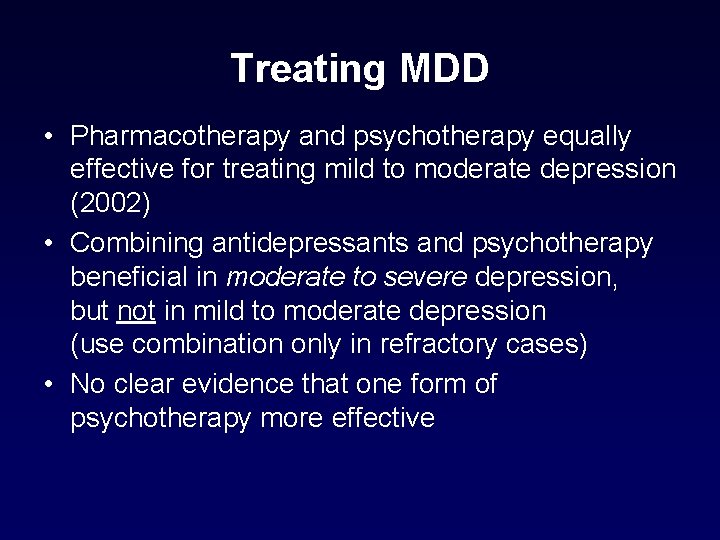
Treating MDD • Pharmacotherapy and psychotherapy equally effective for treating mild to moderate depression (2002) • Combining antidepressants and psychotherapy beneficial in moderate to severe depression, but not in mild to moderate depression (use combination only in refractory cases) • No clear evidence that one form of psychotherapy more effective
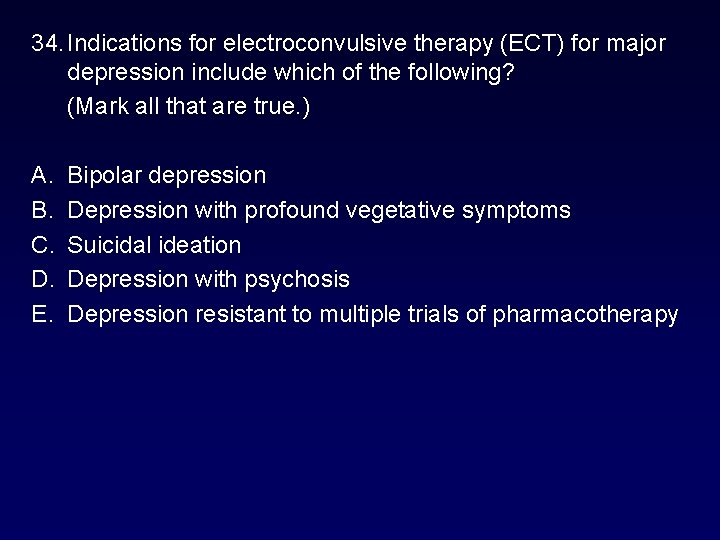
34. Indications for electroconvulsive therapy (ECT) for major depression include which of the following? (Mark all that are true. ) A. B. C. D. E. Bipolar depression Depression with profound vegetative symptoms Suicidal ideation Depression with psychosis Depression resistant to multiple trials of pharmacotherapy
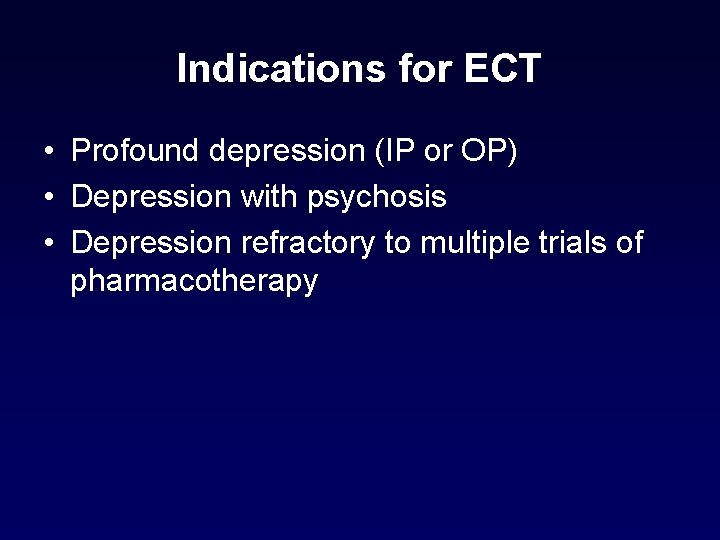
Indications for ECT • Profound depression (IP or OP) • Depression with psychosis • Depression refractory to multiple trials of pharmacotherapy
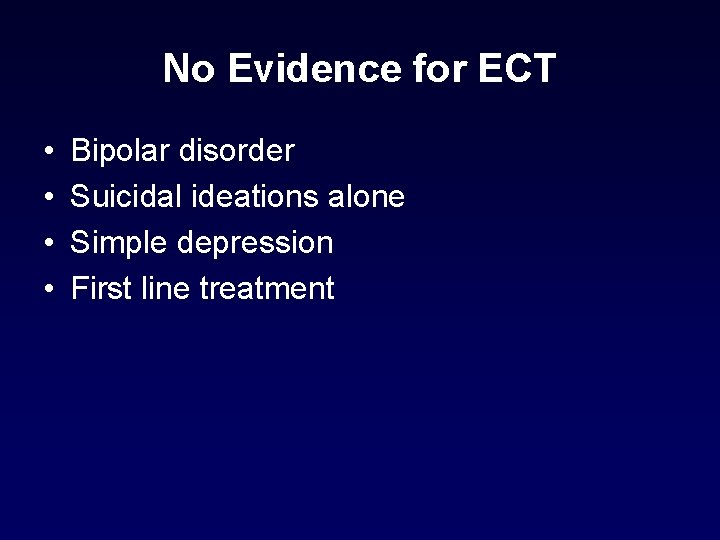
No Evidence for ECT • • Bipolar disorder Suicidal ideations alone Simple depression First line treatment
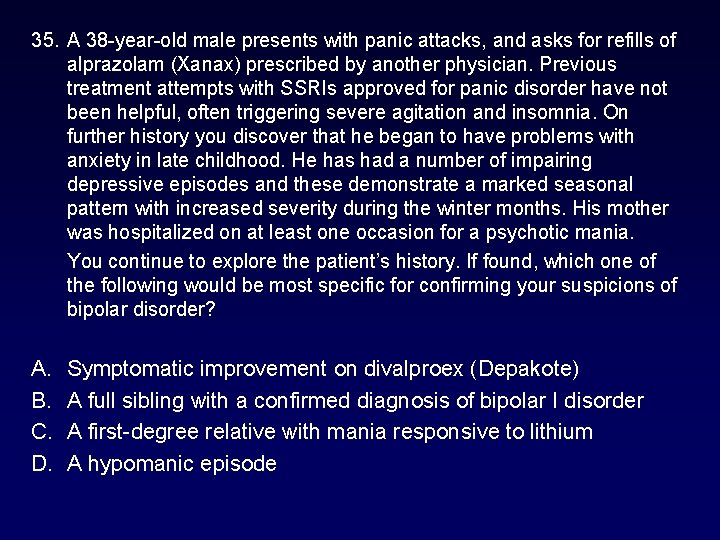
35. A 38 -year-old male presents with panic attacks, and asks for refills of alprazolam (Xanax) prescribed by another physician. Previous treatment attempts with SSRIs approved for panic disorder have not been helpful, often triggering severe agitation and insomnia. On further history you discover that he began to have problems with anxiety in late childhood. He has had a number of impairing depressive episodes and these demonstrate a marked seasonal pattern with increased severity during the winter months. His mother was hospitalized on at least one occasion for a psychotic mania. You continue to explore the patient’s history. If found, which one of the following would be most specific for confirming your suspicions of bipolar disorder? A. B. C. D. Symptomatic improvement on divalproex (Depakote) A full sibling with a confirmed diagnosis of bipolar I disorder A first-degree relative with mania responsive to lithium A hypomanic episode
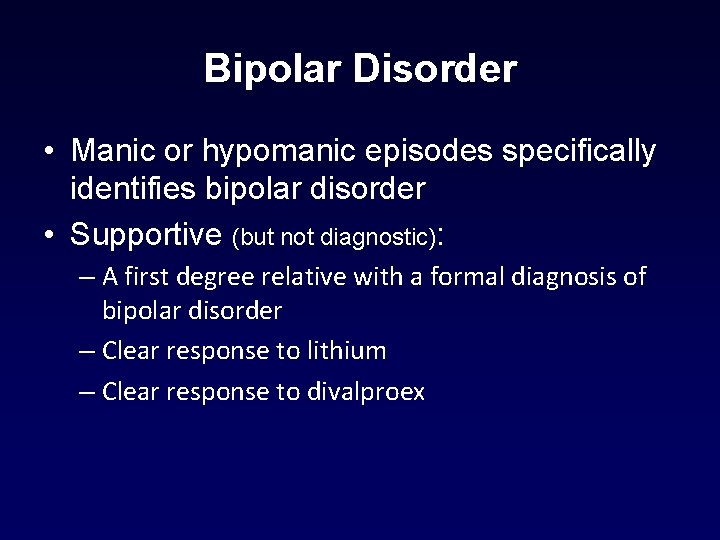
Bipolar Disorder • Manic or hypomanic episodes specifically identifies bipolar disorder • Supportive (but not diagnostic): – A first degree relative with a formal diagnosis of bipolar disorder – Clear response to lithium – Clear response to divalproex
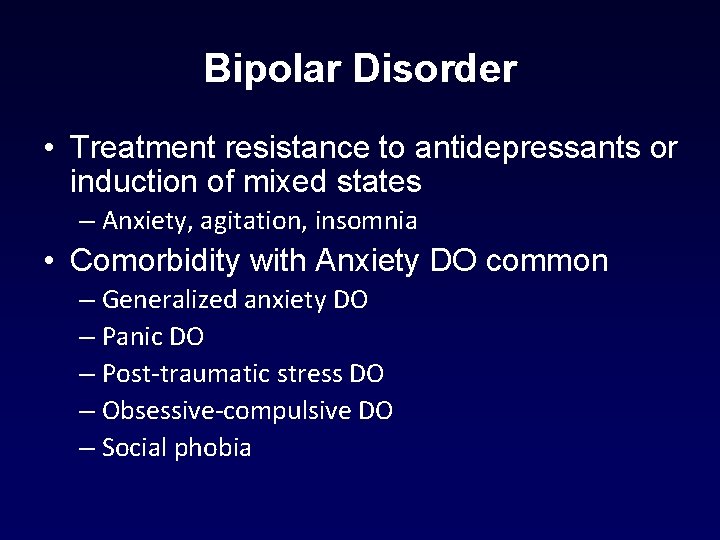
Bipolar Disorder • Treatment resistance to antidepressants or induction of mixed states – Anxiety, agitation, insomnia • Comorbidity with Anxiety DO common – Generalized anxiety DO – Panic DO – Post-traumatic stress DO – Obsessive-compulsive DO – Social phobia
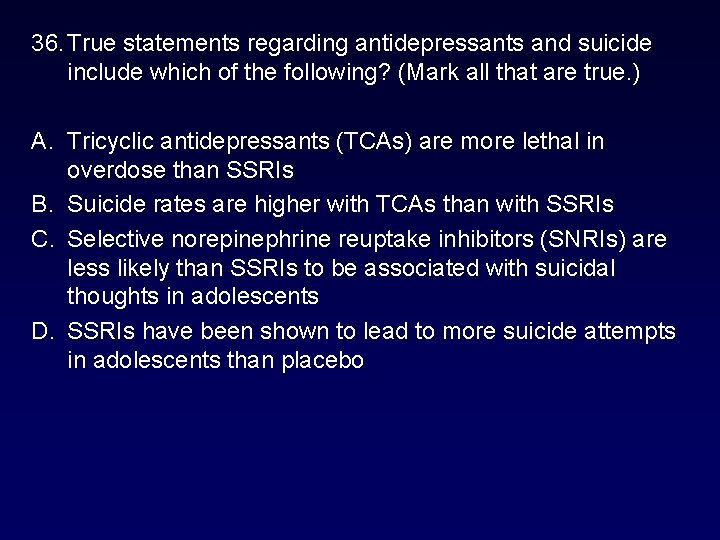
36. True statements regarding antidepressants and suicide include which of the following? (Mark all that are true. ) A. Tricyclic antidepressants (TCAs) are more lethal in overdose than SSRIs B. Suicide rates are higher with TCAs than with SSRIs C. Selective norepinephrine reuptake inhibitors (SNRIs) are less likely than SSRIs to be associated with suicidal thoughts in adolescents D. SSRIs have been shown to lead to more suicide attempts in adolescents than placebo
Antidepressants and Suicide • No one medication is associated with higher rates of attempted • Higher rate of completed suicide by overdose with TCA • Although FDA warns of increased suicidal thoughts in adolescents with SSRIs, no current evidence for increased attempts / completion
37. Which of the following disorders will respond to a medication that has its primary action on the serotonin and/or norepinephrine neurotransmitter systems? (Mark all that are true) A. B. C. D. E. Dysthymic disorder Fibromyalgia Schizophrenia Irritable bowel syndrome Attention deficit / hyperactivity disorder
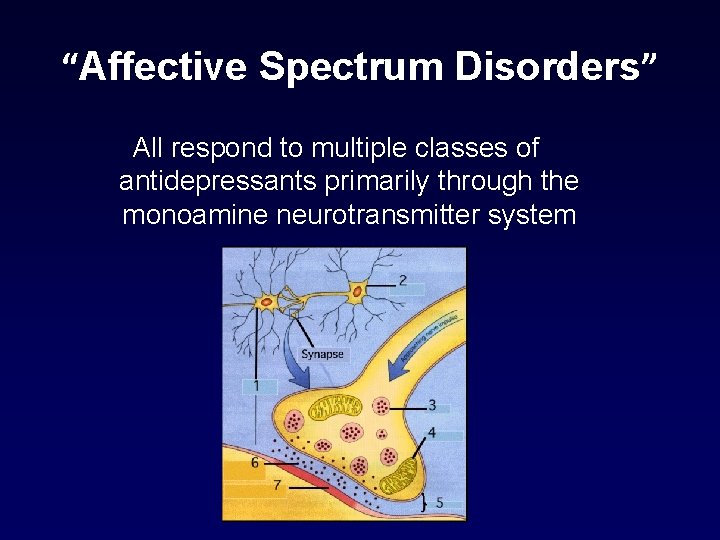
Affective Spectrum Disorders • • Major Depressive DO ADHD Bulimia nervosa Dysthymic DO Fibromyalgia OCD Panic DO Socia phobia • Generalized anxiety DO • Irritable Bowel Syndrome • Migraine • PTSD • Premenstrual dysphoric DO
Affective Spectrum Disorders • All share common set of causal factors • All respond to multiple classes of antidepressant medications (monoamine neurotransmitter system)
38. Appropriate advice for patients when first prescribing antidepressants for major depression includes which of the following? (Mark all that are true) A. Antidepressants should be stopped as soon as any side effects are noted B. Antidepressant side effects such as nausea, anxiety, and dry mouth are likely to persist for 6 -12 weeks C. Antidepressants should be continued even after symptoms of depression have resolved D. If the full effect of medication has not been reached after 4 weeks, a medication change will be necessary
Antidepressant Therapy • Only 70 -75% continue antidepressants for 3 months • Only 50 -60% continue for 6 months • Many SE such as nausea, dry mouth, and anxiety are mild and will abate with continued treatment • Full effect may not be achieved for 6 -8 weeks or longer (some sx sooner) • Many d/c medication when symptoms improve
Antidepressant Therapy Improving Adherence • Specific Instruction = Improved Adherence – Purpose of medication – What to expect in terms of symptom improvement – Common side effects, many transient – Duration of therapy – Do not discontinue without discussing
39. You have made a diagnosis of severe depression in a 30 -year-old woman who is early in the third trimester of her first pregnancy. Which of the following would be accurate advice regarding the risk of taking antidepressants during the remainder of her pregnancy? (Mark all that are true) A. If she takes an SSRI, her baby might develop a syndrome consisting of irritability, abnormal crying, tachypnea, thermal instability, and poor muscle tone B. If she takes an SSRI her baby is likely to be slightly larger than babies born to mothers who did not take antidepressants C. She should stop any antidepressant a few weeks before her anticipated due date to prevent a neonatal withdrawal syndrome D. There is a small but significant risk of a withdrawal syndrome in newborns if serotonergic antidepressants are taken during the third trimester of pregnancy E. SSRI use in the third trimester has been linked to the development of persistent pulmonary hypertension of the newborn
Depression in Pregnancy • No teratogenic effect of Rx in pregnancy (paroxetine category D) • “Behavioral withdrawal syndrome” 2 -3 times as often mothers treated with antidepressants c/w infants of mothers not taking antidepressants • The absolute incidence = 5%-10%
Behavioral Withdrawal Syndrome • • Irritability Jitteriness Poor feeding Abnormal crying Poor muscle tone, Usually mild / transient No long-term sequellae
Depression in Pregnancy • If there is strong benefit from treatment, stopping the antidepressant before delivery is not appropriate because the withdrawal syndrome is mild and transient. • Maternal use of SSRIs in late pregnancy has been linked to the possible development of persistent pulmonary hypertension of the newborn.
40. Which one of the following is true regarding the Beck Depression Inventory (BDI), the Zung Depression Scale (ZDS), the Center for Epidemiologic Studies Depression screen (CES-D), and the nine-item Patient Health Questionnaire (PHQ-9)? A. They can be performed by the patient alone, and take 5 minutes or less B. They can be performed by the patient alone, and take 10 minutes or more C. They must be administered by a trained or lay interviewer, and take 5 minutes or less D. They must be administered by a trained or lay interviewer, and take 10 minutes or more
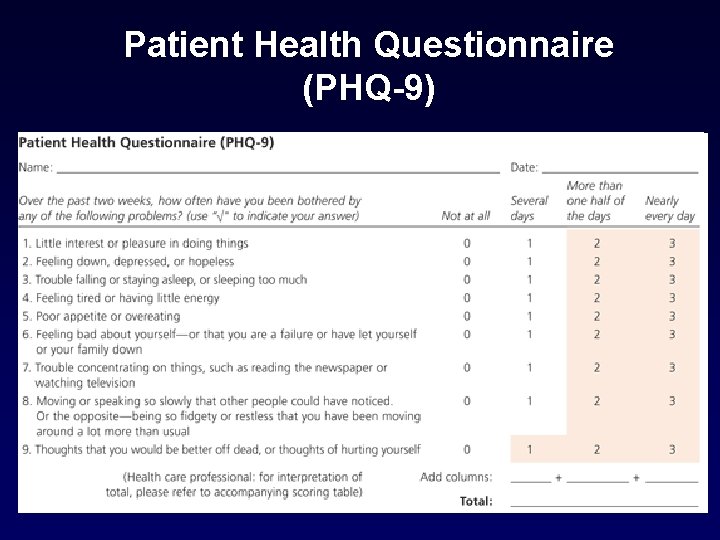
Patient Health Questionnaire (PHQ-9)
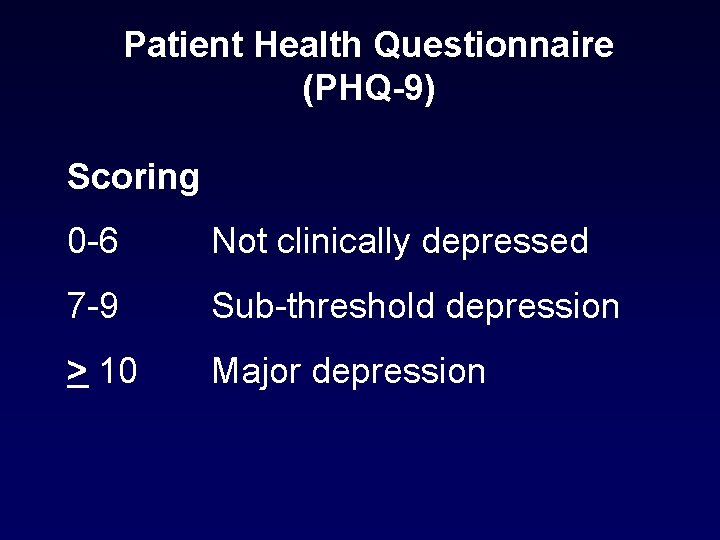
Patient Health Questionnaire (PHQ-9) Scoring 0 -6 Not clinically depressed 7 -9 Sub-threshold depression > 10 Major depression
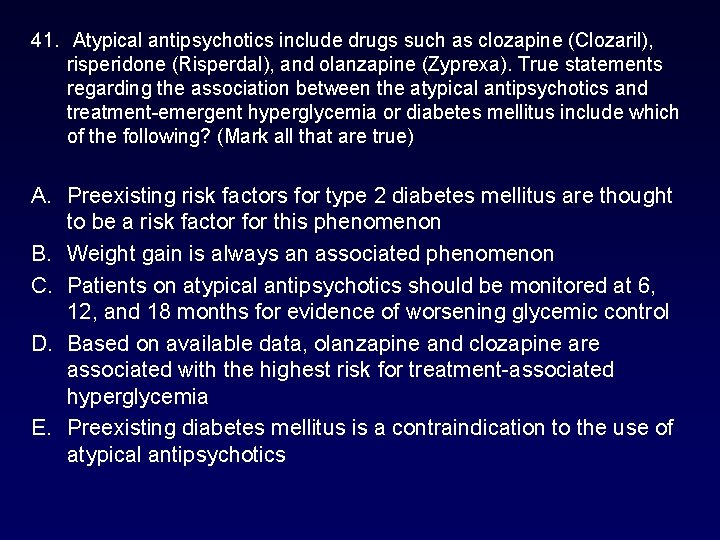
41. Atypical antipsychotics include drugs such as clozapine (Clozaril), risperidone (Risperdal), and olanzapine (Zyprexa). True statements regarding the association between the atypical antipsychotics and treatment-emergent hyperglycemia or diabetes mellitus include which of the following? (Mark all that are true) A. Preexisting risk factors for type 2 diabetes mellitus are thought to be a risk factor for this phenomenon B. Weight gain is always an associated phenomenon C. Patients on atypical antipsychotics should be monitored at 6, 12, and 18 months for evidence of worsening glycemic control D. Based on available data, olanzapine and clozapine are associated with the highest risk for treatment-associated hyperglycemia E. Preexisting diabetes mellitus is a contraindication to the use of atypical antipsychotics
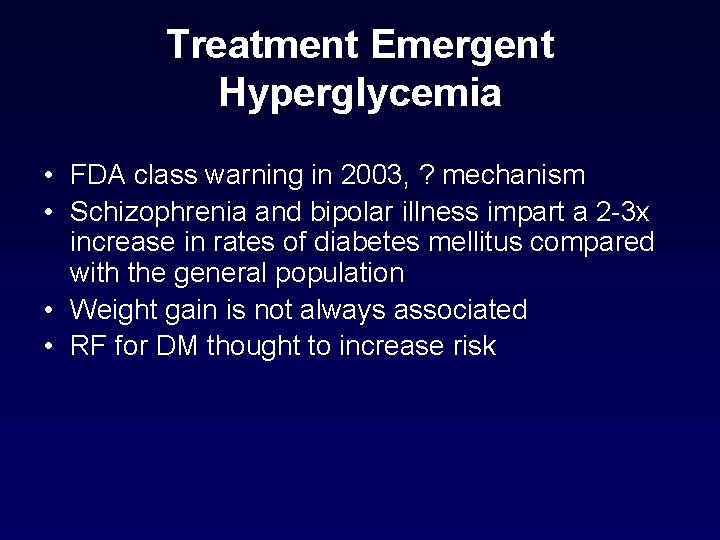
Treatment Emergent Hyperglycemia • FDA class warning in 2003, ? mechanism • Schizophrenia and bipolar illness impart a 2 -3 x increase in rates of diabetes mellitus compared with the general population • Weight gain is not always associated • RF for DM thought to increase risk
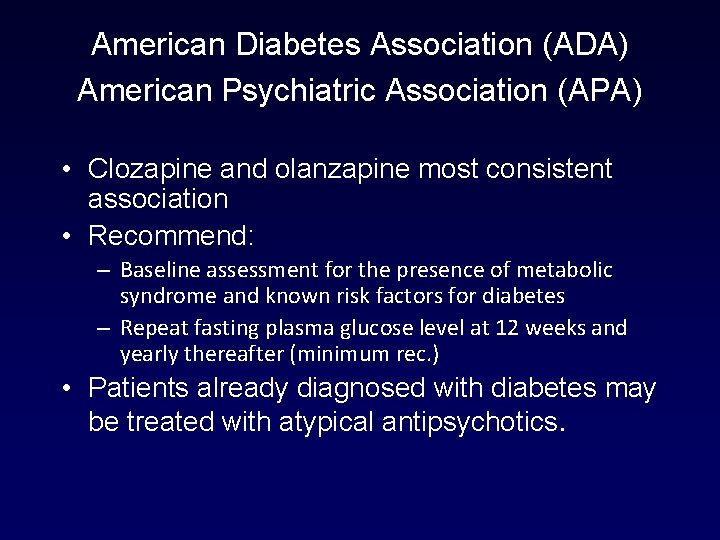
American Diabetes Association (ADA) American Psychiatric Association (APA) • Clozapine and olanzapine most consistent association • Recommend: – Baseline assessment for the presence of metabolic syndrome and known risk factors for diabetes – Repeat fasting plasma glucose level at 12 weeks and yearly thereafter (minimum rec. ) • Patients already diagnosed with diabetes may be treated with atypical antipsychotics.
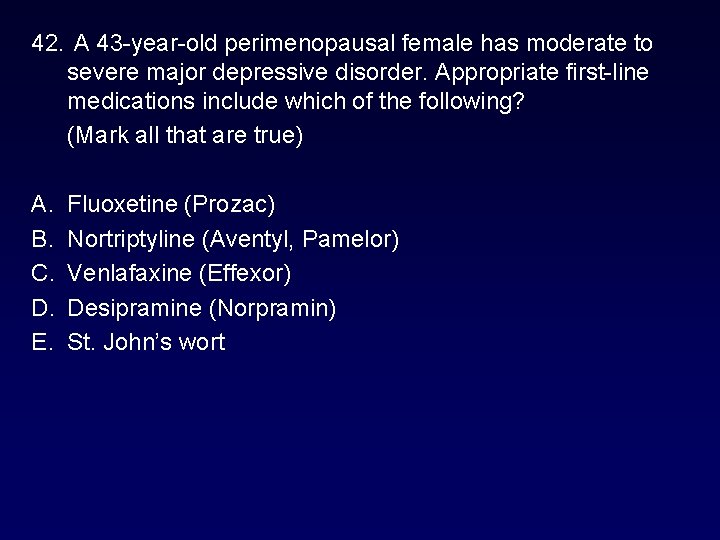
42. A 43 -year-old perimenopausal female has moderate to severe major depressive disorder. Appropriate first-line medications include which of the following? (Mark all that are true) A. B. C. D. E. Fluoxetine (Prozac) Nortriptyline (Aventyl, Pamelor) Venlafaxine (Effexor) Desipramine (Norpramin) St. John’s wort
Major Depression • Tricyclic antidepressants, SSRIs, and newer antidepressants equally effective • St. John’s Wort – Data mixed, some improvement mild depressive syndromes – Lack of standardization – Should not be used in patients with moderatesevere depression
43. Temperament characteristics associated with a bipolar II outcome in patients initially presenting with an episode of major depression include which of the following? (Mark all that are true) A. Lability of mood B. Excessive use of denial as an ego defense C. A tendency to engage in intense fantasy or daydreaming D. Social anxiety E. A high energy level
Bipolar Disorders • Bipolar I – One or more manic or mixed episodes • Bipolar II – Hypomania and major depression • Cyclothymic – Numerous hypomanic and depressive episodes (not major depression)
MDD to BPD • 12% with a MDD diagnosed with bipolar illness (usually bipolar II) over 11 year FU • The early-onset (earlier than age 18) traits that identified risk for bipolar outcome: – Mood lability (most specific = 86%) – Energetic activity – Tendency to engage in intense fantasy and daydreaming – Social anxiety Akiskal HS et al Arch Gen Psychiatry 1995
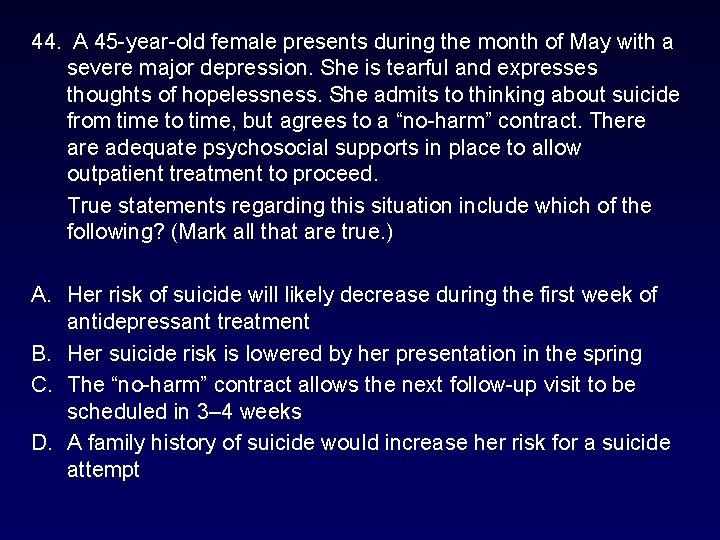
44. A 45 -year-old female presents during the month of May with a severe major depression. She is tearful and expresses thoughts of hopelessness. She admits to thinking about suicide from time to time, but agrees to a “no-harm” contract. There adequate psychosocial supports in place to allow outpatient treatment to proceed. True statements regarding this situation include which of the following? (Mark all that are true. ) A. Her risk of suicide will likely decrease during the first week of antidepressant treatment B. Her suicide risk is lowered by her presentation in the spring C. The “no-harm” contract allows the next follow-up visit to be scheduled in 3– 4 weeks D. A family history of suicide would increase her risk for a suicide attempt
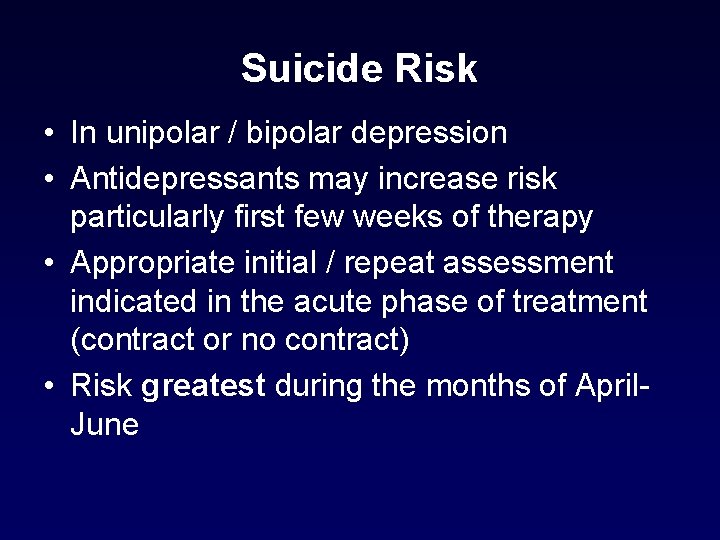
Suicide Risk • In unipolar / bipolar depression • Antidepressants may increase risk particularly first few weeks of therapy • Appropriate initial / repeat assessment indicated in the acute phase of treatment (contract or no contract) • Risk greatest during the months of April. June
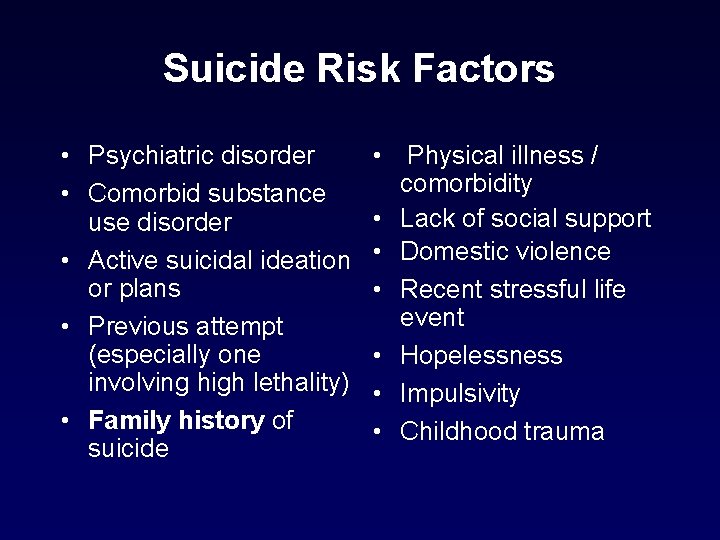
Suicide Risk Factors • Psychiatric disorder • Comorbid substance use disorder • Active suicidal ideation or plans • Previous attempt (especially one involving high lethality) • Family history of suicide • Physical illness / comorbidity • Lack of social support • Domestic violence • Recent stressful life event • Hopelessness • Impulsivity • Childhood trauma
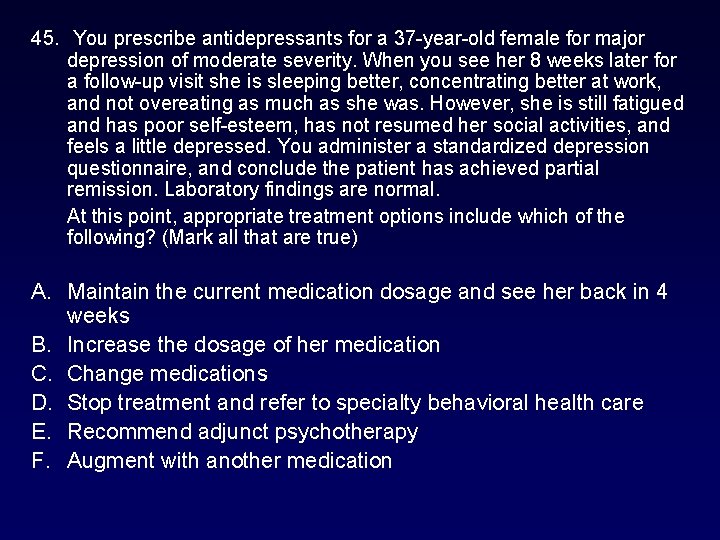
45. You prescribe antidepressants for a 37 -year-old female for major depression of moderate severity. When you see her 8 weeks later for a follow-up visit she is sleeping better, concentrating better at work, and not overeating as much as she was. However, she is still fatigued and has poor self-esteem, has not resumed her social activities, and feels a little depressed. You administer a standardized depression questionnaire, and conclude the patient has achieved partial remission. Laboratory findings are normal. At this point, appropriate treatment options include which of the following? (Mark all that are true) A. Maintain the current medication dosage and see her back in 4 weeks B. Increase the dosage of her medication C. Change medications D. Stop treatment and refer to specialty behavioral health care E. Recommend adjunct psychotherapy F. Augment with another medication
Treatment Resistant Depression ? • STAR*D trial - many patients did not achieve response at 8 weeks • Many subsequently did respond, raising question of how to manage slow response - change meds? Continue Rx? How long?
Kaiser Permanente 2006 Guidelines for Treatment of Major Depression in Primary Care • Combine antidepressants & psychotherapy • Increase dosage of the initial antidepressant • Combine treatment with SSRIs and low-dose desipramine • Switch to a different antidepressant of the same or a different class • ugment with low-dose lithium (300 -600 mg/day)
Treatment of Major Depression in Primary Care • KP Guideline found weak evidence for – increasing the dosage of the initial antidepressant – switching antidepressants – augmenting with low-dose lithium • BMJ Clinical Evidence found insufficient evidence to recommend the addition of lithium (effective in STAR*D Trial)
Treatment of Major Depression in Primary Care • Combining antidepressants should be done carefully • Monitor for: – serotinergic side effects – tricyclic toxicity (cardiac arrhythmias)
46. Deficiencies in which of the following neurotransmitters have been linked to the development of depression? (Mark all that are true) A. Dopamine B. Norepinephrine C. Acetylcholine D. Serotonin E. Histamine
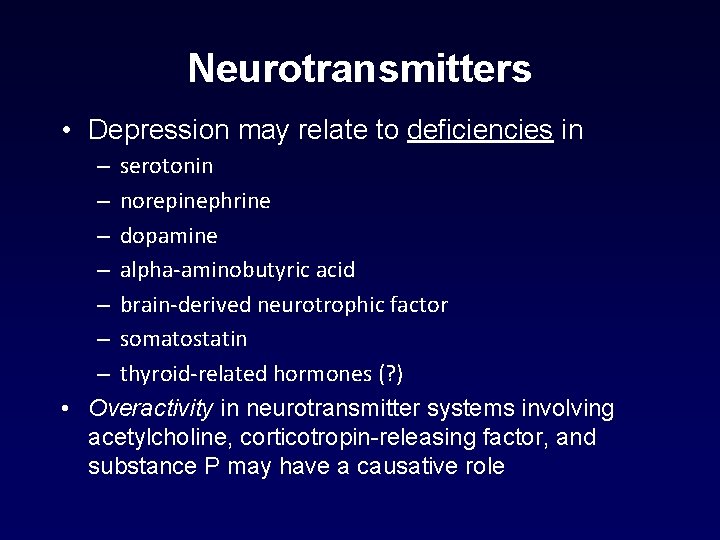
Neurotransmitters • Depression may relate to deficiencies in – serotonin – norepinephrine – dopamine – alpha-aminobutyric acid – brain-derived neurotrophic factor – somatostatin – thyroid-related hormones (? ) • Overactivity in neurotransmitter systems involving acetylcholine, corticotropin-releasing factor, and substance P may have a causative role
47. True statements regarding the relationship of depression to general medical illness include which of the following? (Mark all that are true) A. Chronic medical illness is a risk factor for major depressive disorder B. Depression is a significant side effect of a wide range of medications used to treat medical illnesses C. Patients with neurologic illnesses have a low baseline prevalence of major depressive disorder D. Rheumatoid factor has been found to have a major direct pathophysiologic effect on the brain, which can lead to secondary depression E. Depression can adversely affect the doctor-patient relationship
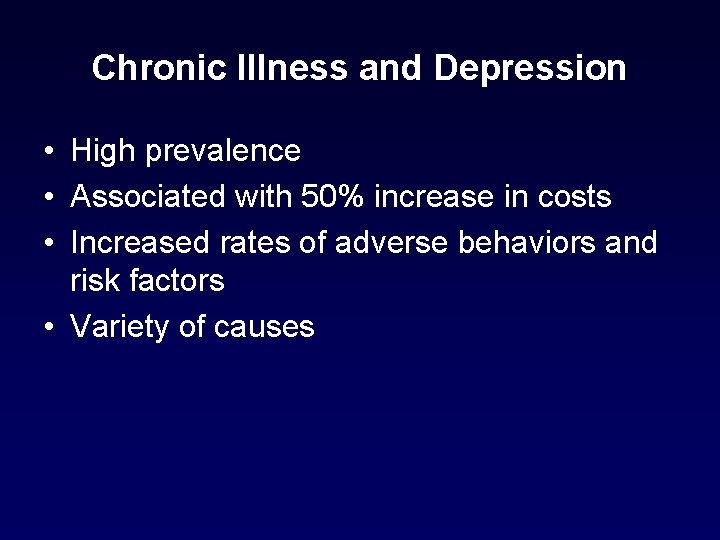
Chronic Illness and Depression • High prevalence • Associated with 50% increase in costs • Increased rates of adverse behaviors and risk factors • Variety of causes
Chronic Illness and Depression • Direct pathophysiologic effects on the brain, as in neurologic illness • Indirect pathophysiologic effects on the brain, mediated by cytokines or other inflammatory factors • Risk factor for the development of some specific diseases • Secondary psychological reaction to the complications or aversive symptoms of the disease • Depression may be a side effect of medications used to treat medical illnesses
48. True statements regarding monoamine oxidase inhibitors (MAOIs) include which of the following? (Mark all that are true) A. MAOIs are more effective than SSRIs for patients with typical symptoms of major depression (insomnia, decreased appetite) B. MAOIs may be more effective than tricyclic antidepressants in patients with atypical symptoms of major depression (hypersomnia, increased appetite) C. MAOIs may precipitate hypertensive crisis when combined with certain foods or medications D. MAOIs are safe to use in combination with SSRIs
MAO Inhibitors • Two systematic reviews – TCAs = MAOIs (1995) – TCAs = SSRIs > MAOIs severe depression EXCEPT MAOIs > TCAs atypical sx, including hypersomnia, increased appetite (2000) • MAOIs can interact with SSRIs, meperidine, tyramine rich foods (red wines, preserved cheeses) = Hypertensive Crisis
49. Primary care patients with medical disorders may suffer from comorbid subsyndromal depressive disorders, as well as comorbid full-criteria DSM-IV Axis I depressive disorders. True statements regarding these patients include which of the following? (Mark all that are true. ) A. Patients with comorbid depressive disorders have significantly higher baseline health care costs than patients without depressive disorders B. Patients with comorbid depressive disorders have health care costs similar to those of patients without these comorbidities when severity of medical illness is factored in C. Both major depressive disorder and subsyndromal depression are associated with significant functional impairment in primary care settings D. Subsyndromal depression is less prevalent than full-criteria major depressive disorder in primary care settings
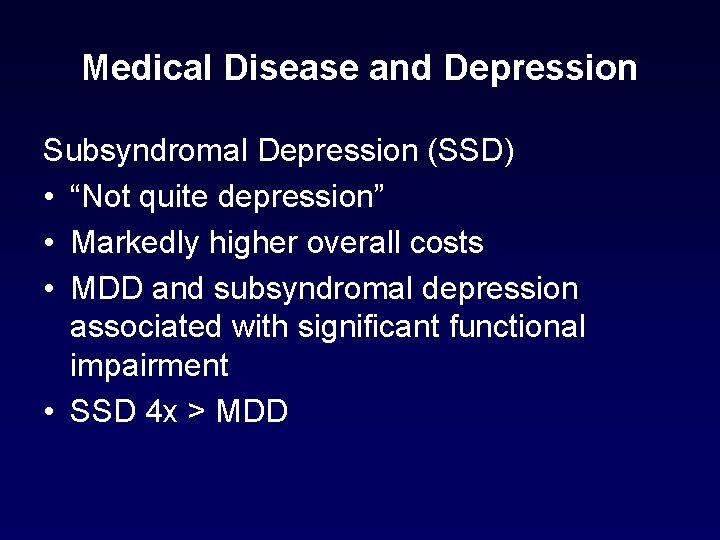
Medical Disease and Depression Subsyndromal Depression (SSD) • “Not quite depression” • Markedly higher overall costs • MDD and subsyndromal depression associated with significant functional impairment • SSD 4 x > MDD
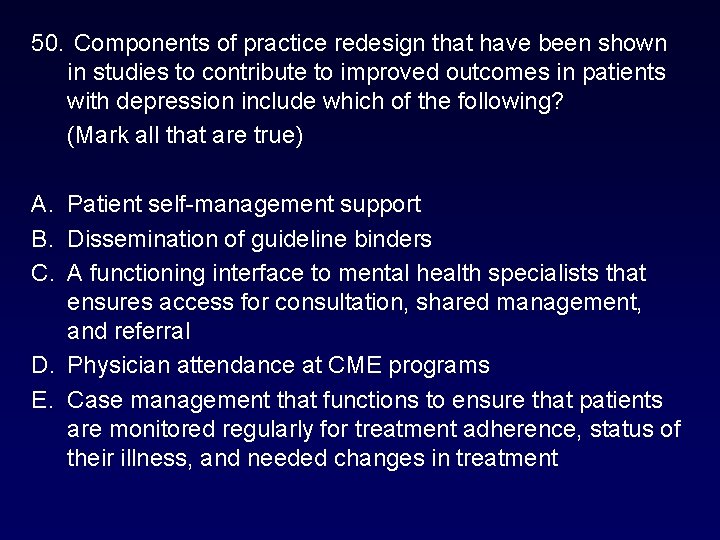
50. Components of practice redesign that have been shown in studies to contribute to improved outcomes in patients with depression include which of the following? (Mark all that are true) A. Patient self-management support B. Dissemination of guideline binders C. A functioning interface to mental health specialists that ensures access for consultation, shared management, and referral D. Physician attendance at CME programs E. Case management that functions to ensure that patients are monitored regularly for treatment adherence, status of their illness, and needed changes in treatment
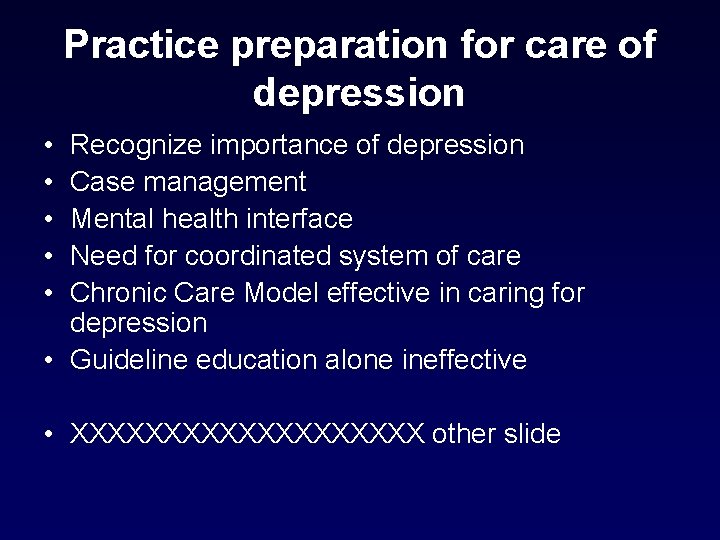
Practice preparation for care of depression • • • Recognize importance of depression Case management Mental health interface Need for coordinated system of care Chronic Care Model effective in caring for depression • Guideline education alone ineffective • XXXXXXXXXX other slide
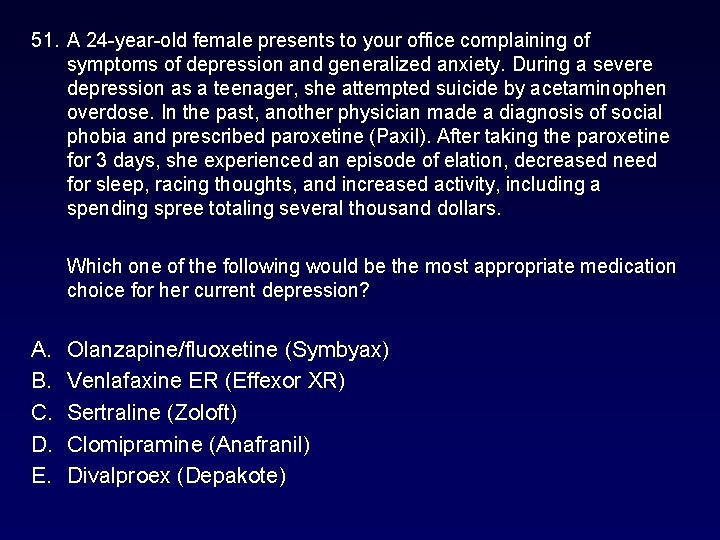
51. A 24 -year-old female presents to your office complaining of symptoms of depression and generalized anxiety. During a severe depression as a teenager, she attempted suicide by acetaminophen overdose. In the past, another physician made a diagnosis of social phobia and prescribed paroxetine (Paxil). After taking the paroxetine for 3 days, she experienced an episode of elation, decreased need for sleep, racing thoughts, and increased activity, including a spending spree totaling several thousand dollars. Which one of the following would be the most appropriate medication choice for her current depression? A. B. C. D. E. Olanzapine/fluoxetine (Symbyax) Venlafaxine ER (Effexor XR) Sertraline (Zoloft) Clomipramine (Anafranil) Divalproex (Depakote)
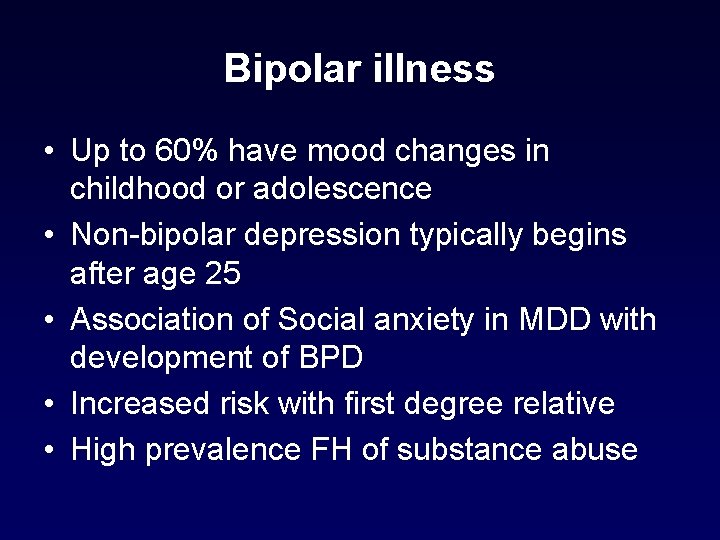
Bipolar illness • Up to 60% have mood changes in childhood or adolescence • Non-bipolar depression typically begins after age 25 • Association of Social anxiety in MDD with development of BPD • Increased risk with first degree relative • High prevalence FH of substance abuse
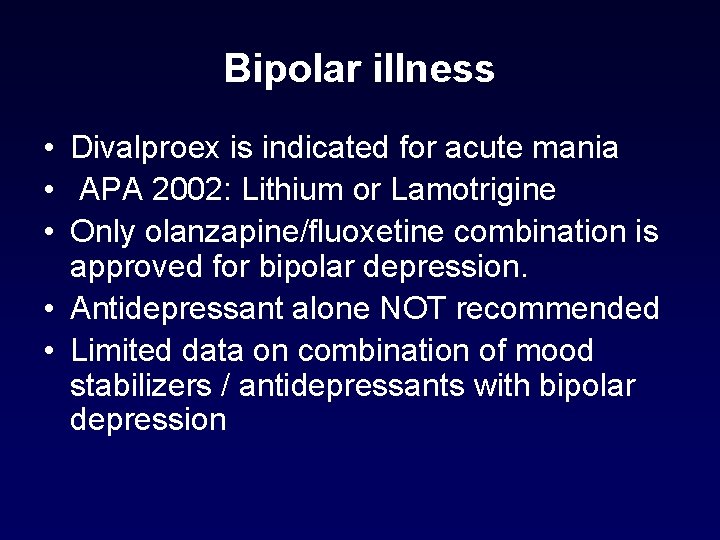
Bipolar illness • Divalproex is indicated for acute mania • APA 2002: Lithium or Lamotrigine • Only olanzapine/fluoxetine combination is approved for bipolar depression. • Antidepressant alone NOT recommended • Limited data on combination of mood stabilizers / antidepressants with bipolar depression
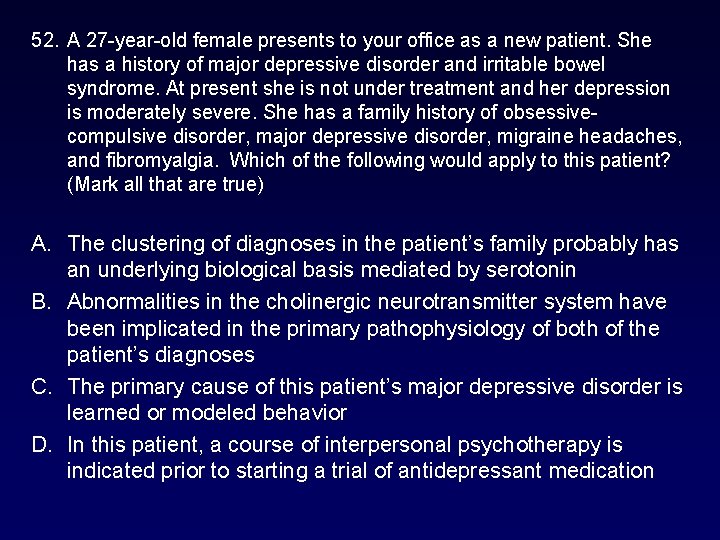
52. A 27 -year-old female presents to your office as a new patient. She has a history of major depressive disorder and irritable bowel syndrome. At present she is not under treatment and her depression is moderately severe. She has a family history of obsessivecompulsive disorder, major depressive disorder, migraine headaches, and fibromyalgia. Which of the following would apply to this patient? (Mark all that are true) A. The clustering of diagnoses in the patient’s family probably has an underlying biological basis mediated by serotonin B. Abnormalities in the cholinergic neurotransmitter system have been implicated in the primary pathophysiology of both of the patient’s diagnoses C. The primary cause of this patient’s major depressive disorder is learned or modeled behavior D. In this patient, a course of interpersonal psychotherapy is indicated prior to starting a trial of antidepressant medication
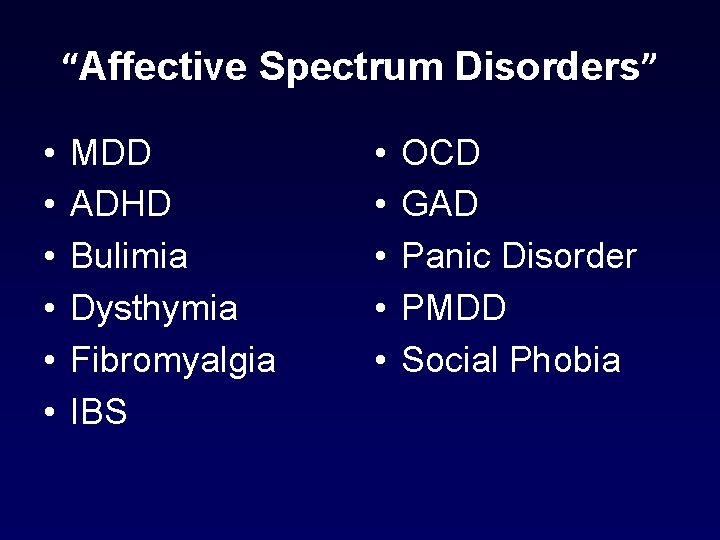
“Affective Spectrum Disorders” • • • MDD ADHD Bulimia Dysthymia Fibromyalgia IBS • • • OCD GAD Panic Disorder PMDD Social Phobia
“Affective Spectrum Disorders” All respond to multiple classes of antidepressants primarily through the monoamine neurotransmitter system
53. True statements regarding major depressive disorder include which of the following? (Mark all that are true) A. Patients with major depressive disorder have high levels of psychiatric comorbidity B. The mean duration of an episode of untreated major depression is 8 weeks C. Over 50% of non-institutionalized patients with major depressive disorder receive appropriate evidence-based treatment D. The risk of developing major depressive disorder is highest in the preteen years
Major Depression • • • Usually begins around age 30 Most common age 45 - 64 High levels of psychiatric comorbidity High levels of role impairment National Comorbidity Study - 22% received appropriate treatment • Mean episode duration was 16 weeks
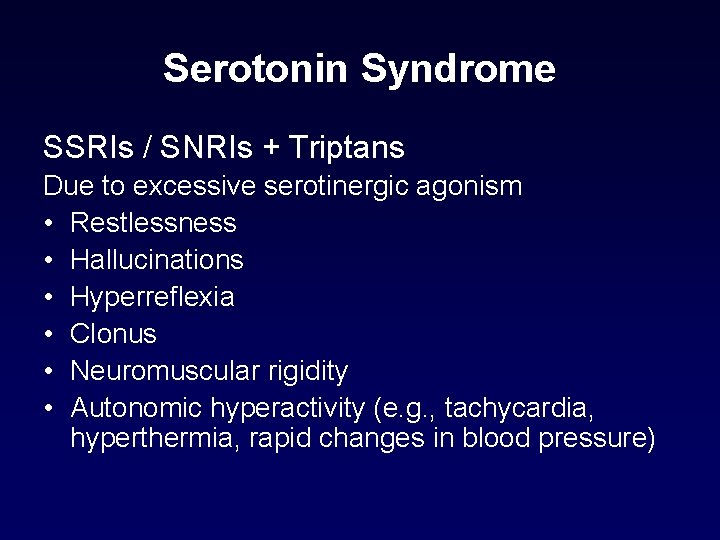
54. A 21 -year-old female is diagnosed with common migraine headaches. She has a history of recurrent major depression well-controlled on citalopram (Celexa). Which one of the following medications used for the treatment of migraine would increase her risk of developing serotonin syndrome? A. Propranolol (Inderal) B. Topiramate (Topamax) C. Dihydroergotamine D. Divalproex (Depakote) E. Sumatriptan (Imitrex)
Serotonin Syndrome SSRIs / SNRIs + Triptans Due to excessive serotinergic agonism • Restlessness • Hallucinations • Hyperreflexia • Clonus • Neuromuscular rigidity • Autonomic hyperactivity (e. g. , tachycardia, hyperthermia, rapid changes in blood pressure)
55. Which one of the following is the strongest risk factor for the development of major depression in the elderly? A. B. C. D. A personal history of major depression The onset of a new chronic disease The death of a spouse A marked decrease in the independent activities of daily living (IADL) score
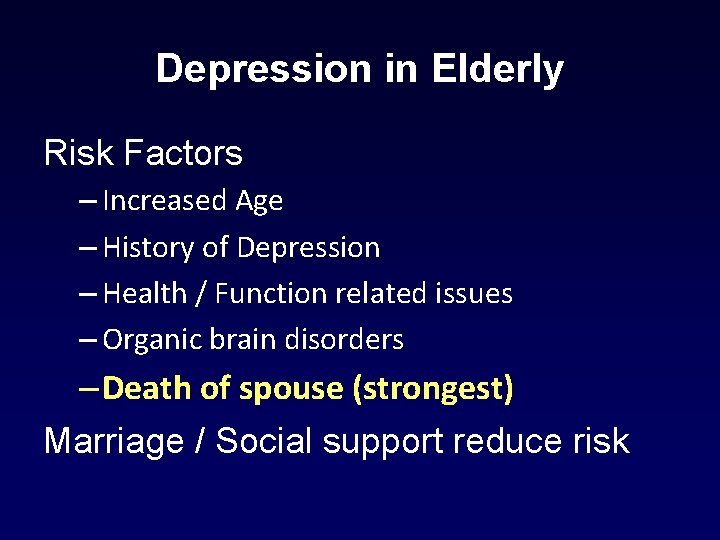
Depression in Elderly Risk Factors – Increased Age – History of Depression – Health / Function related issues – Organic brain disorders – Death of spouse (strongest) Marriage / Social support reduce risk
56. A 28 -year-old female presents with the onset of sadness and tearfulness over the past month. Questioning reveals that her husband is annoyed with her for not wanting to go out like she used to. She is also having difficulty sleeping despite feeling tired almost constantly, has almost stopped eating due to lack of interest, and is feeling guilty over letting her family down because of her tiredness. You diagnose acute major depressive disorder and begin medication after discussing treatment options with the patient. Which one of the following would be most appropriate for monitoring the patient’s condition during the acute phase of the depression? A. Scheduling office visits with you at all monitoring points to ensure adequate assessment of response B. A visit or phone call by your staff at 1 week to ask general questions about adherence and side effects C. Phone calls by a staff member that include assessment of the patient’s progress with a standardized depression assessment instrument D. Required referral to a central case management service to assess the patient’s progress E. An agreement with the patient that she should call in at intervals of 2, 4, and 6 weeks to let your nurse know how she is doing
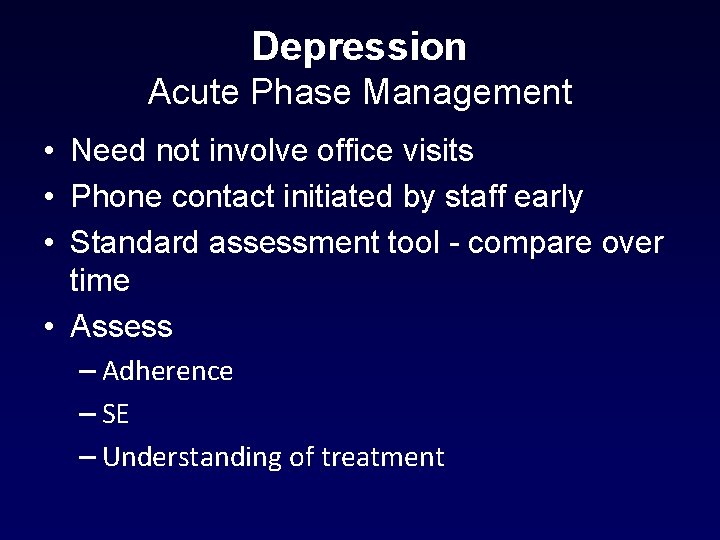
Depression Acute Phase Management • Need not involve office visits • Phone contact initiated by staff early • Standard assessment tool - compare over time • Assess – Adherence – SE – Understanding of treatment
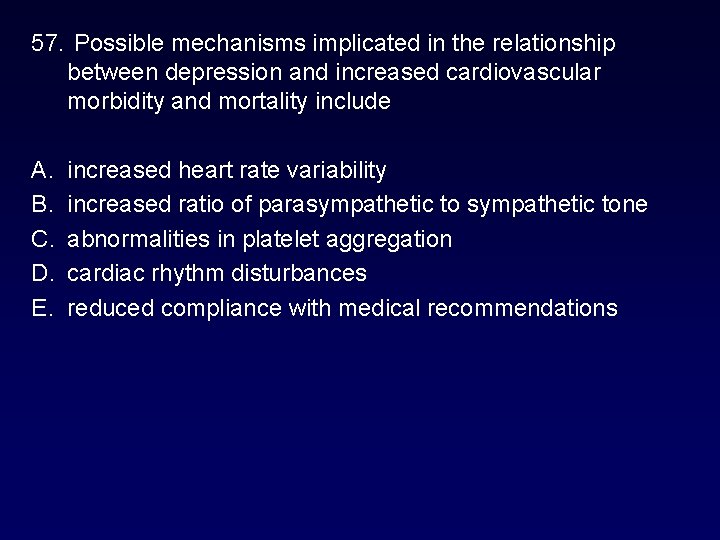
57. Possible mechanisms implicated in the relationship between depression and increased cardiovascular morbidity and mortality include A. B. C. D. E. increased heart rate variability increased ratio of parasympathetic tone abnormalities in platelet aggregation cardiac rhythm disturbances reduced compliance with medical recommendations
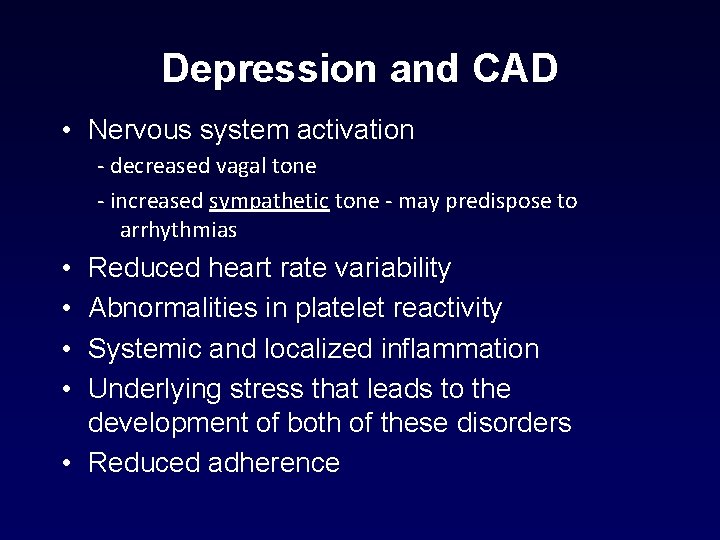
Depression and CAD • Nervous system activation - decreased vagal tone - increased sympathetic tone - may predispose to arrhythmias • • Reduced heart rate variability Abnormalities in platelet reactivity Systemic and localized inflammation Underlying stress that leads to the development of both of these disorders • Reduced adherence
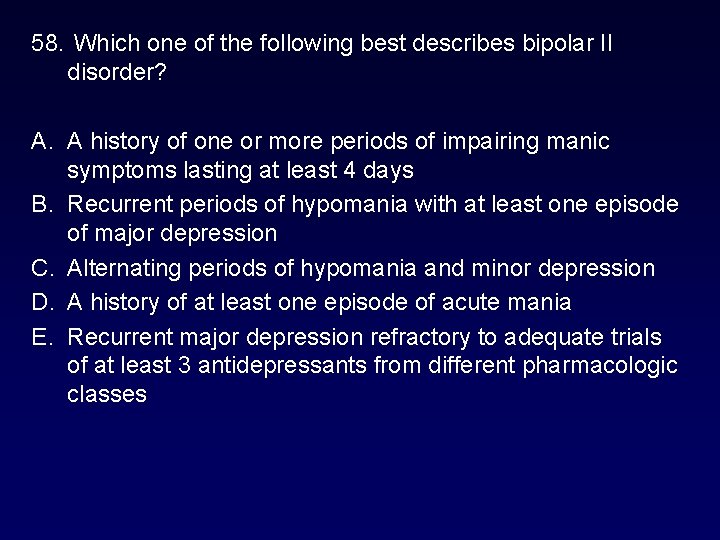
58. Which one of the following best describes bipolar II disorder? A. A history of one or more periods of impairing manic symptoms lasting at least 4 days B. Recurrent periods of hypomania with at least one episode of major depression C. Alternating periods of hypomania and minor depression D. A history of at least one episode of acute mania E. Recurrent major depression refractory to adequate trials of at least 3 antidepressants from different pharmacologic classes
Bipolar II • Criteria ≥ 1 Major depressive episode ≥ 1 Hypomanic episode 3 -4 days’ duration
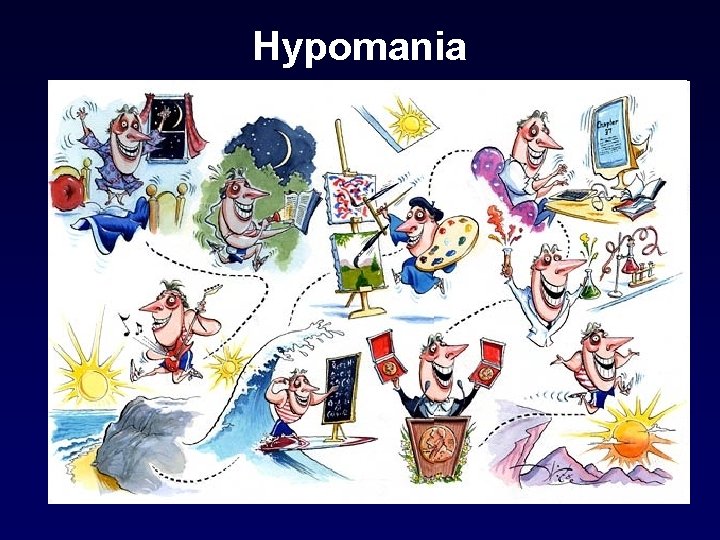
Hypomania
Hypomania (DSM-IV) Elevated mood over 4 days plus three of the following symptoms OR irritable mood plus four of the following symptoms: • • Pressured speech (rapid talking) Inflated self-esteem or grandiosity Decreased need for sleep Flight of ideas / experience that thoughts are racing Easy distractibility and attention-deficit Increase in psychomotor agitation Steep involvement in pleasurable activities that may have a high potential for negative psycho-social or physical consequences (e. g. , unrestrained buying sprees, sexual indiscretions, or foolish business investments)
Mania • All of the hypomania symptoms for at least one week AND • Sfficiently severe to cause marked impairment in occupational functioning or in usual social activities or relationships with others, or to necessitate hospitalization to prevent harm to self or others, or there are psychotic features.
59. True statements regarding suicide attempts among patients with a major depressive episode include which of the following? (Mark all that are true) A. Women successfully commit suicide at a higher rate than men B. Patients hospitalized for suicidality have a markedly increased lifetime risk of suicide compared to patients managed in an outpatient setting C. Patients with depressive disorders have suicide prevalence rates similar to those of the general population D. Depressed cigarette smokers attempt suicide more frequently than depressed nonsmokers E. Increased subjective assessment of depression by the patient is associated with an increased risk for a suicide attempt
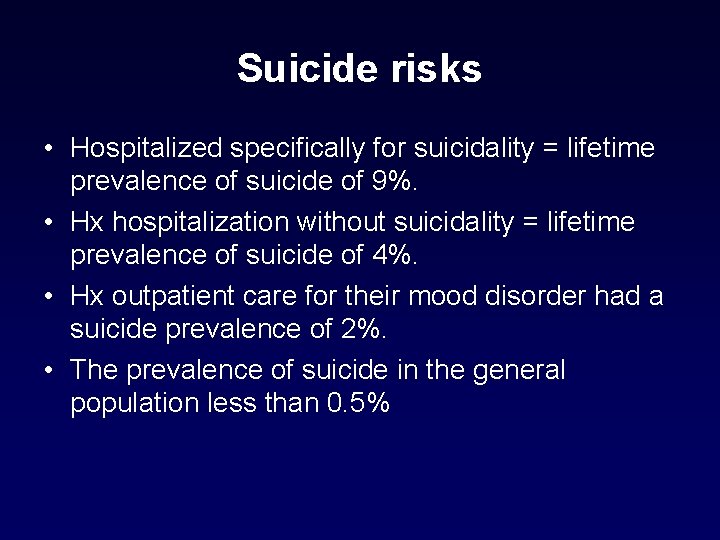
Suicide risks • Hospitalized specifically for suicidality = lifetime prevalence of suicide of 9%. • Hx hospitalization without suicidality = lifetime prevalence of suicide of 4%. • Hx outpatient care for their mood disorder had a suicide prevalence of 2%. • The prevalence of suicide in the general population less than 0. 5%
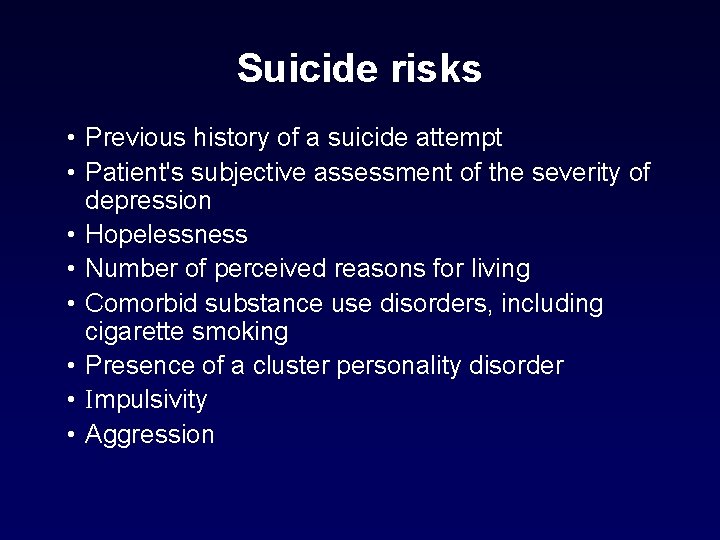
Suicide risks • Previous history of a suicide attempt • Patient's subjective assessment of the severity of depression • Hopelessness • Number of perceived reasons for living • Comorbid substance use disorders, including cigarette smoking • Presence of a cluster personality disorder • mpulsivity • Aggression
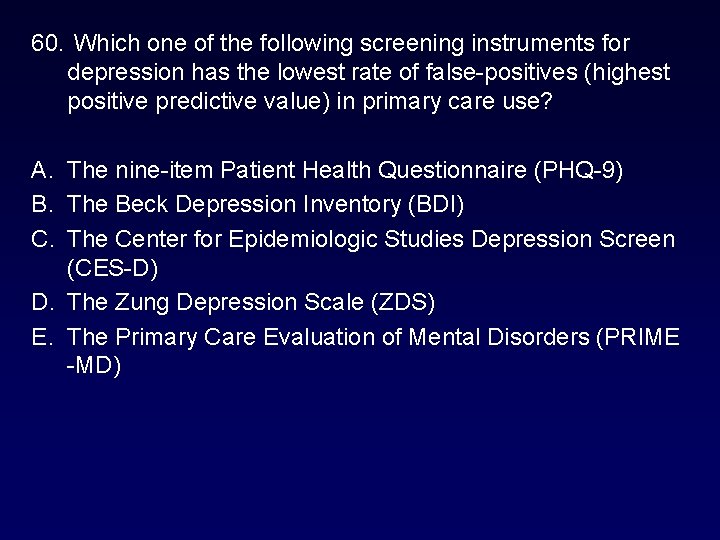
60. Which one of the following screening instruments for depression has the lowest rate of false-positives (highest positive predictive value) in primary care use? A. The nine-item Patient Health Questionnaire (PHQ-9) B. The Beck Depression Inventory (BDI) C. The Center for Epidemiologic Studies Depression Screen (CES-D) D. The Zung Depression Scale (ZDS) E. The Primary Care Evaluation of Mental Disorders (PRIME -MD)
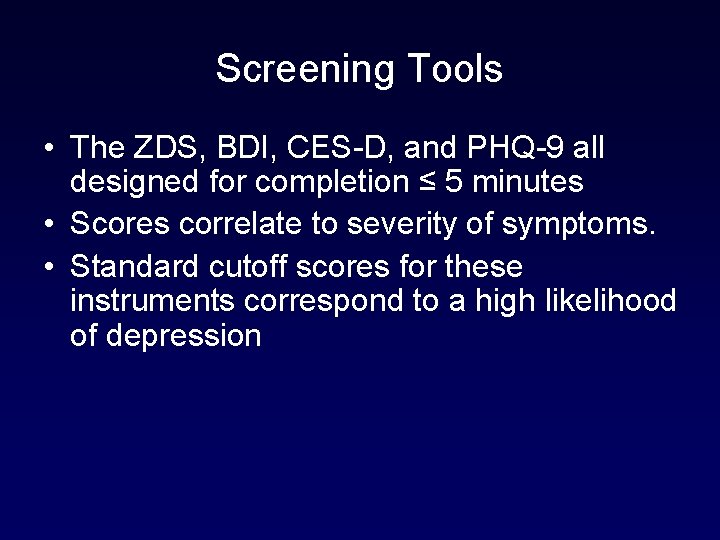
Screening Tools • The ZDS, BDI, CES-D, and PHQ-9 all designed for completion ≤ 5 minutes • Scores correlate to severity of symptoms. • Standard cutoff scores for these instruments correspond to a high likelihood of depression
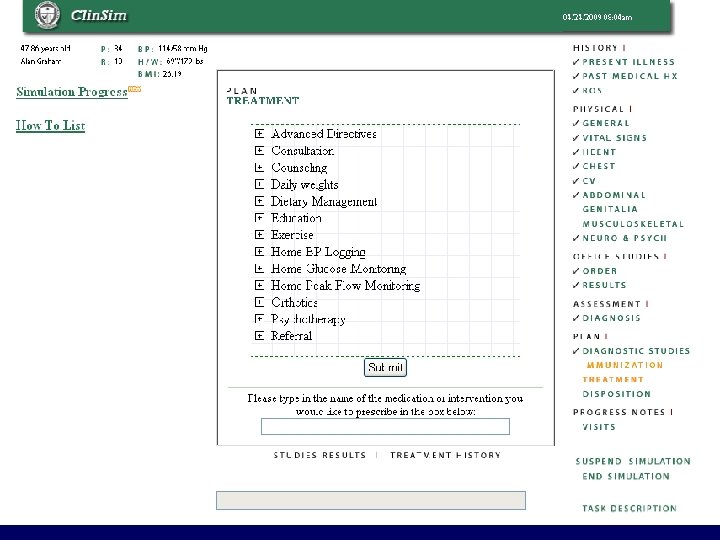
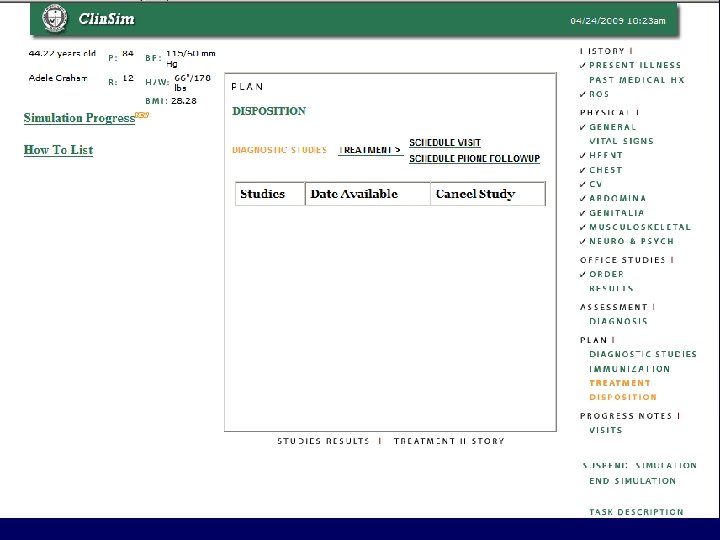
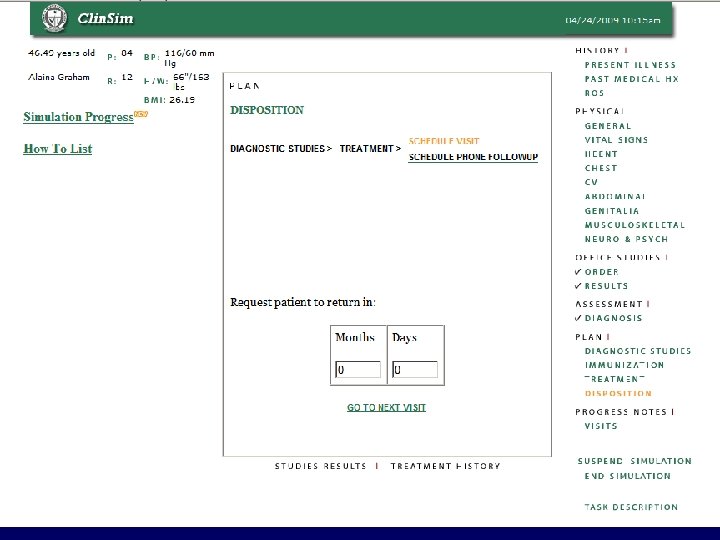
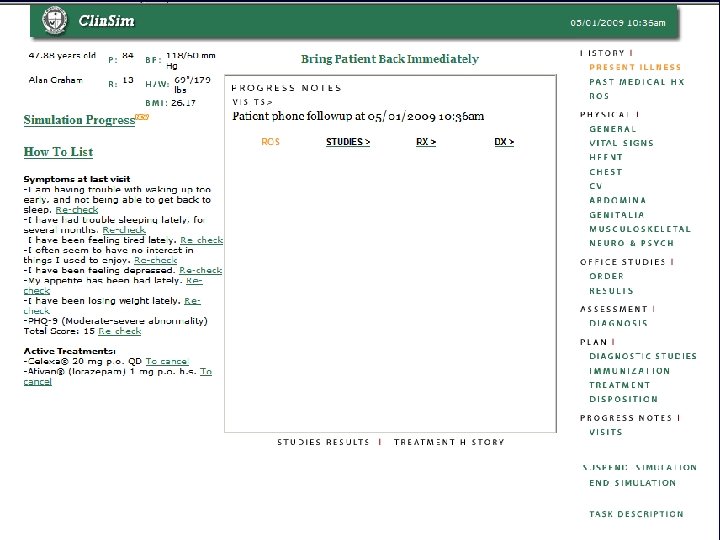
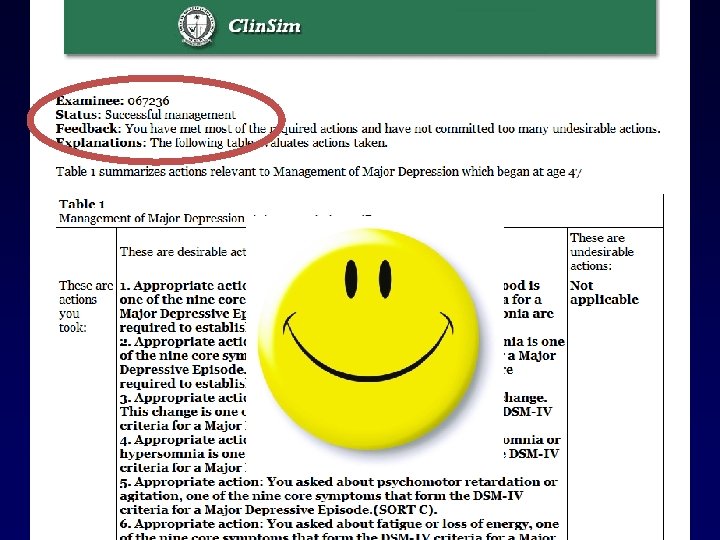
Warning: Patient Simulation cause adrenal stimulation ….
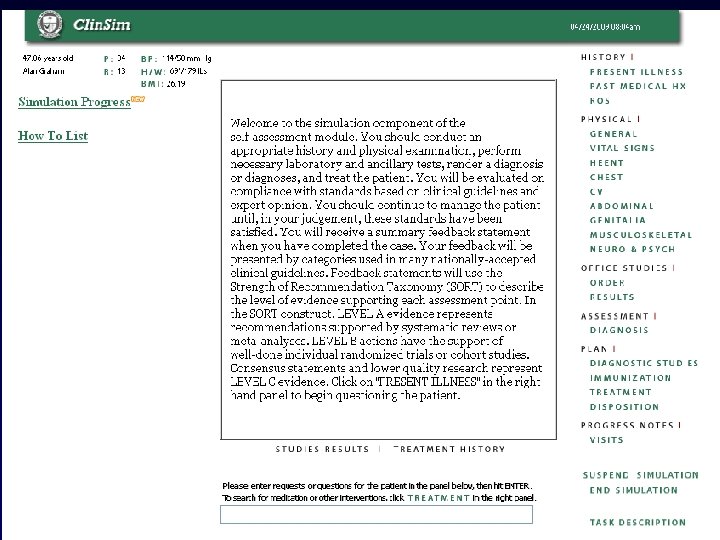
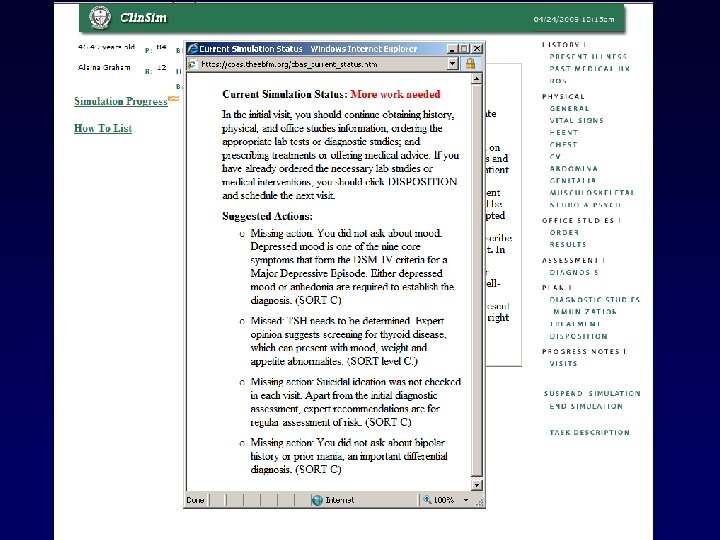
Simulation 911
DSM-IV Criteria For Major Depression ( > 5 for > 2 weeks) • Depressed mood • Loss of interest or pleasure • Appetite / weight change • Insomnia / hypersomnia • Psychomotor agitation / retardation • Fatigue / loss of energy • Worthlessness / excessive guilt • Diminished ability to think / concentrate • Recurrent thoughts of death / suicide
PHQ-9 • PHQ-9 is unique - individual questions are based on the current DSM-IV Major Depressive Disorder criteria, • Can assess if DMS-IV criteria are met • Also gives an overall severity score. • Superior performance characteristics in primary care. • PPV of 55% is superior to that of other screening instruments, which have PPV ranges from 21%-50% in primary care settings