
1 826 Para empezar Please write these sentences
- Slides: 17
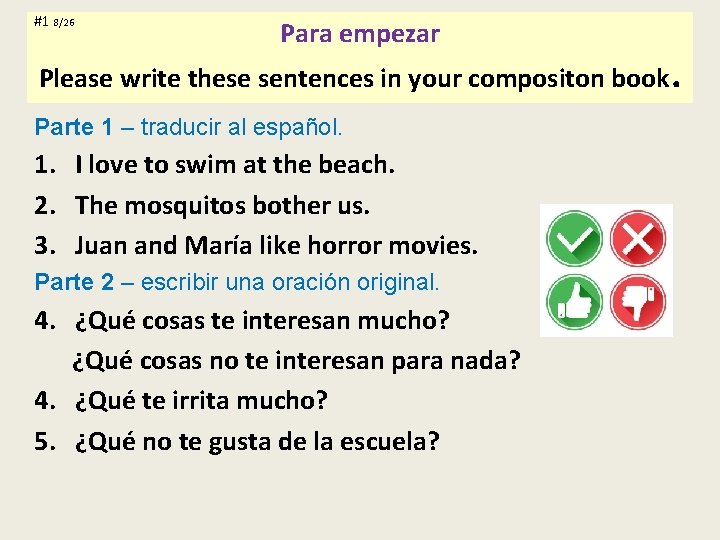
#1 8/26 Para empezar Please write these sentences in your compositon book. Parte 1 – traducir al español. 1. I love to swim at the beach. 2. The mosquitos bother us. 3. Juan and María like horror movies. Parte 2 – escribir una oración original. 4. ¿Qué cosas te interesan mucho? ¿Qué cosas no te interesan para nada? 4. ¿Qué te irrita mucho? 5. ¿Qué no te gusta de la escuela?
Ser vs. Estar “to be or to be” That is the question!
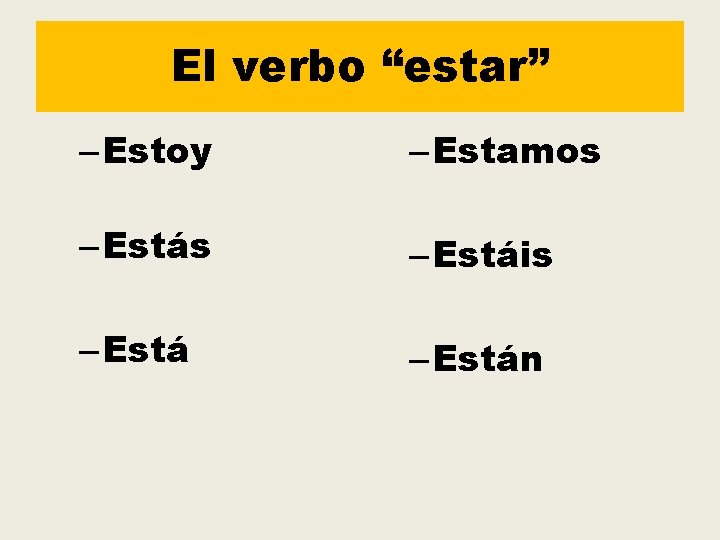
El verbo “estar” – Estoy – Estamos – Estáis – Están
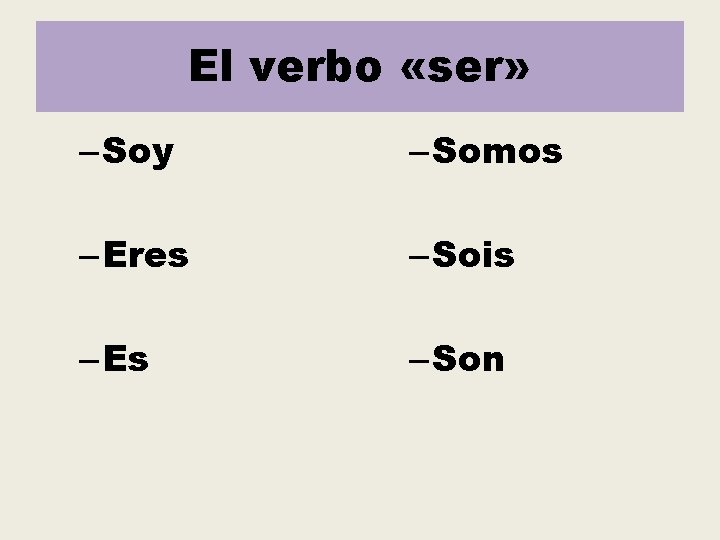
El verbo «ser» – Soy – Somos – Eres – Sois – Es – Son
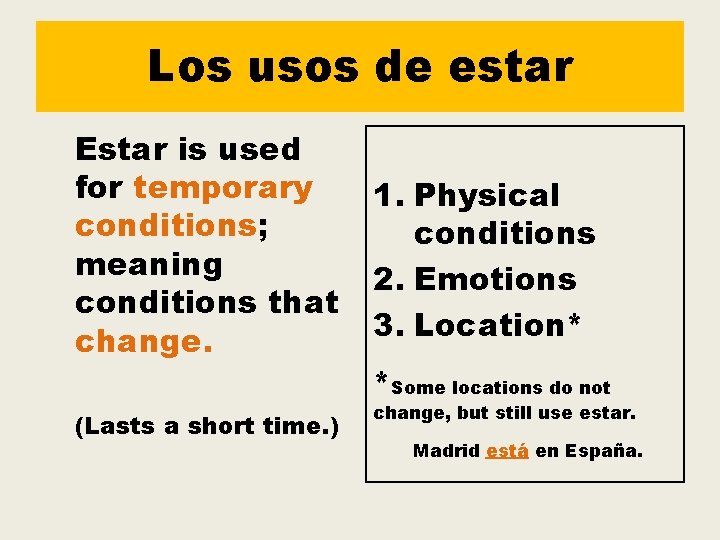
Los usos de estar Estar is used for temporary conditions; meaning conditions that change. (Lasts a short time. ) 1. Physical conditions 2. Emotions 3. Location* *Some locations do not change, but still use estar. Madrid está en España.
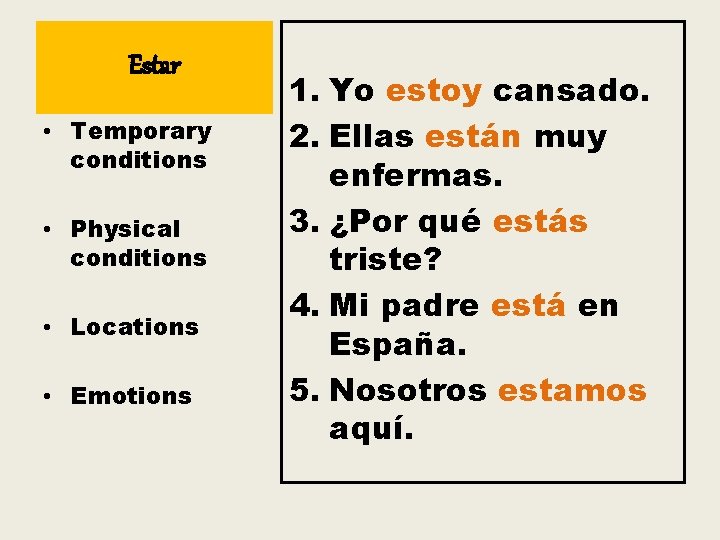
Estar • Temporary conditions • Physical conditions • Locations • Emotions 1. Yo estoy cansado. 2. Ellas están muy enfermas. 3. ¿Por qué estás triste? 4. Mi padre está en España. 5. Nosotros estamos aquí.
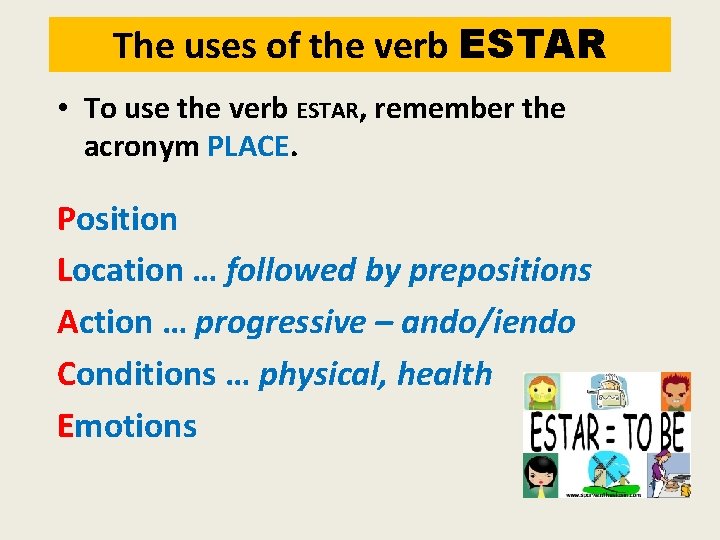
The uses of the verb ESTAR • To use the verb ESTAR, remember the acronym PLACE. Position Location … followed by prepositions Action … progressive – ando/iendo Conditions … physical, health Emotions
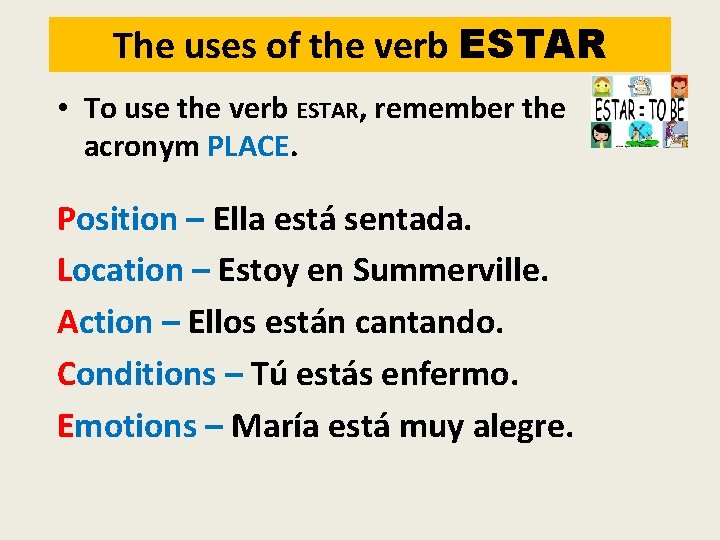
The uses of the verb ESTAR • To use the verb ESTAR, remember the acronym PLACE. Position – Ella está sentada. Location – Estoy en Summerville. Action – Ellos están cantando. Conditions – Tú estás enfermo. Emotions – María está muy alegre.
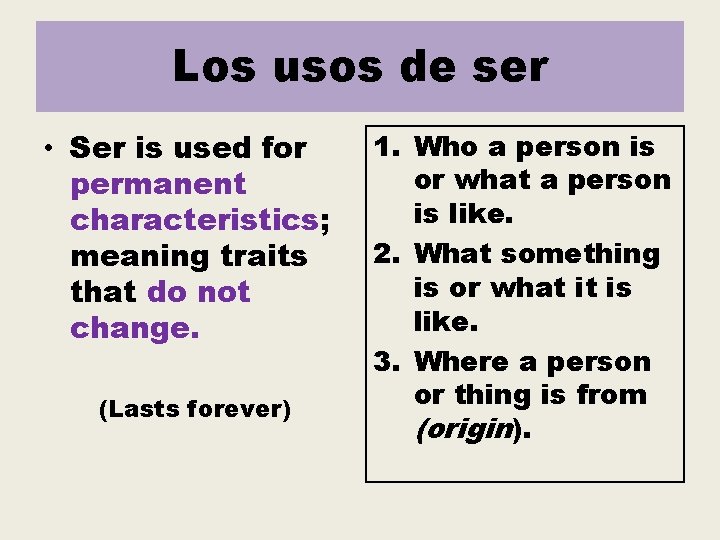
Los usos de ser • Ser is used for permanent characteristics; meaning traits that do not change. (Lasts forever) 1. Who a person is or what a person is like. 2. What something is or what it is like. 3. Where a person or thing is from (origin).
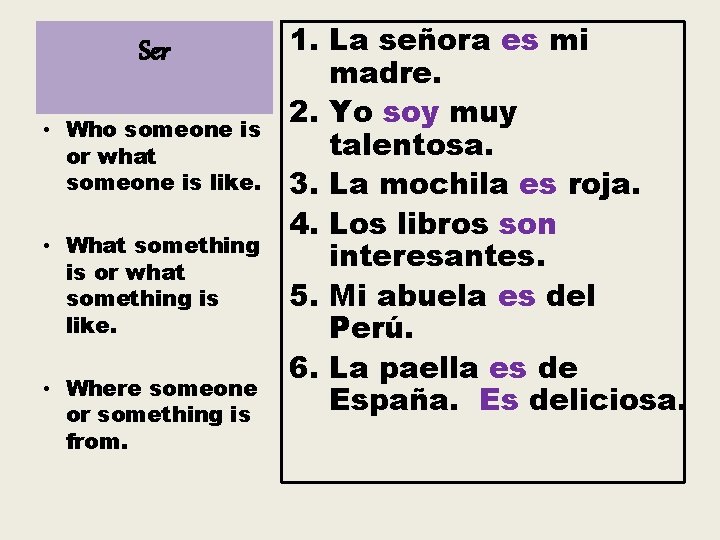
Ser • Who someone is or what someone is like. • What something is or what something is like. • Where someone or something is from. 1. La señora es mi madre. 2. Yo soy muy talentosa. 3. La mochila es roja. 4. Los libros son interesantes. 5. Mi abuela es del Perú. 6. La paella es de España. Es deliciosa.
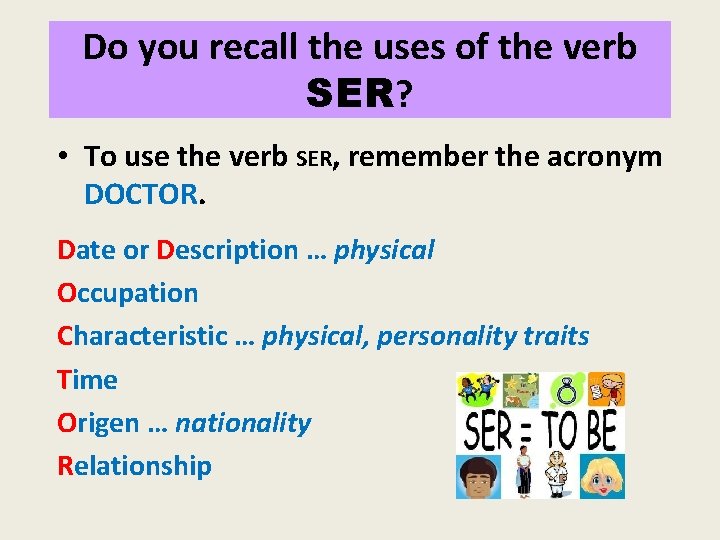
Do you recall the uses of the verb SER? • To use the verb SER, remember the acronym DOCTOR. Date or Description … physical Occupation Characteristic … physical, personality traits Time Origen … nationality Relationship
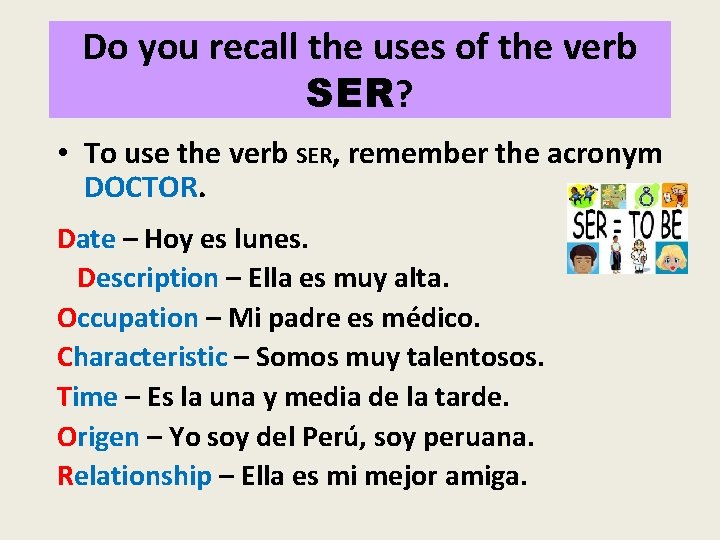
Do you recall the uses of the verb SER? • To use the verb SER, remember the acronym DOCTOR. Date – Hoy es lunes. Description – Ella es muy alta. Occupation – Mi padre es médico. Characteristic – Somos muy talentosos. Time – Es la una y media de la tarde. Origen – Yo soy del Perú, soy peruana. Relationship – Ella es mi mejor amiga.
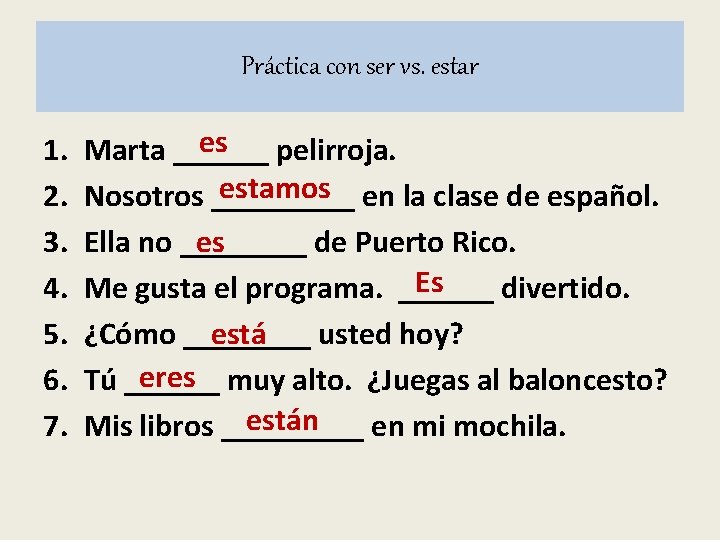
Práctica con ser vs. estar 1. 2. 3. 4. 5. 6. 7. es pelirroja. Marta ______ estamos en la clase de español. Nosotros _____ es Ella no ____ de Puerto Rico. Es Me gusta el programa. ______ divertido. está ¿Cómo ____ usted hoy? eres muy alto. ¿Juegas al baloncesto? Tú ______ están Mis libros _____ en mi mochila.
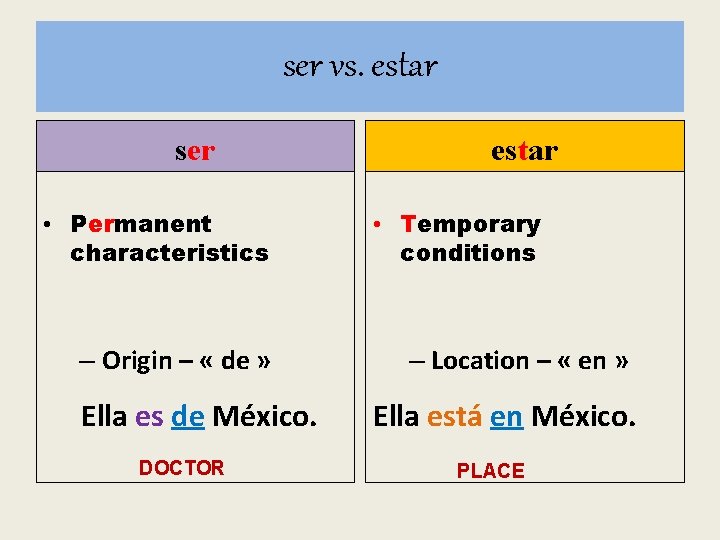
ser vs. estar ser • Permanent characteristics – Origin – « de » Ella es de México. DOCTOR estar • Temporary conditions – Location – « en » Ella está en México. PLACE
Ser vs. Estar Resumen 1. In Spanish? – to be 2. Acronym para SER? 3. Acronym para ESTAR?
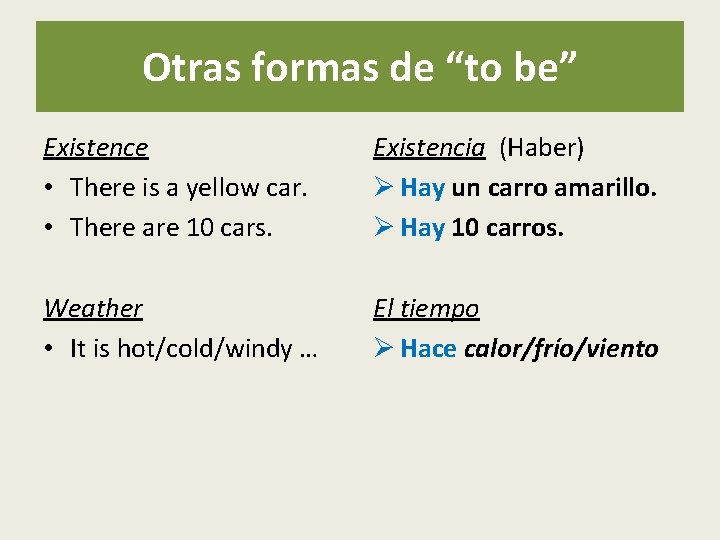
Otras formas de “to be” Existence • There is a yellow car. • There are 10 cars. Existencia (Haber) Ø Hay un carro amarillo. Ø Hay 10 carros. Weather • It is hot/cold/windy … El tiempo Ø Hace calor/frío/viento
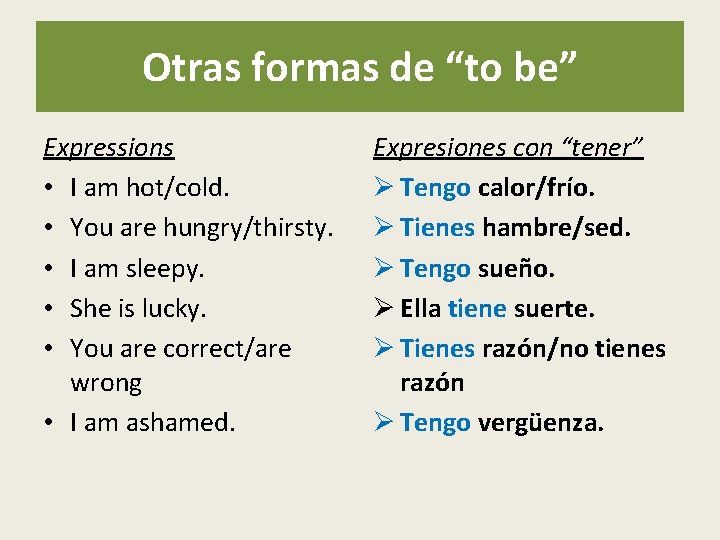
Otras formas de “to be” Expressions • I am hot/cold. • You are hungry/thirsty. • I am sleepy. • She is lucky. • You are correct/are wrong • I am ashamed. Expresiones con “tener” Ø Tengo calor/frío. Ø Tienes hambre/sed. Ø Tengo sueño. Ø Ella tiene suerte. Ø Tienes razón/no tienes razón Ø Tengo vergüenza.