
1 6 b Threats posed to networks 1
1. 6 b Threats posed to networks 1. 6 System Security b Threats posed to networks Comp 1 (Exam) GCSE Computing 1 -9
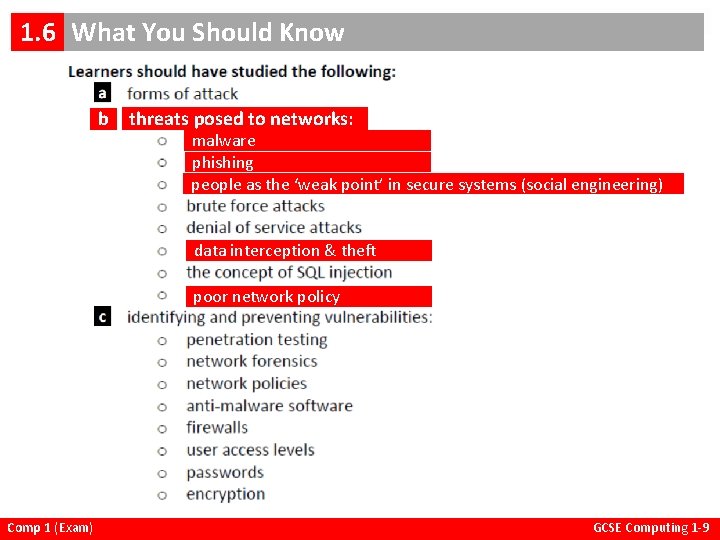
1. 6 b Threats posed to networks 1. 6 What You Should Know b threats posed to networks: malware phishing people as the ‘weak point’ in secure systems (social engineering) data interception & theft poor network policy Comp 1 (Exam) GCSE Computing 1 -9
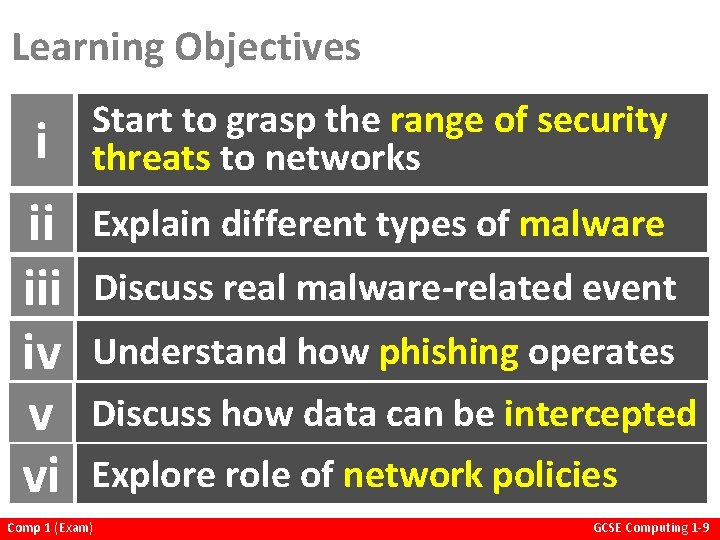
1. 6 b Threats posed to networks Learning Objectives i Start to grasp the range of security threats to networks ii iv v vi Explain different types of malware Discuss real malware-related event Understand how phishing operates Discuss how data can be intercepted Explore role of network policies Comp 1 (Exam) GCSE Computing 1 -9
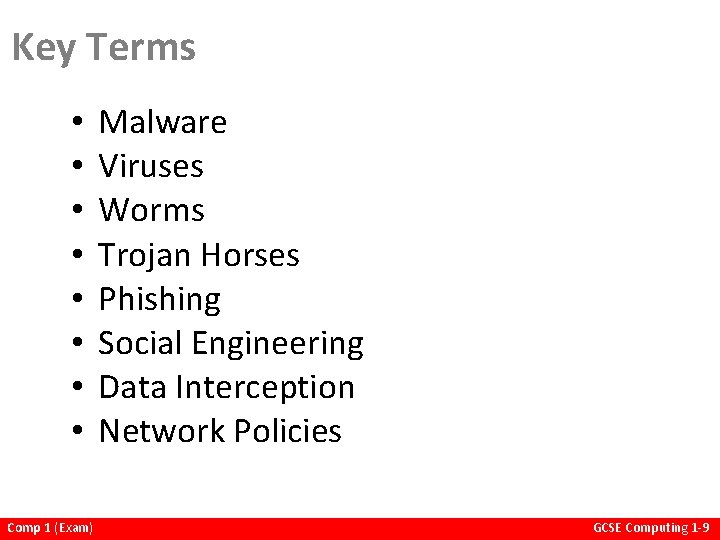
1. 6 b Threats posed to networks Key Terms • • Comp 1 (Exam) Malware Viruses Worms Trojan Horses Phishing Social Engineering Data Interception Network Policies GCSE Computing 1 -9
1. 6 b Threats posed to networks Learning Objectives i Start to grasp the range of security threats to networks ii iv v vi Explain different types of malware Discuss real malware-related event Understand how phishing operates Discuss how data can be intercepted Explore role of network policies Comp 1 (Exam) GCSE Computing 1 -9
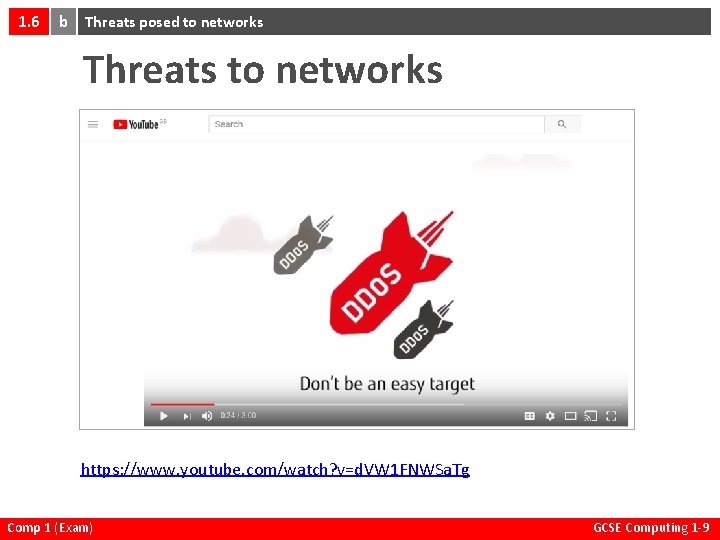
1. 6 b Threats posed to networks Threats to networks https: //www. youtube. com/watch? v=d. VW 1 FNWSa. Tg Comp 1 (Exam) GCSE Computing 1 -9
1. 6 b Threats posed to networks Threats to networks https: //www. youtube. com/watch? v=v. PJ 6 ir. UDm. HI Comp 1 (Exam) GCSE Computing 1 -9
1. 6 b Threats posed to networks Learning Objectives i Start to grasp the range of security threats to networks ii iv v vi Explain different types of malware Discuss real malware-related event Understand how phishing operates Discuss how data can be intercepted Explore role of network policies Comp 1 (Exam) GCSE Computing 1 -9
1. 6 b Threats posed to networks Key Terms • • Comp 1 (Exam) Malware Viruses Worms Trojan Horses Phishing Social Engineering Data Interception Network Policies GCSE Computing 1 -9
1. 6 b Threats posed to networks Malware • Otherwise known as ‘malicious software’ • Malicious means bad • Software which can be malicious if damaging to a computer or network • Examples include viruses, worms and trojan horses Comp 1 (Exam) GCSE Computing 1 -9
1. 6 b Threats posed to networks Viruses • Malicious software designed to cause harm to a network or computer system • Attaches itself to programs or files on a computer or server • Can affect all components of operating system • Around 82, 000 viruses are made each day • Famous examples: Stuxnet &Crypto. Locker Source: https: //uk. norton. com/norton-blog/2016/02/the_8_most_famousco. html Comp 1 (Exam) GCSE Computing 1 -9
1. 6 b Threats posed to networks Worm • Replicates itself in order to spread to other computers • Often using a computer network • In order to achieve this, the worm exploits vulnerabilities across the computer network • Unlike a virus, it does not need to attach to a program Comp 1 (Exam) GCSE Computing 1 -9
1. 6 b Threats posed to networks Trojan Horse • Malicious computer program • Designed to access a computer by misleading users of its intent • Example: Email appearing to have been sent from a bank asking to download security software which would improve security where in fact the software intention is to give unauthorised access to the system Comp 1 (Exam) GCSE Computing 1 -9
1. 6 b Threats posed to networks Activity 1 – Types of Malware Comp 1 (Exam) GCSE Computing 1 -9
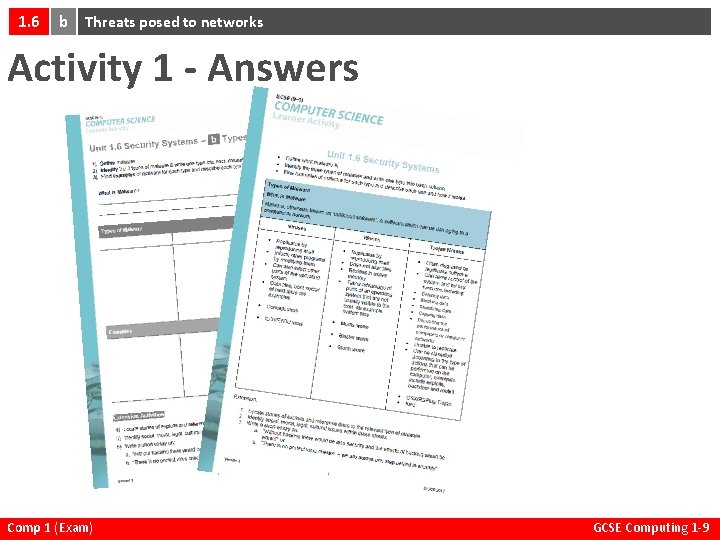
1. 6 b Threats posed to networks Activity 1 - Answers Comp 1 (Exam) GCSE Computing 1 -9
1. 6 b Threats posed to networks Learning Objectives i Start to grasp the range of security threats to networks ii iv v vi Explain different types of malware Discuss real malware-related event Understand how phishing operates Discuss how data can be intercepted Explore role of network policies Comp 1 (Exam) GCSE Computing 1 -9
1. 6 b Threats posed to networks Key Terms • • Comp 1 (Exam) Malware Viruses Worms Trojan Horses Phishing Social Engineering Data Interception Network Policies GCSE Computing 1 -9
1. 6 b Threats posed to networks Social Engineering • Relies on human interaction or social skills • Commonly involves tricking users into breaking normal security procedures • Method does not revolve around technical cracking techniques such as worms or viruses Comp 1 (Exam) GCSE Computing 1 -9
1. 6 b Threats posed to networks Phishing • Phishing is a form of social engineering • Designed to acquire sensitive information such as usernames, passwords, card details etc. • Most common phishing attacks are sent through email Comp 1 (Exam) GCSE Computing 1 -9
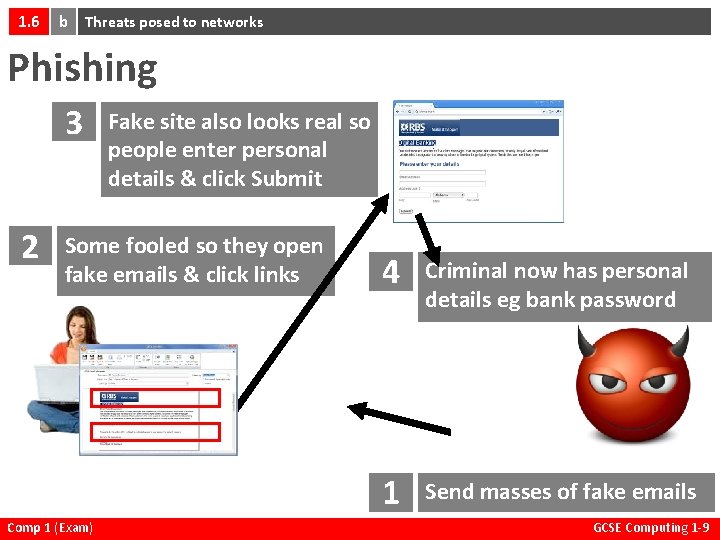
1. 6 b Threats posed to networks Phishing 3 2 Fake site also looks real so people enter personal details & click Submit Some fooled so they open fake emails & click links Comp 1 (Exam) 4 Criminal now has personal details eg bank password 1 Send masses of fake emails GCSE Computing 1 -9
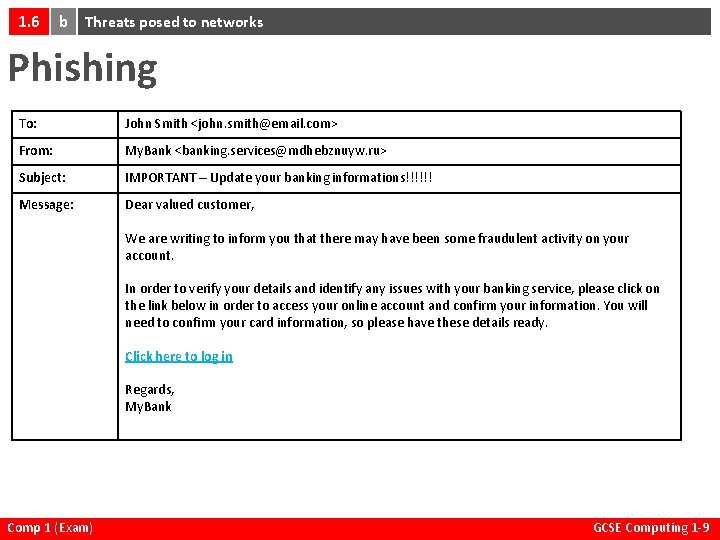
1. 6 b Threats posed to networks Phishing To: John Smith <john. smith@email. com> From: My. Bank <banking. services@mdhebznuyw. ru> Subject: IMPORTANT – Update your banking informations!!!!!! Message: Dear valued customer, We are writing to inform you that there may have been some fraudulent activity on your account. In order to verify your details and identify any issues with your banking service, please click on the link below in order to access your online account and confirm your information. You will need to confirm your card information, so please have these details ready. Click here to log in Regards, My. Bank Comp 1 (Exam) GCSE Computing 1 -9
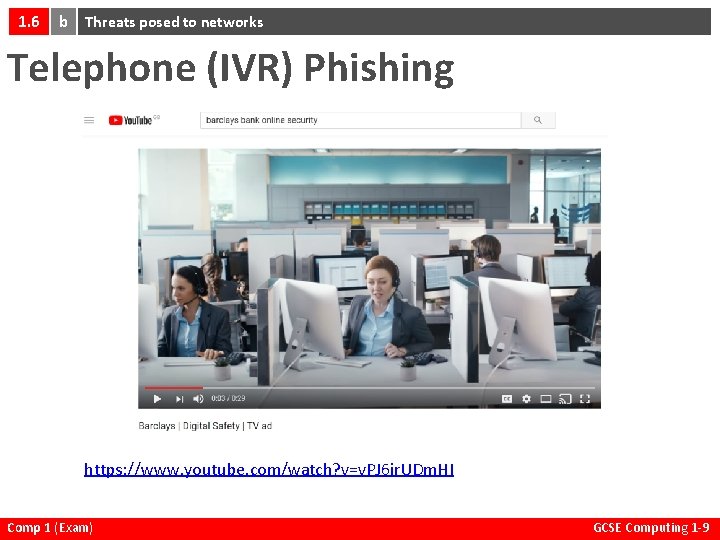
1. 6 b Threats posed to networks Telephone (IVR) Phishing https: //www. youtube. com/watch? v=v. PJ 6 ir. UDm. HI Comp 1 (Exam) GCSE Computing 1 -9
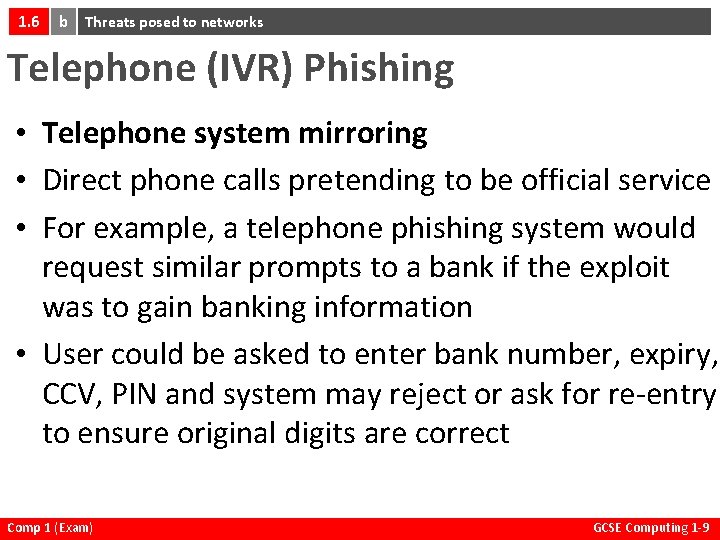
1. 6 b Threats posed to networks Telephone (IVR) Phishing • Telephone system mirroring • Direct phone calls pretending to be official service • For example, a telephone phishing system would request similar prompts to a bank if the exploit was to gain banking information • User could be asked to enter bank number, expiry, CCV, PIN and system may reject or ask for re-entry to ensure original digits are correct Comp 1 (Exam) GCSE Computing 1 -9
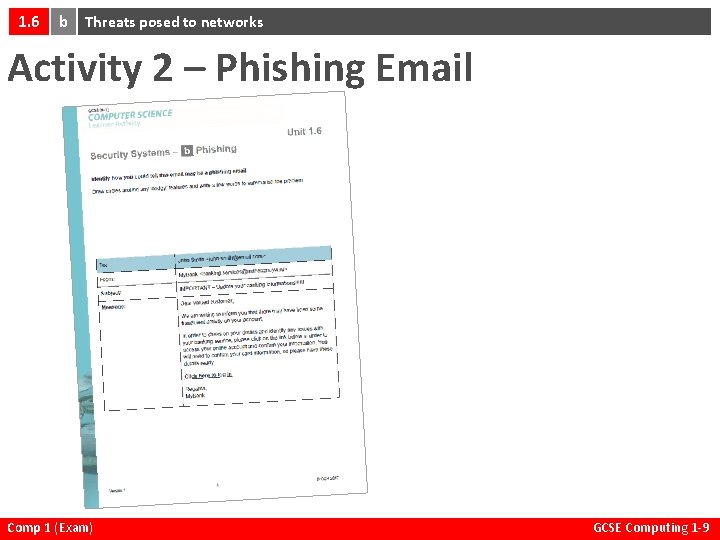
1. 6 b Threats posed to networks Activity 2 – Phishing Email Comp 1 (Exam) GCSE Computing 1 -9
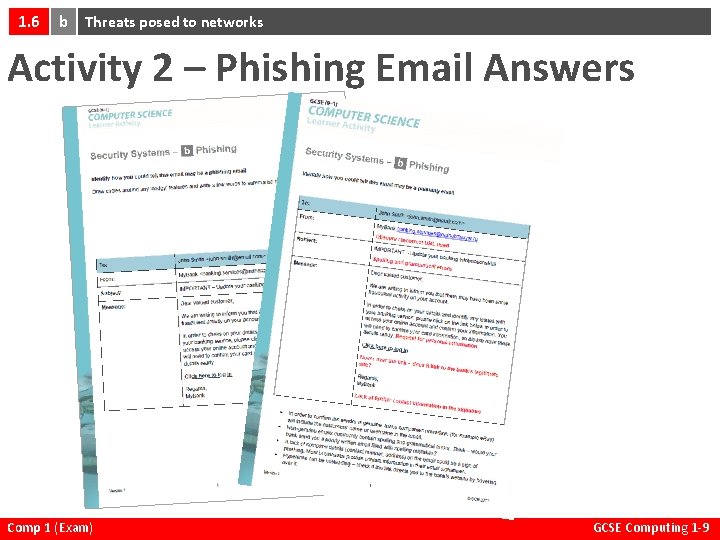
1. 6 b Threats posed to networks Activity 2 – Phishing Email Answers Comp 1 (Exam) GCSE Computing 1 -9
1. 6 b Threats posed to networks Learning Objectives i Start to grasp the range of security threats to networks ii iv v vi Explain different types of malware Discuss real malware-related event Understand how phishing operates Discuss how data can be intercepted Explore role of network policies Comp 1 (Exam) GCSE Computing 1 -9
1. 6 b Threats posed to networks Key Terms • • Comp 1 (Exam) Malware Viruses Worms Trojan Horses Phishing Social Engineering Data Interception Network Policies GCSE Computing 1 -9
1. 6 b Threats posed to networks Data Interception and Theft • Data travels across networks in packets • Packets can be intercepted • If packets are encrypted, they cannot be read without a key • Unencrypted packets can be re-assembled using signatures • Data can also be intercepted physically, for example portable hard drives and other external hardware can be stolen Comp 1 (Exam) GCSE Computing 1 -9
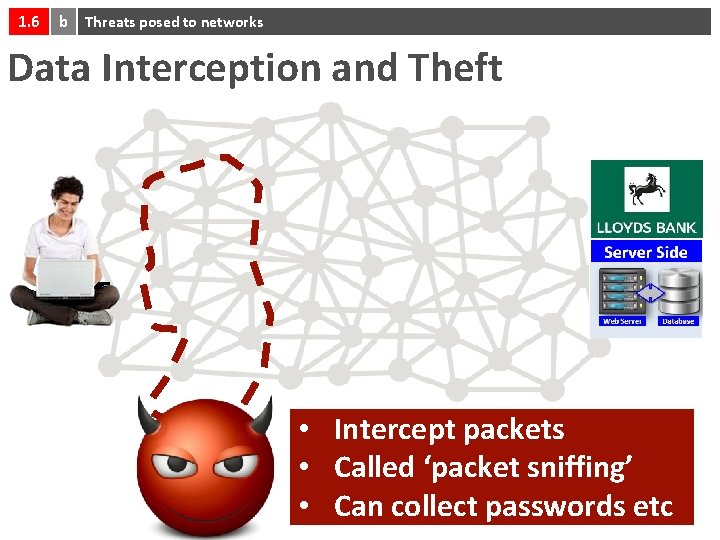
1. 6 b Threats posed to networks Data Interception and Theft Comp 1 (Exam) • Intercept packets • Called ‘packet sniffing’ • Can collect passwords etc GCSE Computing 1 -9
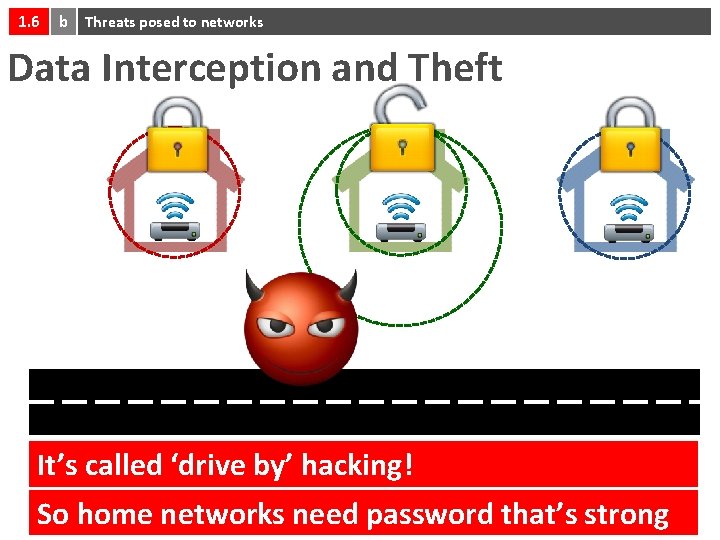
1. 6 b Threats posed to networks Data Interception and Theft It’s called ‘drive by’ hacking! So home networks need password that’s strong GCSE Computing 1 -9 Comp 1 (Exam)
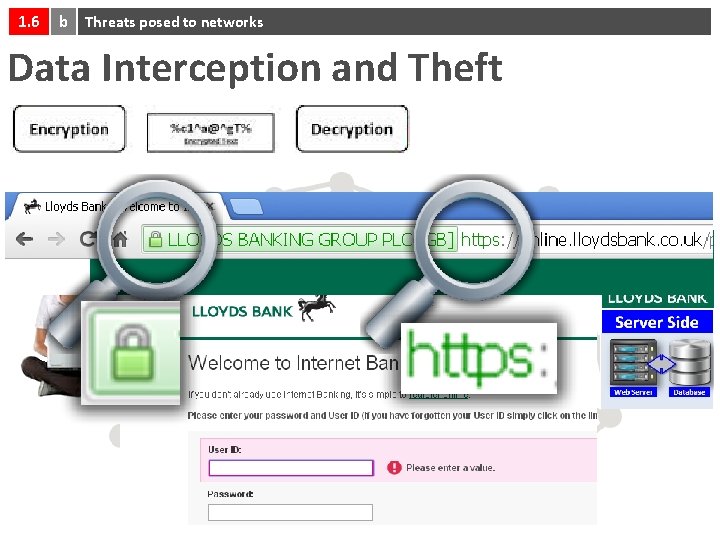
1. 6 b Threats posed to networks Data Interception and Theft Comp 1 (Exam) GCSE Computing 1 -9
1. 6 b Threats posed to networks Learning Objectives i Start to grasp the range of security threats to networks ii iv v vi Explain different types of malware Discuss real malware-related event Understand how phishing operates Discuss how data can be intercepted Explore role of network policies Comp 1 (Exam) GCSE Computing 1 -9
1. 6 b Threats posed to networks Network Policies • Outlines rules for network access • Most common is Acceptable Use Policy (AUP) • You may have been asked to agree to an AUP when joining your school • Other policies more suitable for contractors and those in charge of maintaining the network Comp 1 (Exam) GCSE Computing 1 -9
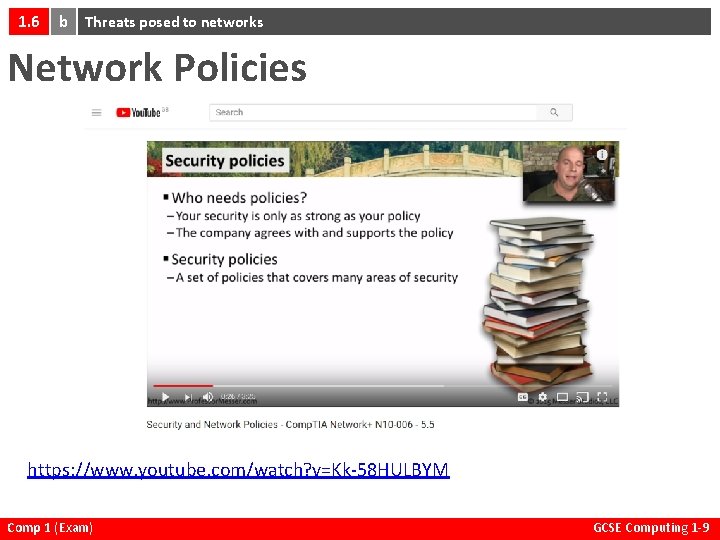
1. 6 b Threats posed to networks Network Policies https: //www. youtube. com/watch? v=Kk-58 HULBYM Comp 1 (Exam) GCSE Computing 1 -9
1. 6 b Threats posed to networks Poor Network Policy • Could expose a network to numerous threats • Users could be unaware of the risks of: – using software – opening emails – turning off firewalls etc. • Most networks restrict users to what they can/cannot do – Can you install software on your school PC? – Do you have filters on your email and internet browser? Comp 1 (Exam) GCSE Computing 1 -9
1. 6 b Threats posed to networks Examples of Network Policy • University of Birmingham https: //intranet. birmingham. ac. uk/it/teams/infrastructure/core/wireless/h elp/policy. aspx • NHS Southwest Yorkshire www. southwestyorkshire. nhs. uk/documents/317. doc Comp 1 (Exam) GCSE Computing 1 -9
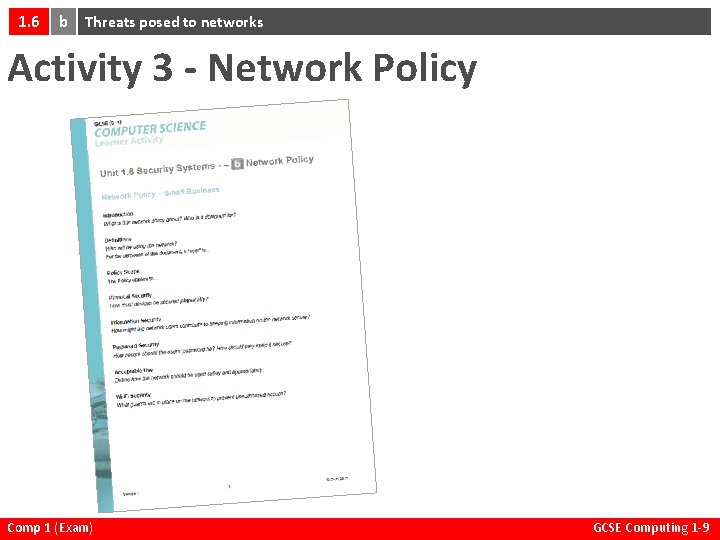
1. 6 b Threats posed to networks Activity 3 - Network Policy Comp 1 (Exam) GCSE Computing 1 -9
1. 6 b Threats posed to networks Learning Objectives i Start to grasp the range of security threats to networks ii iv v vi Explain different types of malware Discuss real malware-related event Understand how phishing operates Discuss how data can be intercepted Explore role of network policies Comp 1 (Exam) GCSE Computing 1 -9
1. 6 b Threats posed to networks Learning Objectives Start to grasp the range of threats to i networks ii Understand these key terms • • Comp 1 (Exam) Malware Viruses Worms Trojan Horses Phishing Social Engineering Data Interception Network Policies GCSE Computing 1 -9
1. 6 b Threats posed to networks Key Terms • • Comp 1 (Exam) Malware Viruses Worms Trojan Horses Phishing Social Engineering Data Interception Network Policies GCSE Computing 1 -9
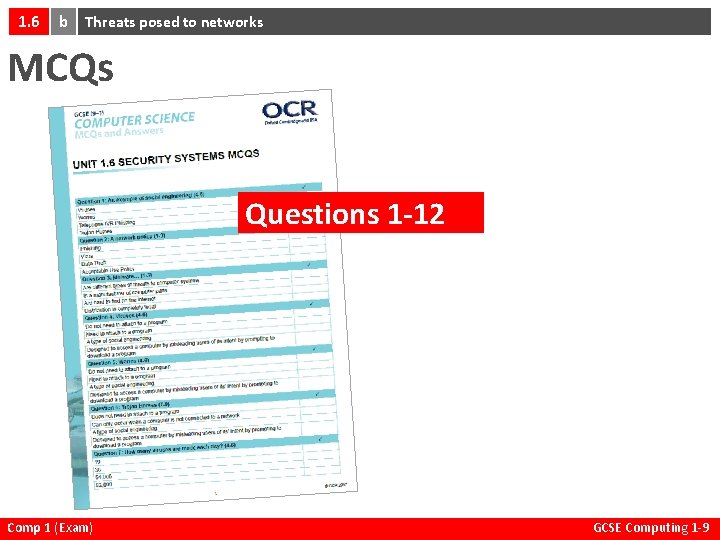
1. 6 b Threats posed to networks MCQs Questions 1 -12 Comp 1 (Exam) GCSE Computing 1 -9
- Slides: 41