
1 5 Promoting Social Cohesion Bringing Different Races
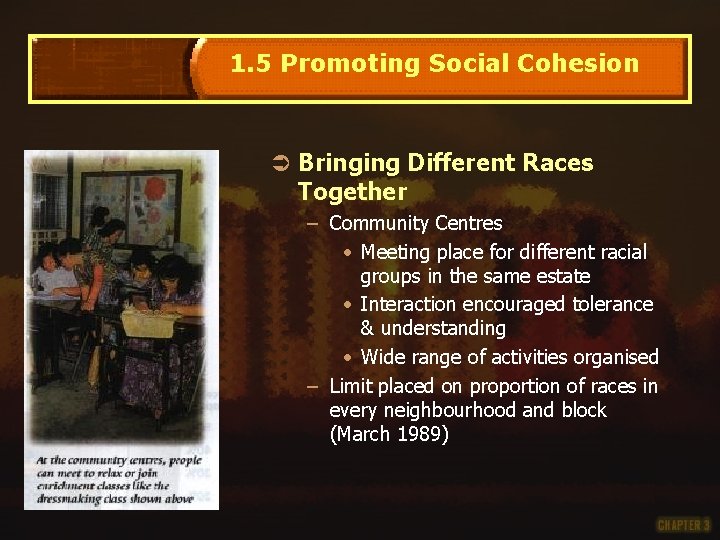
1. 5 Promoting Social Cohesion Ü Bringing Different Races Together – Community Centres • Meeting place for different racial groups in the same estate • Interaction encouraged tolerance & understanding • Wide range of activities organised – Limit placed on proportion of races in every neighbourhood and block (March 1989)

1. 5 Promoting Social Cohesion Ü Bringing Different Races Together – 1980 : Govt observed certain housing estates had higher concentrations of the same race – Malay : Bedok, Tampines – Chinese : Hougang, Ang Mo Kio – Racial congregation the result of a free market – This could hinder social bonding – Mar 1989 : Limit placed on proportion of races in every neighbourhood and block – Aim to encourage people of different races to reside within a block

1. 5 Promoting Social Cohesion Source : SS Teachers’ Resource CD (Upper Sec)/Practice of Good Governance CDR 1/SSS 4 RCD_A/03/Urban Renewal/1: 54

1. 5 Promoting Social Cohesion Ü Meeting Needs of Different Income Groups – Housing and Urban Development Corporation (HUDC) • Provide housing for the middle-income group – HDB built bigger flats with better designs • Tampines and Choa Chu Kang – 1995 : Executive Condominium • Built by private sector • Will become private property after a certain number of years • Located in HDB housing estates • Swimming pools and tennis courts – Mixture of smaller and bigger flats • Interaction between different income groups

1. 5 Promoting Social Cohesion Ü Building a Sense of Belonging – End 1970 s : Precinct Concept • The precinct as the basic planning unit of a new town • Precinct : Group of 4 -8 blocks with a central spce; a few basic facilities to serve as focal point for residents • To build up community spirit

1. 5 Promoting Social Cohesion Ü Building a Sense of Belonging Residents’ Committees (RCs) – Set up in 1978 – Allow involvement of residents in matters directly concerning them – Encourages greater participation from the people in communal and social activities – Foster community identity – Promotes neighbourliness & identity among residents

1. 5 Promoting Social Cohesion Ü Building a Sense of Belonging – 1989 : Town Councils • HDB Estate management functions transferred to TCs • Residents given greater say in running own estates • TCs services : Collection of conservancy fees; landscaping, maintenance of essential services eg lift-rescue • Estb stronger community ties
1. 6 Looking Ahead Ü Meeting Needs of Single Citizens – 35 years old singles can buy resale flats – CPF Housing Grant for single citizens Ü Meeting Needs of Senior Citizens – Building of Studio Apartments • Non-slip floors, pull-cords alarm system – Improving HDB’s rental blocks resided by senior citizens • Lifts stopping at every lift, handrails, activity centre
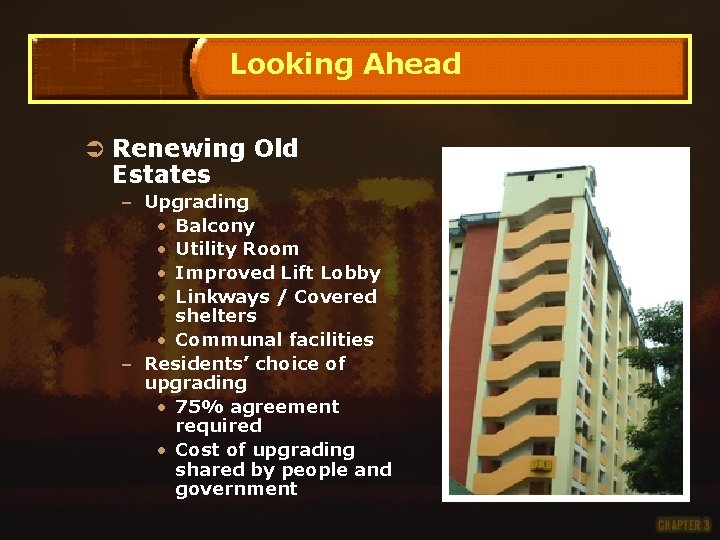
Looking Ahead Ü Renewing Old Estates – Upgrading • Balcony • Utility Room • Improved Lift Lobby • Linkways / Covered shelters • Communal facilities – Residents’ choice of upgrading • 75% agreement required • Cost of upgrading shared by people and government
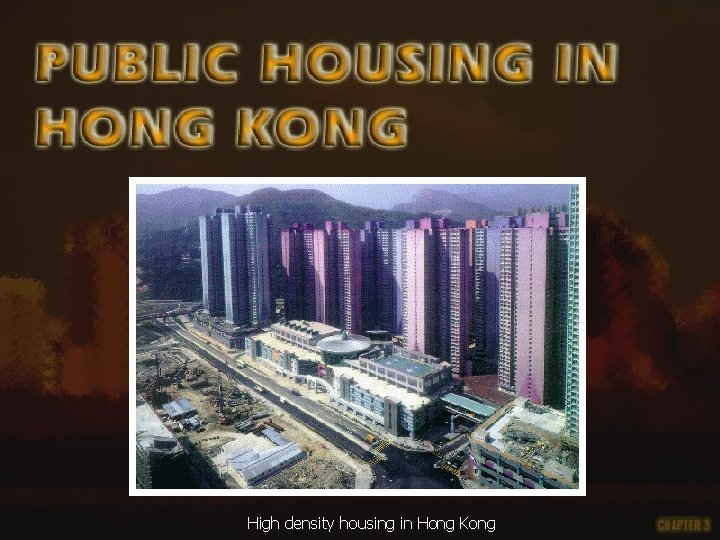
High density housing in Hong Kong
2. 1 The Housing Problem Ü Large-scale immigration – Sino-Japanese War (1937 -1945) – Communist takeover in China (1949) Ü Post-war baby boom Ü No Government planning – Provision of public housing left to private developers – Not enough homes built
2. 2 Resettling Squatters and Fire Victims Ü Fire at Shek Kip Mei Christmas Day 1953 – Forced government to be more active in providing public housing – Eight blocks of flats built in 1954 to settle the fire victims – More housing estates were also built to resettle people from the fire-prone squatters – Flats constructed remained overcrowded and lacking of hygiene and facilities
2. 3 Housing Lower-Income Families Ü Rental Housing – Low-cost rental housing scheme for lowerincome families – Involvement of government-financed agencies – Building flats of higher standard Ü Temporary Housing Areas (THAs) – For homeless people who were not victims of natural disasters or residents of squatters – Materials to be provided by government – Became a permanent feature in Hong Kong
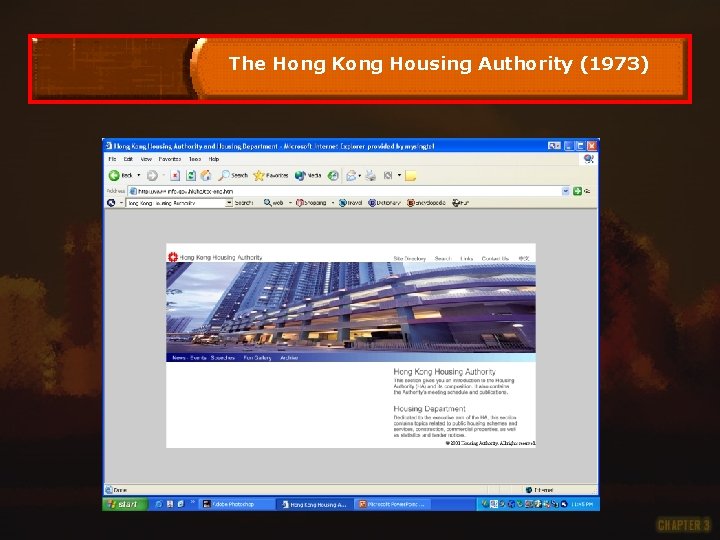
2. 4 Providing Quality Homes Ü The Hong Kong Housing Authority (1973) – To co-ordinate all aspects of public housing – Self-contained new towns proposed – Towns having their own facilities
The Hong Kong Housing Authority (1973)
The Hong Kong Housing Authority (1973)
Providing Quality Homes Ü New Towns – New Territories identified – Villages became large high-rise towns – Sha Tin – Other problems arose – Reluctance of employers to set up business in new town due to lack of proper infrastructure – Workers unwilling to receive lower pay
2. 5 Encouraging Home Ownership Ü Hopes to change from homeless immigrant society to home-owning society – Home Ownership Scheme – Flats sold at subsidised rates – Sale of flats not allowed within five years – Private Sector Participation Scheme – Private developers allowed to buy land to build flats – Prices of flats to be 30 -50% lower than market price – Sale of flats not allowed within five years
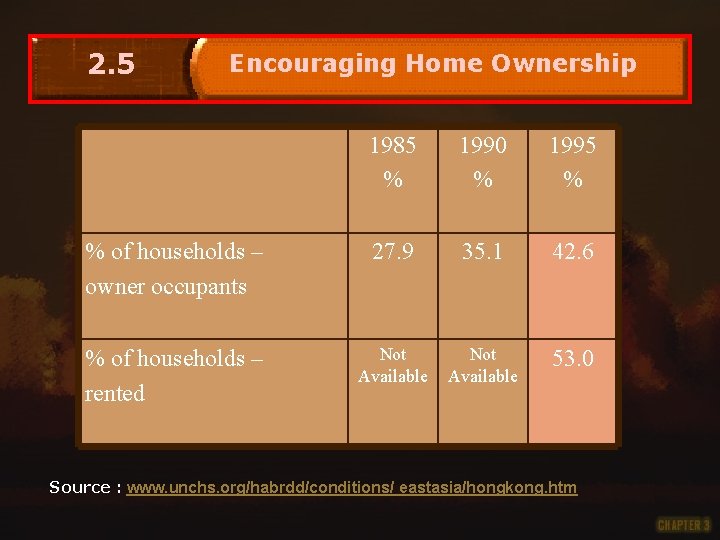
2. 5 Encouraging Home Ownership 1985 % 1990 % 1995 % % of households – owner occupants 27. 9 35. 1 42. 6 % of households – rented Not Available 53. 0 Source : www. unchs. org/habrdd/conditions/ eastasia/hongkong. htm
2. 6 Modernising Old Estates Ü Conversion of resettlement flats into larger self-contained flats – Building of recreational & educational facilities – Schools, playgrounds and shopping centres Ü Redevelopment Programme – Demolishing existing buildings and rebuilding them into self-contained community estates – Shek Kip Mei
2. 7 Housing Senior Citizens Ü Welfare premises on the ground floor Ü Sheltered housing on the lower floors Ü Installation of alarm systems
2. 7 Housing Senior Citizens Ü Conclusion Ü Importance of Government’s role in housing • Need to strike a balance between people’s expectations and availability of resources Acknowledgement : Adaptation of text by Mr Robin Leong, East Spring Sec School
- Slides: 22