
1 4 UNITS OF MEASUREMENT SUMMER AP CHEMISTRY
- Slides: 10
1. 4 – UNITS OF MEASUREMENT SUMMER AP CHEMISTRY HOMEWORK CHAPTER 1
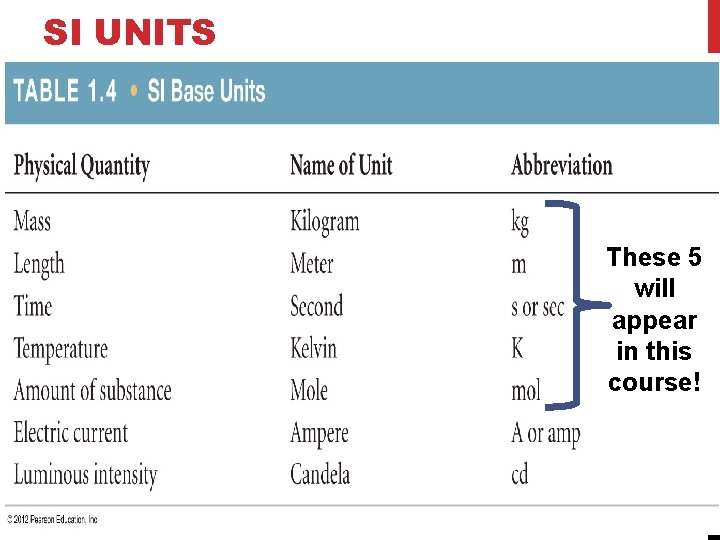
SI UNITS These 5 will appear in this course!
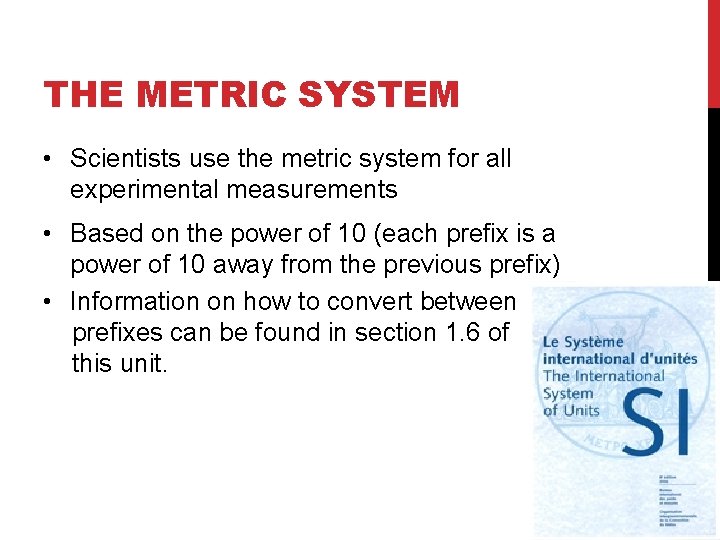
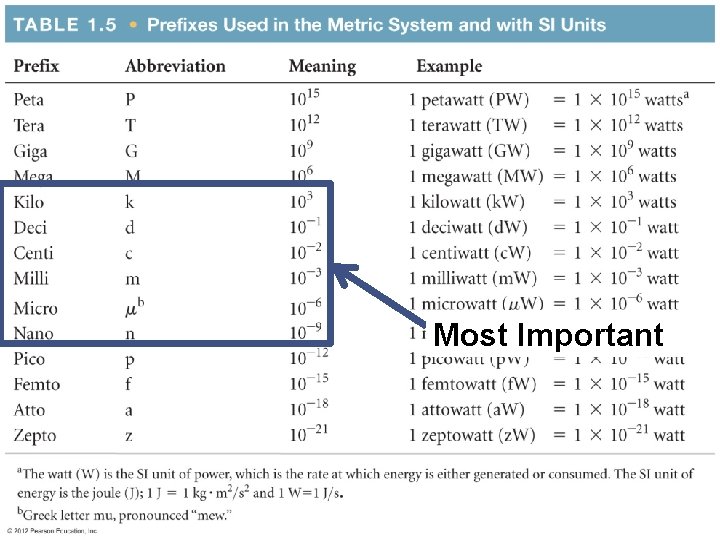
THE METRIC SYSTEM • Scientists use the metric system for all experimental measurements • Based on the power of 10 (each prefix is a power of 10 away from the previous prefix) • Information on how to convert between prefixes can be found in section 1. 6 of this unit.
Most Important
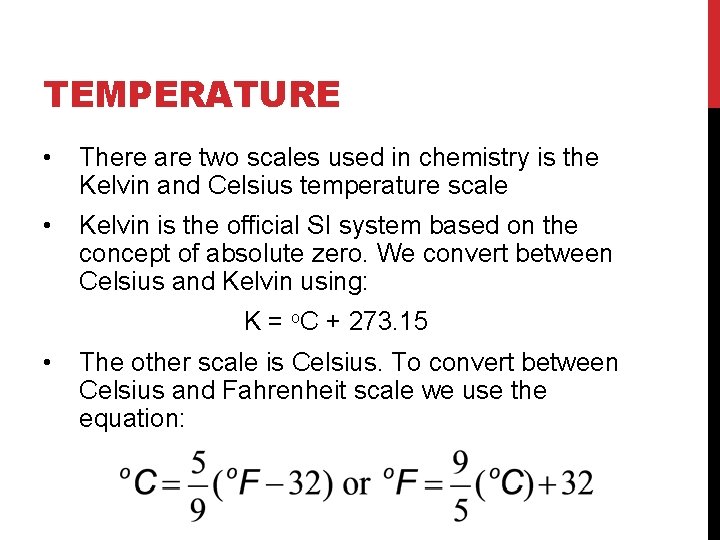
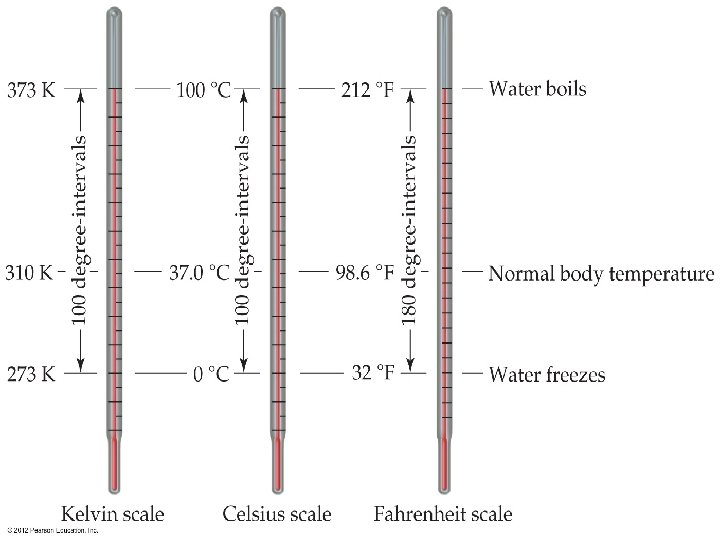
TEMPERATURE • There are two scales used in chemistry is the Kelvin and Celsius temperature scale • Kelvin is the official SI system based on the concept of absolute zero. We convert between Celsius and Kelvin using: K = o. C + 273. 15 • The other scale is Celsius. To convert between Celsius and Fahrenheit scale we use the equation:
DERIVED UNITS: VOLUME • The SI units are used to create all other units. These units are known as derived units. • Volume is a derived unit • Volume is the cube of a substances length (i. e. the derived SI unit for volume is m 3). • Any metric unit cubed can be a unit of volume (e. g. mm 3, cm 3, etc. )
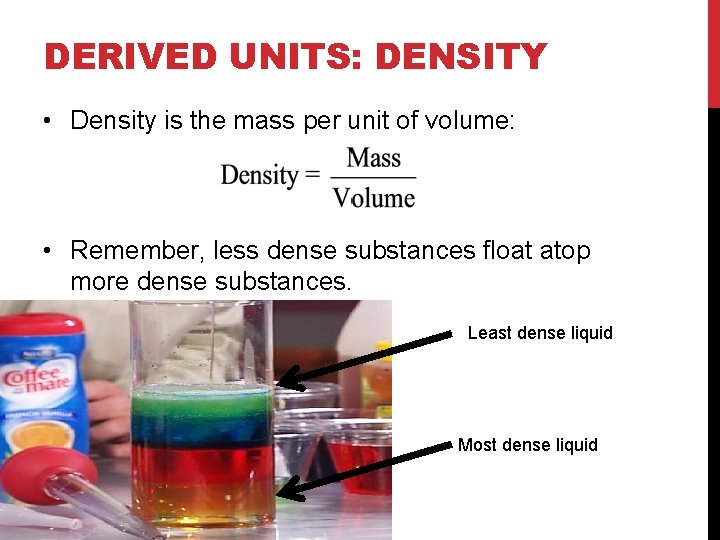
DERIVED UNITS: DENSITY • Density is the mass per unit of volume: • Remember, less dense substances float atop more dense substances. Least dense liquid Most dense liquid
CLASS EXAMPLE • Calculate the density of Hg if 1. 00 x 102 g occupies a volume of 7. 36 cm 3
CLASS EXAMPLE • What is the mass in grams of a cube of gold (density = 19. 32 g/cm 3) if the length of the cube is 2. 00 cm?