
1 4 Understand how moving ice acts as



- Slides: 71
1. 4 Understand how moving ice acts as an agent of erosion and deposition. (Chap. 2) There are two types of glaciation. • Alpine Glaciation • Continental Glaciation
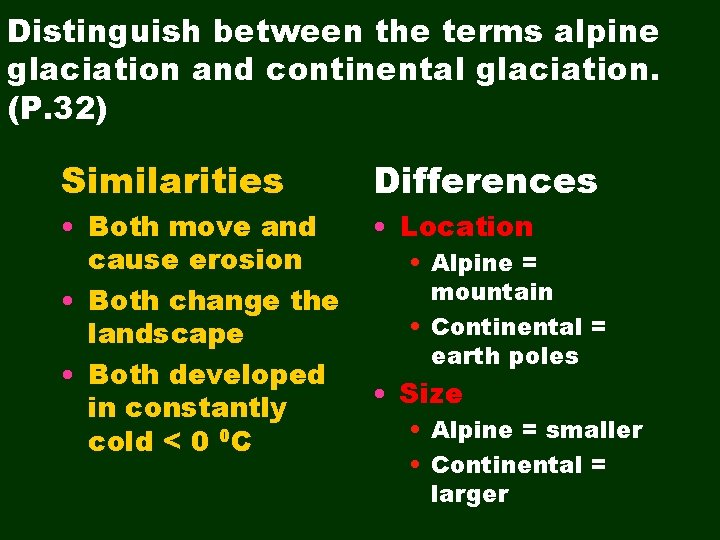
Distinguish between the terms alpine glaciation and continental glaciation. (P. 32)
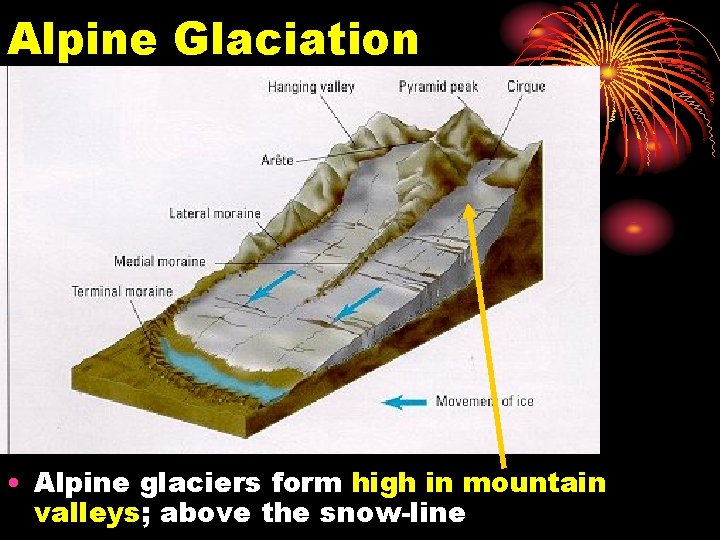
Alpine Glaciation • Alpine glaciers form high in mountain valleys; above the snow-line
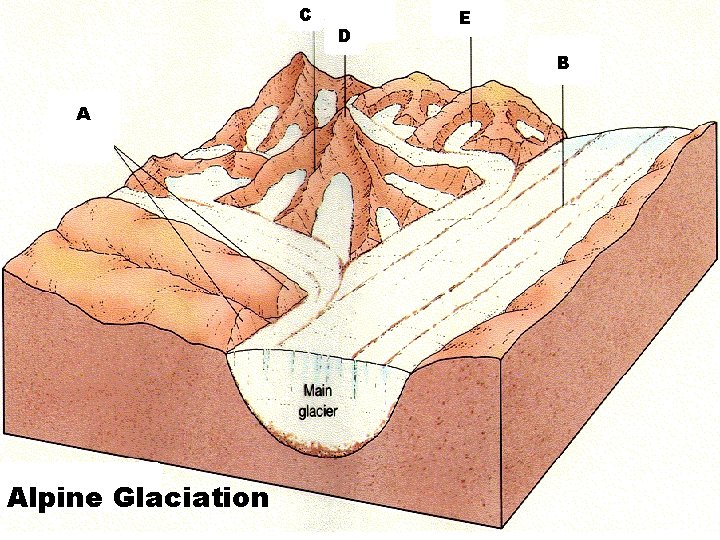
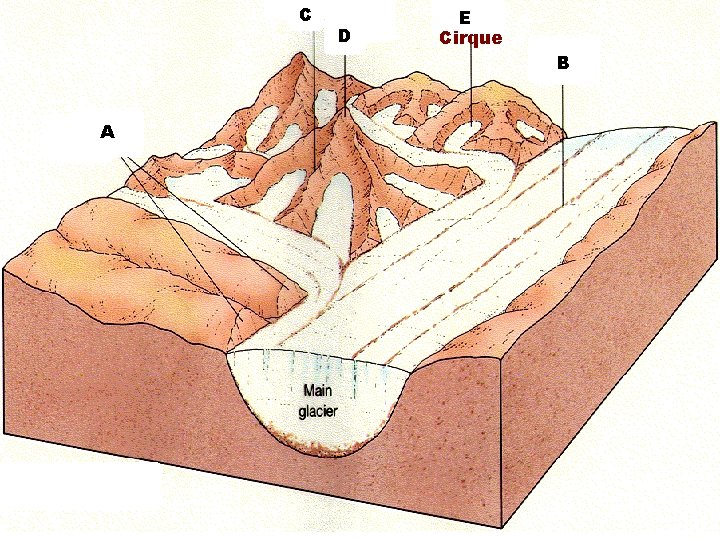
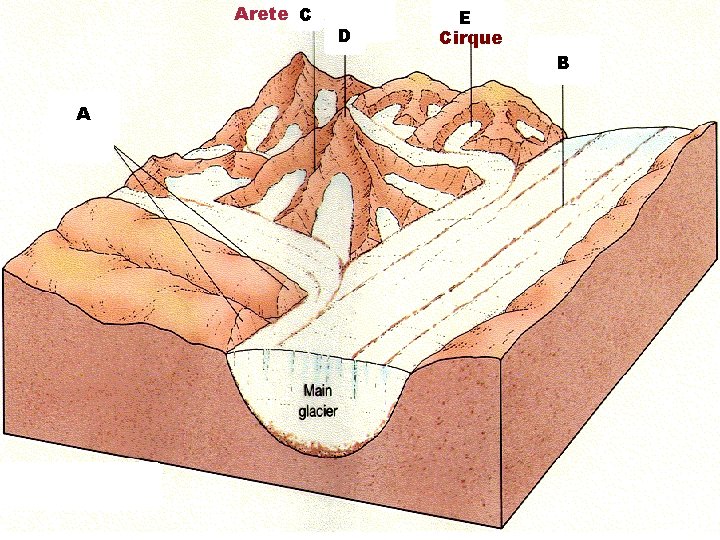
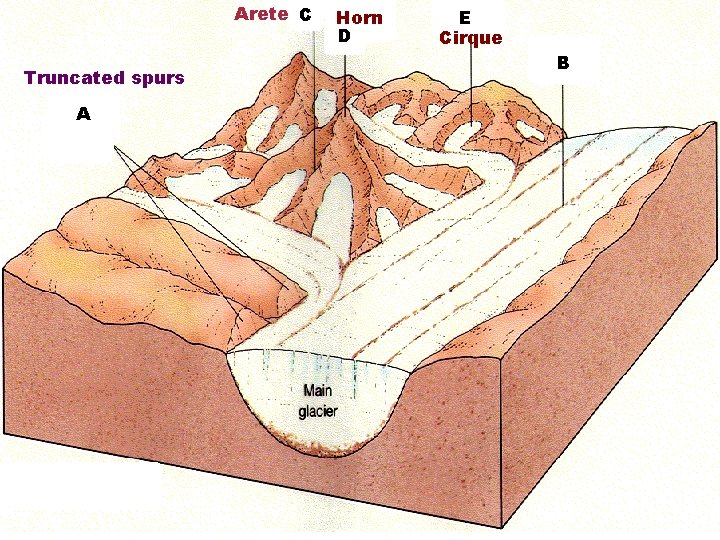
C D E B A Alpine Glaciation
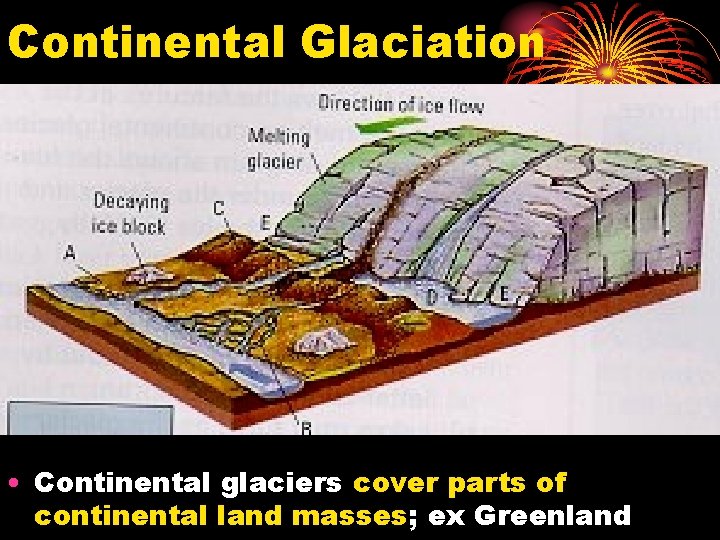
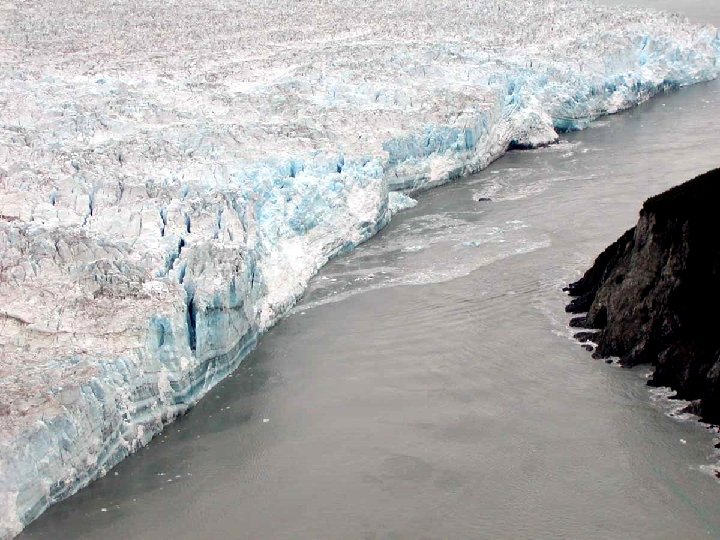
Continental Glaciation • Continental glaciers cover parts of continental land masses; ex Greenland
Distinguish between the terms alpine glaciation and continental glaciation. (P. 32) Similarities • Both move and cause erosion • Both change the landscape • Both developed in constantly cold < 0 0 C Differences • Location • Alpine = mountain • Continental = earth poles • Size • Alpine = smaller • Continental = larger
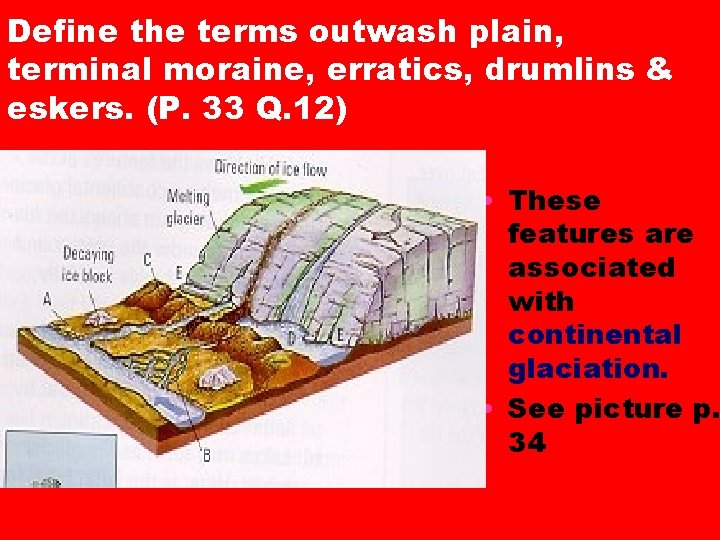
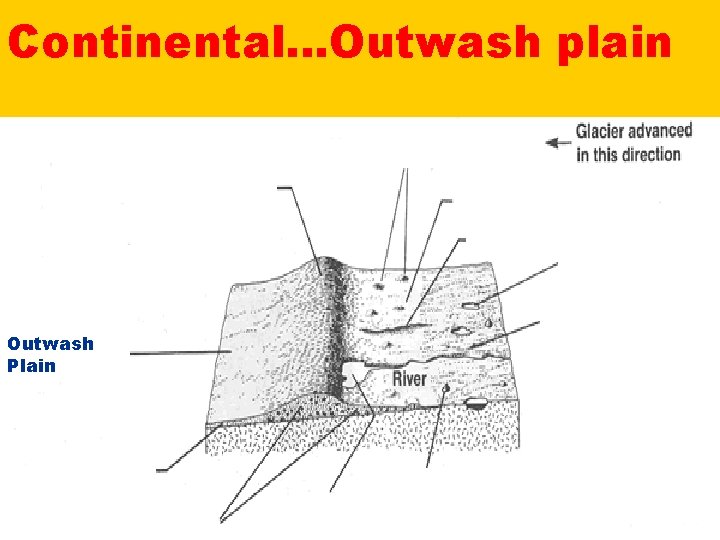
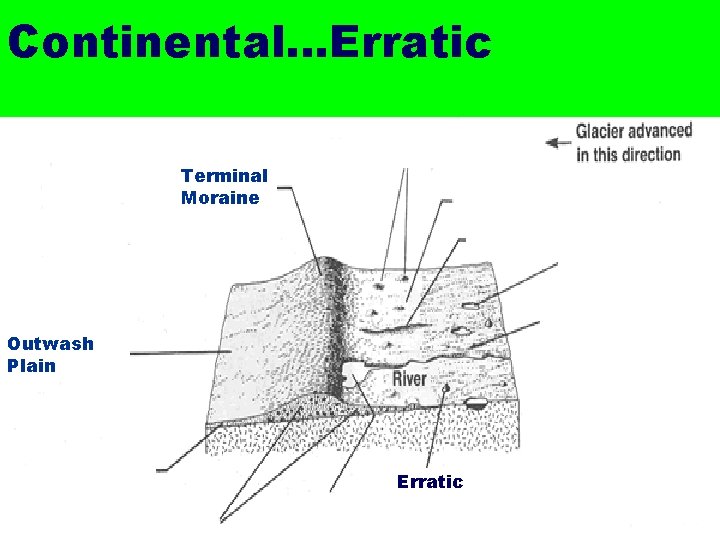
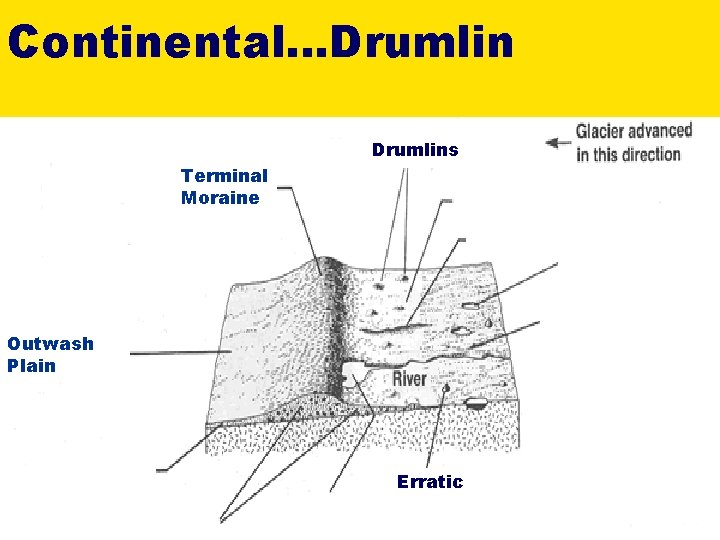
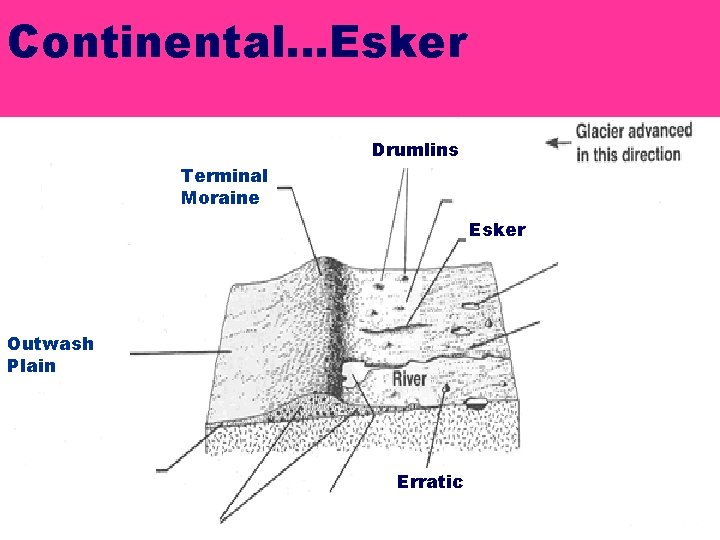
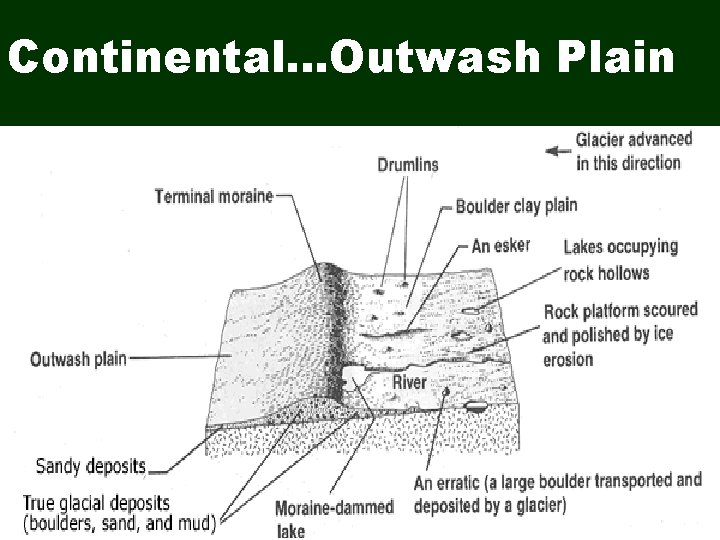
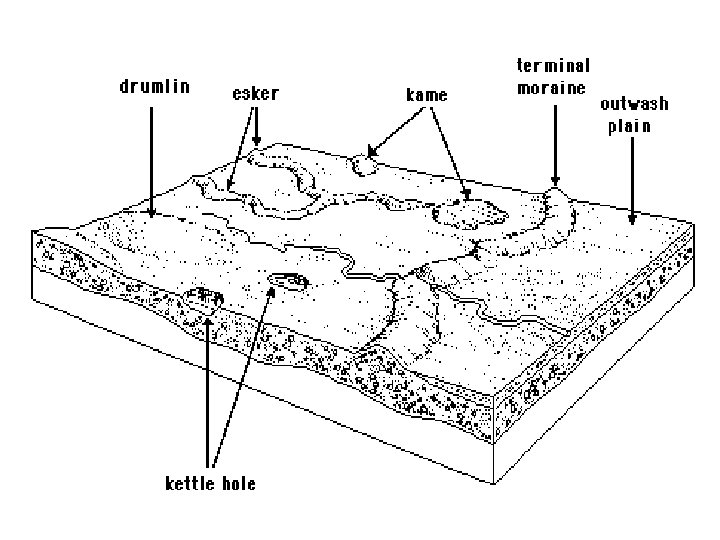
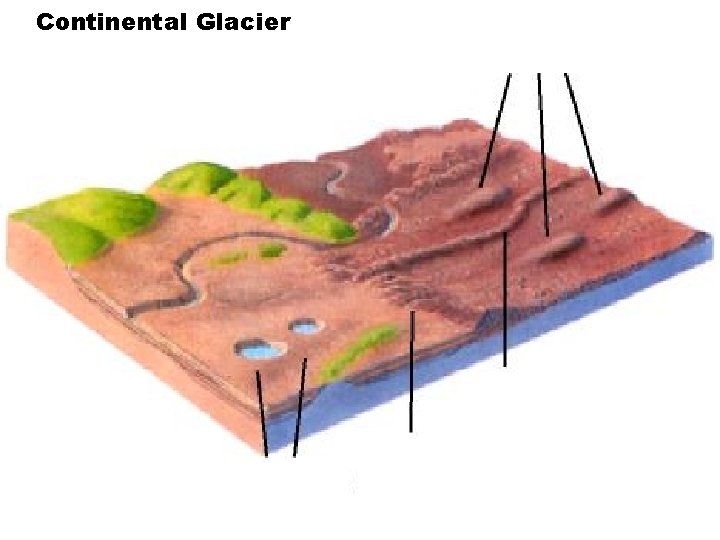
Define the terms outwash plain, terminal moraine, erratics, drumlins & eskers. (P. 33 Q. 12) • These features are associated with continental glaciation. • See picture p. 34
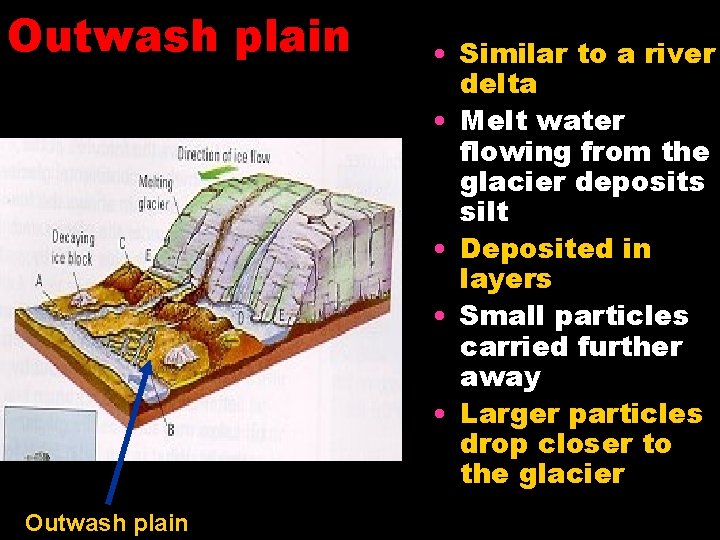
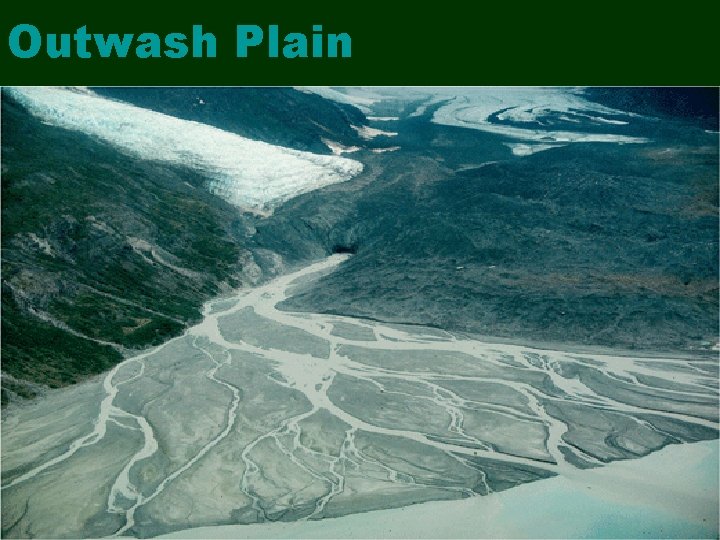
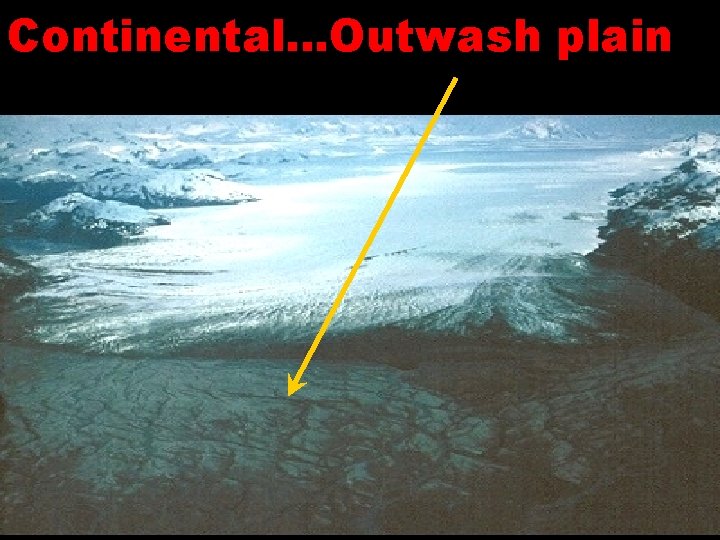
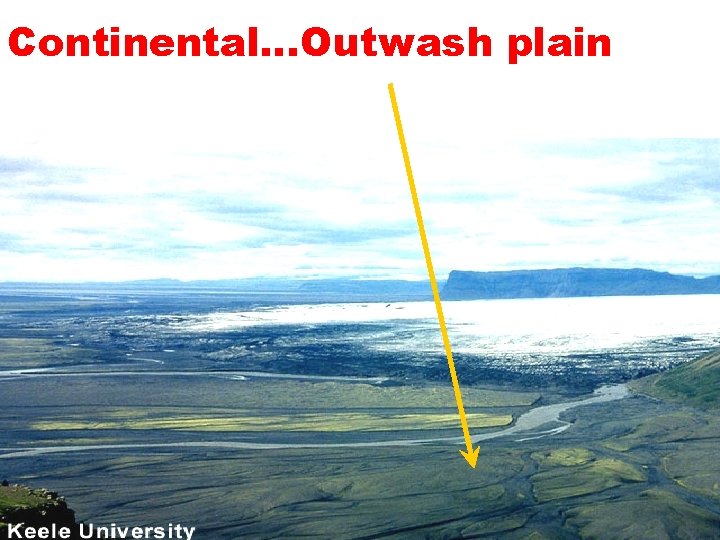
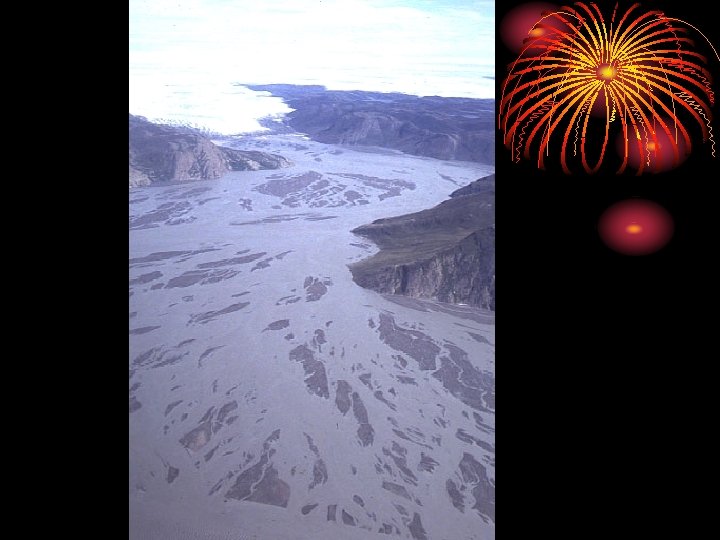
Outwash plain • Similar to a river delta • Melt water flowing from the glacier deposits silt • Deposited in layers • Small particles carried further away • Larger particles drop closer to the glacier
Outwash Plain
Continental…Outwash plain Outwash Plain
Continental…Outwash plain
Continental…Outwash plain
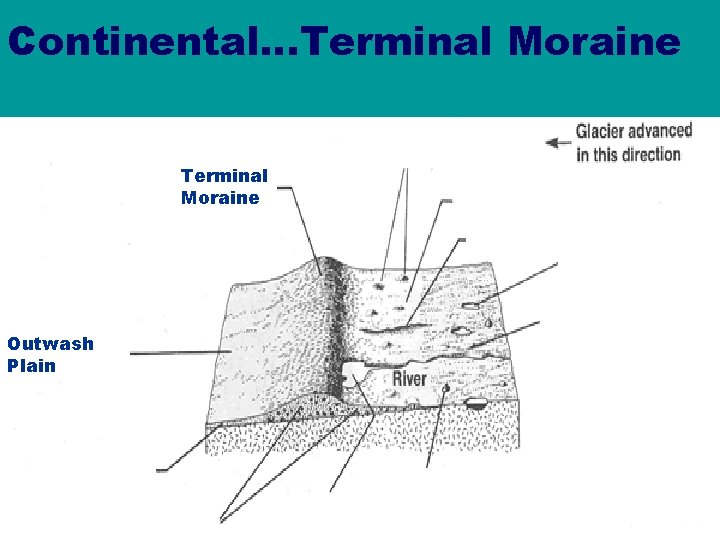
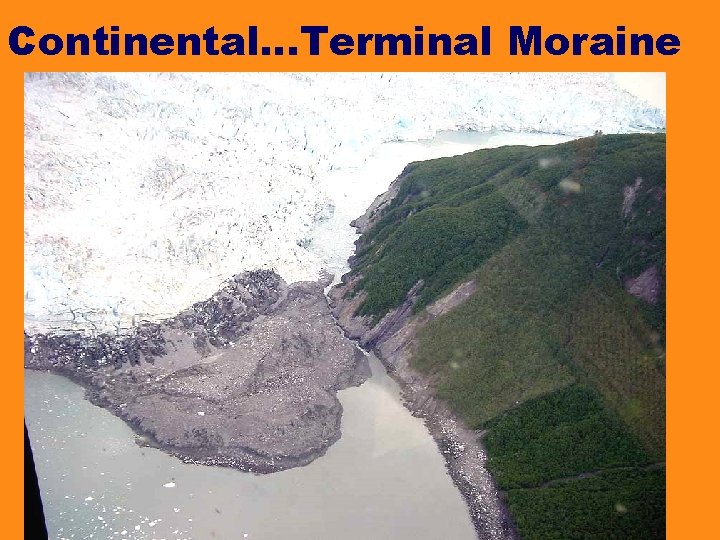
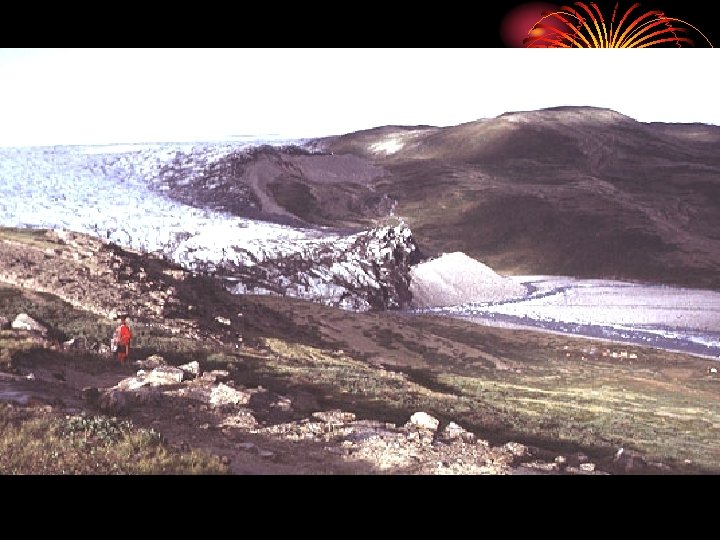
Terminal moraine • Heap or ridge of bulldozed gravel that marks the end of the forward motion of a glacier • As glacier retreats it deposits debris/gravel • P. 34
Continental…Terminal Moraine Outwash Plain
Continental…Terminal Moraine
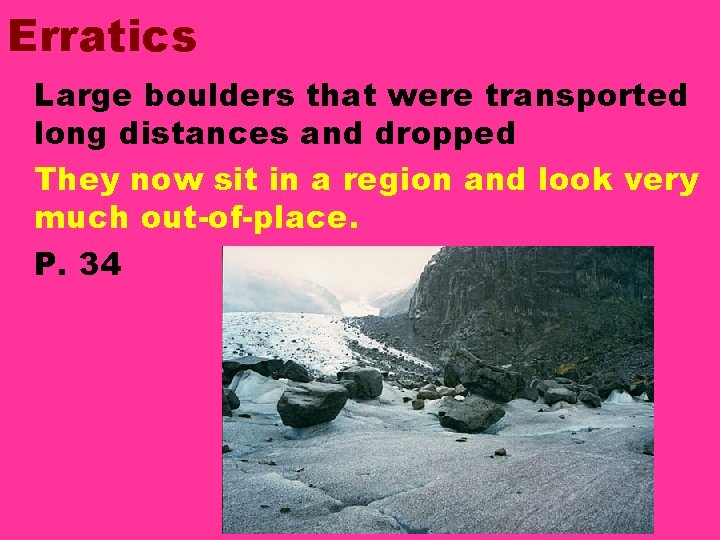
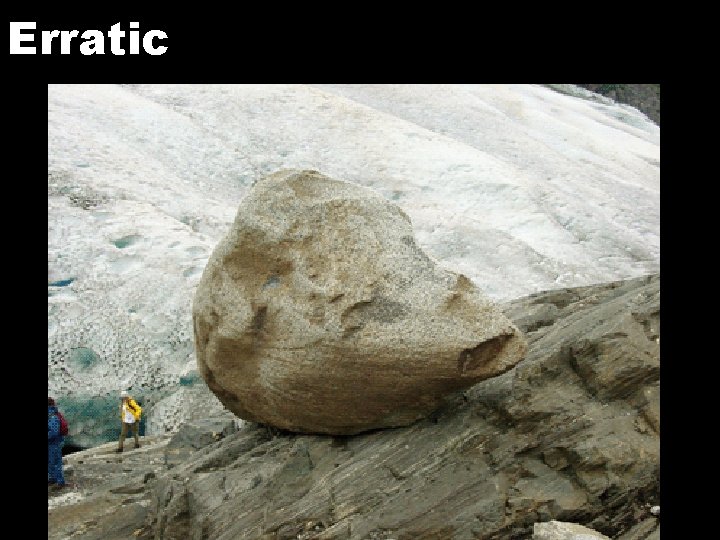
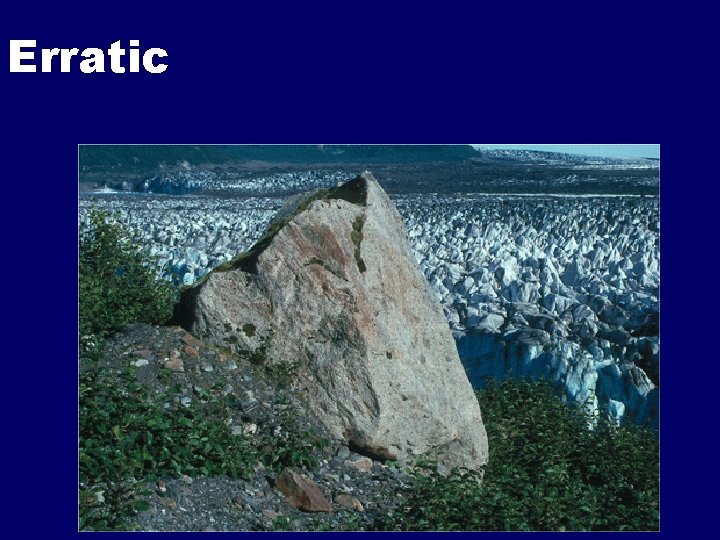
Erratics • Large boulders that were transported long distances and dropped • They now sit in a region and look very much out-of-place. • P. 34
Erratic
Erratic
Continental…Erratic Terminal Moraine Outwash Plain Erratic
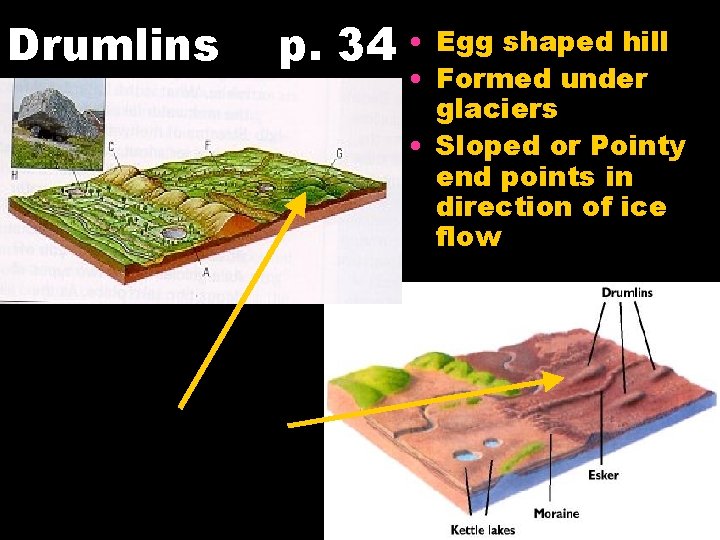
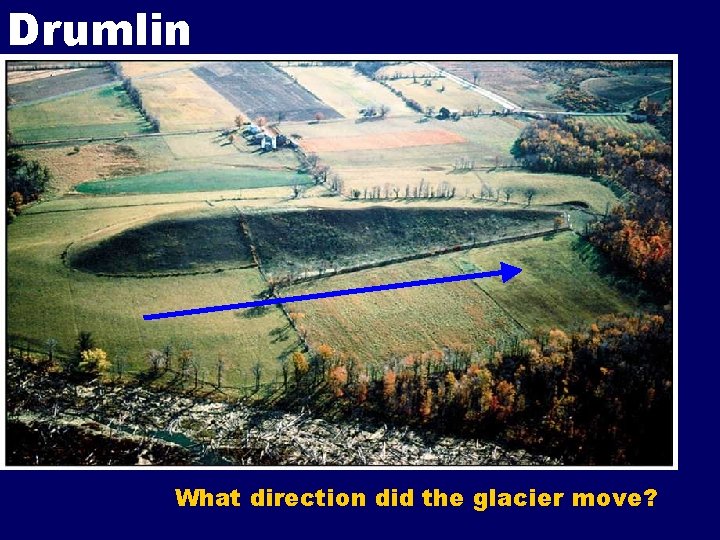
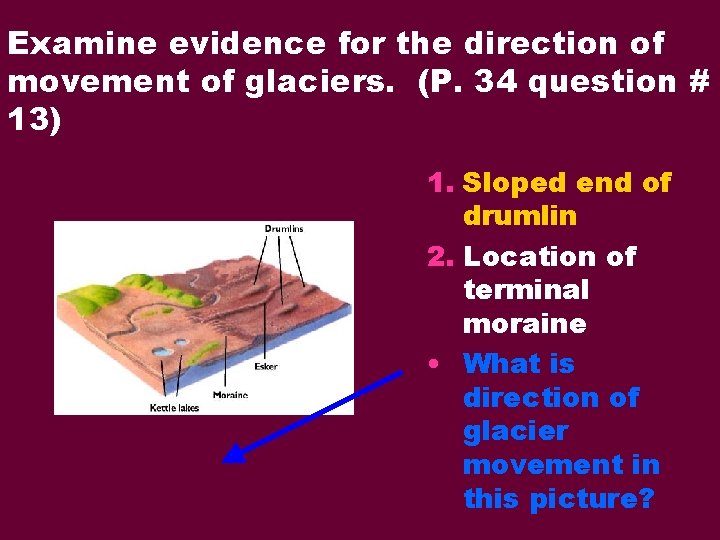
Drumlins p. 34 • Egg shaped hill • Formed under glaciers • Sloped or Pointy end points in direction of ice flow
Drumlins p. 34 • Formation • Ice melts under glacier • Deposits of gravel made • Glacier moves forward • Deposits are bull-dozed along and catches up in rough areas forming piles or drumlins.
Drumlin What direction did the glacier move?
Continental…Drumlins Terminal Moraine Outwash Plain Erratic
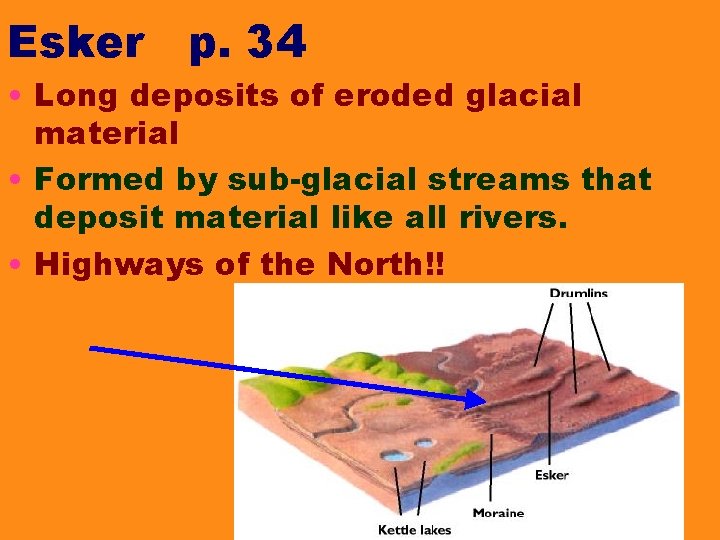
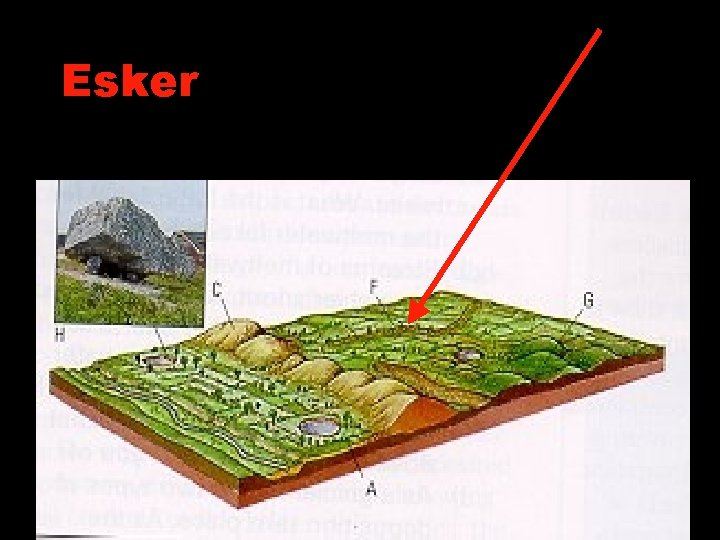
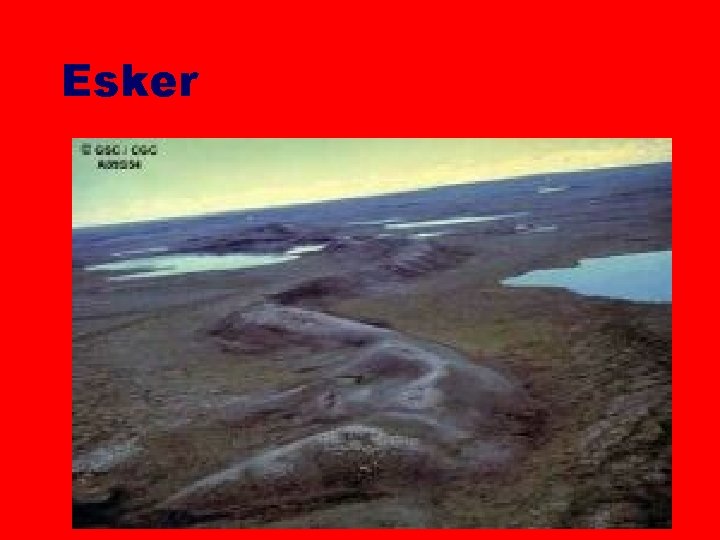
Esker p. 34 • Long deposits of eroded glacial material • Formed by sub-glacial streams that deposit material like all rivers. • Highways of the North!!
Esker
Esker
Continental…Esker Drumlins Terminal Moraine Esker Outwash Plain Erratic
Examine evidence for the direction of movement of glaciers. (P. 34 question # 13) 1. Sloped end of drumlin 2. Location of terminal moraine • What is direction of glacier movement in this picture?
Continental…Outwash Plain
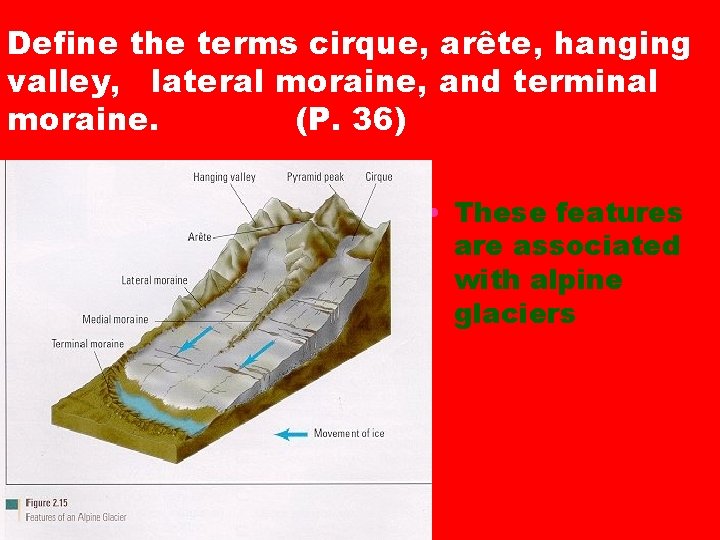
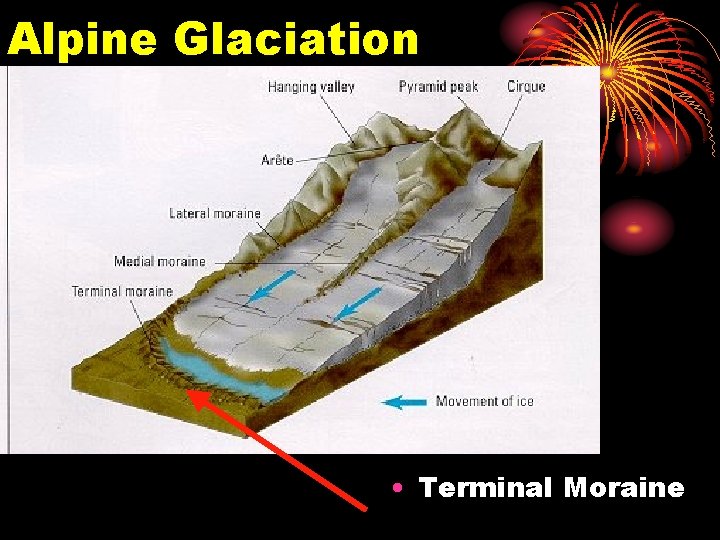
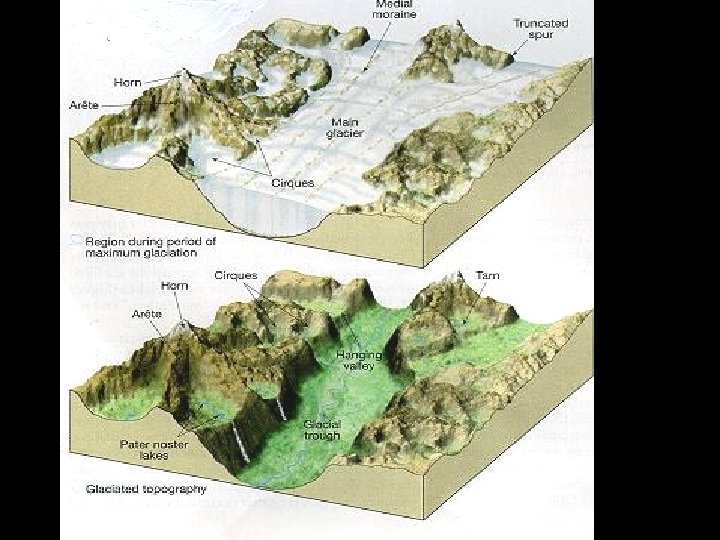
Define the terms cirque, arête, hanging valley, lateral moraine, and terminal moraine. (P. 36) • These features are associated with alpine glaciers
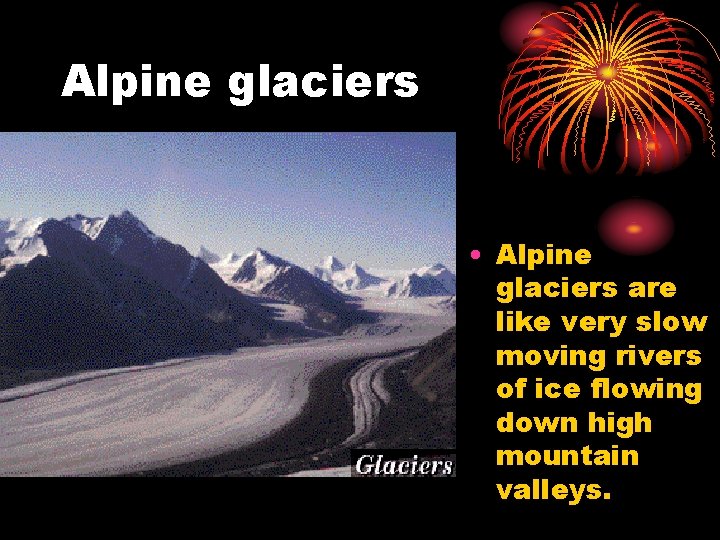
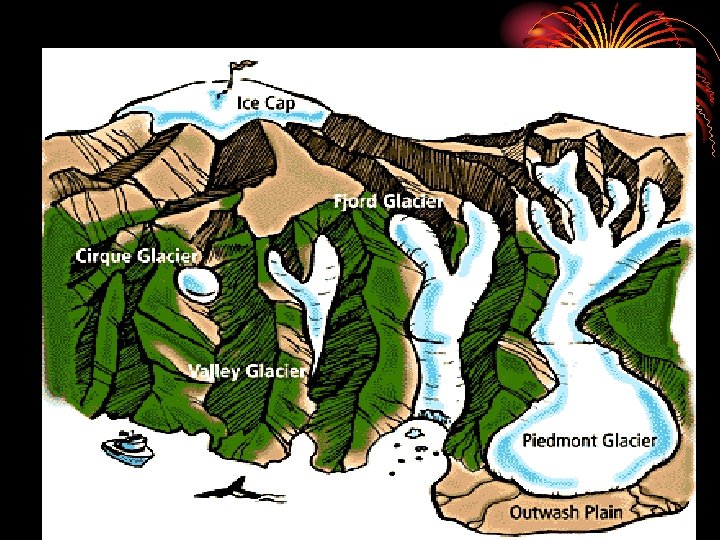
Alpine glaciers • Alpine glaciers are like very slow moving rivers of ice flowing down high mountain valleys.
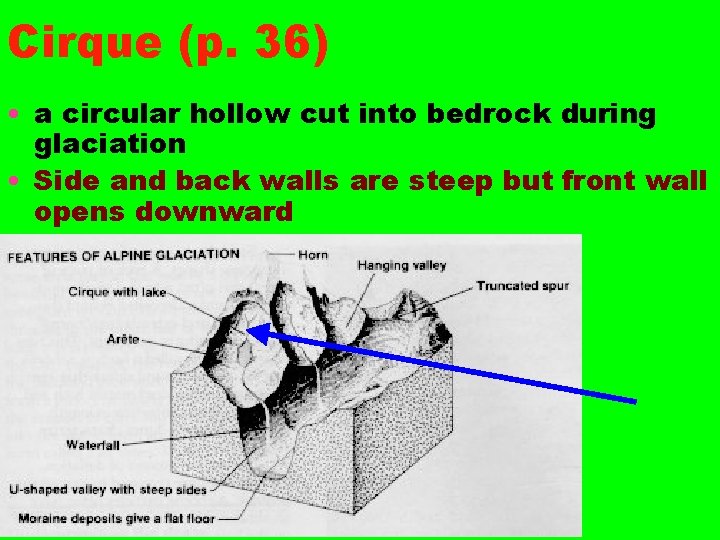
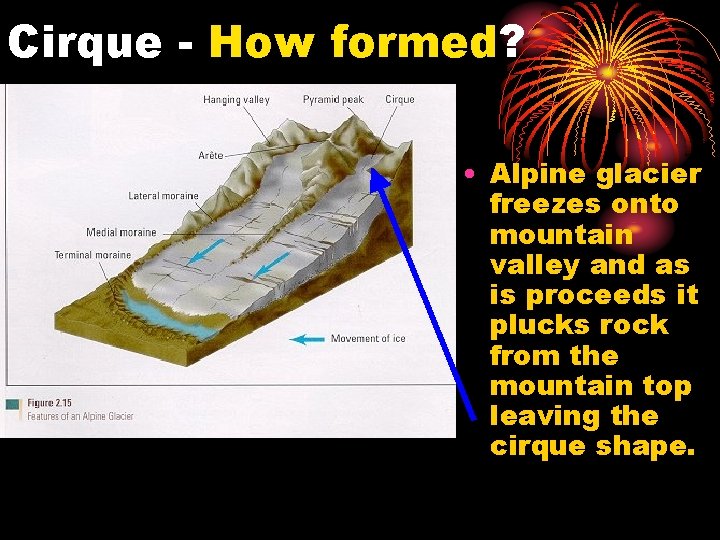
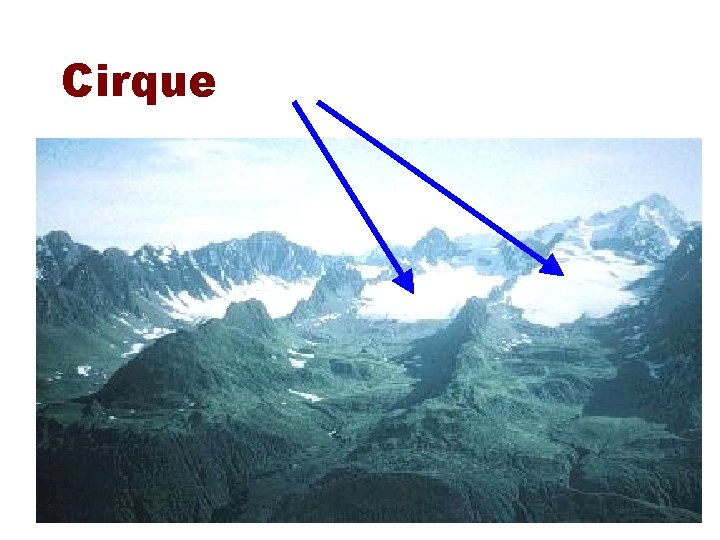
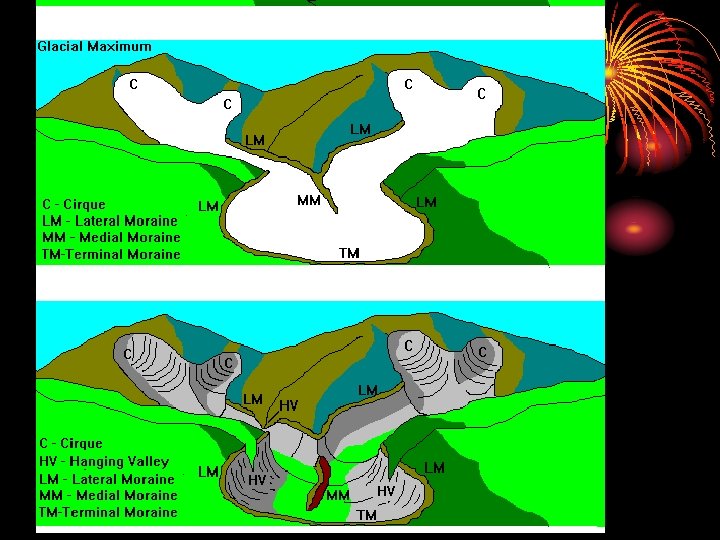
Cirque (p. 36) • a circular hollow cut into bedrock during glaciation • Side and back walls are steep but front wall opens downward
Cirque - How formed? • Alpine glacier freezes onto mountain valley and as is proceeds it plucks rock from the mountain top leaving the cirque shape.
C A D E Cirque B
Cirque
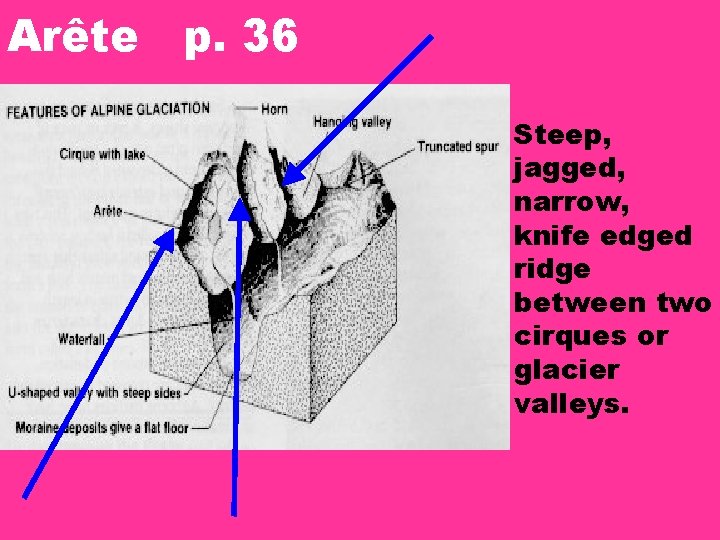
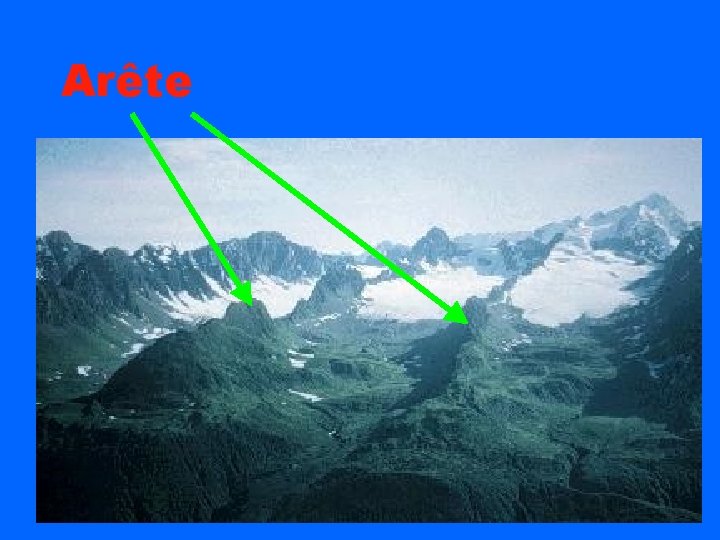
Arête p. 36 • Steep, jagged, narrow, knife edged ridge between two cirques or glacier valleys.
Arete C A D E Cirque B
Arête
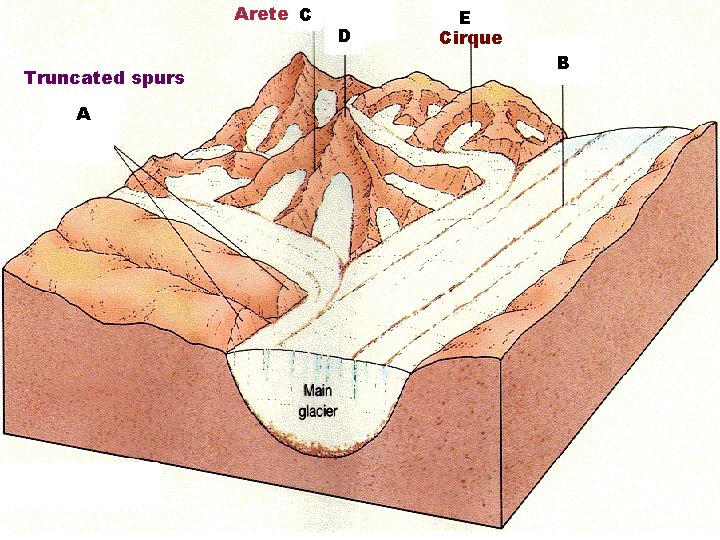
Truncated Spur • Blunt-ended ridge of rock jutting from the side of a glacial trough, or valley
Arete C Truncated spurs A D E Cirque B
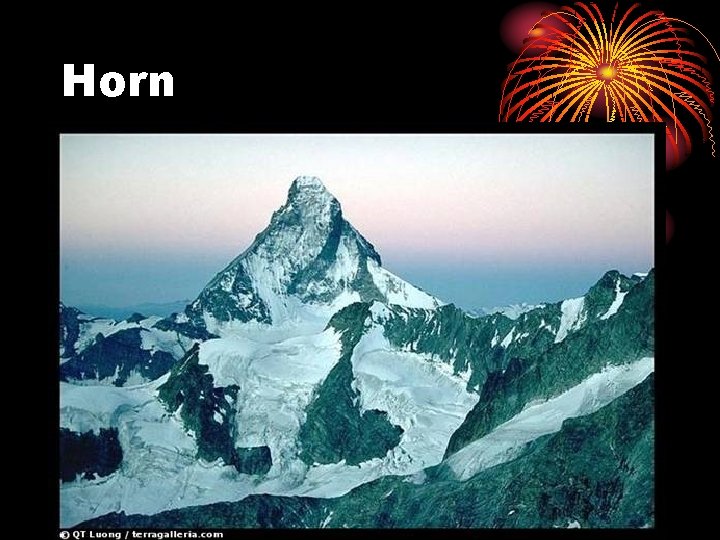
Horn or Pyramidal Peak • is a mountaintop (peak) that has been modified by the action of ice during glaciation.
Arete C Truncated spurs A Horn D E Cirque B
Horn
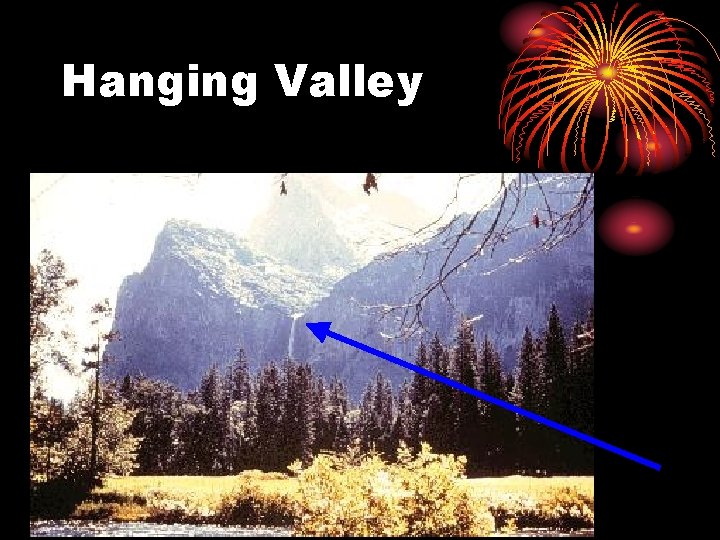
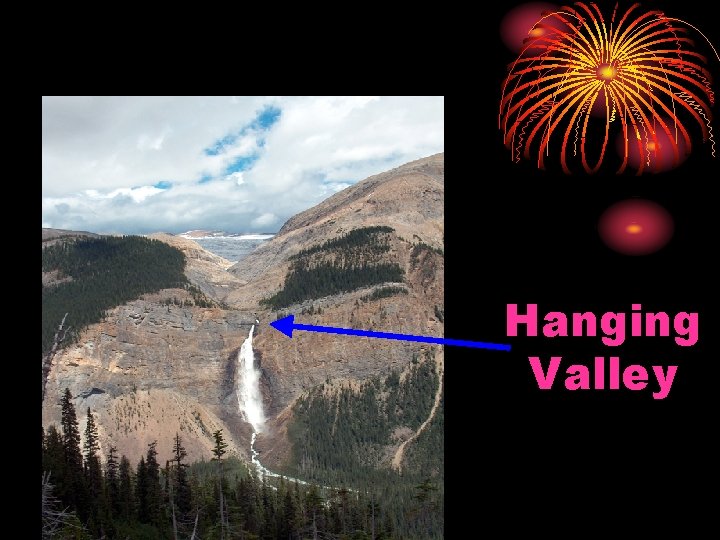
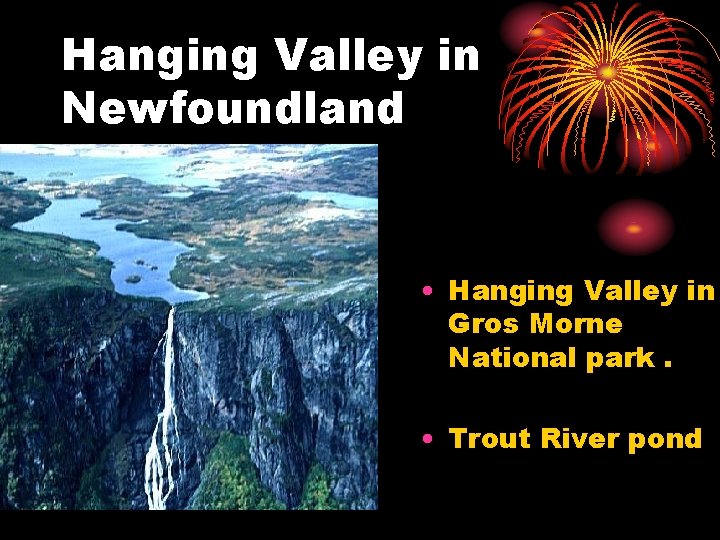
Hanging Valley Most noticeable once glacier has melted! • A high level tributary valley from which the ground falls sharply to the level of the lower, main valley. • The depth of the lower valley is due to more severe glaciation.
Hanging Valley
Hanging Valley
Hanging Valley in Newfoundland • Hanging Valley in Gros Morne National park. • Trout River pond
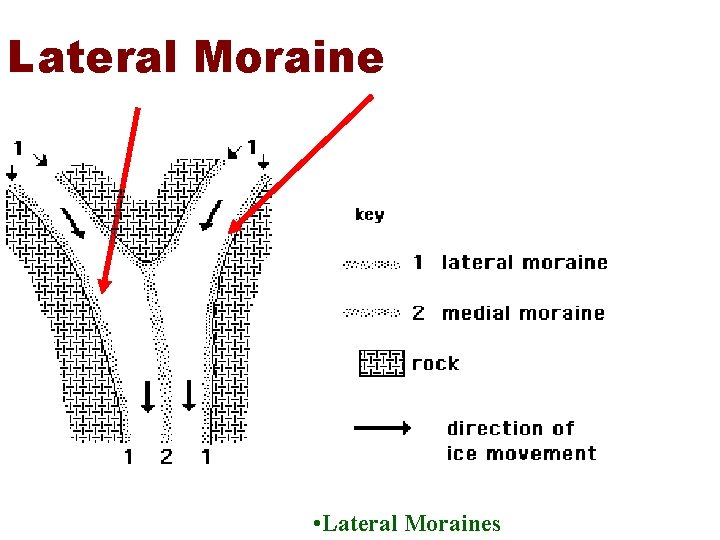
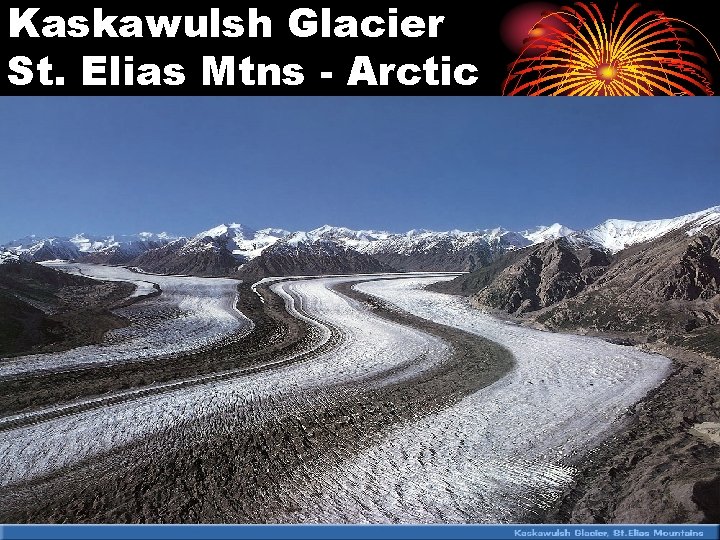
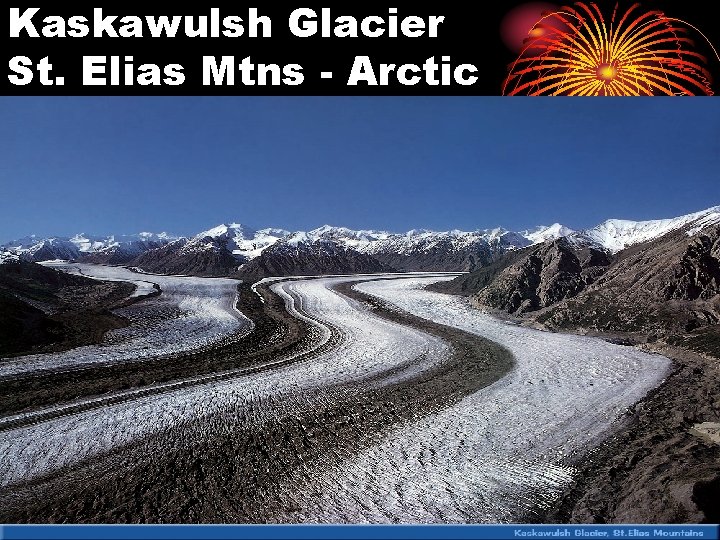
Lateral Moraine • Moraine means 'rock waste'. It is also known as glacial till • Lateral Moraine is the land-form deposited at the side of a glacier • Debris/waste rock drops off the side of the mountain as the glacier moves forming a ridge of debris at the outer -sides of the glacier.
Lateral Moraine • Lateral Moraines
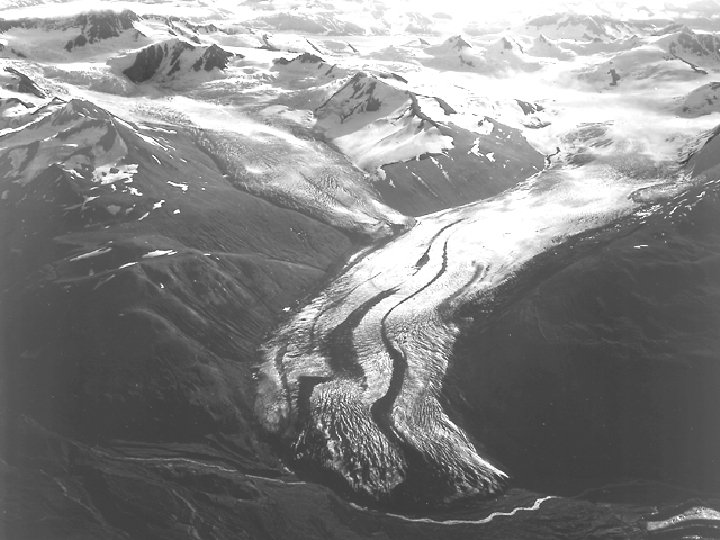
Kaskawulsh Glacier St. Elias Mtns - Arctic
Terminal Moraine • deposits that mark the farthest extent of the glacier • Good indicator of the direction or movement of the glacier as well.
Alpine Glaciation • Terminal Moraine
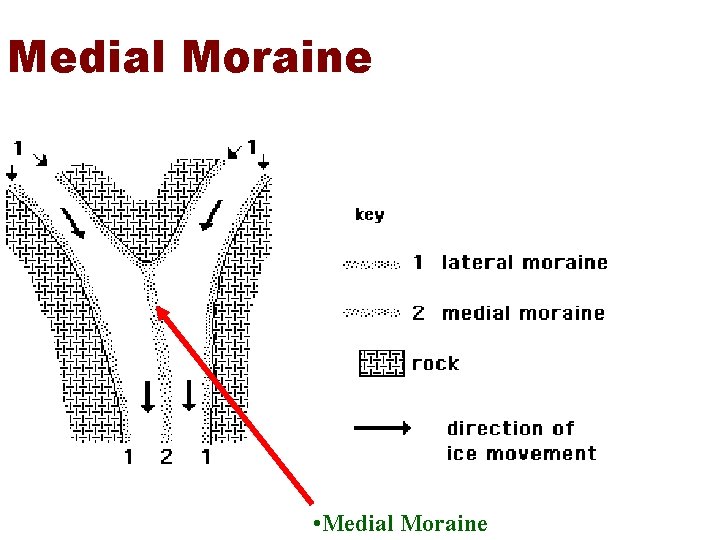
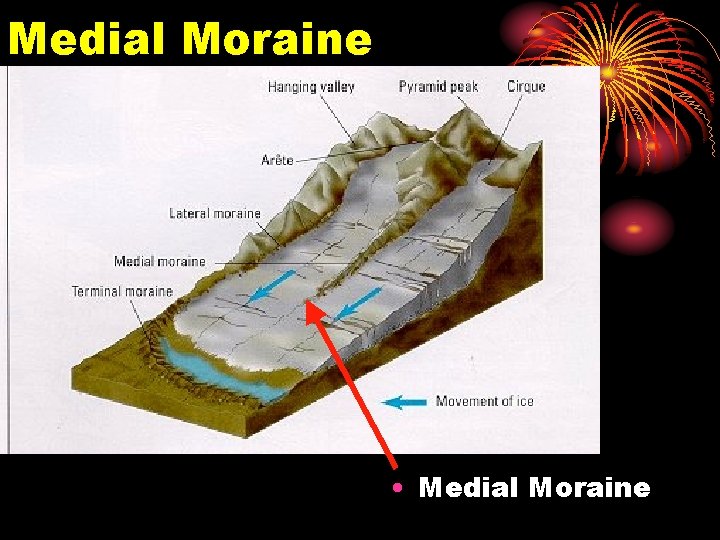
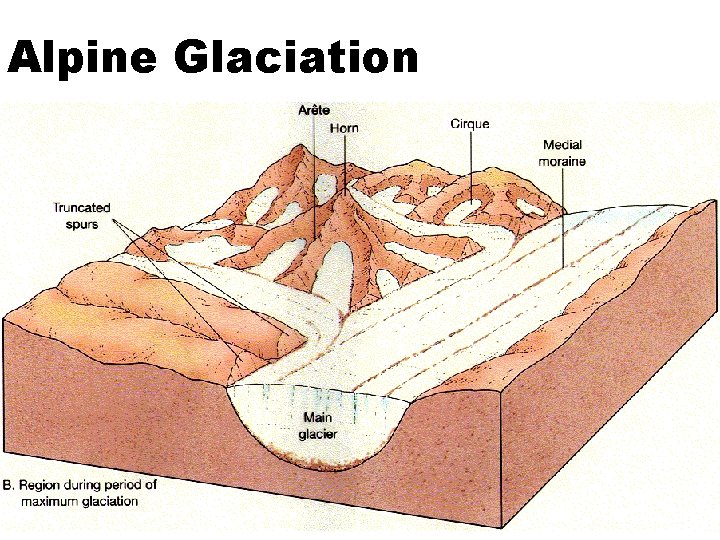
Medial Moraine • This is a ridge of rock waste found along the middle of the floor of a u - shaped valley. • It occurs when two glaciers meet, two lateral moraines unite to form a medial moraine.
Medial Moraine • Medial Moraine
Medial Moraine • Medial Moraine
Alpine Glaciation
Kaskawulsh Glacier St. Elias Mtns - Arctic
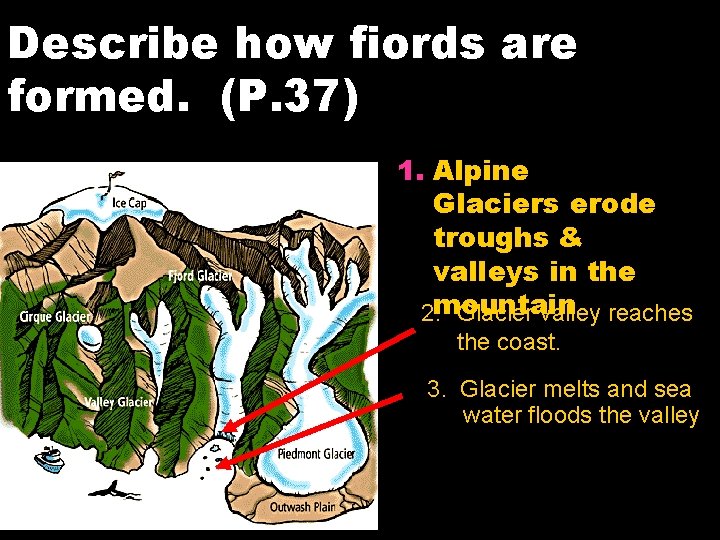
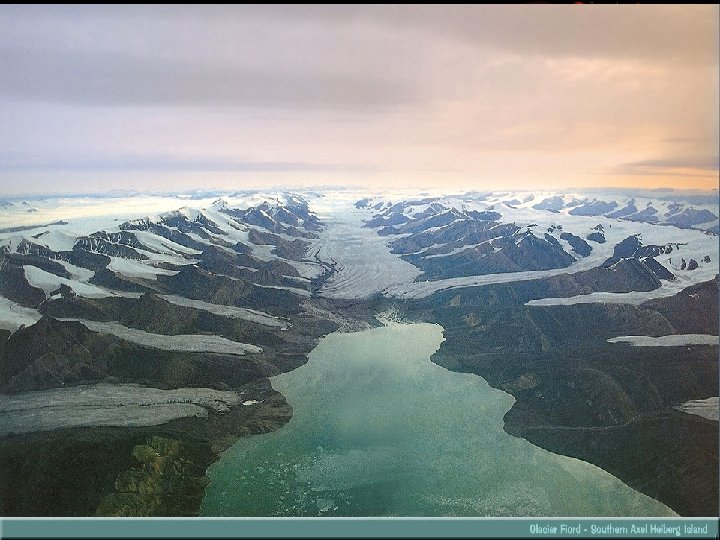
Describe how fiords are formed. (P. 37) 1. Alpine Glaciers erode troughs & valleys in the 2. mountain Glacier valley reaches the coast. 3. Glacier melts and sea water floods the valley
Fiord • A glacially eroded or modified Ushaped valley that extends below sea level and connects to the ocean. Filled with seawater…
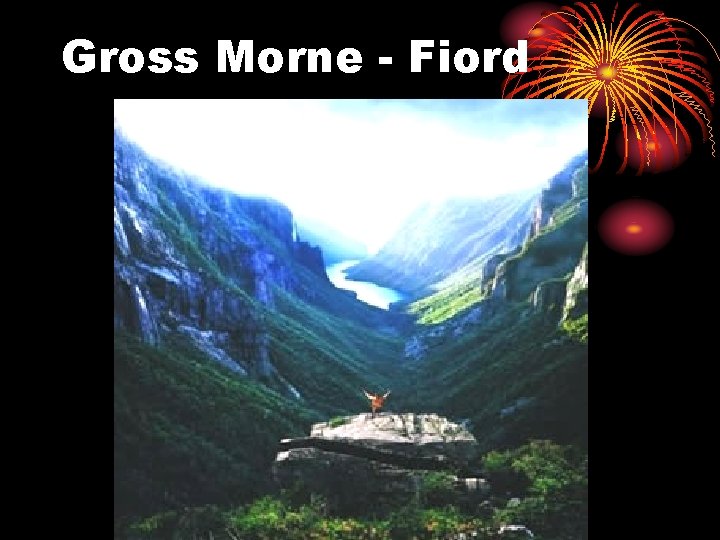
Gross Morne - Fiord
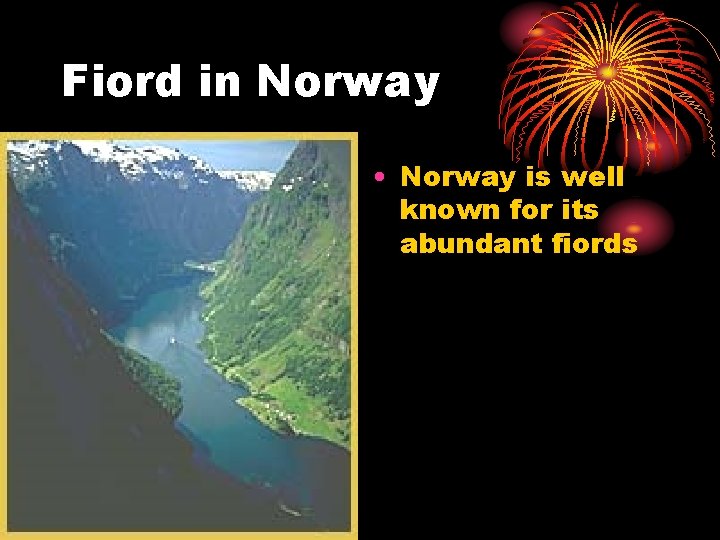
Fiord in Norway • Norway is well known for its abundant fiords
Continental Glacier