
1 4 Membrane Transport Understanding Particles move across
1. 4 Membrane Transport Understanding: - Particles move across membranes by simple diffusion, facilitated diffusion, osmosis and active transport - The fluidity of membranes allows materials to be taken into cells by endocytosis or released by exocytosis - Vesicles move materials within cells Skills: - Estimation of osmolarity in tissues by bathing samples in hypotonic and hypertonic solutions Applications: - Structure and function of sodium potassium pumps for active transport and potassium channels for facilitated diffusion in axons - Tissues or organs to be used in medical procedures must be bathed in a solution with the same osmolarity as the cytoplasm to prevent osmosis Nature of science: - Experimental design: accurate quantitative measurements in osmosis experiments are essential
Active Transport • Define active transport • Describe how membrane proteins are involved in active transport
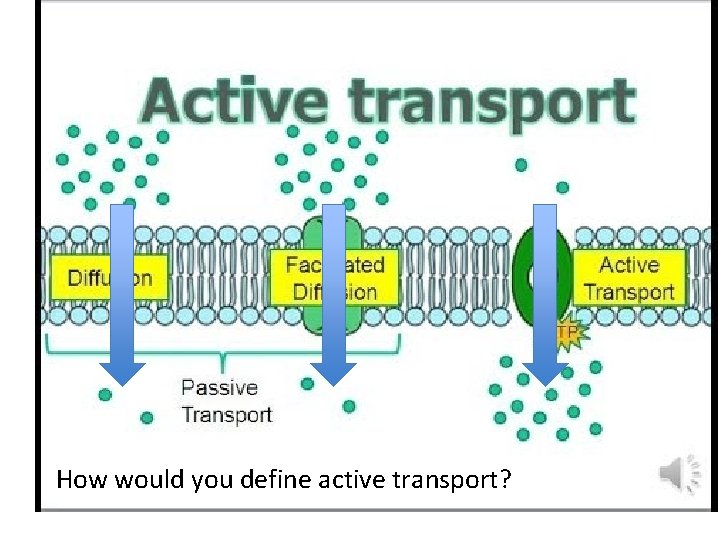
How would you define active transport?
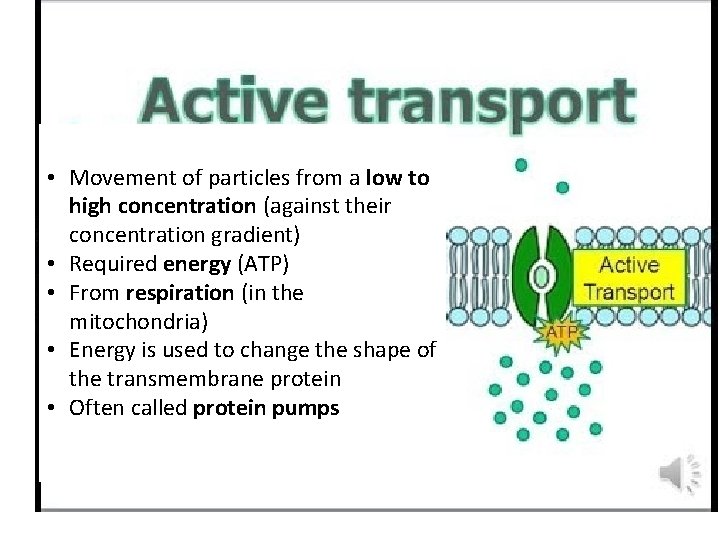
• Movement of particles from a low to high concentration (against their concentration gradient) • Required energy (ATP) • From respiration (in the mitochondria) • Energy is used to change the shape of the transmembrane protein • Often called protein pumps
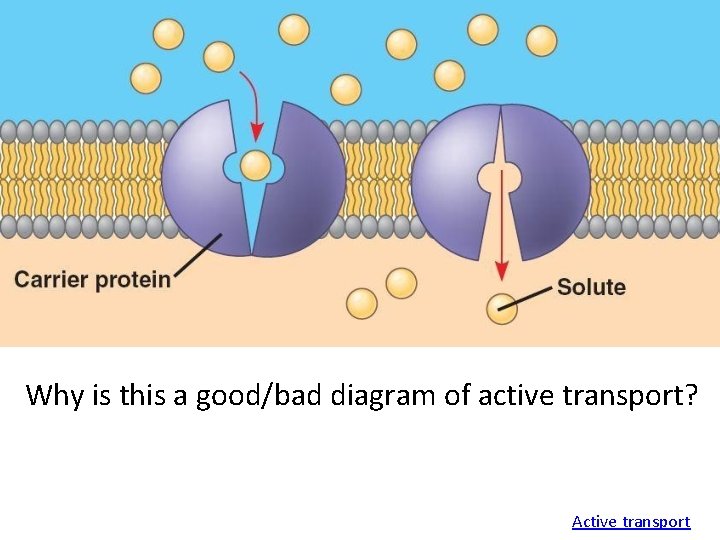
Why is this a good/bad diagram of active transport? Active transport

• How will the minerals ( ) enter the root hair cell? (1) • How is the root hair cell adapted for taking in minerals by this process? (3) • Gardeners aerate the soil (dig to get more air into the soil). Why do you think they do this? (3)
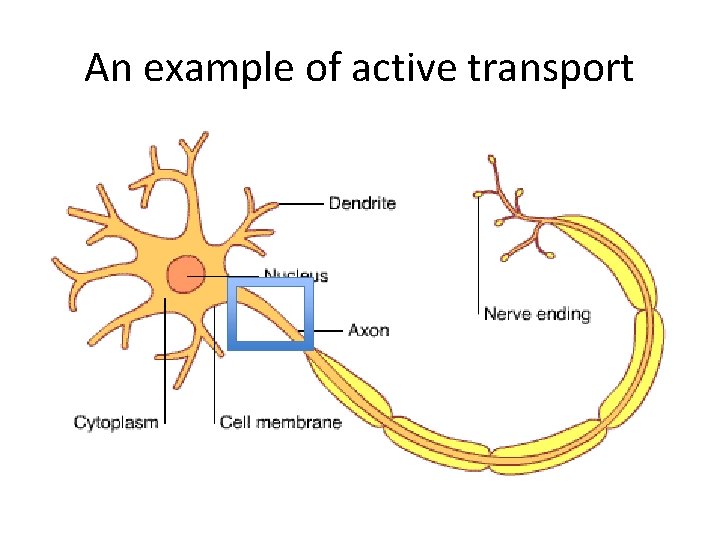
An example of active transport

- Slides: 9