
1 4 Final Absorption The Small Intestine Liver
1. 4 Final Absorption
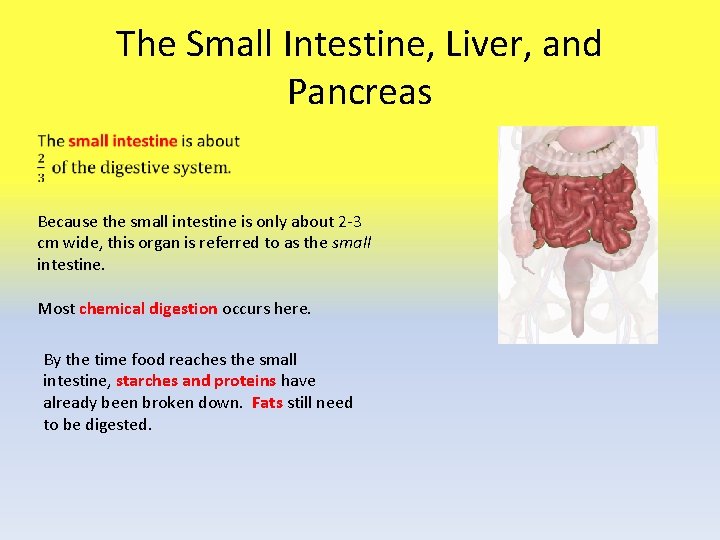
The Small Intestine, Liver, and Pancreas Because the small intestine is only about 2 -3 cm wide, this organ is referred to as the small intestine. Most chemical digestion occurs here. By the time food reaches the small intestine, starches and proteins have already been broken down. Fats still need to be digested.
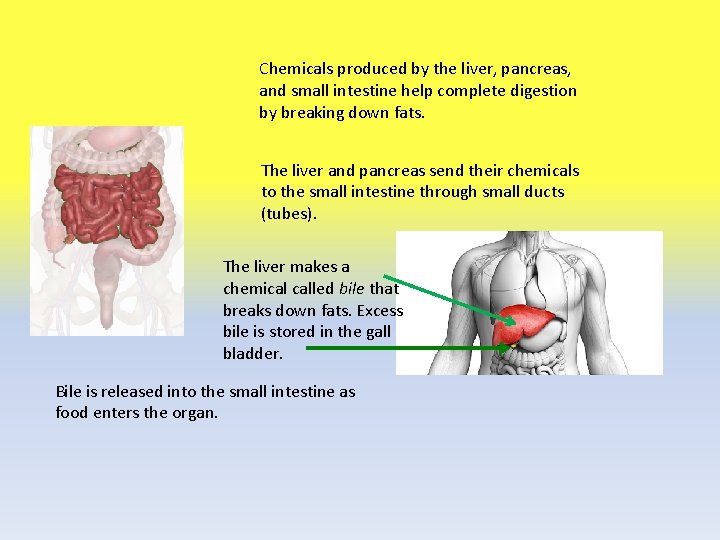
Chemicals produced by the liver, pancreas, and small intestine help complete digestion by breaking down fats. The liver and pancreas send their chemicals to the small intestine through small ducts (tubes). The liver makes a chemical called bile that breaks down fats. Excess bile is stored in the gall bladder. Bile is released into the small intestine as food enters the organ.
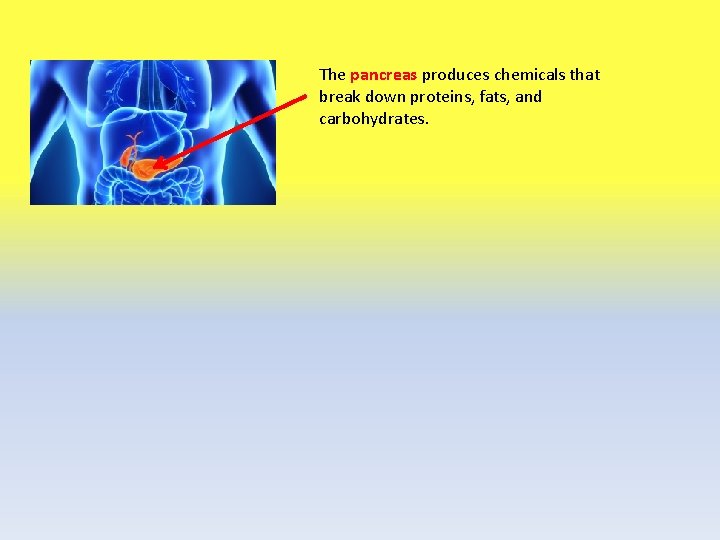
The pancreas produces chemicals that break down proteins, fats, and carbohydrates.
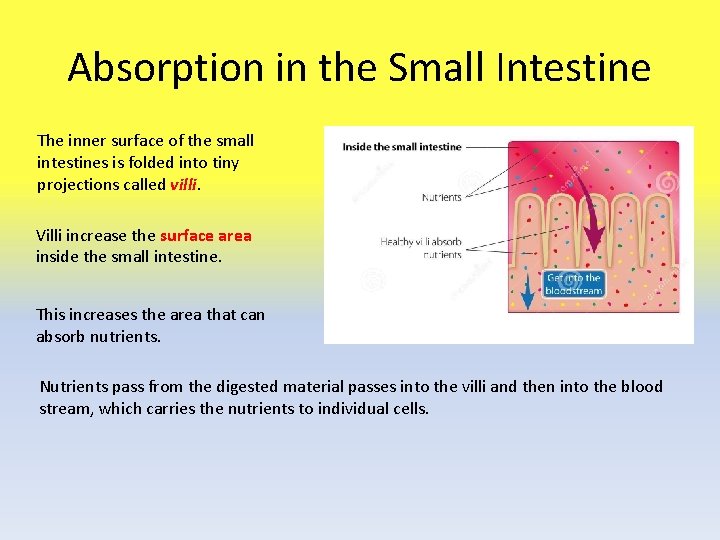
Absorption in the Small Intestine The inner surface of the small intestines is folded into tiny projections called villi. Villi increase the surface area inside the small intestine. This increases the area that can absorb nutrients. Nutrients pass from the digested material passes into the villi and then into the blood stream, which carries the nutrients to individual cells.
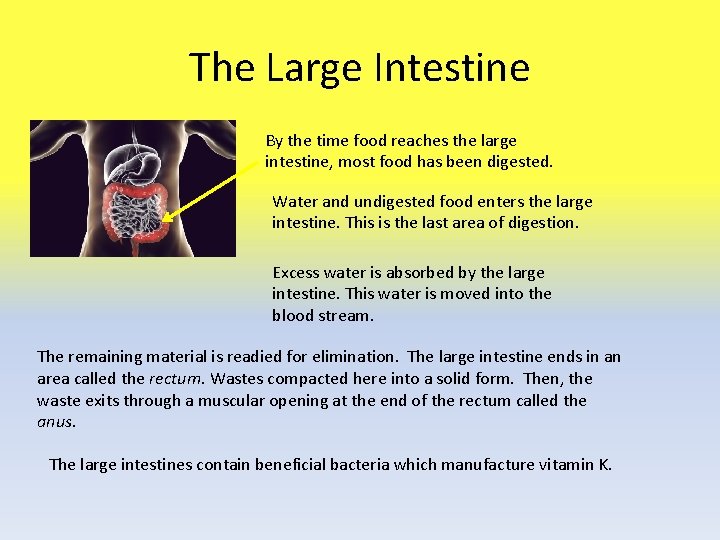
The Large Intestine By the time food reaches the large intestine, most food has been digested. Water and undigested food enters the large intestine. This is the last area of digestion. Excess water is absorbed by the large intestine. This water is moved into the blood stream. The remaining material is readied for elimination. The large intestine ends in an area called the rectum. Wastes compacted here into a solid form. Then, the waste exits through a muscular opening at the end of the rectum called the anus. The large intestines contain beneficial bacteria which manufacture vitamin K.
- Slides: 6