
1 4 Covalent Network Elements Diamond Structure LO
- Slides: 8
1. 4 Covalent Network Elements Diamond Structure LO: I understand how the structure of diamond relates to its properties
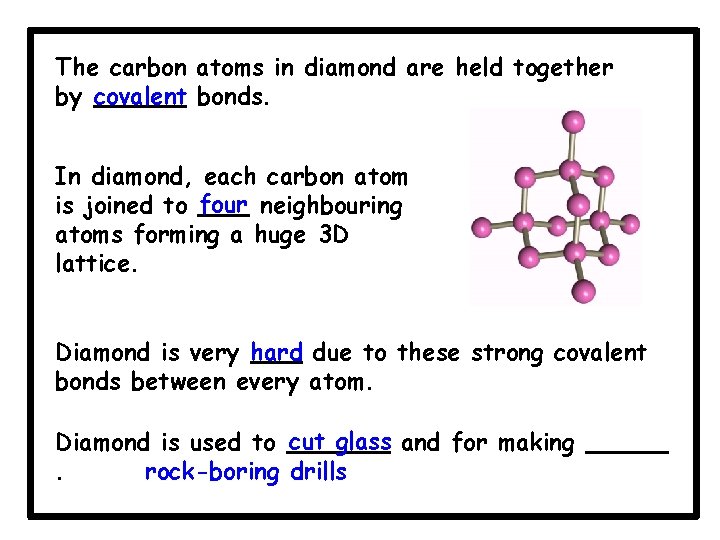
The carbon atoms in diamond are held together by covalent bonds. In diamond, each carbon atom is joined to four neighbouring atoms forming a huge 3 D lattice. Diamond is very hard due to these strong covalent bonds between every atom. Diamond is used to cut glass and for making. rock-boring drills
Networks and Melting Points LO: I understand the relationship between network structures and their melting and boiling points.
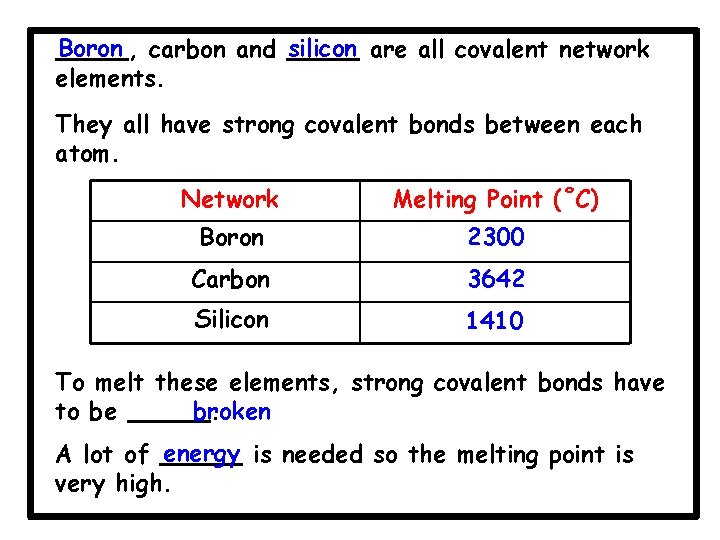
Boron , carbon and silicon are all covalent network elements. They all have strong covalent bonds between each atom. Network Melting Point (˚C) Boron 2300 Carbon 3642 Silicon 1410 To melt these elements, strong covalent bonds have to be. broken A lot of energy is needed so the melting point is very high.
Graphite Structure LO: I understand how the structure of graphite relates to its properties
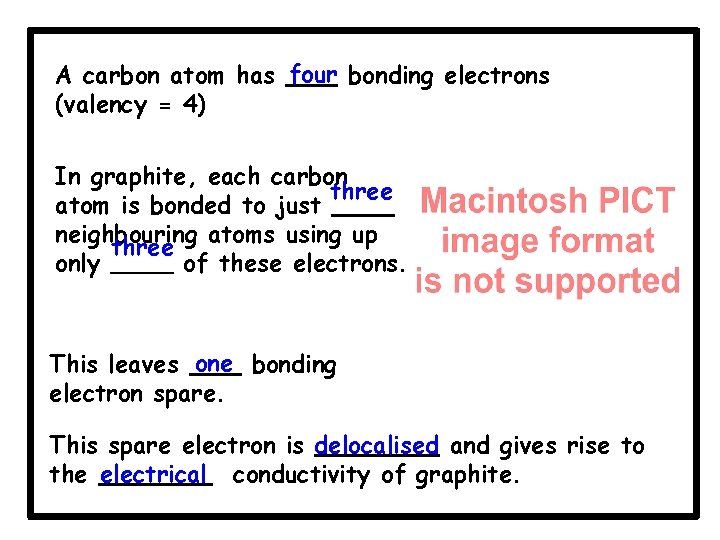
A carbon atom has four bonding electrons (valency = 4) In graphite, each carbon three atom is bonded to just neighbouring atoms using up three only of these electrons. This leaves one bonding electron spare. This spare electron is delocalised and gives rise to the electrical , conductivity of graphite.
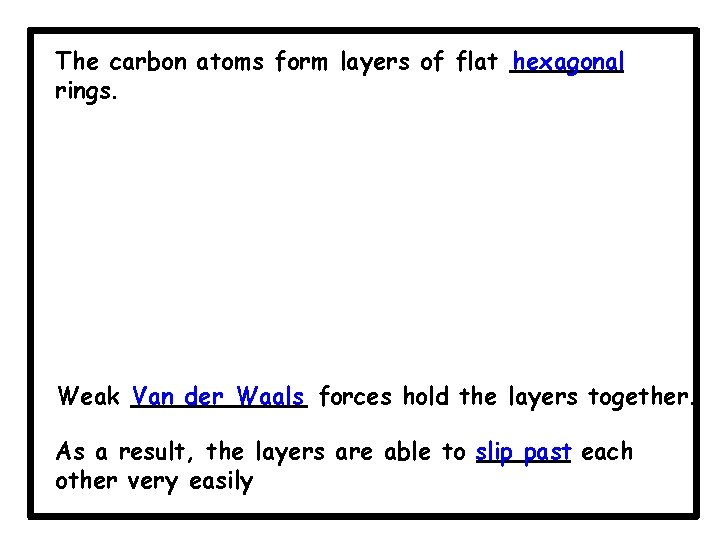
The carbon atoms form layers of flat hexagonal rings. Weak Van der Waals forces hold the layers together. As a result, the layers are able to slip past each other very easily
Uses of graphite The conduction properties of graphite make it useful as: • electrodes • electrical contacts in motors The slippery properties of graphite make it useful as: • “lead” in pencils • a solid lubricant