
1 4 Asexual Reproduction Bacteria Protists Fungi and
1. 4 Asexual Reproduction Bacteria, Protists, Fungi and some Animals (text pages 29 -35)
Asexual Reproduction The formation of a new individual that has identical genetic information to its parent.
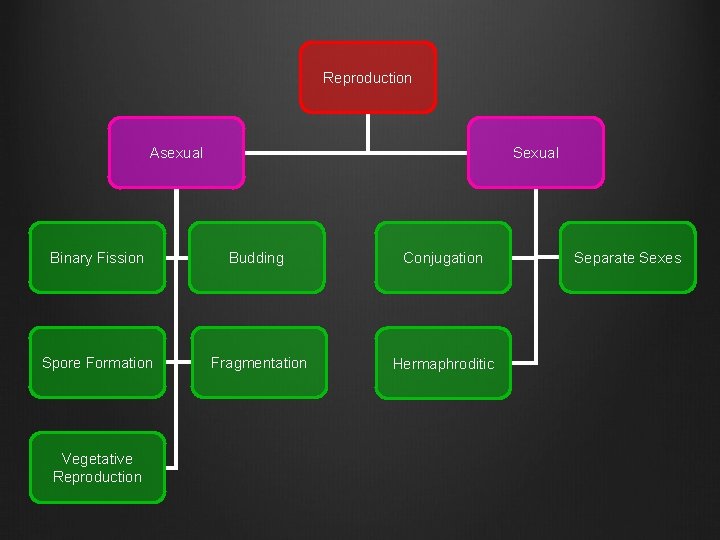
Reproduction Sexual Asexual Binary Fission Budding Conjugation Spore Formation Fragmentation Hermaphroditic Vegetative Reproduction Separate Sexes
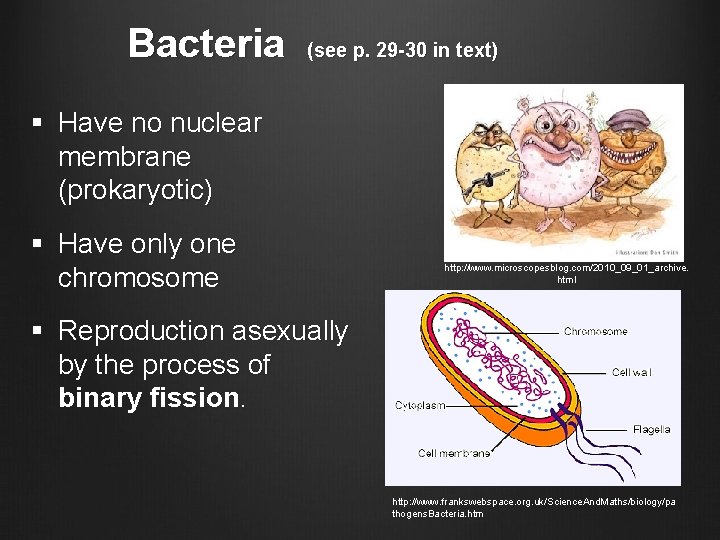
Bacteria (see p. 29 -30 in text) § Have no nuclear membrane (prokaryotic) § Have only one chromosome http: //www. microscopesblog. com/2010_09_01_archive. html § Reproduction asexually by the process of binary fission. http: //www. frankswebspace. org. uk/Science. And. Maths/biology/pa thogens. Bacteria. htm

Binary Fission • • • Steps (see p. 30) cell wall ruptures single chromosome gets copied cell grows longer and a chromosome moves to each end. cell membrane pinches off. cell wall grows to surround both cells. http: //www. biologycorner. com/APbiology/pathology/bacteria. html

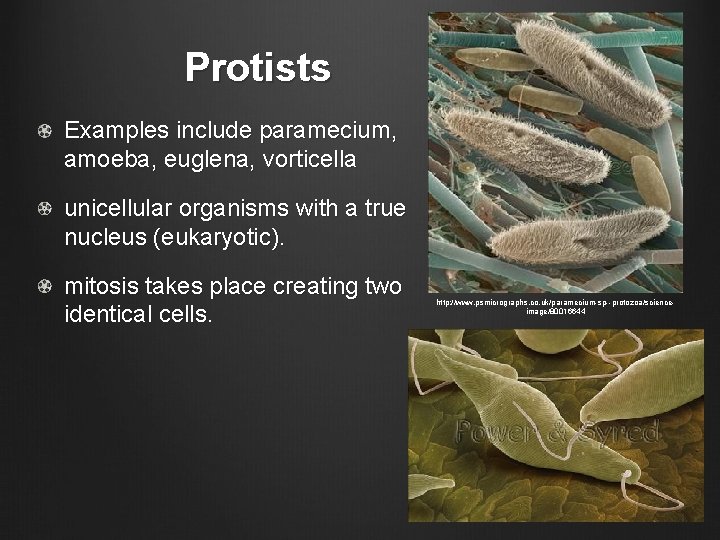
Protists Examples include paramecium, amoeba, euglena, vorticella unicellular organisms with a true nucleus (eukaryotic). mitosis takes place creating two identical cells. http: //www. psmicrographs. co. uk/paramecium-sp--protozoa/scienceimage/80016644
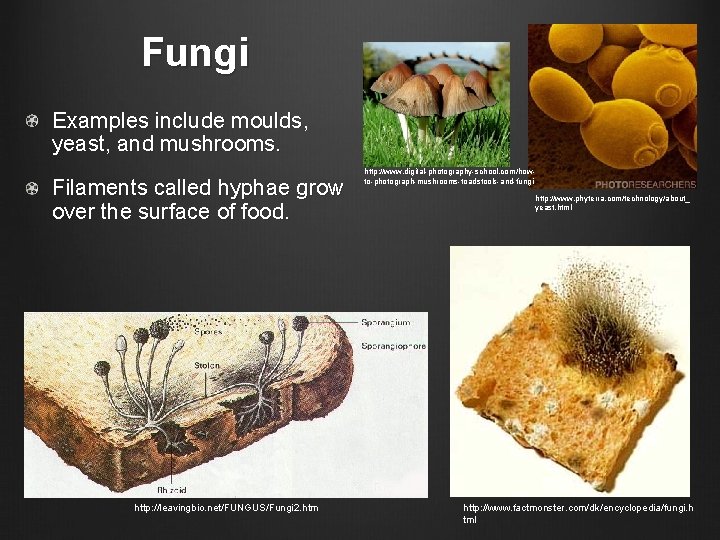
Fungi Examples include moulds, yeast, and mushrooms. Filaments called hyphae grow over the surface of food. http: //leavingbio. net/FUNGUS/Fungi 2. htm http: //www. digital-photography-school. com/howto-photograph-mushrooms-toadstools-and-fungi http: //www. phyterra. com/technology/about_ yeast. html http: //www. factmonster. com/dk/encyclopedia/fungi. h tml
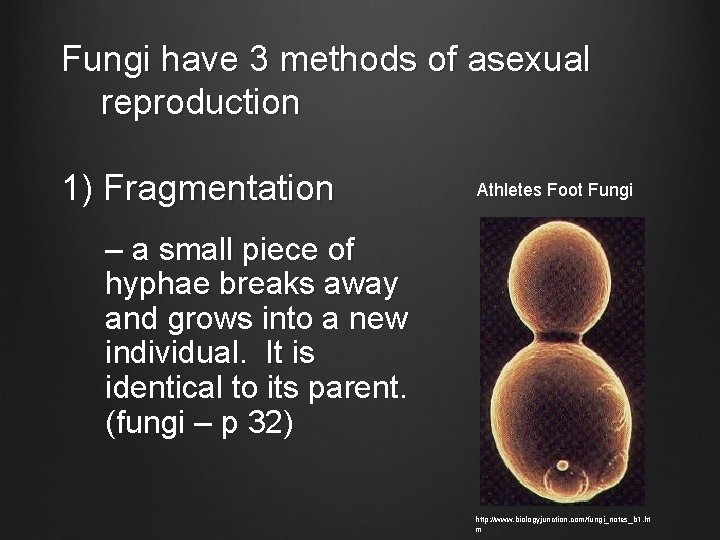
Fungi have 3 methods of asexual reproduction 1) Fragmentation Athletes Foot Fungi – a small piece of hyphae breaks away and grows into a new individual. It is identical to its parent. (fungi – p 32) http: //www. biologyjunction. com/fungi_notes_b 1. ht m
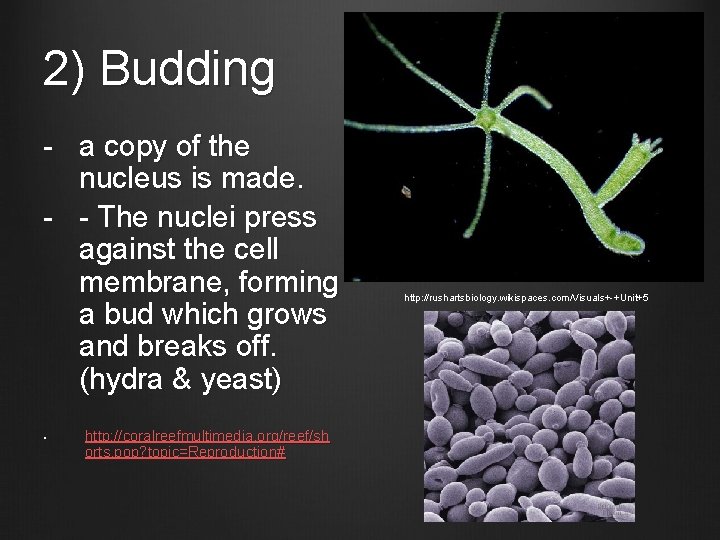
2) Budding - a copy of the nucleus is made. - - The nuclei press against the cell membrane, forming a bud which grows and breaks off. (hydra & yeast) • http: //coralreefmultimedia. org/reef/sh orts. pop? topic=Reproduction# http: //rushartsbiology. wikispaces. com/Visuals+-+Unit+5
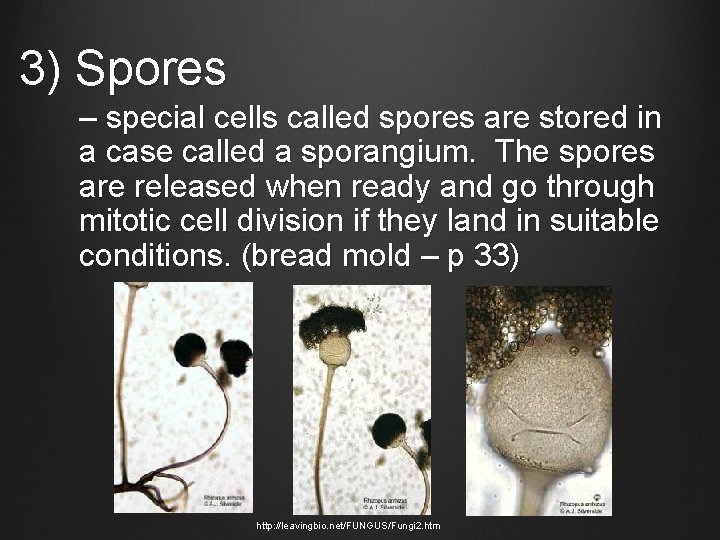
3) Spores – special cells called spores are stored in a case called a sporangium. The spores are released when ready and go through mitotic cell division if they land in suitable conditions. (bread mold – p 33) http: //leavingbio. net/FUNGUS/Fungi 2. htm
Animals § Invertebrates (without backbone) make up 97% of animal species § Example, Planaria (Flatworms) – divide in two and replace the parts that are missing. § Example, Sponges and hydras – reproduce by budding. see pg 35.
- Slides: 12