
1 4 9 Human Impact on an Ecosystem

- Slides: 25
1. 4. 9 Human Impact on an Ecosystem 1 Pollution
Human Impact on Ecosystems We are going to look at 3 ways that humans affect ecosystems: 1. Pollution 2. Conservation 3. Waste Management Note: from Syllabus Clarifications – Pollution must be related to habitat studied. 2
Pollution What it is Types of pollution Pollutants Effects of pollutants Control of pollutants Ecological impact of one human activity 3
Pollution is any human addition (contamination) to a habitat or the environment that leaves it less able to sustain life. It is the most harmful human impact and affects air, fresh water, sea, soil and land. Chemicals of human origin that harm the environment are called pollutants. 4
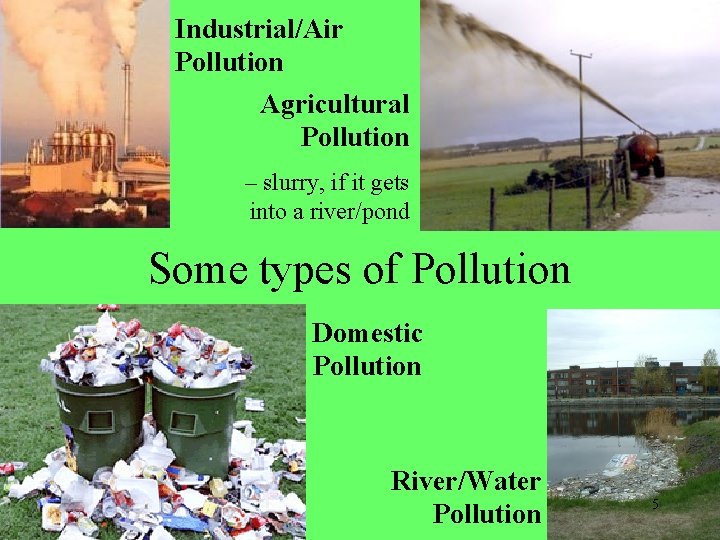
Industrial/Air Pollution Agricultural Pollution – slurry, if it gets into a river/pond Some types of Pollution Domestic Pollution River/Water Pollution 5
Learning check Explain the difference between Pollution and Pollutant Pollution is any human addition (contamination) to a habitat or the environment that leaves it less able to sustain life. Pollutants are chemicals of human origin that harm the environment. 6
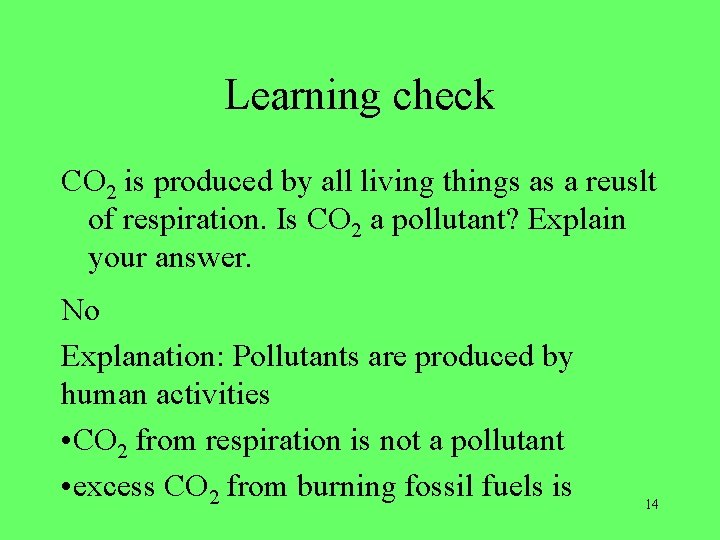
Pollutants are produced by human activities • CO 2 from respiration is not a pollutant – why? • excess CO 2 from burning fossil fuels is • SO 2 from marshes & volcanoes is not – why? • SO 2 from factory chimney is 7
Pollutants Some pollutants are normally present in an environment, e. g. CO 2, but levels are increased by human activity. Other pollutants never exist in an environment e. g. oil slick, CFCs 8
Learning check List some types of pollution • Industrial • Agricultural • Domestic • River/Water 9
From the Syllabus & Guidelines The Syllabus states: “Study the effects of any one pollutant. ” The Guidelines for Teachers states: “Give the effects of one pollutant from any of the following areas: domestic, agricultural, industrial. ” and “Give an example of one way in which pollution may be controlled in the selected area. ” What follows is only a sample of the 10 pollutants available.
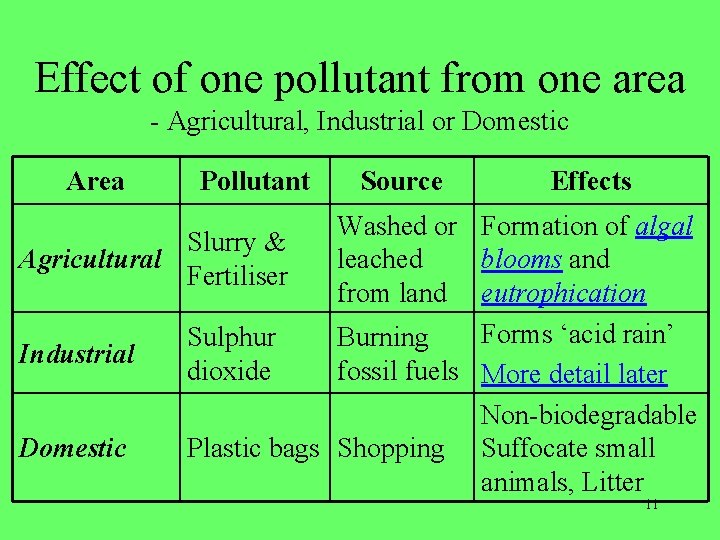
Effect of one pollutant from one area - Agricultural, Industrial or Domestic Area Pollutant Source Effects Washed or Formation of algal Slurry & leached blooms and Agricultural Fertiliser from land eutrophication Forms ‘acid rain’ Sulphur Burning Industrial dioxide fossil fuels More detail later Non-biodegradable Domestic Plastic bags Shopping Suffocate small animals, Litter 11
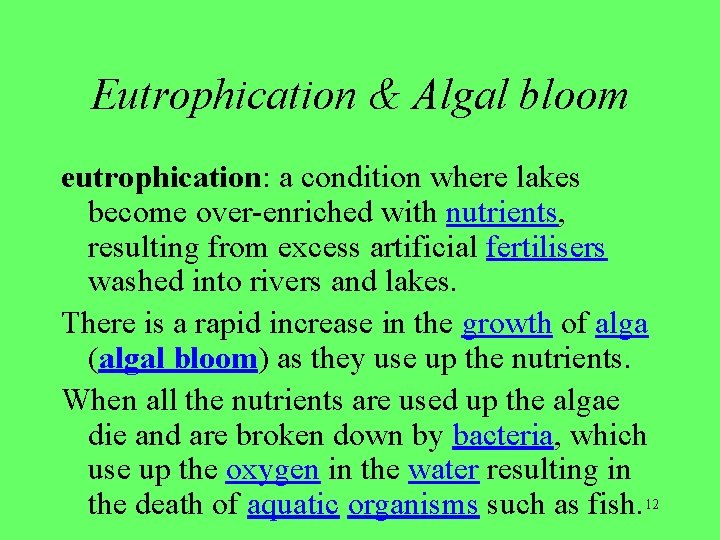
Eutrophication & Algal bloom eutrophication: a condition where lakes become over-enriched with nutrients, resulting from excess artificial fertilisers washed into rivers and lakes. There is a rapid increase in the growth of alga (algal bloom) as they use up the nutrients. When all the nutrients are used up the algae die and are broken down by bacteria, which use up the oxygen in the water resulting in the death of aquatic organisms such as fish. 12
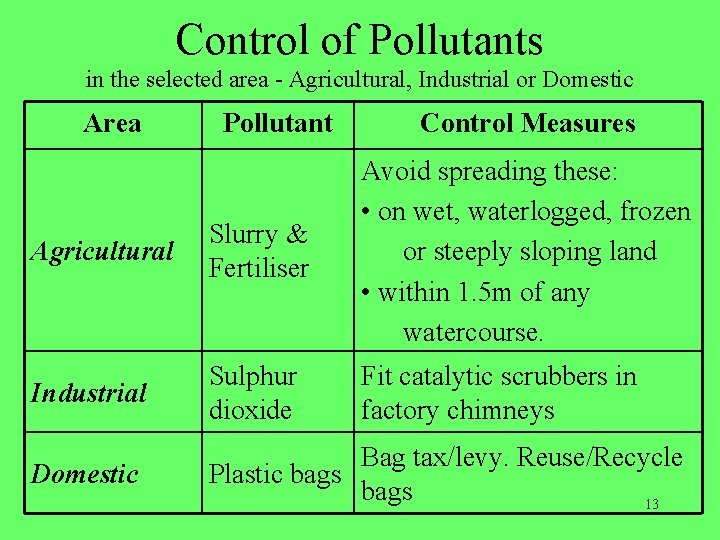
Control of Pollutants in the selected area - Agricultural, Industrial or Domestic Area Pollutant Control Measures Agricultural Slurry & Fertiliser Avoid spreading these: • on wet, waterlogged, frozen or steeply sloping land • within 1. 5 m of any watercourse. Industrial Sulphur dioxide Fit catalytic scrubbers in factory chimneys Domestic Bag tax/levy. Reuse/Recycle Plastic bags 13
Learning check CO 2 is produced by all living things as a reuslt of respiration. Is CO 2 a pollutant? Explain your answer. No Explanation: Pollutants are produced by human activities • CO 2 from respiration is not a pollutant • excess CO 2 from burning fossil fuels is 14
Ecological impact of one human activity Burning Fossil Fuels
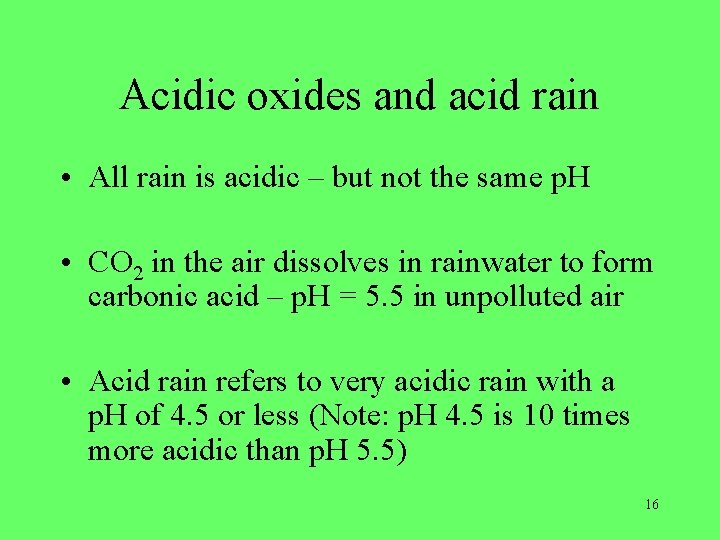
Acidic oxides and acid rain • All rain is acidic – but not the same p. H • CO 2 in the air dissolves in rainwater to form carbonic acid – p. H = 5. 5 in unpolluted air • Acid rain refers to very acidic rain with a p. H of 4. 5 or less (Note: p. H 4. 5 is 10 times more acidic than p. H 5. 5) 16
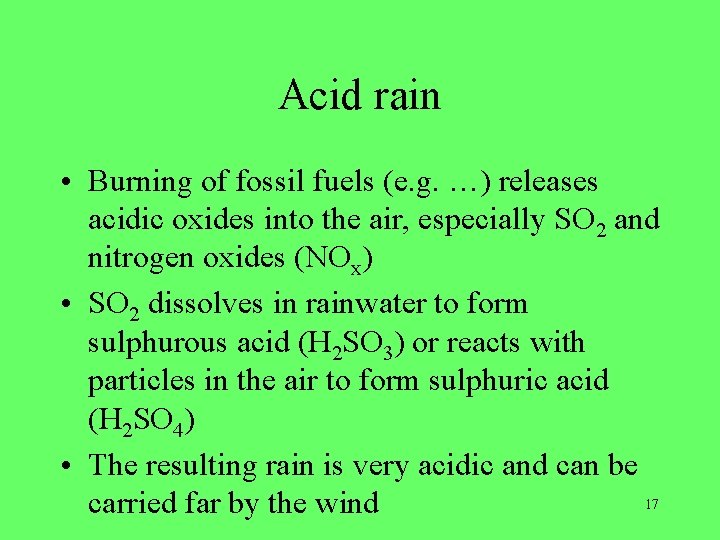
Acid rain • Burning of fossil fuels (e. g. …) releases acidic oxides into the air, especially SO 2 and nitrogen oxides (NOx) • SO 2 dissolves in rainwater to form sulphurous acid (H 2 SO 3) or reacts with particles in the air to form sulphuric acid (H 2 SO 4) • The resulting rain is very acidic and can be 17 carried far by the wind
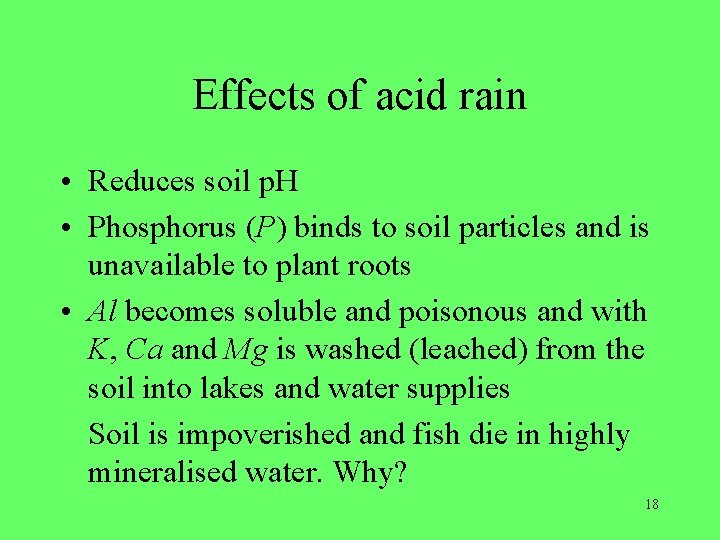
Effects of acid rain • Reduces soil p. H • Phosphorus (P) binds to soil particles and is unavailable to plant roots • Al becomes soluble and poisonous and with K, Ca and Mg is washed (leached) from the soil into lakes and water supplies Soil is impoverished and fish die in highly mineralised water. Why? 18
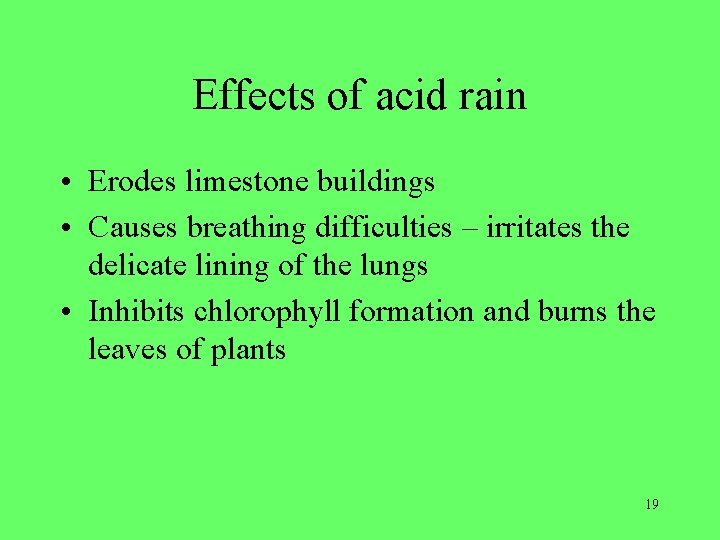
Effects of acid rain • Erodes limestone buildings • Causes breathing difficulties – irritates the delicate lining of the lungs • Inhibits chlorophyll formation and burns the leaves of plants 19
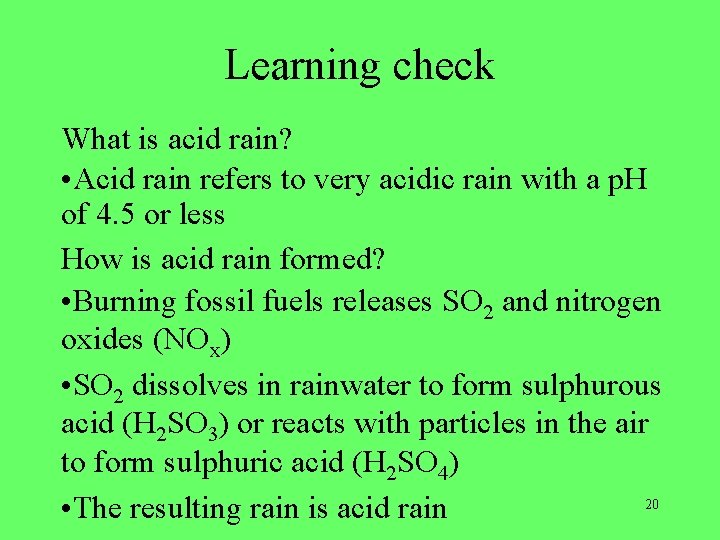
Learning check What is acid rain? • Acid rain refers to very acidic rain with a p. H of 4. 5 or less How is acid rain formed? • Burning fossil fuels releases SO 2 and nitrogen oxides (NOx) • SO 2 dissolves in rainwater to form sulphurous acid (H 2 SO 3) or reacts with particles in the air to form sulphuric acid (H 2 SO 4) 20 • The resulting rain is acid rain
Effects of acid rain Acid rain is a ‘trans-boundary problem’ i. e. it is formed in one country but transported or blown huge distances to another. Norway ‘imported’ its acid pollutions from the English Midlands and the Ruhr valley in Germany. • Ireland is lucky that the prevailing winds are from the Atlantic and not from Europe. 21
Dealing with acid rain • Reducing the quantity of fossil fuels burned • Using catalysts to treat chimney gases (‘scrubbers’ are fitted to the insides of chimneys) • Catalytic converters fitted to modern cars • Developing alternative ‘clean’ energy sources 22
Learning check List some of the effects of acid rain • Reduces soil p. H • Phosphorus (P) becones unavailable to plant roots • Al, K, Ca and Mg is washed (leached) from the soil into lakes and water supplies • Fish die in highly mineralised water • Erodes limestone buildings • Causes breathing difficulties • Inhibits chlorophyll formation 23 • Burns the leaves of plants
Need to know • • Define the term: Pollution. State areas affected by pollution. State mechanisms to control pollution. Explain the difference between the terms pollutant and pollution. • Discuss the ecological impact of one human activity. Go to next topic 24 Conservation
END 25