
1 3 Why Do We Have Environmental Problems
1 -3 Why Do We Have Environmental Problems? • Concept 1 -3 Major causes of environmental problems are population growth, wasteful and unsustainable resource use, poverty, and exclusion of environmental costs of resource use from the market prices of goods and services.
Experts Have Identified Four Basic Causes of Environmental Problems 1. Population growth 2. Wasteful and unsustainable resource use 3. Poverty 4. Failure to include the harmful environmental costs of goods and services in market prices
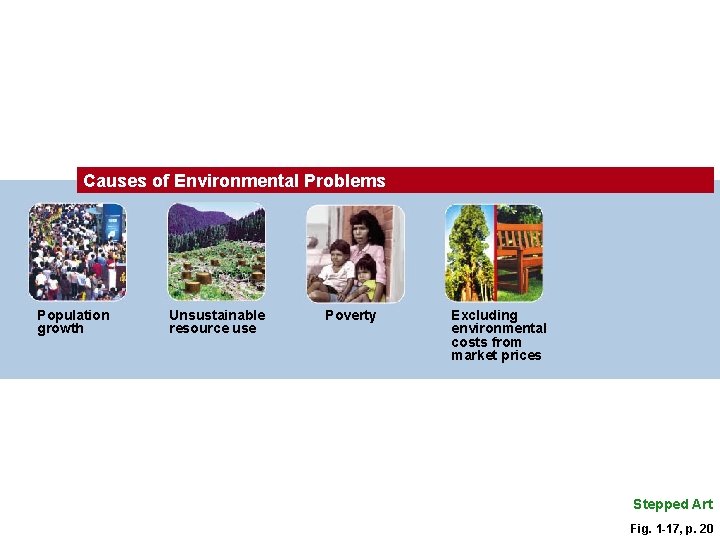
Causes of Environmental Problems Population growth Unsustainable resource use Poverty Excluding environmental costs from market prices Stepped Art Fig. 1 -17, p. 20
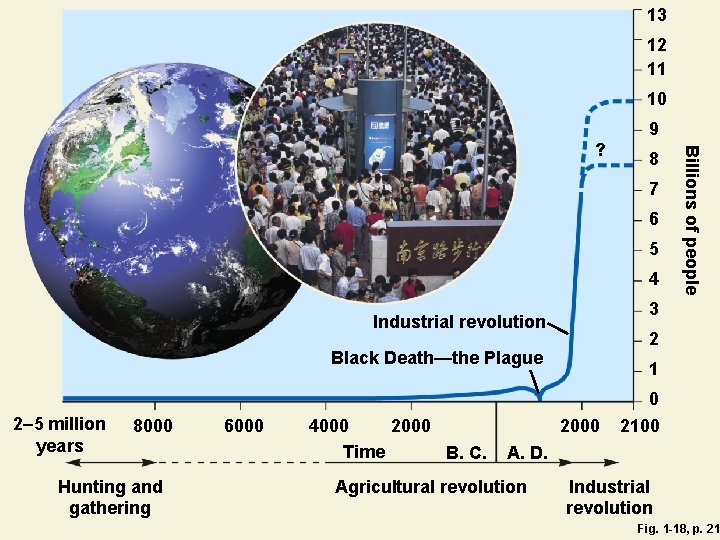
13 12 11 10 9 8 7 6 5 4 3 Industrial revolution 2 Black Death—the Plague 2– 5 million years 8000 Hunting and gathering 6000 4000 2000 Time B. C. Billions of people ? 1 2000 0 2100 A. D. Agricultural revolution Industrial revolution Fig. 1 -18, p. 21

Affluence Has Harmful and Beneficial Environmental Effects • Harmful environmental impact due to • High levels of consumption • High levels of pollution • Unnecessary waste of resources • Affluence can provide funding for developing technologies to reduce • Pollution • Environmental degradation • Resource waste
Poverty Has Harmful Environmental and Health Effects • Population growth affected • Malnutrition • Premature death • Limited access to adequate sanitation facilities and clean water
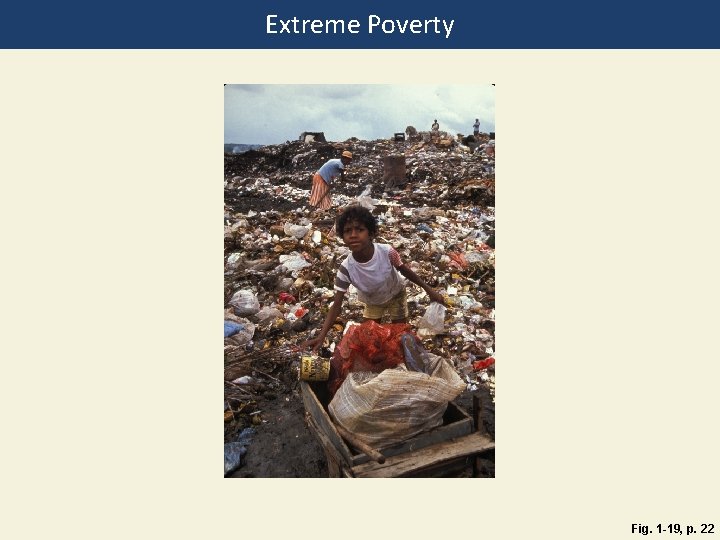
Extreme Poverty Fig. 1 -19, p. 22
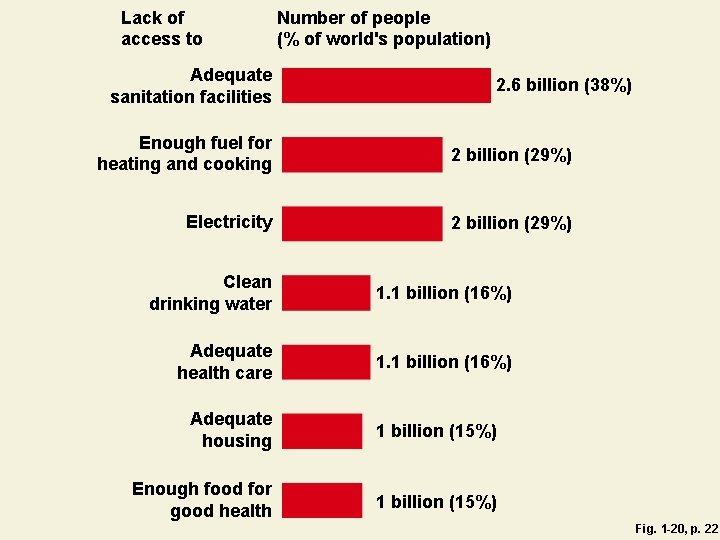
Lack of access to Adequate sanitation facilities Number of people (% of world's population) 2. 6 billion (38%) Enough fuel for heating and cooking 2 billion (29%) Electricity 2 billion (29%) Clean drinking water 1. 1 billion (16%) Adequate health care 1. 1 billion (16%) Adequate housing 1 billion (15%) Enough food for good health 1 billion (15%) Fig. 1 -20, p. 22
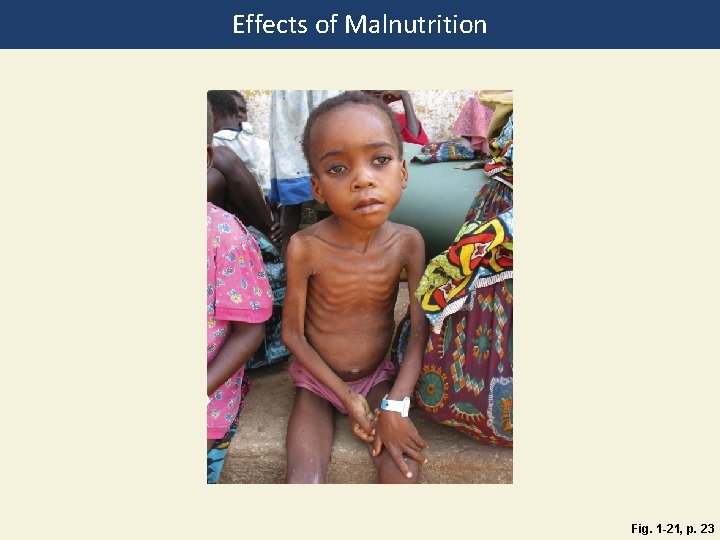
Effects of Malnutrition Fig. 1 -21, p. 23
Prices Do Not Include the Value of Natural Capital • Companies do not pay the environmental cost of resource use • Goods and services do not include the harmful environmental costs • Companies receive tax breaks and subsidies • Economy may be stimulated but there may be a degradation of natural capital
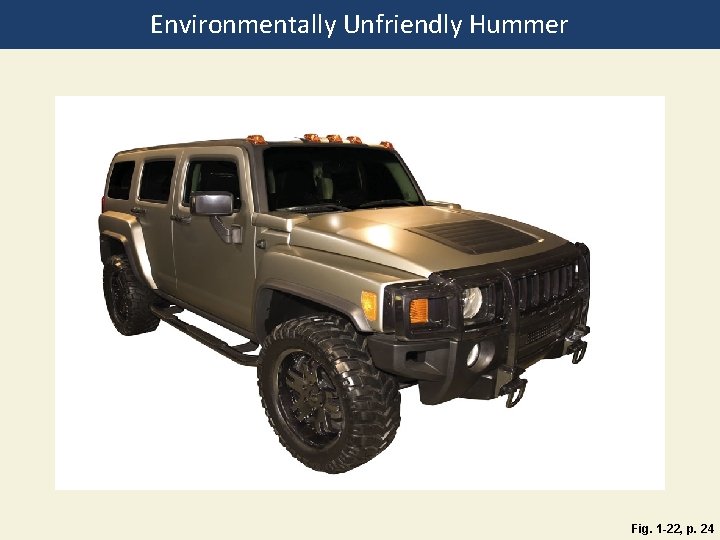
Environmentally Unfriendly Hummer Fig. 1 -22, p. 24
Different Views about Environmental Problems and Their Solutions • Environmental ethics: what is right and wrong with how we treat the environment • Planetary management worldview • We are separate from and in charge of nature • Stewardship worldview • Manage earth for our benefit with ethical responsibility to be stewards • Environmental wisdom worldview • We are part of nature and must engage in sustainable use
Question 1)Describe the 3 major cultural changes that have occurred since we were hunter-gathers. 2)What would a sustainable revolution involve?
1 -4 What Is an Environmentally Sustainable Society? • Concept 1 -4 Living sustainably means living off the earth’s natural income without depleting or degrading the natural capital that supplies it.
Environmentally Sustainable Societies Protect Natural Capital and Live Off Its Income • Environmentally sustainable society: meets current needs while ensuring that needs of future generations will be met • Live on natural income of natural capital without diminishing the natural capital
We Can Work Together to Solve Environmental Problems • Social capital • Encourages • Openness and communication • Cooperation • Hope • Discourages • Close-mindedness • Polarization • Confrontation and fear
Case Study: The Environmental Transformation of Chattanooga, TN • Environmental success story: example of building their social capital • 1960: most polluted city in the U. S. • 1984: Vision 2000 • 1995: most goals met • 1993: Revision 2000
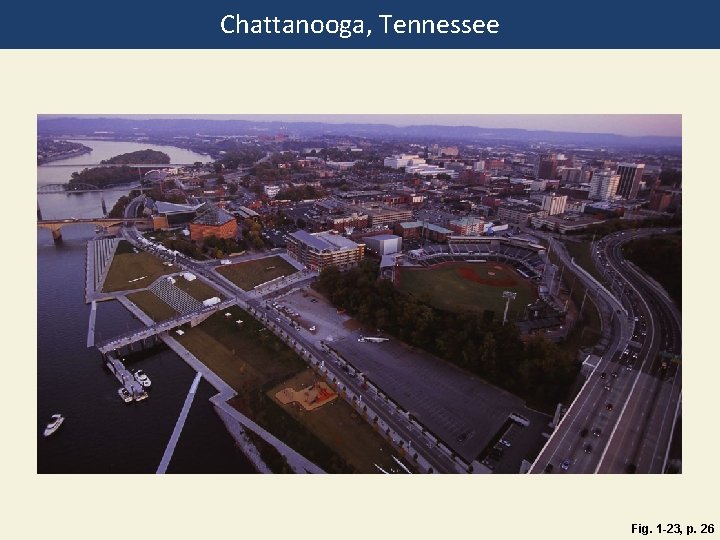
Chattanooga, Tennessee I Fig. 1 -23, p. 26
Individuals Matter • 5– 10% of the population can bring about major social change • We have only 50 -100 years to make the change to sustainability before it’s too late • Rely on renewable energy • Protect biodiversity • Reduce waste and pollution
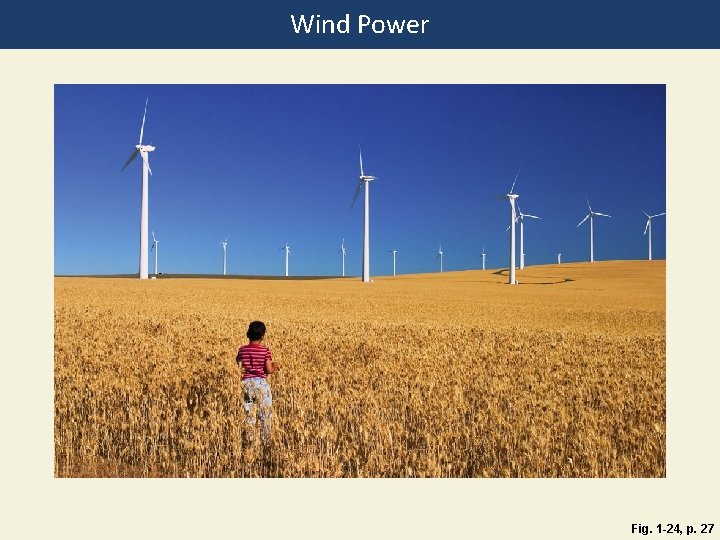
Wind Power Fig. 1 -24, p. 27
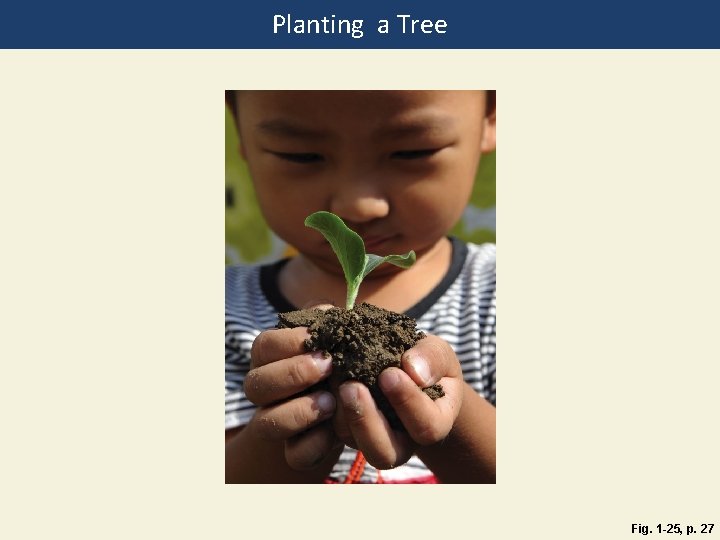
Planting a Tree Fig. 1 -25, p. 27
Three Big Ideas • 1. We could rely more on renewable energy from the sun, including indirect forms of solar energy such as wind and flowing water, to meet most of our heating and electricity needs. • 2. We can protect biodiversity by preventing the degradation of the earth’s species, ecosystems, and natural processes, and by restoring areas we have degraded.
Three Big Ideas 3. We can help to sustain the earth’s natural chemical cycles by reducing our production of wastes and pollution, not overloading natural systems with harmful chemicals, and not removing natural chemicals faster than those chemical cycles can replace them.
- Slides: 23