
1 3 The Nutrition Cluster Cluster Activation and

- Slides: 21
1. 3 The Nutrition Cluster: Cluster Activation and Core Functions
Objectives of this Session By the end of this session, participants will be able to: ü Explore L 3 emergencies ü List the process for cluster activation and de -activation. ü Describe the Cluster Core Functions with a focus on AAP and explain how they relate to the Nutrition Cluster at the country level.
Level 3 Emergencies L 3 emergencies are exceptional in view of their: – scale, – complexity, – urgency, – the capacity required to respond, and – the reputational risk to humanitarian organizations and responders. Within 48 hours of a sudden-onset emergency, the IASC will determine whether it is a Level 3 emergency or not.
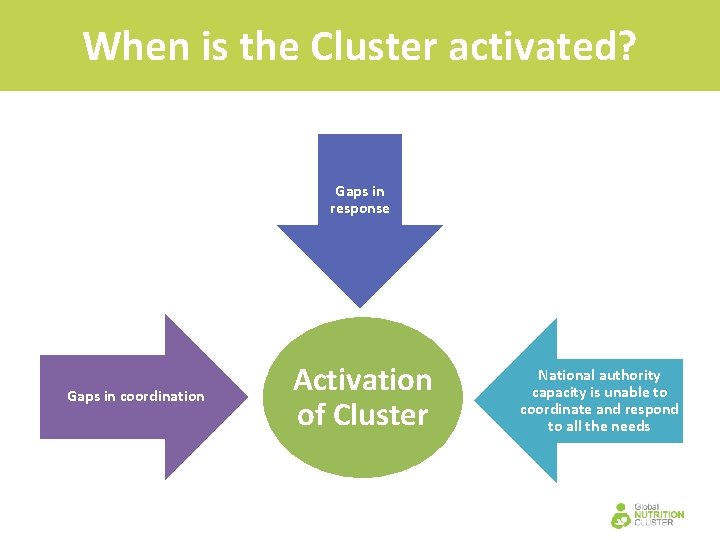
When is the Cluster activated? Gaps in response Gaps in coordination Activation of Cluster National authority capacity is unable to coordinate and respond to all the needs
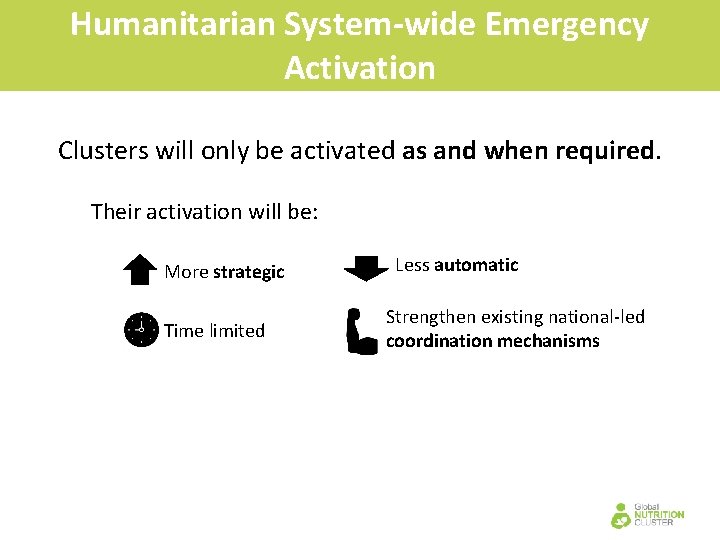
Humanitarian System-wide Emergency Activation Clusters will only be activated as and when required. Their activation will be: More strategic Time limited Less automatic Strengthen existing national-led coordination mechanisms In recognition of the diversity of crises, no “one size fits all” approach to Cluster management.
Cluster De-activation In small groups, what would be the ideal conditions for a Cluster to be de-activated?
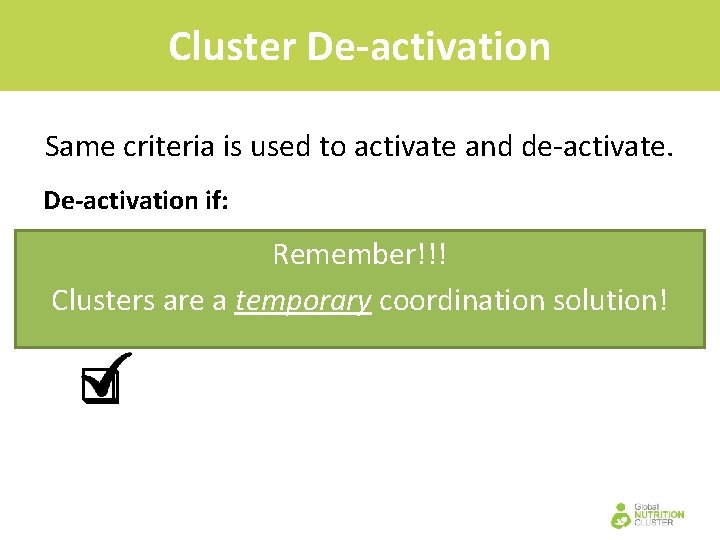
Cluster De-activation Same criteria is used to activate and de-activate. De-activation if: Remember!!! Humanitarian situation has improved significantly (with decreased needs and Clusters are a temporary coordination solution! reduced need for response). National structures acquired sufficient capacity to coordinate and meet humanitarian needs.
Cluster Transition ! But note that de-activation of the NC is not synonymous with stopping of humanitarian funding or activities!
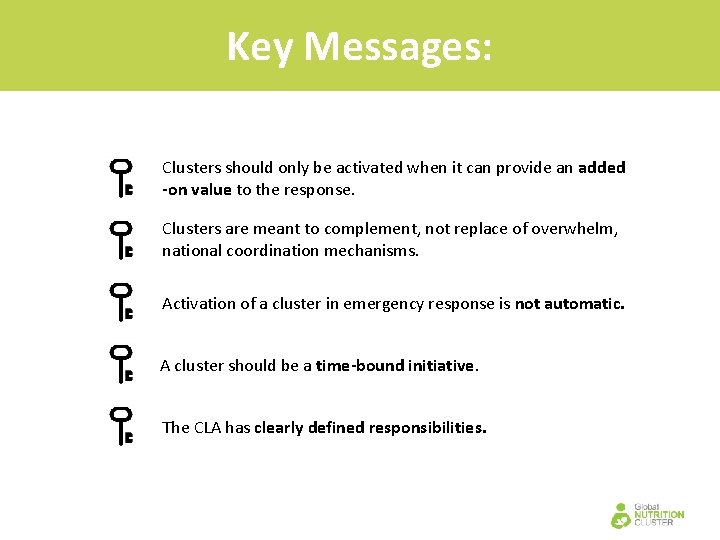
Key Messages: Clusters should only be activated when it can provide an added -on value to the response. Clusters are meant to complement, not replace of overwhelm, national coordination mechanisms. Activation of a cluster in emergency response is not automatic. A cluster should be a time-bound initiative. The CLA has clearly defined responsibilities.
Core Cluster Functions
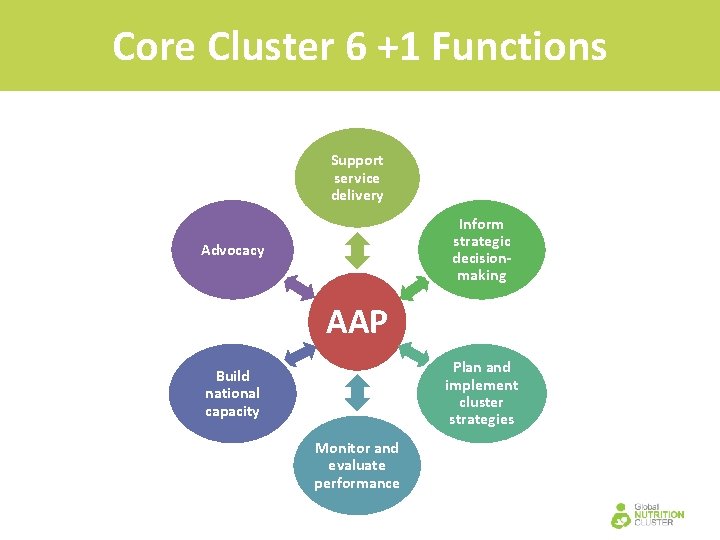
Core Cluster 6 +1 Functions Support service delivery Inform strategic decisionmaking Advocacy AAP Plan and implement cluster strategies Build national capacity Monitor and evaluate performance
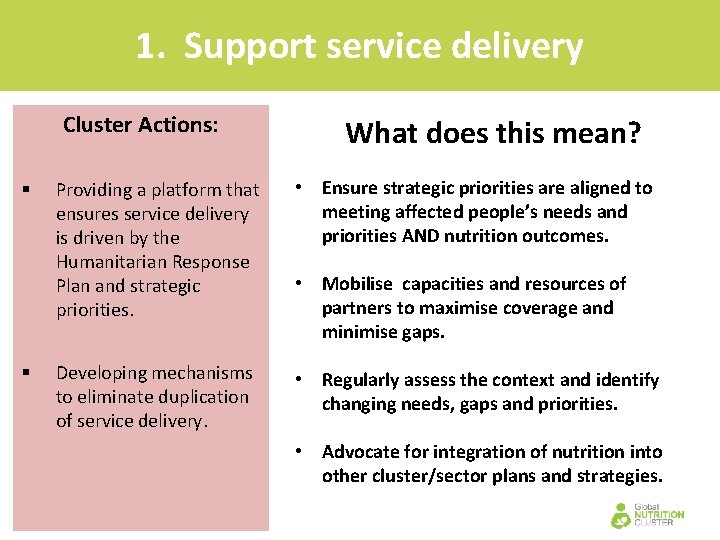
1. Support service delivery Cluster Actions: § § What does this mean? Providing a platform that ensures service delivery is driven by the Humanitarian Response Plan and strategic priorities. • Ensure strategic priorities are aligned to meeting affected people’s needs and priorities AND nutrition outcomes. Developing mechanisms to eliminate duplication of service delivery. • Regularly assess the context and identify changing needs, gaps and priorities. • Mobilise capacities and resources of partners to maximise coverage and minimise gaps. • Advocate for integration of nutrition into other cluster/sector plans and strategies.
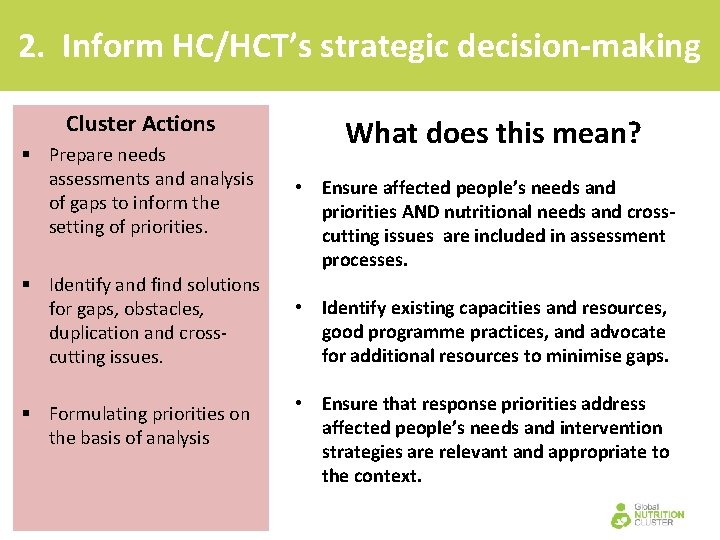
2. Inform HC/HCT’s strategic decision-making Cluster Actions § Prepare needs assessments and analysis of gaps to inform the setting of priorities. § Identify and find solutions for gaps, obstacles, duplication and crosscutting issues. § Formulating priorities on the basis of analysis What does this mean? • Ensure affected people’s needs and priorities AND nutritional needs and crosscutting issues are included in assessment processes. • Identify existing capacities and resources, good programme practices, and advocate for additional resources to minimise gaps. • Ensure that response priorities address affected people’s needs and intervention strategies are relevant and appropriate to the context.
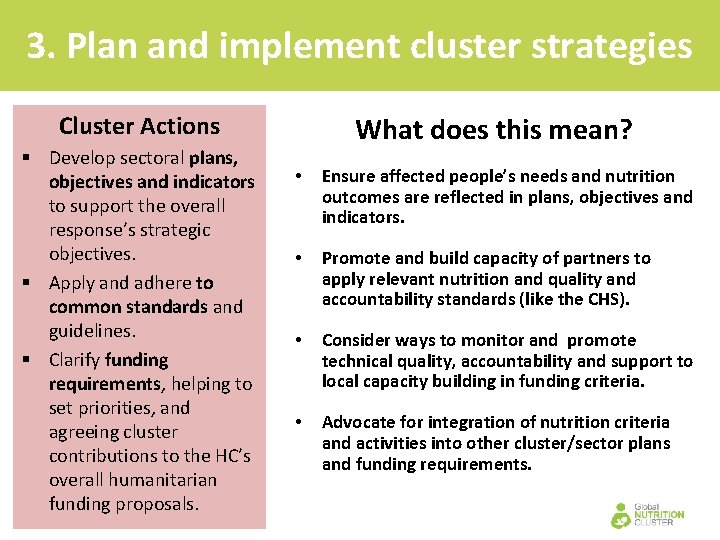
3. Plan and implement cluster strategies Cluster Actions § Develop sectoral plans, objectives and indicators to support the overall response’s strategic objectives. § Apply and adhere to common standards and guidelines. § Clarify funding requirements, helping to set priorities, and agreeing cluster contributions to the HC’s overall humanitarian funding proposals. What does this mean? • Ensure affected people’s needs and nutrition outcomes are reflected in plans, objectives and indicators. • Promote and build capacity of partners to apply relevant nutrition and quality and accountability standards (like the CHS). • Consider ways to monitor and promote technical quality, accountability and support to local capacity building in funding criteria. • Advocate for integration of nutrition criteria and activities into other cluster/sector plans and funding requirements.
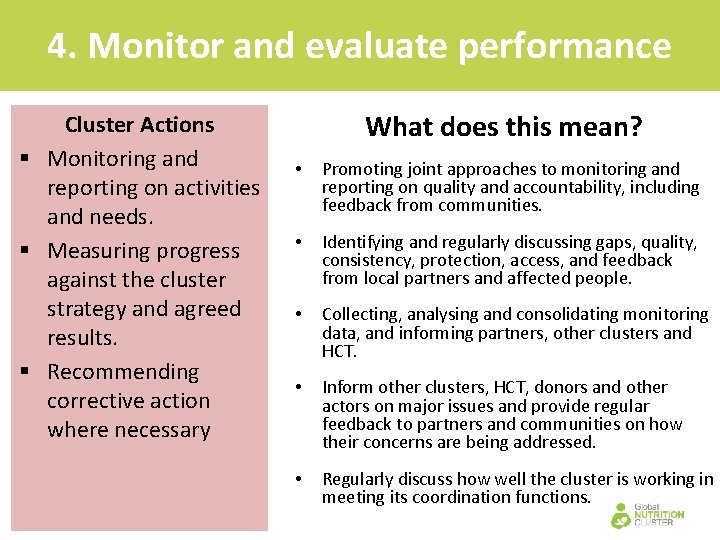
4. Monitor and evaluate performance Cluster Actions § Monitoring and reporting on activities and needs. § Measuring progress against the cluster strategy and agreed results. § Recommending corrective action where necessary What does this mean? • Promoting joint approaches to monitoring and reporting on quality and accountability, including feedback from communities. • Identifying and regularly discussing gaps, quality, consistency, protection, access, and feedback from local partners and affected people. • Collecting, analysing and consolidating monitoring data, and informing partners, other clusters and HCT. • Inform other clusters, HCT, donors and other actors on major issues and provide regular feedback to partners and communities on how their concerns are being addressed. • Regularly discuss how well the cluster is working in meeting its coordination functions.
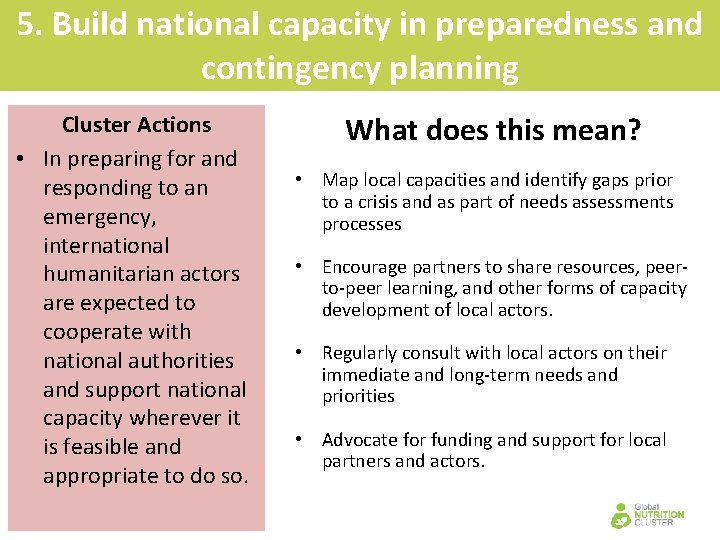
5. Build national capacity in preparedness and contingency planning Cluster Actions • In preparing for and responding to an emergency, international humanitarian actors are expected to cooperate with national authorities and support national capacity wherever it is feasible and appropriate to do so. What does this mean? • Map local capacities and identify gaps prior to a crisis and as part of needs assessments processes • Encourage partners to share resources, peerto-peer learning, and other forms of capacity development of local actors. • Regularly consult with local actors on their immediate and long-term needs and priorities • Advocate for funding and support for local partners and actors.
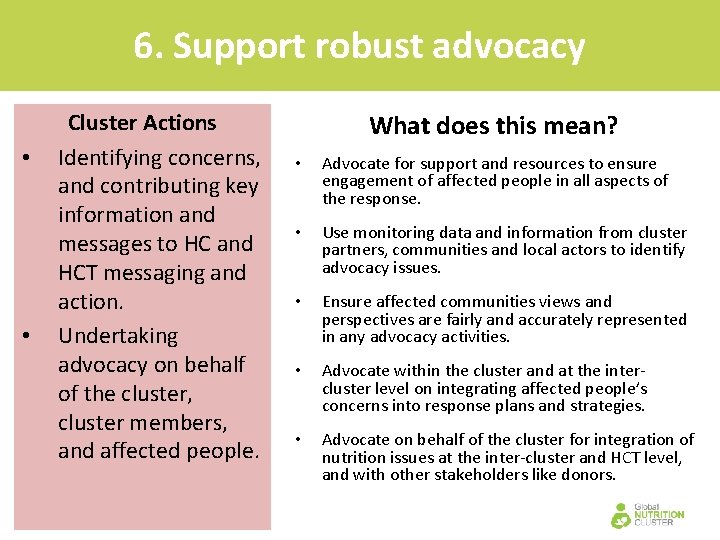
6. Support robust advocacy • • Cluster Actions Identifying concerns, and contributing key information and messages to HC and HCT messaging and action. Undertaking advocacy on behalf of the cluster, cluster members, and affected people. What does this mean? • Advocate for support and resources to ensure engagement of affected people in all aspects of the response. • Use monitoring data and information from cluster partners, communities and local actors to identify advocacy issues. • Ensure affected communities views and perspectives are fairly and accurately represented in any advocacy activities. • Advocate within the cluster and at the intercluster level on integrating affected people’s concerns into response plans and strategies. • Advocate on behalf of the cluster for integration of nutrition issues at the inter-cluster and HCT level, and with other stakeholders like donors.
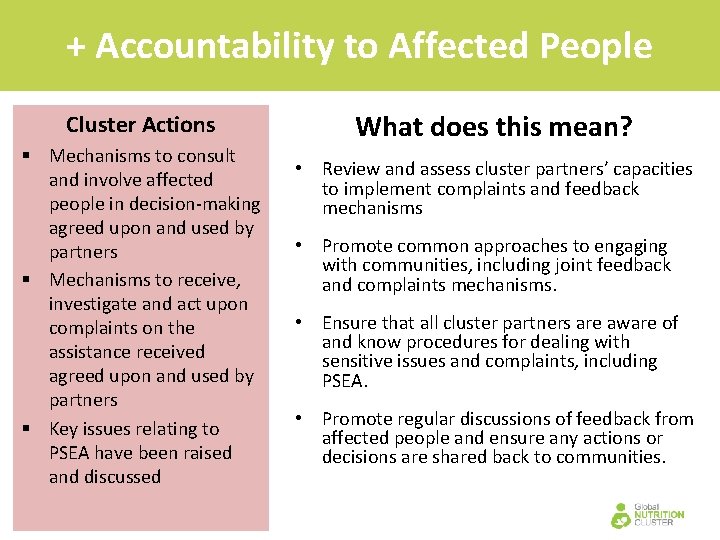
+ Accountability to Affected People Cluster Actions § Mechanisms to consult and involve affected people in decision-making agreed upon and used by partners § Mechanisms to receive, investigate and act upon complaints on the assistance received agreed upon and used by partners § Key issues relating to PSEA have been raised and discussed What does this mean? • Review and assess cluster partners’ capacities to implement complaints and feedback mechanisms • Promote common approaches to engaging with communities, including joint feedback and complaints mechanisms. • Ensure that all cluster partners are aware of and know procedures for dealing with sensitive issues and complaints, including PSEA. • Promote regular discussions of feedback from affected people and ensure any actions or decisions are shared back to communities.
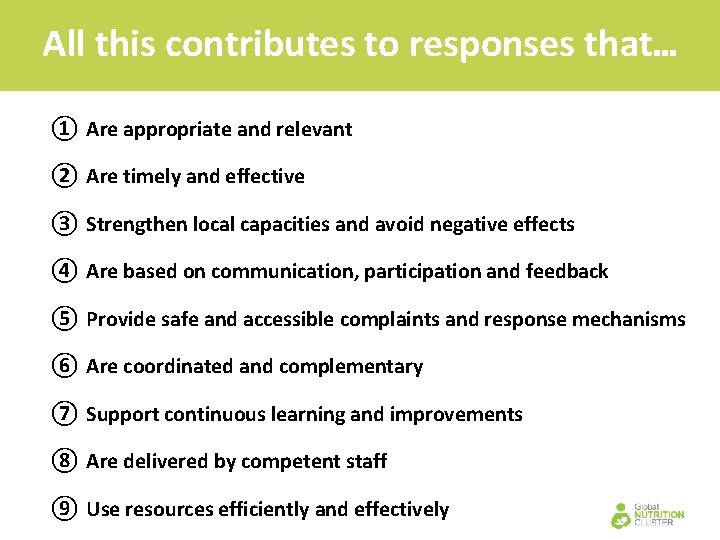
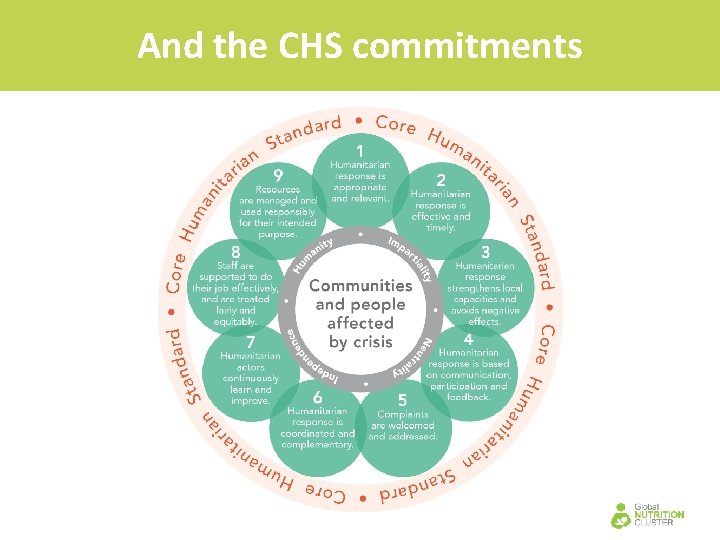
All this contributes to responses that… ① Are appropriate and relevant ② Are timely and effective ③ Strengthen local capacities and avoid negative effects ④ Are based on communication, participation and feedback ⑤ Provide safe and accessible complaints and response mechanisms ⑥ Are coordinated and complementary ⑦ Support continuous learning and improvements ⑧ Are delivered by competent staff ⑨ Use resources efficiently and effectively
And the CHS commitments
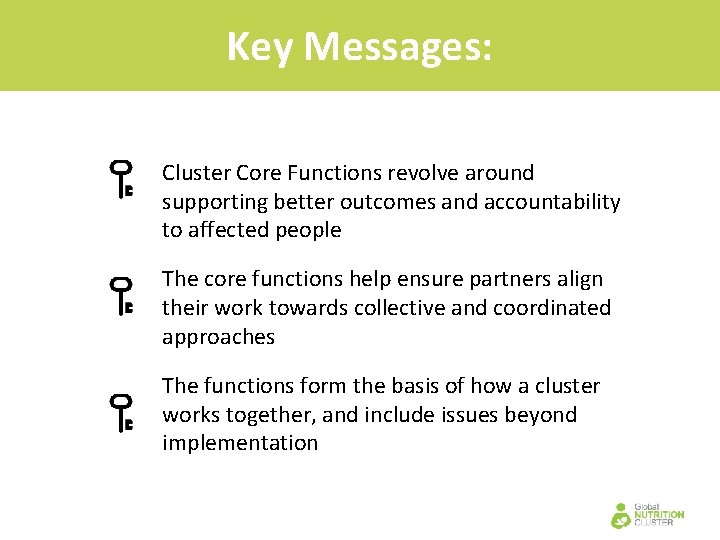
Key Messages: Cluster Core Functions revolve around supporting better outcomes and accountability to affected people The core functions help ensure partners align their work towards collective and coordinated approaches The functions form the basis of how a cluster works together, and include issues beyond implementation