
1 3 Engineering Disciplines Introduction to Engineering Design

- Slides: 17
1. 3 Engineering Disciplines Introduction to Engineering Design
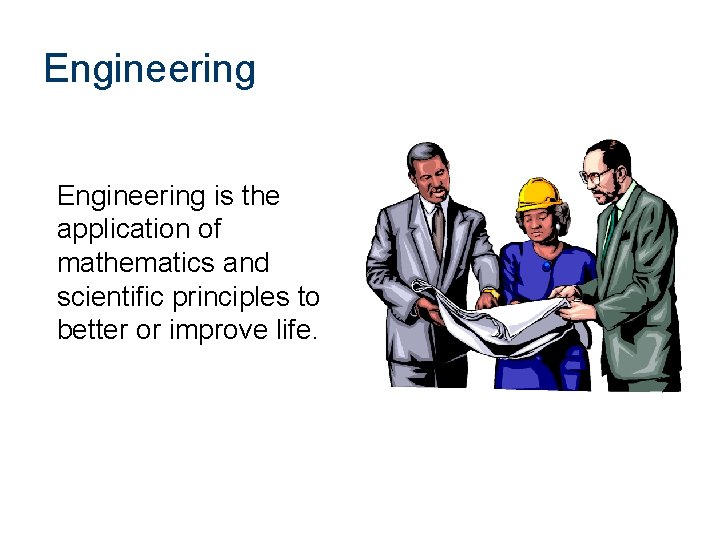
Engineering is the application of mathematics and scientific principles to better or improve life.
Fields of Engineering • The big four fields of engineering include: – Chemical – Civil – Electrical – Mechanical • Most other disciplines are a derivative, combination, or extension of one of these.
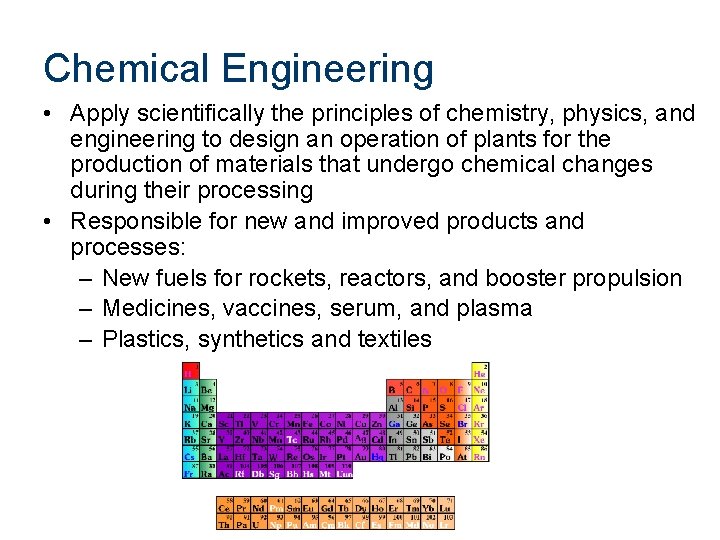
Chemical Engineering • Apply scientifically the principles of chemistry, physics, and engineering to design an operation of plants for the production of materials that undergo chemical changes during their processing • Responsible for new and improved products and processes: – New fuels for rockets, reactors, and booster propulsion – Medicines, vaccines, serum, and plasma – Plastics, synthetics and textiles
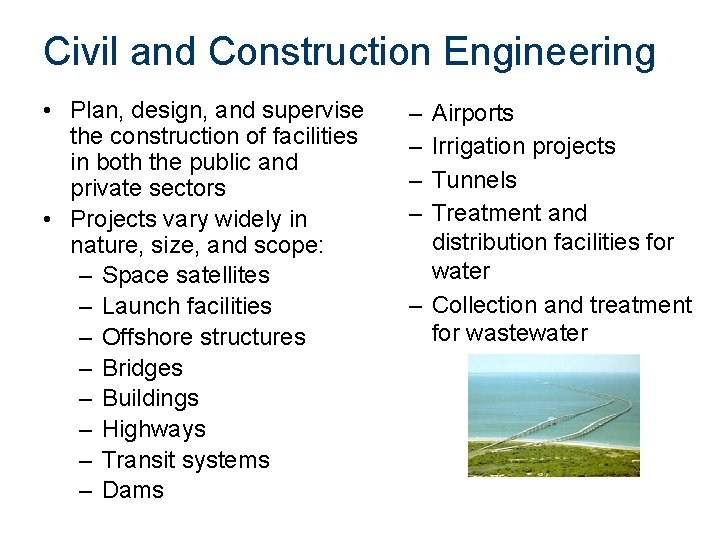
Civil and Construction Engineering • Plan, design, and supervise the construction of facilities in both the public and private sectors • Projects vary widely in nature, size, and scope: – Space satellites – Launch facilities – Offshore structures – Bridges – Buildings – Highways – Transit systems – Dams – – Airports Irrigation projects Tunnels Treatment and distribution facilities for water – Collection and treatment for wastewater
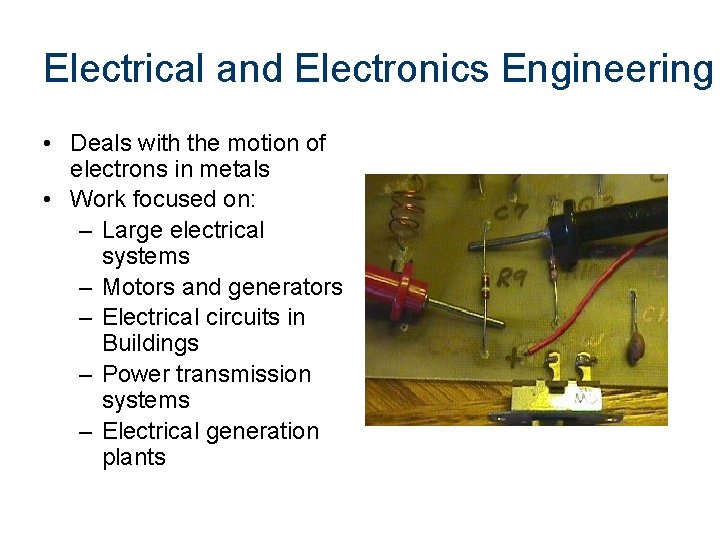
Electrical and Electronics Engineering • Deals with the motion of electrons in metals • Work focused on: – Large electrical systems – Motors and generators – Electrical circuits in Buildings – Power transmission systems – Electrical generation plants
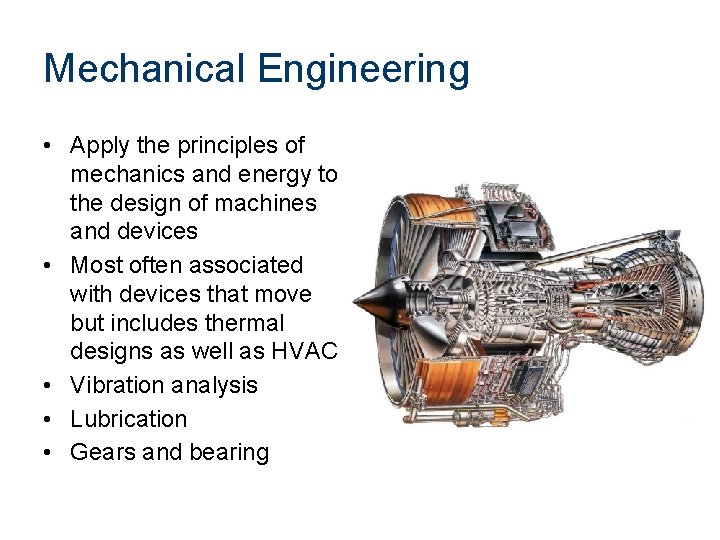
Mechanical Engineering • Apply the principles of mechanics and energy to the design of machines and devices • Most often associated with devices that move but includes thermal designs as well as HVAC • Vibration analysis • Lubrication • Gears and bearing
More Engineering Disciplines
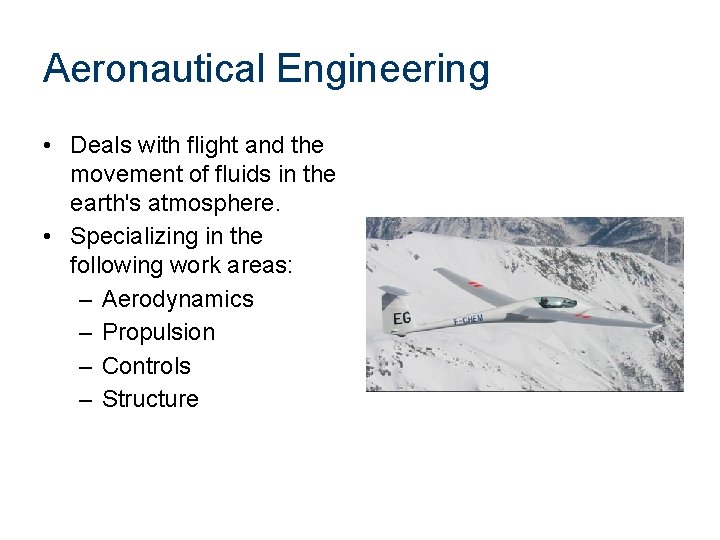
Aeronautical Engineering • Deals with flight and the movement of fluids in the earth's atmosphere. • Specializing in the following work areas: – Aerodynamics – Propulsion – Controls – Structure
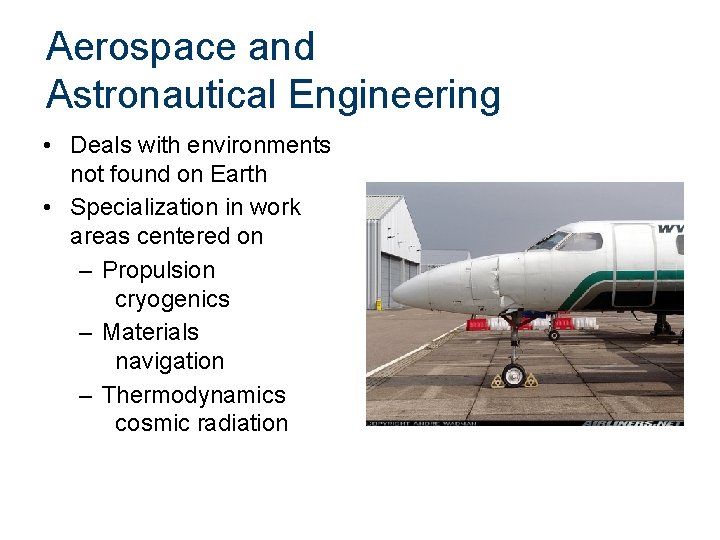
Aerospace and Astronautical Engineering • Deals with environments not found on Earth • Specialization in work areas centered on – Propulsion cryogenics – Materials navigation – Thermodynamics cosmic radiation
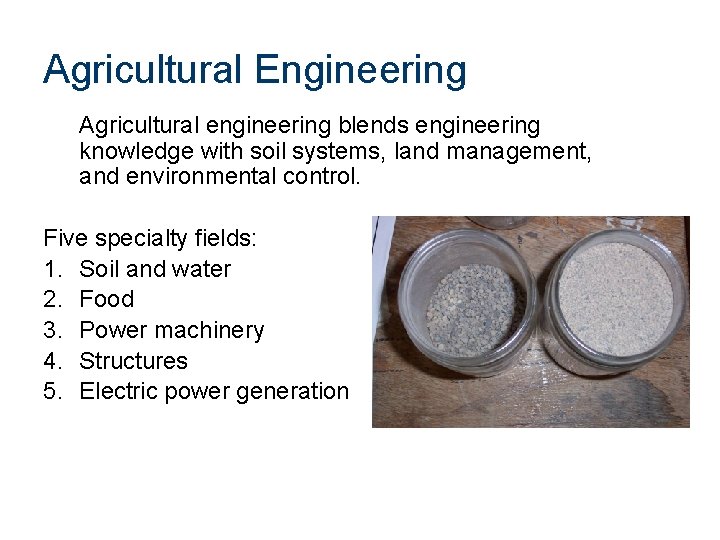
Agricultural Engineering Agricultural engineering blends engineering knowledge with soil systems, land management, and environmental control. Five specialty fields: 1. Soil and water 2. Food 3. Power machinery 4. Structures 5. Electric power generation
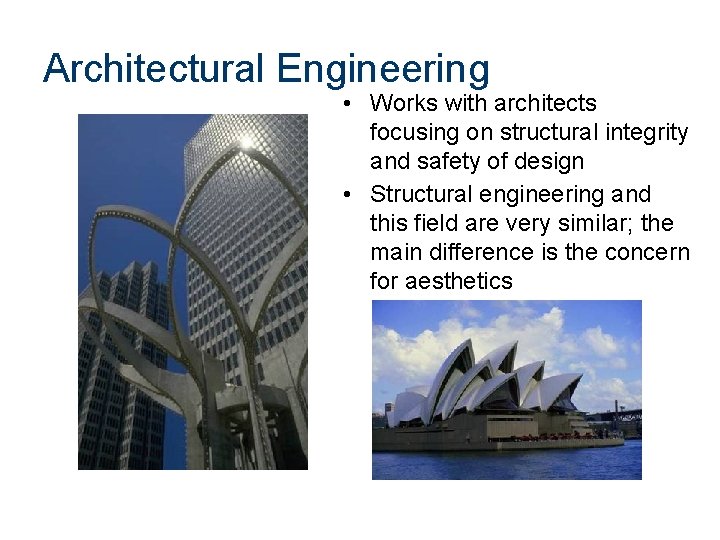
Architectural Engineering • Works with architects focusing on structural integrity and safety of design • Structural engineering and this field are very similar; the main difference is the concern for aesthetics
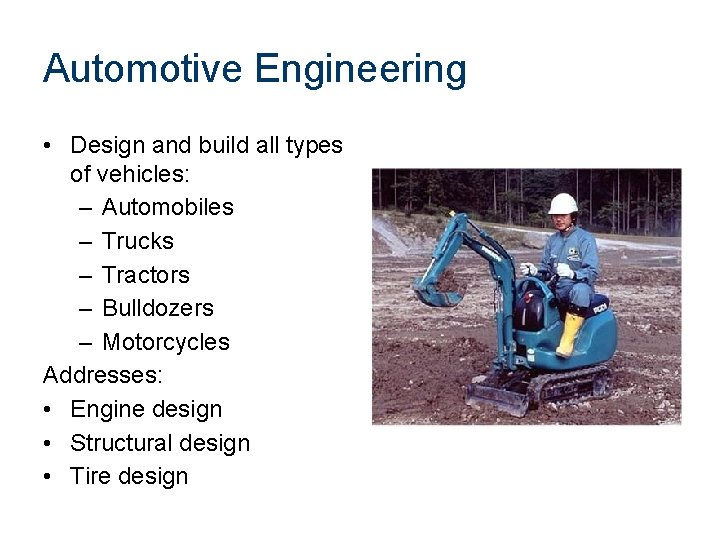
Automotive Engineering • Design and build all types of vehicles: – Automobiles – Trucks – Tractors – Bulldozers – Motorcycles Addresses: • Engine design • Structural design • Tire design
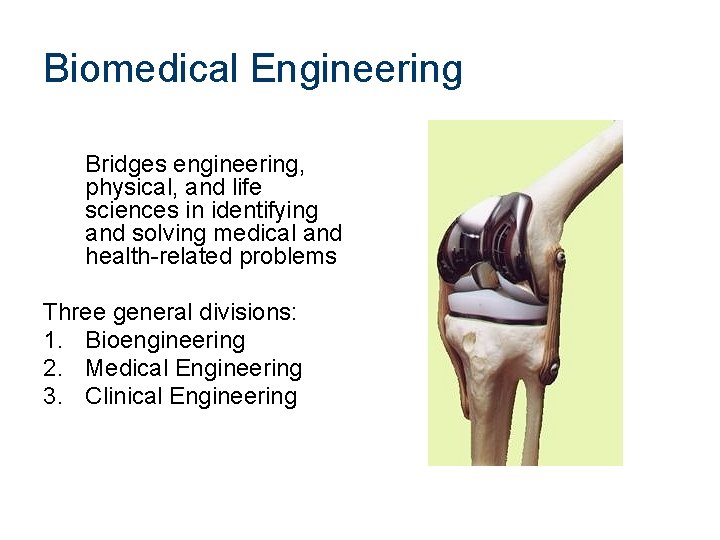
Biomedical Engineering Bridges engineering, physical, and life sciences in identifying and solving medical and health-related problems Three general divisions: 1. Bioengineering 2. Medical Engineering 3. Clinical Engineering
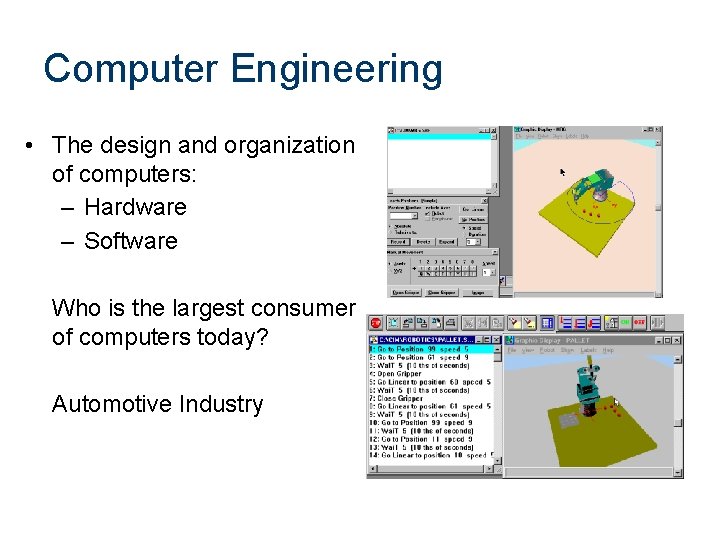
Computer Engineering • The design and organization of computers: – Hardware – Software Who is the largest consumer of computers today? Automotive Industry
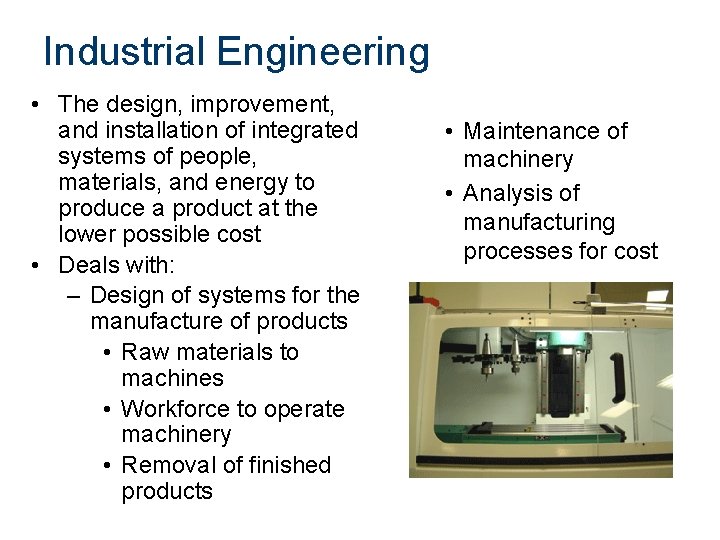
Industrial Engineering • The design, improvement, and installation of integrated systems of people, materials, and energy to produce a product at the lower possible cost • Deals with: – Design of systems for the manufacture of products • Raw materials to machines • Workforce to operate machinery • Removal of finished products • Maintenance of machinery • Analysis of manufacturing processes for cost
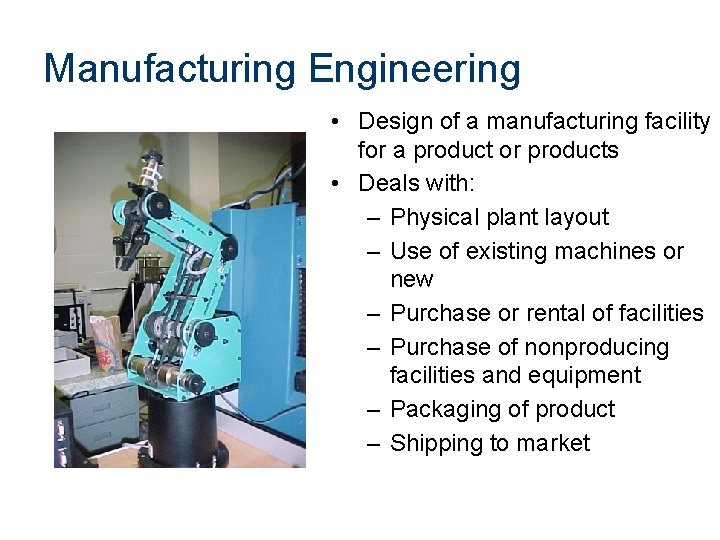
Manufacturing Engineering • Design of a manufacturing facility for a product or products • Deals with: – Physical plant layout – Use of existing machines or new – Purchase or rental of facilities – Purchase of nonproducing facilities and equipment – Packaging of product – Shipping to market