
1 3 Common Substances Essential to Living Things
1. 3 Common Substances Essential to Living Things
A. Organic vs. Inorganic ¬organic compounds are large complex molecules made up of carbon with hydrogen, oxygen and nitrogen ¬inorganic compounds are substances that do not contain carbon (except carbon oxides like carbon dioxide and carbonate compounds) slide 1 of 10
B. Macronutrients vs. Micronutrients ¬nutrients are elements and compounds that are needed for organisms to live, grow and reproduce ¬macronutrients are the 9 nutrients that are needed by organisms in large amounts… C, H, O, N, P, S, K, Mg, Ca ¬micronutrients are substances needed in trace (very small) amounts by organisms eg) selenium slide 2 of 10
C. Nutrient Levels ¬ sometimes too much nutrient can interfere with the absorption of other nutrients eg) K can interfere with the absorption of Mg in farmer’s crops ¬ the optimum amount is the amount of a substance that provides the best health for the organism ¬ too much or too little of any nutrient can have harmful side effects slide 3 of 10
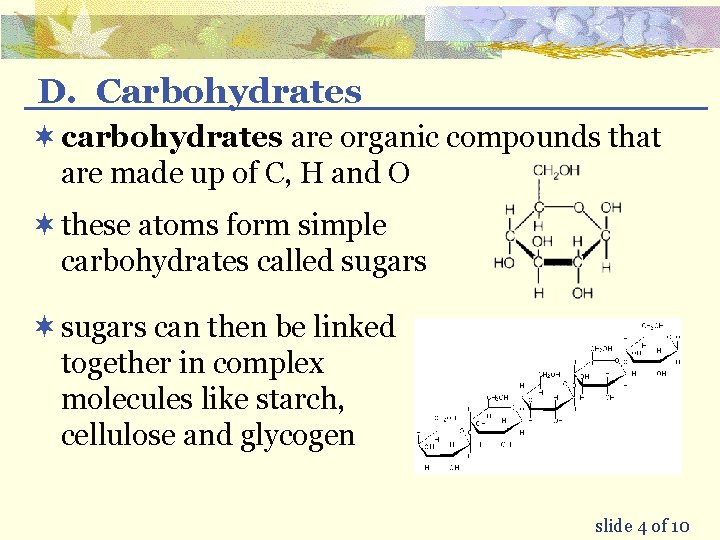
D. Carbohydrates ¬ carbohydrates are organic compounds that are made up of C, H and O ¬ these atoms form simple carbohydrates called sugars ¬ sugars can then be linked together in complex molecules like starch, cellulose and glycogen slide 4 of 10
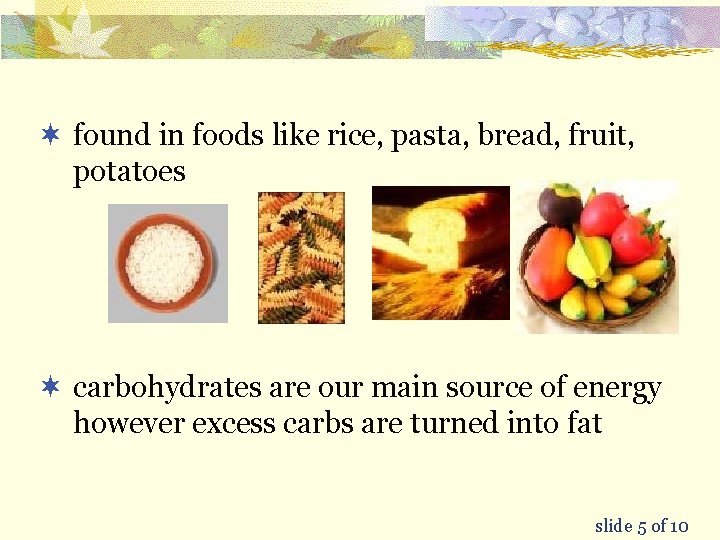
¬ found in foods like rice, pasta, bread, fruit, potatoes ¬ carbohydrates are our main source of energy however excess carbs are turned into fat slide 5 of 10
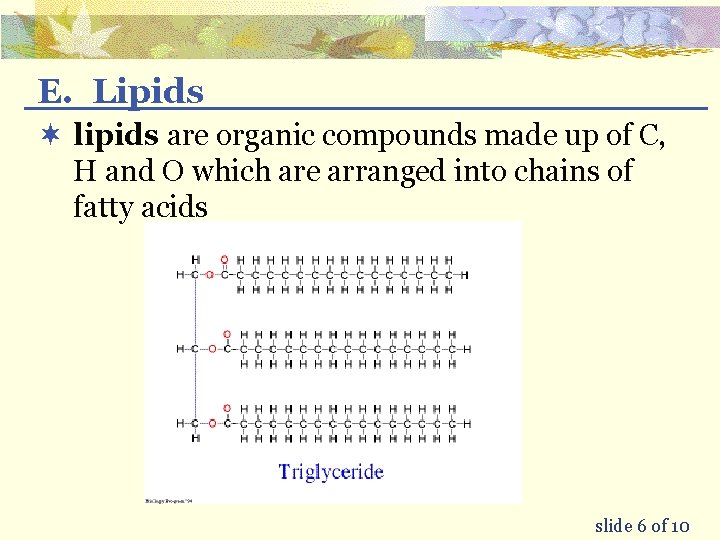
E. Lipids ¬ lipids are organic compounds made up of C, H and O which are arranged into chains of fatty acids slide 6 of 10
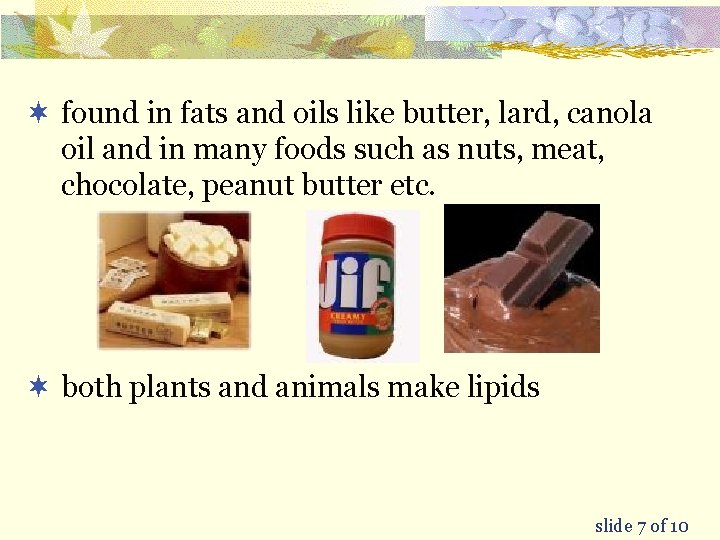
¬ found in fats and oils like butter, lard, canola oil and in many foods such as nuts, meat, chocolate, peanut butter etc. ¬ both plants and animals make lipids slide 7 of 10
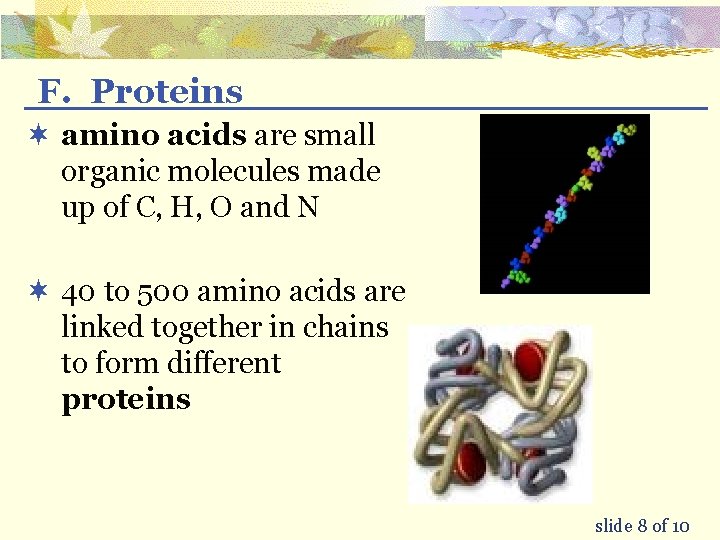
F. Proteins ¬ amino acids are small organic molecules made up of C, H, O and N ¬ 40 to 500 amino acids are linked together in chains to form different proteins slide 8 of 10
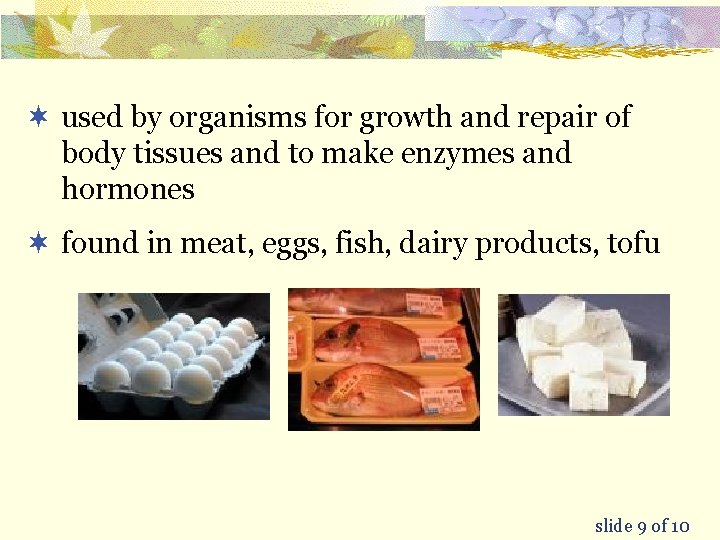
¬ used by organisms for growth and repair of body tissues and to make enzymes and hormones ¬ found in meat, eggs, fish, dairy products, tofu slide 9 of 10
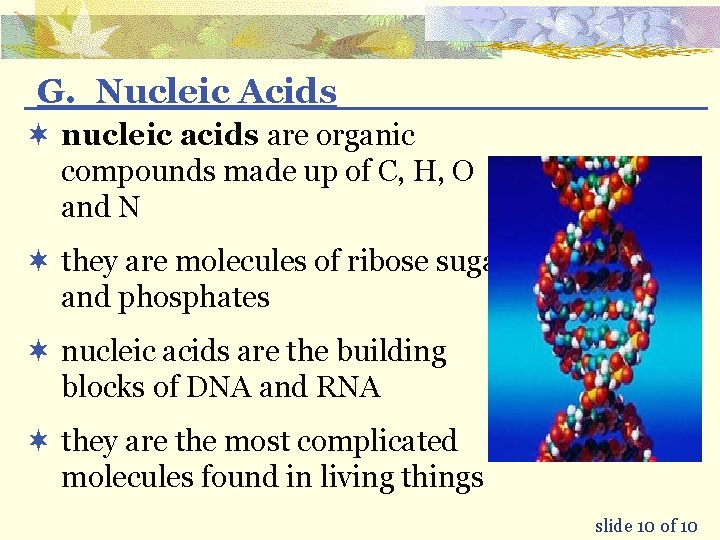
G. Nucleic Acids ¬ nucleic acids are organic compounds made up of C, H, O and N ¬ they are molecules of ribose sugars and phosphates ¬ nucleic acids are the building blocks of DNA and RNA ¬ they are the most complicated molecules found in living things slide 10 of 10
1. 4 How Organisms Take in Substances
A. Plants ¬there are 3 ways for plants to get water and nutrients: 1. diffusion 2. osmosis 3. active transport slide 1 of 10
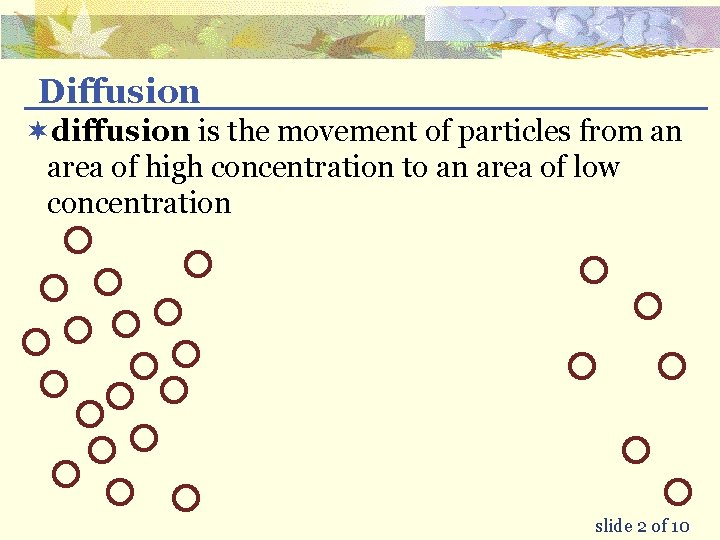
Diffusion ¬diffusion is the movement of particles from an area of high concentration to an area of low concentration slide 2 of 10
¬ it is a passive process which means no extra energy is needed ¬ nutrients in the soil (higher concentration) will diffuse into the roots (lower concentration) slide 3 of 10
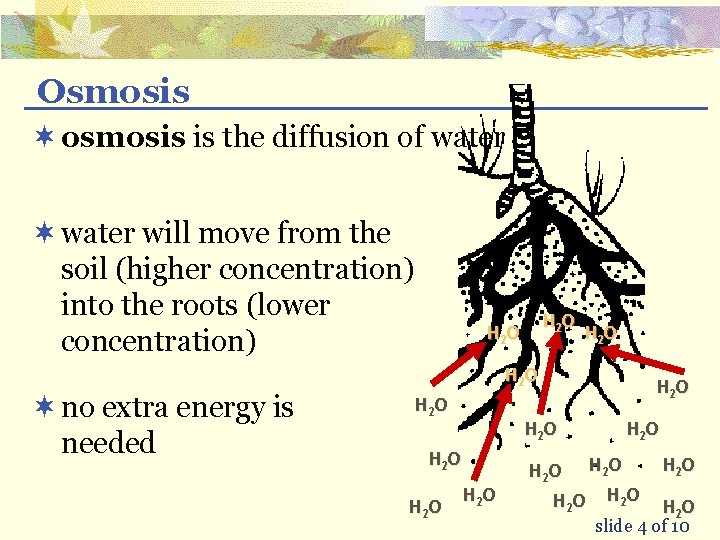
Osmosis ¬ osmosis is the diffusion of water ¬ water will move from the soil (higher concentration) into the roots (lower concentration) H 2 O ¬ no extra energy is needed H 2 O H 2 O H 2 O H 2 O slide 4 of 10
Active Transport ¬ active transport is the movement of particles from an area of low concentration to an area of high concentration ¬ energy is needed!!! ¬ nitrogen is actively moved from the soil (lower concentration) into the roots of the plant (higher concentration) slide 5 of 10
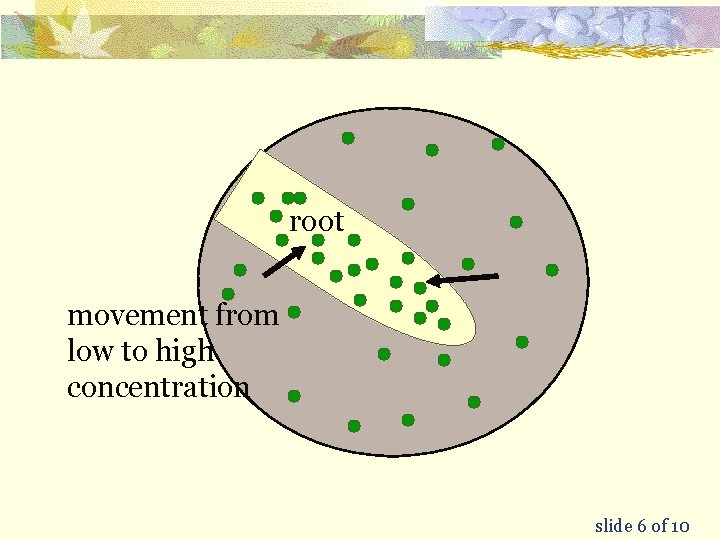
root movement from low to high concentration slide 6 of 10
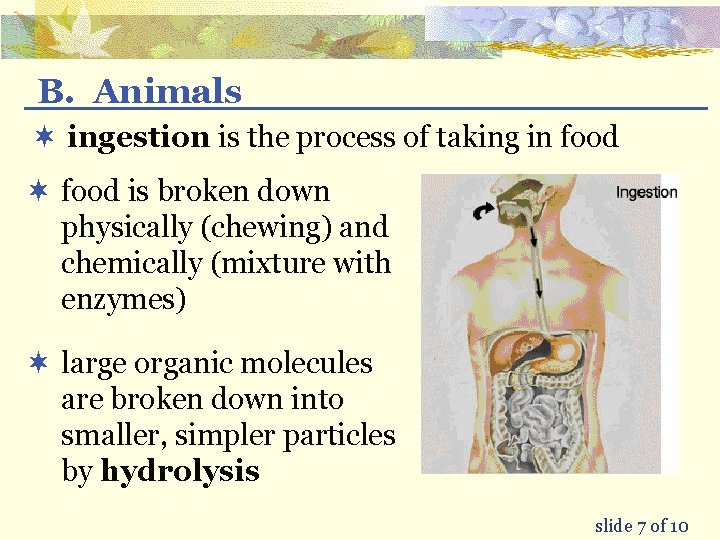
B. Animals ¬ ingestion is the process of taking in food ¬ food is broken down physically (chewing) and chemically (mixture with enzymes) ¬ large organic molecules are broken down into smaller, simpler particles by hydrolysis slide 7 of 10
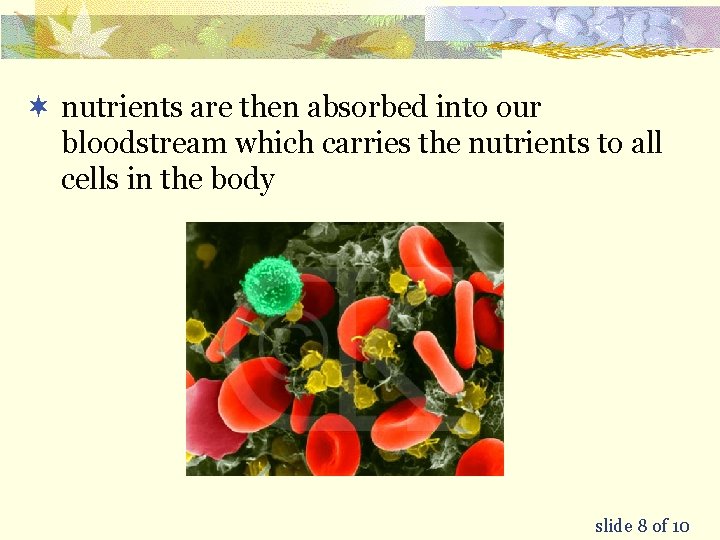
¬ nutrients are then absorbed into our bloodstream which carries the nutrients to all cells in the body slide 8 of 10
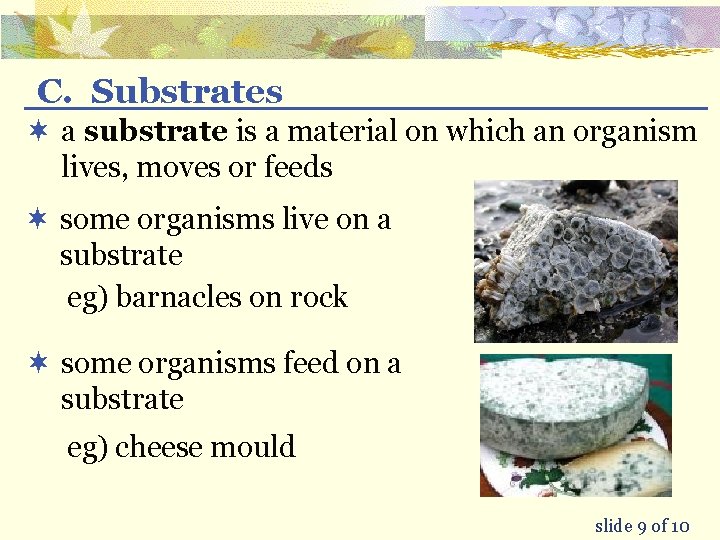
C. Substrates ¬ a substrate is a material on which an organism lives, moves or feeds ¬ some organisms live on a substrate eg) barnacles on rock ¬ some organisms feed on a substrate eg) cheese mould slide 9 of 10
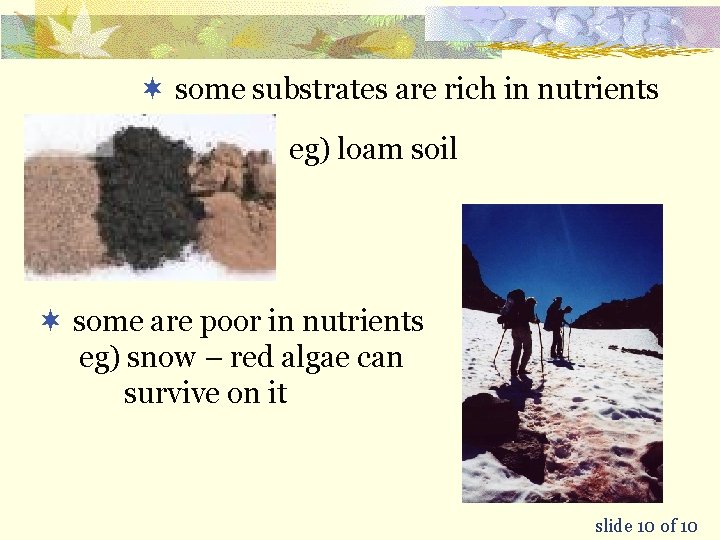
¬ some substrates are rich in nutrients eg) loam soil ¬ some are poor in nutrients eg) snow – red algae can survive on it slide 10 of 10
- Slides: 22