
1 3 Cell Membrane Structure Functions of a
1. 3 Cell Membrane Structure
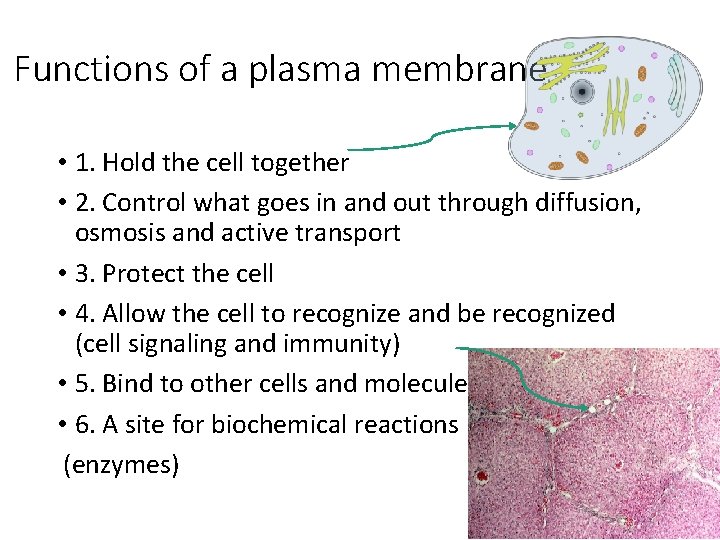
Functions of a plasma membrane • 1. Hold the cell together • 2. Control what goes in and out through diffusion, osmosis and active transport • 3. Protect the cell • 4. Allow the cell to recognize and be recognized (cell signaling and immunity) • 5. Bind to other cells and molecules • 6. A site for biochemical reactions (enzymes)
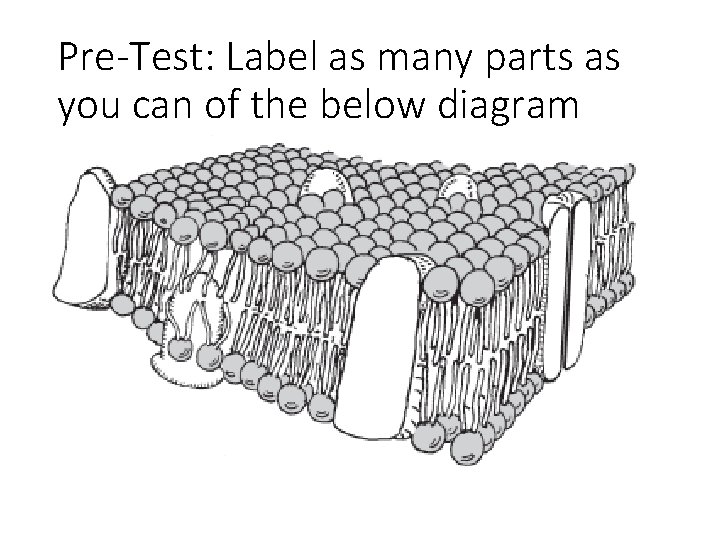
Pre-Test: Label as many parts as you can of the below diagram
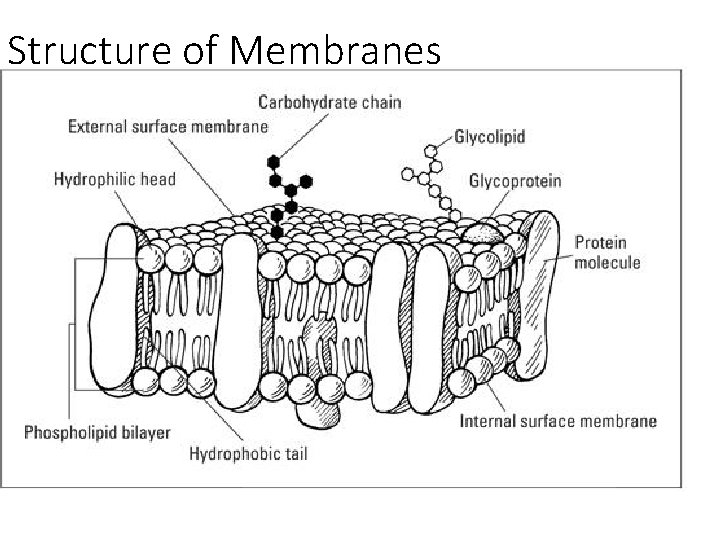
Structure of Membranes
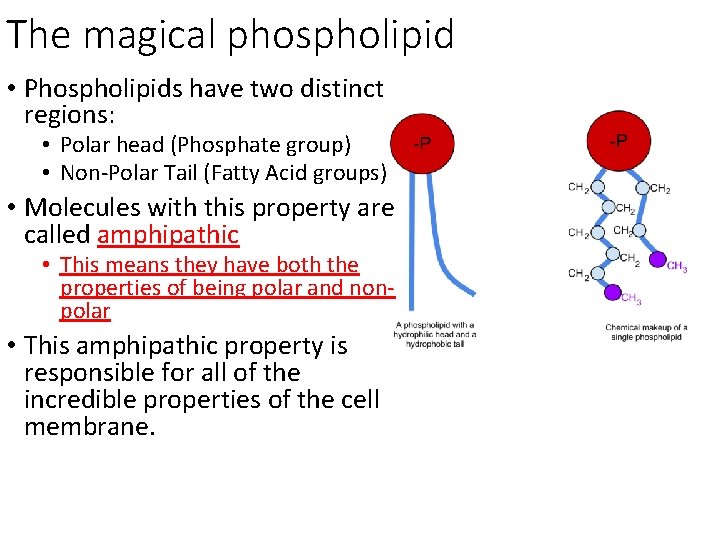
The magical phospholipid • Phospholipids have two distinct regions: • Polar head (Phosphate group) • Non-Polar Tail (Fatty Acid groups) • Molecules with this property are called amphipathic • This means they have both the properties of being polar and nonpolar • This amphipathic property is responsible for all of the incredible properties of the cell membrane.
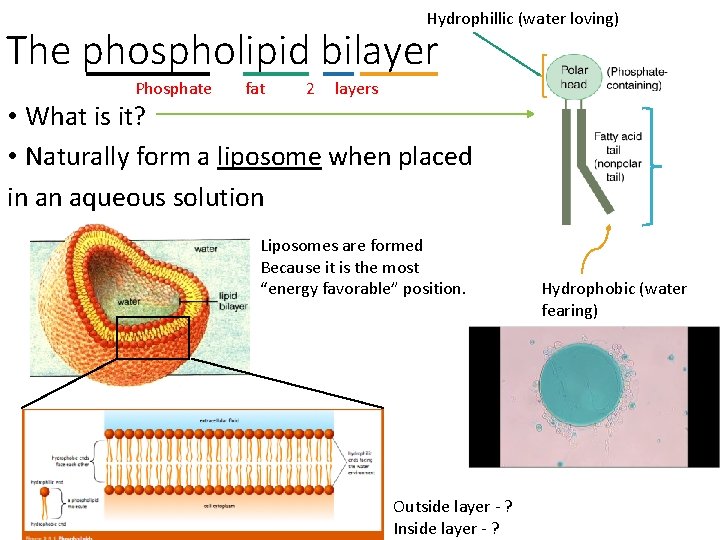
Hydrophillic (water loving) The phospholipid bilayer Phosphate fat 2 layers • What is it? • Naturally form a liposome when placed in an aqueous solution Liposomes are formed Because it is the most “energy favorable” position. Outside layer - ? Inside layer - ? Hydrophobic (water fearing)
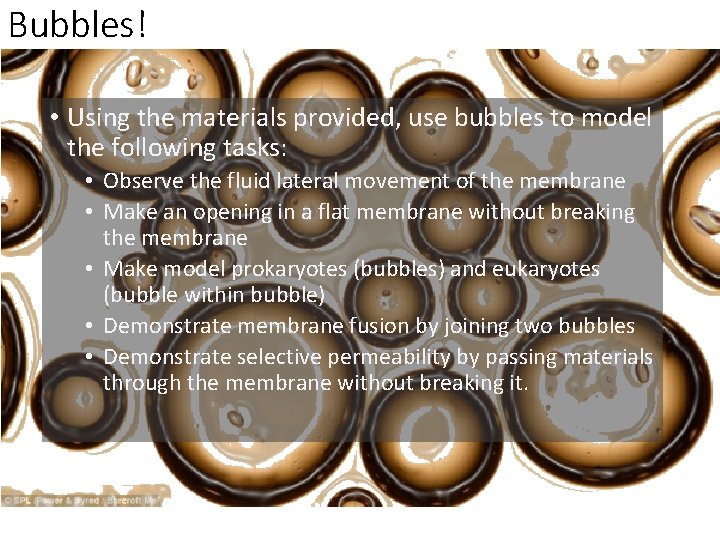
Bubbles! • Using the materials provided, use bubbles to model the following tasks: • Observe the fluid lateral movement of the membrane • Make an opening in a flat membrane without breaking the membrane • Make model prokaryotes (bubbles) and eukaryotes (bubble within bubble) • Demonstrate membrane fusion by joining two bubbles • Demonstrate selective permeability by passing materials through the membrane without breaking it.
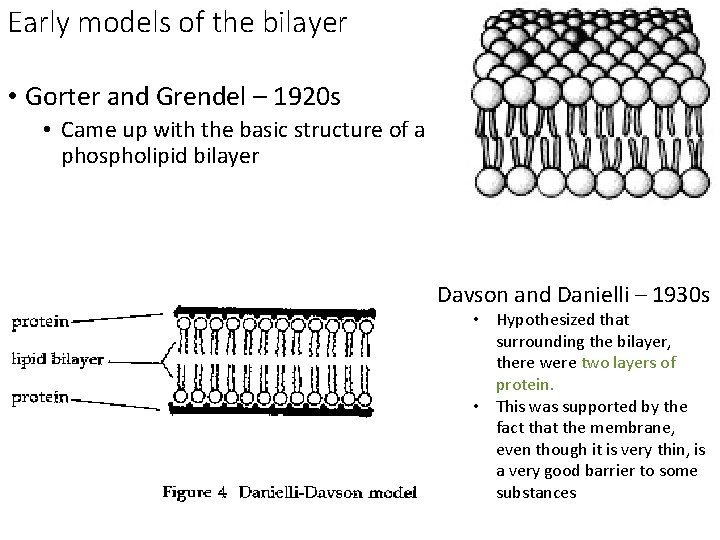
Early models of the bilayer • Gorter and Grendel – 1920 s • Came up with the basic structure of a phospholipid bilayer Davson and Danielli – 1930 s • Hypothesized that surrounding the bilayer, there were two layers of protein. • This was supported by the fact that the membrane, even though it is very thin, is a very good barrier to some substances
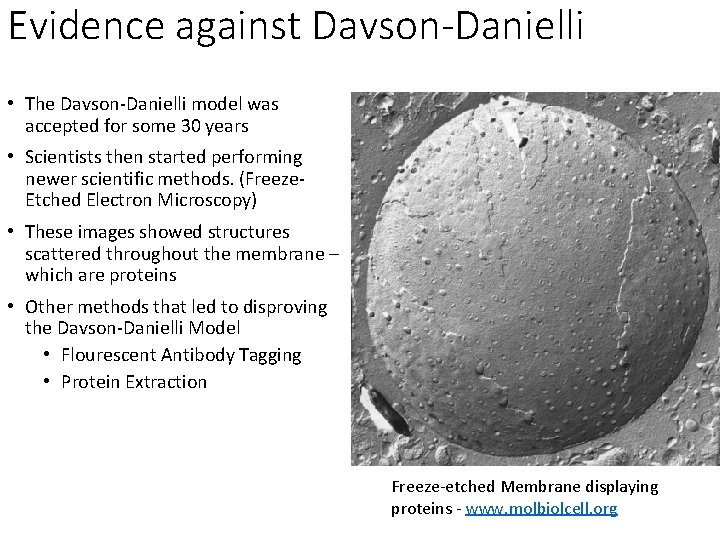
Evidence against Davson-Danielli • The Davson-Danielli model was accepted for some 30 years • Scientists then started performing newer scientific methods. (Freeze. Etched Electron Microscopy) • These images showed structures scattered throughout the membrane – which are proteins • Other methods that led to disproving the Davson-Danielli Model • Flourescent Antibody Tagging • Protein Extraction Freeze-etched Membrane displaying proteins - www. molbiolcell. org
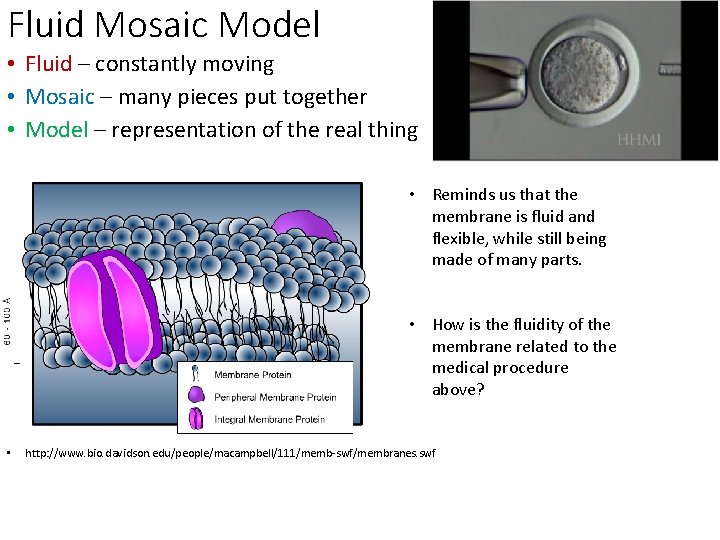
Fluid Mosaic Model • Fluid – constantly moving • Mosaic – many pieces put together • Model – representation of the real thing • Reminds us that the membrane is fluid and flexible, while still being made of many parts. • How is the fluidity of the membrane related to the medical procedure above? • http: //www. bio. davidson. edu/people/macampbell/111/memb-swf/membranes. swf
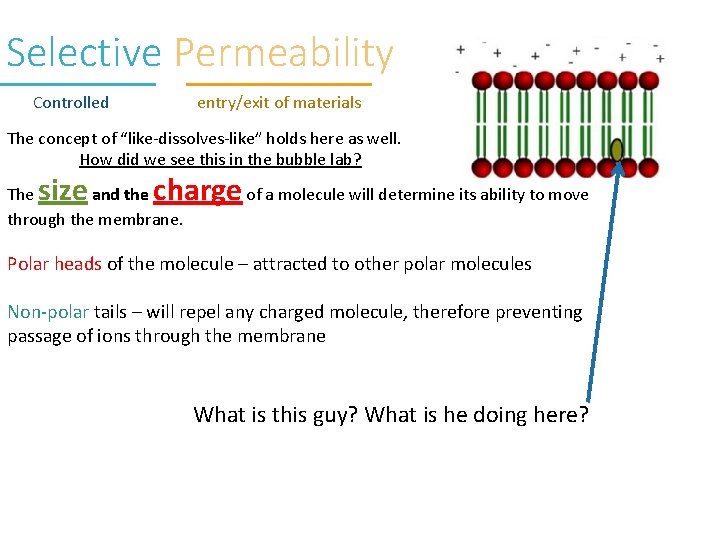
Selective Permeability Controlled entry/exit of materials The concept of “like-dissolves-like” holds here as well. How did we see this in the bubble lab? size charge of a molecule will determine its ability to move The and the through the membrane. Polar heads of the molecule – attracted to other polar molecules Non-polar tails – will repel any charged molecule, therefore preventing passage of ions through the membrane What is this guy? What is he doing here?
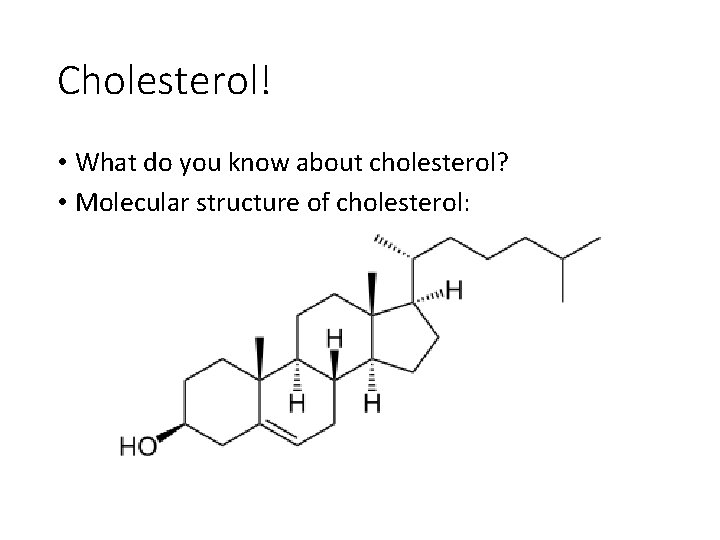
Cholesterol! • What do you know about cholesterol? • Molecular structure of cholesterol:
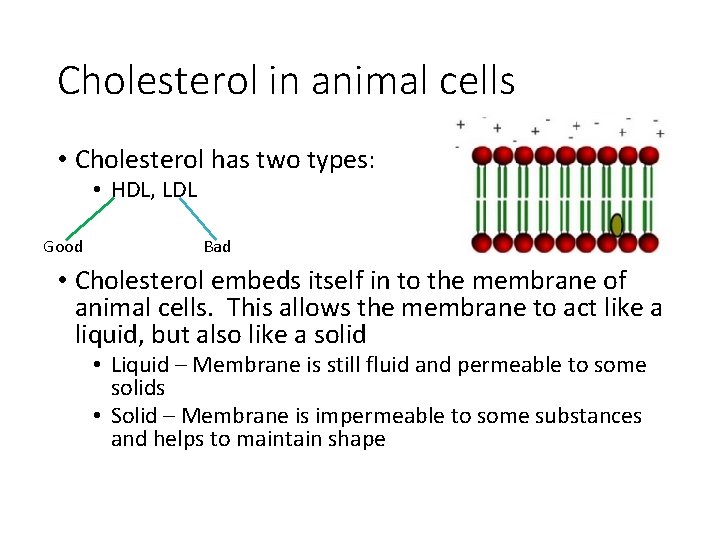
Cholesterol in animal cells • Cholesterol has two types: • HDL, LDL Good Bad • Cholesterol embeds itself in to the membrane of animal cells. This allows the membrane to act like a liquid, but also like a solid • Liquid – Membrane is still fluid and permeable to some solids • Solid – Membrane is impermeable to some substances and helps to maintain shape
Lab – Yeast Viability Research Question – How resilient is the cell membrane of saccharomyces cerevisiae to temperature? Independent Variable – Yeast is exposed to different solution temperatures. Dependent Variables – The amount of yeast found to be viable after exposure. Hypothesis – That as temperature increases…… Lab Materials for Use – Microscopes Beakers Yeast 0. 1% solution Methylene Blue Hemocytometer Microcentrifuge Tubes Design a lab to test two different temperatures of exposure for yeast on Wednesday, as to how resilient the cell membrane of yeast.
Types of Transport • Some molecules pass through easily, and can therefore be moved through diffusion • Other molecules need a channel and utilize facilitated diffusion • Other small molecules need energy (ATP) to move them through, and those are transported through by active transport • Large molecules use their own membranes, and are moved past the cell membrane by endo/exocytosis
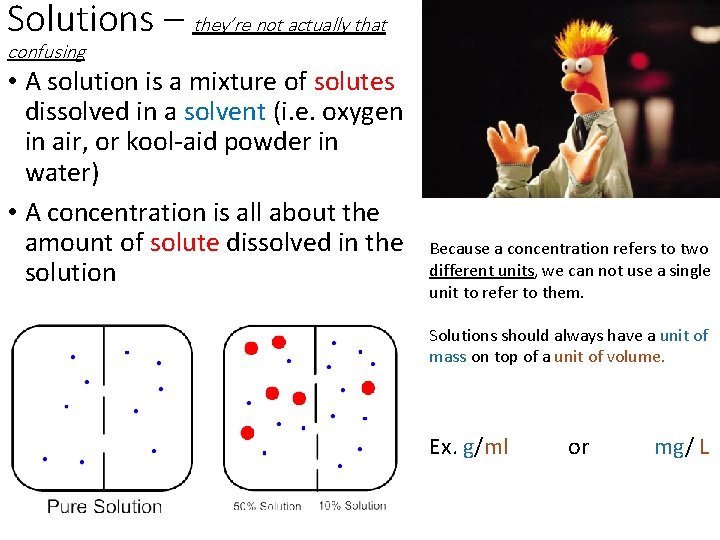
Solutions – they’re not actually that confusing • A solution is a mixture of solutes dissolved in a solvent (i. e. oxygen in air, or kool-aid powder in water) • A concentration is all about the amount of solute dissolved in the solution Because a concentration refers to two different units, we can not use a single unit to refer to them. Solutions should always have a unit of mass on top of a unit of volume. Ex. g/ml or mg/ L
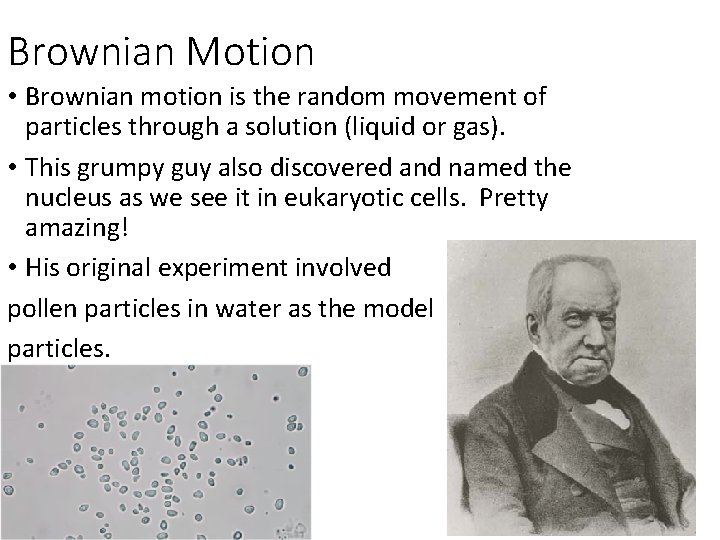
Brownian Motion • Brownian motion is the random movement of particles through a solution (liquid or gas). • This grumpy guy also discovered and named the nucleus as we see it in eukaryotic cells. Pretty amazing! • His original experiment involved pollen particles in water as the model particles.
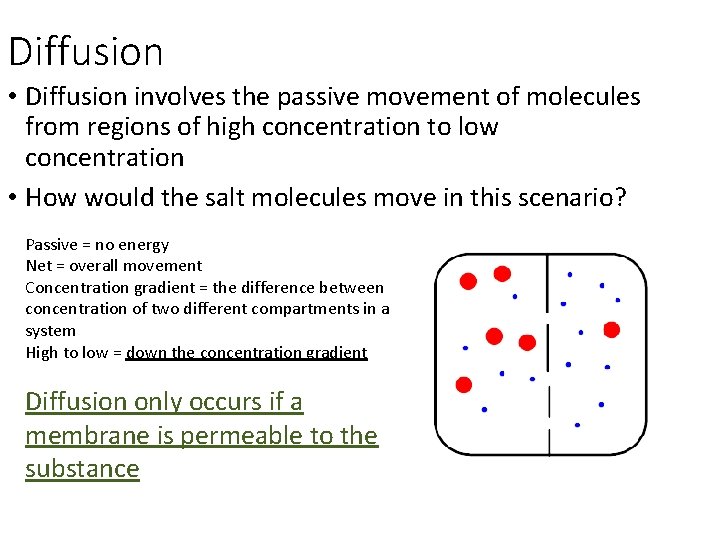
Diffusion • Diffusion involves the passive movement of molecules from regions of high concentration to low concentration • How would the salt molecules move in this scenario? Passive = no energy Net = overall movement Concentration gradient = the difference between concentration of two different compartments in a system High to low = down the concentration gradient Diffusion only occurs if a membrane is permeable to the substance
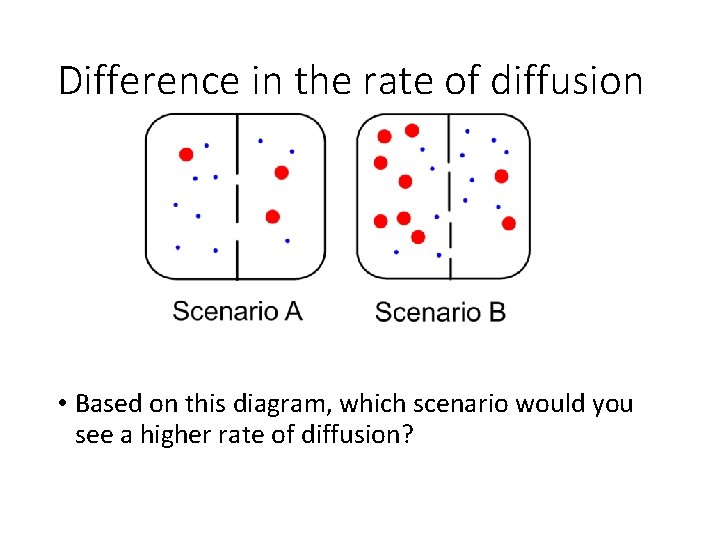
Difference in the rate of diffusion • Based on this diagram, which scenario would you see a higher rate of diffusion?
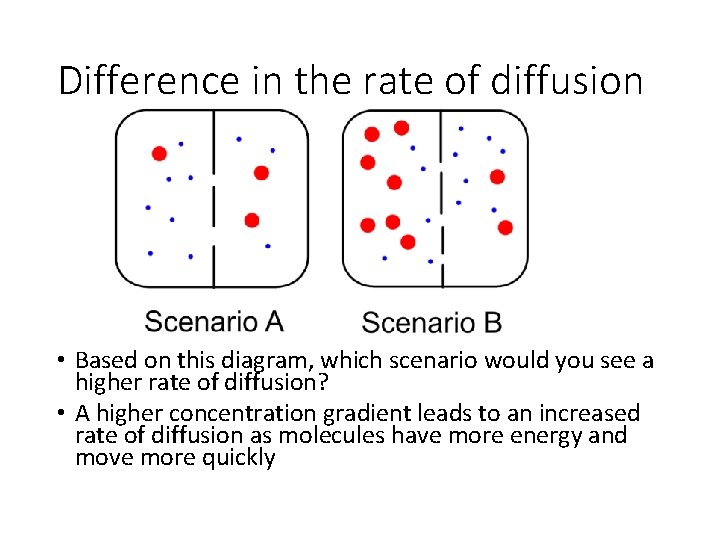
Difference in the rate of diffusion • Based on this diagram, which scenario would you see a higher rate of diffusion? • A higher concentration gradient leads to an increased rate of diffusion as molecules have more energy and move more quickly
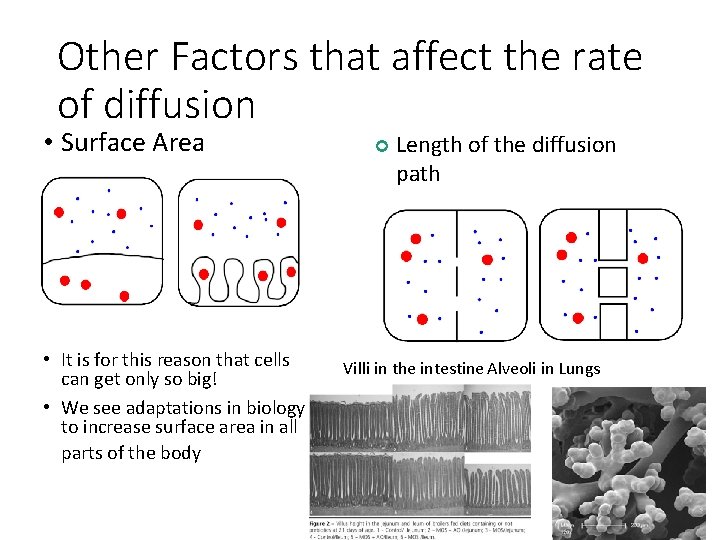
Other Factors that affect the rate of diffusion • Surface Area • It is for this reason that cells can get only so big! • We see adaptations in biology to increase surface area in all parts of the body Length of the diffusion path Villi in the intestine Alveoli in Lungs
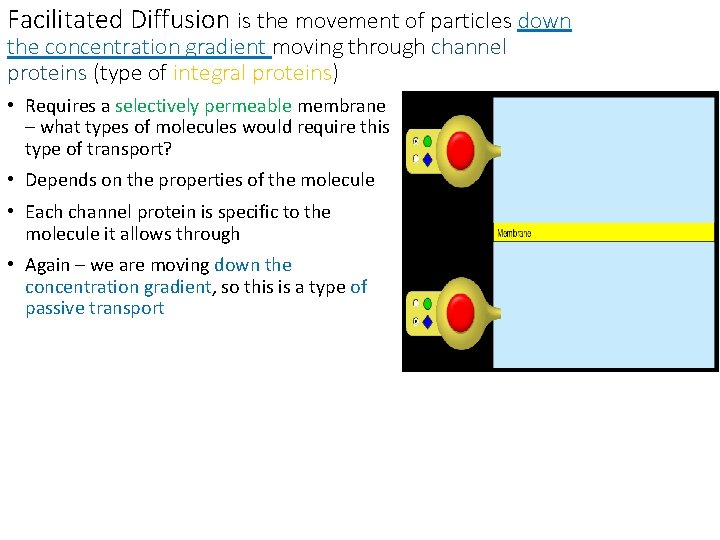
Facilitated Diffusion is the movement of particles down the concentration gradient moving through channel proteins (type of integral proteins) • Requires a selectively permeable membrane – what types of molecules would require this type of transport? • Depends on the properties of the molecule • Each channel protein is specific to the molecule it allows through • Again – we are moving down the concentration gradient, so this is a type of passive transport
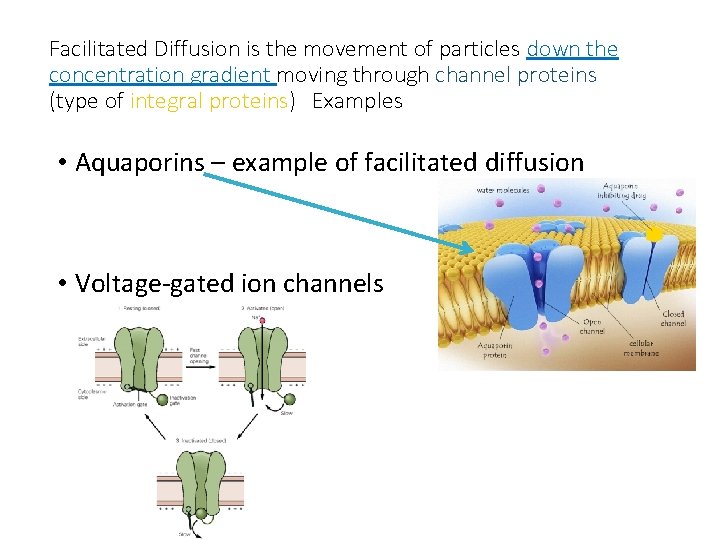
Facilitated Diffusion is the movement of particles down the concentration gradient moving through channel proteins (type of integral proteins) Examples • Aquaporins – example of facilitated diffusion • Voltage-gated ion channels
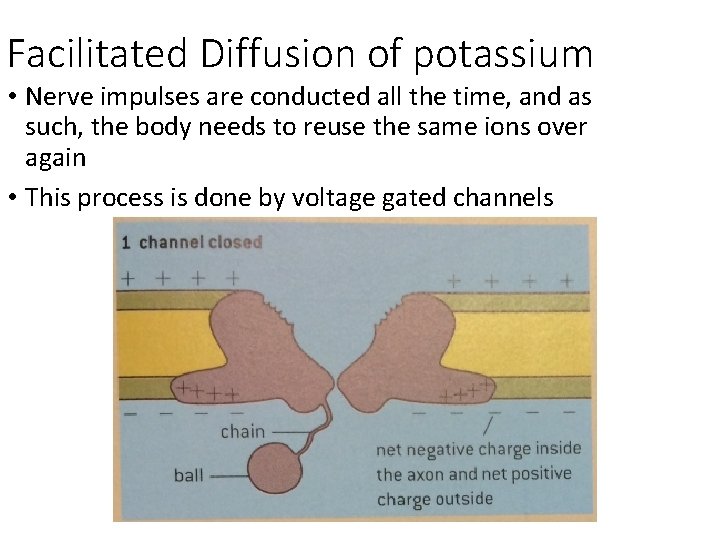
Facilitated Diffusion of potassium • Nerve impulses are conducted all the time, and as such, the body needs to reuse the same ions over again • This process is done by voltage gated channels
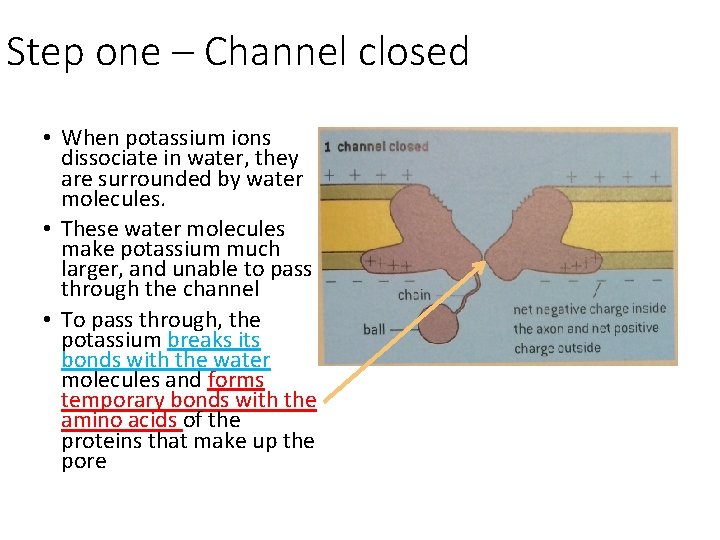
Step one – Channel closed • When potassium ions dissociate in water, they are surrounded by water molecules. • These water molecules make potassium much larger, and unable to pass through the channel • To pass through, the potassium breaks its bonds with the water molecules and forms temporary bonds with the amino acids of the proteins that make up the pore
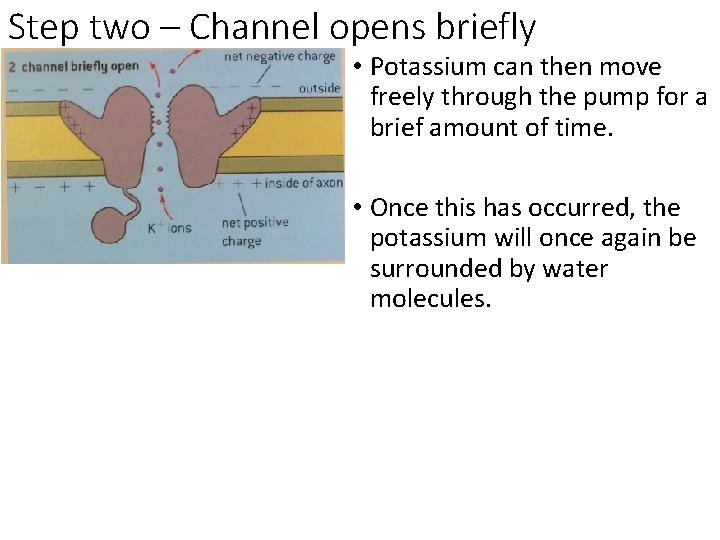
Step two – Channel opens briefly • Potassium can then move freely through the pump for a brief amount of time. • Once this has occurred, the potassium will once again be surrounded by water molecules.
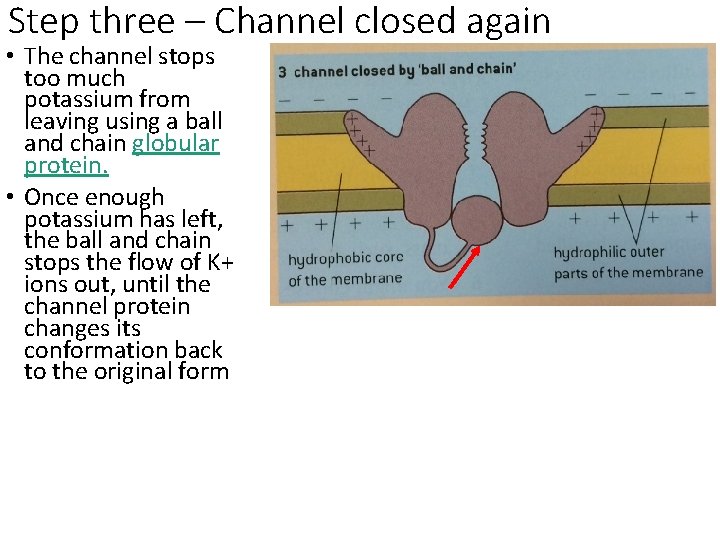
Step three – Channel closed again • The channel stops too much potassium from leaving using a ball and chain globular protein. • Once enough potassium has left, the ball and chain stops the flow of K+ ions out, until the channel protein changes its conformation back to the original form
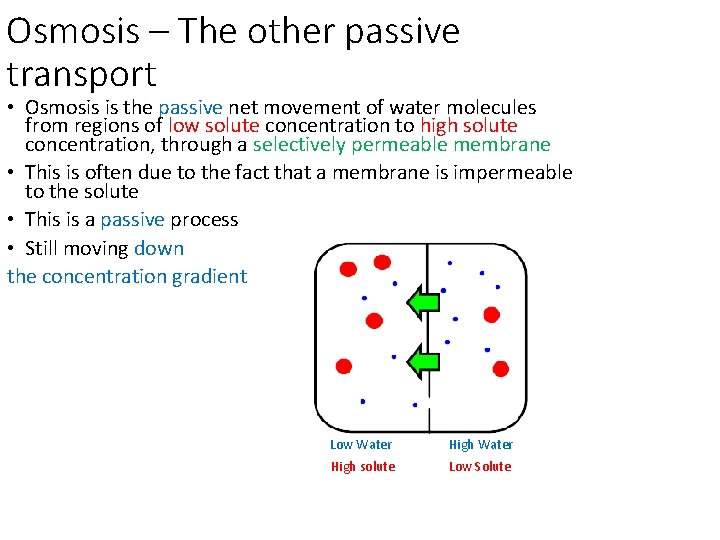
Osmosis – The other passive transport • Osmosis is the passive net movement of water molecules from regions of low solute concentration to high solute concentration, through a selectively permeable membrane • This is often due to the fact that a membrane is impermeable to the solute • This is a passive process • Still moving down the concentration gradient Low Water High solute Low Solute
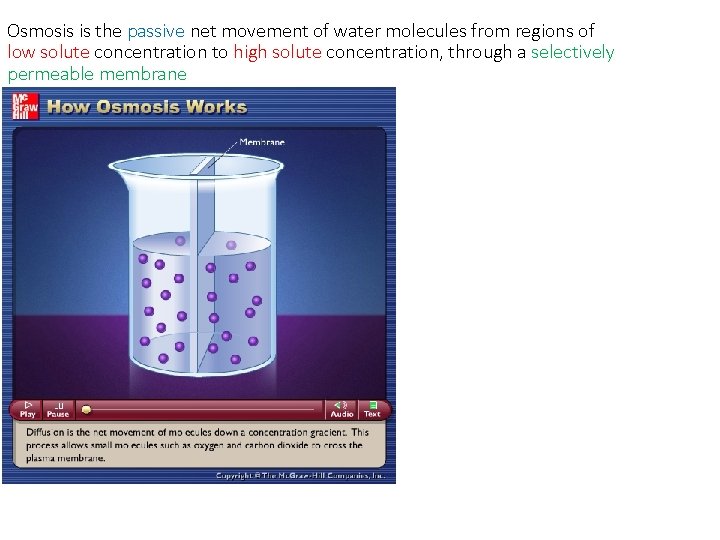
Osmosis is the passive net movement of water molecules from regions of low solute concentration to high solute concentration, through a selectively permeable membrane
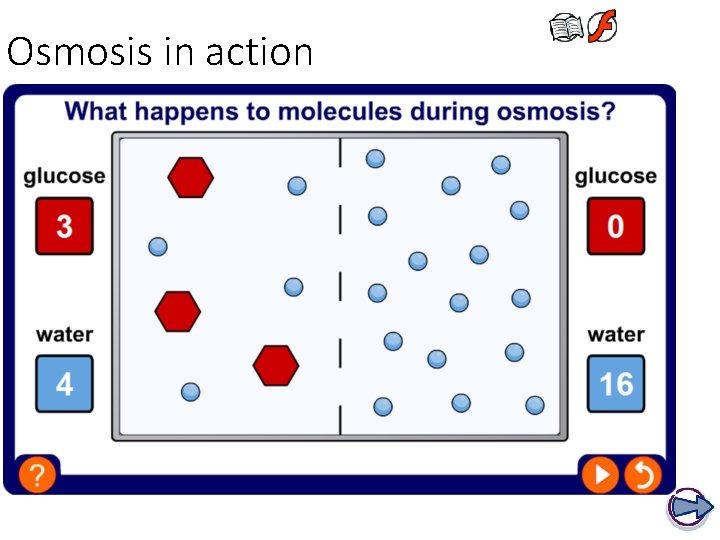
Osmosis in action
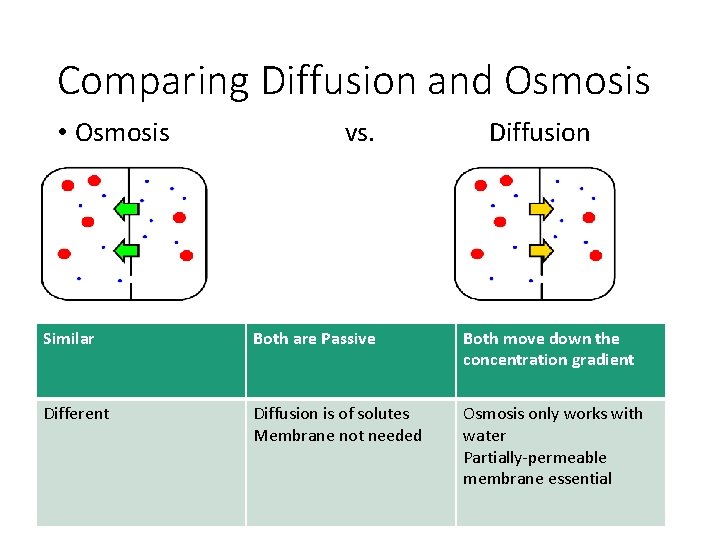
Comparing Diffusion and Osmosis • Osmosis vs. Diffusion Similar Both are Passive Both move down the concentration gradient Different Diffusion is of solutes Membrane not needed Osmosis only works with water Partially-permeable membrane essential
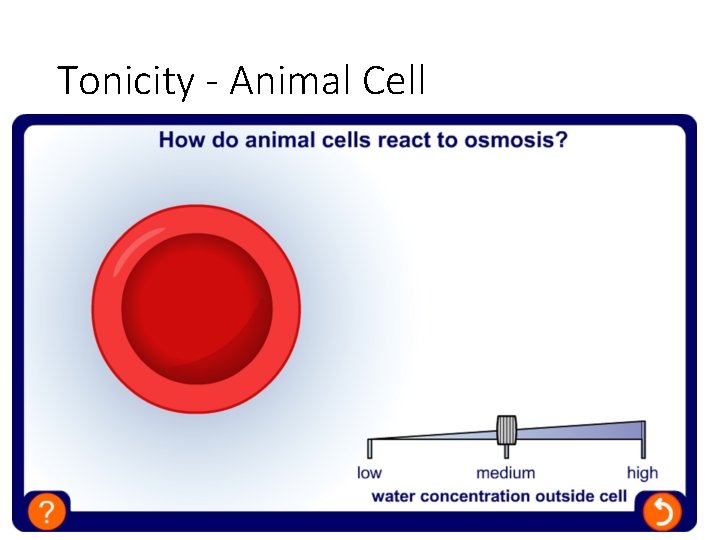
Tonicity - Animal Cell
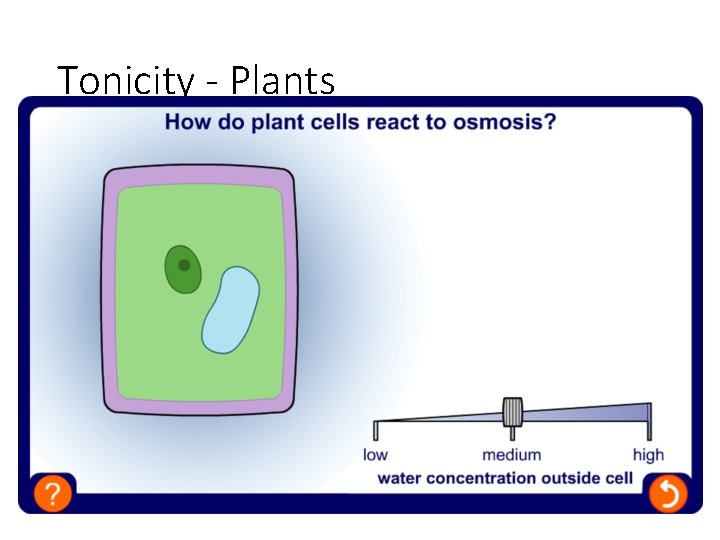
Tonicity - Plants
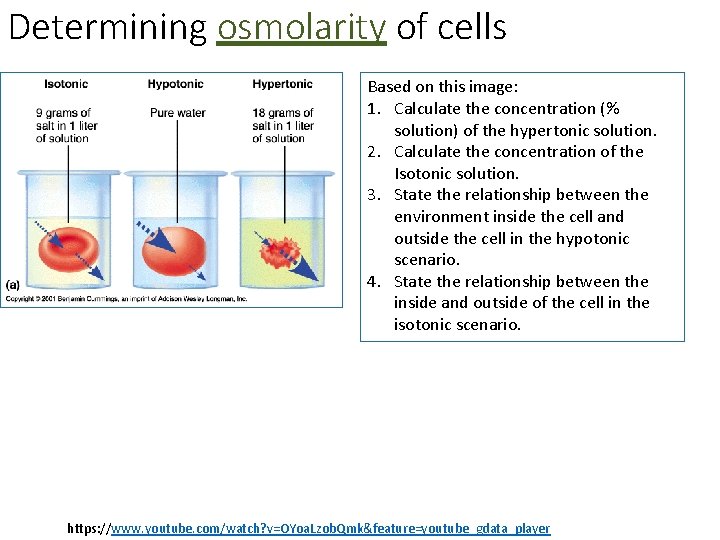
Determining osmolarity of cells Based on this image: 1. Calculate the concentration (% solution) of the hypertonic solution. 2. Calculate the concentration of the Isotonic solution. 3. State the relationship between the environment inside the cell and outside the cell in the hypotonic scenario. 4. State the relationship between the inside and outside of the cell in the isotonic scenario. https: //www. youtube. com/watch? v=OYoa. Lzob. Qmk&feature=youtube_gdata_player
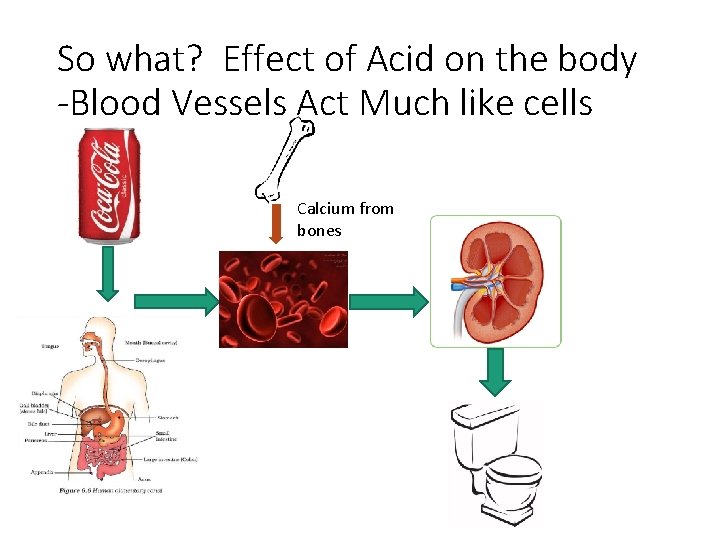
So what? Effect of Acid on the body -Blood Vessels Act Much like cells Calcium from bones
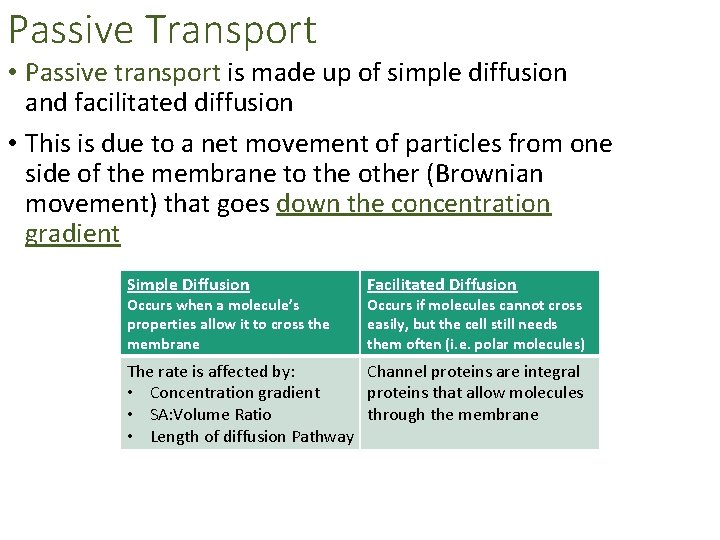
Passive Transport • Passive transport is made up of simple diffusion and facilitated diffusion • This is due to a net movement of particles from one side of the membrane to the other (Brownian movement) that goes down the concentration gradient Simple Diffusion Occurs when a molecule’s properties allow it to cross the membrane Facilitated Diffusion Occurs if molecules cannot cross easily, but the cell still needs them often (i. e. polar molecules) The rate is affected by: Channel proteins are integral • Concentration gradient proteins that allow molecules • SA: Volume Ratio through the membrane • Length of diffusion Pathway
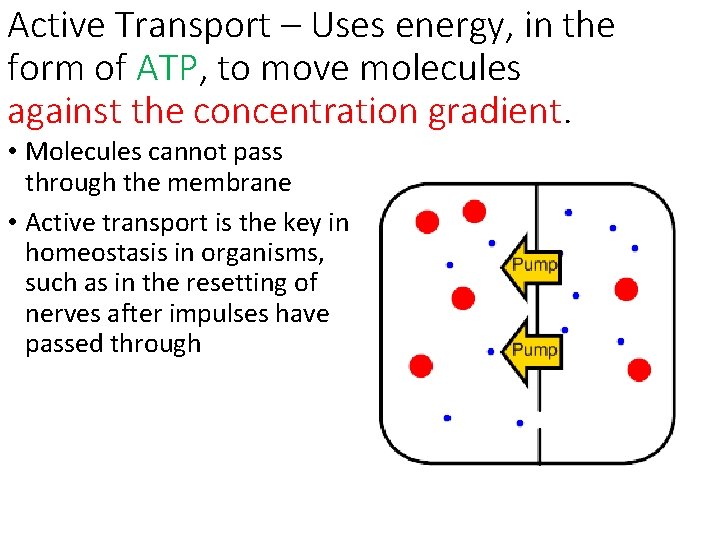
Active Transport – Uses energy, in the form of ATP, to move molecules against the concentration gradient. • Molecules cannot pass through the membrane • Active transport is the key in homeostasis in organisms, such as in the resetting of nerves after impulses have passed through
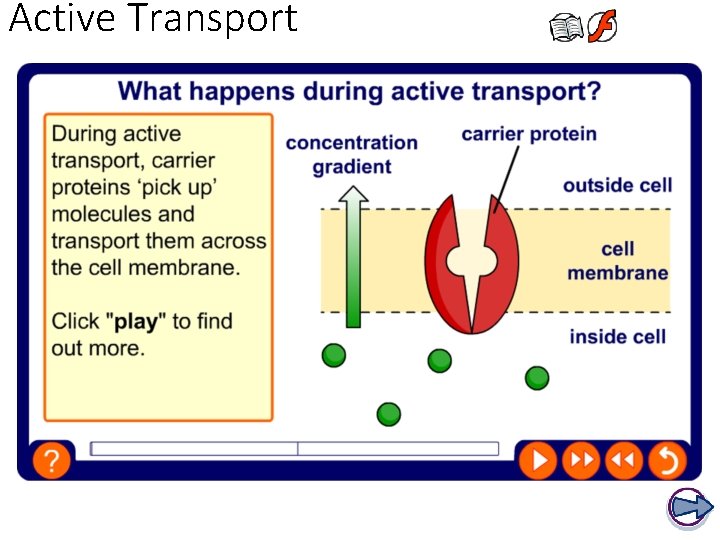
Active Transport
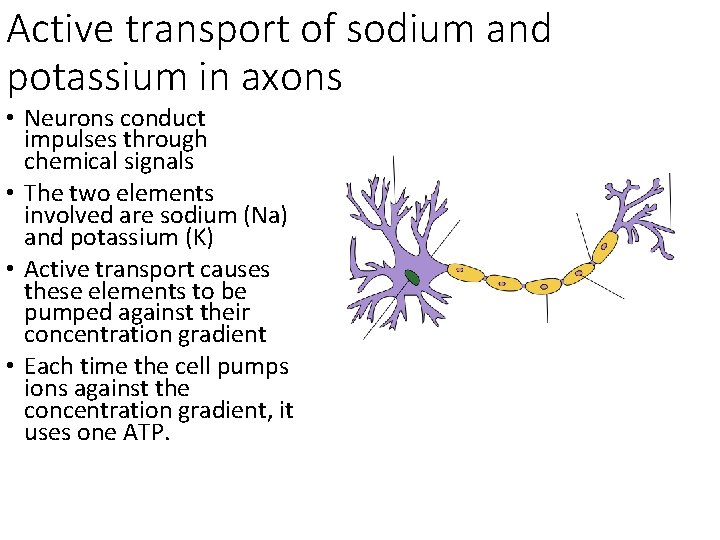
Active transport of sodium and potassium in axons • Neurons conduct impulses through chemical signals • The two elements involved are sodium (Na) and potassium (K) • Active transport causes these elements to be pumped against their concentration gradient • Each time the cell pumps ions against the concentration gradient, it uses one ATP.
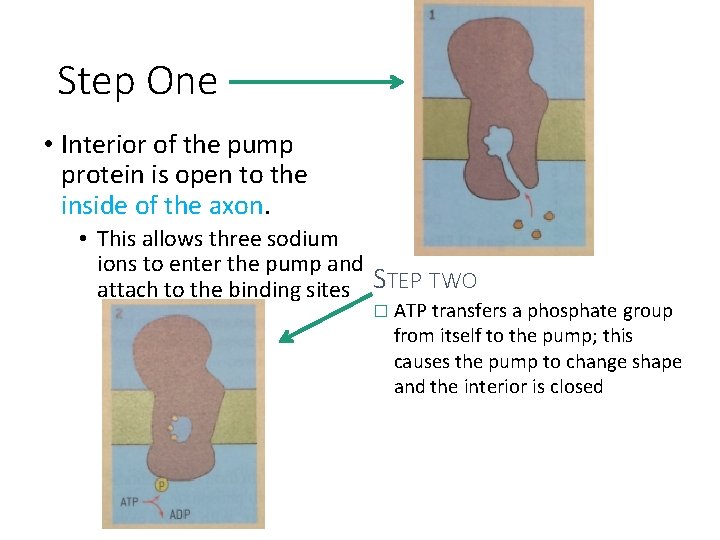
Step One • Interior of the pump protein is open to the inside of the axon. • This allows three sodium ions to enter the pump and attach to the binding sites STEP TWO � ATP transfers a phosphate group from itself to the pump; this causes the pump to change shape and the interior is closed
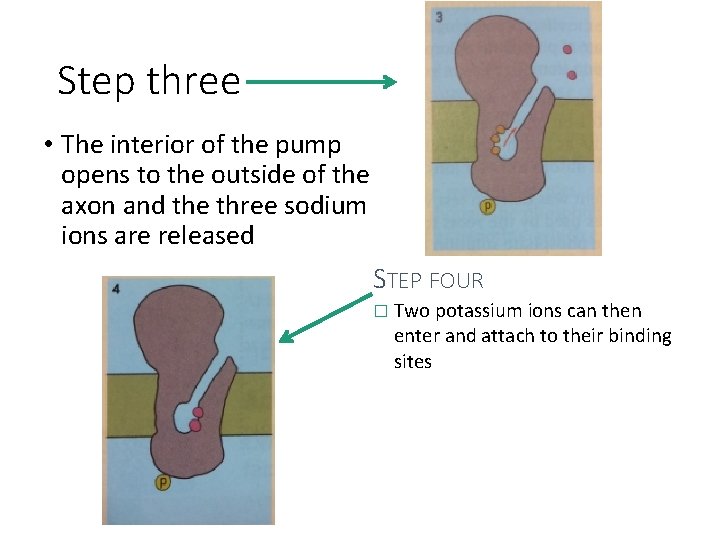
Step three • The interior of the pump opens to the outside of the axon and the three sodium ions are released STEP FOUR � Two potassium ions can then enter and attach to their binding sites
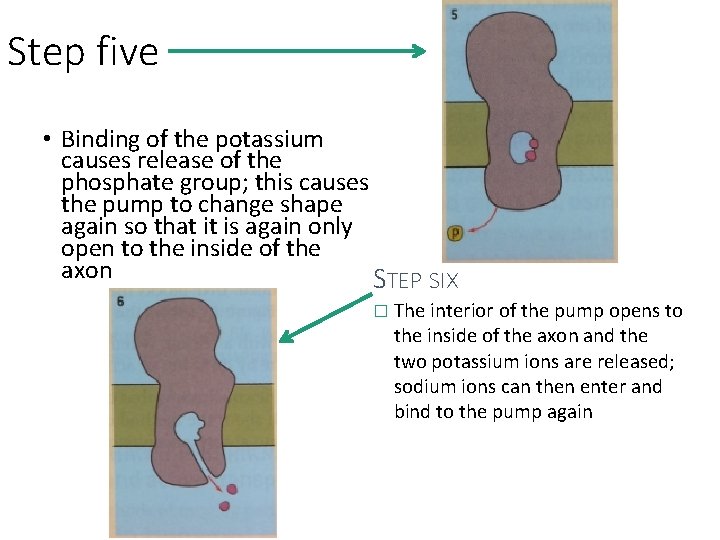
Step five • Binding of the potassium causes release of the phosphate group; this causes the pump to change shape again so that it is again only open to the inside of the axon STEP SIX � The interior of the pump opens to the inside of the axon and the two potassium ions are released; sodium ions can then enter and bind to the pump again
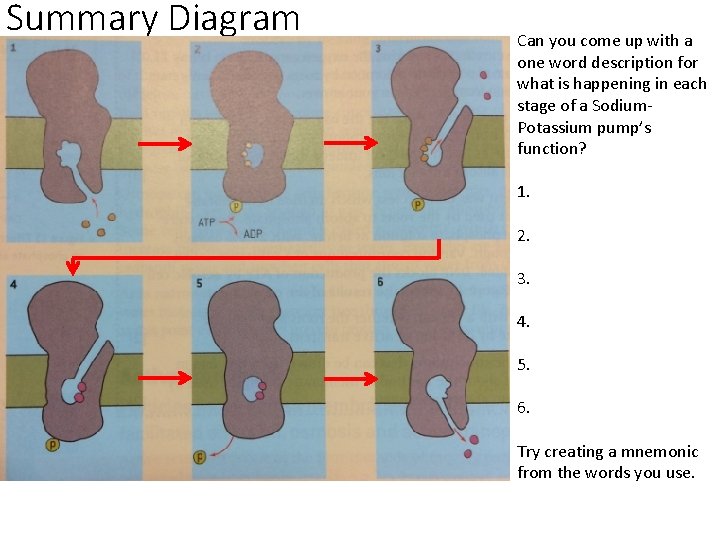
Summary Diagram Can you come up with a one word description for what is happening in each stage of a Sodium. Potassium pump’s function? 1. 2. 3. 4. 5. 6. Try creating a mnemonic from the words you use.
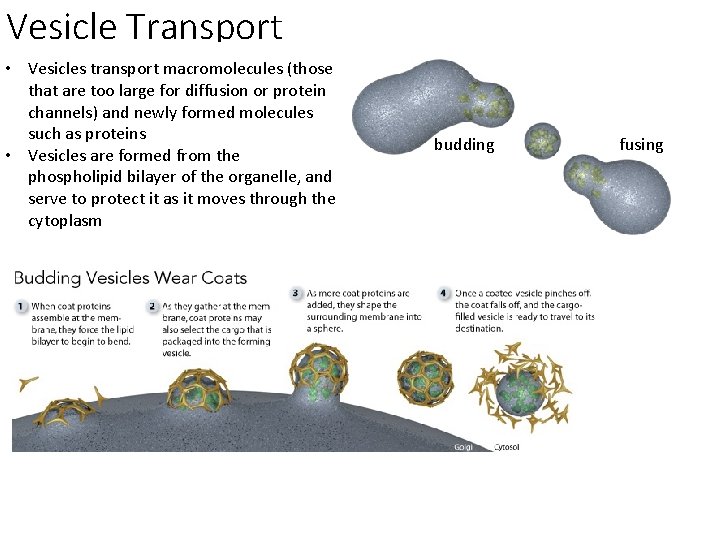
Vesicle Transport • Vesicles transport macromolecules (those that are too large for diffusion or protein channels) and newly formed molecules such as proteins • Vesicles are formed from the phospholipid bilayer of the organelle, and serve to protect it as it moves through the cytoplasm budding fusing
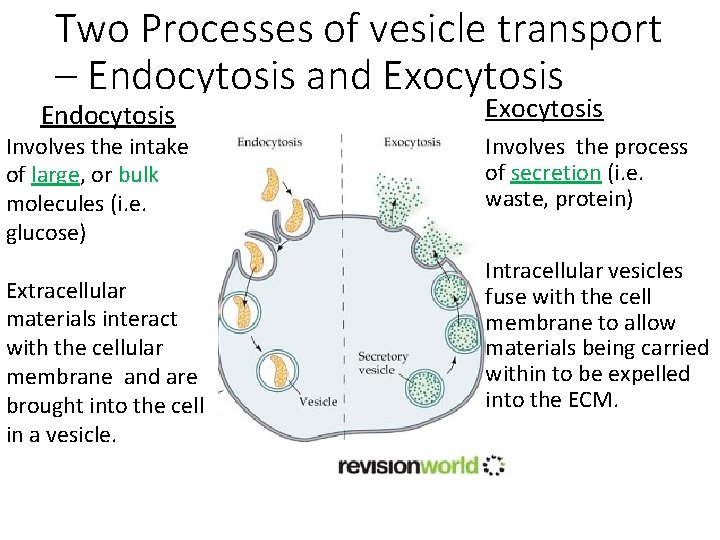
Two Processes of vesicle transport – Endocytosis and Exocytosis Endocytosis Involves the intake of large, or bulk molecules (i. e. glucose) Extracellular materials interact with the cellular membrane and are brought into the cell in a vesicle. Exocytosis Involves the process of secretion (i. e. waste, protein) Intracellular vesicles fuse with the cell membrane to allow materials being carried within to be expelled into the ECM.
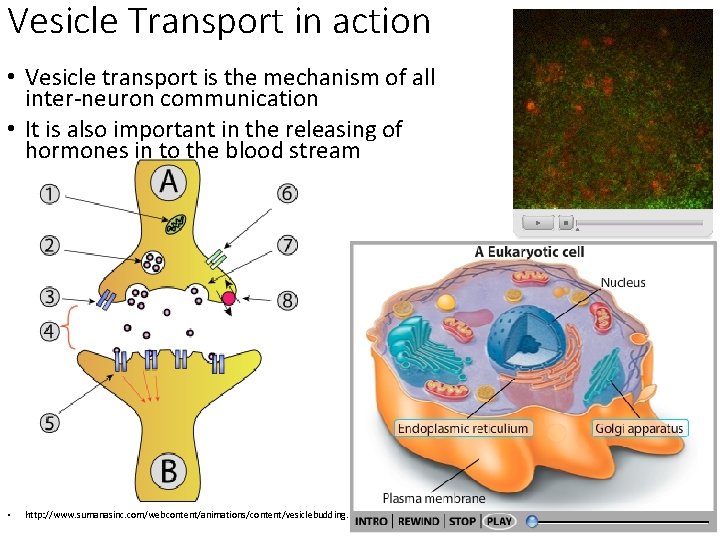
Vesicle Transport in action • Vesicle transport is the mechanism of all inter-neuron communication • It is also important in the releasing of hormones in to the blood stream • http: //www. sumanasinc. com/webcontent/animations/content/vesiclebudding. html
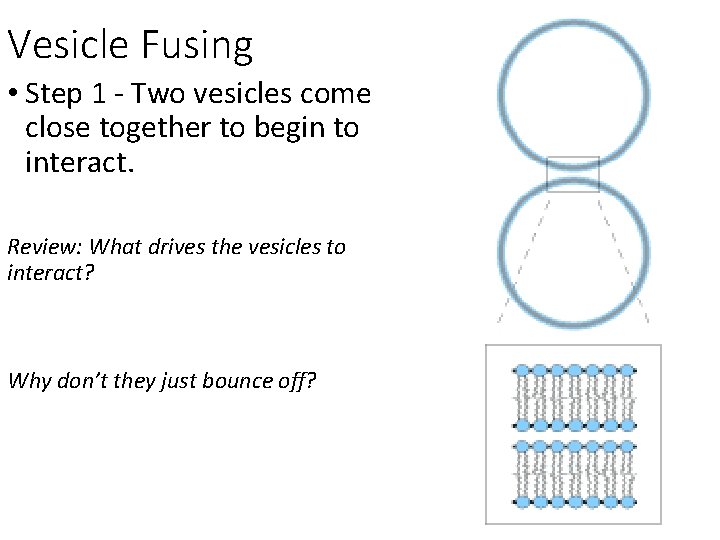
Vesicle Fusing • Step 1 - Two vesicles come close together to begin to interact. Review: What drives the vesicles to interact? Why don’t they just bounce off?
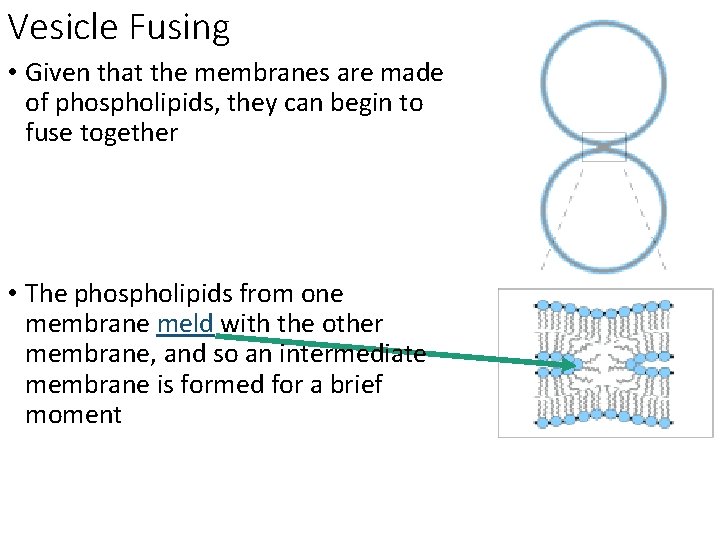
Vesicle Fusing • Given that the membranes are made of phospholipids, they can begin to fuse together • The phospholipids from one membrane meld with the other membrane, and so an intermediate membrane is formed for a brief moment
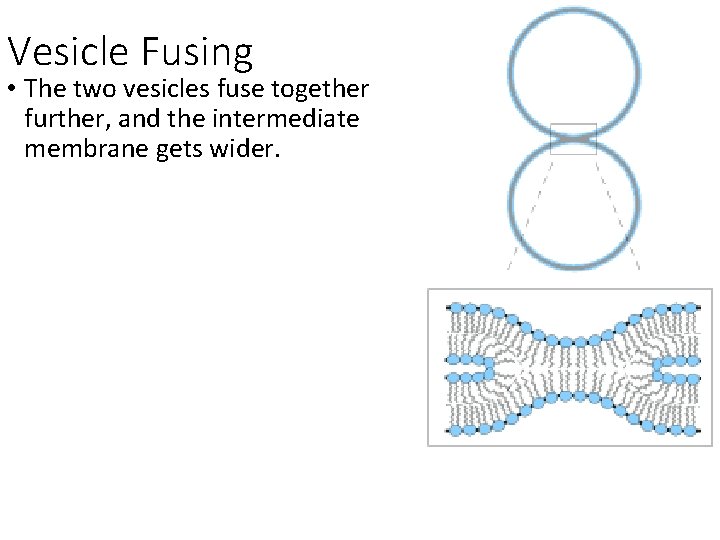
Vesicle Fusing • The two vesicles fuse together further, and the intermediate membrane gets wider.
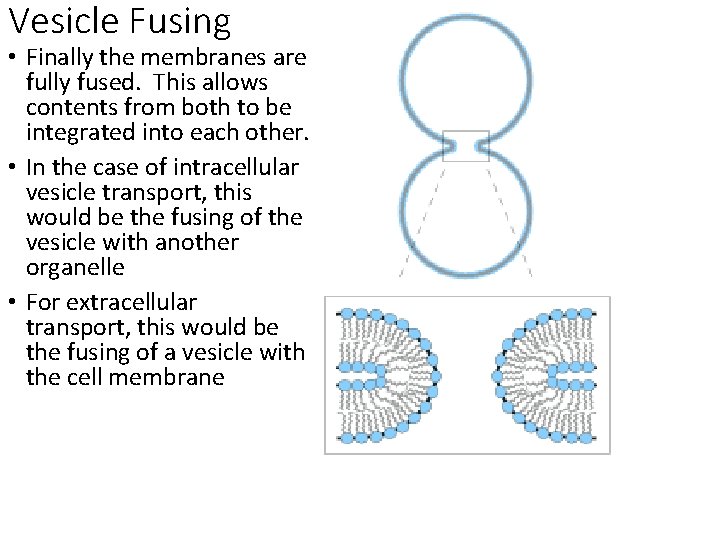
Vesicle Fusing • Finally the membranes are fully fused. This allows contents from both to be integrated into each other. • In the case of intracellular vesicle transport, this would be the fusing of the vesicle with another organelle • For extracellular transport, this would be the fusing of a vesicle with the cell membrane
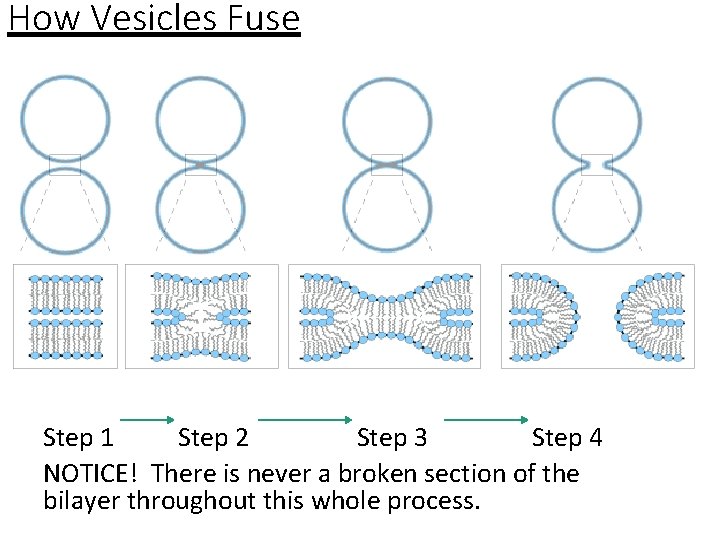
How Vesicles Fuse Step 1 Step 2 Step 3 Step 4 NOTICE! There is never a broken section of the bilayer throughout this whole process.
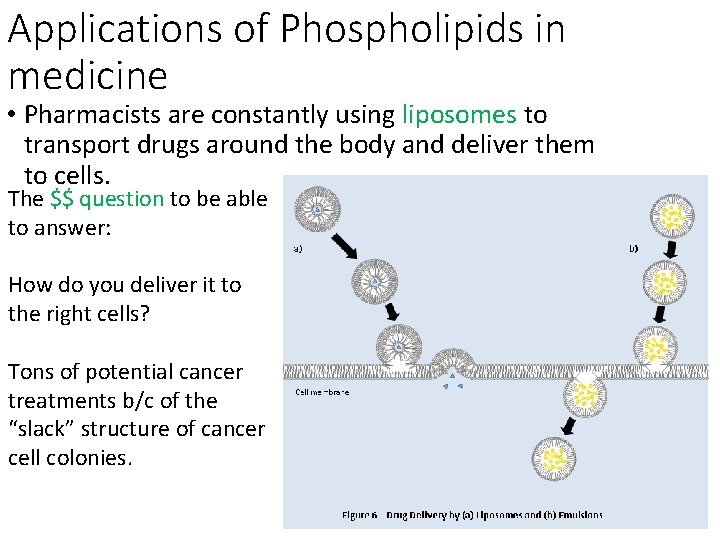
Applications of Phospholipids in medicine • Pharmacists are constantly using liposomes to transport drugs around the body and deliver them to cells. The $$ question to be able to answer: How do you deliver it to the right cells? Tons of potential cancer treatments b/c of the “slack” structure of cancer cell colonies.
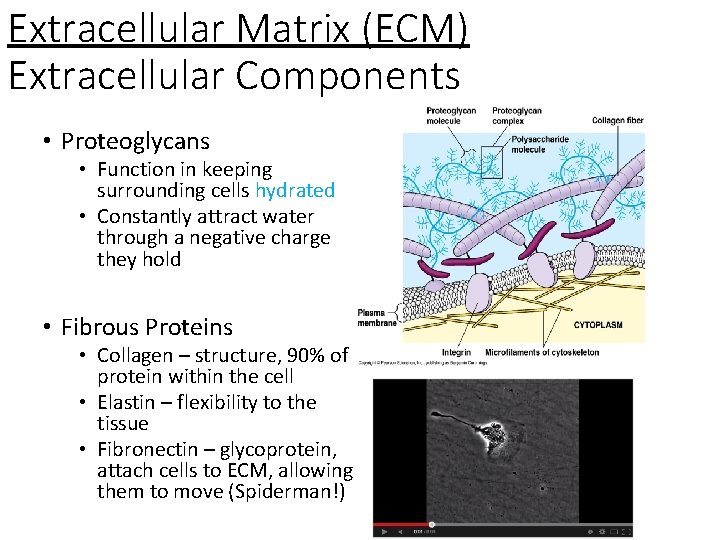
Extracellular Matrix (ECM) Extracellular Components • Proteoglycans • Function in keeping surrounding cells hydrated • Constantly attract water through a negative charge they hold • Fibrous Proteins • Collagen – structure, 90% of protein within the cell • Elastin – flexibility to the tissue • Fibronectin – glycoprotein, attach cells to ECM, allowing them to move (Spiderman!)
- Slides: 53