
1 2018 UHF Radio Operations PREPARED BY DEPARTMENT
1 2018 UHF Radio Operations PREPARED BY: DEPARTMENT OF PUBLIC SAFETY UHF Radio Operations
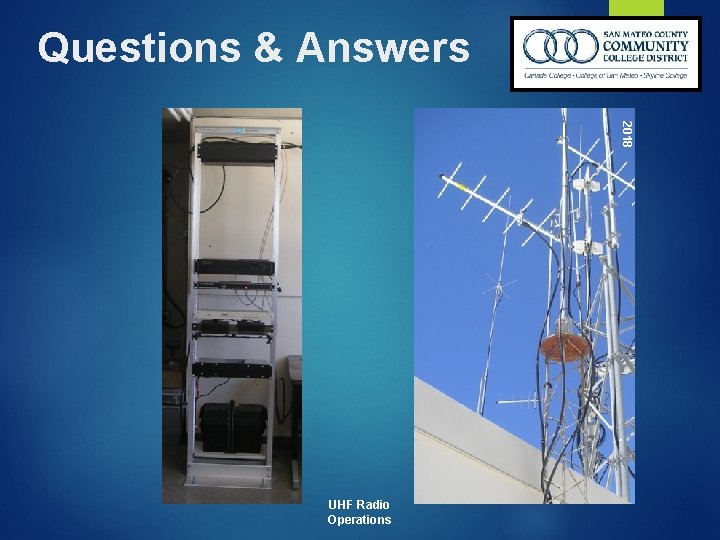
Introduction UHF = Ultra High Frequency The system is comprised of repeaters, antennas & hand-held radios Repeater locations at each Campus Our frequency is registered with the Federal Communications Commission (FCC) 2018 UHF Radio Operations 2
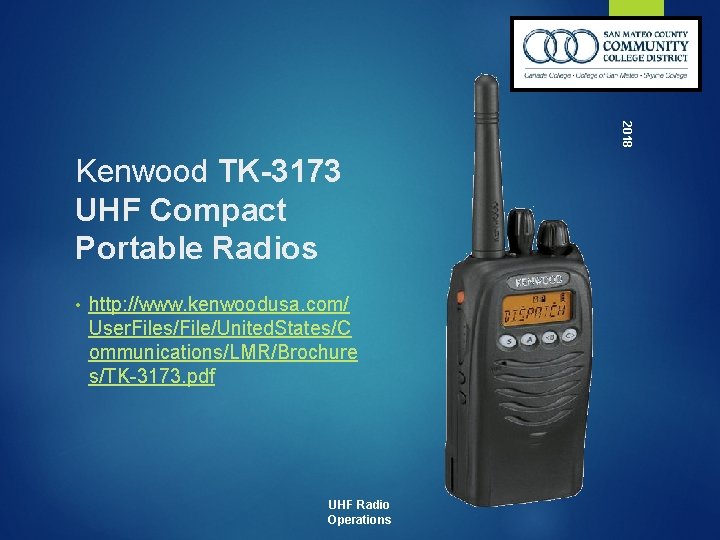
3 2018 Kenwood TK-3173 UHF Compact Portable Radios • http: //www. kenwoodusa. com/ User. Files/File/United. States/C ommunications/LMR/Brochure s/TK-3173. pdf UHF Radio Operations
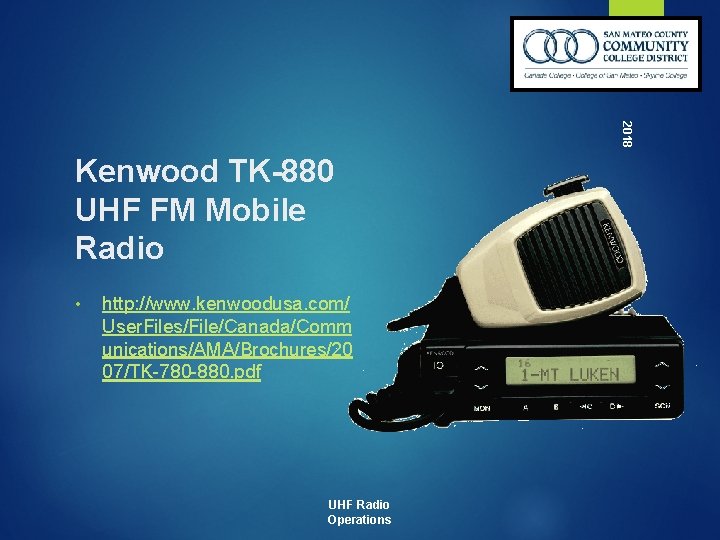
4 2018 Kenwood TK-880 UHF FM Mobile Radio • http: //www. kenwoodusa. com/ User. Files/File/Canada/Comm unications/AMA/Brochures/20 07/TK-780 -880. pdf UHF Radio Operations
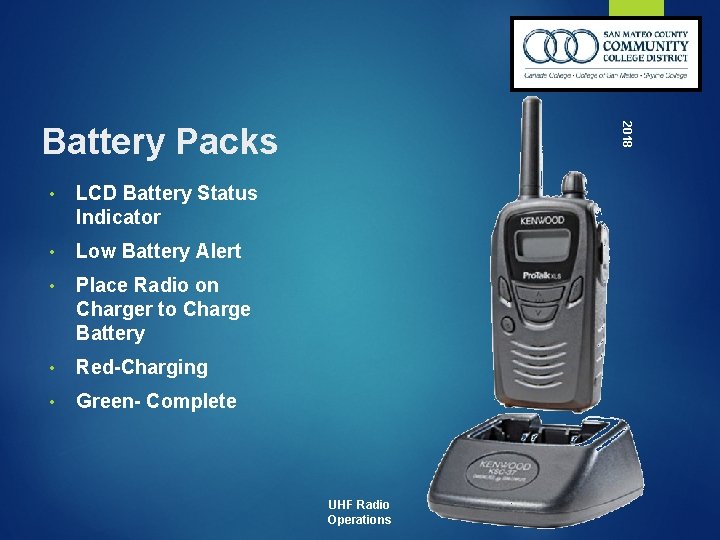
5 2018 Battery Packs • LCD Battery Status Indicator • Low Battery Alert • Place Radio on Charger to Charge Battery • Red-Charging • Green- Complete UHF Radio Operations
Transmission Push to select channel using A, B, C buttons to • Wait for the channel to become clear to avoid interference • To maximize the readability of your transmitted signal, pause a few seconds after pushing PTT Push and hold PTT, speak into the microphone Release PTT to return to receive Transmitting without an antenna may damage the transceiver 2018 UHF Radio Operations 6
UHF Radio Channels at each Campus Location • • 2018 Maintenance (CAN, CSM, SKY) Campus Only Public Safety – Transmits & Receives Districtwide Local 1 – Not Repeated. Campus Only Local 2 – Not Repeated. Campus Only UHF Radio Operations 7
• Use Public Safety Channel to hail Public Safety. They need to change channels to respond, so please be patient. • District All/VOIP • UPS (Uninterrupted Power Source) back up power. UHF Radio Operations 2018 PUBLIC SAFETY Channel 8
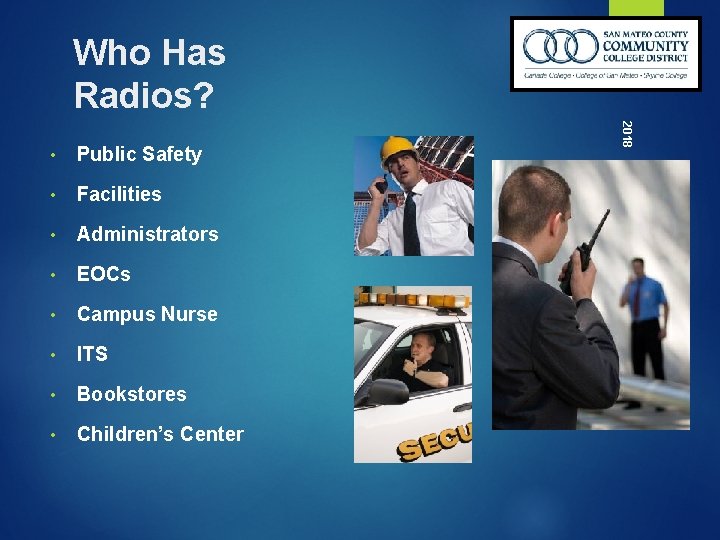
Who Has Radios? Public Safety • Facilities • Administrators • EOCs • Campus Nurse • ITS • Bookstores • Children’s Center 2018 • 9
FAQs Filters on the repeater will filter out as much ‘outside’ chatter as possible Radios ARE programmed to travel between campuses UHF Radios have been identified for daily usage for Facilities & Public Safety. Also identified for primary usage during an emergency 2018 UHF Radio Operations 10
Radio Etiquette Do not ‘step-on’ or interrupt parties already engaged in conversation Do not use for trivial or confidential conversations As a courtesy, be aware of the volume of your radio; radios can be disruptive to those around you Do not use foul language; the FCC considers this a grievous offense and will revoke our license 2018 UHF Radio Operations 11
Radio Protocols Before you talk, identify who you are trying to contact, then identify yourself and your college site • For Example: “CSM Public Safety this is Kathy Smith at CSM. ” Wait for a positive response & carry on your conversation At the end of each piece of the conversation, prior to the other party’s response, indicate you are going to stop talking by saying ‘over’ When the last party to speak wants to end the conversation, indicate the end of transmission by saying ‘over’ or ‘clear’ 2018 UHF Radio Operations 12
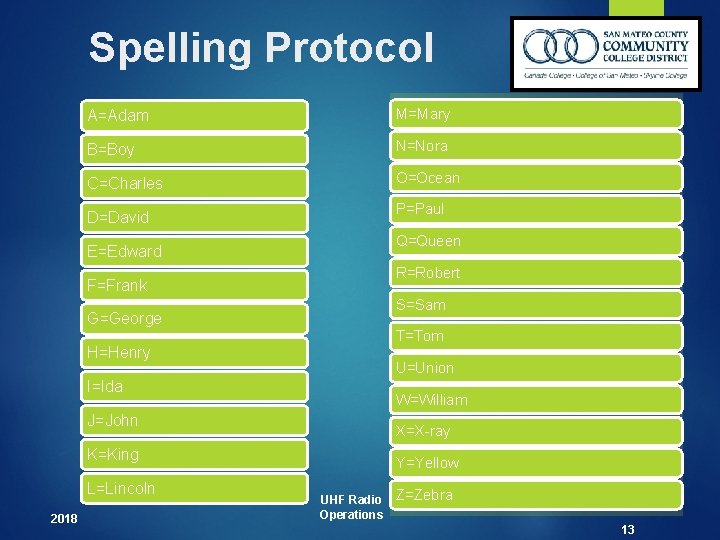
Spelling Protocol A=Adam M=Mary B=Boy N=Nora C=Charles O=Ocean P=Paul D=David Q=Queen E=Edward R=Robert F=Frank S=Sam G=George T=Tom H=Henry U=Union I=Ida W=William J=John X=X-ray K=King L=Lincoln 2018 Y=Yellow UHF Radio Operations Z=Zebra 13
Public Safety Personnel are happy to provide personal radio training. Feel free to drop by any DPS office or contact any DPS officer with questions or if you need assistance. 14 2018 Personalized Radio Training
Questions & Answers 15 2018 UHF Radio Operations
16 2018 UHF Radio Operations PREPARED BY: DEPARTMENT OF PUBLIC SAFETY (650) 738 -7000 UHF Radio Operations
- Slides: 16