
1 2006 by jochen kilgus managing flow A
1 © 2006 by jochen kilgus, managing flow A. Starts with an Individual Reflection. . . B. . followed by an Input on Change. . . C. . to be discussed in the Groups. . . D. . and to be shared in the Plenary.
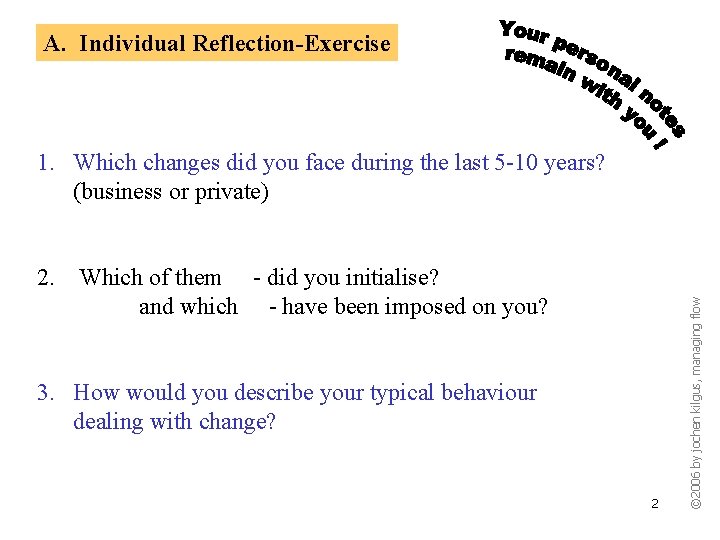
A. Individual Reflection-Exercise 2. Which of them - did you initialise? and which - have been imposed on you? 3. How would you describe your typical behaviour dealing with change? 2 © 2006 by jochen kilgus, managing flow 1. Which changes did you face during the last 5 -10 years? (business or private)
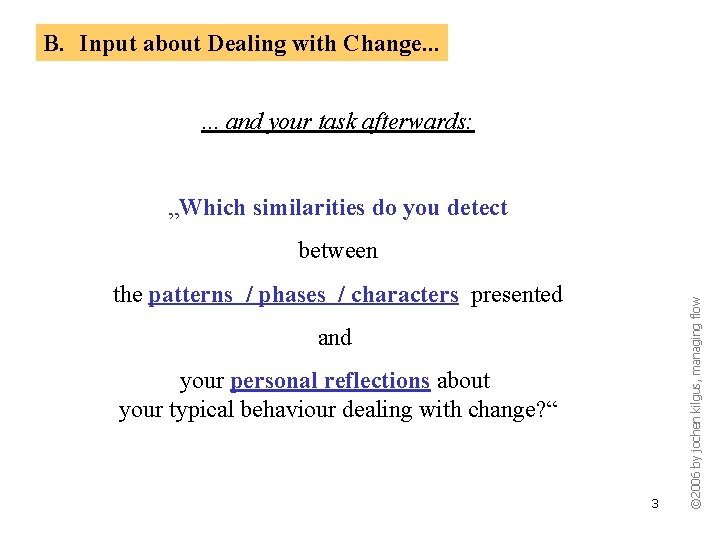
B. Input about Dealing with Change. . . and your task afterwards: „Which similarities do you detect the patterns / phases / characters presented and your personal reflections about your typical behaviour dealing with change? “ 3 © 2006 by jochen kilgus, managing flow between
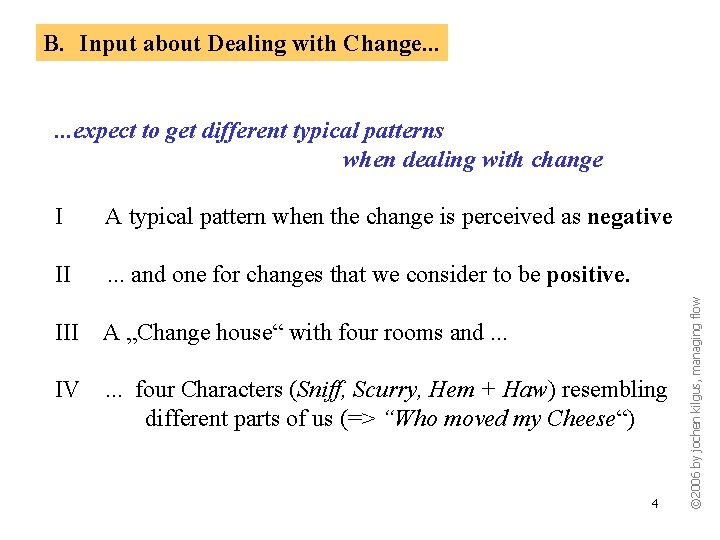
B. Input about Dealing with Change. . . I A typical pattern when the change is perceived as negative II . . . and one for changes that we consider to be positive. III A „Change house“ with four rooms and. . . IV. . . four Characters (Sniff, Scurry, Hem + Haw) resembling different parts of us (=> “Who moved my Cheese“) 4 © 2006 by jochen kilgus, managing flow . . . expect to get different typical patterns when dealing with change
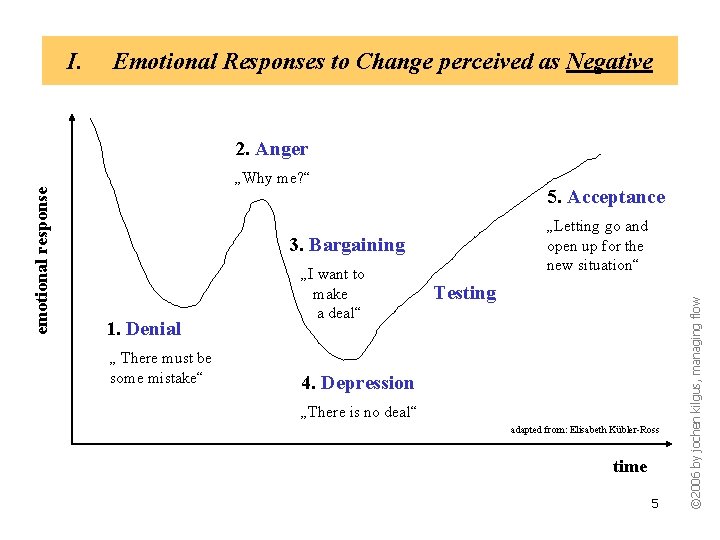
I. Emotional Responses to Change perceived as Negative 2. Anger 5. Acceptance „Letting go and open up for the new situation“ 3. Bargaining 1. Denial „ There must be some mistake“ „I want to make a deal“ Testing 4. Depression „There is no deal“ adapted from: Elisabeth Kübler-Ross time 5 © 2006 by jochen kilgus, managing flow emotional response „Why me? “
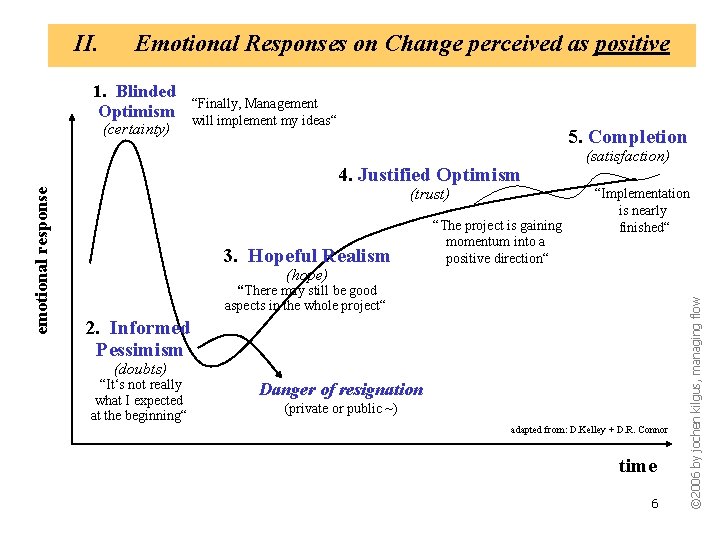
Emotional Responses on Change perceived as positive 1. Blinded Optimism (certainty) “Finally, Management will implement my ideas“ 5. Completion emotional response 4. Justified Optimism (trust) 3. Hopeful Realism (hope) “The project is gaining momentum into a positive direction“ (satisfaction) “Implementation is nearly finished“ “There may still be good aspects in the whole project“ 2. Informed Pessimism (doubts) “It‘s not really what I expected at the beginning“ Danger of resignation (private or public ~) adapted from: D. Kelley + D. R. Connor time 6 © 2006 by jochen kilgus, managing flow II.
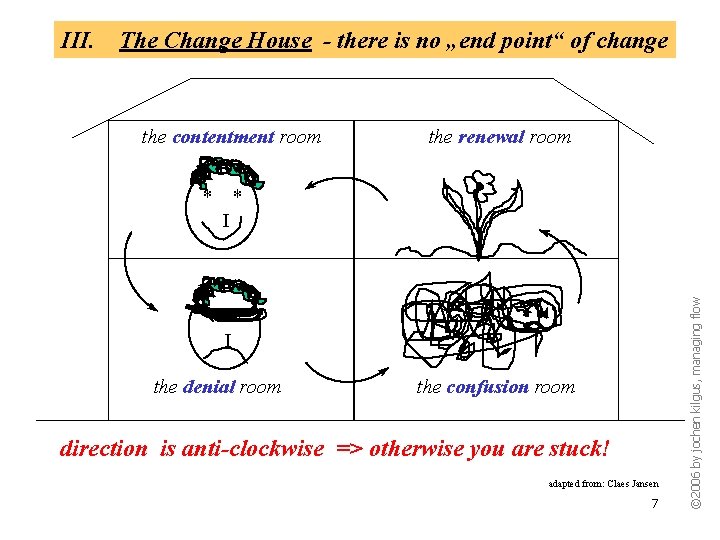
III. The Change House - there is no „end point“ of change the contentment room * the renewal room * * * I the denial room the confusion room direction is anti-clockwise => otherwise you are stuck! adapted from: Claes Jansen 7 © 2006 by jochen kilgus, managing flow I
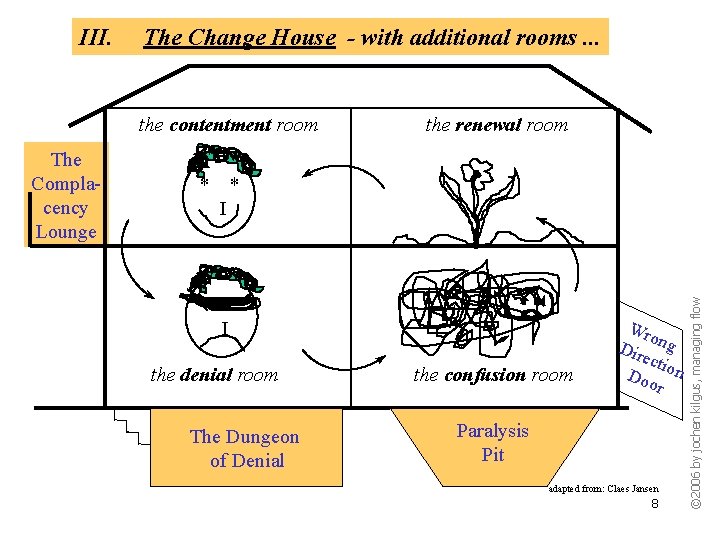
The Change House - with additional rooms. . . the contentment room The Complacency Lounge * the renewal room * I * * I the denial room The Dungeon of Denial the confusion room Wro Dir ng ecti Doo on r Paralysis Pit adapted from: Claes Jansen 8 © 2006 by jochen kilgus, managing flow III.
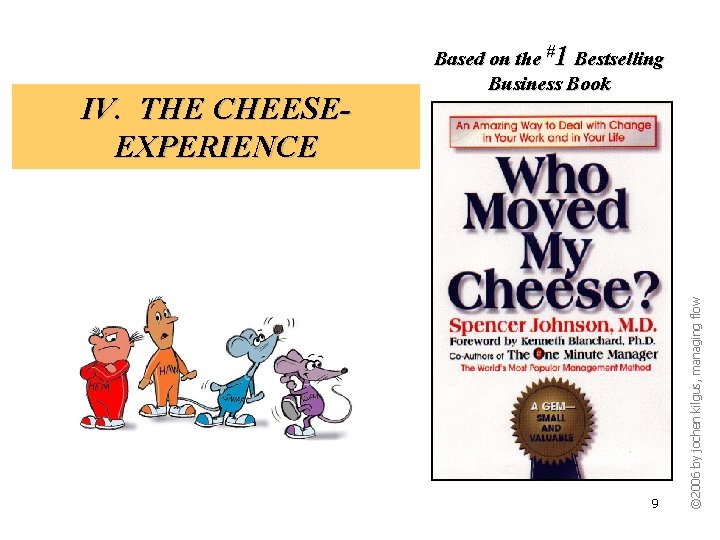
9 © 2006 by jochen kilgus, managing flow IV. THE CHEESEEXPERIENCE Based on the #1 Bestselling Business Book
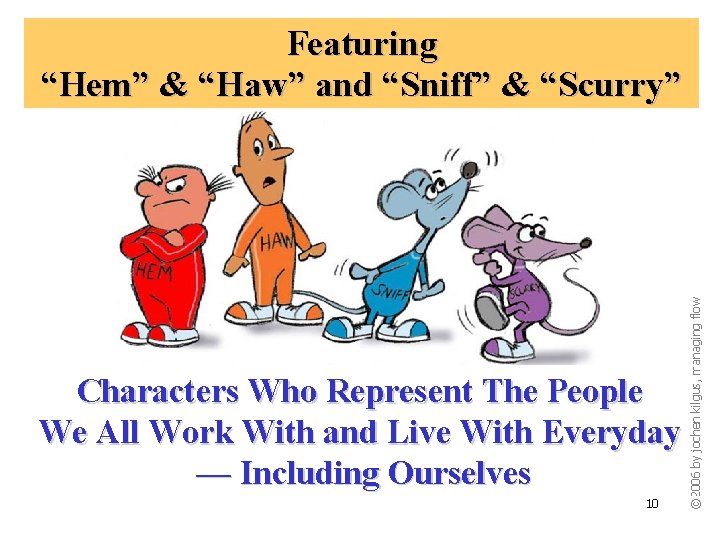
Characters Who Represent The People We All Work With and Live With Everyday — Including Ourselves 10 © 2006 by jochen kilgus, managing flow Featuring “Hem” & “Haw” and “Sniff” & “Scurry”
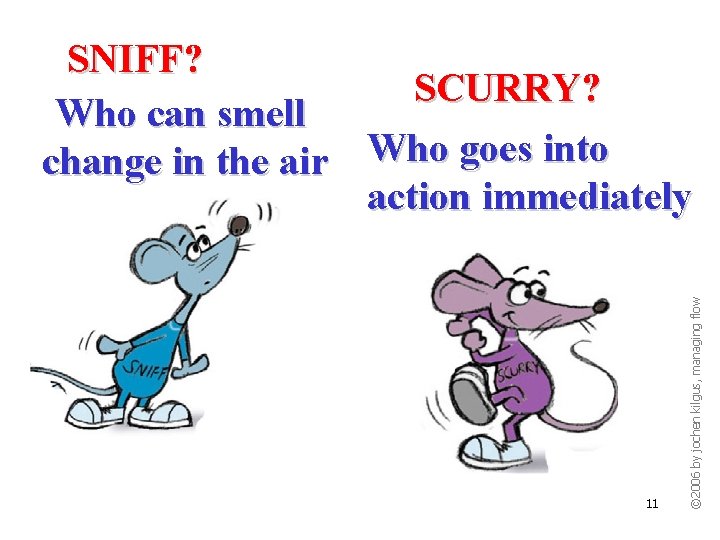
11 © 2006 by jochen kilgus, managing flow SNIFF? SCURRY? Who can smell change in the air Who goes into action immediately
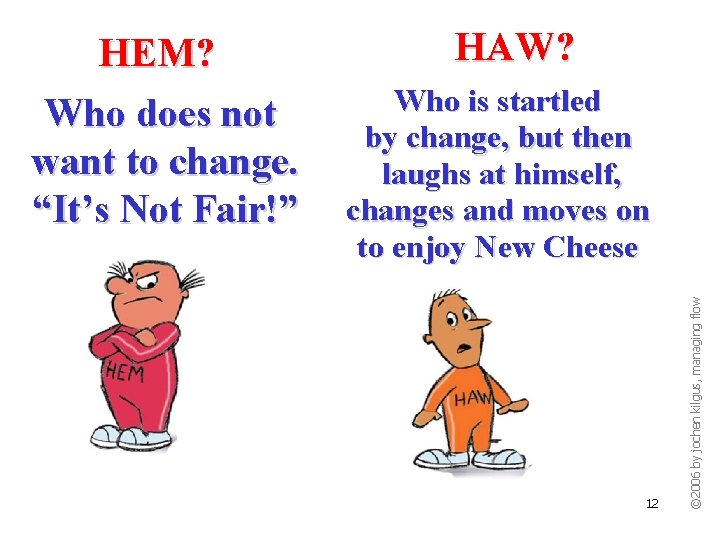
HAW? Who is startled by change, but then laughs at himself, changes and moves on to enjoy New Cheese 12 © 2006 by jochen kilgus, managing flow HEM? Who does not want to change. “It’s Not Fair!”

© 2006 by jochen kilgus, managing flow 13
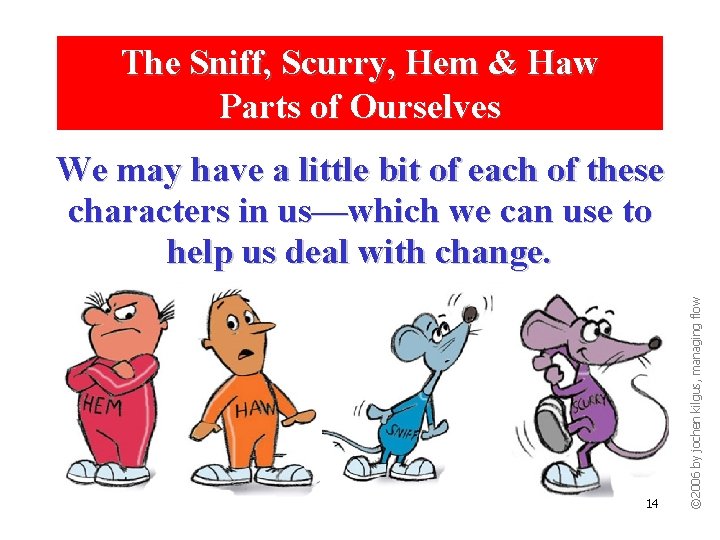
The Sniff, Scurry, Hem & Haw Parts of Ourselves 14 © 2006 by jochen kilgus, managing flow We may have a little bit of each of these characters in us—which we can use to help us deal with change.
Change Happens They Keep Moving the Cheese Anticipate Change Smell The Cheese Often So You Know When It Is Getting Old 15 © 2006 by jochen kilgus, managing flow THE HANDWRITING ON THE WALL
Adapt To Change Quickly The Quicker You Let Go Of Old Cheese, The Sooner You Can Enjoy New Cheese (Try to) Enjoy Change! Be Ready To Change Quickly & Enjoy It, Again! They Keep Moving The Cheese 16 © 2006 by jochen kilgus, managing flow Savor The Adventure And Enjoy The Taste Of New Cheese!
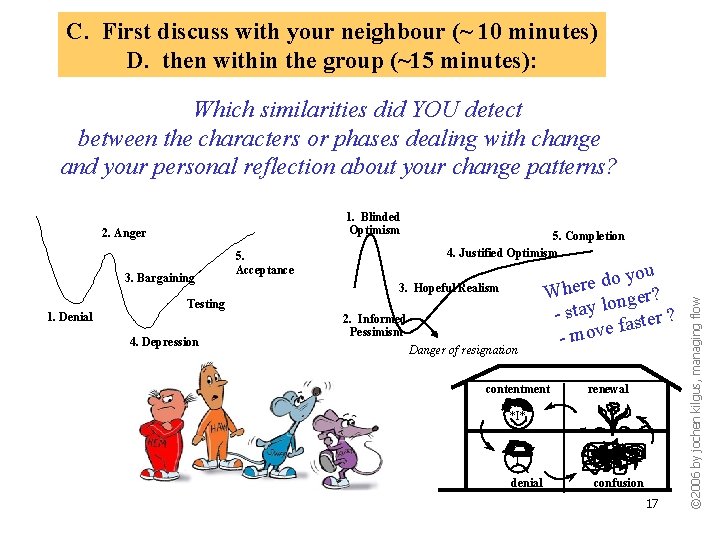
C. First discuss with your neighbour (~ 10 minutes) D. then within the group (~15 minutes): Which similarities did YOU detect between the characters or phases dealing with change and your personal reflection about your change patterns? 2. Anger 3. Bargaining 1. Denial 5. Acceptance 5. Completion 4. Justified Optimism 3. Hopeful Realism Testing 4. Depression 2. Informed Pessimism Danger of resignation you o d e r Whe ger? n o l y - sta er ? t s a f e - mov contentment renewal *I* I denial confusion 17 © 2006 by jochen kilgus, managing flow 1. Blinded Optimism
D. Sharing in the Plenary (preparation) 18 © 2006 by jochen kilgus, managing flow As a Group: Please prepare a Flipchart-Poster representing the personal insights of your group about dealing with change.
- Slides: 18