
1 2 Types of Government U S Government
- Slides: 13
(1. 2) Types of Government U. S. Government and Politics
Review Preamble Analysis Intro to the U. S. Constitution Purpose of government 6 goals Class poster / post it notes
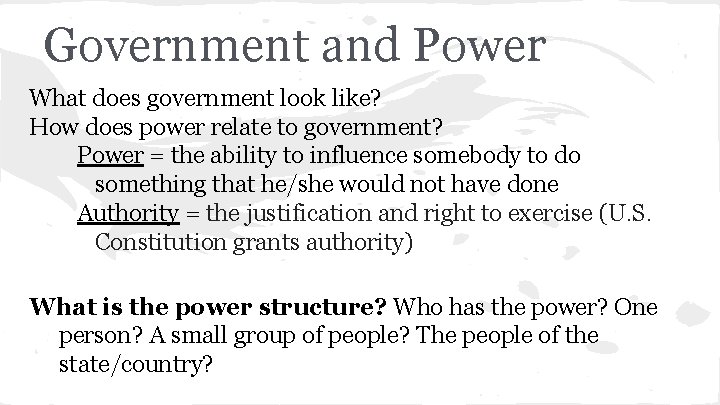
Government and Power What does government look like? How does power relate to government? Power = the ability to influence somebody to do something that he/she would not have done Authority = the justification and right to exercise (U. S. Constitution grants authority) What is the power structure? Who has the power? One person? A small group of people? The people of the state/country?
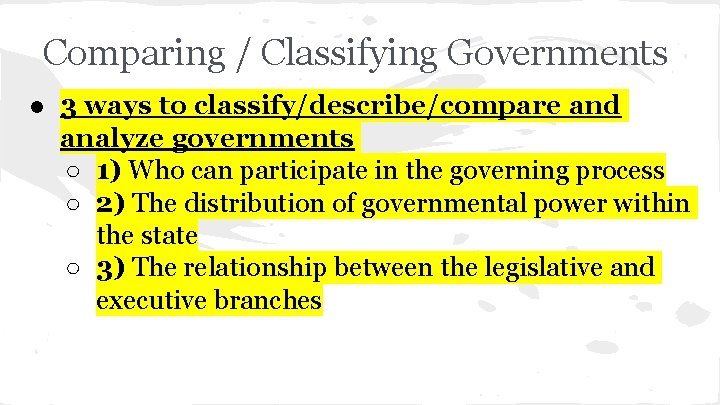
Comparing / Classifying Governments ● 3 ways to classify/describe/compare and analyze governments ○ 1) Who can participate in the governing process ○ 2) The distribution of governmental power within the state ○ 3) The relationship between the legislative and executive branches
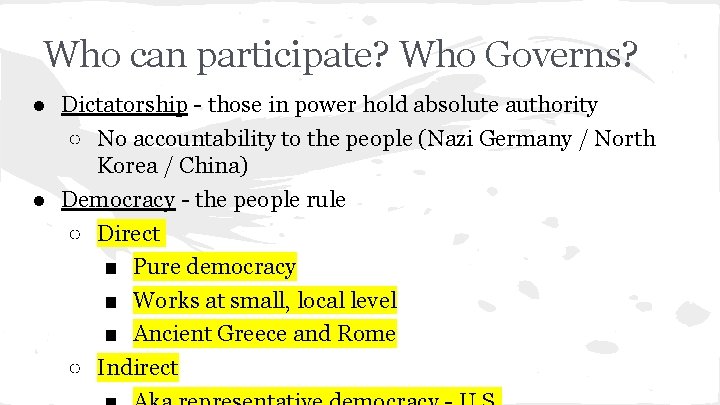
Who can participate? Who Governs? ● Dictatorship - those in power hold absolute authority ○ No accountability to the people (Nazi Germany / North Korea / China) ● Democracy - the people rule ○ Direct ■ Pure democracy ■ Works at small, local level ■ Ancient Greece and Rome ○ Indirect
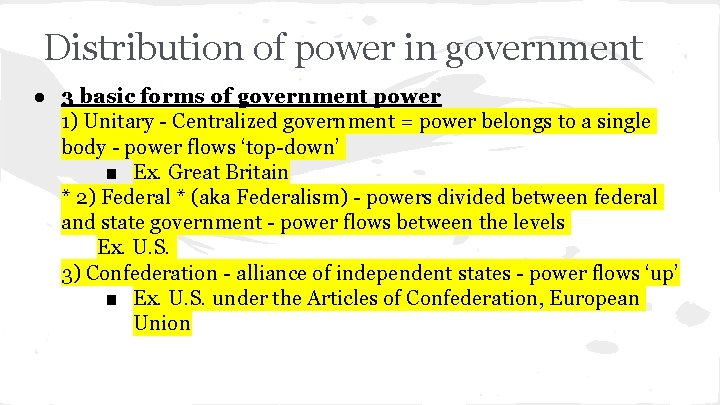
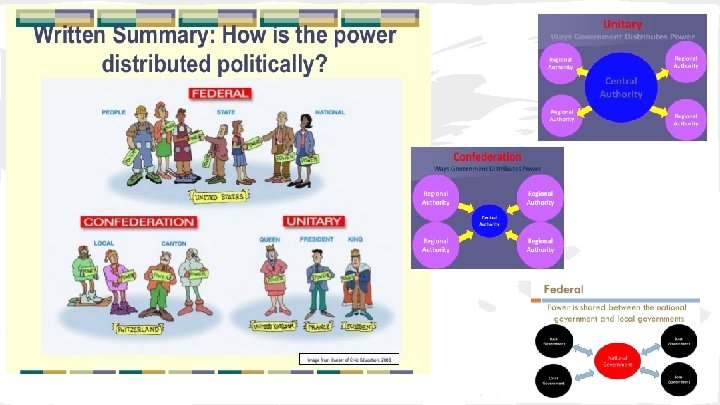
Distribution of power in government ● 3 basic forms of government power 1) Unitary - Centralized government = power belongs to a single body - power flows ‘top-down’ ■ Ex. Great Britain * 2) Federal * (aka Federalism) - powers divided between federal and state government - power flows between the levels Ex. U. S. 3) Confederation - alliance of independent states - power flows ‘up’ ■ Ex. U. S. under the Articles of Confederation, European Union
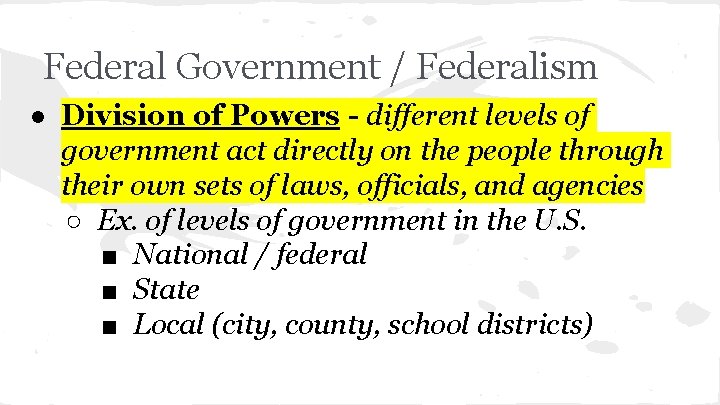
Federal Government / Federalism ● Division of Powers - different levels of government act directly on the people through their own sets of laws, officials, and agencies ○ Ex. of levels of government in the U. S. ■ National / federal ■ State ■ Local (city, county, school districts)
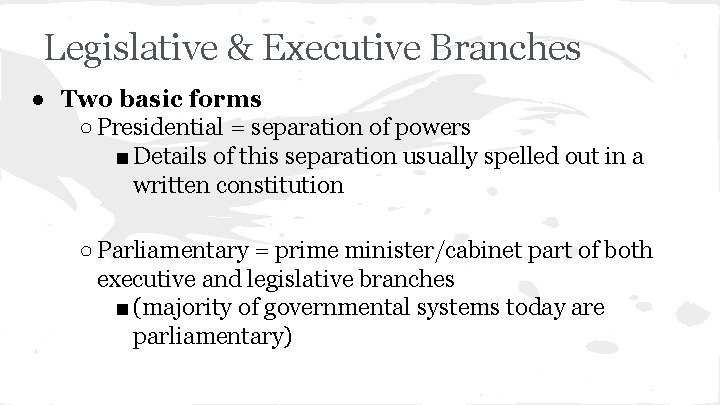
Legislative & Executive Branches ● Two basic forms ○ Presidential = separation of powers ■ Details of this separation usually spelled out in a written constitution ○ Parliamentary = prime minister/cabinet part of both executive and legislative branches ■ (majority of governmental systems today are parliamentary)
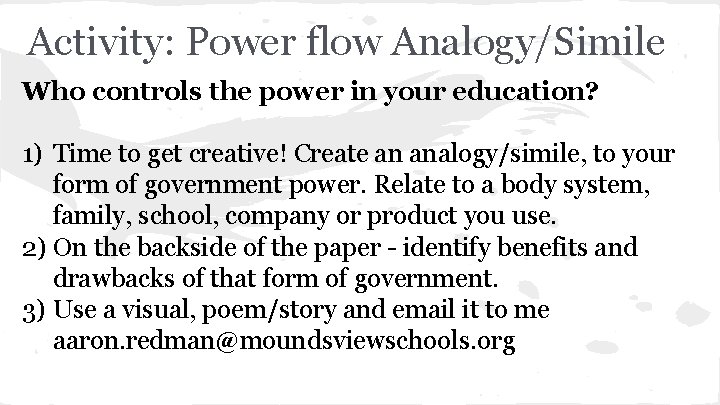
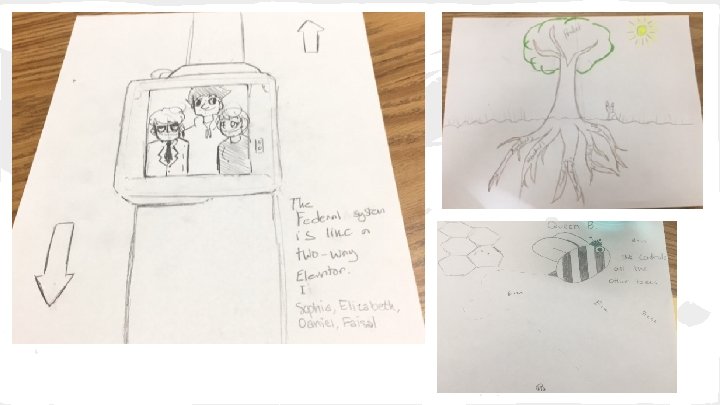
Activity: Power flow Analogy/Simile Who controls the power in your education? 1) Time to get creative! Create an analogy/simile, to your form of government power. Relate to a body system, family, school, company or product you use. 2) On the backside of the paper - identify benefits and drawbacks of that form of government. 3) Use a visual, poem/story and email it to me aaron. redman@moundsviewschools. org
Power flow Analogy ●Vote best presentation ●Vote best analogy/simile ●Now let’s think about benefits and drawbacks of each….
Conclusions / Takeaways ●Quick write: Summarize the 3 ways in which government can be distributed