
1 2 Thumbmeat example on phone Main message
1
2
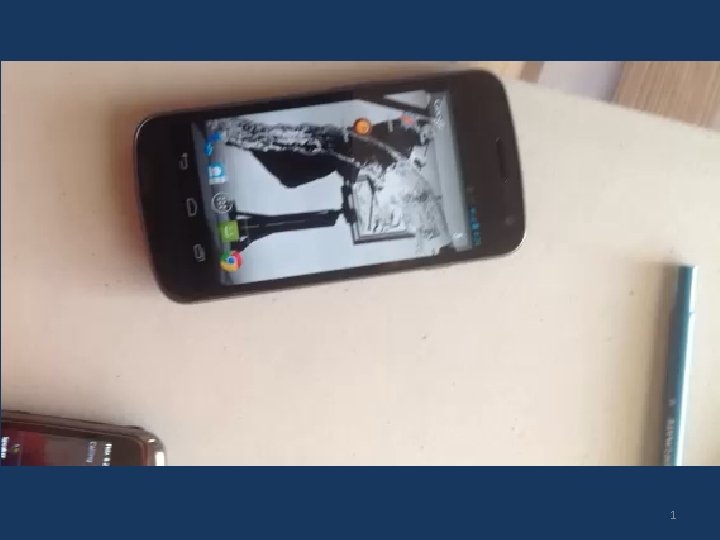
Thumb-meat example on phone Main message: you don’t know who your users are, and often, you need to test your interface in the field to see if it’s going to work 3

Investigation… CPSC 481: HCI I Fall 2012 Anthony Tang, with acknowledgements to Julie Kientz, Saul Greenberg, Ehud Sharlin, Jake Wobbrock, Dave Hendry, Andy Ko, Jennifer Turns, & Mark Zachry 4

Think about my “thumb-meat” example… What does it tell you? Breakdowns Opportunities for a new design Workarounds Mismatches between what users say and do This is what observing people can help you discover 5
6
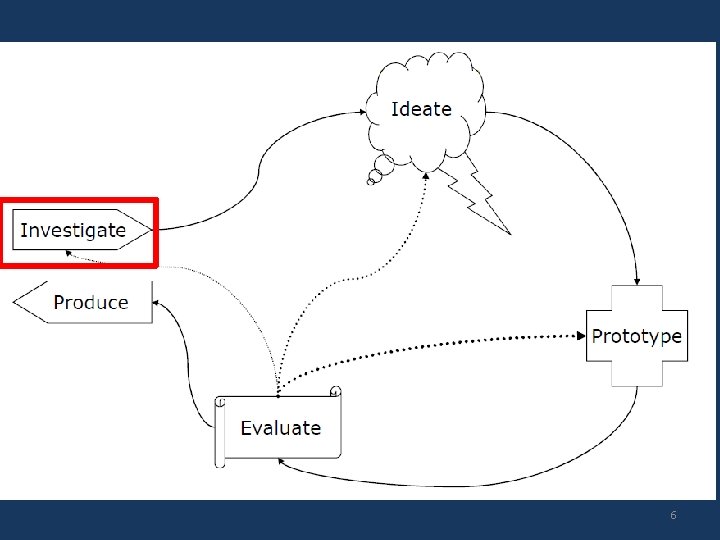
Investigate Phase Goals Understand the state of the world, the state of our users, and what the problem is. How can we go about doing this? 7
Imagine… You are trying to design a better mop. What do we need to find out? How are we going to do that? 8
What people say… Can we rely on what people say about what they want in a new design? Only kind of: people are really only good at framing their needs within the language of their current designs Henry Ford: “If I had asked my customers what they wanted, they would have said a faster horse. ” Often, people can’t see past their immediate problems to the possibilities 9
What people say… How many hours did you sleep last night? How many hours did you sleep last Monday night? People have a bad memory 10
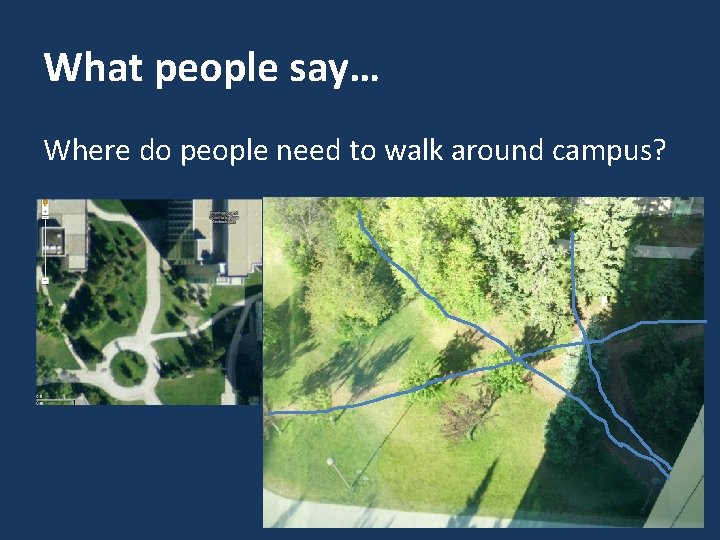
What people say… Where do people need to walk around campus? 11
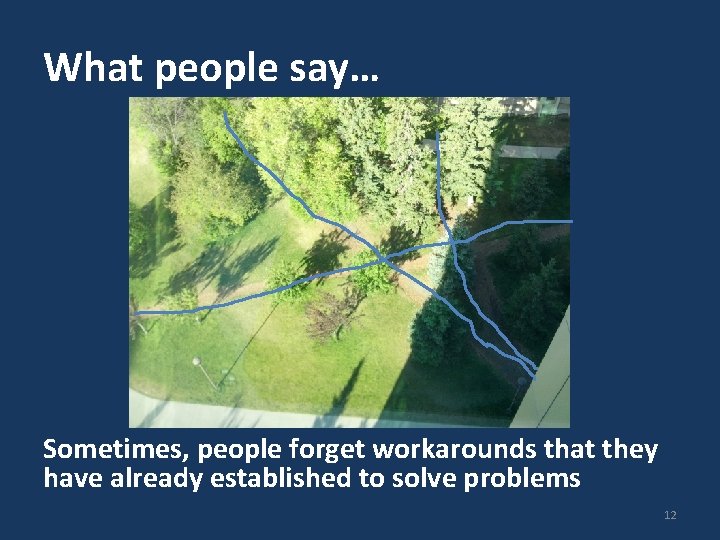
What people say… 12 Sometimes, people forget workarounds that they have already established to solve problems 12
What people say… Where should we put the hand sanitizer? On the way out the door, after we turn off the computer, after we turn off the printer, turn off the lights, etc. 13
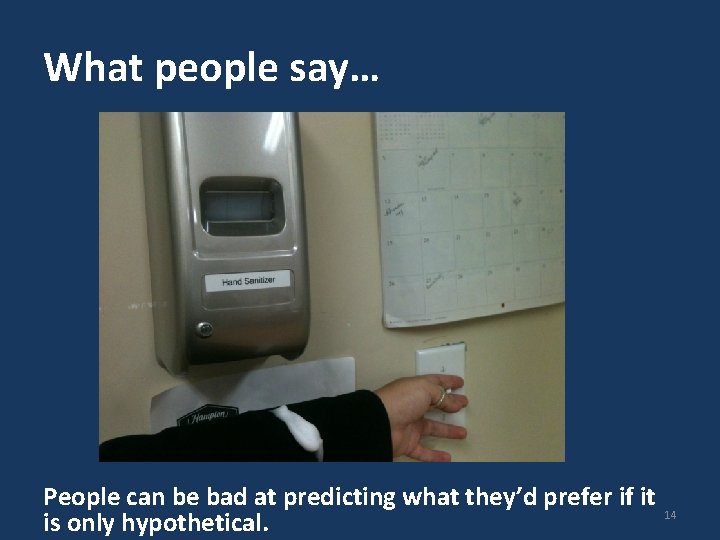
What people say… People can be bad at predicting what they’d prefer if it is only hypothetical. 14
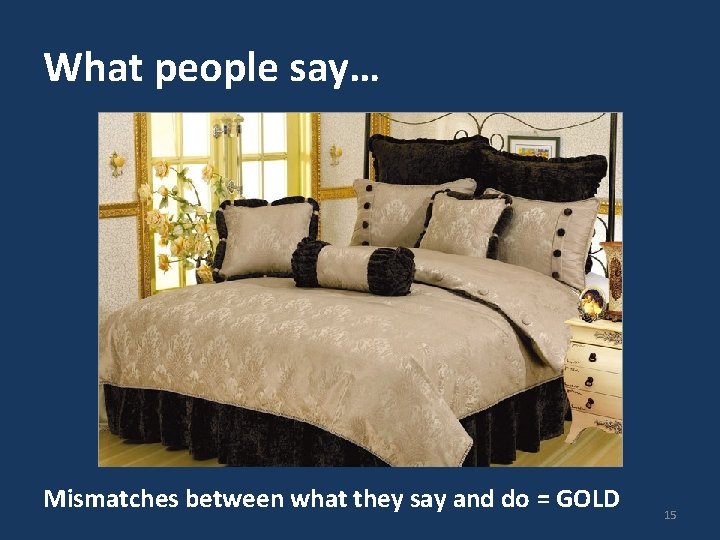
What people say… Mismatches between what they say and do = GOLD 15
Wait, are people completely useless? People are really good at telling us a few things: What they are doing right now. How they are feeling right now. What their goal is right now. 16
Combine Interview with Observation Watch people in their own environment Watch people do everyday tasks Opportunities for new designs arise from: Workarounds Breakdowns Unexpected uses of existing tools 17
Two Messages Using a combination of what they are good at telling us, and observing them can tell us a lot mismatches between what they say and what they do often lead keys to new designs Your assumptions are likely to be wrong. To discover more, assume that your assumptions are always wrong. 18

IDEO Method Cards: Course Site > Readings Available from William Stout publishers ($49) 19
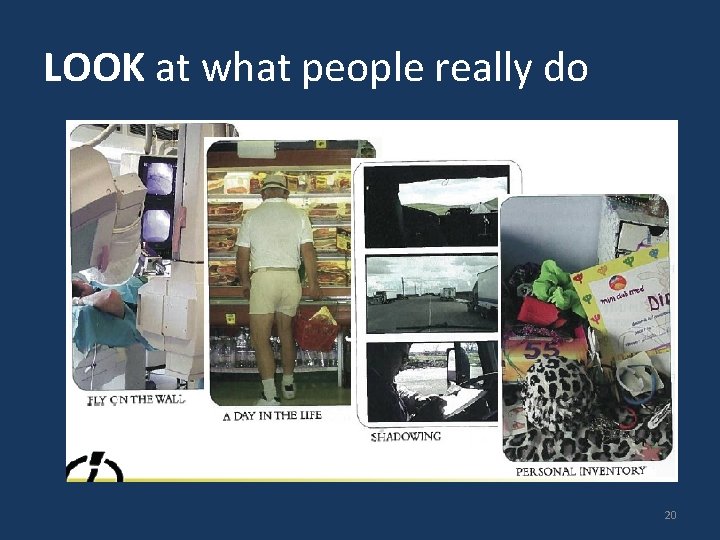
LOOK at what people really do 20
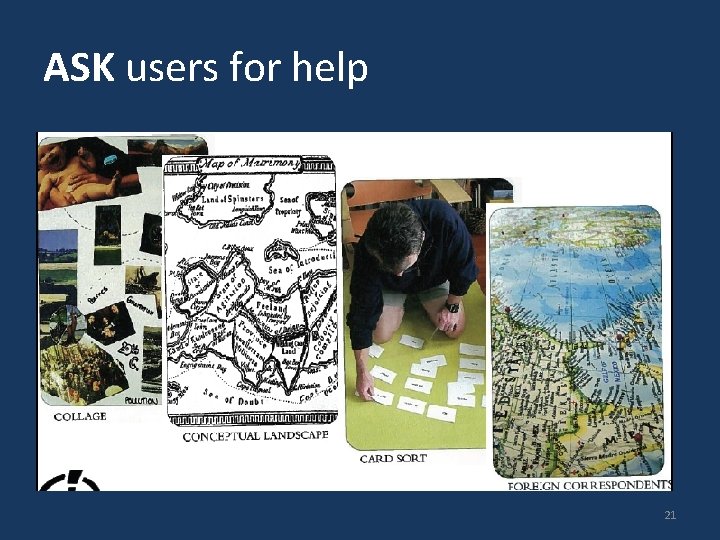
ASK users for help 21
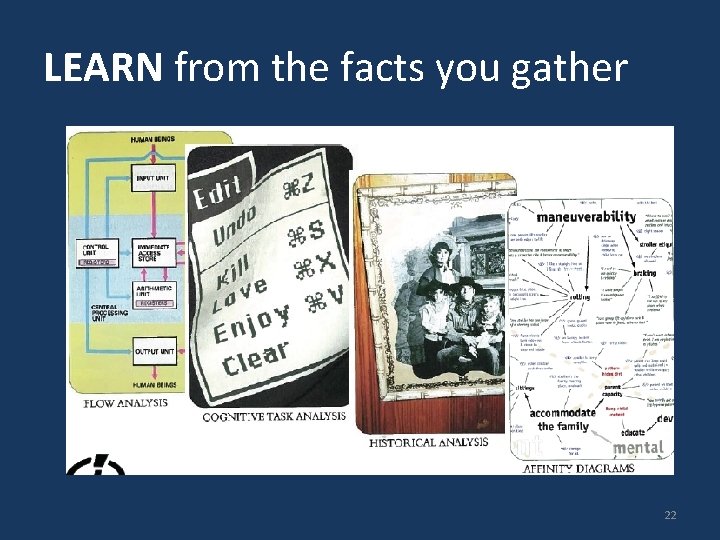
LEARN from the facts you gather 22
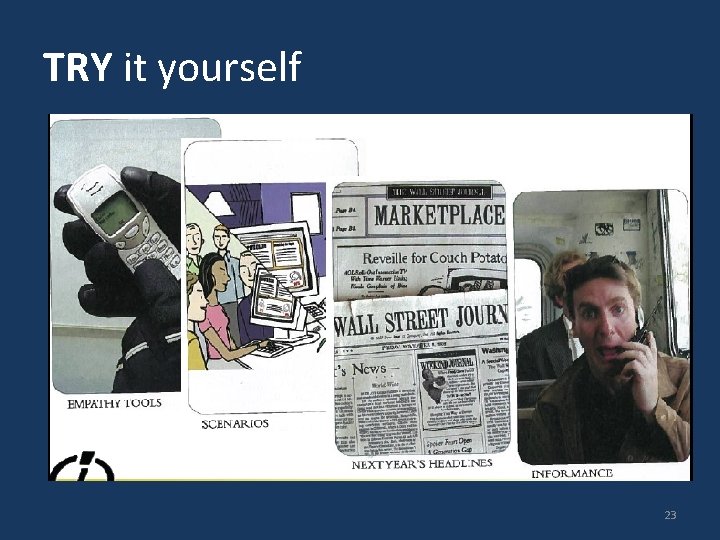
TRY it yourself 23
Assume you are wrong. 24
- Slides: 24