
1 2 The Thirteen Commandments for a More
![“Let us [euphemism]. ” “Ebenezer is sick and needs our [circumlocutions]. ” 16](https://slidetodoc.com/presentation_image/9fa773f023189a52e7494bb31ed3b82c/image-16.jpg "“Let us [euphemism]. ” “Ebenezer is sick and needs our [circumlocutions]. ” 16")
- Slides: 27
1
2
The Thirteen Commandments for a More Prayerful Congregation 3
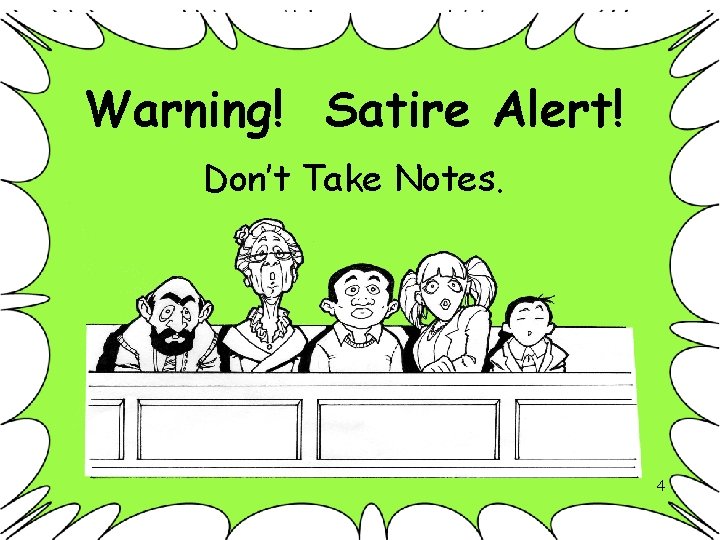
Warning! Satire Alert! Don’t Take Notes. 4
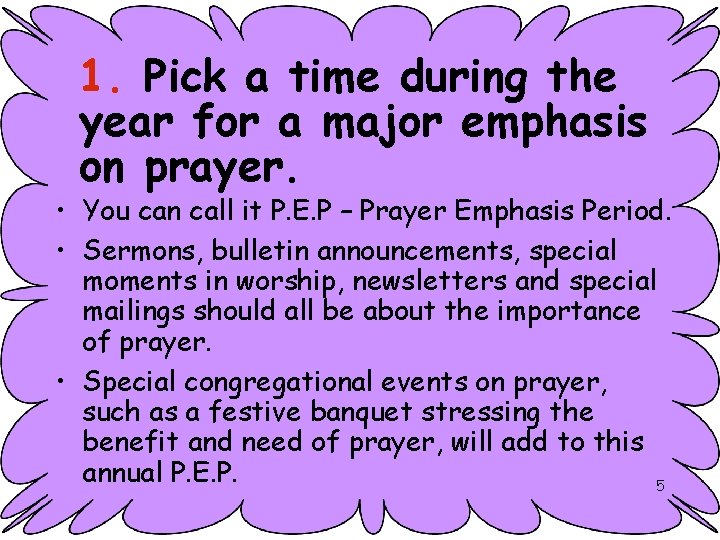
1. Pick a time during the year for a major emphasis on prayer. • You can call it P. E. P – Prayer Emphasis Period. • Sermons, bulletin announcements, special moments in worship, newsletters and special mailings should all be about the importance of prayer. • Special congregational events on prayer, such as a festive banquet stressing the benefit and need of prayer, will add to this annual P. E. P. 5
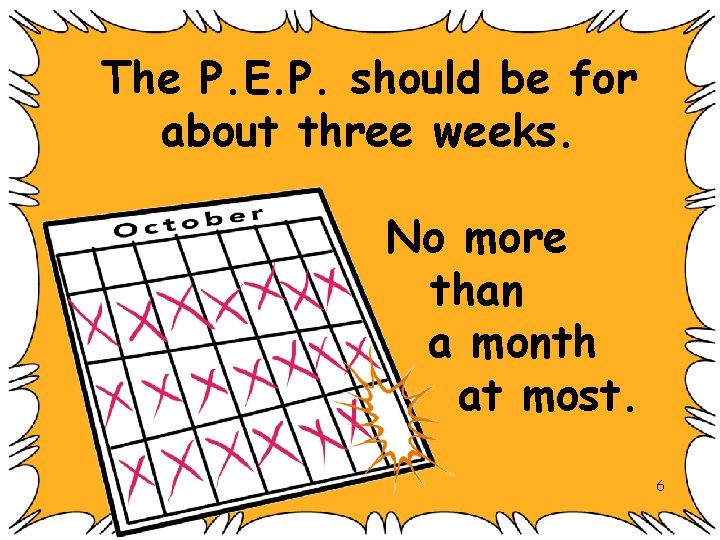
The P. E. P. should be for about three weeks. No more than a month at most. 6
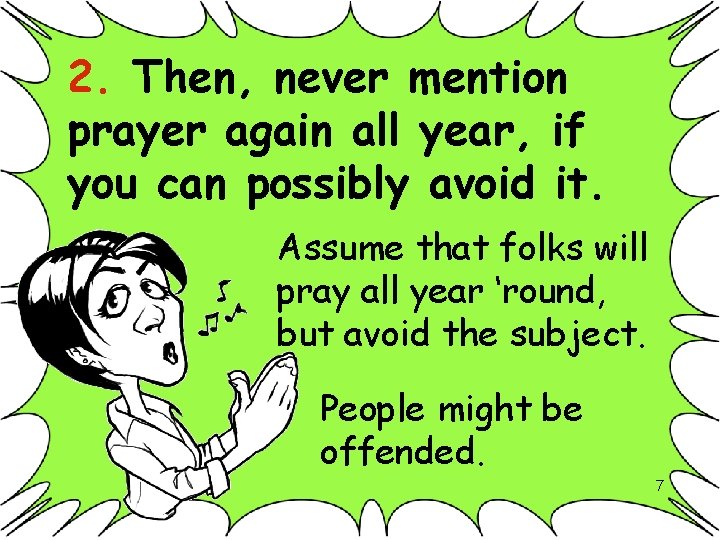
2. Then, never mention prayer again all year, if you can possibly avoid it. Assume that folks will pray all year ‘round, but avoid the subject. People might be offended. 7
3. Even during the Prayer Emphasis Period, make it clear that prayer is an uncomfortable subject. Convey to the congregation that you are uncomfortable with it and that you don’t blame them for being uneasy, too. 8
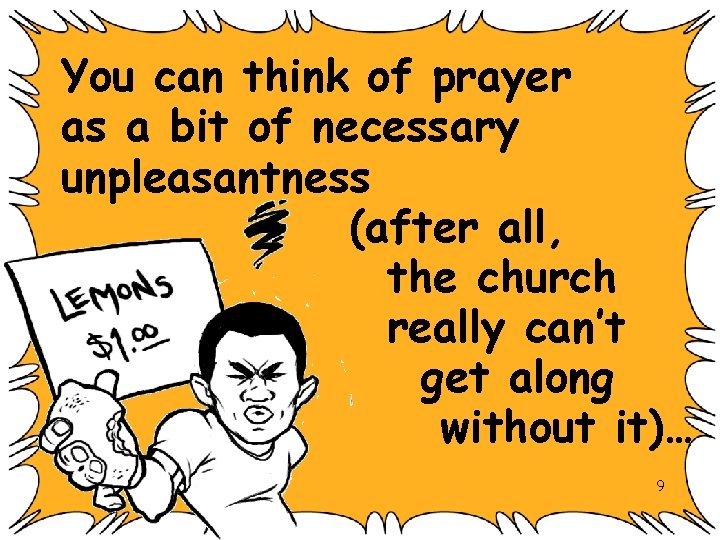
You can think of prayer as a bit of necessary unpleasantness (after all, the church really can’t get along without it)… 9
…but remind folks that this emphasis will soon be over for another year. 10
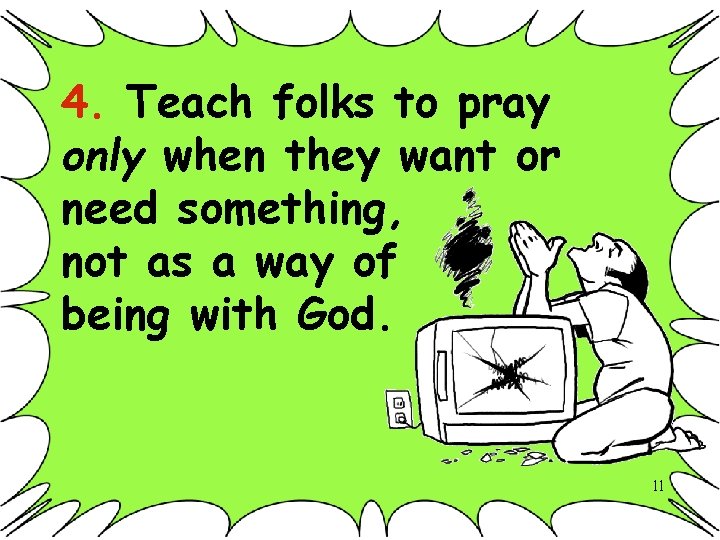
4. Teach folks to pray only when they want or need something, not as a way of being with God. 11
5. Teach (subtly, by example) that prayer is something you can do when you can spare the time. Recognize that people really are too busy to pray, so don’t expect them to make prayer a regular or foundational part of their lives. 12
6. Don’t ask people to pray for you; that would be selfish. 13
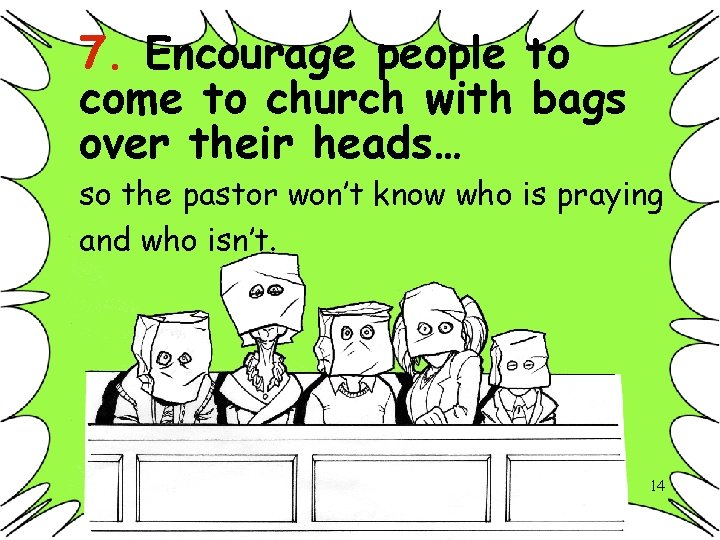
7. Encourage people to come to church with bags over their heads… so the pastor won’t know who is praying and who isn’t. 14
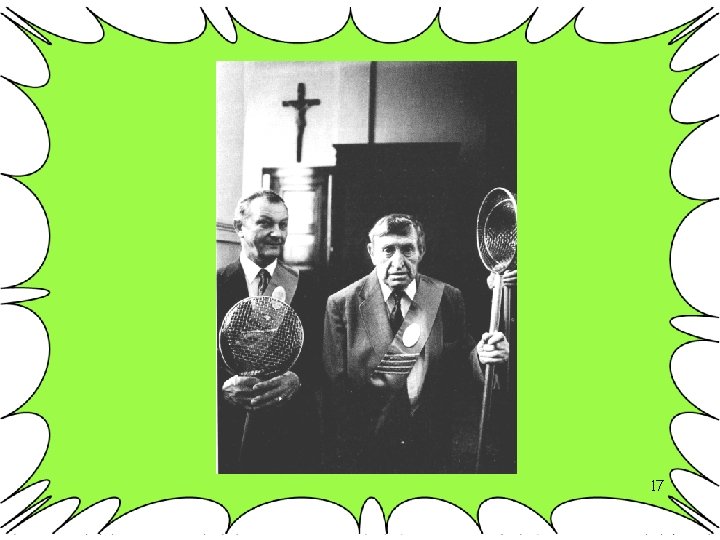
8. When prayer time comes in worship (as it apparently must), make the interruption in the flow and spirit worship as unobtrusive as possible. Get it over with quickly, and then get on with the real business of worship. Use euphemisms rather than mentioning the “p” word itself. 15
“Let us [euphemism]. ” “Ebenezer is sick and needs our [circumlocutions]. ” 16
17
9. It’s okay to mention prayer in session and committee meetings. In fact, you should dwell on prayer and how little there is of it, and how you should do everything you can not to utilize it. 18
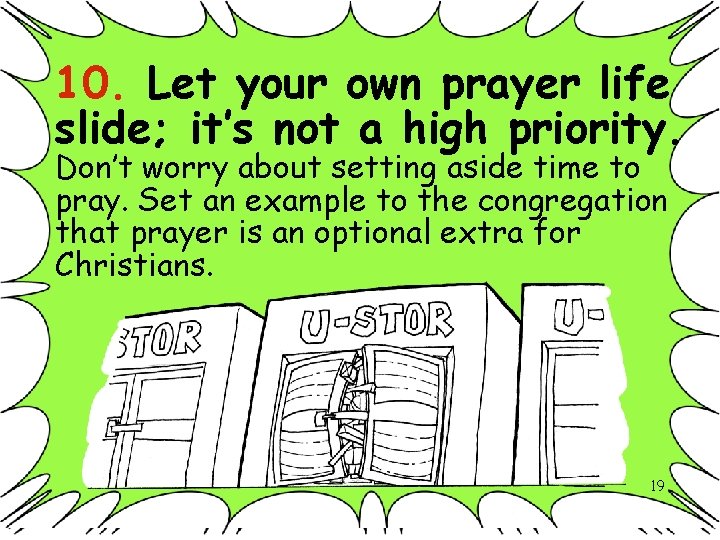
10. Let your own prayer life slide; it’s not a high priority. Don’t worry about setting aside time to pray. Set an example to the congregation that prayer is an optional extra for Christians. 19
11. Except during the Prayer Emphasis Period, never mention that Jesus prayed, or that any other biblical figure had a prayer life. In fact, avoid any biblical reference to prayer other than during the P. E. P. 20
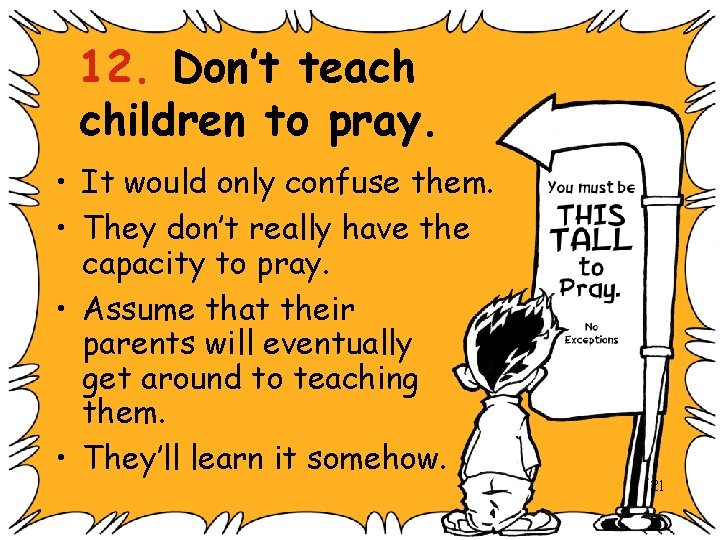
12. Don’t teach children to pray. • It would only confuse them. • They don’t really have the capacity to pray. • Assume that their parents will eventually get around to teaching them. • They’ll learn it somehow. 21
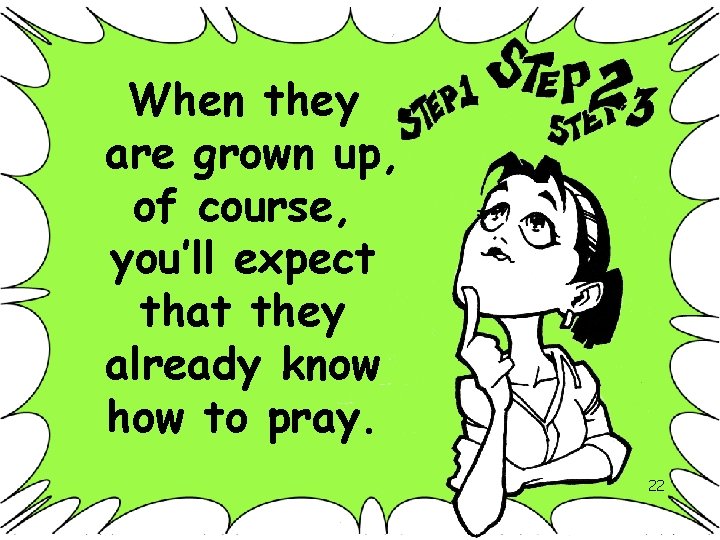
When they are grown up, of course, you’ll expect that they already know how to pray. 22
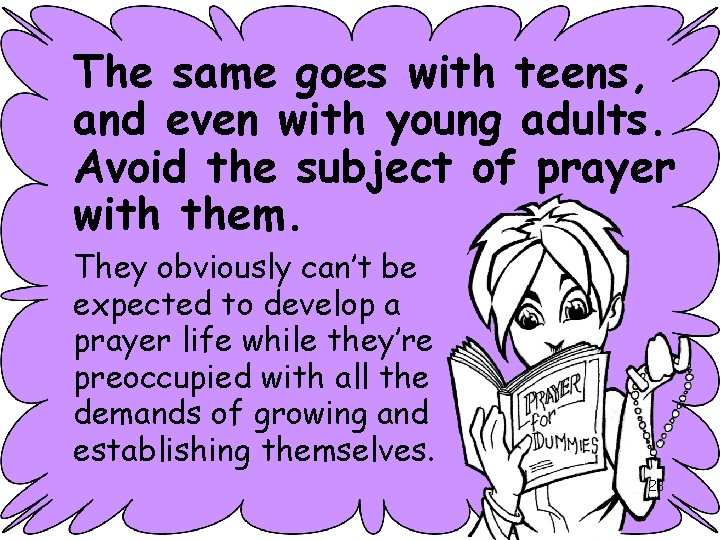
The same goes with teens, and even with young adults. Avoid the subject of prayer with them. They obviously can’t be expected to develop a prayer life while they’re preoccupied with all the demands of growing and establishing themselves. 23
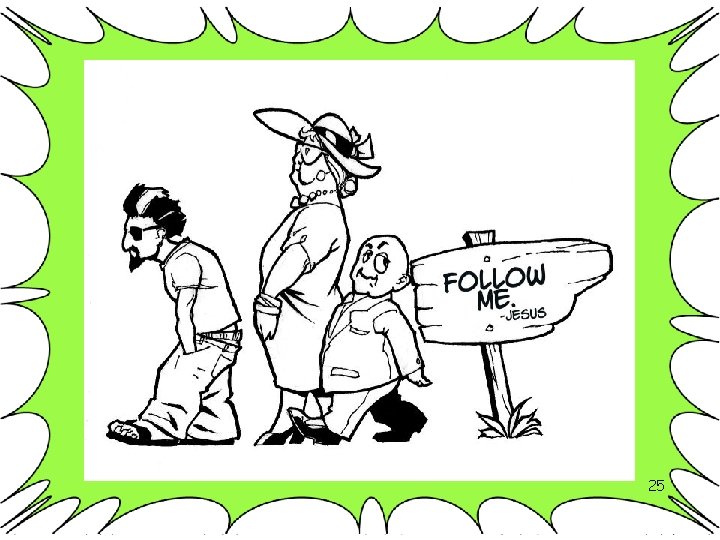
13. Finally (and this is the biggie), never teach that there’s any connection between prayer and blessing, prayer and spiritual growth, or prayer and God’s call to be a full-time Christian. 24
25
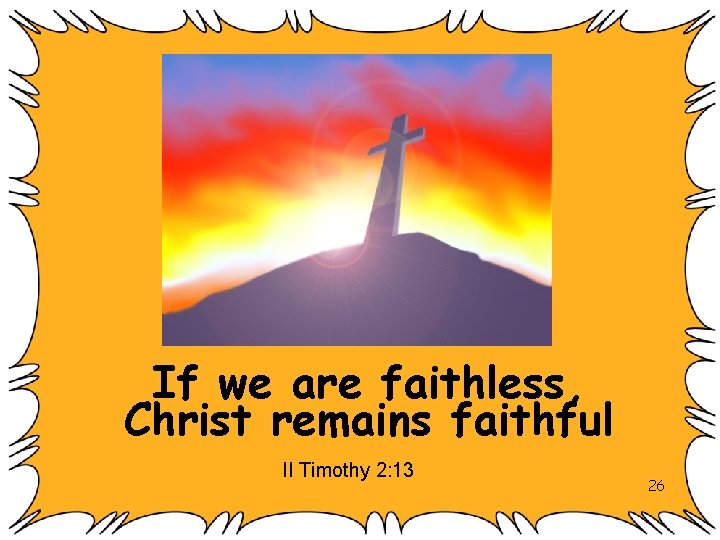
If we are faithless, Christ remains faithful II Timothy 2: 13 26
Copyright Information Text © 2004 Richard H. Craft. Used by permission. Illustrations © 2006 Alan D. Evans. Used by permission. The graph on the second slide was published in Presbyterians Today, August 2004. This presentation may be be used freely within the congregations and governing bodies of the Presbyterian Church (U. S. A. ) provided these copyright notices are included and the presentation is not altered or sold for profit. 27