
1 2 Respirator Characterization fundamental types 1 airpurifying



- Slides: 58
1
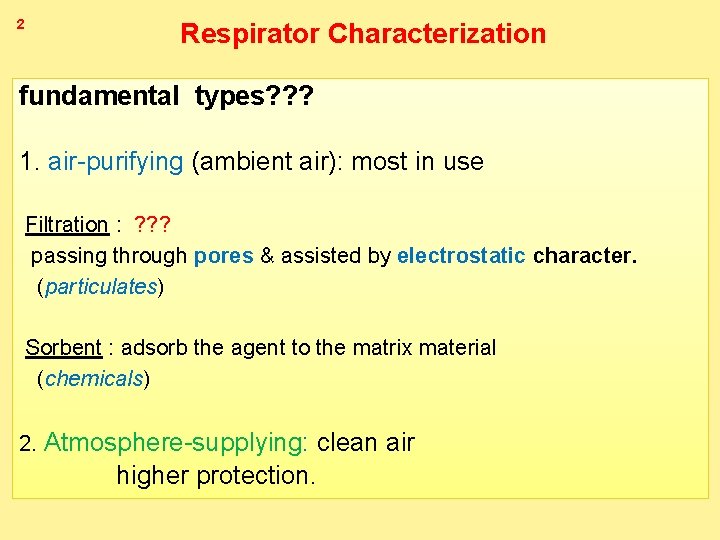
2 Respirator Characterization fundamental types? ? ? 1. air-purifying (ambient air): most in use Filtration : ? ? ? passing through pores & assisted by electrostatic character. (particulates) Sorbent : adsorb the agent to the matrix material (chemicals) 2. Atmosphere-supplying: clean air higher protection.
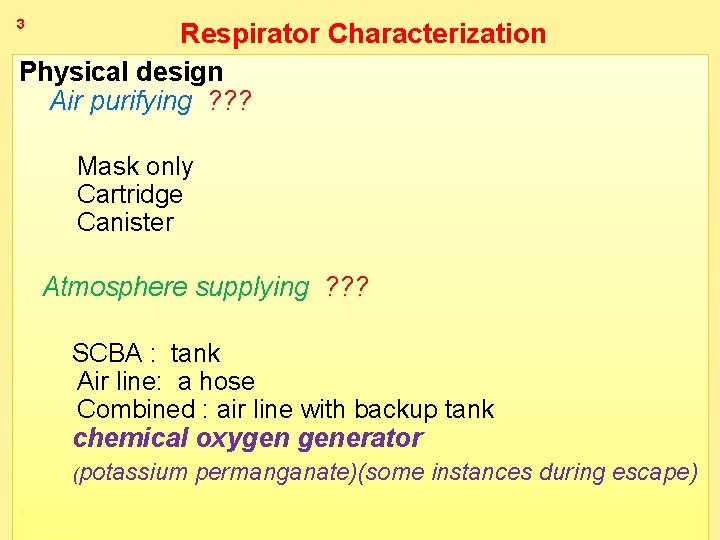
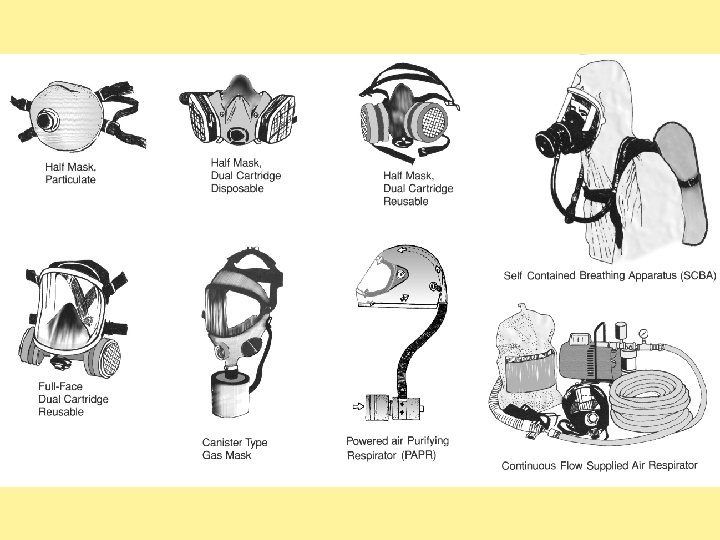
3 Respirator Characterization Physical design Air purifying ? ? ? Mask only Cartridge Canister Atmosphere supplying ? ? ? SCBA : tank Air line: a hose Combined : air line with backup tank chemical oxygen generator (potassium permanganate)(some instances during escape).
4
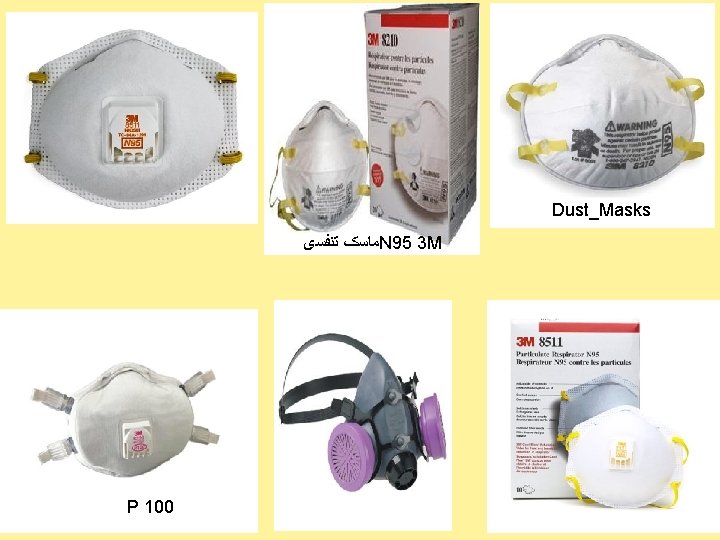
5 Dust_Masks ﺗﻨﻔﺴی ﻣﺎﺳک N 95 3 M P 100
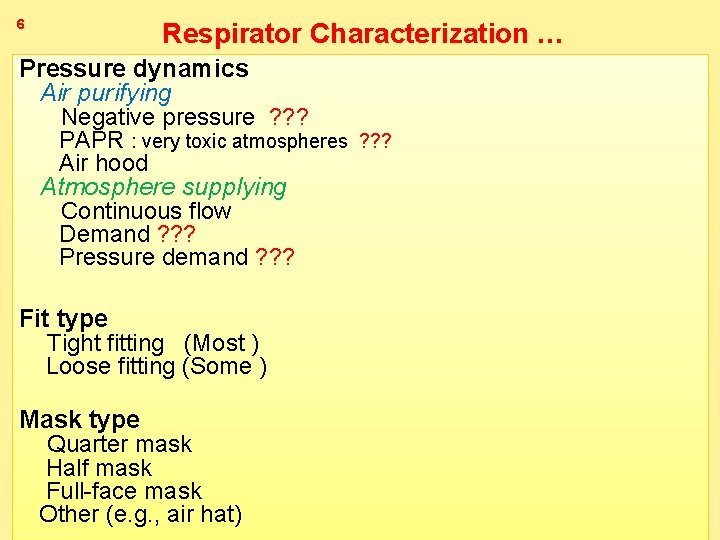
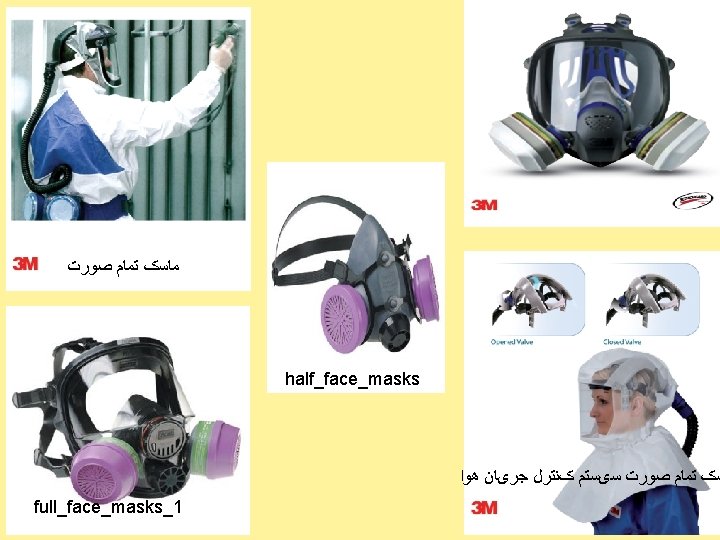
6 Respirator Characterization … Pressure dynamics Air purifying Negative pressure ? ? ? PAPR : very toxic atmospheres ? ? ? Air hood Atmosphere supplying Continuous flow Demand ? ? ? Pressure demand ? ? ? Fit type Tight fitting (Most ) Loose fitting (Some ) Mask type Quarter mask Half mask Full-face mask Other (e. g. , air hat)
8 Respirator use: is not choice other methods: preferable. when required : ? ? ? -work is of varied nature (construction). -maintenance / repair : ventilation non operative. -infrequent operations (transfer of liquid raw materials). -emergency / accident -unknown agent -other methods are not financially feasible. .
9 Occupational Respiratory Protection Program Assessment of need to respirators Exposure assessment Respirator selection Medical assessment of users Training Cleaning and maintenance Program audit ﺑﺎﺯﺭﺳﻰ Written procedures; designated program director
10 Respirator Selection appropriate type : adequate protection & comfort. NIOSH periodically publishes : Updated "respirator decision logic" manuals, Two factors inform respirator selection: ? ? ? (a) exposure situation (b) worker characteristics & preferences. ** importance of program > device factors. ** The (filtration efficiency) is only one component of successful program.
11
12 3 M Respirator Selection Guide - 2011 Is a list of chemicals for which 3 M respirators can be recommended. can be used If contaminants & concentrations identified. Respirator Program Management (OSHA 1910) requires: Maintenance //cleaning // storage programs for reusable respirators.
13 Respirator Fit (ROM) The protection factor : ? ? ? outside / inside the mask. Assigned (APF): ? ? ? no measurement in the subject based on studies Measured (MPF): individual, in lab. Workplace (WPF): in real workplace. facial configurations, beard, … can affect actual fit. .
14 Hazard Ratio & Protection Factors HR = ? ? ? Airborne Concentration / OEL (TLV) HR ≤ APF is adequate
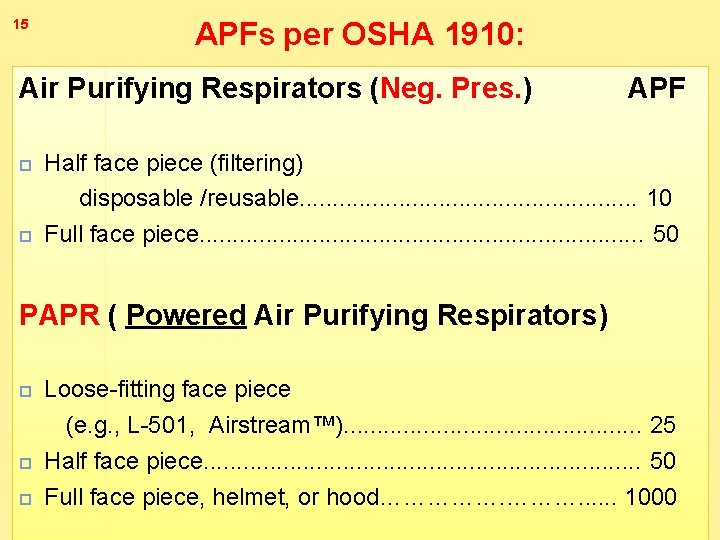
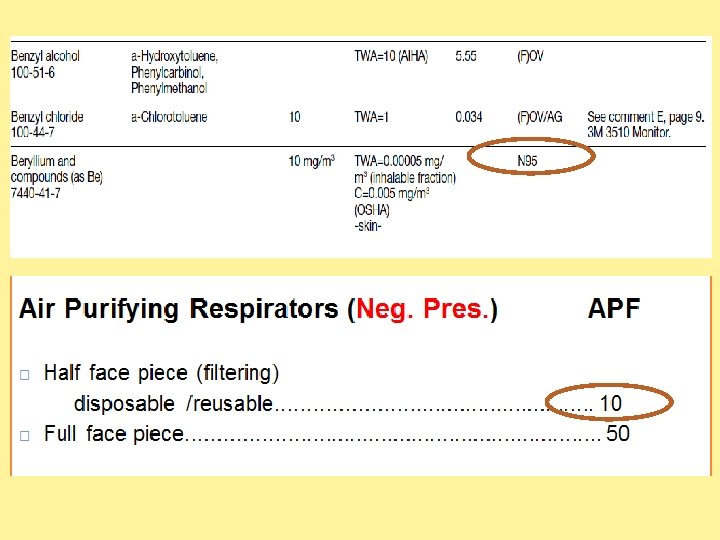
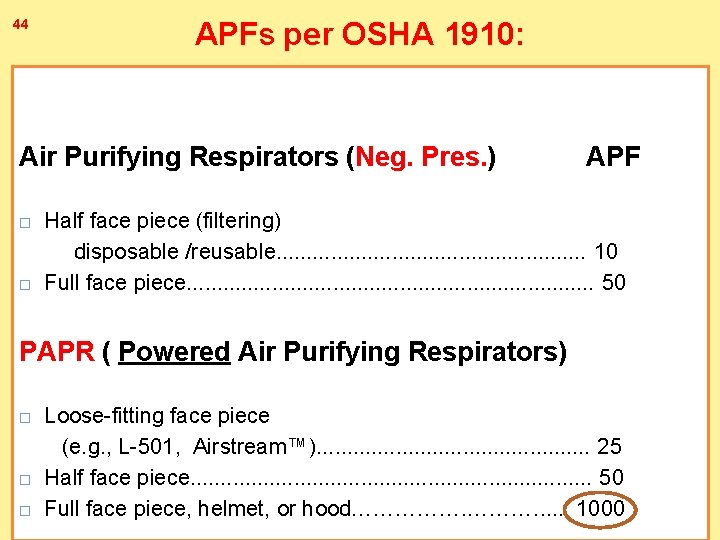
15 APFs per OSHA 1910: Air Purifying Respirators (Neg. Pres. ) APF Half face piece (filtering) disposable /reusable. . . . 10 Full face piece. . . . . 50 PAPR ( Powered Air Purifying Respirators) Loose-fitting face piece (e. g. , L-501, Airstream™). . . 25 Half face piece. . . . 50 Full face piece, helmet, or hood……………. . . . 1000
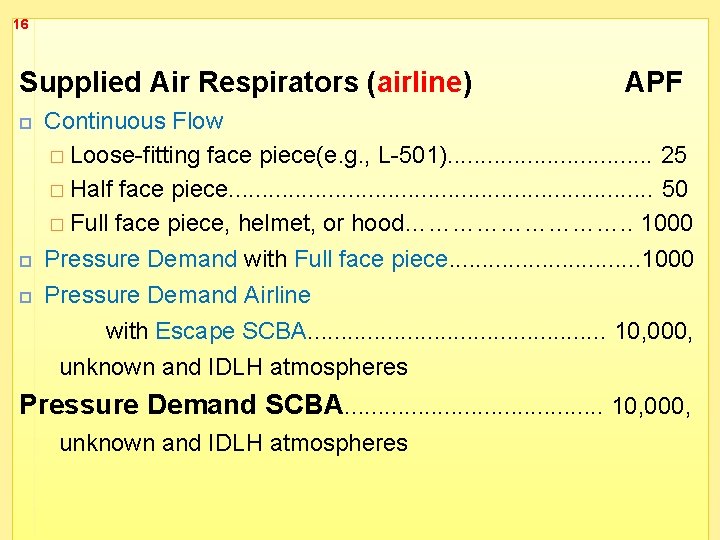
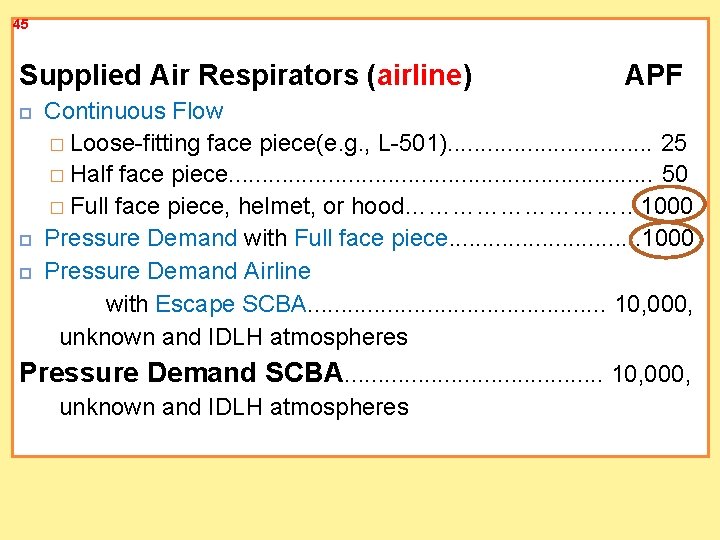
16 Supplied Air Respirators (airline) APF Continuous Flow � Loose-fitting face piece(e. g. , L-501). . . . 25 � Half face piece. . . . 50 � Full face piece, helmet, or hood……………. . 1000 Pressure Demand with Full face piece. . . . 1000 Pressure Demand Airline with Escape SCBA. . . 10, 000, unknown and IDLH atmospheres Pressure Demand SCBA. . . . . 10, 000, unknown and IDLH atmospheres
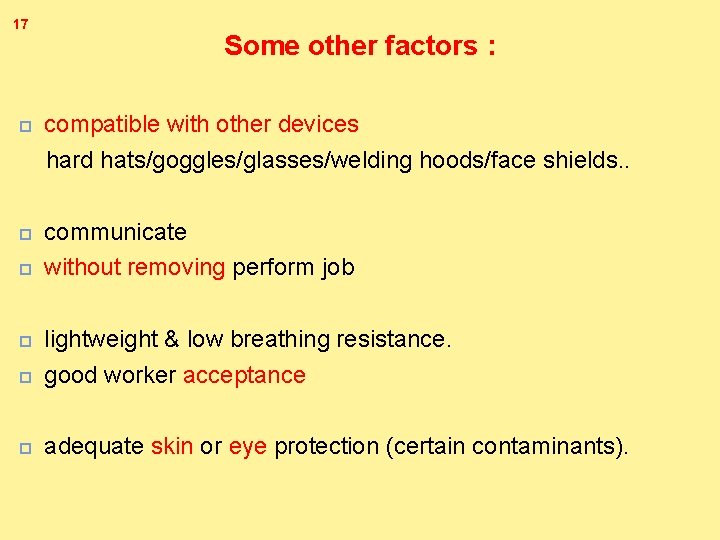
17 Some other factors : compatible with other devices hard hats/goggles/glasses/welding hoods/face shields. . communicate without removing perform job lightweight & low breathing resistance. good worker acceptance adequate skin or eye protection (certain contaminants).
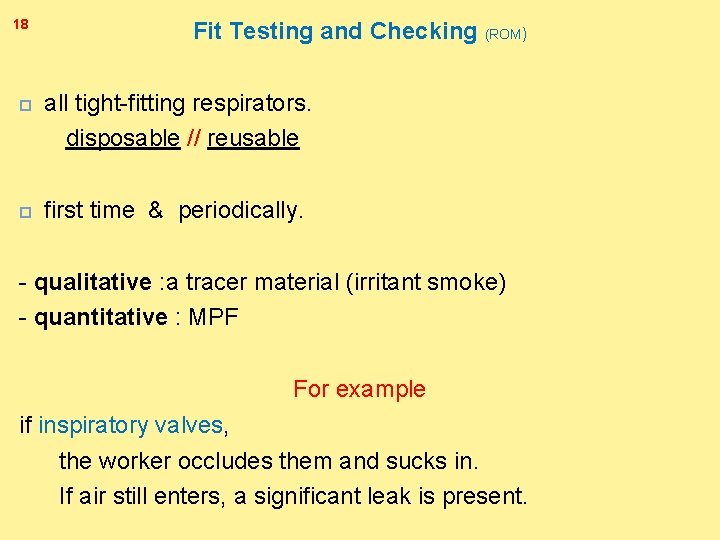
18 Fit Testing and Checking (ROM) all tight-fitting respirators. disposable // reusable first time & periodically. - qualitative : a tracer material (irritant smoke) - quantitative : MPF For example if inspiratory valves, the worker occludes them and sucks in. If air still enters, a significant leak is present.
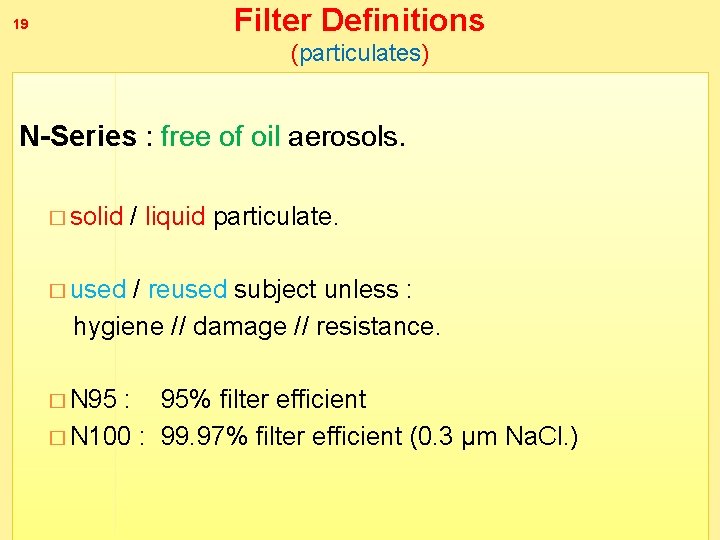
19 Filter Definitions (particulates) N-Series : free of oil aerosols. � solid / liquid particulate. � used / reused subject unless : hygiene // damage // resistance. � N 95 : 95% filter efficient � N 100 : 99. 97% filter efficient (0. 3 μm Na. Cl. )
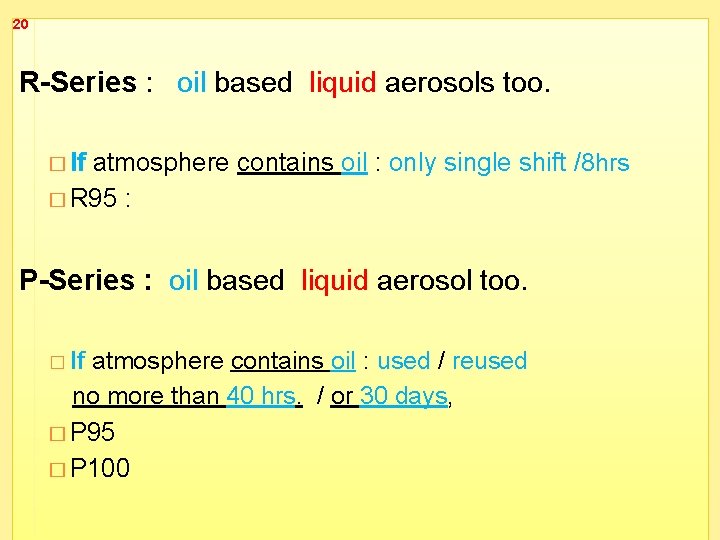
20 R-Series : oil based liquid aerosols too. � If atmosphere contains oil : only single shift /8 hrs � R 95 : P-Series : oil based liquid aerosol too. � If atmosphere contains oil : used / reused no more than 40 hrs. / or 30 days, � P 95 � P 100
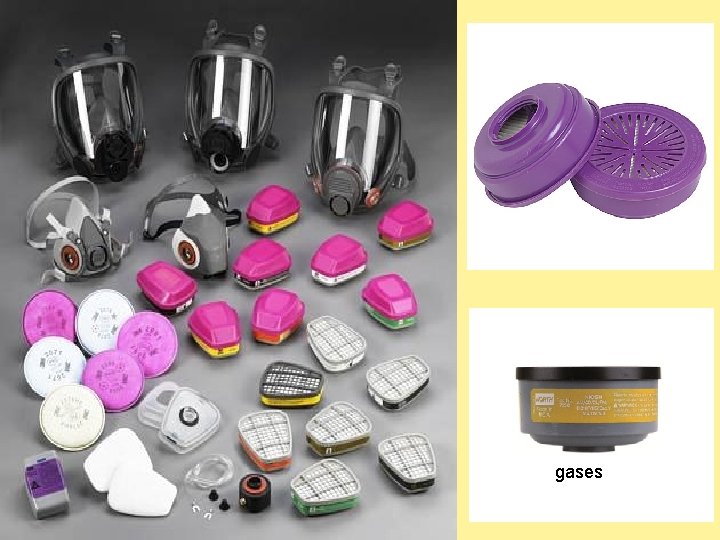
21 gases
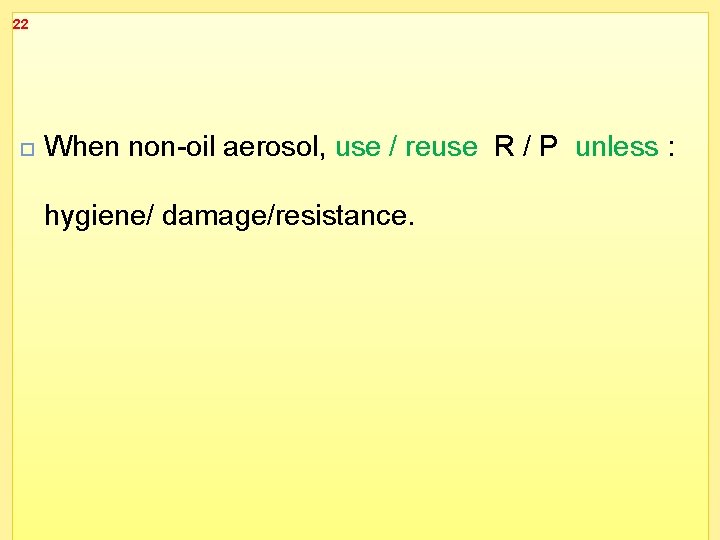
22 When non-oil aerosol, use / reuse R / P unless : hygiene/ damage/resistance.
23
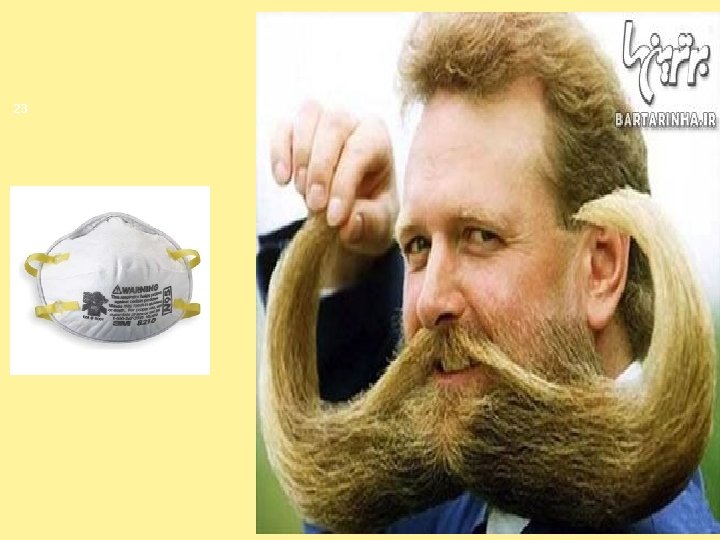
24 Some limitations : Don’t use tight / loose-fitting face pieces with beards or… 3 m respirators protect against airborne particles / gases & vapors only. Use only for specific chemicals These respirators do not supply oxygen. Don't use when: unknown concentrations / immediately dangerous / oxygen < 19. 5%.
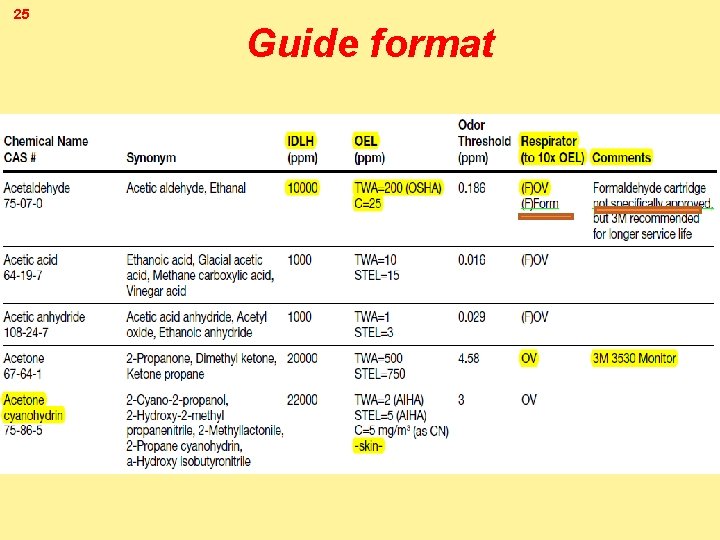
25 Guide format
26 IDLH Level ? ? ? concentration Immediately Dangerous to Life or Health, (NIOSH) acute respiratory exposure acute eye exposure oxygen deficient OEL occupational exposure limit = TLV (ACGIH) Or : PEL TWA STEL Ceiling
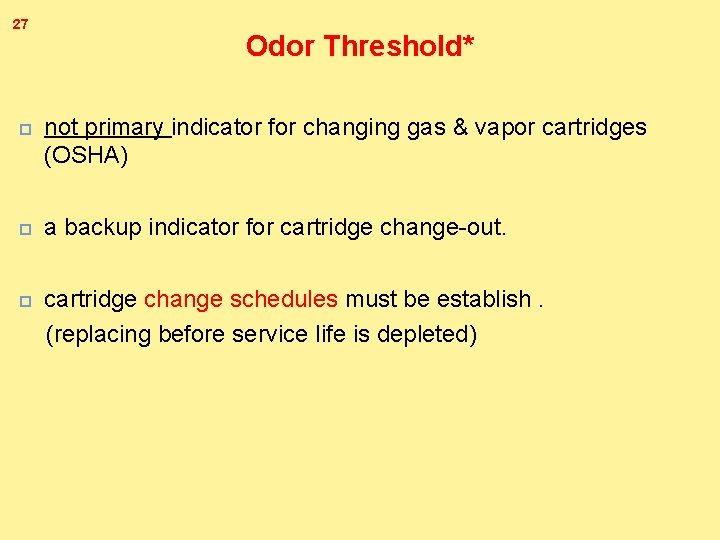
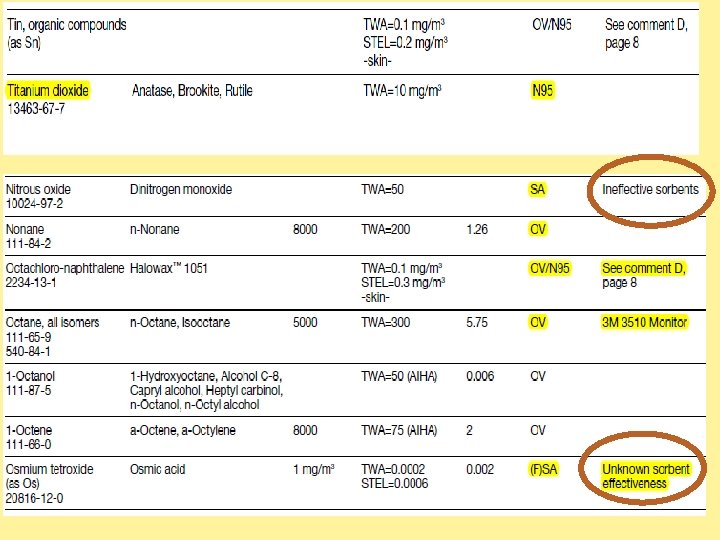
27 Odor Threshold* not primary indicator for changing gas & vapor cartridges (OSHA) a backup indicator for cartridge change-out. cartridge change schedules must be establish. (replacing before service life is depleted)
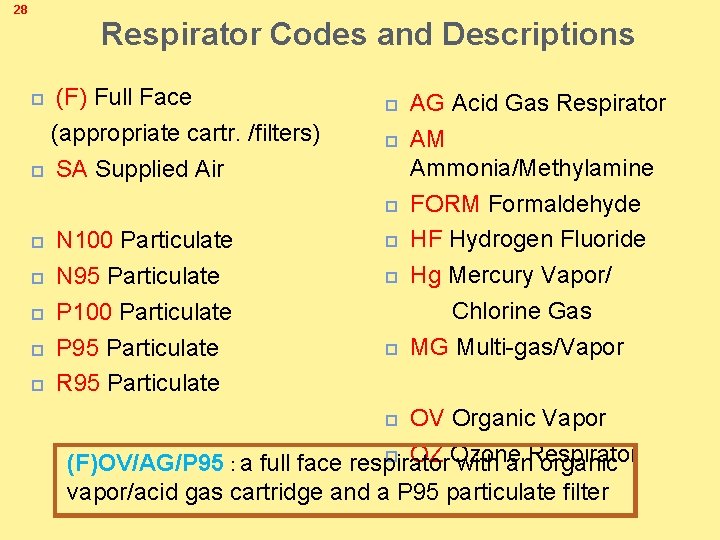
28 Respirator Codes and Descriptions (F) Full Face (appropriate cartr. /filters) SA Supplied Air N 100 Particulate N 95 Particulate P 100 Particulate P 95 Particulate R 95 Particulate AG Acid Gas Respirator AM Ammonia/Methylamine FORM Formaldehyde HF Hydrogen Fluoride Hg Mercury Vapor/ Chlorine Gas MG Multi-gas/Vapor OV Organic Vapor OZ Ozone Respirator (F)OV/AG/P 95 : a full face respirator with an organic vapor/acid gas cartridge and a P 95 particulate filter
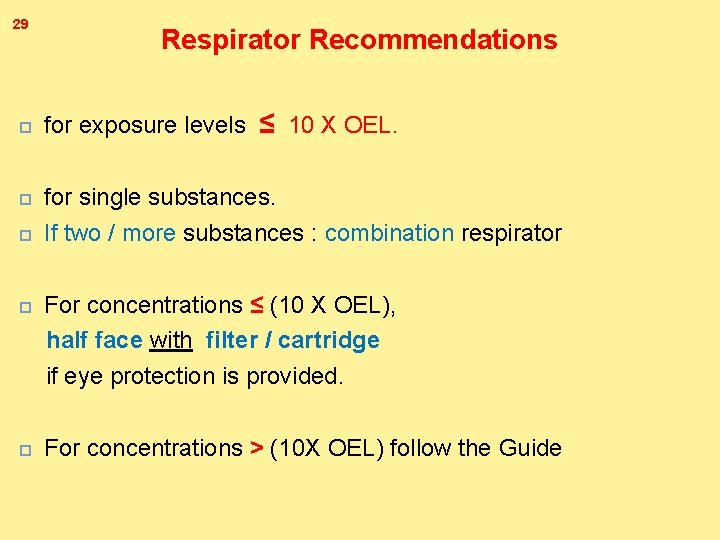
29 Respirator Recommendations for exposure levels ≤ 10 X OEL. for single substances. If two / more substances : combination respirator For concentrations ≤ (10 X OEL), half face with filter / cartridge if eye protection is provided. For concentrations > (10 X OEL) follow the Guide
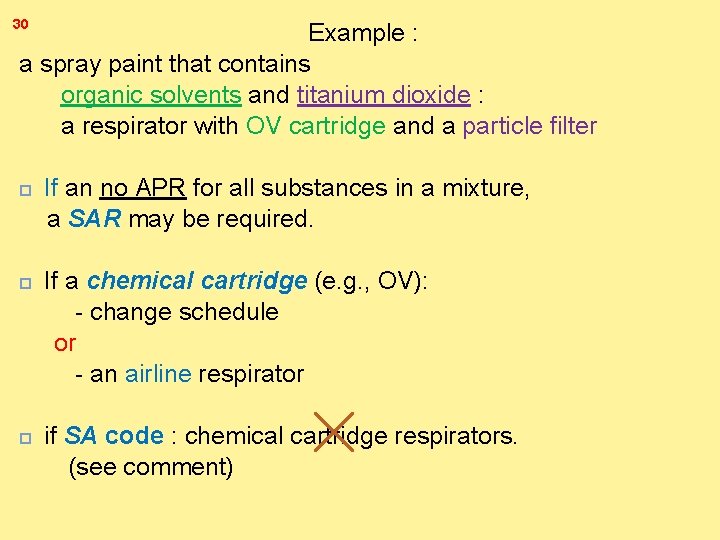
30 Example : a spray paint that contains organic solvents and titanium dioxide : a respirator with OV cartridge and a particle filter If an no APR for all substances in a mixture, a SAR may be required. If a chemical cartridge (e. g. , OV): - change schedule or - an airline respirator if SA code : chemical cartridge respirators. (see comment)
31
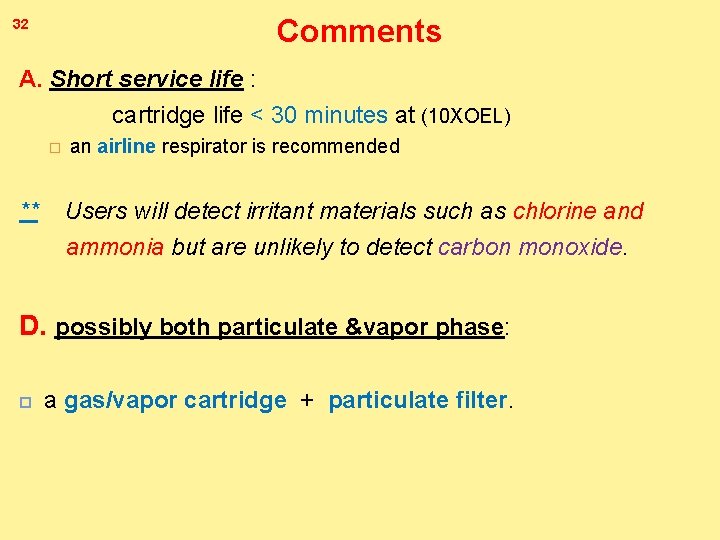
Comments 32 A. Short service life : cartridge life < 30 minutes at (10 XOEL) � an airline respirator is recommended ** Users will detect irritant materials such as chlorine and ammonia but are unlikely to detect carbon monoxide. D. possibly both particulate &vapor phase: a gas/vapor cartridge + particulate filter.
33
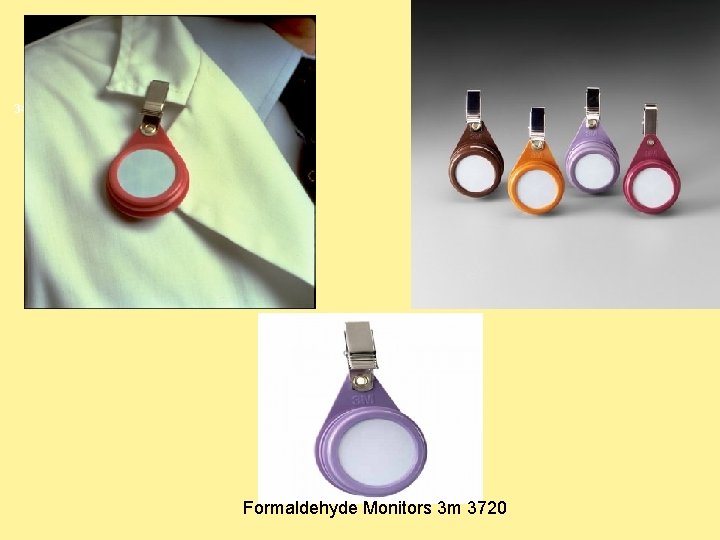
34 Formaldehyde Monitors 3 m 3720
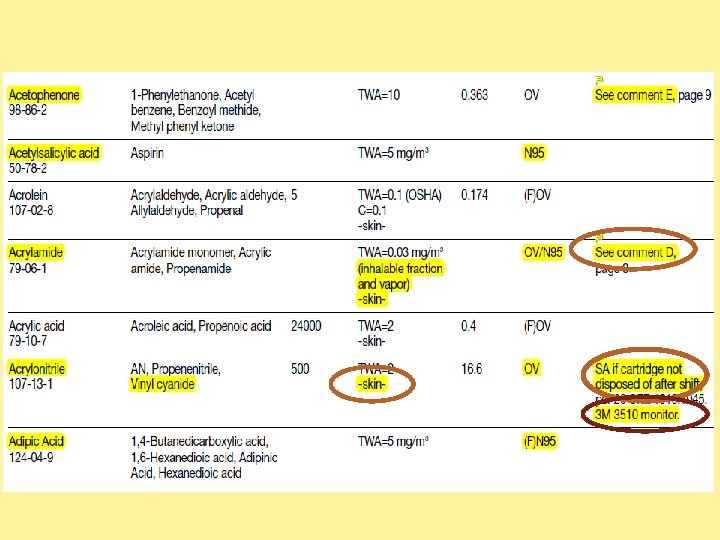
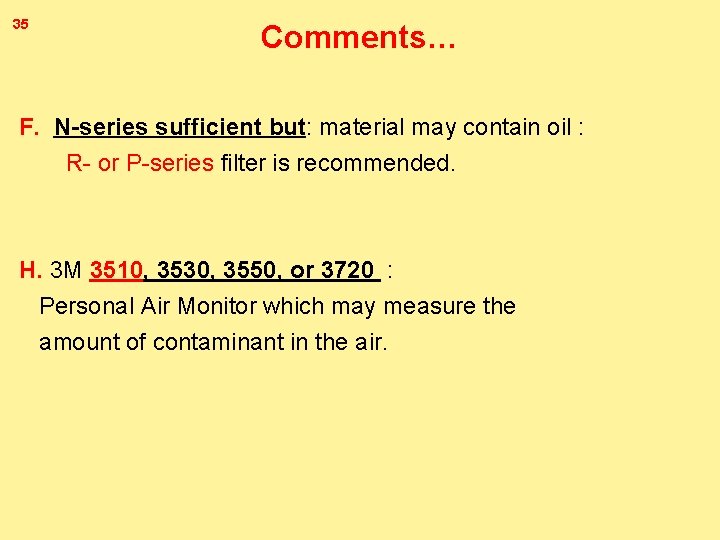
35 Comments… F. N-series sufficient but: material may contain oil : R- or P-series filter is recommended. H. 3 M 3510, 3530, 3550, or 3720 : Personal Air Monitor which may measure the amount of contaminant in the air.
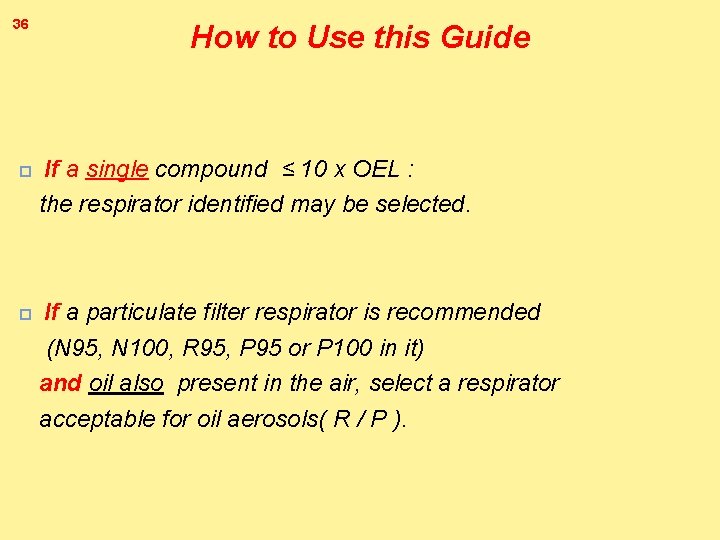
36 How to Use this Guide If a single compound ≤ 10 x OEL : the respirator identified may be selected. If a particulate filter respirator is recommended (N 95, N 100, R 95, P 95 or P 100 in it) and oil also present in the air, select a respirator acceptable for oil aerosols( R / P ).
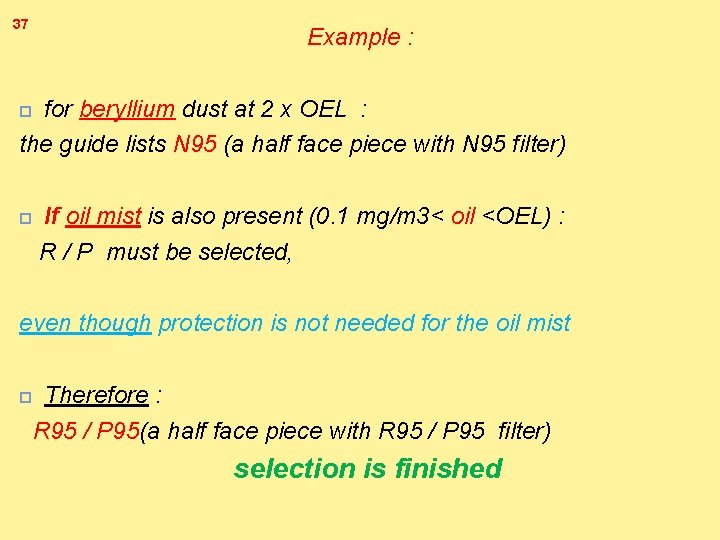
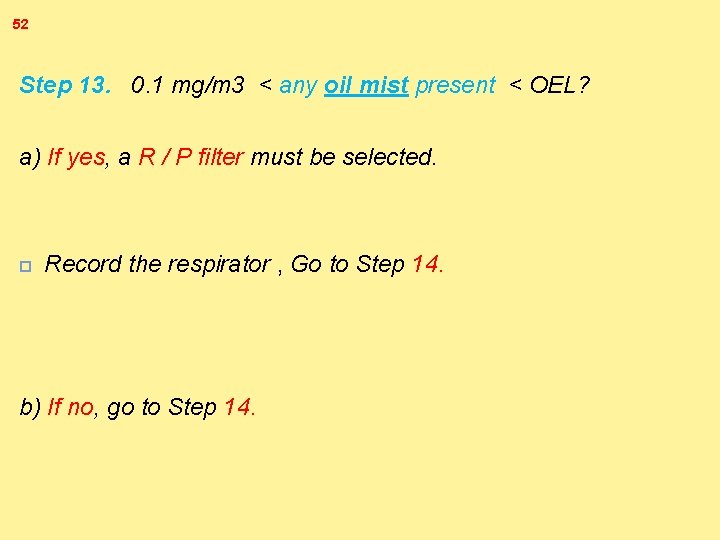
37 Example : for beryllium dust at 2 x OEL : the guide lists N 95 (a half face piece with N 95 filter) If oil mist is also present (0. 1 mg/m 3< oil <OEL) : R / P must be selected, even though protection is not needed for the oil mist Therefore : R 95 / P 95(a half face piece with R 95 / P 95 filter) selection is finished
38
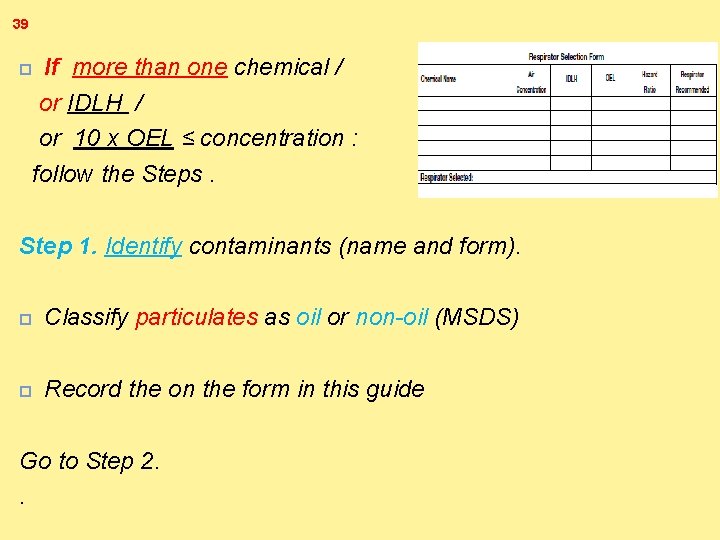
39 If more than one chemical / or IDLH / or 10 x OEL ≤ concentration : follow the Steps. Step 1. Identify contaminants (name and form). Classify particulates as oil or non-oil (MSDS) Record the on the form in this guide Go to Step 2. .
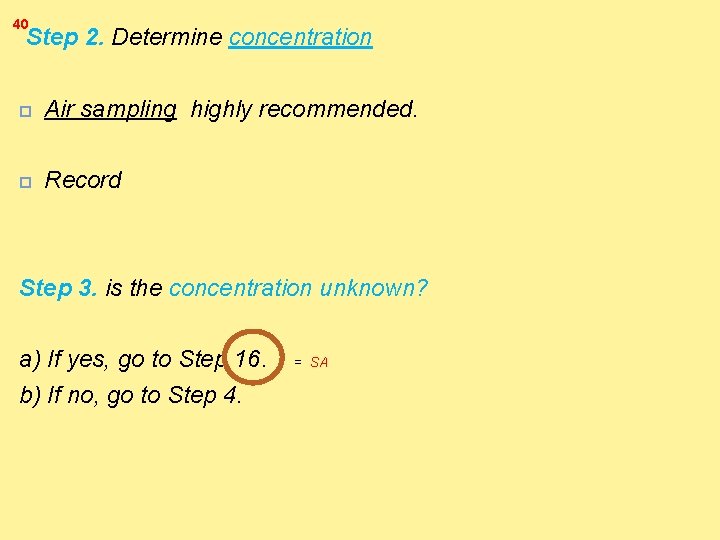
40 Step 2. Determine concentration Air sampling highly recommended. Record Step 3. is the concentration unknown? a) If yes, go to Step 16. = SA b) If no, go to Step 4.
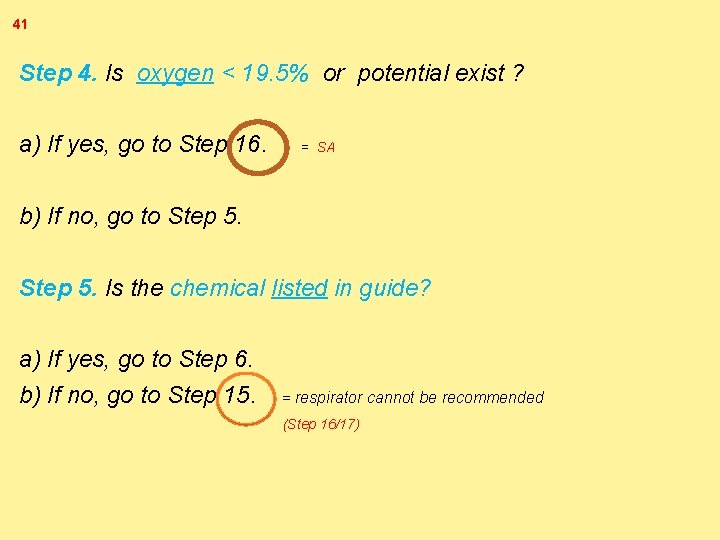
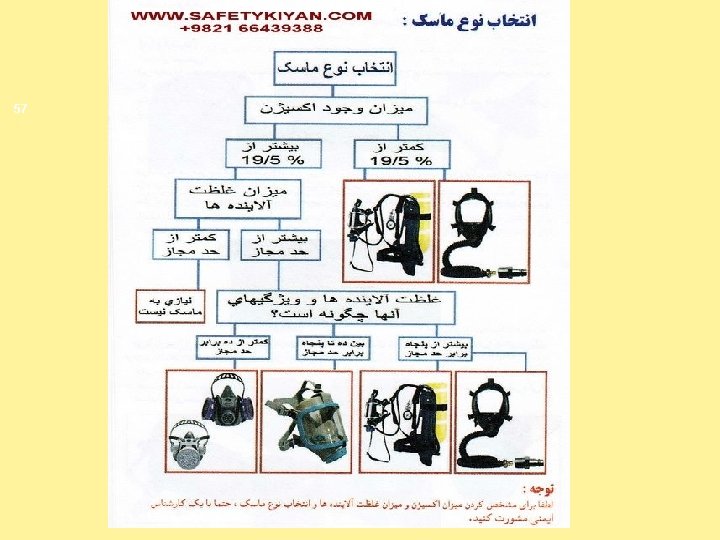
41 Step 4. Is oxygen < 19. 5% or potential exist ? a) If yes, go to Step 16. = SA b) If no, go to Step 5. Is the chemical listed in guide? a) If yes, go to Step 6. b) If no, go to Step 15. = respirator cannot be recommended (Step 16/17)
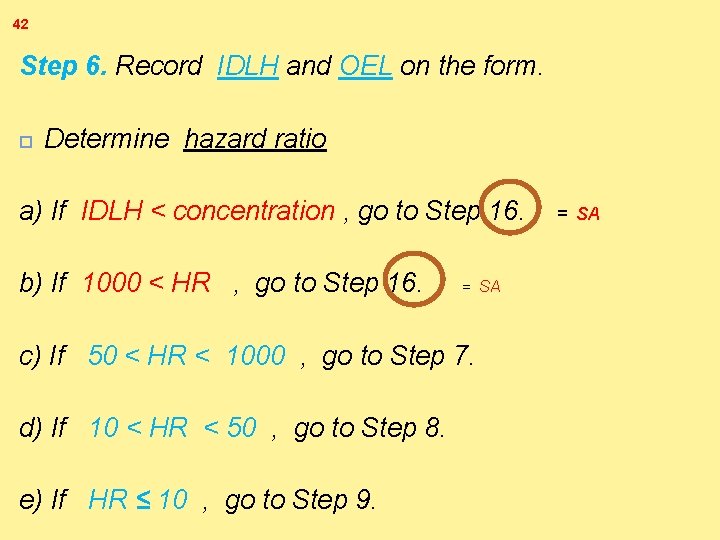
42 Step 6. Record IDLH and OEL on the form. Determine hazard ratio a) If IDLH < concentration , go to Step 16. = SA b) If 1000 < HR , go to Step 16. = SA c) If 50 < HR < 1000 , go to Step 7. d) If 10 < HR < 50 , go to Step 8. e) If HR ≤ 10 , go to Step 9.
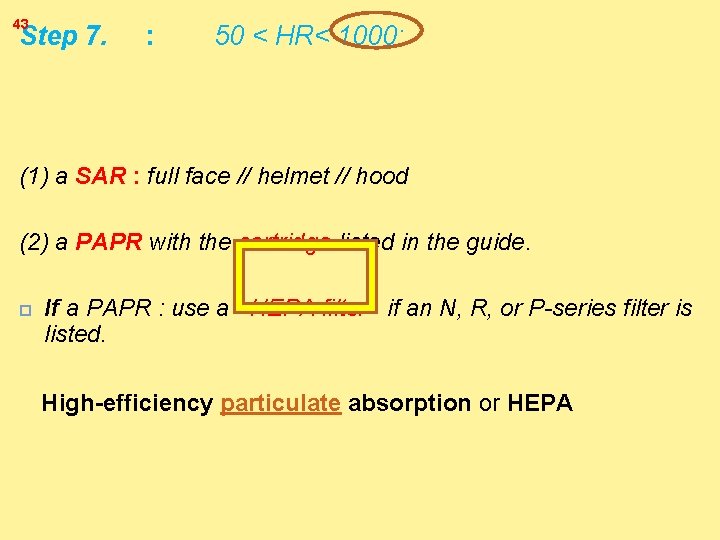
43 Step 7. : 50 < HR< 1000: (1) a SAR : full face // helmet // hood (2) a PAPR with the cartridge listed in the guide. If a PAPR : use a HEPA filter if an N, R, or P-series filter is listed. High-efficiency particulate absorption or HEPA
44 APFs per OSHA 1910: Air Purifying Respirators (Neg. Pres. ) APF Half face piece (filtering) disposable /reusable. . . . 10 Full face piece. . . . . 50 PAPR ( Powered Air Purifying Respirators) Loose-fitting face piece (e. g. , L-501, Airstream™). . . 25 Half face piece. . . . 50 Full face piece, helmet, or hood……………. . . . 1000
45 Supplied Air Respirators (airline) APF Continuous Flow � Loose-fitting face piece(e. g. , L-501). . . . 25 � Half face piece. . . . 50 � Full face piece, helmet, or hood……………. . 1000 Pressure Demand with Full face piece. . . . 1000 Pressure Demand Airline with Escape SCBA. . . 10, 000, unknown and IDLH atmospheres Pressure Demand SCBA. . . . . 10, 000, unknown and IDLH atmospheres
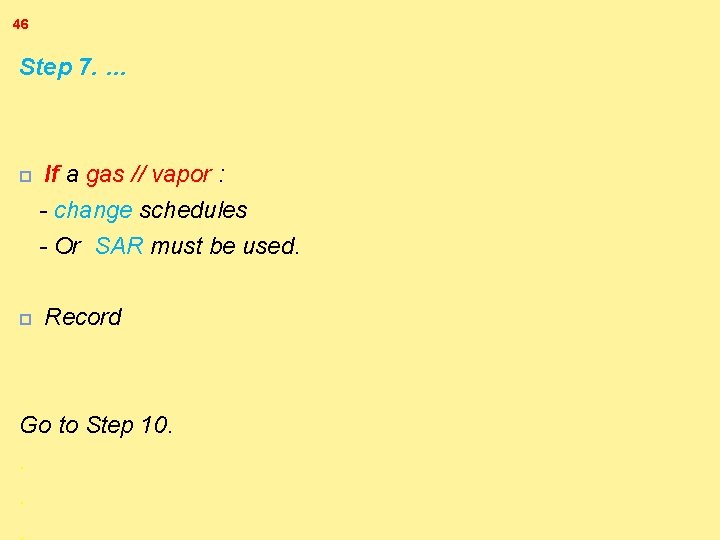
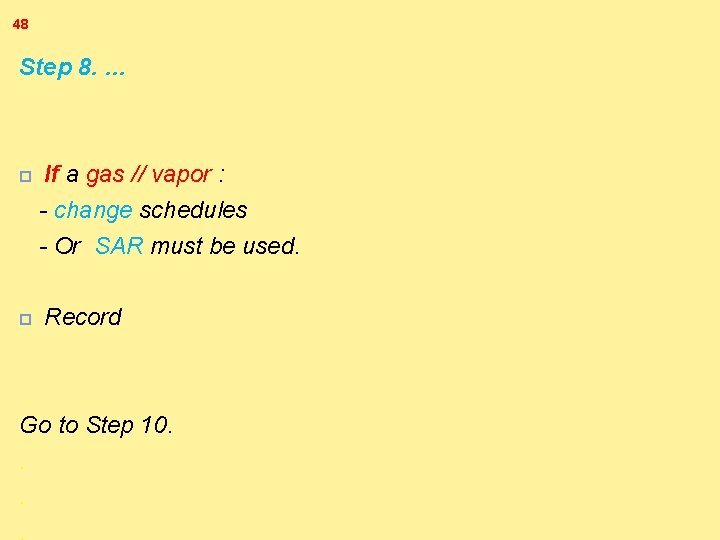
46 Step 7. … If a gas // vapor : - change schedules - Or SAR must be used. Record Go to Step 10. . .
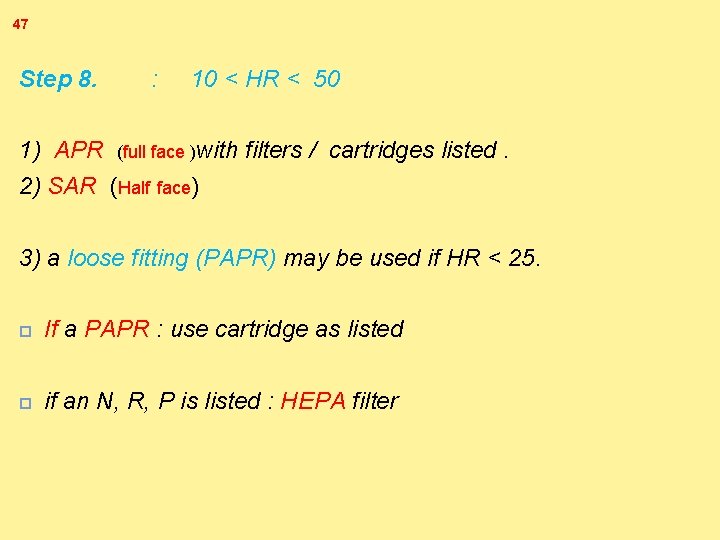
47 Step 8. : 10 < HR < 50 1) APR (full face )with filters / cartridges listed. 2) SAR (Half face) 3) a loose fitting (PAPR) may be used if HR < 25. If a PAPR : use cartridge as listed if an N, R, P is listed : HEPA filter
48 Step 8. … If a gas // vapor : - change schedules - Or SAR must be used. Record Go to Step 10. . .
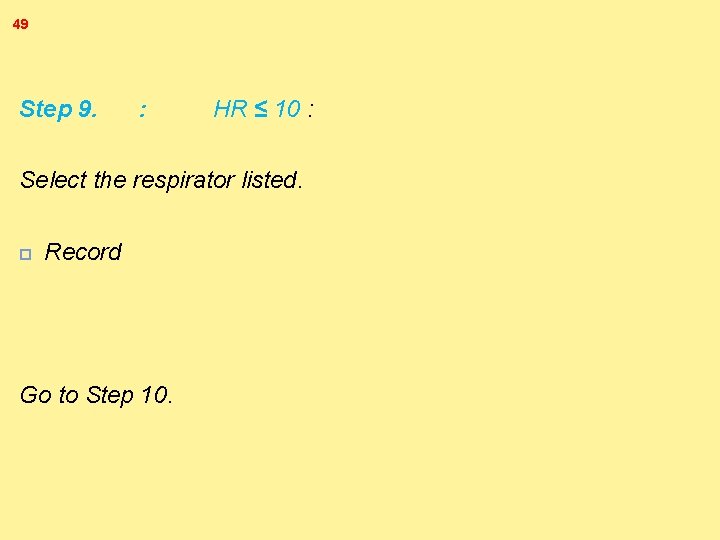
49 Step 9. : HR ≤ 10 : Select the respirator listed. Record Go to Step 10.
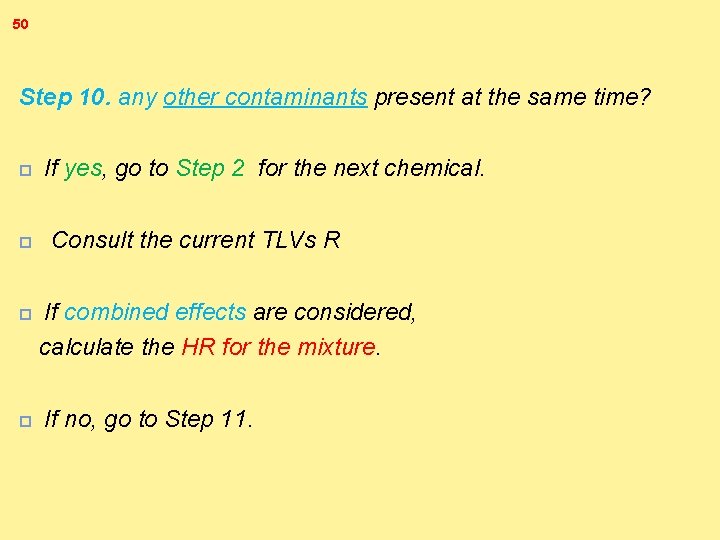
50 Step 10. any other contaminants present at the same time? If yes, go to Step 2 for the next chemical. Consult the current TLVs R If combined effects are considered, calculate the HR for the mixture. If no, go to Step 11.
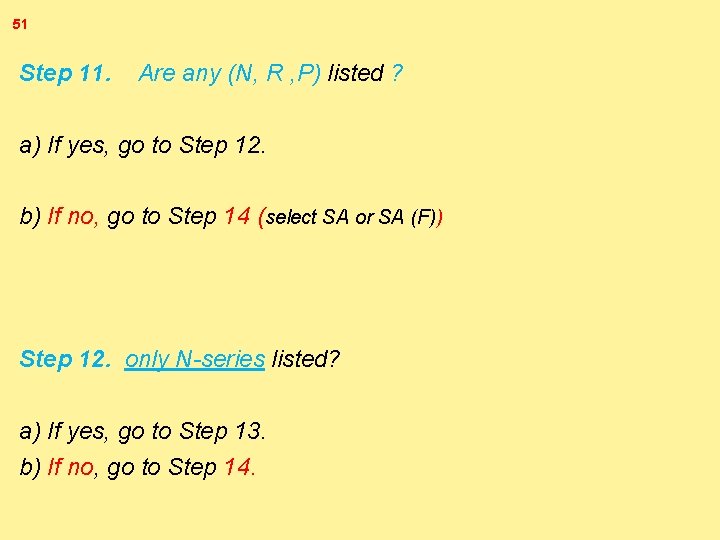
51 Step 11. Are any (N, R , P) listed ? a) If yes, go to Step 12. b) If no, go to Step 14 (select SA or SA (F)) Step 12. only N-series listed? a) If yes, go to Step 13. b) If no, go to Step 14.
52 Step 13. 0. 1 mg/m 3 < any oil mist present < OEL? a) If yes, a R / P filter must be selected. Record the respirator , Go to Step 14. b) If no, go to Step 14.
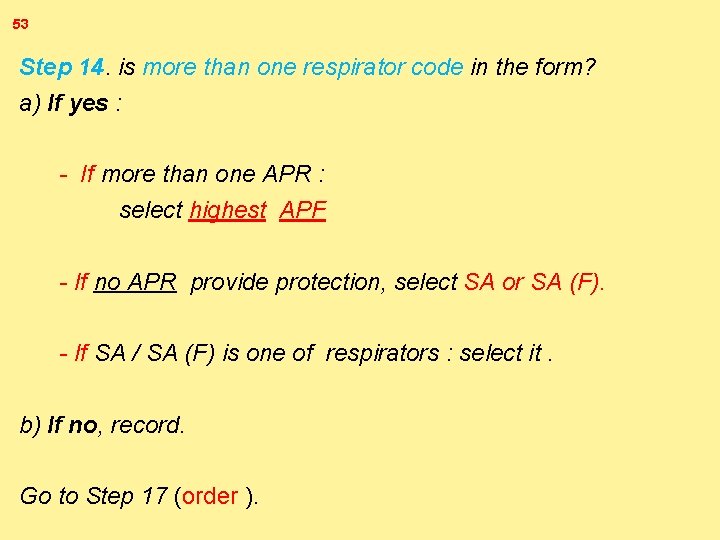
53 Step 14. is more than one respirator code in the form? a) If yes : - If more than one APR : select highest APF - If no APR provide protection, select SA or SA (F). - If SA / SA (F) is one of respirators : select it. b) If no, record. Go to Step 17 (order ).
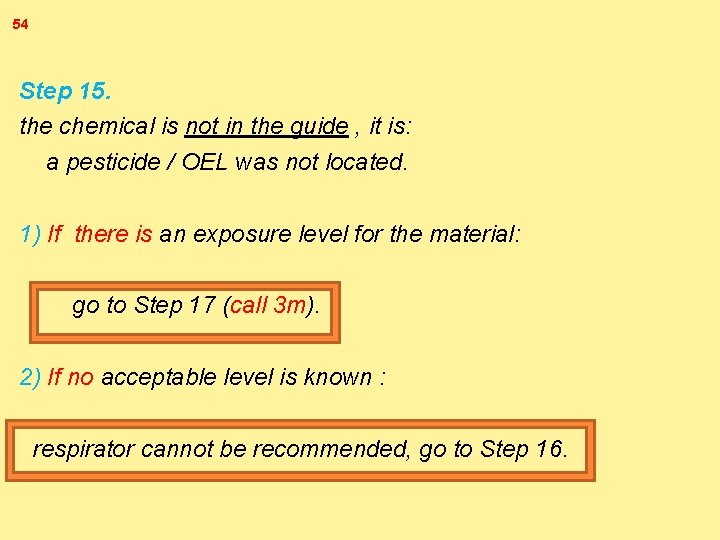
54 Step 15. the chemical is not in the guide , it is: a pesticide / OEL was not located. 1) If there is an exposure level for the material: go to Step 17 (call 3 m). 2) If no acceptable level is known : respirator cannot be recommended, go to Step 16.
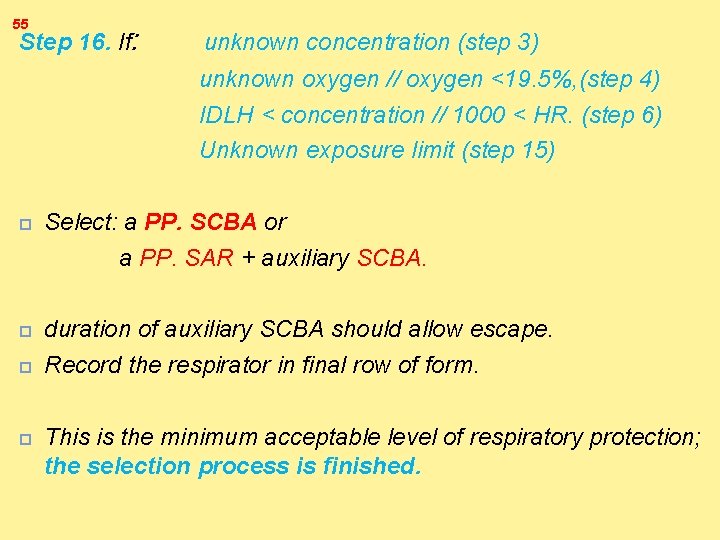
55 Step 16. If: unknown concentration (step 3) unknown oxygen // oxygen <19. 5%, (step 4) IDLH < concentration // 1000 < HR. (step 6) Unknown exposure limit (step 15) Select: a PP. SCBA or a PP. SAR + auxiliary SCBA. duration of auxiliary SCBA should allow escape. Record the respirator in final row of form. This is the minimum acceptable level of respiratory protection; the selection process is finished.
56 If you need help, go to Step 17. Do you need help? a) If yes, call 3 M for assistance b) If no, order the respirator(s) from distributor.
57
58