
1 2 Grounding Principles and CF Infrastructure in






- Slides: 33
1 -2 Grounding Principles and CF Infrastructure in Instruments Halls Grounding Implementation Workshop Lund, 29 th August 2018 Thomas Gahl - Group Leader Motion Control & Automation -
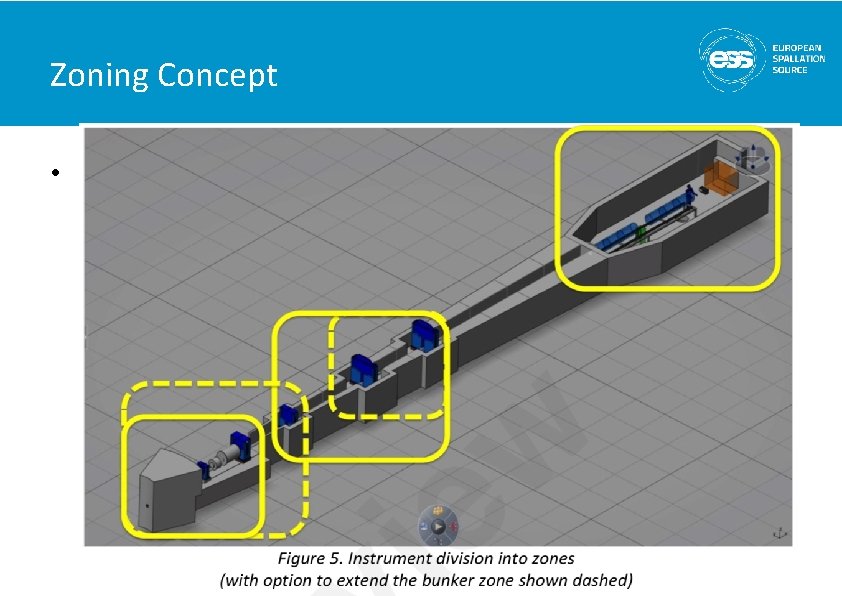
Overview • ESS Grounding principles – The zoning concept – Basic requirements for implementation on ESS instruments • Application on instruments – Long, medium, short – Ground connections inside a zone • How to connect to infrastructure? – Existing CF infrastructure – Preferred ground connection points + alternatives • Instruments zoning map (proposal) 2
Zoning Concept • mm 3
Zoning Concept • mm 4
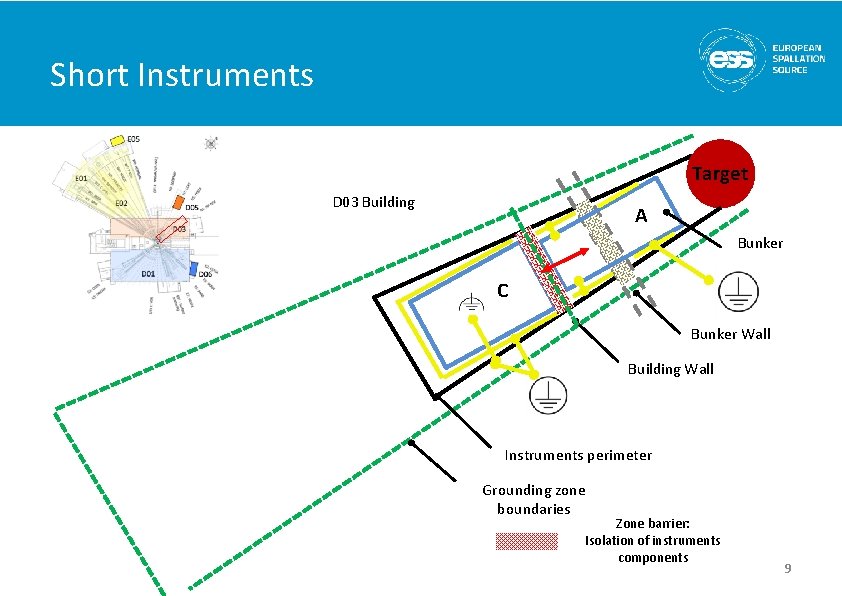
L 1 - High level requirements 1. The grounding installations shall be divided into three greater grounding zones, following the different power supply zones in the D- and E-buildings. 2. The grounding of NSS instruments shall be implemented in a way that interferences from in- and outside the instrument through air, power cables or grounding bonds shall not compromise the availability, functionality and performance of the single instrument (e. g. by introducing isolated instruments grounding zones). 3. The number of grounding zones shall be minimized. 4. Lessons learned from other facilities shall be included in the design of the grounding installations. 5. Grounding shall fulfill functional, EMC and safety requirements to ESS and European standards. 5
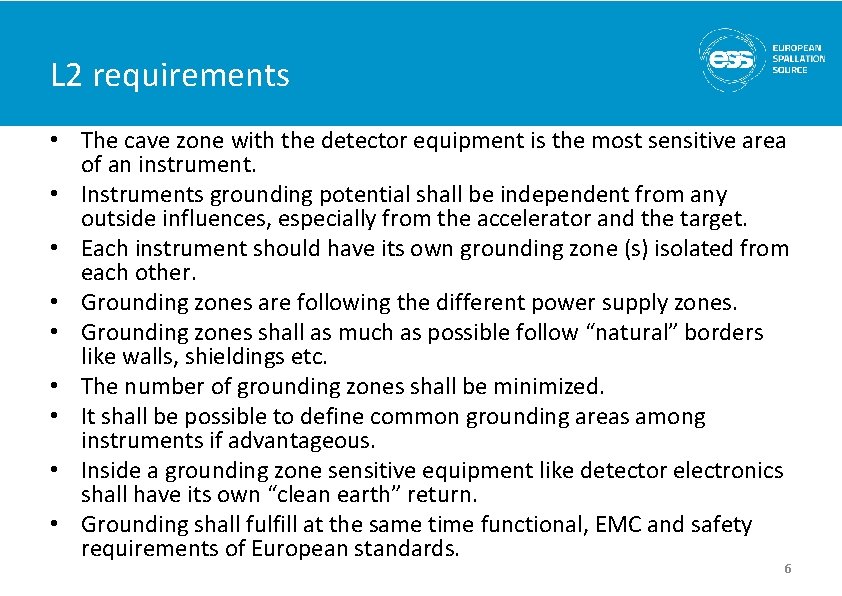
L 2 requirements • The cave zone with the detector equipment is the most sensitive area of an instrument. • Instruments grounding potential shall be independent from any outside influences, especially from the accelerator and the target. • Each instrument should have its own grounding zone (s) isolated from each other. • Grounding zones are following the different power supply zones. • Grounding zones shall as much as possible follow “natural” borders like walls, shieldings etc. • The number of grounding zones shall be minimized. • It shall be possible to define common grounding areas among instruments if advantageous. • Inside a grounding zone sensitive equipment like detector electronics shall have its own “clean earth” return. • Grounding shall fulfill at the same time functional, EMC and safety requirements of European standards. 6
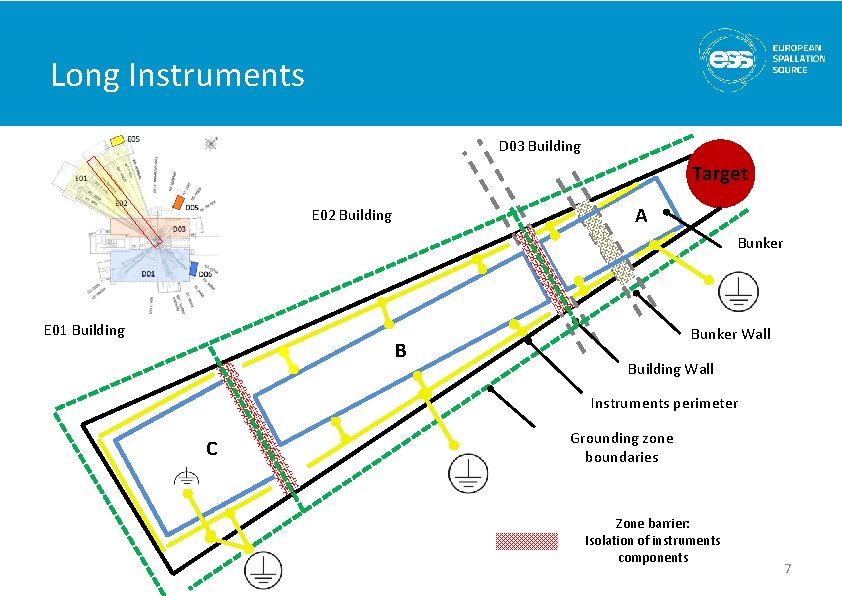
Long Instruments D 03 Building Target A E 02 Building Bunker E 01 Building B Bunker Wall Building Wall Instruments perimeter C Grounding zone boundaries Zone barrier: Isolation of instruments components 7
Medium Instruments Target D 01 Building A Bunker ? B C Bunker Wall Instruments perimeter Grounding zone boundaries Zone barrier: Isolation of instruments components 8
Short Instruments Target D 03 Building A Bunker C Bunker Wall Building Wall Instruments perimeter Grounding zone boundaries Zone barrier: Isolation of instruments components 9
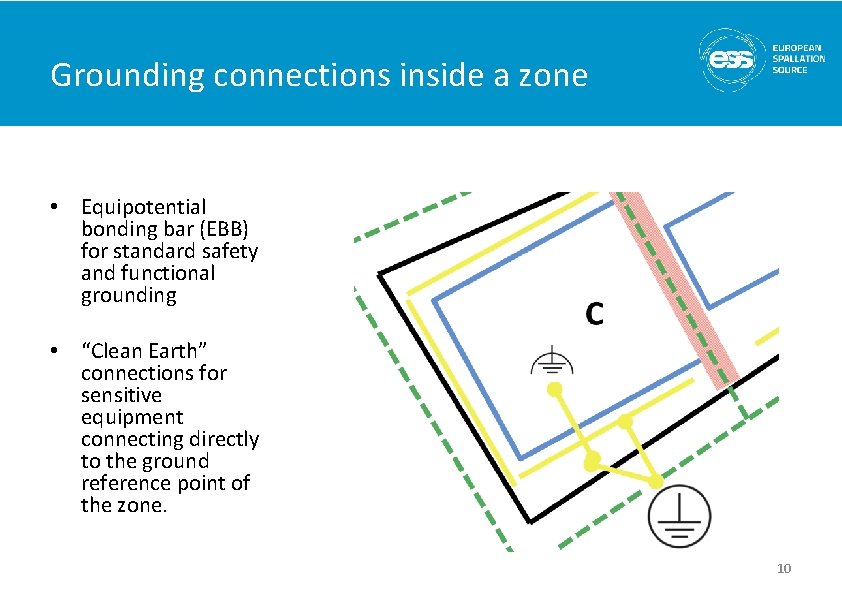
Grounding connections inside a zone • Equipotential bonding bar (EBB) for standard safety and functional grounding • “Clean Earth” connections for sensitive equipment connecting directly to the ground reference point of the zone. 10
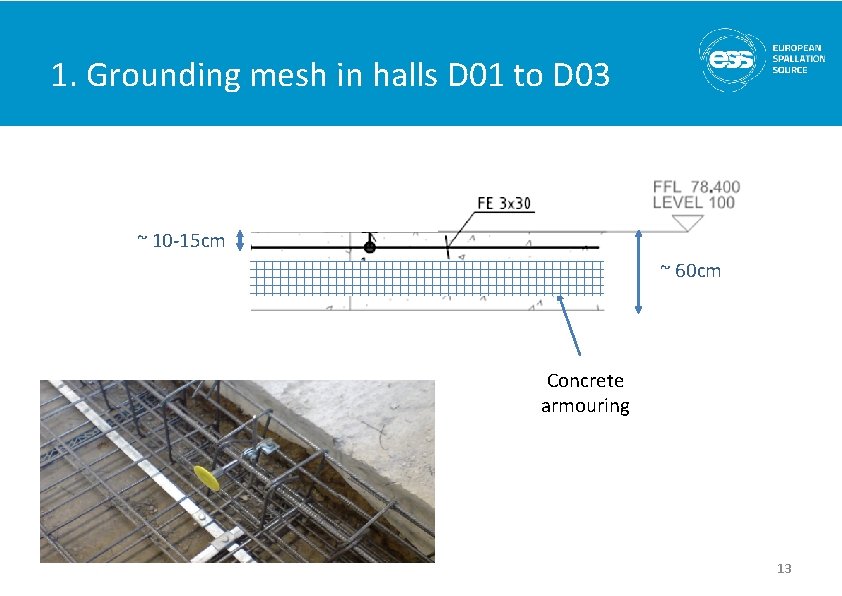
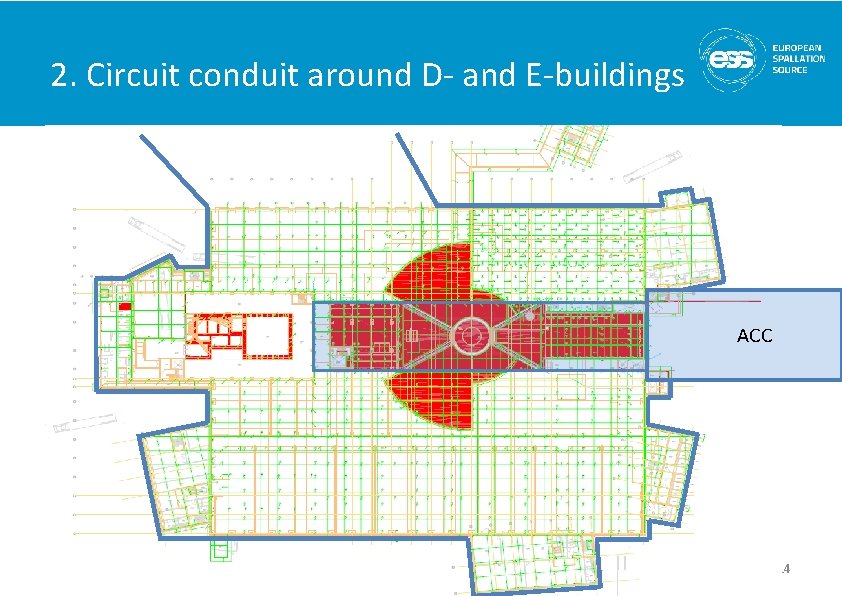
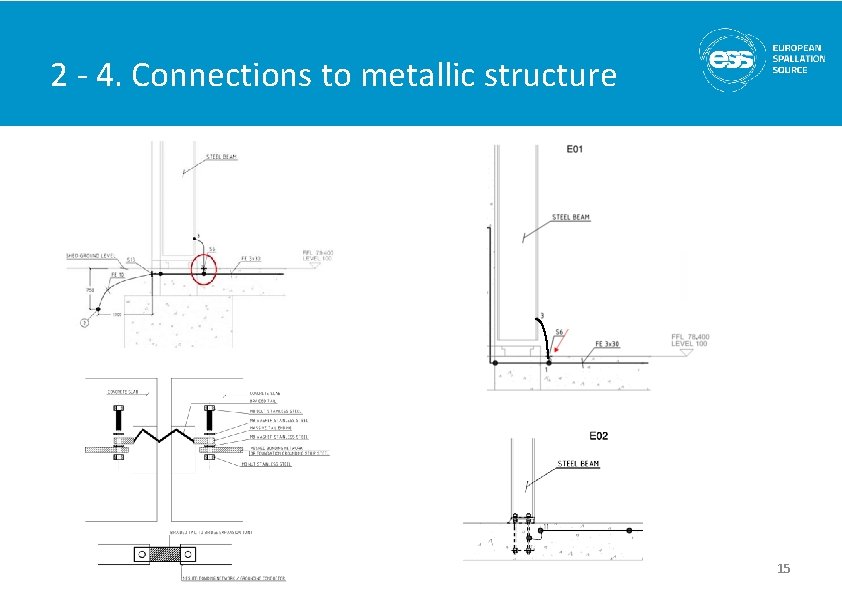
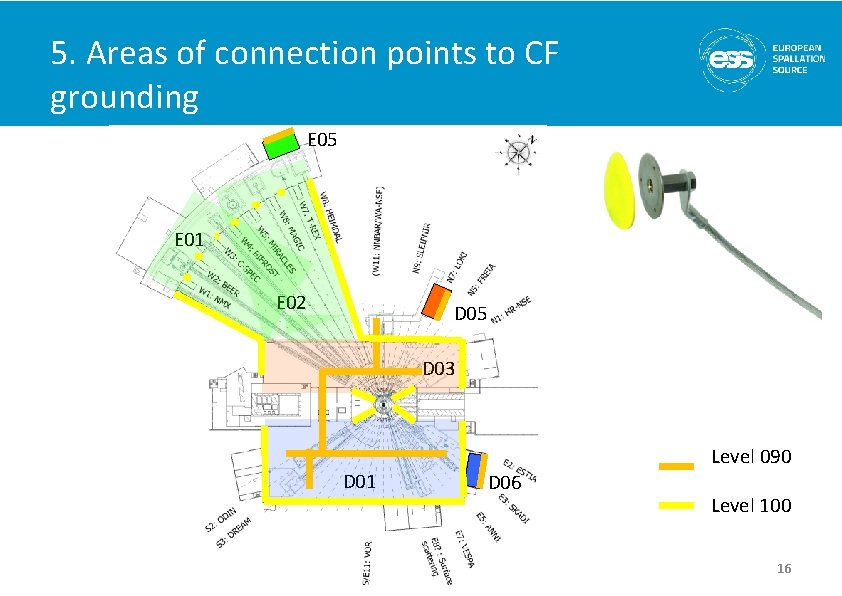
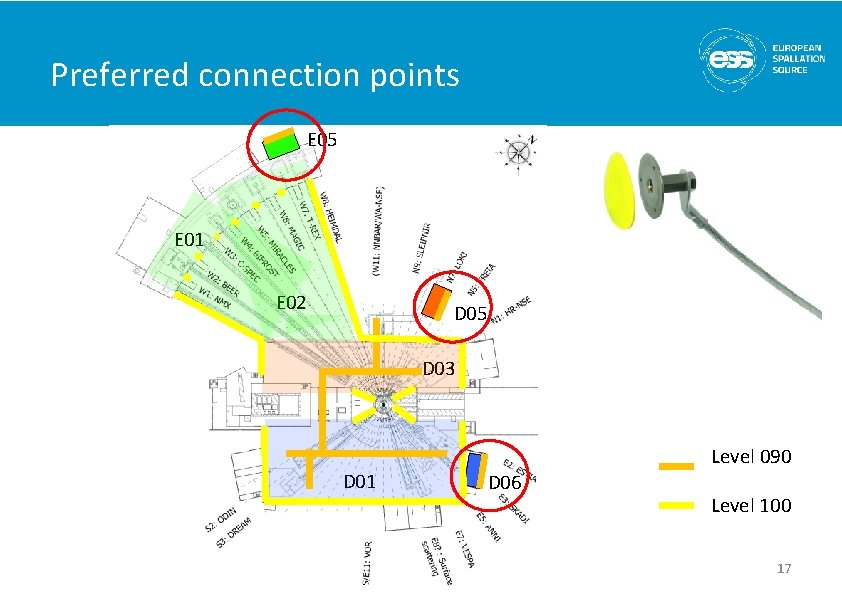
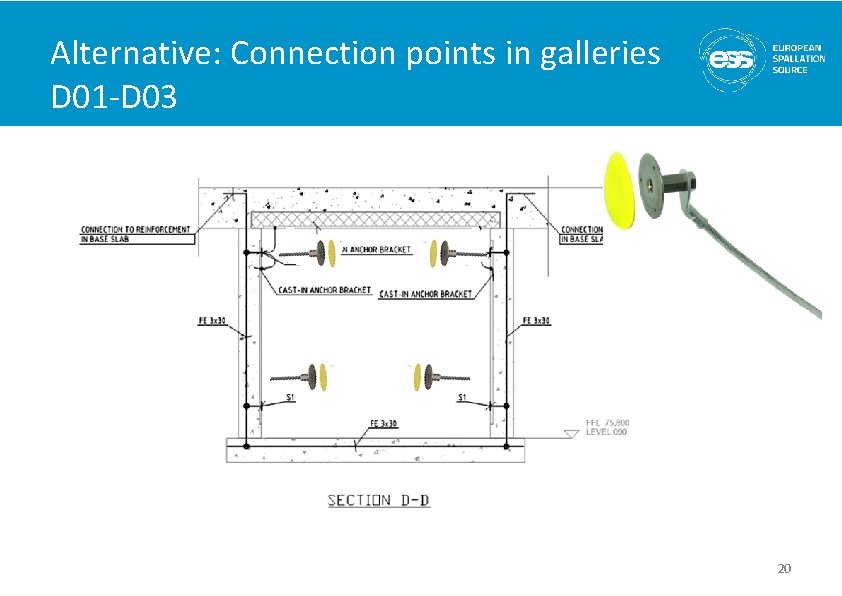
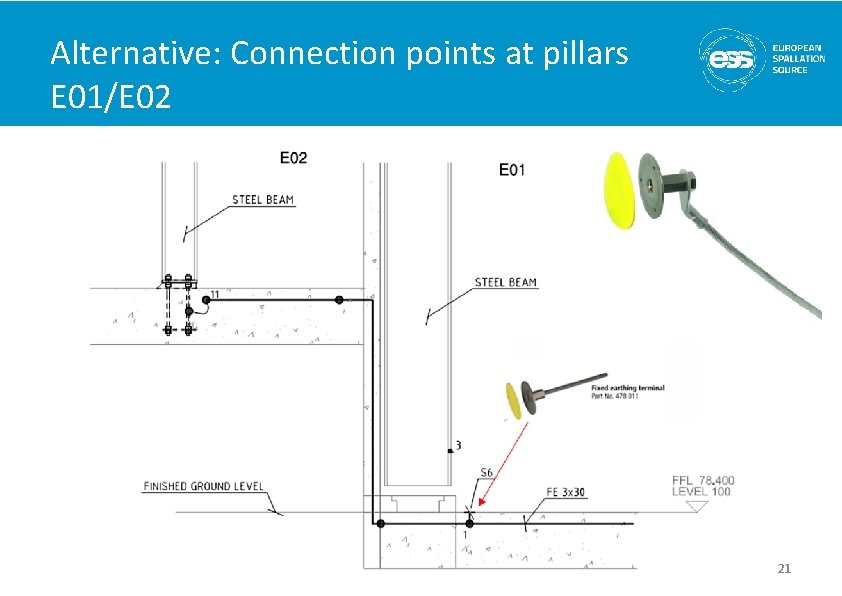
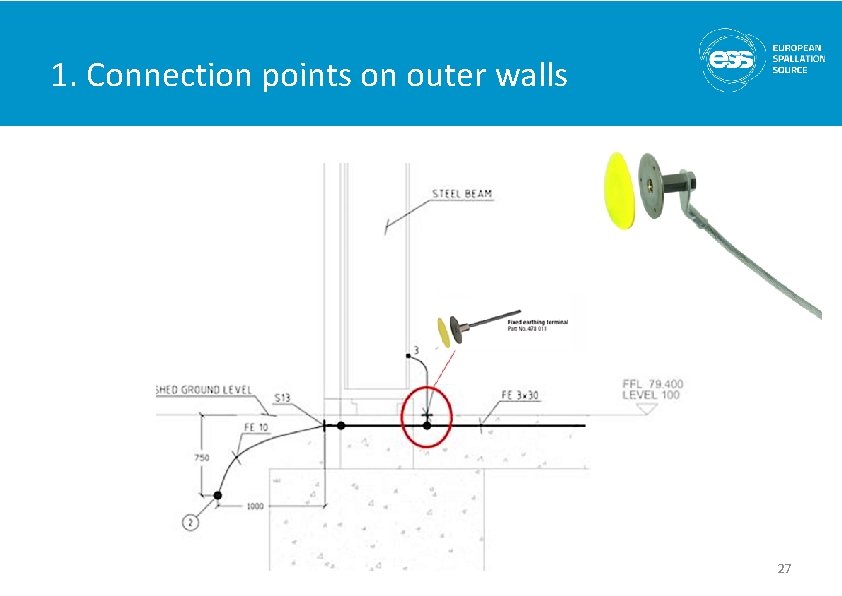
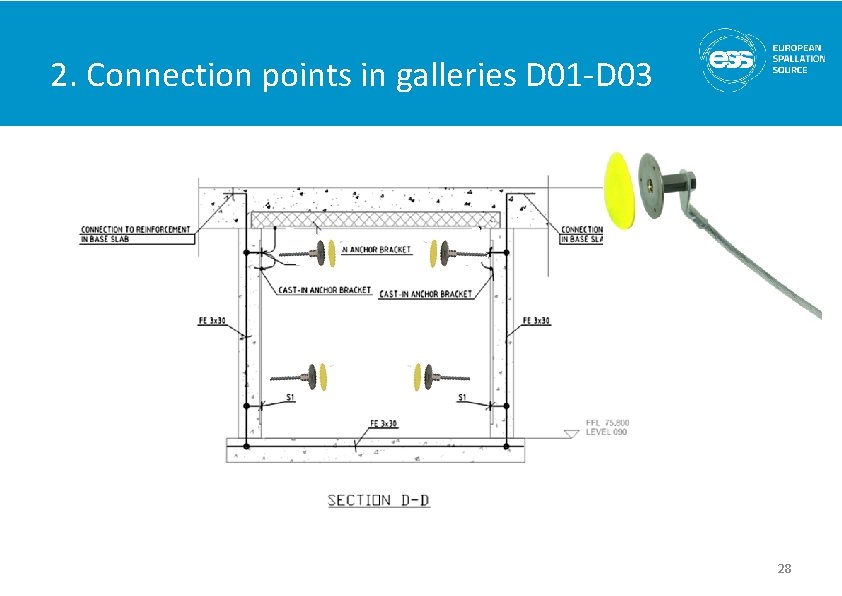
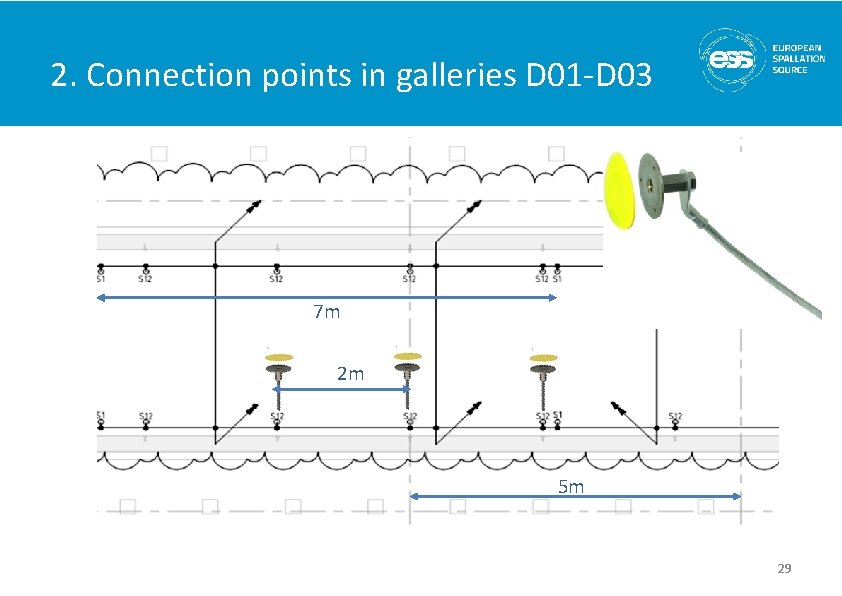
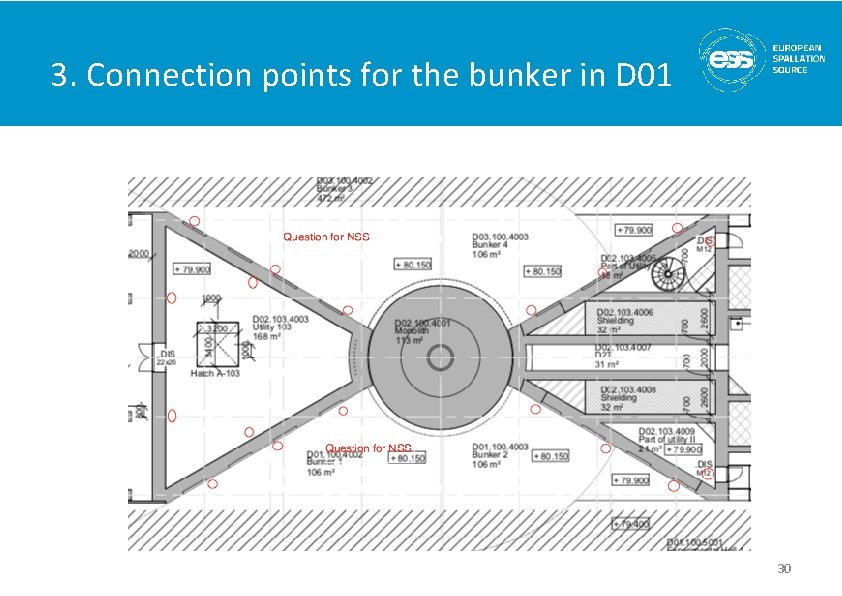
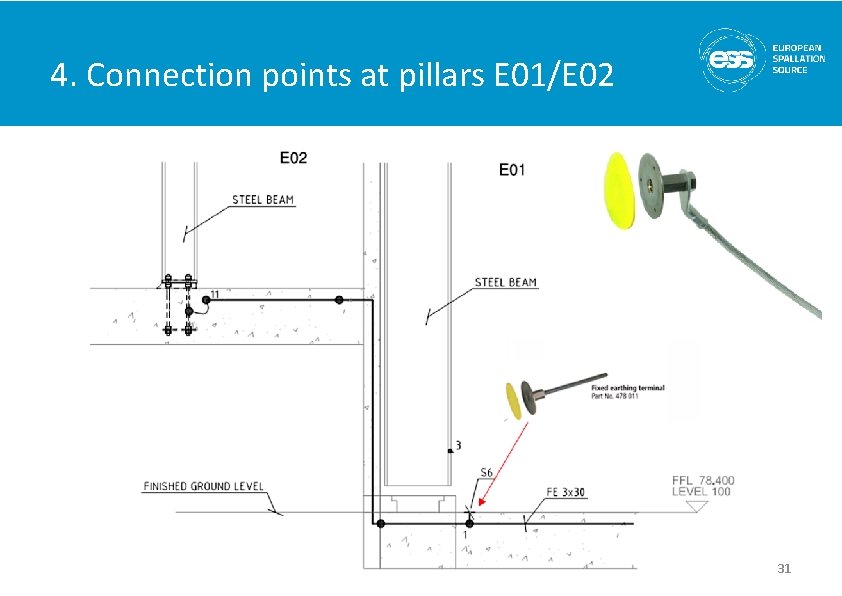
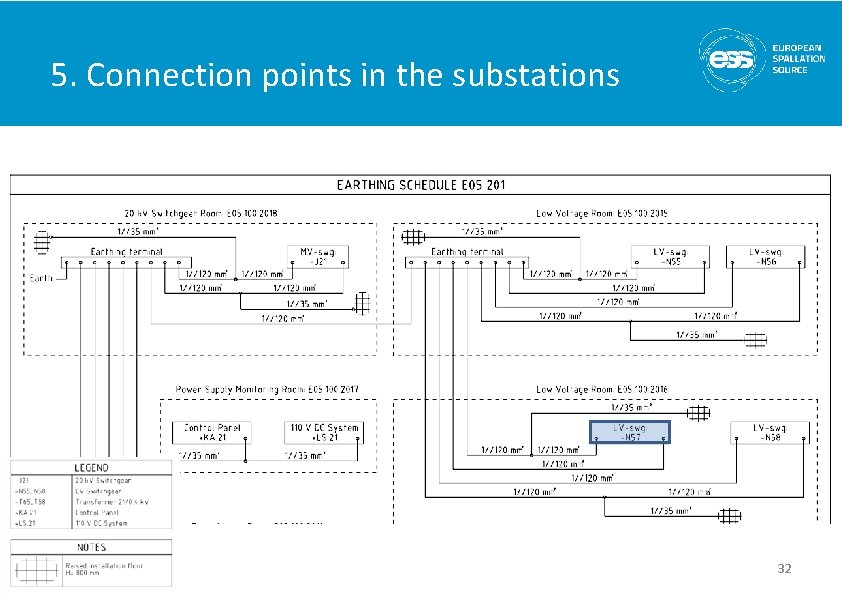
CF Grounding Infrastructure 1. In Instruments halls: Grounding mesh 5 x 5 m of conductor Fe 3 x 30, regularly connected to the rebar. 2. Regular connection to the ring conduit around the whole ensemble of buildings 3. Connections of all metallic infrastructure to this mesh (pillars, facade structure etc. ) 4. Flexible connection to bridge the dilatation joint between D 01/D 03 and D 02. 5. Areas of connection points to CF grounding 1. 2. 3. 4. 5. Access to the grounding mesh with “yellow” connection points along the outer walls of the halls (every 5 m) Access to the grounding mesh in the gallery of halls D 01 and D 03 (every 3 m) Access to the grounding mesh at the bunker walls of D 02 Access to the grounding mesh at each pillar between E 01 and E 02 Access to the grounding mesh of the substation buildings (D 05, D 06 and E 05) in the power distribution rooms for instruments of that buildings (one ground connection per instrument zone) 11
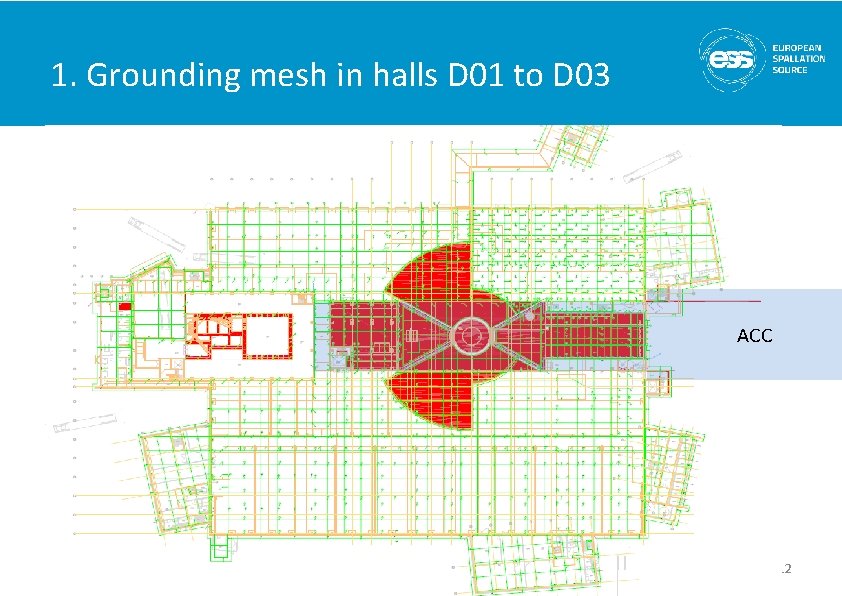
1. Grounding mesh in halls D 01 to D 03 ACC 12
1. Grounding mesh in halls D 01 to D 03 ~ 10 -15 cm ~ 60 cm Concrete armouring 13
2. Circuit conduit around D- and E-buildings ACC 14
2 - 4. Connections to metallic structure 15
5. Areas of connection points to CF grounding E 05 E 01 E 02 D 05 D 03 D 01 Level 090 D 06 Level 100 16
Preferred connection points E 05 E 01 E 02 D 05 D 03 D 01 Level 090 D 06 Level 100 17
Reservation of space in the installation pathways 18
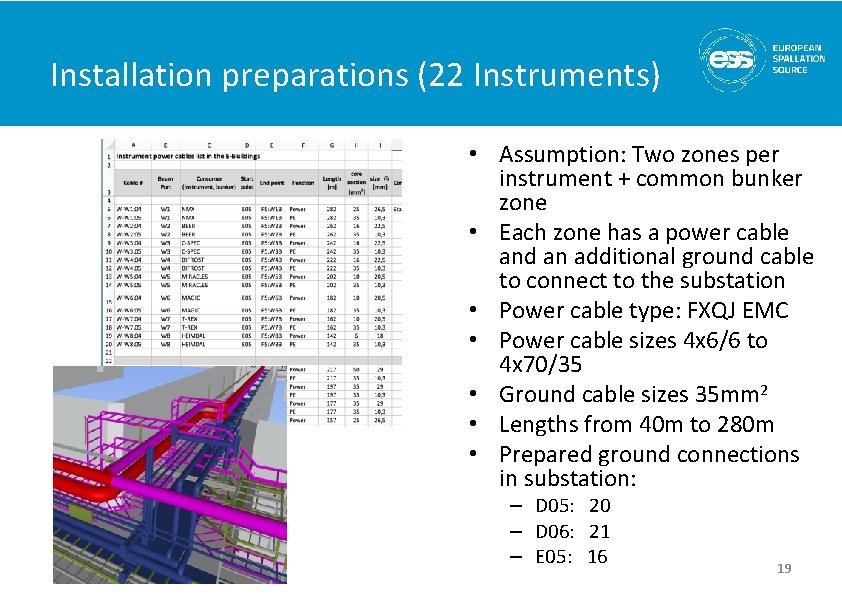
Installation preparations (22 Instruments) • Assumption: Two zones per instrument + common bunker zone • Each zone has a power cable and an additional ground cable to connect to the substation • Power cable type: FXQJ EMC • Power cable sizes 4 x 6/6 to 4 x 70/35 • Ground cable sizes 35 mm 2 • Lengths from 40 m to 280 m • Prepared ground connections in substation: – D 05: 20 – D 06: 21 – E 05: 16 19
Alternative: Connection points in galleries D 01 -D 03 20
Alternative: Connection points at pillars E 01/E 02 21
Thanks! 22
Grounding Principles and CF Infrastructure in Instruments Halls - Additional slides Grounding Implementation Workshop Lund, 29 th August 2018 Thomas Gahl - Group Leader Motion Control & Automation -
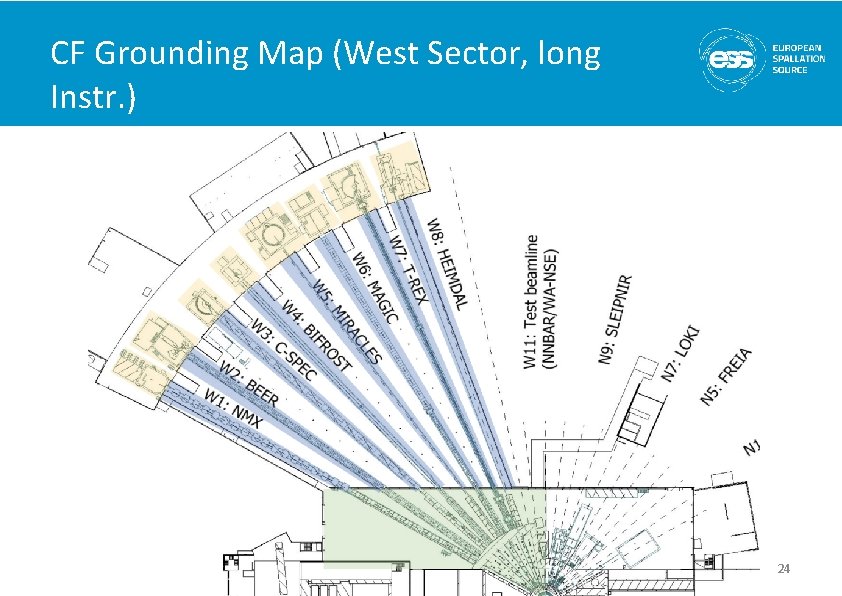
CF Grounding Map (West Sector, long Instr. ) 24
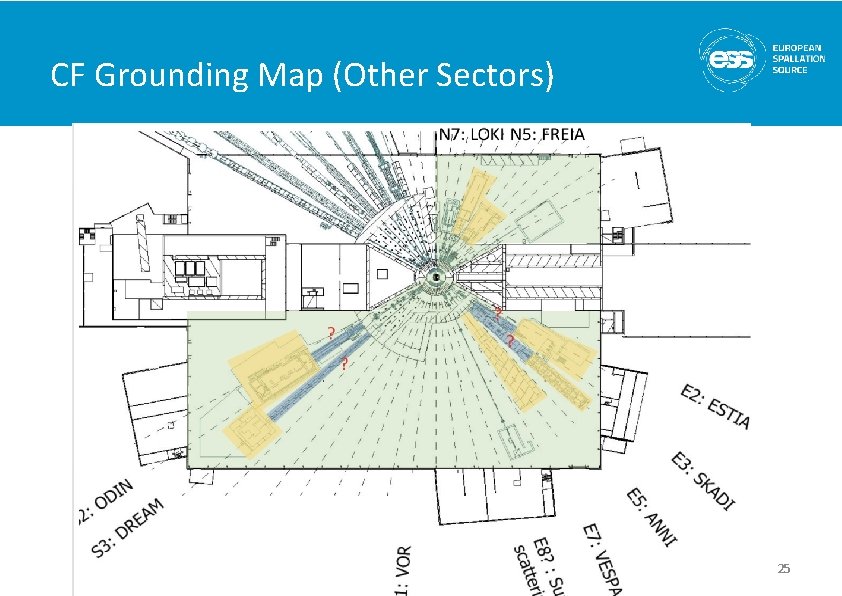
CF Grounding Map (Other Sectors) 25
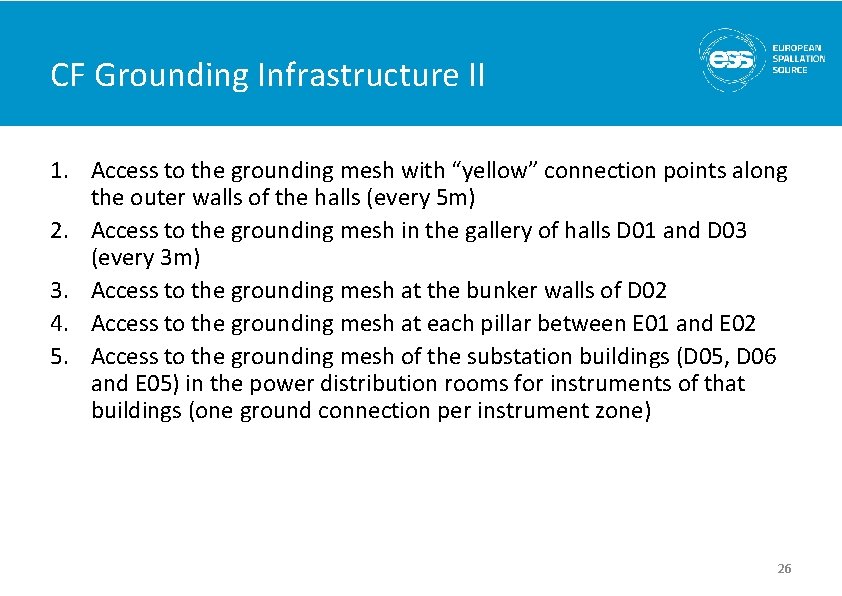
CF Grounding Infrastructure II 1. Access to the grounding mesh with “yellow” connection points along the outer walls of the halls (every 5 m) 2. Access to the grounding mesh in the gallery of halls D 01 and D 03 (every 3 m) 3. Access to the grounding mesh at the bunker walls of D 02 4. Access to the grounding mesh at each pillar between E 01 and E 02 5. Access to the grounding mesh of the substation buildings (D 05, D 06 and E 05) in the power distribution rooms for instruments of that buildings (one ground connection per instrument zone) 26
1. Connection points on outer walls 27
2. Connection points in galleries D 01 -D 03 28
2. Connection points in galleries D 01 -D 03 7 m 2 m 5 m 29
3. Connection points for the bunker in D 01 30
4. Connection points at pillars E 01/E 02 31
5. Connection points in the substations 32
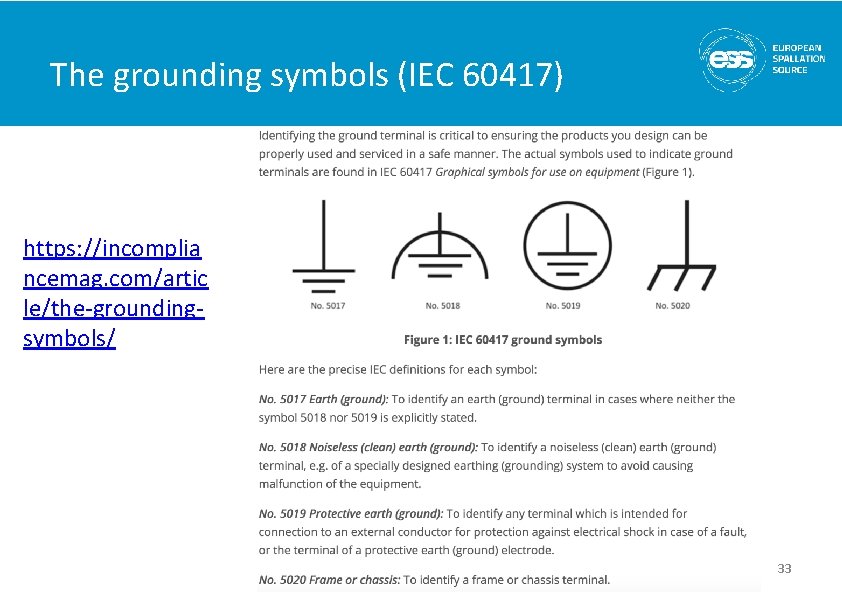
The grounding symbols (IEC 60417) https: //incomplia ncemag. com/artic le/the-groundingsymbols/ 33