
1 2 Elasticity Price Elasticity of Demand PED










- Slides: 30
1. 2 Elasticity Price Elasticity of Demand (PED)
THE LAW OF DEMAND SAYS. . . Consumers will buy more when prices go down and less when prices go up HOW MUCH MORE OR LESS? DOES IT MATTER?
Price elasticity of demand shows how sensitive quantity is to a change in price.
Price Elasticity of Demand (PED) Elasticity of Demand • Measurement of consumers’ responsiveness to a change in price. • What will happen if prices increase? How much will it effect Quantity Demanded Who cares? • Used by firms to help determine prices and sales • Used by the government to decide how to tax
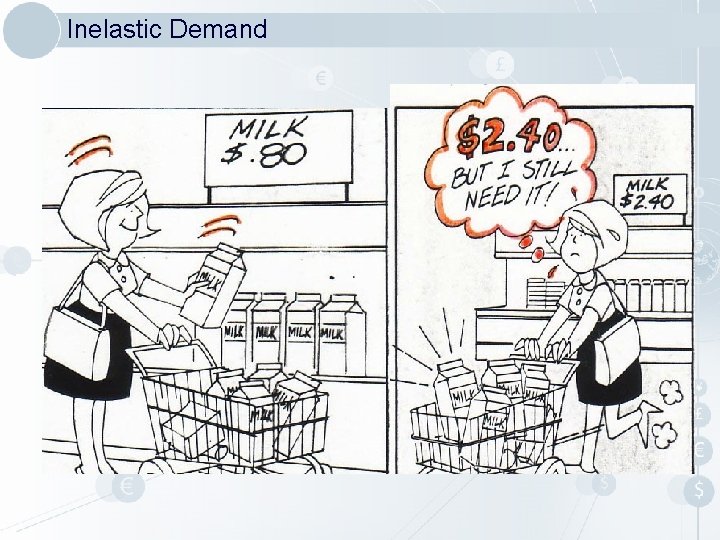
Inelastic Demand
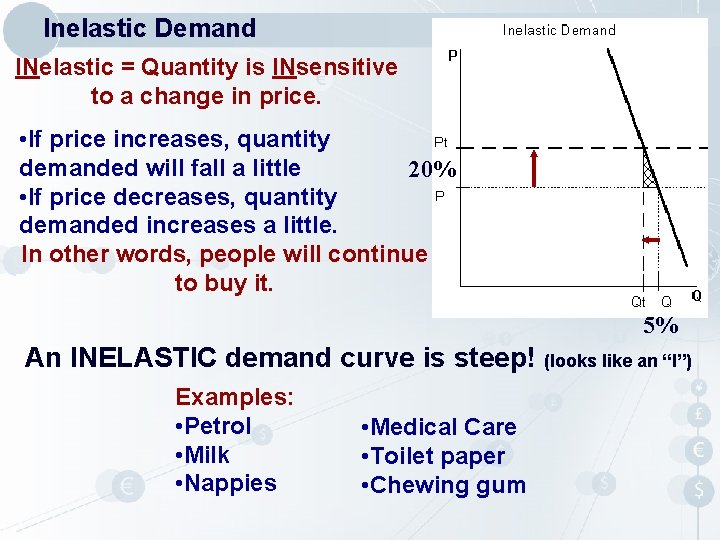
Inelastic Demand INelastic = Quantity is INsensitive to a change in price. • If price increases, quantity demanded will fall a little 20% • If price decreases, quantity demanded increases a little. In other words, people will continue to buy it. 5% An INELASTIC demand curve is steep! (looks like an “I”) Examples: • Petrol • Milk • Nappies • Medical Care • Toilet paper • Chewing gum
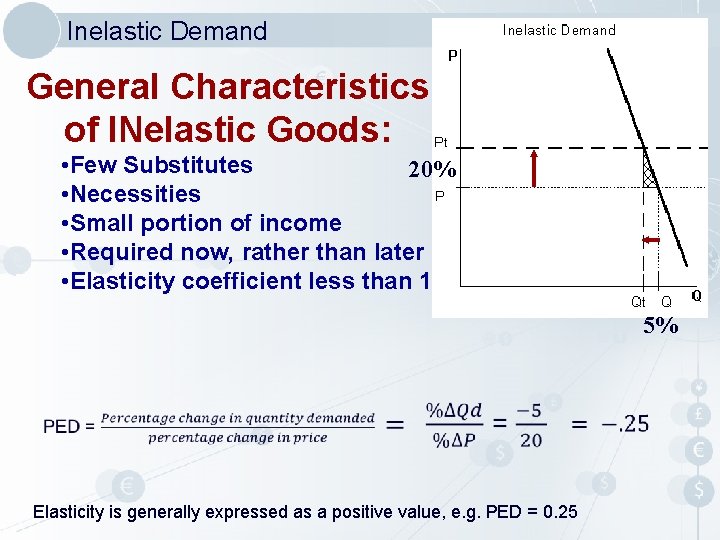
Inelastic Demand General Characteristics of INelastic Goods: • Few Substitutes 20% • Necessities • Small portion of income • Required now, rather than later • Elasticity coefficient less than 1 5% Elasticity is generally expressed as a positive value, e. g. PED = 0. 25
Elastic Demand
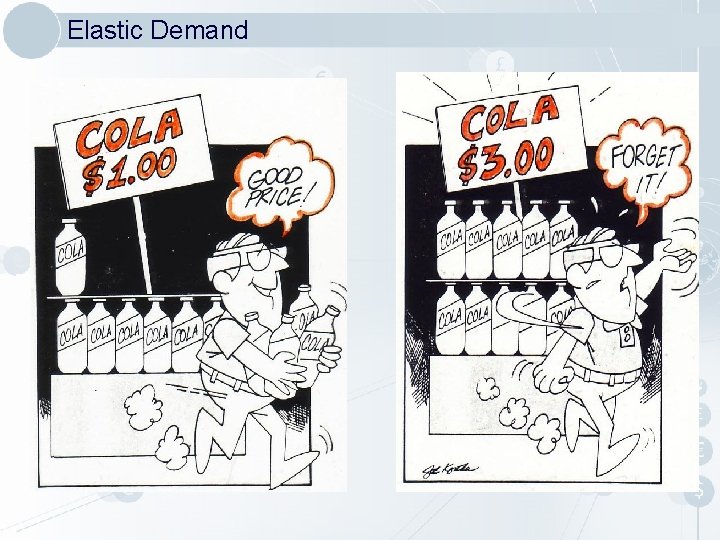
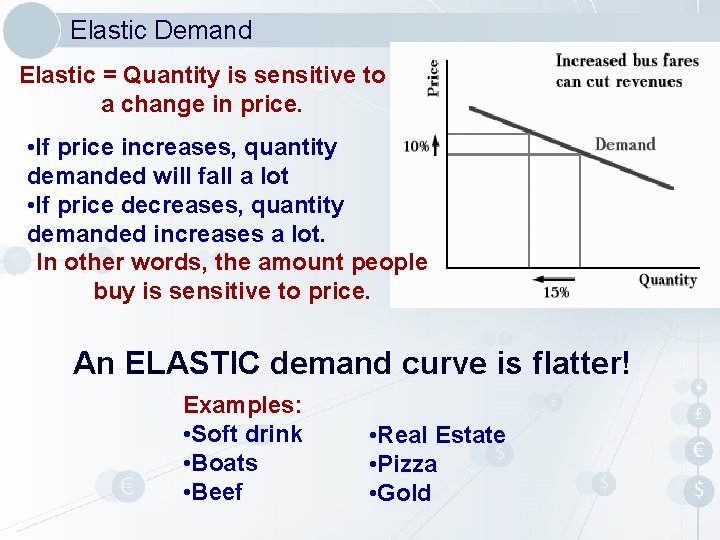
Elastic Demand Elastic = Quantity is sensitive to a change in price. • If price increases, quantity demanded will fall a lot • If price decreases, quantity demanded increases a lot. In other words, the amount people buy is sensitive to price. An ELASTIC demand curve is flatter! Examples: • Soft drink • Boats • Beef • Real Estate • Pizza • Gold
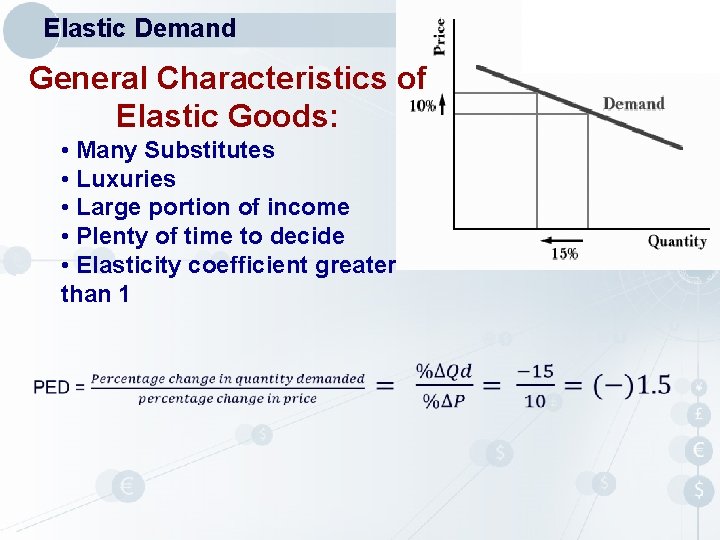
Elastic Demand General Characteristics of Elastic Goods: • Many Substitutes • Luxuries • Large portion of income • Plenty of time to decide • Elasticity coefficient greater than 1
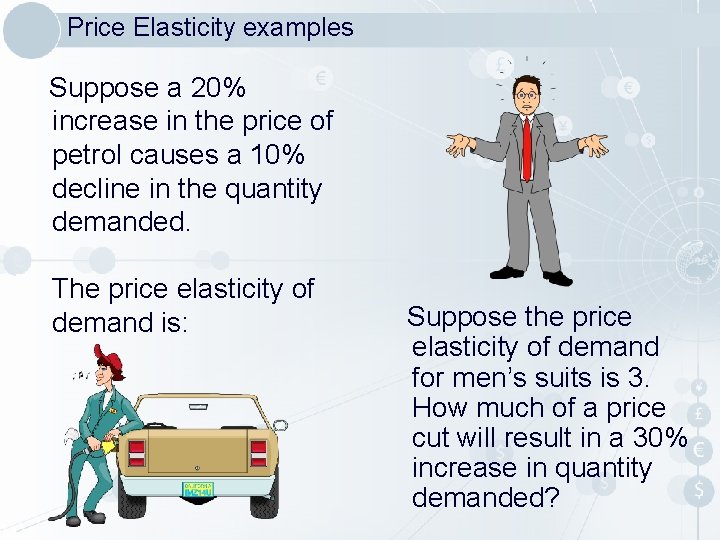
Price Elasticity examples Suppose a 20% increase in the price of petrol causes a 10% decline in the quantity demanded. The price elasticity of demand is: Suppose the price elasticity of demand for men’s suits is 3. How much of a price cut will result in a 30% increase in quantity demanded?
Real world example In 1991, Apple computer lowered the prices of its Macintosh machines by an average of 50%. The resulting increase in quantity demanded amounted to 85%. The price elasticity of demand for Macs at that time was, therefore, 85%/-50% = – 1. 7 = 1. 7
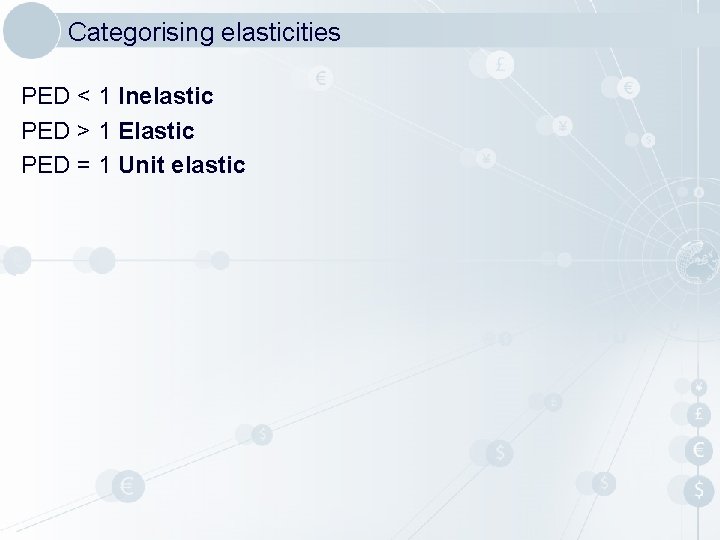
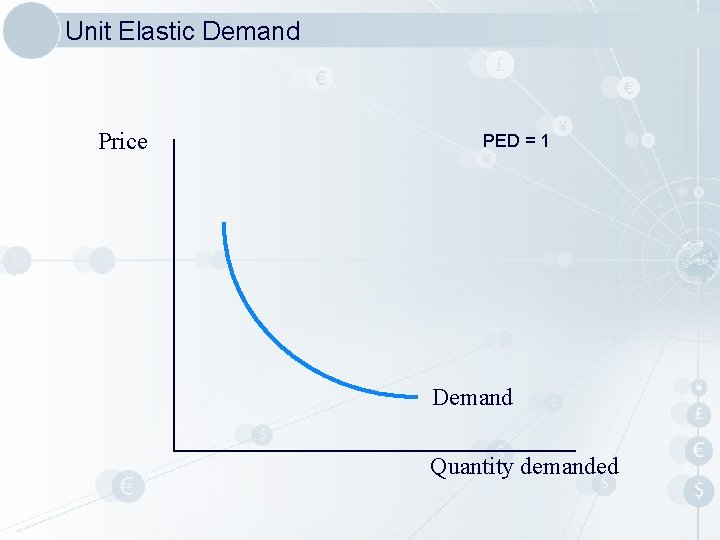
Categorising elasticities PED < 1 Inelastic PED > 1 Elastic PED = 1 Unit elastic
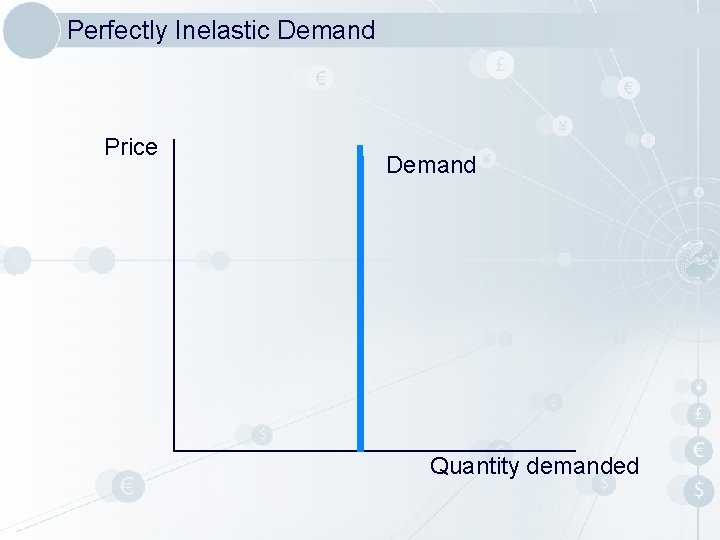
Perfectly Inelastic Demand Price Demand Quantity demanded
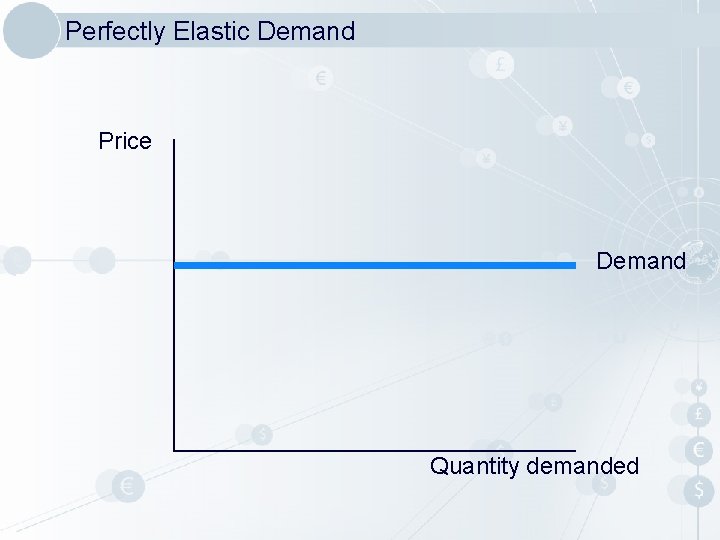
Perfectly Elastic Demand Price Demand Quantity demanded
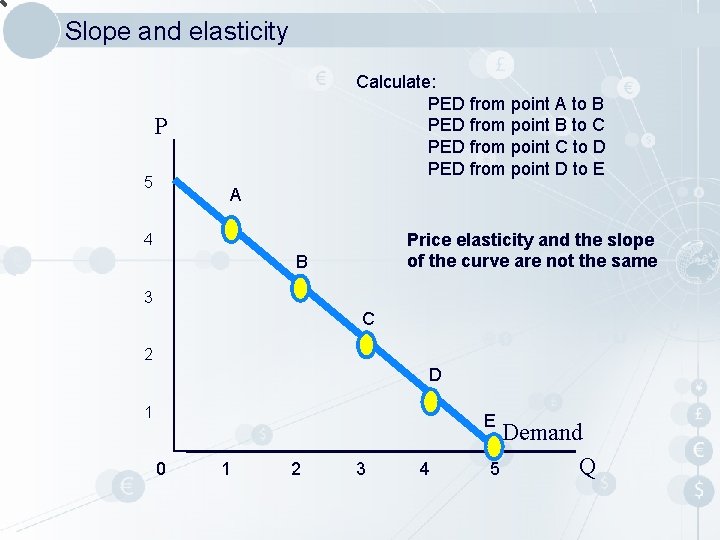
Slope and elasticity Calculate: PED from point A to B PED from point B to C PED from point C to D PED from point D to E P 5 A Price elasticity and the slope of the curve are not the same 4 B 3 C 2 D 1 E 0 1 2 3 4 Demand Q 5
Unit Elastic Demand Price PED = 1 Demand Quantity demanded
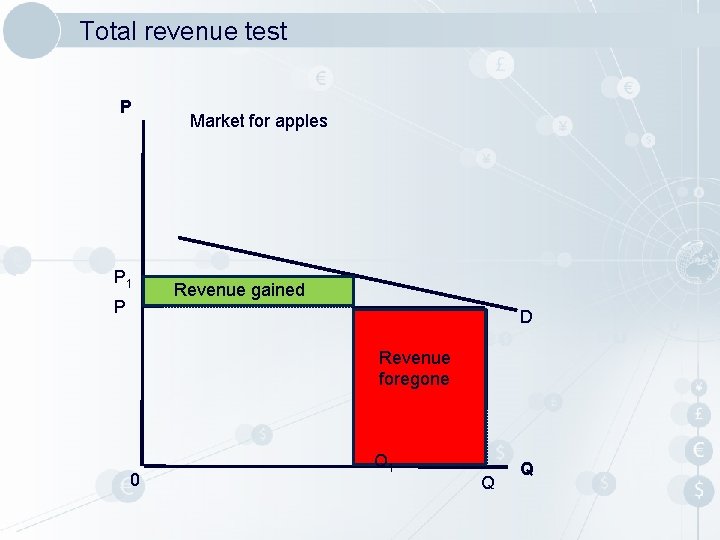
Total revenue test P P 1 P Market for apples Revenue gained D Revenue foregone 0 Q 1 Q Q
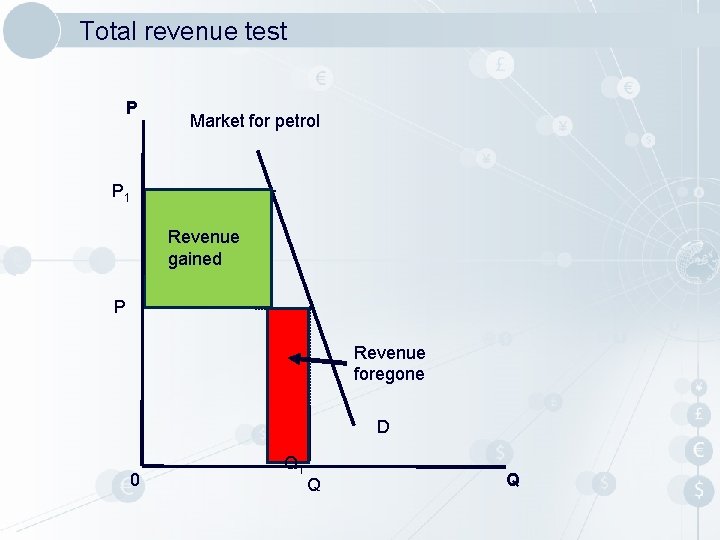
Total revenue test P Market for petrol P 1 Revenue gained P Revenue foregone D 0 Q 1 Q Q
Price Elasticity of Demand Total Revenue If you know the price elasticity of demand of a product, you can forecast the effects of price changes on total revenue.
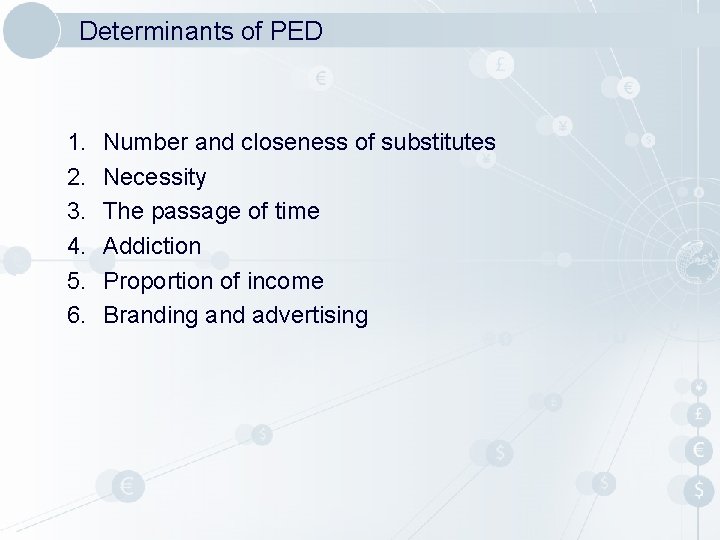
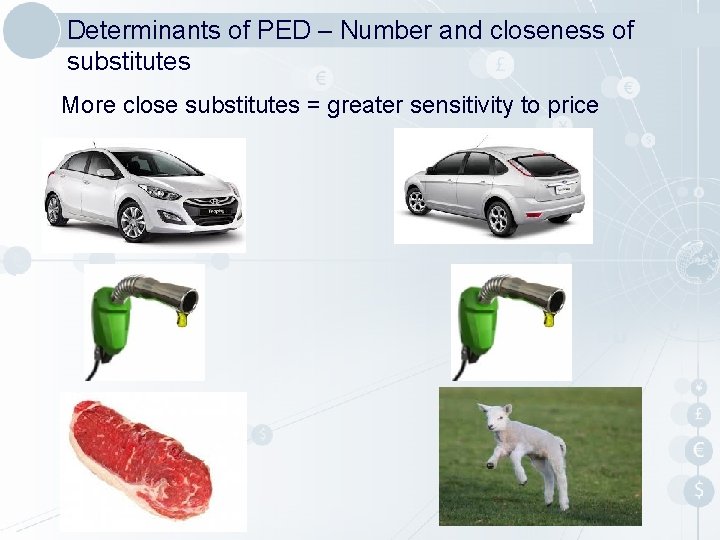
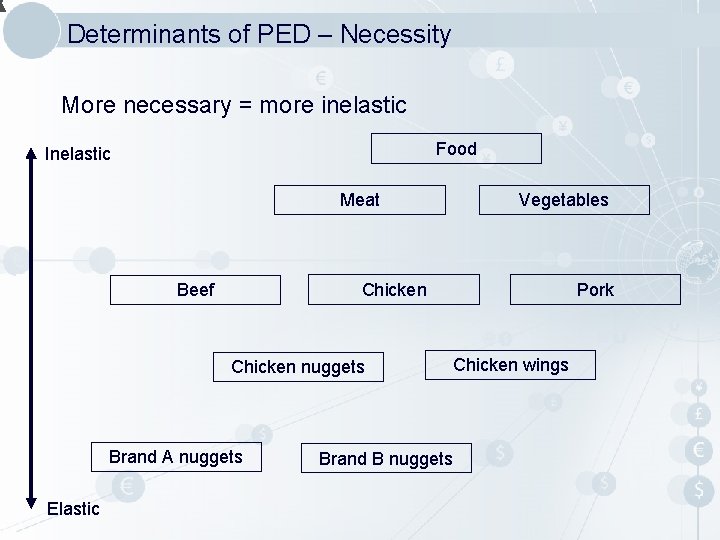
Determinants of PED 1. 2. 3. 4. 5. 6. Number and closeness of substitutes Necessity The passage of time Addiction Proportion of income Branding and advertising
Determinants of PED – Number and closeness of substitutes More close substitutes = greater sensitivity to price
Determinants of PED – Necessity More necessary = more inelastic Food Inelastic Meat Chicken Beef Chicken nuggets Brand A nuggets Elastic Vegetables Pork Chicken wings Brand B nuggets
Determinants of PED – Addiction The extreme of necessity. Addicted people can be willing to pay almost any price.
Determinants of PED – The passage of time The longer the passage of time, the more elastic demand becomes.
Determinants of PED – Proportion of Income If a small proportion of income is spent on a good, e. g. pencils, chewing gum, a change in price will have negligible impact on quantity demanded. If a large proportion of income is spent on it, demand will be more elastic.
Determinants of PED – Branding and advertising Companies try to make it seem as if there are no close substitutes.
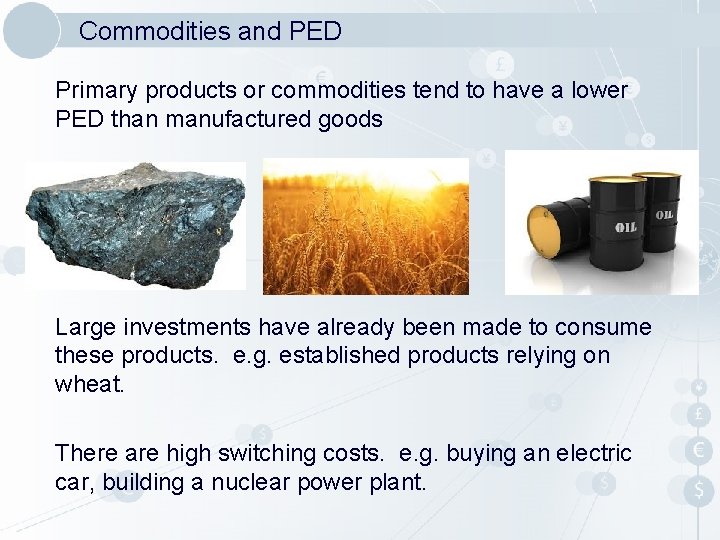
Commodities and PED Primary products or commodities tend to have a lower PED than manufactured goods Large investments have already been made to consume these products. e. g. established products relying on wheat. There are high switching costs. e. g. buying an electric car, building a nuclear power plant.
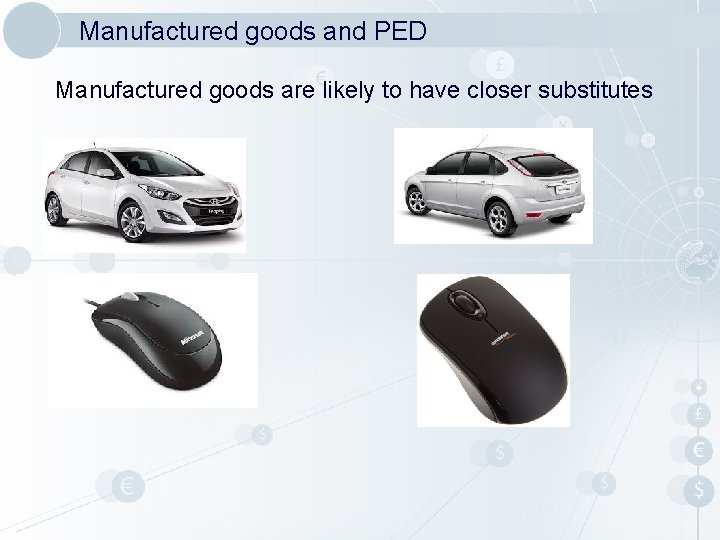
Manufactured goods and PED Manufactured goods are likely to have closer substitutes
Government intervention and PED is crucial when governments consider indirect taxes. Two aims: 1. Raise revenue 2. Change behaviour