
1 2 Ecosystems Each biome is divided into
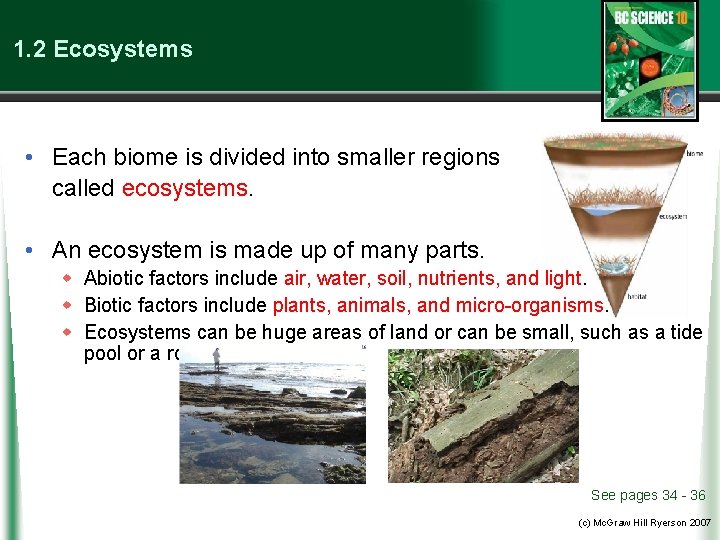
1. 2 Ecosystems • Each biome is divided into smaller regions called ecosystems. • An ecosystem is made up of many parts. w Abiotic factors include air, water, soil, nutrients, and light. w Biotic factors include plants, animals, and micro-organisms. w Ecosystems can be huge areas of land or can be small, such as a tide pool or a rotting log. See pages 34 - 36 (c) Mc. Graw Hill Ryerson 2007
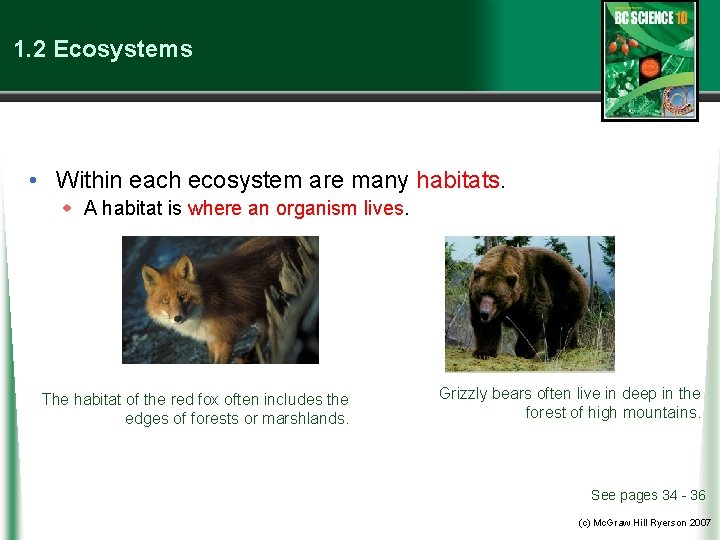
1. 2 Ecosystems • Within each ecosystem are many habitats. w A habitat is where an organism lives. The habitat of the red fox often includes the edges of forests or marshlands. Grizzly bears often live in deep in the forest of high mountains. See pages 34 - 36 (c) Mc. Graw Hill Ryerson 2007
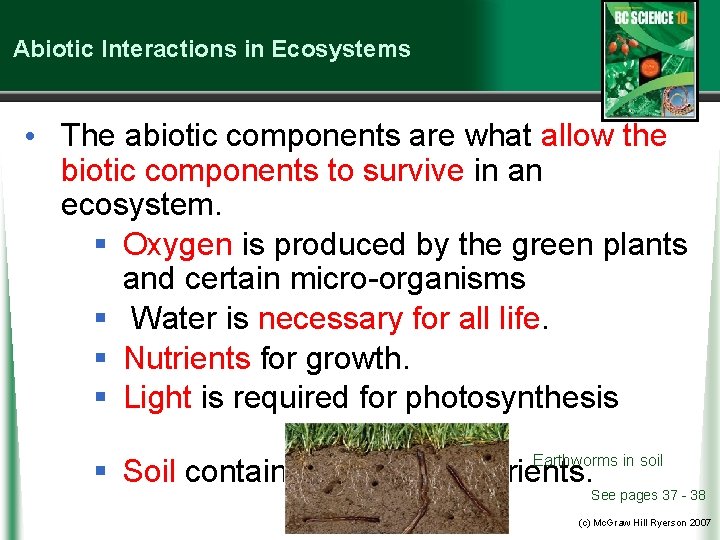
Abiotic Interactions in Ecosystems • The abiotic components are what allow the biotic components to survive in an ecosystem. § Oxygen is produced by the green plants and certain micro-organisms § Water is necessary for all life. § Nutrients for growth. § Light is required for photosynthesis Earthworms in soil § Soil contains water and nutrients. See pages 37 - 38 (c) Mc. Graw Hill Ryerson 2007
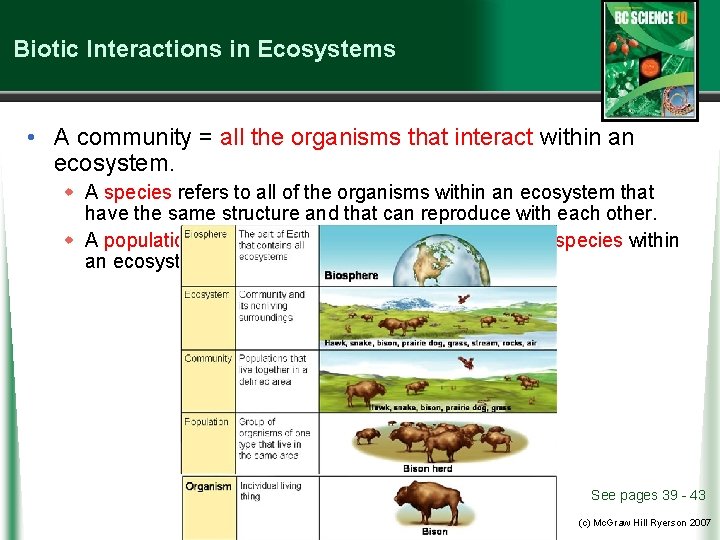
Biotic Interactions in Ecosystems • A community = all the organisms that interact within an ecosystem. w A species refers to all of the organisms within an ecosystem that have the same structure and that can reproduce with each other. w A population refers to all of the members of a certain species within an ecosystem. See pages 39 - 43 (c) Mc. Graw Hill Ryerson 2007
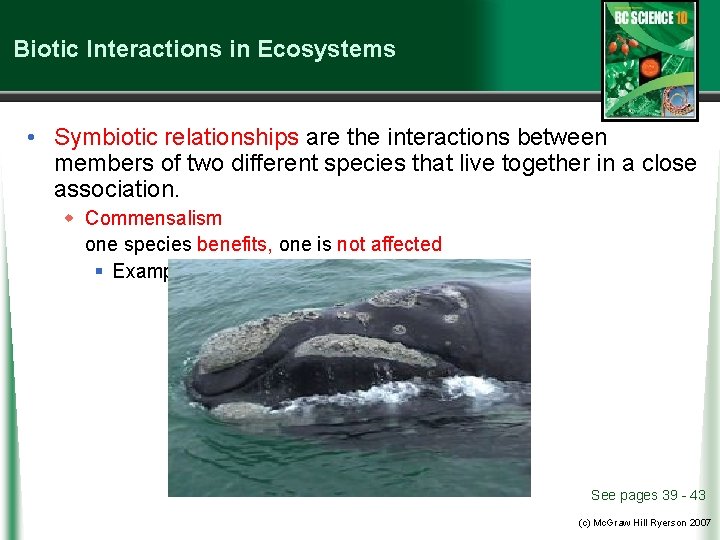
Biotic Interactions in Ecosystems • Symbiotic relationships are the interactions between members of two different species that live together in a close association. w Commensalism one species benefits, one is not affected § Example: the barnacles on a whale See pages 39 - 43 (c) Mc. Graw Hill Ryerson 2007

Biotic Interactions in Ecosystems w Mutualism both species benefit § Example: a bee gathering nectar from a flower See pages 39 - 43 (c) Mc. Graw Hill Ryerson 2007

Biotic Interactions in Ecosystems w Parasitism one species benefits, the other is harmed § Example: hookworm living in dogs See pages 39 - 43 (c) Mc. Graw Hill Ryerson 2007
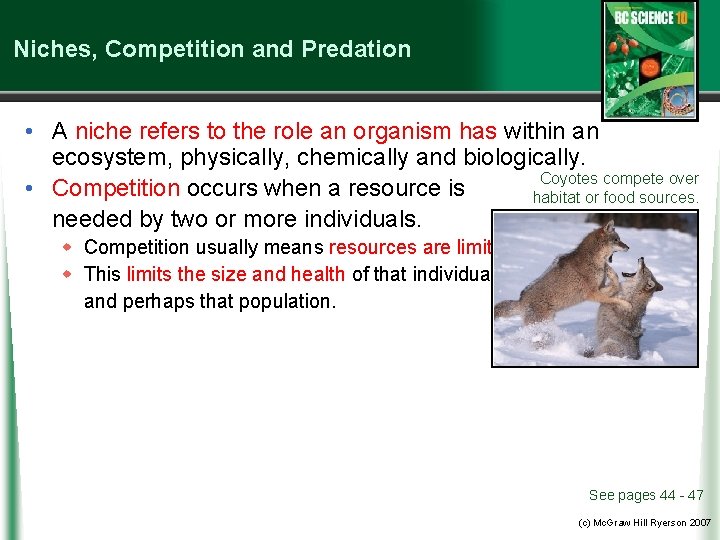
Niches, Competition and Predation • A niche refers to the role an organism has within an ecosystem, physically, chemically and biologically. Coyotes compete over • Competition occurs when a resource is habitat or food sources. needed by two or more individuals. w Competition usually means resources are limited. w This limits the size and health of that individual and perhaps that population. See pages 44 - 47 (c) Mc. Graw Hill Ryerson 2007
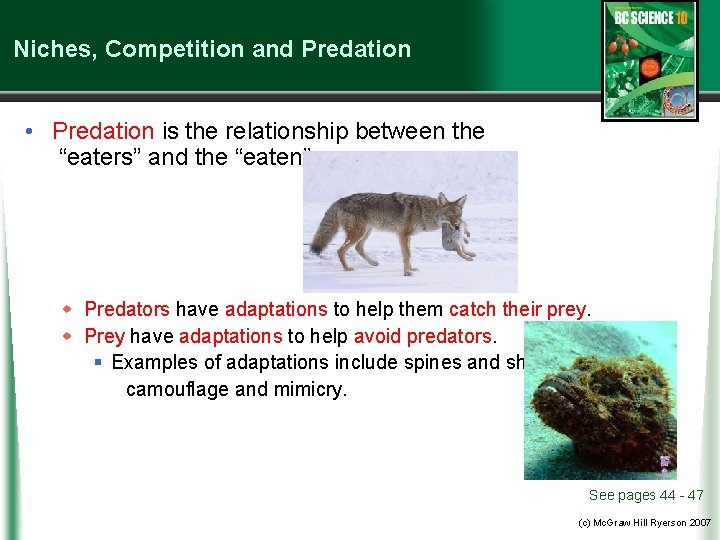
Niches, Competition and Predation • Predation is the relationship between the “eaters” and the “eaten”. w Predators have adaptations to help them catch their prey. w Prey have adaptations to help avoid predators. § Examples of adaptations include spines and shells, camouflage and mimicry. See pages 44 - 47 (c) Mc. Graw Hill Ryerson 2007
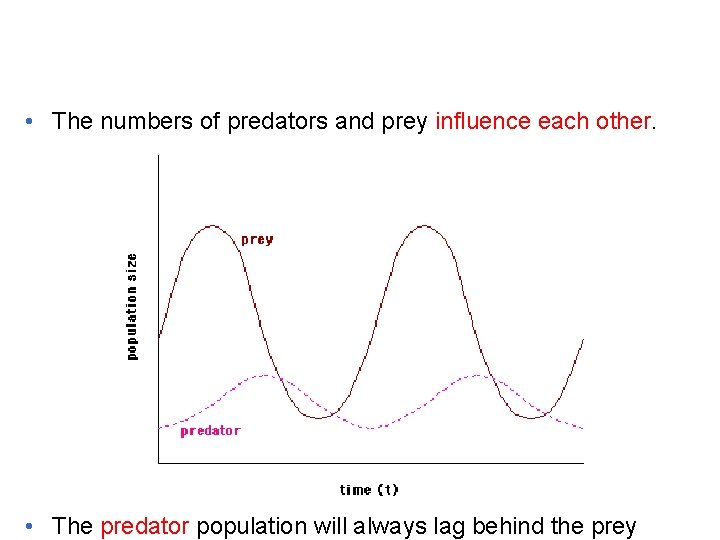
• The numbers of predators and prey influence each other. • The predator population will always lag behind the prey
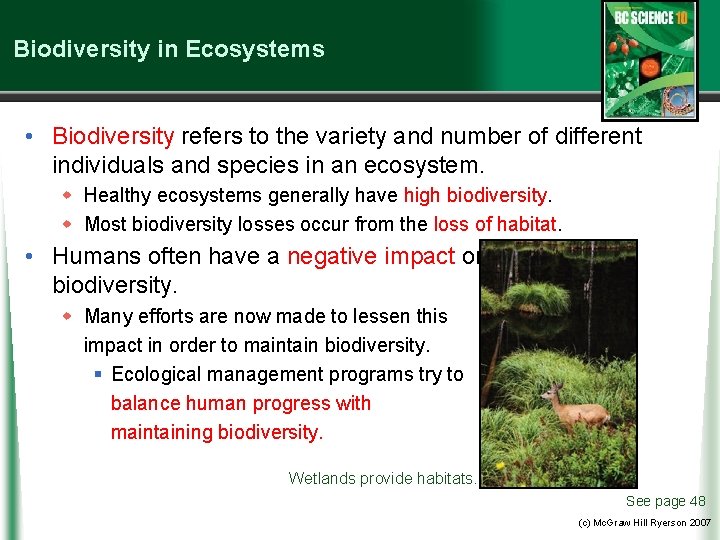
Biodiversity in Ecosystems • Biodiversity refers to the variety and number of different individuals and species in an ecosystem. w Healthy ecosystems generally have high biodiversity. w Most biodiversity losses occur from the loss of habitat. • Humans often have a negative impact on biodiversity. w Many efforts are now made to lessen this impact in order to maintain biodiversity. § Ecological management programs try to balance human progress with maintaining biodiversity. Wetlands provide habitats. See page 48 (c) Mc. Graw Hill Ryerson 2007
- Slides: 11