
1 2 Components of Life Components of a


- Slides: 19
1. 2 Components of Life
Components of a Construction Site First things first… (Uhm… no you’re not) don’t write this part down!! YOU’RE WELCOME
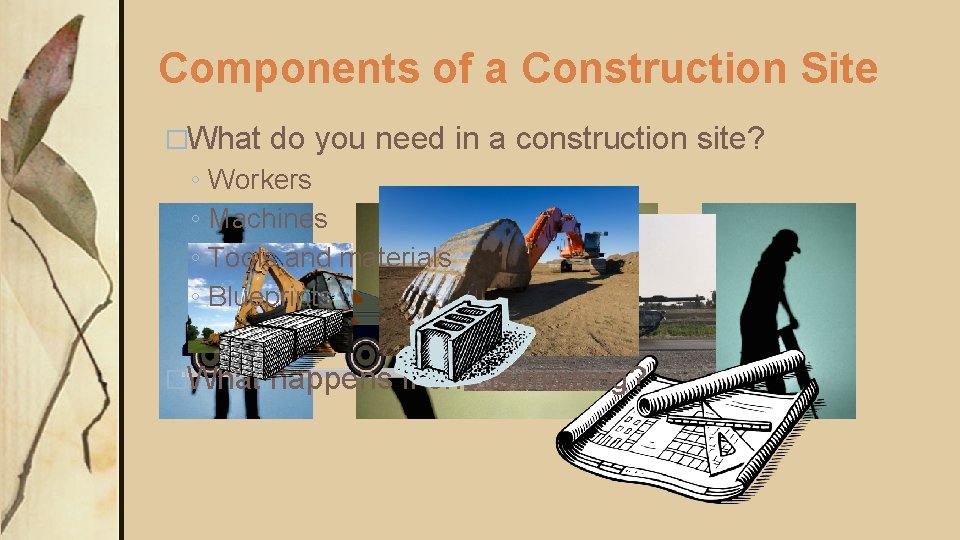
Components of a Construction Site �What ◦ ◦ do you need in a construction site? Workers Machines Tools and materials Blueprints �What happens if one is missing?
4 Main Types �Four ◦ ◦ main components to life: Carbohydrates – similar to workers Lipids – similar to machines Proteins – similar to building materials Nucleic Acid – similar to blueprints
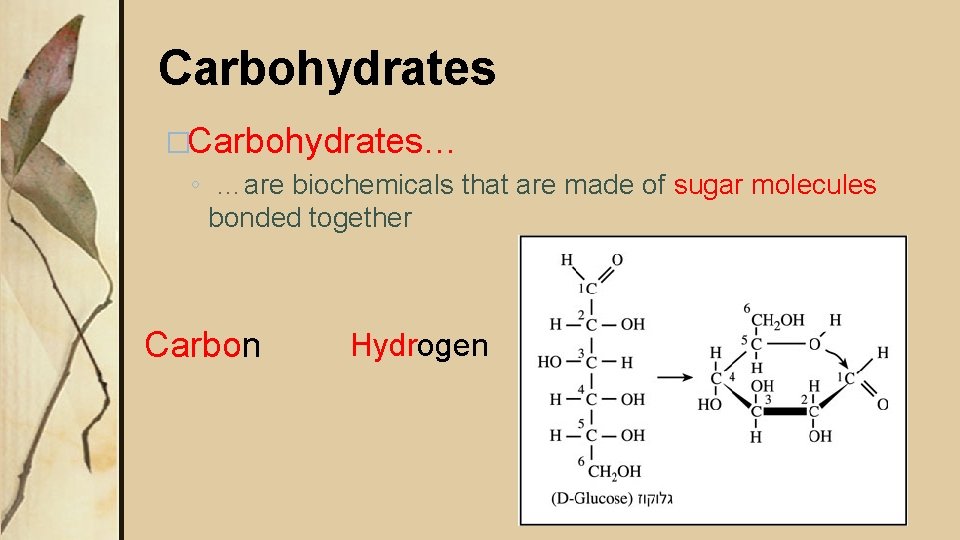
Carbohydrates �Carbohydrates… ◦ …are biochemicals that are made of sugar molecules bonded together Carbon Hydrogen
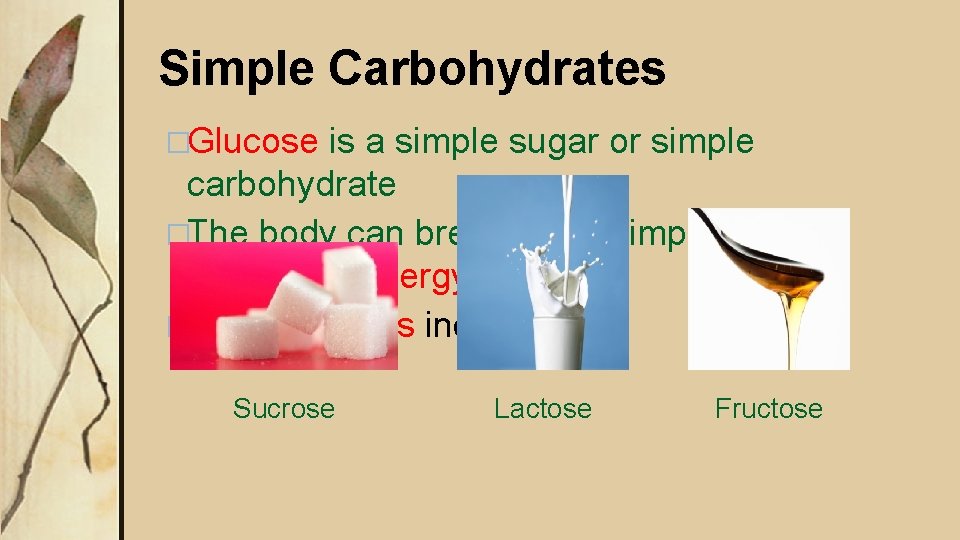
Simple Carbohydrates �Glucose is a simple sugar or simple carbohydrate �The body can break down simple sugars quickly for energy �Simple sugars include Sucrose Lactose Fructose
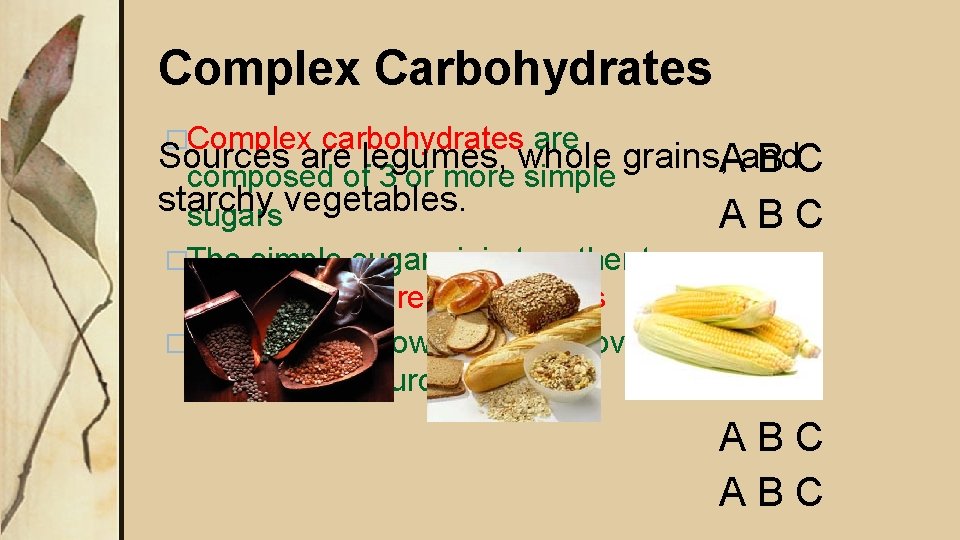
Complex Carbohydrates �Complex carbohydrates are Sources are legumes, whole grains, Aand BC composed of 3 or more simple starchy vegetables. sugars ABC �The simple sugars join together to ABC form chains of repeating units A B C �These break down slowly, providing a long term source of energy ABC ABC
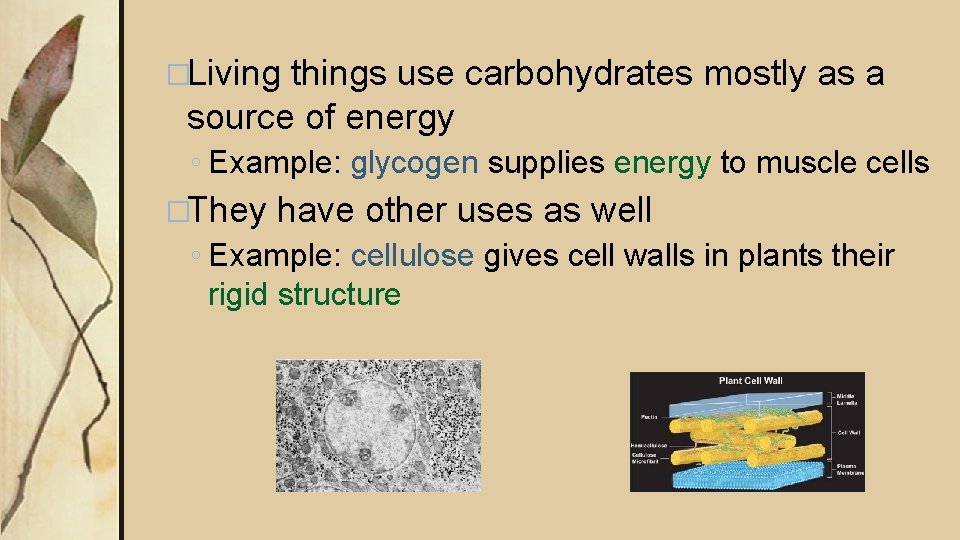
�Living things use carbohydrates mostly as a source of energy ◦ Example: glycogen supplies energy to muscle cells �They have other uses as well ◦ Example: cellulose gives cell walls in plants their rigid structure
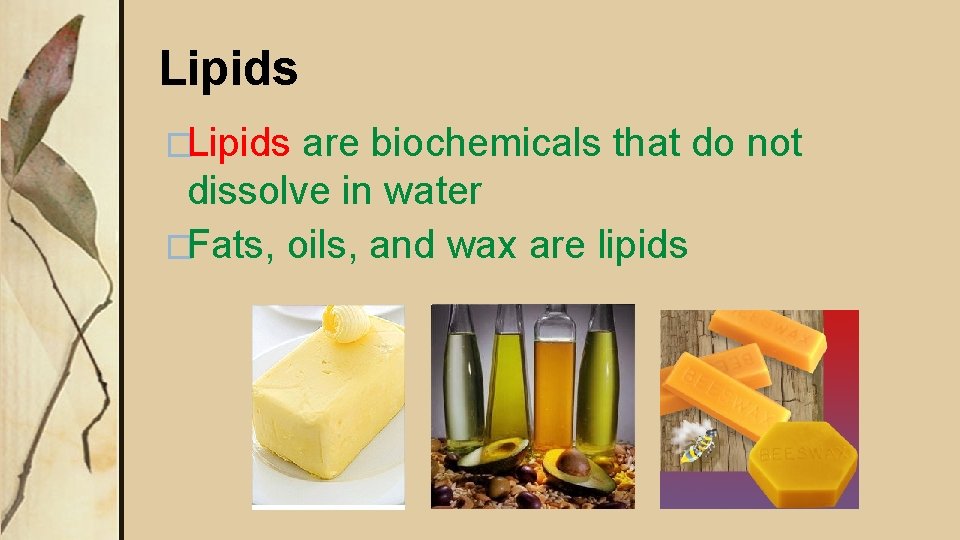
Lipids �Lipids are biochemicals that do not dissolve in water �Fats, oils, and wax are lipids
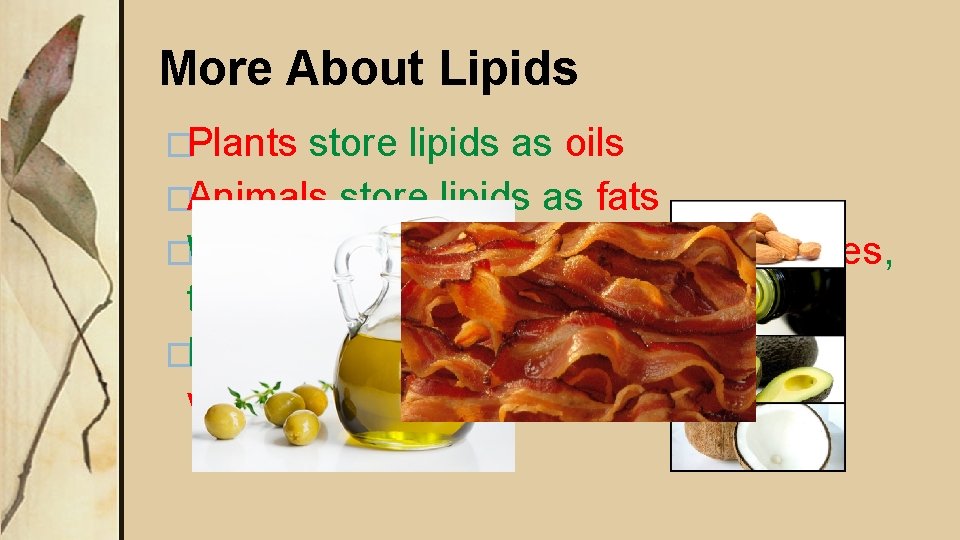
More About Lipids �Plants store lipids as oils �Animals store lipids as fats �When organisms use up carbohydrates, they use lipids as energy �Lipids are also used to store some vitamins
What’s the difference between UNSATURATE D VS SATURATE D?
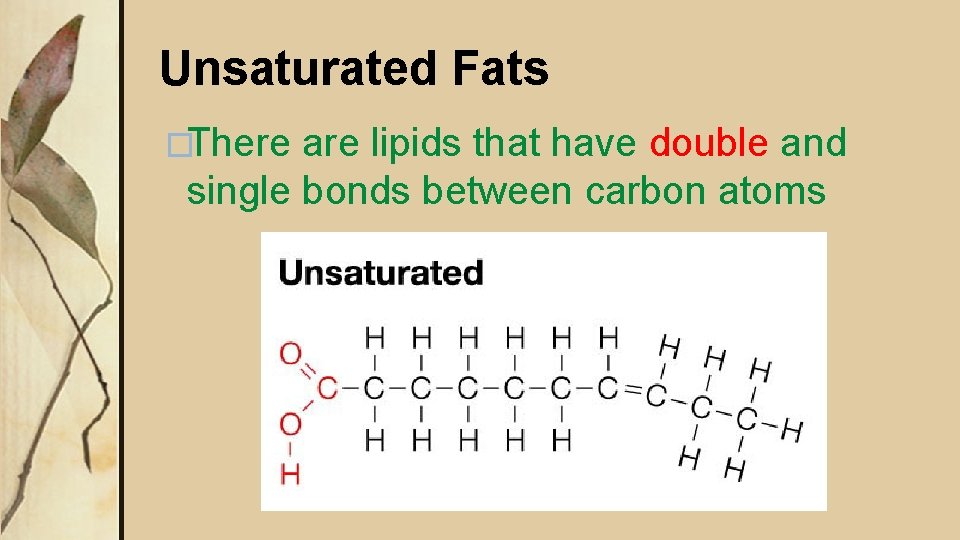
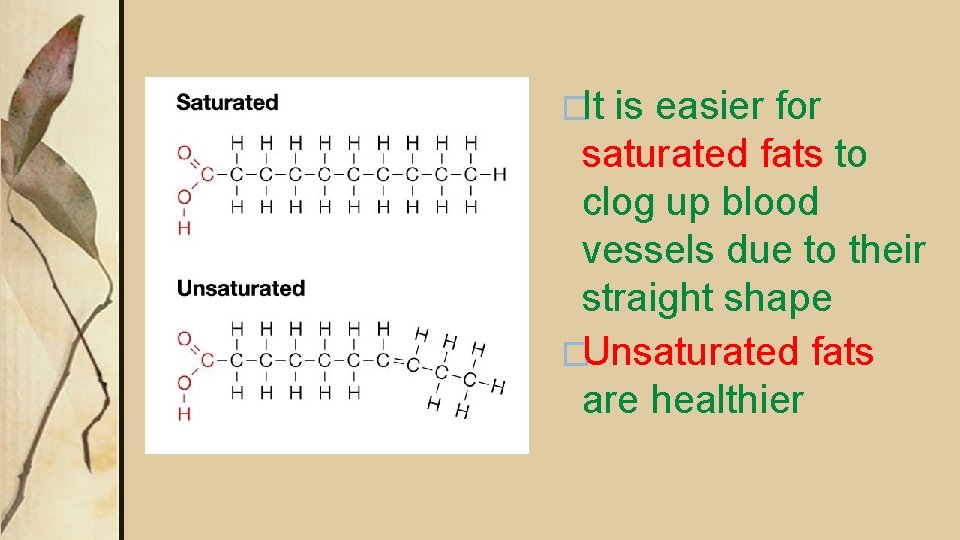
Unsaturated Fats �There are lipids that have double and single bonds between carbon atoms
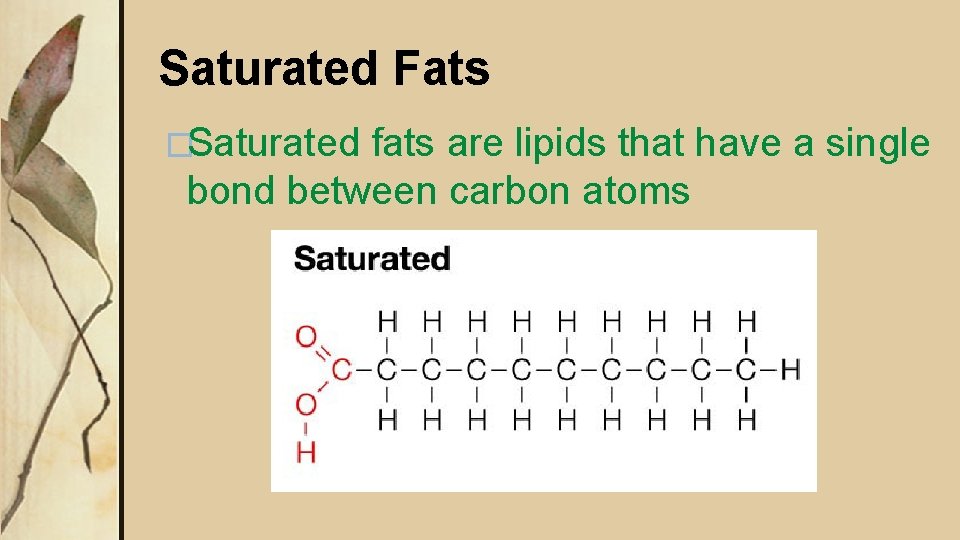
Saturated Fats �Saturated fats are lipids that have a single bond between carbon atoms
�It is easier for saturated fats to clog up blood vessels due to their straight shape �Unsaturated fats are healthier
Proteins �Proteins are biochemicals that are made of much smaller molecules called amino acids �Most proteins are made from very long chains of amino acids
Their Job �Proteins are needed to build and repair body structures �They also regulate body processes such as your metabolism
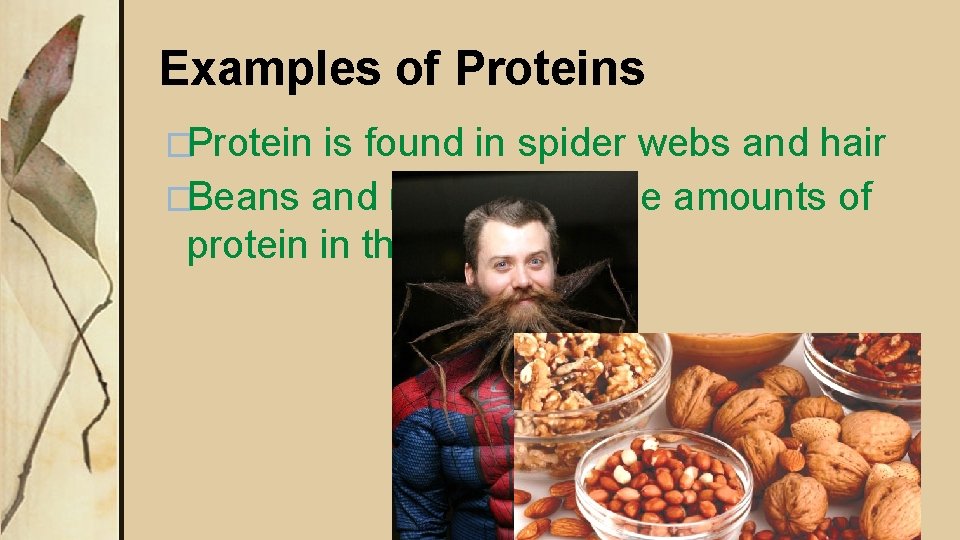
Examples of Proteins �Protein is found in spider webs and hair �Beans and nuts have large amounts of protein in them
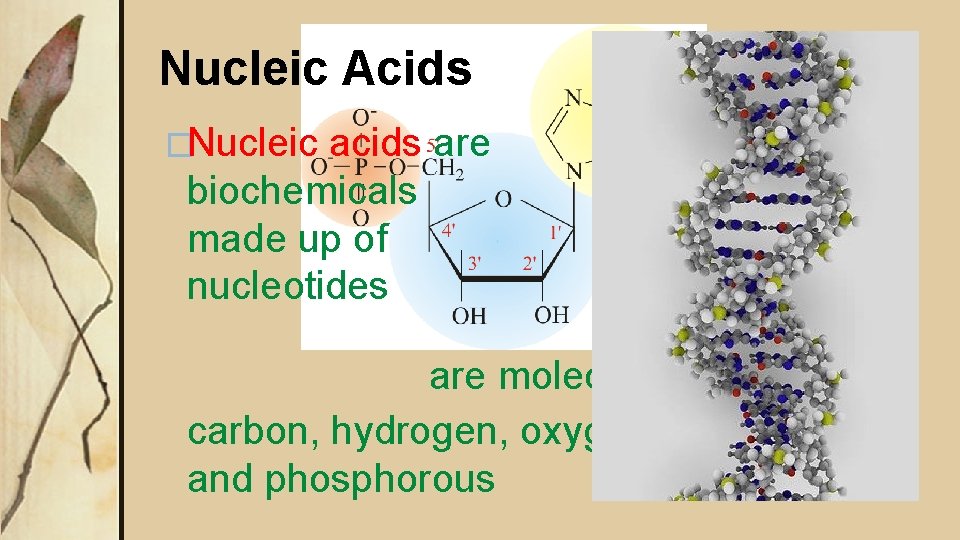
Nucleic Acids �Nucleic acids are biochemicals made up of nucleotides are molecules made of carbon, hydrogen, oxygen, nitrogen, and phosphorous
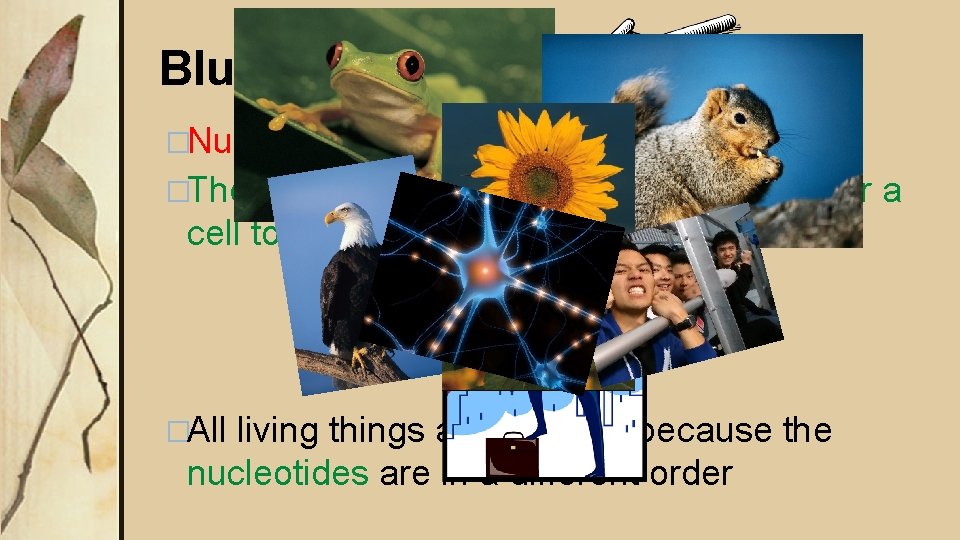
Blueprints of Life �Nucleic acids store genetic information �They carry all of the information needed for a cell to make all of its proteins �All living things are different because the nucleotides are in a different order