
1 2 Characteristics of Learning disability Difficulty in
1
2
Characteristics of Learning disability • Difficulty in: – Focusing attention – Remembering information – Regulating one’s own behavior – Mastering academic tasks – Making friends • Difficulty in: – Performing life skills • Appears unmotivated • Below average intelligence 3
4
Characteristics of Specific Learning Disabilities Difficulty in: v v v v v Using language and symbols Perceiving Managing emotions and behavior Talking: limited vocabulary; difficulty in formulating coherent, grammatical sentences Math: computation and reasoning/ problem solving Reading: basic skills & comprehension Writing: penmanship and expressing ideas clearly Listening: hearing, but not understanding Difficulty in using language and symbols 5
Characteristics of Specific Learning Disabilities (continued) Difficulty in perceiving: v. Differences in voice tones v. Differences in facial expressions v. Body language v. Passage of time v. Verbal humor v. Personal space 6
Characteristics of Specific Learning Disabilities (continued) Difficulty in managing emotions and behavior: v. Controlling anger v. Making hasty decisions v. Interrupting (impulsive) v. Responding to rapid transitions (rigid) v. Organizing tasks v. Managing time and resources 7
Characteristics of Specific Learning Disabilities (continued) • Students often may: – Appear frustrated, shy, or act out in reading activities (because of reading problems) – Panic, resist, or act out in writing activities (because of writing problems) – Resist, refuse, act out at math time (because of math problems) 8
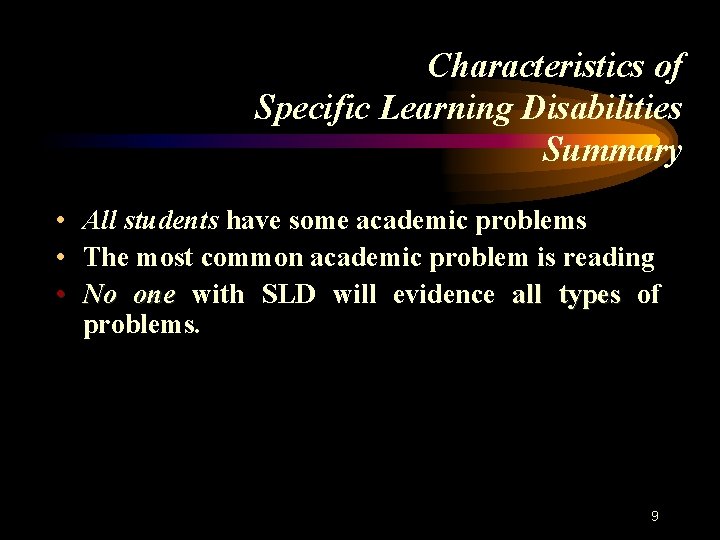
Characteristics of Specific Learning Disabilities Summary • • • All students have some academic problems The most common academic problem is reading No one with SLD will evidence all types of problems. 9
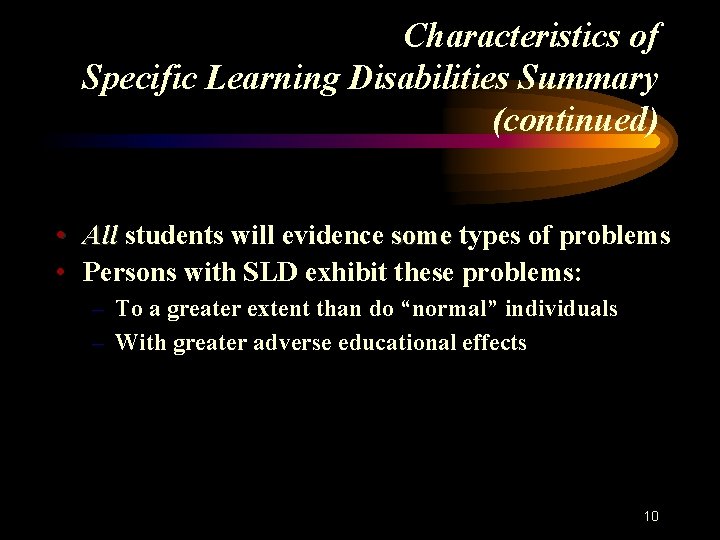
Characteristics of Specific Learning Disabilities Summary (continued) • All students will evidence some types of problems • Persons with SLD exhibit these problems: – To a greater extent than do “normal” individuals – With greater adverse educational effects 10
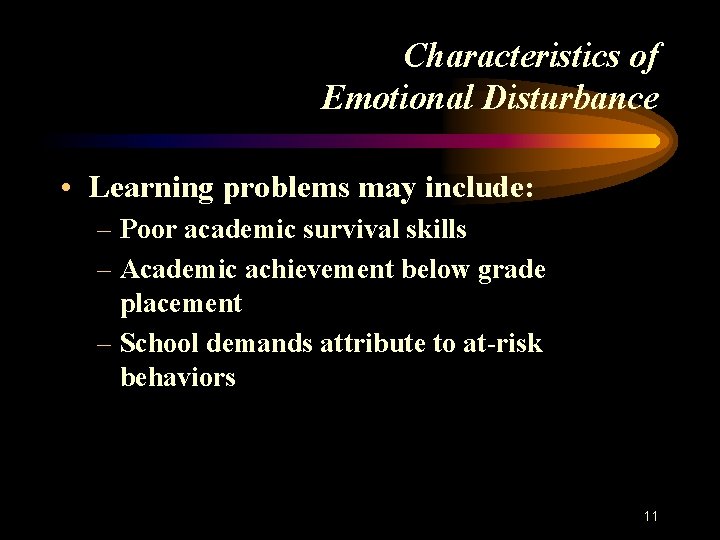
Characteristics of Emotional Disturbance • Learning problems may include: – Poor academic survival skills – Academic achievement below grade placement – School demands attribute to at-risk behaviors 11
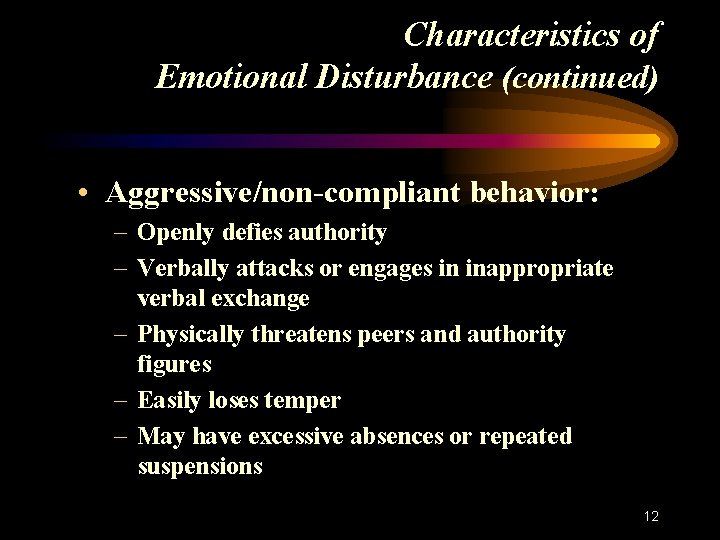
Characteristics of Emotional Disturbance (continued) • Aggressive/non-compliant behavior: – Openly defies authority – Verbally attacks or engages in inappropriate verbal exchange – Physically threatens peers and authority figures – Easily loses temper – May have excessive absences or repeated suspensions 12
Characteristics of Emotional Disturbance (continued) • Withdrawn: – Lacks social skills to make friends – Uses retreat behavior – Exhibits thought disorders – Exhibits pervasive mood of unhappiness and/or depression 13
Characteristics of Emotional Disturbance (continued) • Hyperactive: – Feet/hands often moving – Out of seat often without permission – Runs or climbs when walking or reaching would be better – Trouble maintaining self in quiet activities – Appears tense, anxious, and nervous 14
Characteristics of Emotional Disturbance (continued) • Immature: – Preoccupation with things not presently required – Short attention span for chronological age – Difficulty starting and completing tasks – Prefers to socialize with younger-age peers – Difficulty following multi-step directions – Engages in behavior of younger children 15
Characteristics of Emotional Disturbance Summary • • • Learning Problems Aggressive/non-compliant behavior Withdrawn Hyperactive Immature 16
What Is The Connection Between Disability Characteristics And Student Characteristics? 17
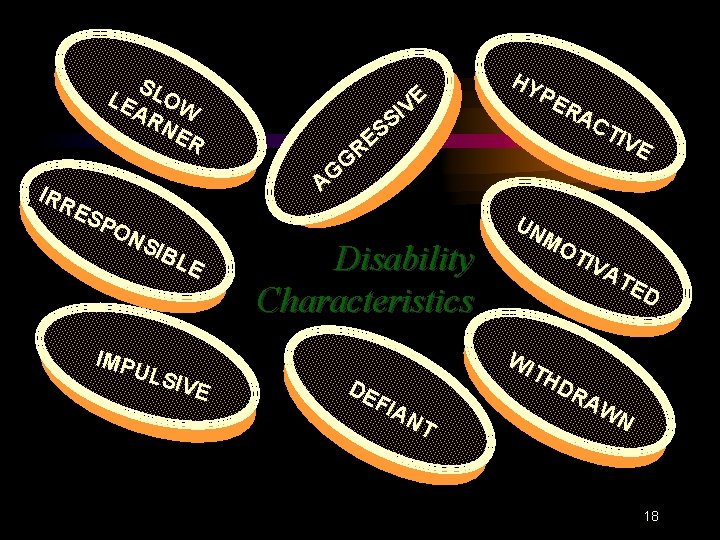
S LE LOW AR NE R IRR ES PO NS IBL E IMP ULS IVE VE I S S E R G G A Disability Characteristics DE FIA NT HY PE RA CT IVE UN MO TIV AT ED WI TH DR AW N 18
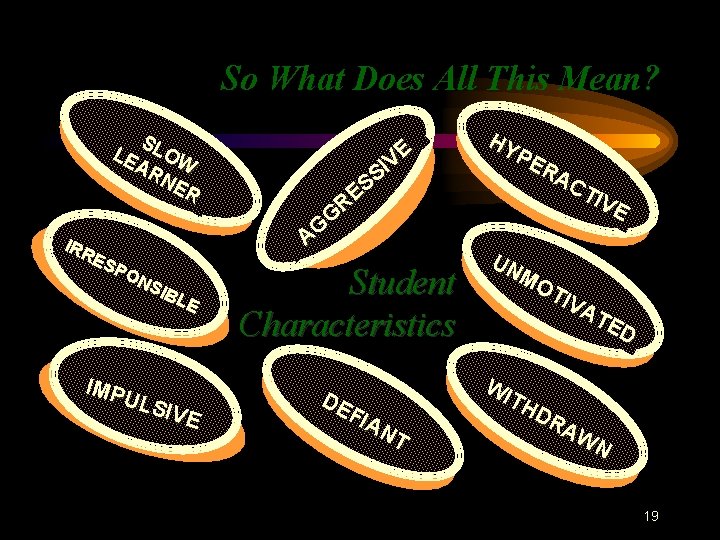
So What Does All This Mean? S LE LOW AR NE R IRR ES PO NS IBL E IMP ULS IVE E V I S S E R G AG Student Characteristics DE FIA NT HY PE RA CT IVE UN MO TIV AT ED WI TH DR AW N 19
What Can Be Done To Reduce Overrepresentation/ Underrepresentation • • • General education classroom Family involvement Referrals Evaluations Services Monitor 20

21
- Slides: 21