
1 2 Babies with an intense and highly
1. 2. Babies with an intense and highly reactive temperament tend to be…. . What is the human genome? Please turn in your FRQ Please write the questions & leave room for your answers.

� � DMA/turn in FRQ Chapter 3 � Masculine or feminine? � Heritability & temperament Homework: � Chap. 3 Test Review session – Thursday, Dec. 15 th � Chap. 3 test – Friday, Dec. 16 th � Chap. 3 Test – Friday, Dec. 16 th � Child Dev. Project due Friday, Jan. 6 th
Everyone needs a handout

1. 2. 3. Are you male or female? Are you a man or a woman? Are you masculine or feminine?
2. Biology – a person’s chromosomes, hormones, and sexual anatomical structures Your perception of which sex you are. 3. Gets a bit tricky 1.

� Masculine and feminine are often descriptions on a scale. � This masculinity-femininity scale forms the basis of what is refer to as gender. �Your perception of your own maleness and femaleness is your gender identity. One of the most powerful parts of: �your personality �your self-concept �others’ perception of who you are.
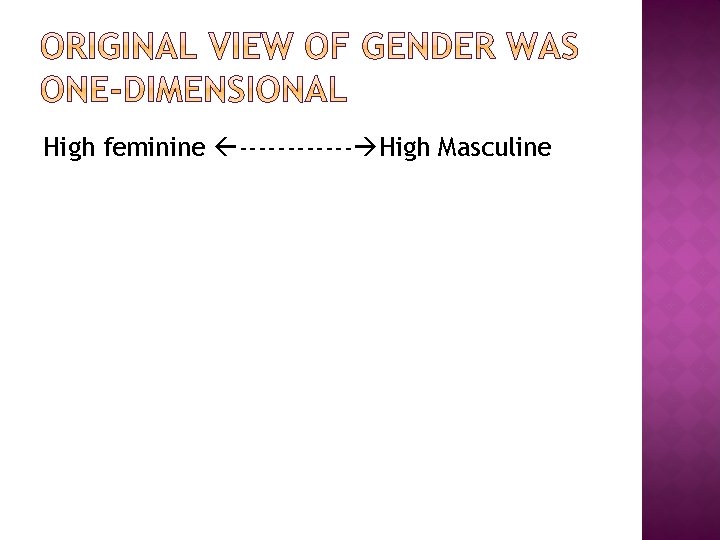
High feminine ------ High Masculine
� Believed gender identity was primarily masculine or primarily feminine. � Also thought that it was optimal if a person fit into the gender category defined by his/her biological sex. On the back of your paper brainstorm some problems with this idea.
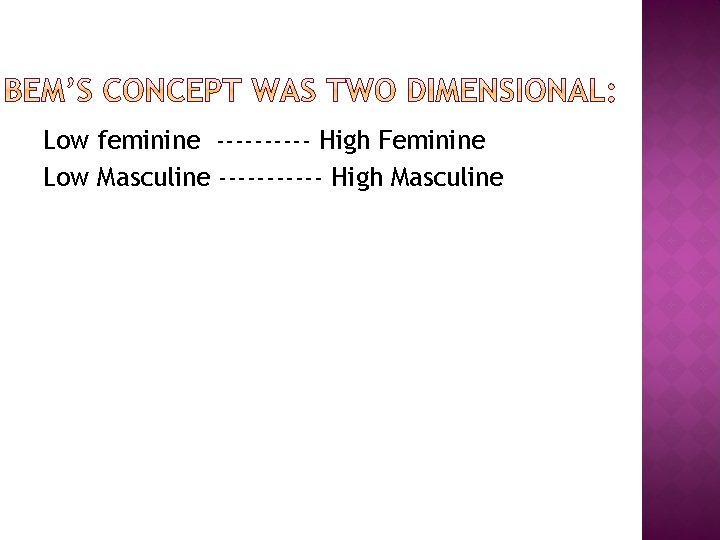
Low feminine ----- High Feminine Low Masculine ------ High Masculine
� Andro � Gyn from man from woman �A person could be high or low in masculinity and high or low in femininity at the same time. �Idea is a more balanced view of gender
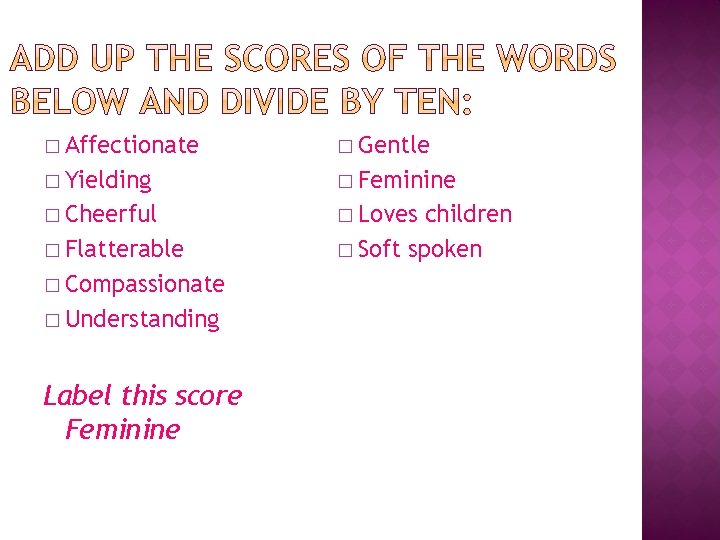
� Affectionate � Gentle � Yielding � Feminine � Cheerful � Loves � Flatterable � Compassionate � Understanding Label this score Feminine children � Soft spoken
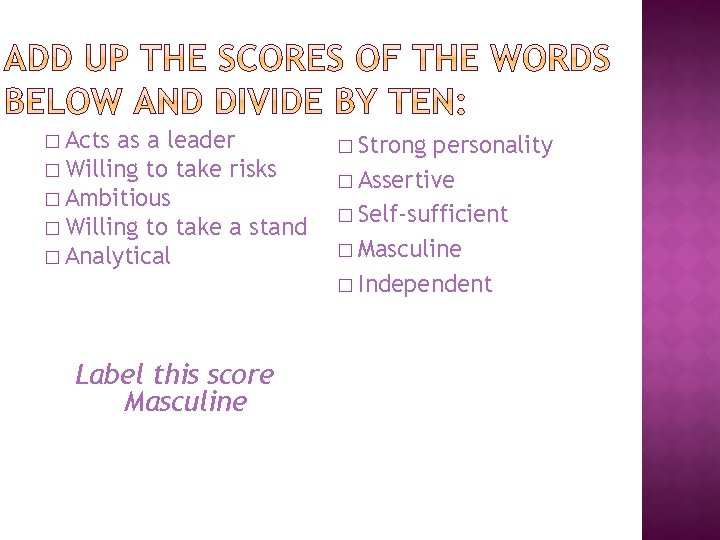
� Acts as a leader � Willing to take risks � Ambitious � Willing to take a stand � Analytical Label this score Masculine � Strong personality � Assertive � Self-sufficient � Masculine � Independent
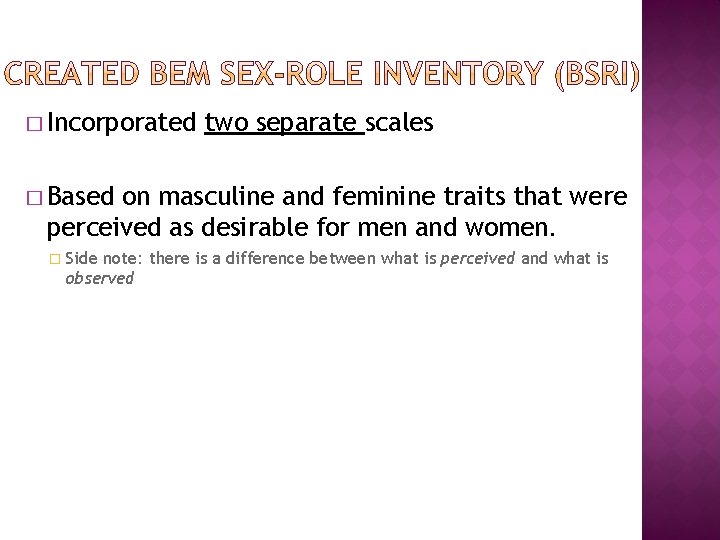
� Incorporated two separate scales � Based on masculine and feminine traits that were perceived as desirable for men and women. � Side note: there is a difference between what is perceived and what is observed
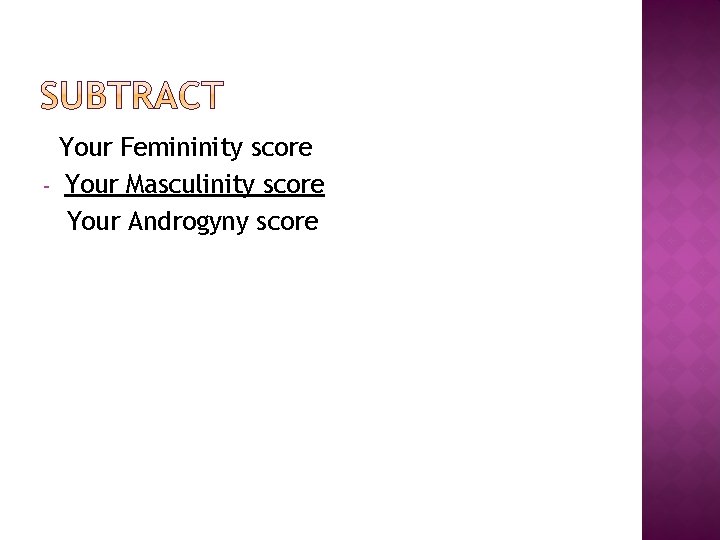
- Your Femininity score Your Masculinity score Your Androgyny score
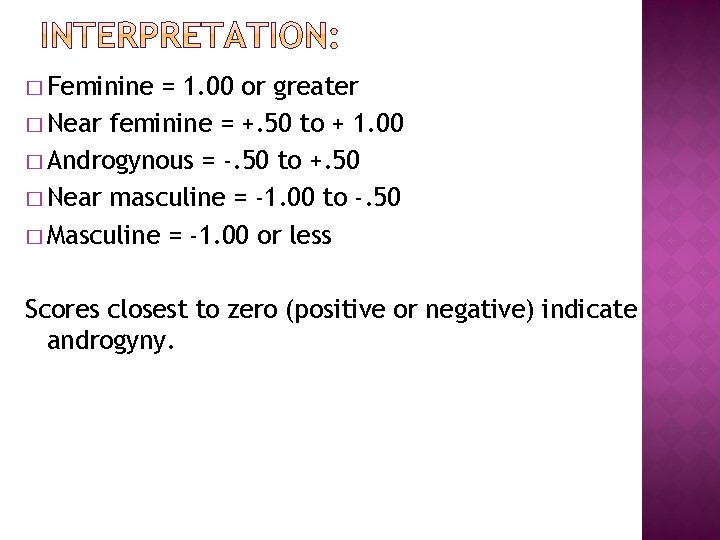
� Feminine = 1. 00 or greater � Near feminine = +. 50 to + 1. 00 � Androgynous = -. 50 to +. 50 � Near masculine = -1. 00 to -. 50 � Masculine = -1. 00 or less Scores closest to zero (positive or negative) indicate androgyny.
� How might androgyny help a person? � Hindrances?
� The BSRI encouraged researchers to question: �the traditional assumption that it is the sex-typed individual is healthiest. and begin focusing on the behavioral & societal consequences of the more flexible sex-role concepts.
Character Building
- Slides: 19