
1 2 4 Eating the scraps of another

- Slides: 11
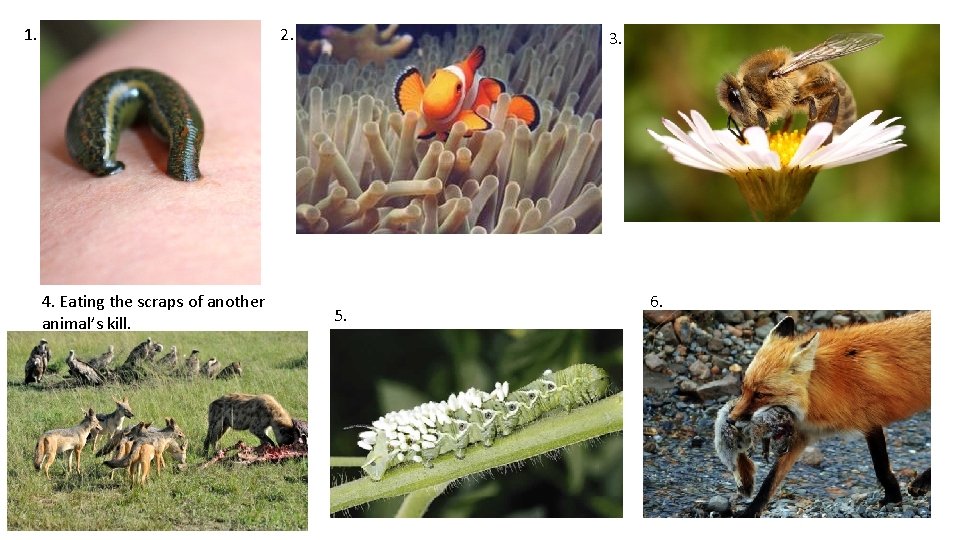
1. 2. 4. Eating the scraps of another animal’s kill. 3. 5. 6.
Symbiotic Relationships • Commensalism: A relationship between two organisms in which one organism benefits and the other is unaffected. • Mutualism: A relationship between two organisms in which both organisms benefit. • Parasitism: A relationship between two organisms in which one organism benefits and the other is harmed. • Predator/Prey: A relationship between two organisms in which one organisms eats the other. • Competition:
Example of Symbiotic Relationship task • What’s the symbiotic relationship? • Mutualism • Describe the symbiotic relationship? • The birds are being fed and at the same time are removing parasites for the hippos, zebras, etc.
Clip #1 • Tiger Shark and Loggerhead Turtle Predator vs Prey: (Shark eats turtle, or tries to)
Clip #2 Shark and Jack: Commensalism (Jacks use the shark as a “blind”-to keep out of the view of prey. Shark is neither helped nor harmed)
Clip #2 Shark and Mackerel: Commensalism (Mackerel bump up against the shark’s skin to rid themselves of loose scales and parasites. Shark is neither helped nor harmed
Clip #2 Shark and Shark Suckerfish: Commensalism (suckerfish attaches to shark and gets a free ride. Shark is neither helped or harmed)
Clip #2 Hammerhead Shark and Barberfish: Mutualism (Barberfish benefit the hammerhead by ridding it of parasites and at the same time benefit themselves with a meal
Clip #3: Competition (sharks are after the same fish as the human and will often steal the humans’ catch
Clip #4 Ants and liver fluke: Parasitism (The liver fluke invades the ants body and takes over it’s nervous system)