
1 2 3 Classification of Life What is
- Slides: 21
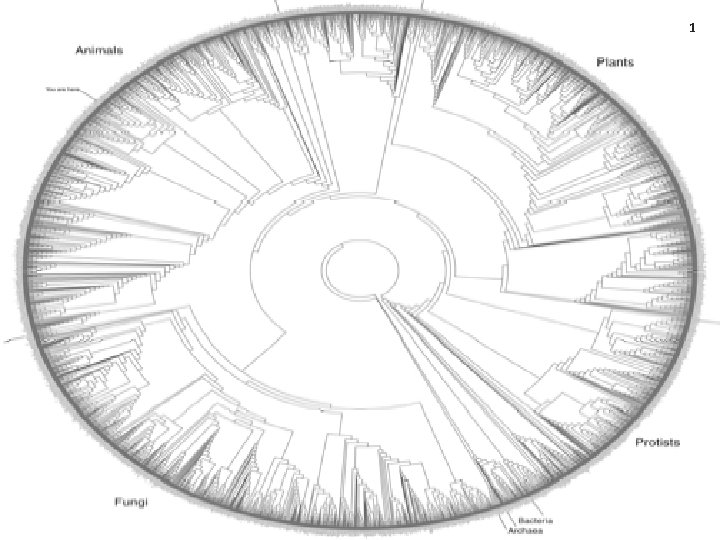
1
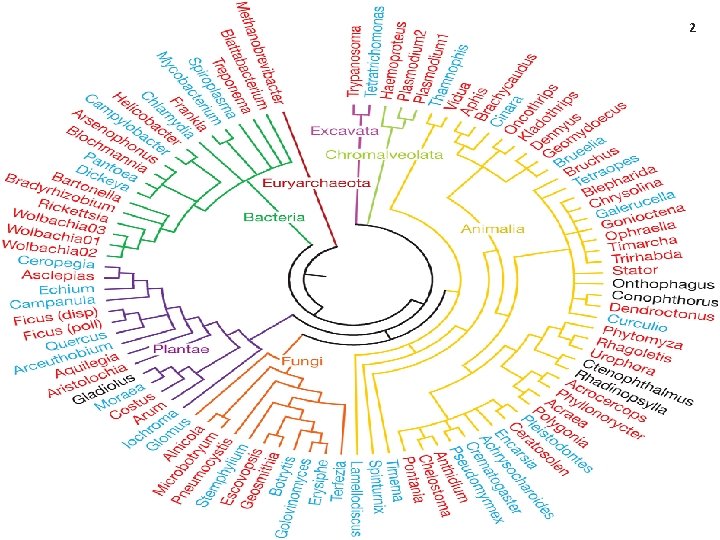
2
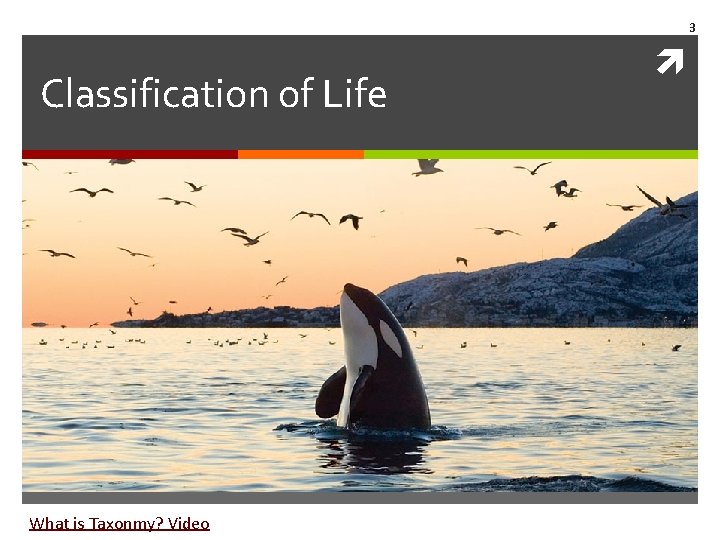
3 Classification of Life What is Taxonmy? Video
4 Essential Questions 1. How can genetic and evolutionary relationships be used to classify organisms? 2. How can data and/or models be used to analyze how organisms are organized into hierarchy of groups and subgroups based on evolutionary relationships?
5 Classification of Life 1. Biologist classify, or group, organisms in a logical way that shows their relationships to other organism (similar to a family tree!) 2. Grouped according to various biological characteristics such as similarities in structures, biochemistry, genetics, embryological development and fossil evidence 3. Classification systems suggest that related organisms shared a common ancestor at some time in the past
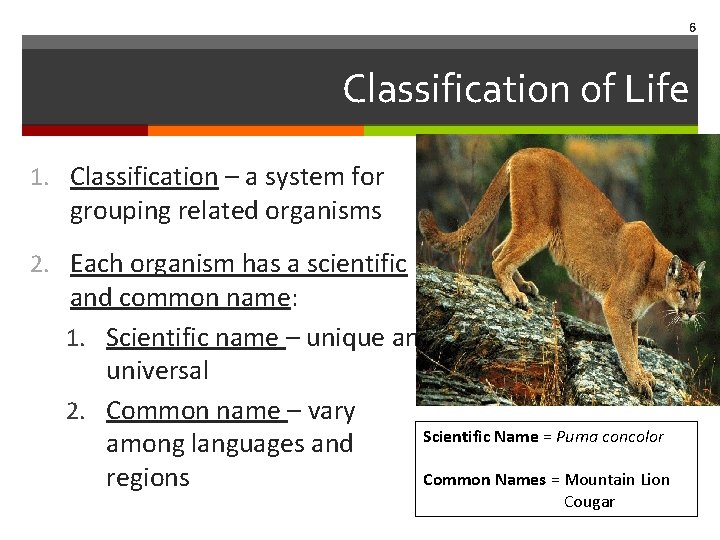
6 Classification of Life 1. Classification – a system for grouping related organisms 2. Each organism has a scientific and common name: 1. Scientific name – unique and universal 2. Common name – vary Scientific Name = Puma concolor among languages and Common Names = Mountain Lion regions Cougar
7 Linnaeus’s System of Classification 1. Binomial nomenclature – each species is assigned a 2 part name (Bi = two) 1. First word refers to the genus 2. Second word refers to the species 2. Scientific names always written: 1. In italics 2. First word is capitalized 3. Second word is lowercase
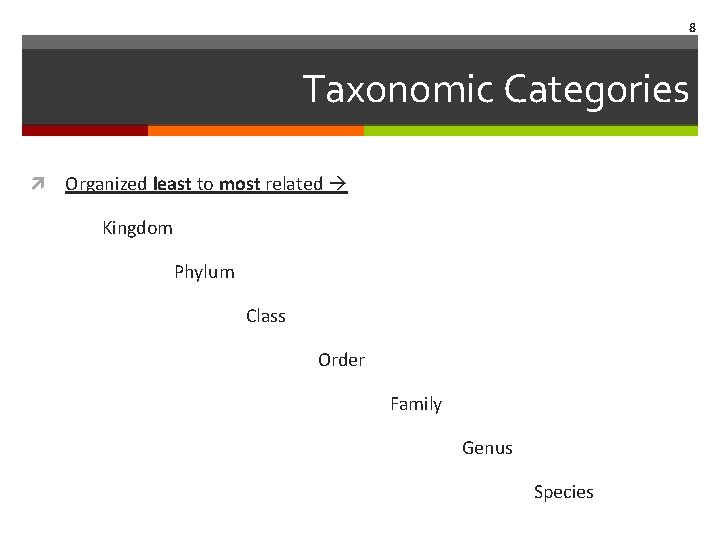
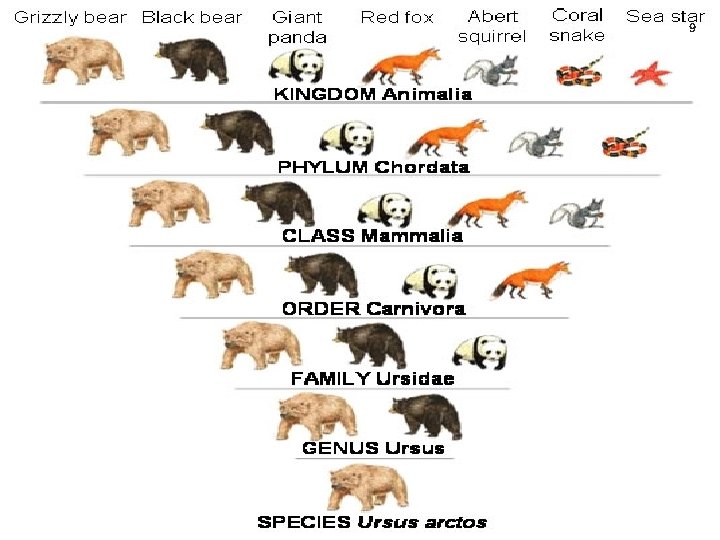
8 Taxonomic Categories Organized least to most related Kingdom Phylum Class Order Family Genus Species
9
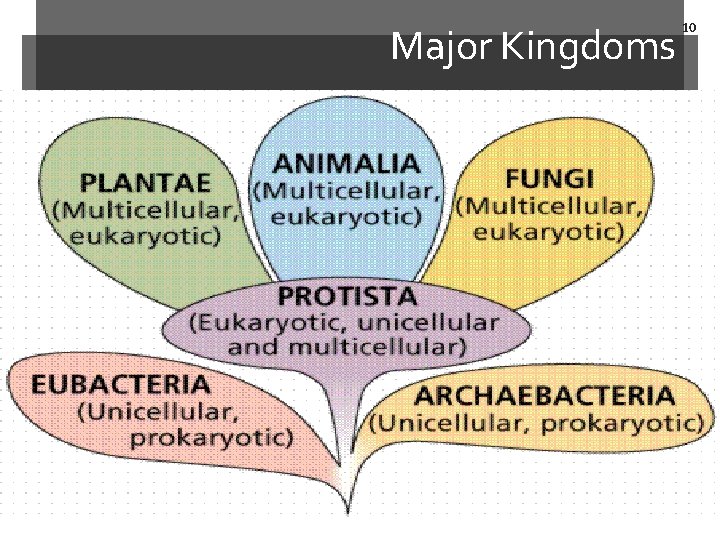
Major Kingdoms 10
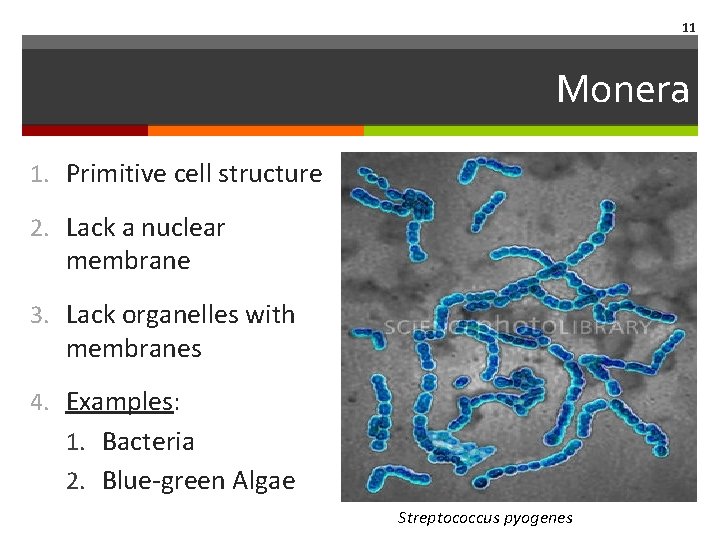
11 Monera 1. Primitive cell structure 2. Lack a nuclear membrane 3. Lack organelles with membranes 4. Examples: 1. Bacteria 2. Blue-green Algae Streptococcus pyogenes
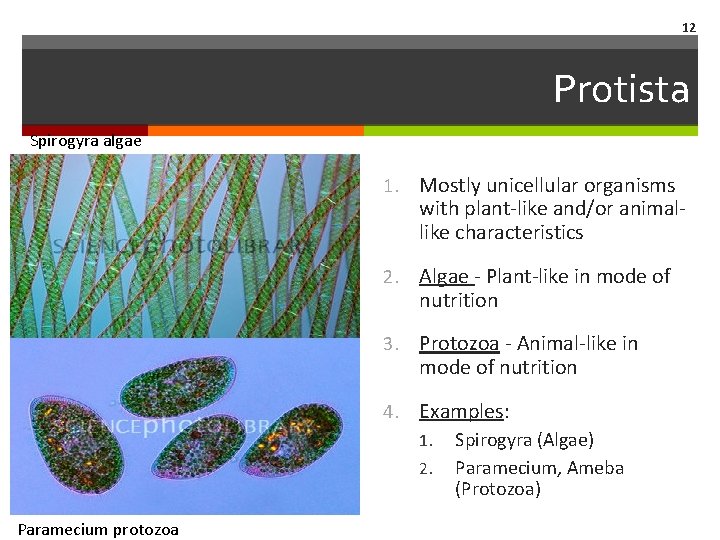
12 Protista Spirogyra algae 1. Mostly unicellular organisms with plant-like and/or animallike characteristics 2. Algae - Plant-like in mode of nutrition 3. Protozoa - Animal-like in mode of nutrition 4. Examples: 1. 2. Paramecium protozoa Spirogyra (Algae) Paramecium, Ameba (Protozoa)
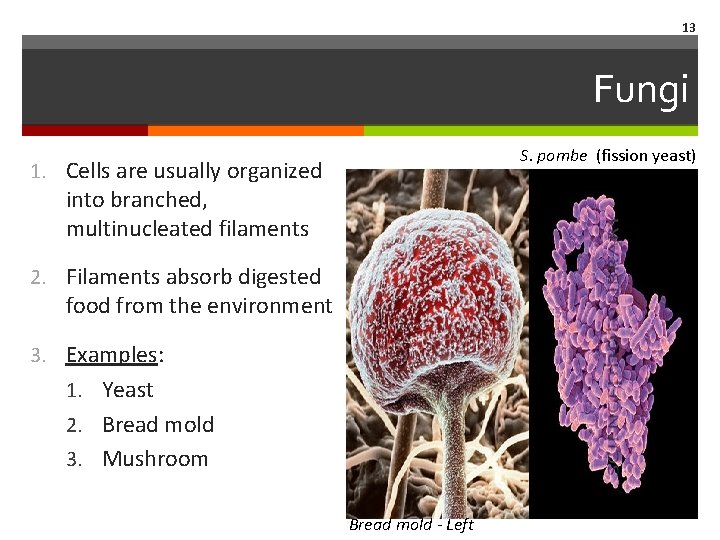
13 Fungi S. pombe (fission yeast) 1. Cells are usually organized into branched, multinucleated filaments 2. Filaments absorb digested food from the environment 3. Examples: 1. Yeast 2. Bread mold 3. Mushroom Bread mold - Left
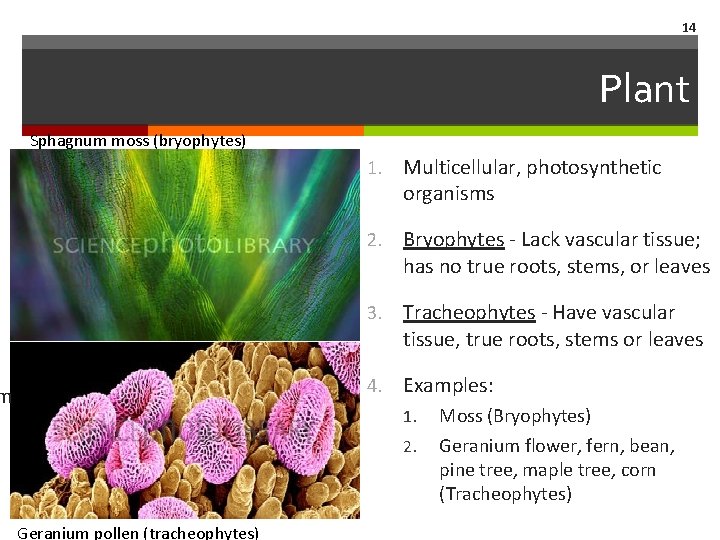
14 Plant Sphagnum moss (bryophytes) m 1. Multicellular, photosynthetic organisms 2. Bryophytes - Lack vascular tissue; has no true roots, stems, or leaves 3. Tracheophytes - Have vascular tissue, true roots, stems or leaves 4. Examples: 1. 2. Geranium pollen (tracheophytes) Moss (Bryophytes) Geranium flower, fern, bean, pine tree, maple tree, corn (Tracheophytes)
15 Animals 1. Multicellular organisms that ingest their food 4. Mollusks – one or two part shell (clam) 2. Coelenterates – two cell layers, hollow body wit one opening (hydra, jellyfish) 5. 3. Annelids – segmented body walls (earthworm) Arthropods – jointed appendages, exoskeleton (grasshopper, lobster, spider) 6. Chordates – dorsal nerve cord (shark, frog, human)
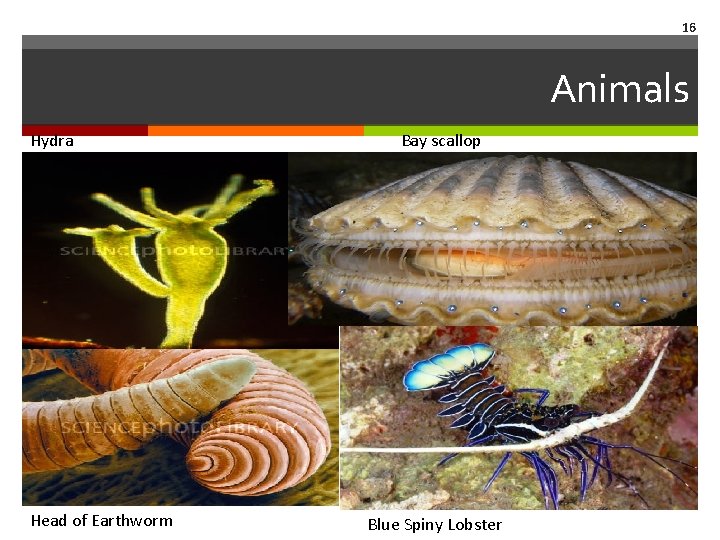
16 Animals Hydra Head of Earthworm Bay scallop Blue Spiny Lobster
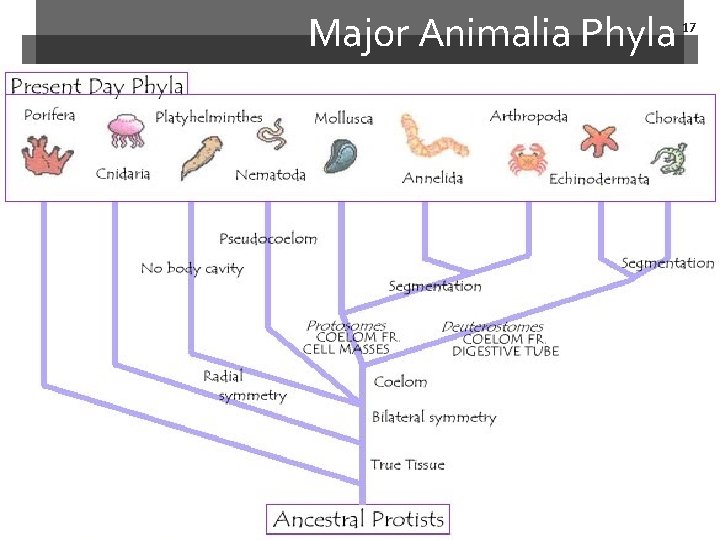
Major Animalia Phyla 17
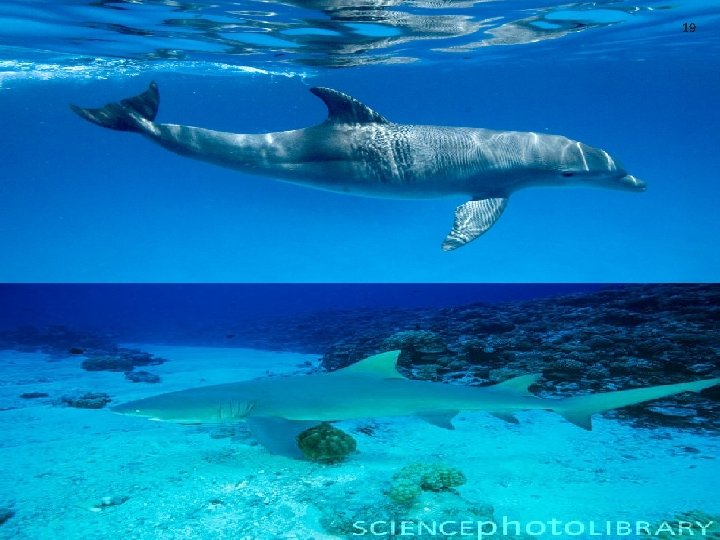
18 Patterns of Evolution Coevolution – process by which two species evolve in response to changes in each other Convergent Evolution – process by which organisms evolve structures that have similar (analogous) structures or functions in spite of their evolutionary ancestors being unrelated Divergent Evolution – Process by which species diverges into two or more descendant species, resulting in once related species to become more unrelated
19
20 Cladistic Analysis Guided by Darwin’s Theory of Evolution: Biologist now group organisms that represent lines of evolutionary decent, not just physical similarities Cladistic Analysis – identifies and considers only characteristics that are evolutionary innovations (new characteristics that arise as lineages evolve over time) Derived Characters – characteristics that appear in recent lineages but not in its older members
21 Genetics & Classification Genes of many dissimilar organisms show important similarities at the molecular level The genetic similarities can be used for classification Molecular Clock – comparisons of DNA can be used to estimate the length of time that two species have been evolved independently Degree of dissimilarity = indication of how long ago the two species shared a common ancestor