
1 2 3 4 CSHP WEBINAR SERIES A
1
2
3
4 CSHP WEBINAR SERIES: A CASE-BASED APPLICATION OF MULTIMODAL ANALGESIA Richard H. Poirier, Pharm. D. , BCOP Sarah Walden Pharm. D. Kaweah Delta Healthcare District October 2019
5 Disclosures • Dr. Richard Poirier and Dr. Sarah Walden have no relevant conflicts of interest to disclose.
6 Objectives • List multiple factors associated with constructing a patient- specific analgesic regimen • Identify the characteristics of a multidimensional pain assessment • Distinguish between somatic pain and neuropathic pain symptoms and appropriately select pharmacotherapy which targets these subtypes
7 Why Does Pain Matter? 1 Approximately 100 million adults in U. S. affected by chronic pain (including joint pain or arthritis) * Total financial cost of pain to society: $560 - $635 billion • Combines the health care cost estimates and the following three productivity estimates • Days of work missed ($11. 6 - $12. 7 billion) • Hours of Work Lost ($95. 2 - $96. 5 billion) • Lower Wages (190. 6 - $226. 3 billion) • Results of 2008 Medical Expenditure Panel Survey (MEPS)

8 Why Does Pain Matter? 1 • Annual cost of pain was greater than the annual costs, in 2010 dollars, of the following: • Heart Disease ($309 billion) • Cancer ($243 billion) • Diabetes ($ 118 billion) • Note: pain costs approx. 30% more than combined costs of cancer and diabetes
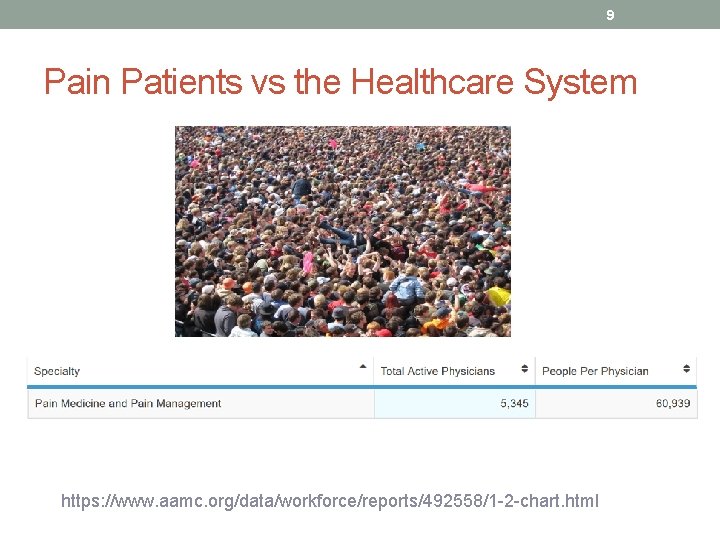
9 Pain Patients vs the Healthcare System https: //www. aamc. org/data/workforce/reports/492558/1 -2 -chart. html
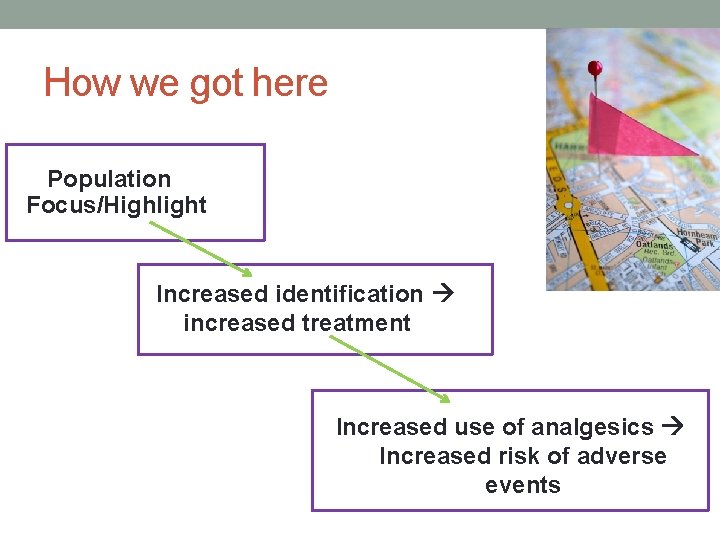
How we got here Population Focus/Highlight Increased identification increased treatment Increased use of analgesics Increased risk of adverse events
A Look at the Numbers 2, 3 • Between 1997 and 2007, the number of opioid prescriptions increased 700% • CDC reported 27, 658 deaths secondary to unintentional opioid overdose in 20072 • Approximately 1. 4 million drug-related visits to emergency rooms throughout the country in 2011 • 420, 000 visits were associated with opioid analgesics
More Statistics 4 • In 2013, there were 43, 982 drug overdose deaths in the United States. • Fifty-one percent (22, 767) were related to pharmaceuticals agents. When this population was further sub-stratified: • 16, 235 (71. 3%) were observed to have involved use of opioid analgesics.
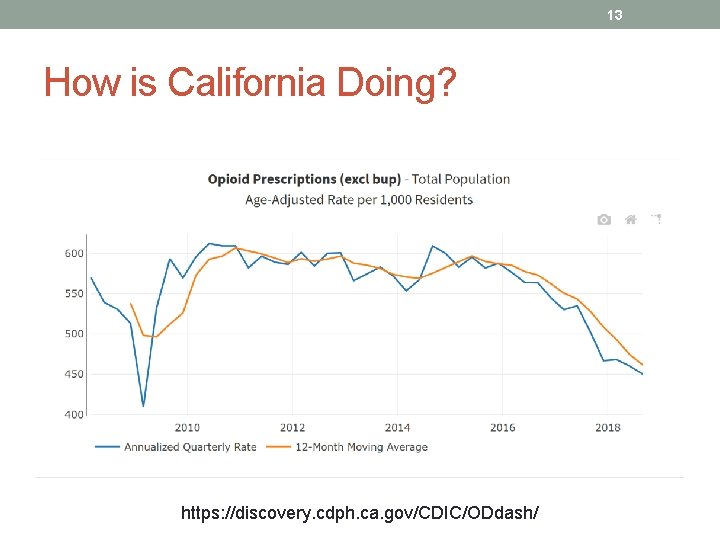
13 How is California Doing? https: //discovery. cdph. ca. gov/CDIC/ODdash/
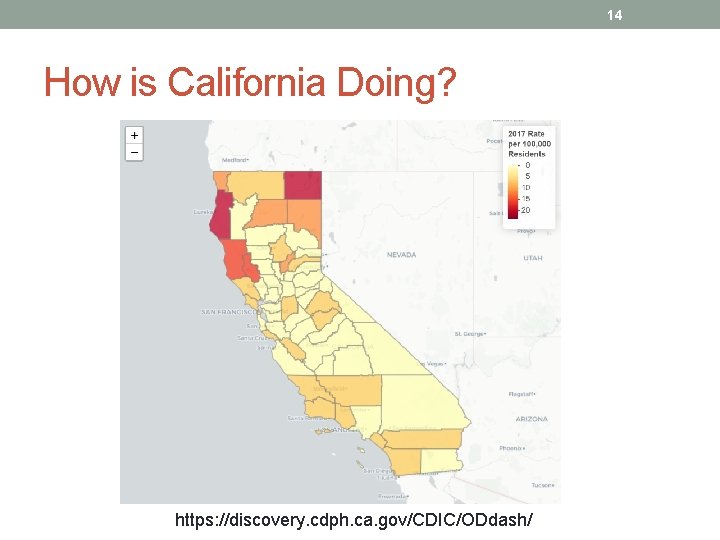
14 How is California Doing? https: //discovery. cdph. ca. gov/CDIC/ODdash/
Challenges Facing Pain Management in the U. S. Healthcare System • Current state of pain management education • Healthcare culture • Misperceptions facing the patient with pain
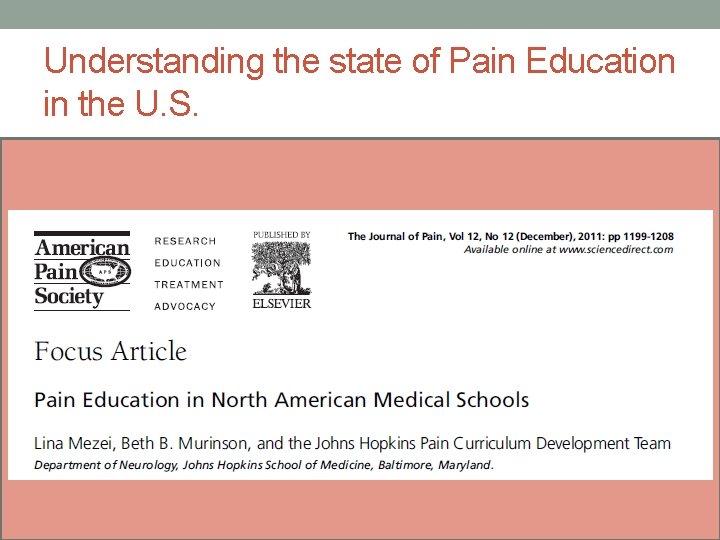
Understanding the state of Pain Education in the U. S.
Understanding the State of Pain Education in the U. S. 5 • Utilized the Association of American Medical Colleges’ (AAMC) Curr. MIT: • Centralized, password-protected, repository of curricular information for US medical schools. • 145 medical schools (in US and Canada) assessed. 104 US medical schools met criteria for inclusion in study (Curr. MIT participants)
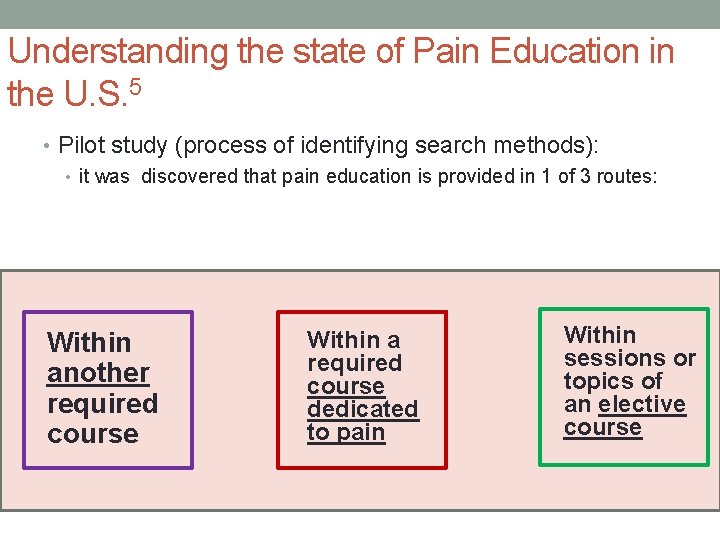
Understanding the state of Pain Education in the U. S. 5 • Pilot study (process of identifying search methods): • it was discovered that pain education is provided in 1 of 3 routes: Within another required course Within a required course dedicated to pain Within sessions or topics of an elective course
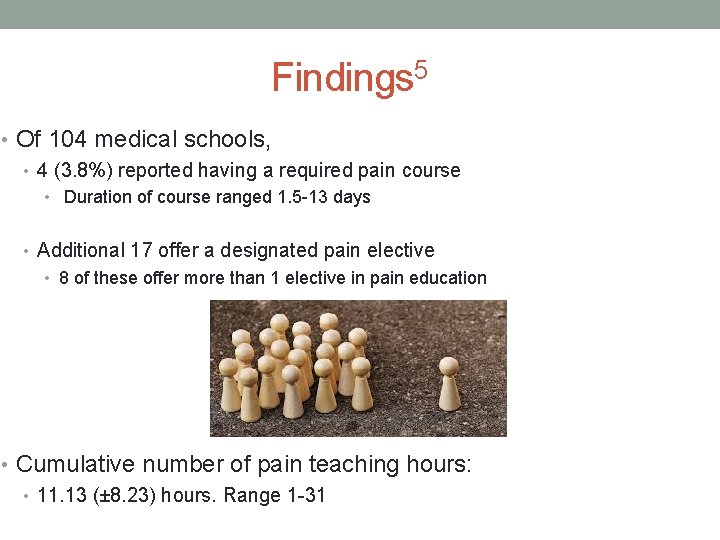
Findings 5 • Of 104 medical schools, • 4 (3. 8%) reported having a required pain course • Duration of course ranged 1. 5 -13 days • Additional 17 offer a designated pain elective • 8 of these offer more than 1 elective in pain education • Cumulative number of pain teaching hours: • 11. 13 (± 8. 23) hours. Range 1 -31
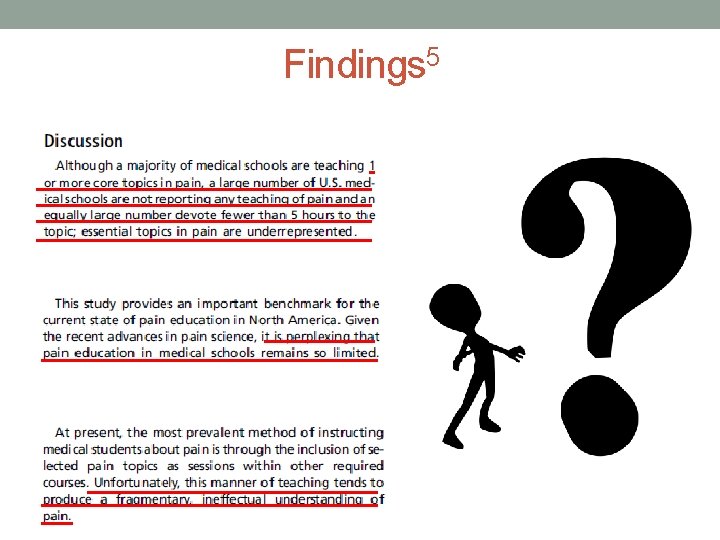
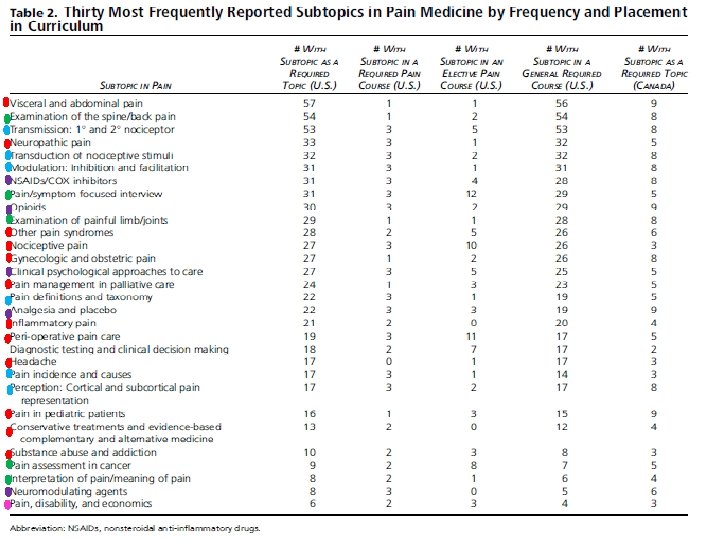
Findings 5
Complications Facing Pain Patients • Providers may be hesitant to initiate treatment or modify therapy started by other providers • Providers may have unfamiliarity with medication selection or WHEN to refer to a pain management specialist
Misperceptions of “Addiction” • Healthcare providers commonly don’t differentiate physical dependence vs. “addiction” • DSM-5 – Substance Abuse Disorder • Red Vs Yellow Flags
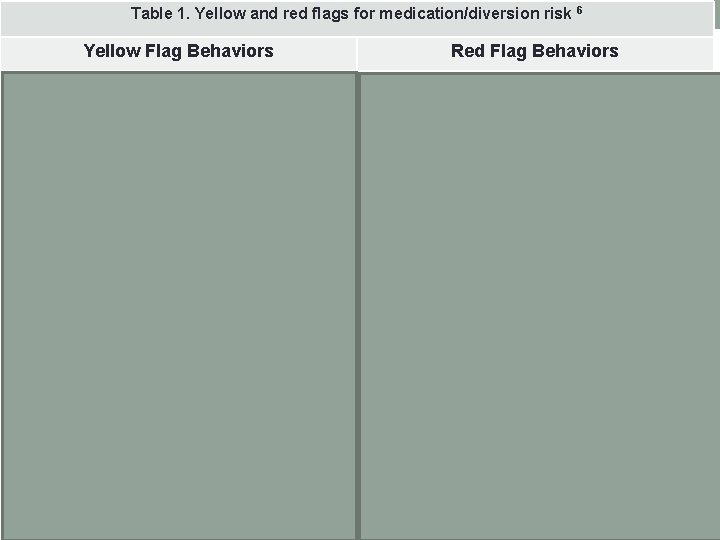
Table 1. Yellow and red flags for medication/diversion risk 6 Yellow Flag Behaviors Frequent visits to a facility with requests for refills of controlled medications or unsanctioned escalations in doses Red Flag Behaviors Patient frequents different providers, pharmacies, etc. in a short period of time to obtain controlled substances Patient providing unlikely stories regarding Steals/Diverts prescriptions the loss of their medication (i. e. a pet ate the medication, medication fell down the toilet, etc. ) Patient has unusual amount of knowledge Obtains controlled medications from nonabout the requested medication or requests a medical source (i. e. the “street”) specific medication by name Patient has little interest in the diagnosis or alternative treatments Forges of alters prescriptions for controlled medications Uses controlled medications for purposes other than those prescribed. Notification by a provider, institution, or family member that patient is addicted to a controlled substance History of abuse of other substances (e. g. alcohol, recreational drugs) Has drug related deterioration in work performance, family relationships, or other social dynamics Concurrently abuses illicit drugs
Putting it All Together • Pain is one of the most common complaints of people presenting for medical attention • The number of pain patients greatly outnumber the number of available pain management specialists access to care is very limited • The baseline education provided to many healthcare practitioners appears to be very limited • Opioid induced events and misuse increased markedly beginning in the mid 1990 s. • A cornerstone modality of pain management will continue to be pharmacotherapy • Who can help? . . THE PHARMACIST!!!!
26 So let’s get started! • Pain management is NOT one size fits all. Some patients may be able to be treated with a more generalized approach (i. e. order sets), but not all. • In order for most patients to obtain optimal pain relief, it requires each patient be assessed individually.

27 Describe this painting in one word
28 Unidimensional vs Multidimensional Pain Assessments • Most commonly heard questions about pain in healthcare: • Where is your pain? • What number would you give it (0 -10)? • Above questions are more “unidimensional” in nature
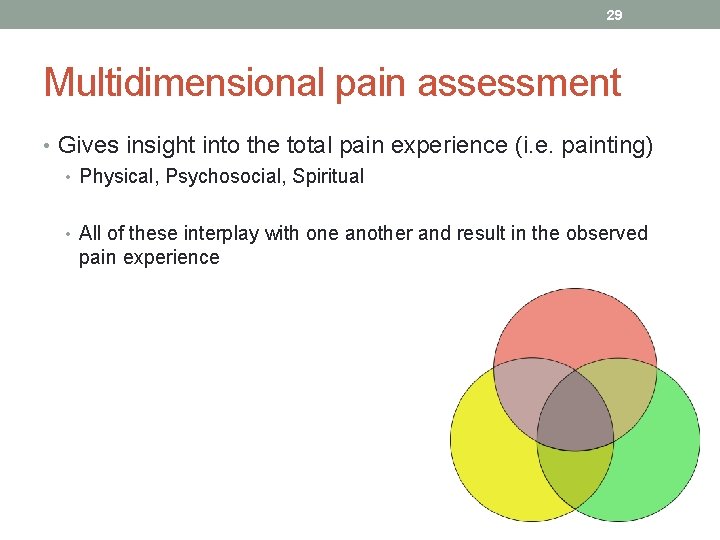
29 Multidimensional pain assessment • Gives insight into the total pain experience (i. e. painting) • Physical, Psychosocial, Spiritual • All of these interplay with one another and result in the observed pain experience
30 Multidimensional pain assessment tool “PQRSTA-U” 6 • P – Palliating and Precipitating Factors, Prior therapies • Q – Quality (sharp, dull, numb, burning, etc) • R – Radiation • S – Severity (0 -10) • T – Temporal (pain only with movement, constant? ) • A – Associated symptoms (e. g. patient experiences increased anxiety resulting in increased pain) • U – How does the pain affect YOU (Does pain prevent you from doing certain things you normally could do or want to be able to do)
31 Pain Subtypes 6 • Somatic - pain associated with skin, bone, connective tissues. • May be described as “Sharp, Dull, Aching, Throbbing, Pulsating. ” • Visceral - Arises from internal organs. • Less well localized. • Not as responsive to medications. • May be referred along a dermatome or in a band-like distribution. • Often described as “Sharp, gnawing, dull, aching, deep, diffuse. ” • Neuropathic – Arises from damage to the nerve itself. • Described as burning (like fire), pins-needles, numbness, electrical shooting, and phantom sensations.
32 Neuropathic Pain Continued 6 • Non-painful stimuli may cause pain (allodynia) or, • An exaggerated pain response may result (hyperalgesia) • May be secondary to direct injury to the CNS (e. g. post stroke pain, spinal cord injuries, etc. ).
33 Agent Selection for Pain Subtypes 6 Somatic/Visceral Pain • Systemic Agents • Acetaminophen • Anti-inflammatory agents (NSAIDs, steroids) • Opioid Analgesics • Topical Agents • Camphor, Menthol, Methyl salicylate • Topical NSAIDs (e. g. diclofenac gel)
34 Agent Selection for Pain Subtypes 6 Neuropathic pain • Systemic • Gabapentinoids • Antidepressants (TCAs, SNRIs) – NE reuptake inhibition • NMDA Receptor Antagonists (ketamine, butorphanol) • Topical • Lidocaine (e. g. lidocaine 4% or 5% patches) • Capsaicin
35 Agent Selection for Pain Subtypes 6 • Agents with mixed modalities that help in mixed somatic/visceral + neuropathic pain complaints • Tramadol/Tapentadol • Weak Mu-opioid Rc agonist • Norephine Reuptake Inhibition • Methadone • Mu-opioid Rc agonist • Norephine Reuptake Inhibition • N-methyl-D-Aspartase (NMDA) Rc Antagonism
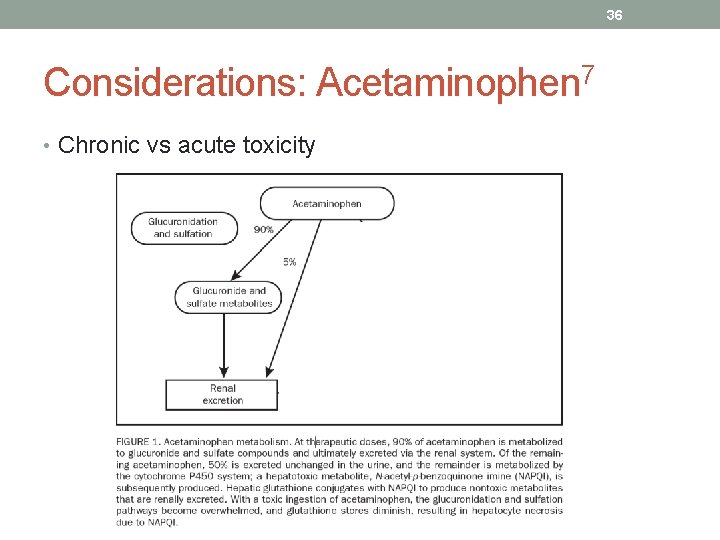
36 Considerations: Acetaminophen 7 • Chronic vs acute toxicity
37 Considerations: Acetaminophen 7 • Not contraindicated for use in ESLD patients • (recommended max 2 gm/24 hr) • May consider holding if increased LFTs with unknown etiology concerning for possible active hepatic injury.
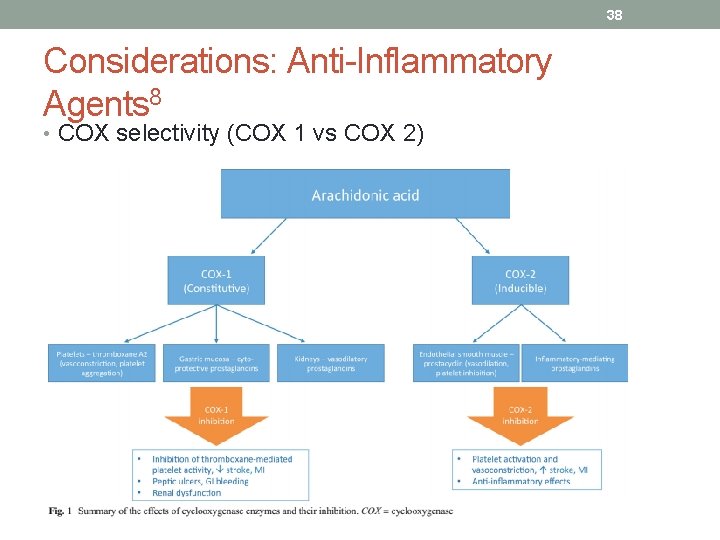
38 Considerations: Anti-Inflammatory Agents 8 • COX selectivity (COX 1 vs COX 2)
39 Considerations: Anti-Inflammatory Agents 8 • Consider avoiding or limiting use in: • CKD (especially ESRD) • Gastric bypass • CV history (esp. history of MI or stroke) • Elderly patients
40 Considerations: Anti-Inflammatory Agents 8, 9 • Drug-drug interactions • NSAIDS with steroids • Work on same pathway • Increases risks of side effects (sp. bleeding events) • NSAIDs + Aspirin therapy • Aspirin: acetylation of platelet COX-1 inhibits platelet function. • NSAIDS: bind to allosteric site on COX-1 preventing access of aspirin to active site (Ibuprofen > other NSAIDS)

41 Considerations: Opioids 10, 11 • Opioid induced constipation (OIC) – use scheduled bowel regimen with a STIMULANT + STOOL SOFTENER • You need both! • Constipation easier to prevent than treat! • Opioid Induced Hyperalgesia (OIH) – changes in peripheral and central nervous system that lead to sensitization of pro-nociceptive pathways and ↑ pain • Suspect when opioid analgesic effects decrease despite dose escalation, pain increases without disease progression • Concern with opioid burden ≥ 300 mg OME • Treatment options: ketamine, methadone, dextromethorphan, propofol, COX-2 inhibitors, alpha-2 agonists
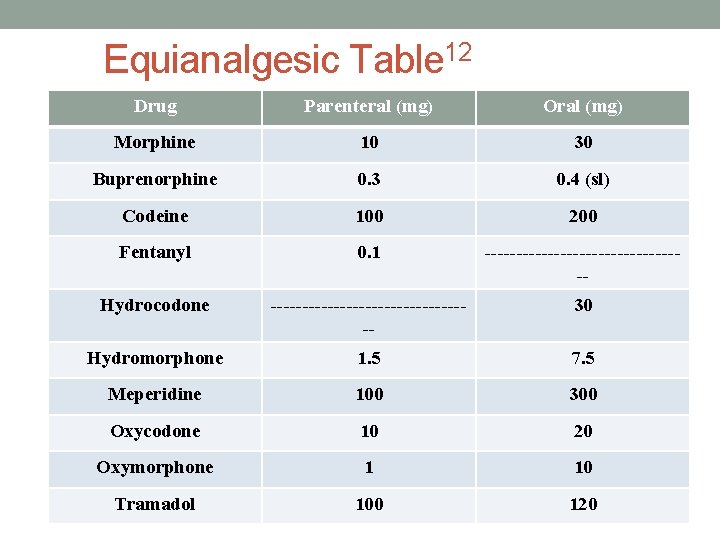
Equianalgesic Table 12 Drug Parenteral (mg) Oral (mg) Morphine 10 30 Buprenorphine 0. 3 0. 4 (sl) Codeine 100 200 Fentanyl 0. 1 ---------------- Hydrocodone ---------------- 30 Hydromorphone 1. 5 7. 5 Meperidine 100 300 Oxycodone 10 20 Oxymorphone 1 10 Tramadol 100 120
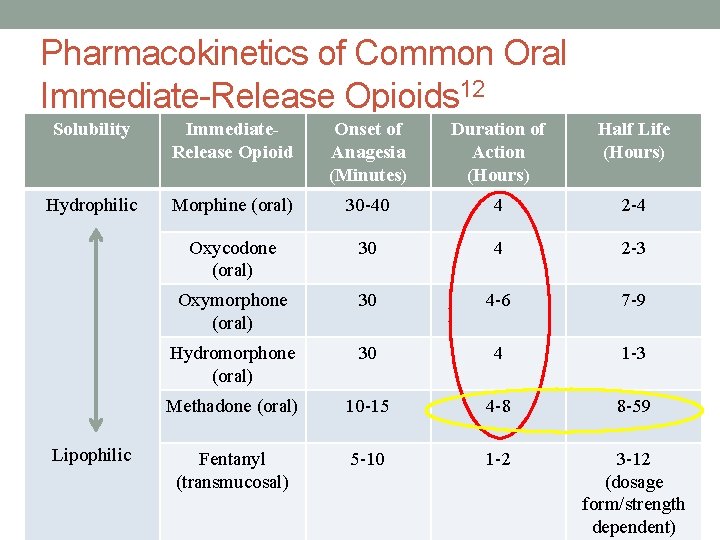
43 Pharmacokinetics of Common Oral Immediate-Release Opioids 12 Solubility Immediate. Release Opioid Onset of Anagesia (Minutes) Duration of Action (Hours) Half Life (Hours) Hydrophilic Morphine (oral) 30 -40 4 2 -4 Oxycodone (oral) 30 4 2 -3 Oxymorphone (oral) 30 4 -6 7 -9 Hydromorphone (oral) 30 4 1 -3 Methadone (oral) 10 -15 4 -8 8 -59 Fentanyl (transmucosal) 5 -10 1 -2 3 -12 (dosage form/strength dependent) Lipophilic
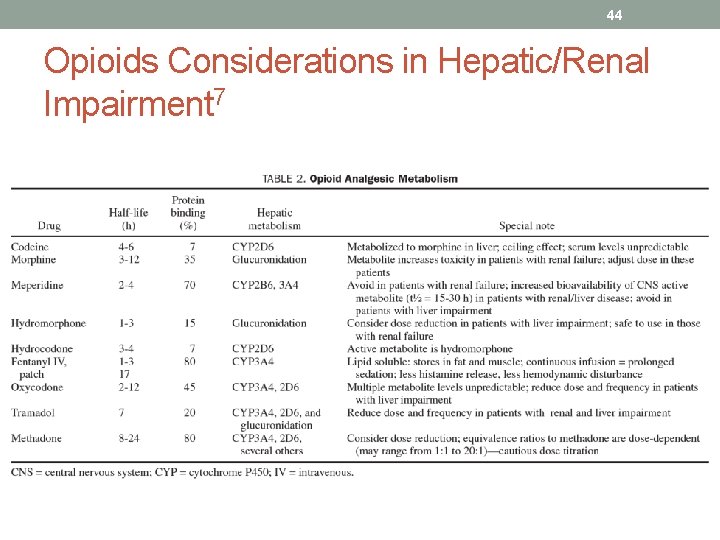
44 Opioids Considerations in Hepatic/Renal Impairment 7

45 Opioids: Hepatic Impairment 7 • Occurrence of opioid-induced side effects in patients with liver impairment difficult to predict • Most concerning in patients with cirrhosis • AUC and duration of action may be prolonged in cirrhotic patients • Consider use of immediate release formulations given less often (i. e. larger time periods between doses) vs. patients with normal hepatic function • Example: Use of q 6 h or q 8 h prn dosing intervals in lieu of q 4 h prn dosing which may be appropriate in normal hepatic function.
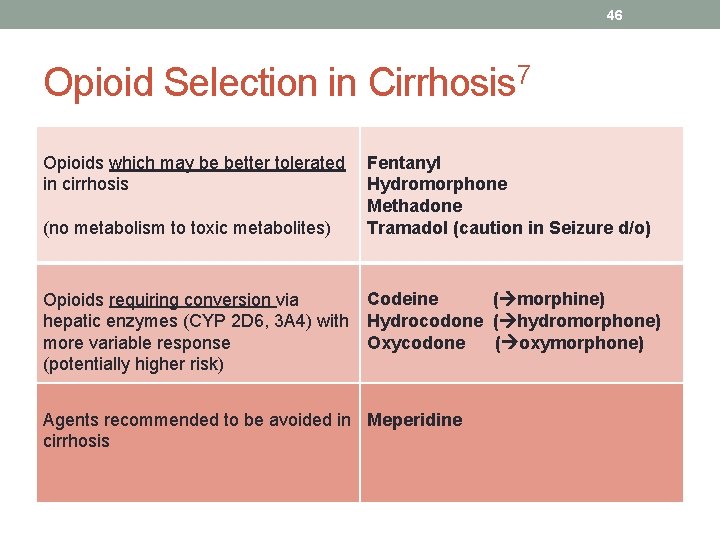
46 Opioid Selection in Cirrhosis 7 Opioids which may be better tolerated in cirrhosis (no metabolism to toxic metabolites) Opioids requiring conversion via hepatic enzymes (CYP 2 D 6, 3 A 4) with more variable response (potentially higher risk) Fentanyl Hydromorphone Methadone Tramadol (caution in Seizure d/o) Codeine ( morphine) Hydrocodone ( hydromorphone) Oxycodone ( oxymorphone) Agents recommended to be avoided in Meperidine cirrhosis
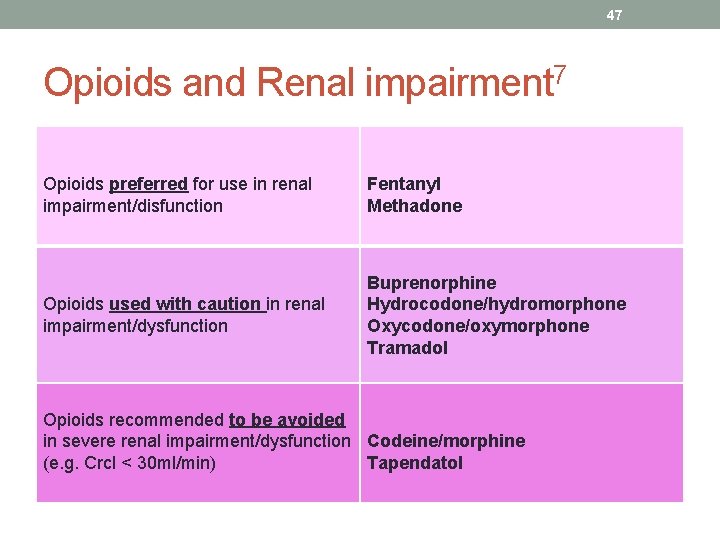
47 Opioids and Renal impairment 7 Opioids preferred for use in renal impairment/disfunction Fentanyl Methadone Opioids used with caution in renal impairment/dysfunction Buprenorphine Hydrocodone/hydromorphone Oxycodone/oxymorphone Tramadol Opioids recommended to be avoided in severe renal impairment/dysfunction Codeine/morphine (e. g. Crcl < 30 ml/min) Tapendatol
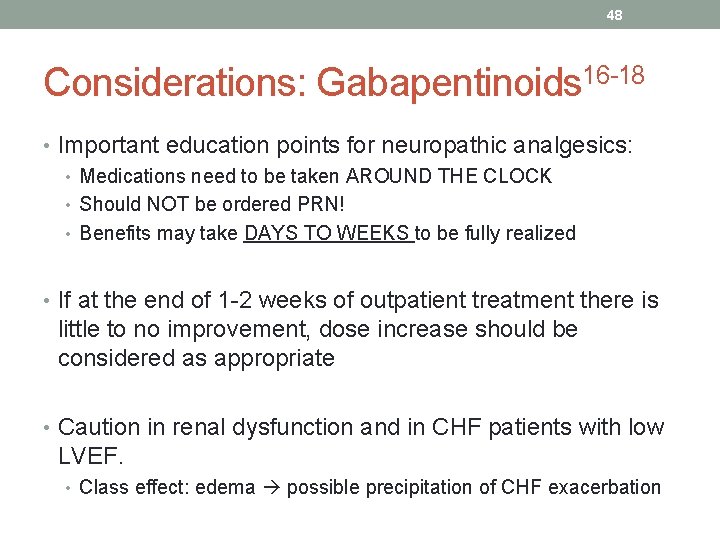
48 Considerations: Gabapentinoids 16 -18 • Important education points for neuropathic analgesics: • Medications need to be taken AROUND THE CLOCK • Should NOT be ordered PRN! • Benefits may take DAYS TO WEEKS to be fully realized • If at the end of 1 -2 weeks of outpatient treatment there is little to no improvement, dose increase should be considered as appropriate • Caution in renal dysfunction and in CHF patients with low LVEF. • Class effect: edema possible precipitation of CHF exacerbation
49 Considerations: Buprenorphine 13, 14 • Partial Mu-opioid receptor AGONIST + kappa-opioid receptor ANTAGONIST • Very high binding affinity for opioid receptors prevents binding of other full mu agonists used for analgesia • Recommended to be weaned off of this agent approx. 7 days prior to planned procedures. • Can be difficult to manage acute pain in unplanned procedures • Often requires higher than expected opioid doses which require continued weaning over several days as buprenorphine dissociates from receptor following cessation
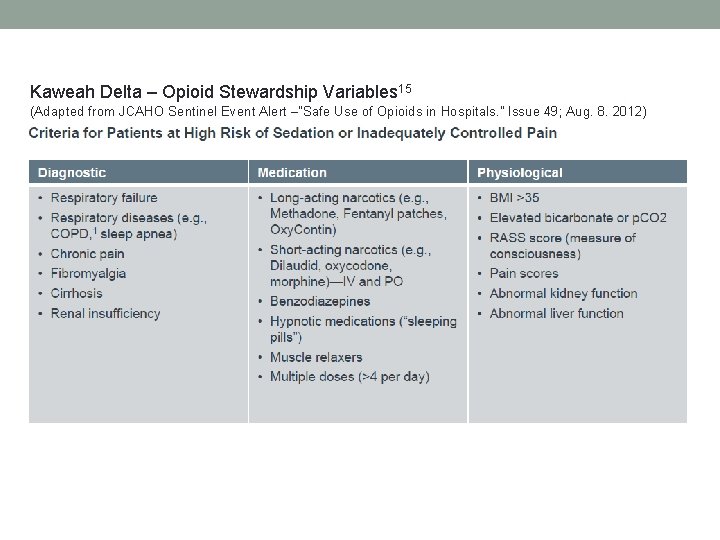
Kaweah Delta – Opioid Stewardship Variables 15 (Adapted from JCAHO Sentinel Event Alert –”Safe Use of Opioids in Hospitals. ” Issue 49; Aug. 8. 2012)
51 Considerations: Antidepressants 16, 18 -19 • Onset: Days to weeks • Agents commonly used: TCAs, SNRIs • Max doses for pain control are often less than doses used for anxiety/depression • TCAs associated with anticholinergic effects that may be more pronounced in older patients. May consider use of SNRI (but caution in renal impairment) • SSRIs are NOT effective for neuropathic pain. Norepinephrine reuptake inhibition is responsible for analgesic effects of this class of adjunctive medications.
52 NMDA-Receptor Antagonists 20 • Ketamine (pure NMDA Rc Antagonist) and methadone • May be useful in patients on relatively high opioid doses where there is high concern for OIH • Example Ketamine infusion rates and duration: • 0. 15 -0. 3 mg/kg/hr x 2 -5 days
53 Topicals 16 • Lidocaine • Effective for SUPERFICIAL neuropathic pain complaints (e. g. rib fractures) • Apply for 12 hours and then REMOVE FOR 12 HOURS, or efficacy lost (i. e. tachyphylaxis) • Avoid application area(s) of broken skin • Capsaicin • Chemical component in hot peppers – causes depletion of substance. P (a chemical mediator of pain signaling) • May be effective for superficial neuropathies (e. g. diabetic peripheral neuropathy, post herpetic neuralgia) • Must be applied 3 -4 times per day for efficacy. However, can provide long lasting relief. • Avoid use in areas with open sores.
54 Scenario • A provider calls the pharmacist on behalf of a patient they are caring for who is expressing extreme pain. • The only information provided is that patient is currently prescribed pain medication(s) but prior attempts to control the patient’s pain have been “inadequate. ” • You obtain all required information to review patient case.
55 Patient Case • Subjective: 83 yo F admitted s/p ground level fall leading to unstable C 5 -C 6 fracture. Awaiting surgery. • Opioid naïve • verified in CURES (PDMP) • no recent controlled substance fills • PMH: HTN, DM, hypothyroid, arthritis, atrial fibrillation
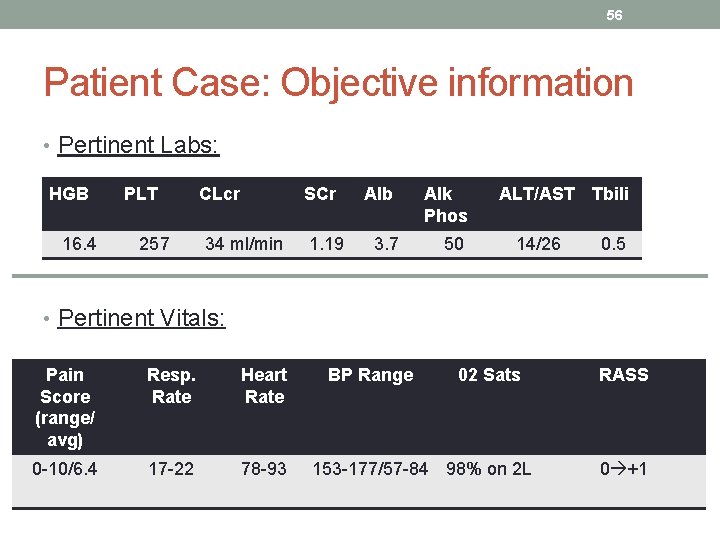
56 Patient Case: Objective information • Pertinent Labs: HGB 16. 4 PLT CLcr 257 34 ml/min SCr 1. 19 Alb 3. 7 Alk Phos 50 ALT/AST Tbili 14/26 0. 5 • Pertinent Vitals: Pain Score (range/ avg) Resp. Rate Heart Rate 0 -10/6. 4 17 -22 78 -93 BP Range 02 Sats 153 -177/57 -84 98% on 2 L RASS 0 +1
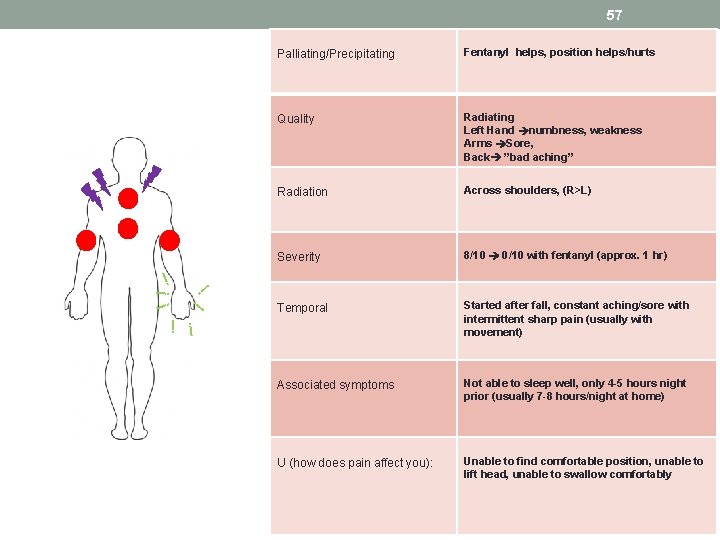
57 Palliating/Precipitating Fentanyl helps, position helps/hurts Quality Radiating Left Hand numbness, weakness Arms Sore, Back ”bad aching” Radiation Across shoulders, (R>L) Severity 8/10 0/10 with fentanyl (approx. 1 hr) Temporal Started after fall, constant aching/sore with intermittent sharp pain (usually with movement) Associated symptoms Not able to sleep well, only 4 -5 hours night prior (usually 7 -8 hours/night at home) U (how does pain affect you): Unable to find comfortable position, unable to lift head, unable to swallow comfortably ! ! !! !! !
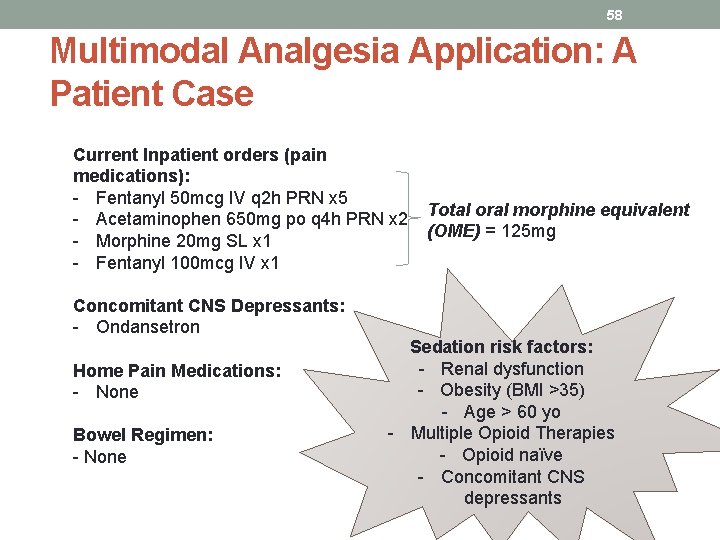
58 Multimodal Analgesia Application: A Patient Case Current Inpatient orders (pain medications): - Fentanyl 50 mcg IV q 2 h PRN x 5 - Acetaminophen 650 mg po q 4 h PRN x 2 - Morphine 20 mg SL x 1 - Fentanyl 100 mcg IV x 1 Concomitant CNS Depressants: - Ondansetron Home Pain Medications: - None Bowel Regimen: - None Total oral morphine equivalent (OME) = 125 mg Sedation risk factors: - Renal dysfunction - Obesity (BMI >35) - Age > 60 yo - Multiple Opioid Therapies - Opioid naïve - Concomitant CNS depressants
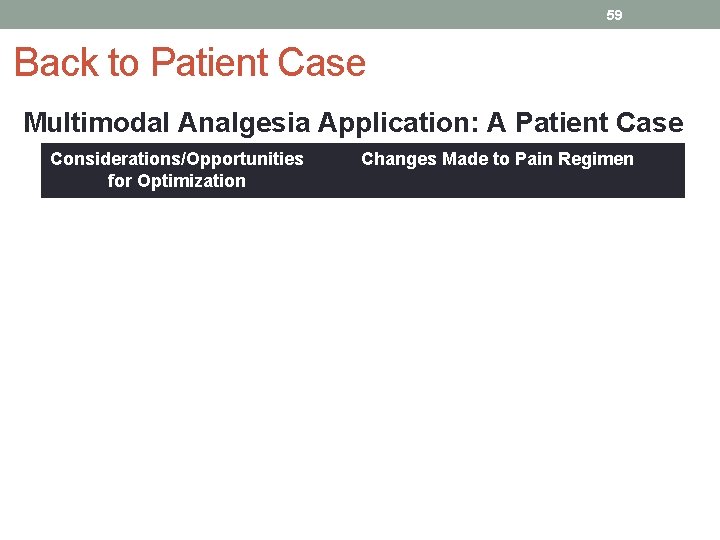
59 Back to Patient Case Multimodal Analgesia Application: A Patient Case Considerations/Opportunities for Optimization Changes Made to Pain Regimen Unable to swallow tablets due to position of collar Consider rotation to oral concentrates that can be administered sublingually (SL), but provide longer analgesic duration Fentanyl dose effective, but analgesia short-lasting Rotation from Fentanyl 50 mcg IV to Oxy. IR 10 mg SL q 4 h PRN (both doses 15 mg OME), continue fentanyl 2 nd line Pain “radiating” and numb Add gabapentinoids Lyrica 50 mg PO BID Opioid Naïve Add scheduled APAP, can reduce opioid burden by 20 -30% Surgery scheduled in 1 -2 days Avoid NSAIDs – increases risk of bleeding
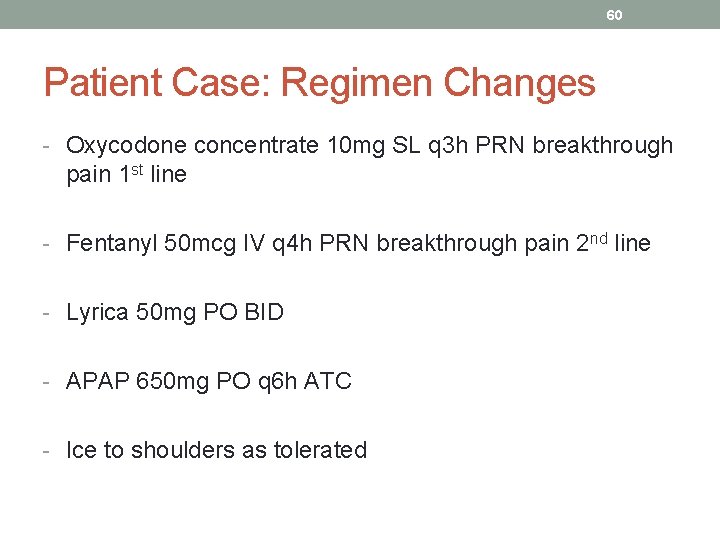
60 Patient Case: Regimen Changes - Oxycodone concentrate 10 mg SL q 3 h PRN breakthrough pain 1 st line - Fentanyl 50 mcg IV q 4 h PRN breakthrough pain 2 nd line - Lyrica 50 mg PO BID - APAP 650 mg PO q 6 h ATC - Ice to shoulders as tolerated
61 Patient Case: Update • Average pain scores improved from 6. 4 3. 6 out of 10 • Regimen effective per patient • Some sedation noted 48 hours after changes made Fentanyl discontinued, doses of Oxycodone concentrate decreased from 10 mg to 5 mg • Opioid burden reduced from 125 mg to 45 mg OME in 48 hours after changes made, low daily OME maintained post-op
62 Patient Case: Key Points • Multi-dimensional patient assessment is KEY • Assessment of pain subtypes, factors affecting patient • Severity important, but only one facet of pain • Maximize co-analgesics when possible • Educate patients on side effects and expectations – they are part of the team!
63 References 1. 2. 3. 4. 5. 6. 7. 8. 9. 10. 11. 12. 13. 14. 15. 16. 17. 18. 19. 20. 21. Gaskin DJ, Richard P. The Economic Costs of Pain in the United States. Institute of Medicine (US) Committee on Advancing Pain Research, Care, and Education. Washington (DC): National Academies Press (US), 2011. 301 -338. Boyer EW. Management of Opioid Analgesic Overdose. N Engl J Med 2012; 367: 146 -155. doi: 10. 1056/NEJMra 1202561. Substance Abuse and Mental Health Service Administration. The DAWN Report: highlights of the 2011 Drug Abuse Warning Network (DAWN) findings on drug-related emergency department visits. SAMHSA Website. Available from URL: http: //archive. samhsa. gov/data/2 k 13/DAWN 127/sr 127 -DAWNhighlights. htm. Accessed April 24, 2015. Centers for Disease Control and Prevention. National Vital Statistics System mortality data. (2015). Available from URL: http: //www. cdc. gov/nchs/deaths. htm. Accessed April 24, 2015. Mezei L, Murinson BB, and the Johns Hopkins Pain Curriculum Development Team. Pain Education in North America Medical Schools. The Journal of Pain. Vol 12, No 12 (December), 2011: pp 1199 -1208. Solis, K. Ethical, Legal, and Professional Challenges Posed by “Controlled Medication Seekers” to Healthcare Providers, Part 2. American Journal of Clinical Medicine. Spring 2011, 86 -92. Chandok N, and Watt K. Pain Management in the Cirrhotic patient: The Clinical Challenge. Mayo Clinic Proceedings. May 2010; 85(5): 451 -458. Ross, SJ, Elgendy, IY, and Bavry AA. Cardiovascular Safety and Bleeding Risk Associated with Non. Steroidal Anti-Inflammatory Medications in Patients with Cardiovascular disease. Curr Cardiol Rep 2017. 19: 8 Horn JR, and Hansten PD. Antiplatelet Effects of Aspriin, Which NSAIDS Interact. Pharmacy Times May 17, 2013. accessed: 7/30/19 9: 35 am https: //www. pharmacytimes. com/publications/issue/2013/may 2013/antiplatelet-effects-of-aspirin-which-nsaids-interact. Crockett, S. D. , Greer, K. B. , Heidelbaugh, J. J. et al. American Gastroenterological Association Institute Guideline on the Medical Management of Opioid. Induced Constipation. Gastreoenterology 2019 Jan; 156(1): 218 -226. Lee, M, Silverman, S. Hansen, H. et al. A Comprehensive Review of Opioid-Induced Hyperalgesia. Pain Physician 2011; 14: 145 -161. Mc. Pherson, M. L. Demystifying Opioid Conversion Calculations. American Society of Health-System Pharmacists. 2010. Khanna, I. K. , Pillarisetti, S. Buprenorphine – an attractive opioid with underutilized potential in treatment of chronic pain. Journal of Pain Research 2015: 8 859– 870. Jonan, A. B. , Kaye, A. D. , and Urman, R. D. Buprenorphine Formulations: Clinical Best Practice Strategies Recommendations for Perioperative Management of Patients Undergoing Surgical or Interventional Pain Procedures. Pain Physician 2018; 21: E 1 -E 12. JCAHO Sentinel Event Alert –”Safe Use of Opioids in Hospitals. ” Issue 49; Aug. 8. 2012. Finnerup, N. B. Nonnarcotic Methods of Pain Management. N Engl J Med 380; 25: 2440 -2448. Clarke, H. , Bonin, R. P. , Orser, B. A. , et al. The Prevention of Chronic Postsurgical Pain Using Gabapentin and Pregabalin: A Combined Systematic Review and Meta-Analysis. Anesthesia-Analgesia. 115; 2: 428 -442. Mishra, S. , Bhatnagar, S. , Goyal, G. N, et al. A Comparative Efficacy of Amitriptyline, Gabapentin, and Pregabalin in Neuropathic Cancer Pain: A Prospective Randomized Double-Blind Placebo Controlled Study. Amer Jour Hosp Pall Med. 29; 3: 177 -182. Bedin, A. , Caldart Bedin, R. A. , Vieira, J. E. , et al. Duloxetine as an Analgesic Reduces Opioid Consumption After Spine Surgery. Clin J Pain. 33; 10: 865 -869. Elia, N. , Tramèr, MR. Ketamine and postoperative pain – a quantitative systematic review of randomised trials. Pain. 113 (2005) 61– 70. Dipiro, J. T. , Talbert, R. L. , Yee, G. C. , Matzke, G. R. , Wells, B. G. et al. Pharmacotherapy: A Pathophysiologic Approach 6 th Edition. Mcgraw-Hill 2005. 1089 – 1104.
64 Discussion
65 Acknowledgements • Our speakers • CSHP Education Committee: Dianne, Sara, Naveen • CSHP Staff: Ryan Yamamura • Opioid Task Force Members 2018 -2019 • … and you!
- Slides: 65