
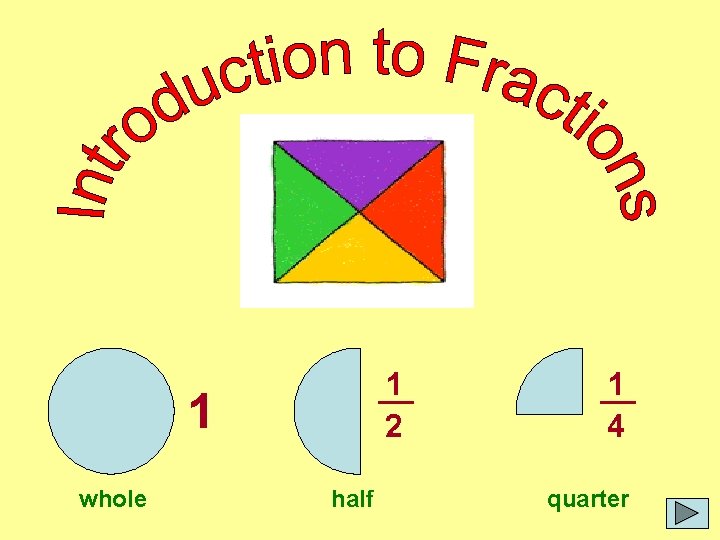
1 2 1 whole half 1 4 quarter
- Slides: 27
1 2 1 whole half 1 4 quarter
Instructions: • Carefully read what is on the screen. • Press the space bar or the left mouse button to continue. • When there is a question, work out the answer before you press the space bar or left mouse button.
Contents: Part 1: Introduction: Part 2: Sums & Explanation: Part 3: Terms to know Part 4: Sums Try to guess answers before they appear.
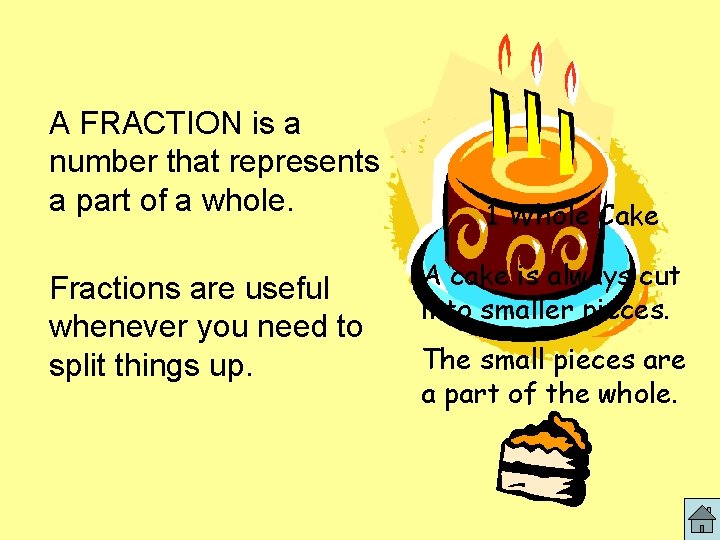
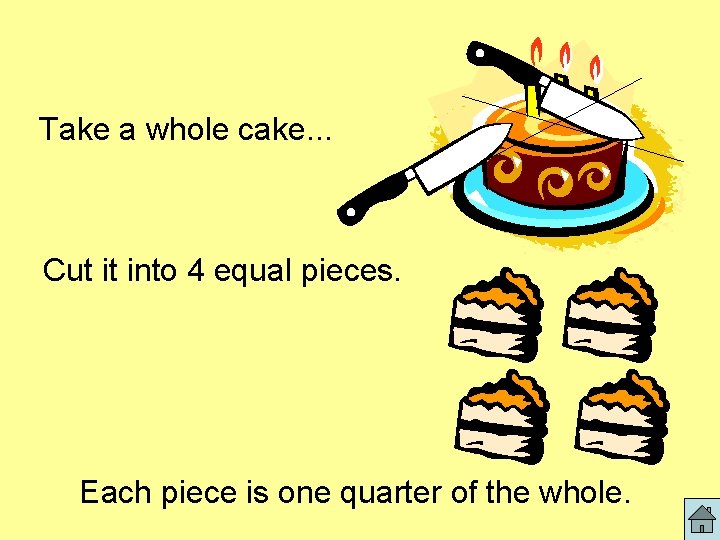
A FRACTION is a number that represents a part of a whole. Fractions are useful whenever you need to split things up. 1 Whole Cake A cake is always cut into smaller pieces. The small pieces are a part of the whole.
Take a whole cake. . . Cut it into 4 equal pieces. Each piece is one quarter of the whole.
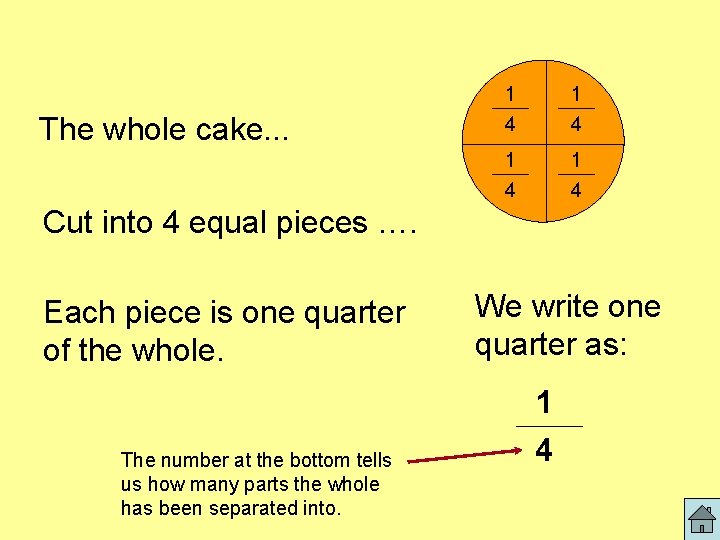
The whole cake. . . 1 1 4 4 1 4 Cut into 4 equal pieces …. Each piece is one quarter of the whole. The number at the bottom tells us how many parts the whole has been separated into. We write one quarter as: 1 4
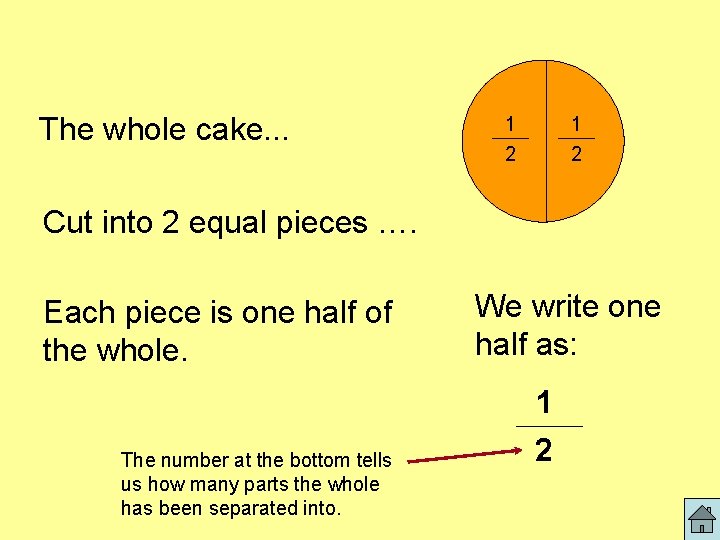
The whole cake. . . 1 1 2 2 Cut into 2 equal pieces …. Each piece is one half of the whole. The number at the bottom tells us how many parts the whole has been separated into. We write one half as: 1 2
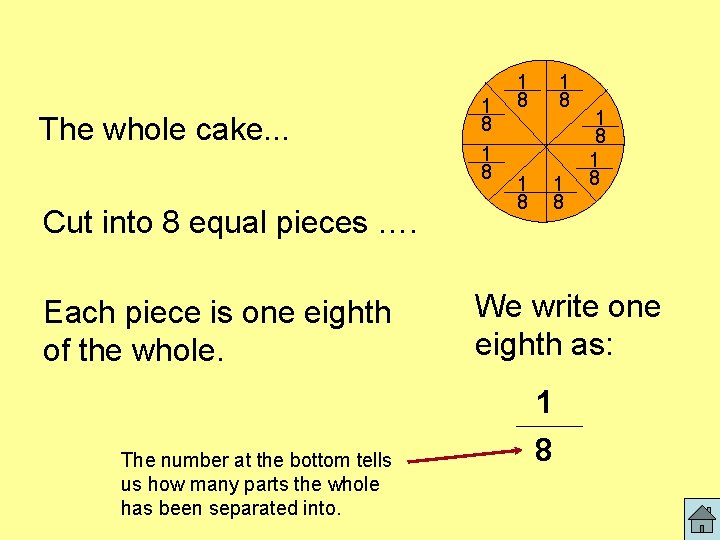
The whole cake. . . Cut into 8 equal pieces …. Each piece is one eighth of the whole. The number at the bottom tells us how many parts the whole has been separated into. 1 8 1 8 We write one eighth as: 1 8
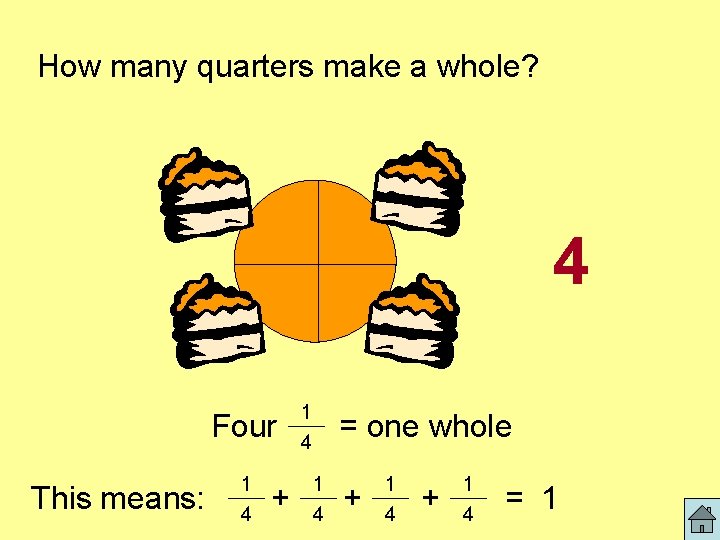
How many quarters make a whole? 4 Four This means: 1 4 + 1 4 = one whole 1 4 + 1 4 = 1
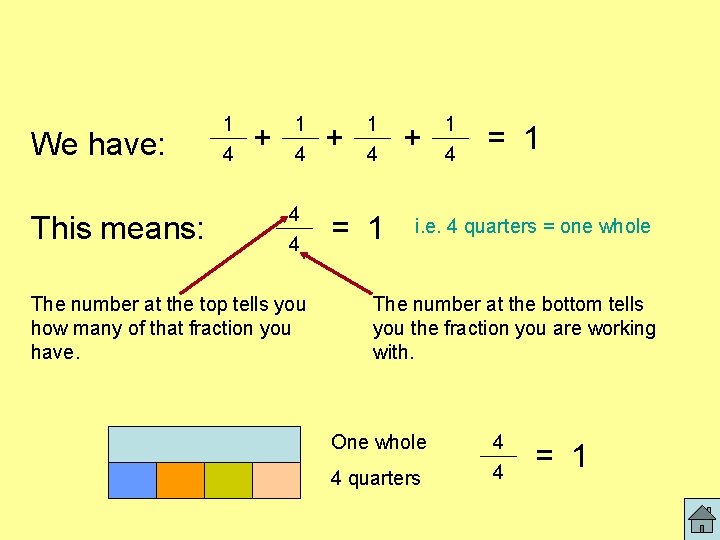
We have: This means: 1 4 + 1 1 4 + 4 4 = 1 The number at the top tells you how many of that fraction you have. 4 + 1 4 = 1 i. e. 4 quarters = one whole The number at the bottom tells you the fraction you are working with. One whole 4 quarters 4 4 = 1
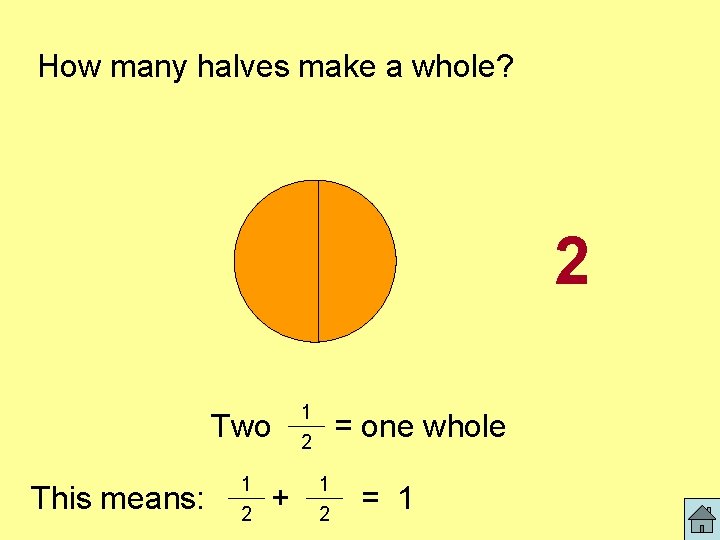
How many halves make a whole? 2 Two This means: 1 2 + 1 2 = one whole 1 2 = 1
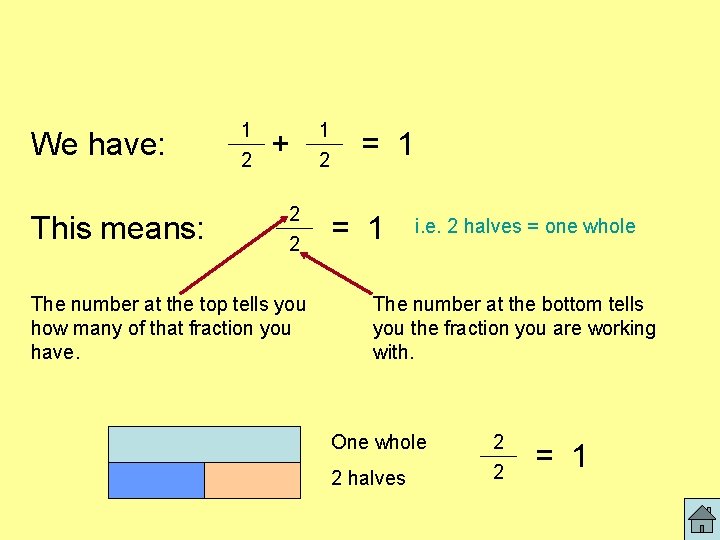
We have: This means: 1 2 + 2 2 The number at the top tells you how many of that fraction you have. 1 2 = 1 i. e. 2 halves = one whole The number at the bottom tells you the fraction you are working with. One whole 2 halves 2 2 = 1
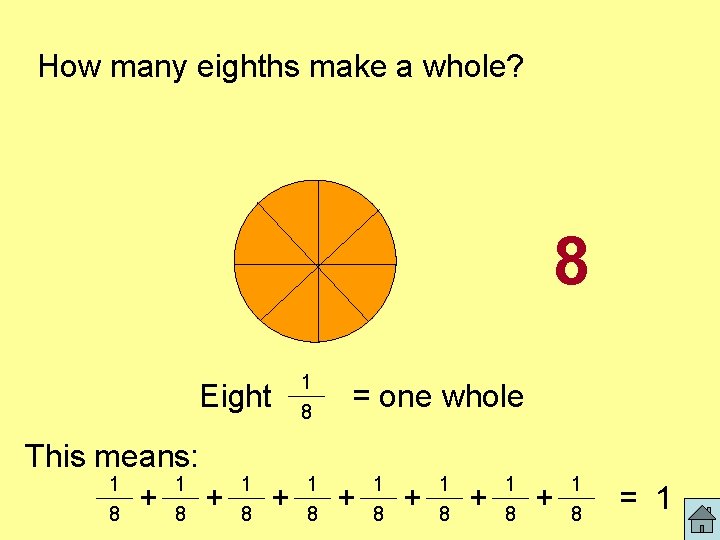
How many eighths make a whole? 8 Eight This means: 1 1 + 8 1 8 + 1 8 = one whole + 1 8 = 1
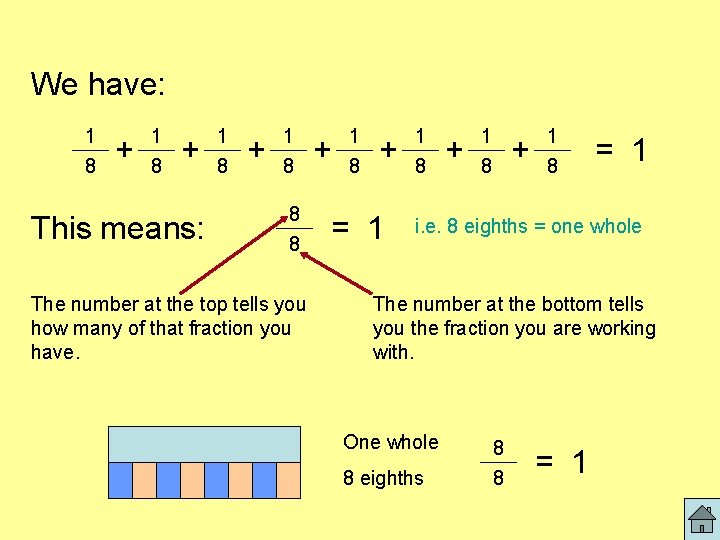
We have: 1 8 + This means: 1 8 + 1 8 8 8 The number at the top tells you how many of that fraction you have. + 1 8 + = 1 1 8 + 1 + 8 1 8 = 1 i. e. 8 eighths = one whole The number at the bottom tells you the fraction you are working with. One whole 8 eighths 8 8 = 1
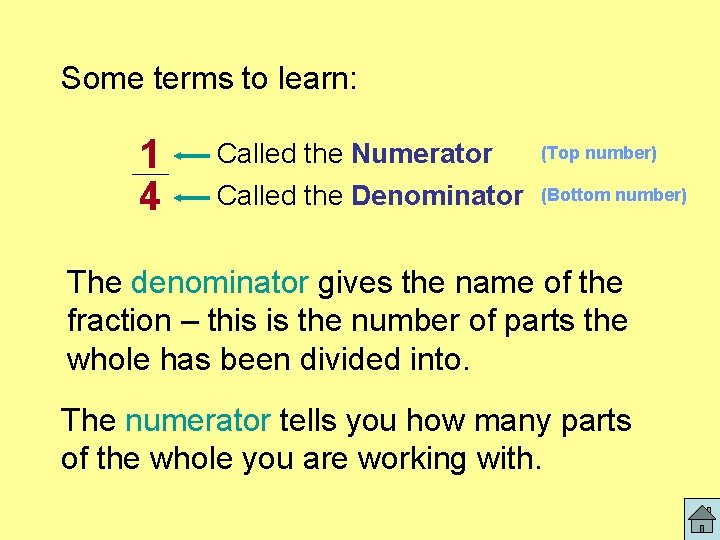
Some terms to learn: 1 4 Called the Numerator Called the Denominator (Top number) (Bottom number) The denominator gives the name of the fraction – this is the number of parts the whole has been divided into. The numerator tells you how many parts of the whole you are working with.
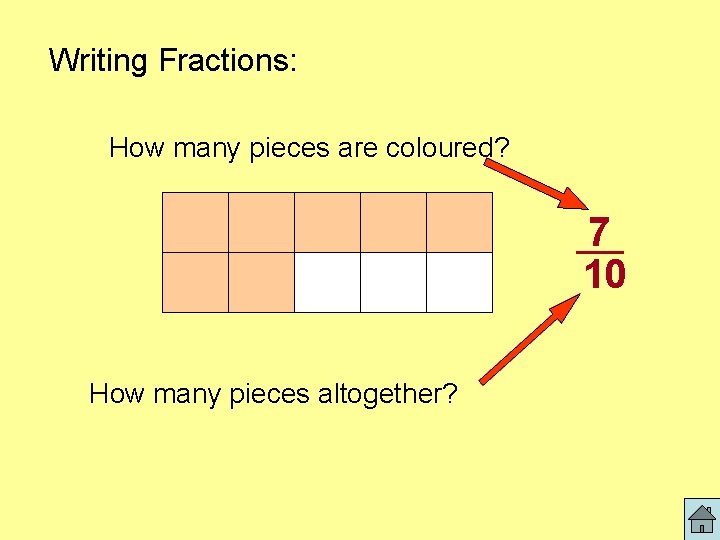
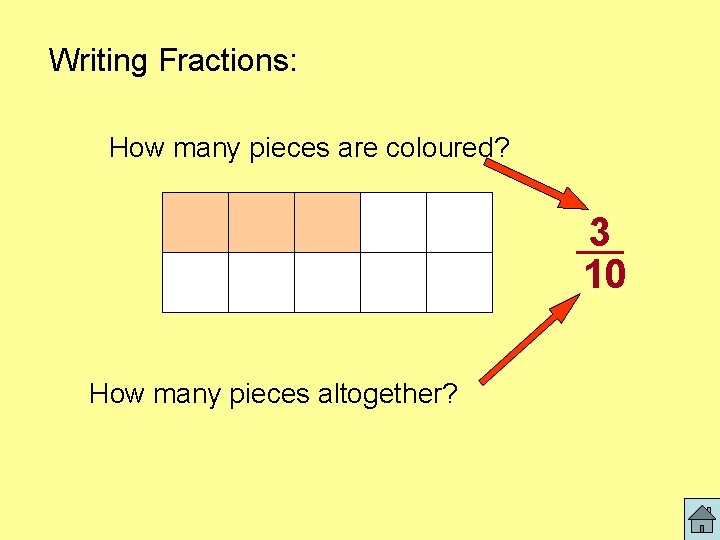
Writing Fractions: How many pieces are coloured? 7 10 How many pieces altogether?
Writing Fractions: How many pieces are coloured? 3 10 How many pieces altogether?
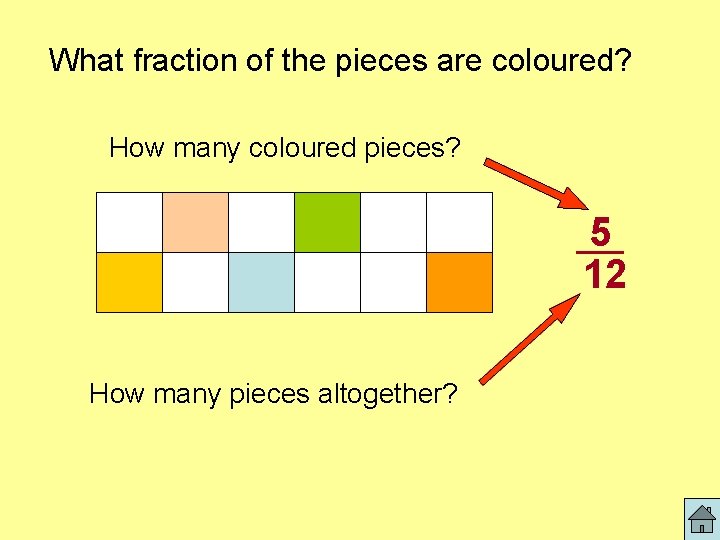
What fraction of the pieces are coloured? How many coloured pieces? 5 12 How many pieces altogether?
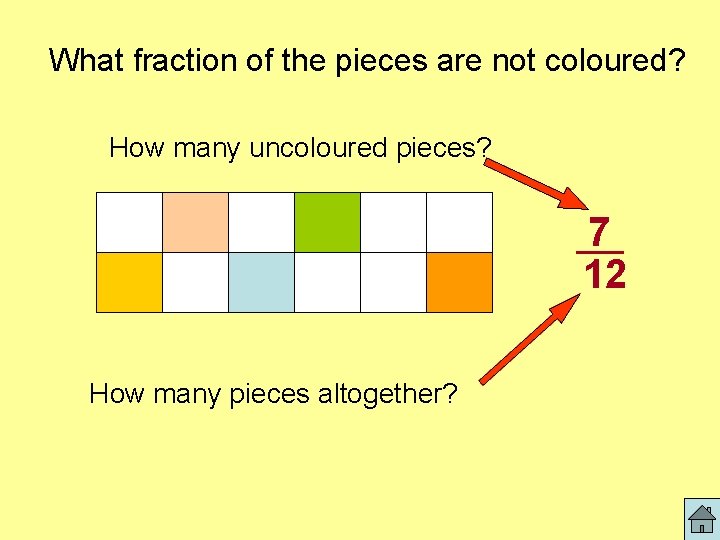
What fraction of the pieces are not coloured? How many uncoloured pieces? 7 12 How many pieces altogether?
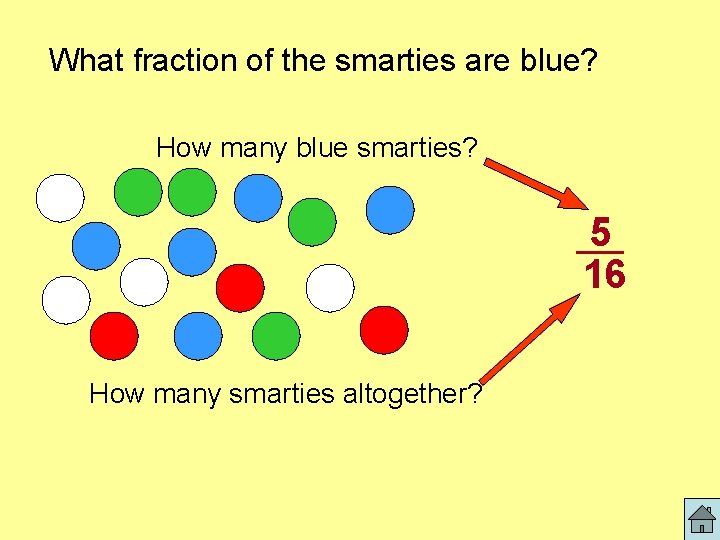
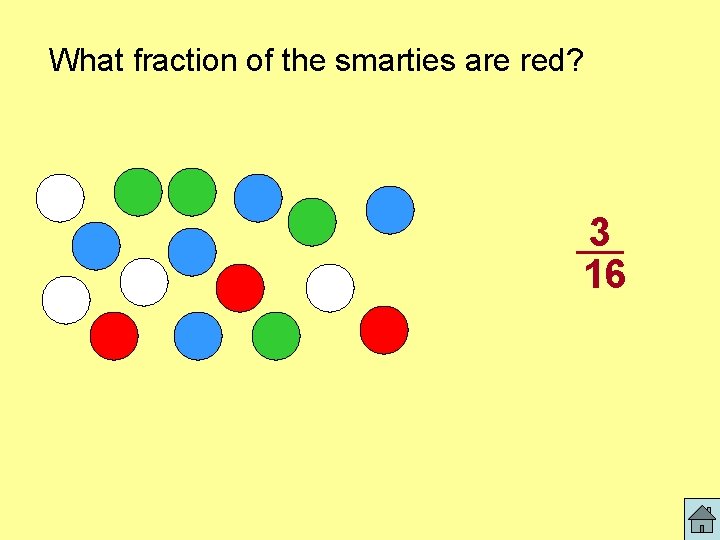
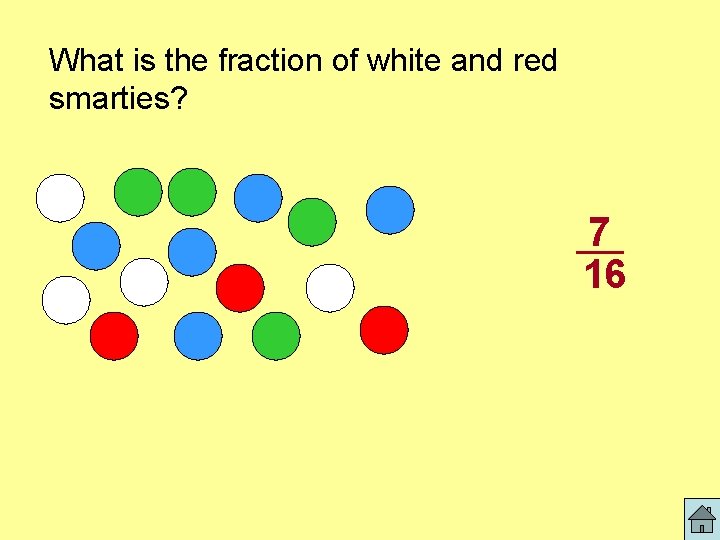
What fraction of the smarties are blue? How many blue smarties? 5 16 How many smarties altogether?
What fraction of the smarties are red? 3 16
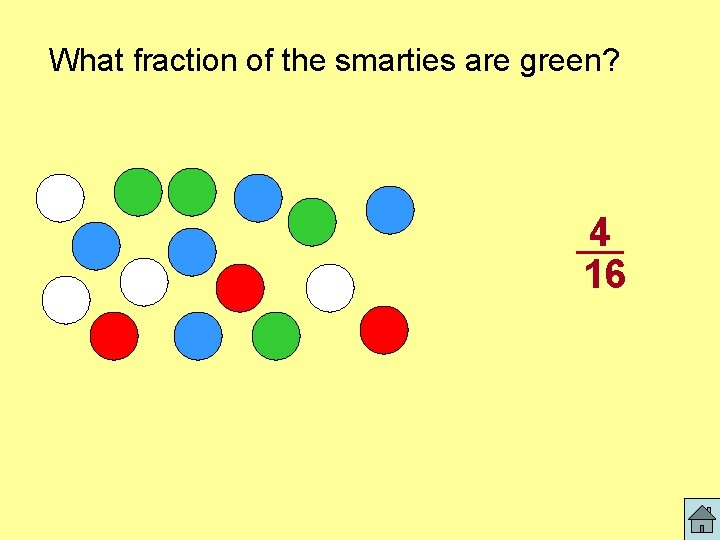
What fraction of the smarties are green? 4 16
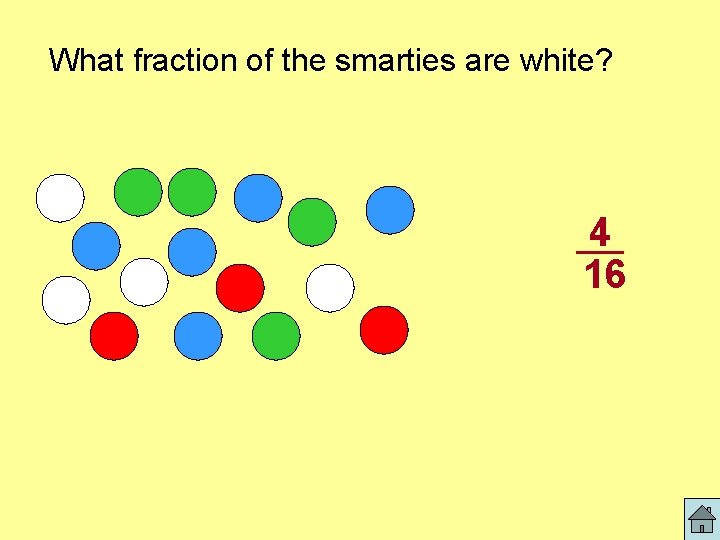
What fraction of the smarties are white? 4 16
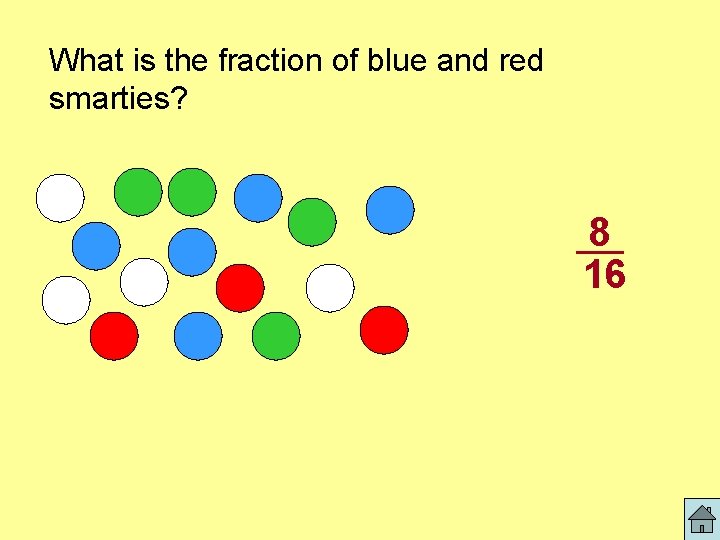
What is the fraction of blue and red smarties? 8 16
What is the fraction of white and red smarties? 7 16
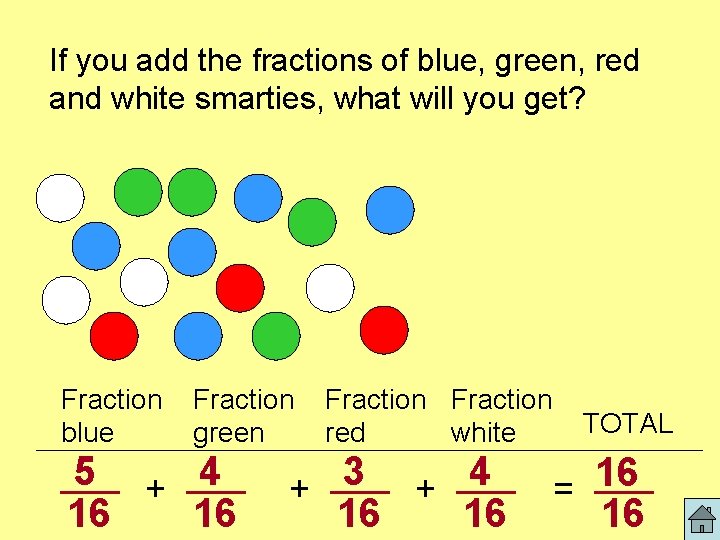
If you add the fractions of blue, green, red and white smarties, what will you get? Fraction blue Fraction green 5 + 4 16 16 Fraction red white 3 4 + + 16 16 TOTAL 16 = 16